
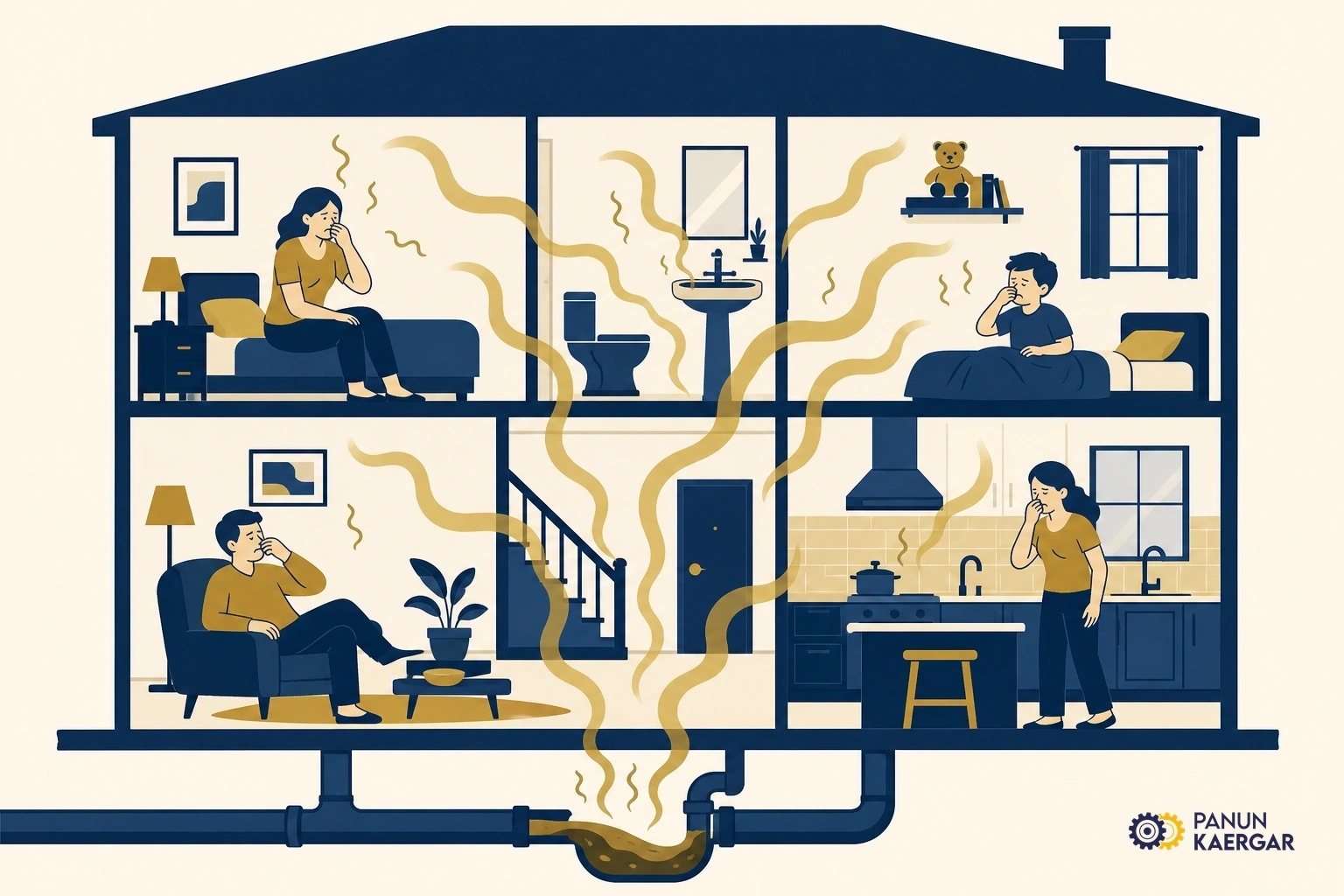
Every morning a guest bathroom smells like something forgotten. The basin looks clean; the drain may have lost its water seal overnight.
Run water in little-used drains, clean traps and strainers, check for slow drainage, and inspect overflow holes. Persistent sewage smell, gurgling, or multiple drains affected need a plumber.
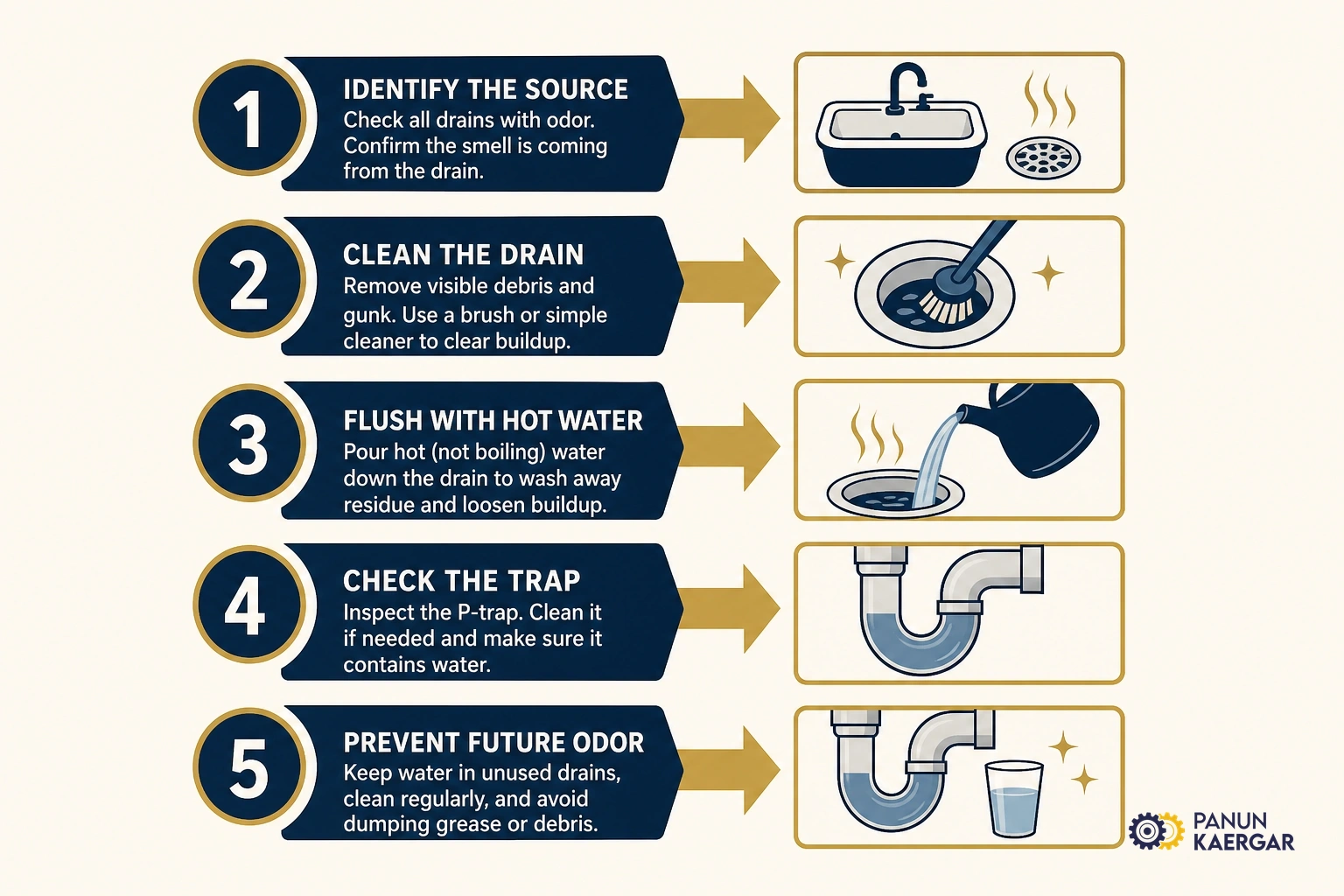
Quick diagnosis map
Start with the symptom, not the most dramatic fix. A small check now can save a cabinet, appliance, or Sunday afternoon.
| What you notice | Likely reason | First move |
|---|---|---|
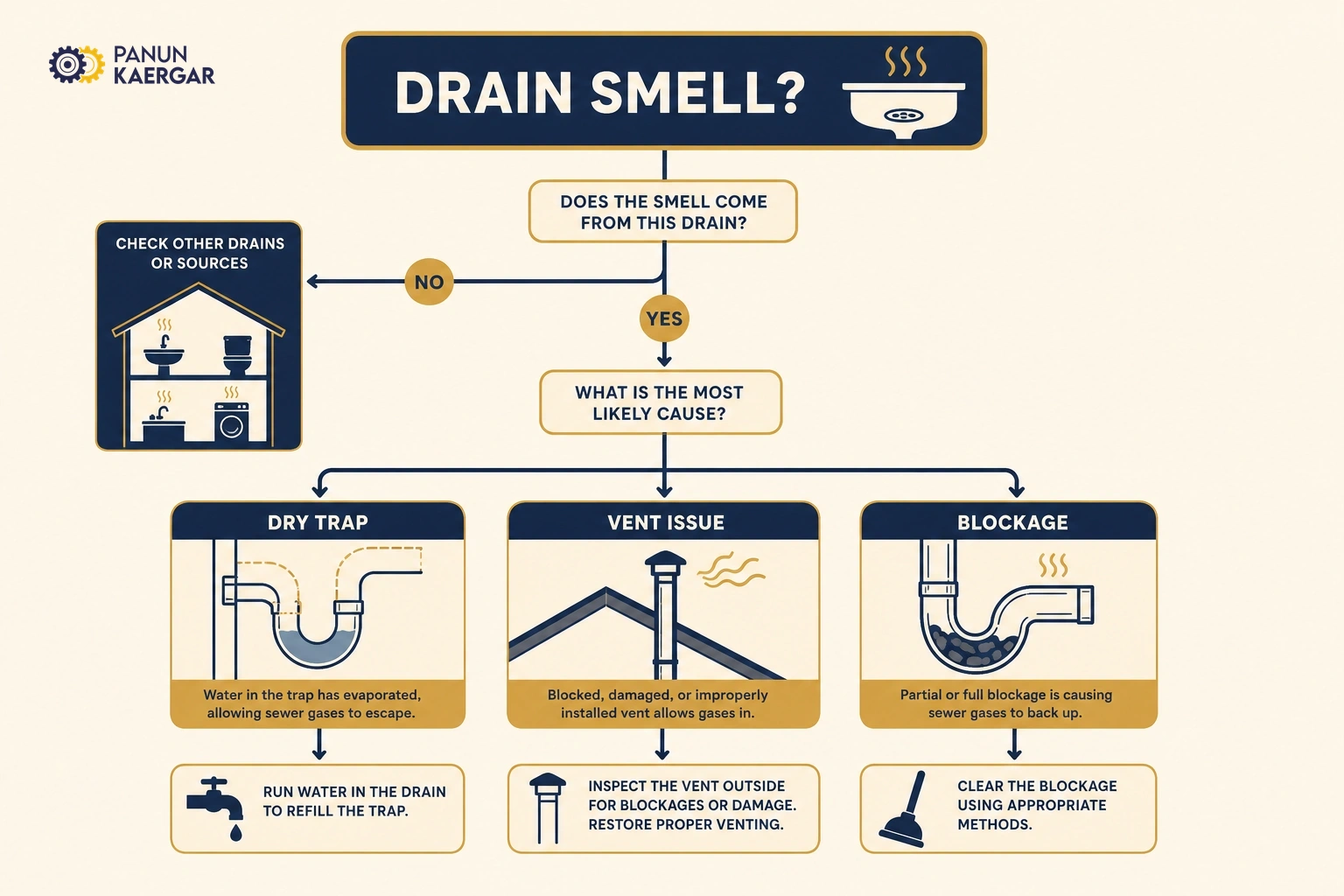
| Sour or sewage smell from basin, floor, or kitchen drain | Dry trap, biofilm buildup, partial blockage, or vent issue | Pour water until the trap refills; repeat weekly in little-used rooms. |
| Problem worsens after use | An underlying fault or hidden damage | Stop adding load; inspect safely. |
| Heat, burning smell, leak, or sudden pain | Safety issue, not a DIY puzzle | Switch off / isolate / get help. |
Do not mask smell with constant bleach alone, ignore gurgling toilets, or mix drain chemicals.
What usually causes this
The visible symptom is useful, but the small detail around it usually tells the real story.
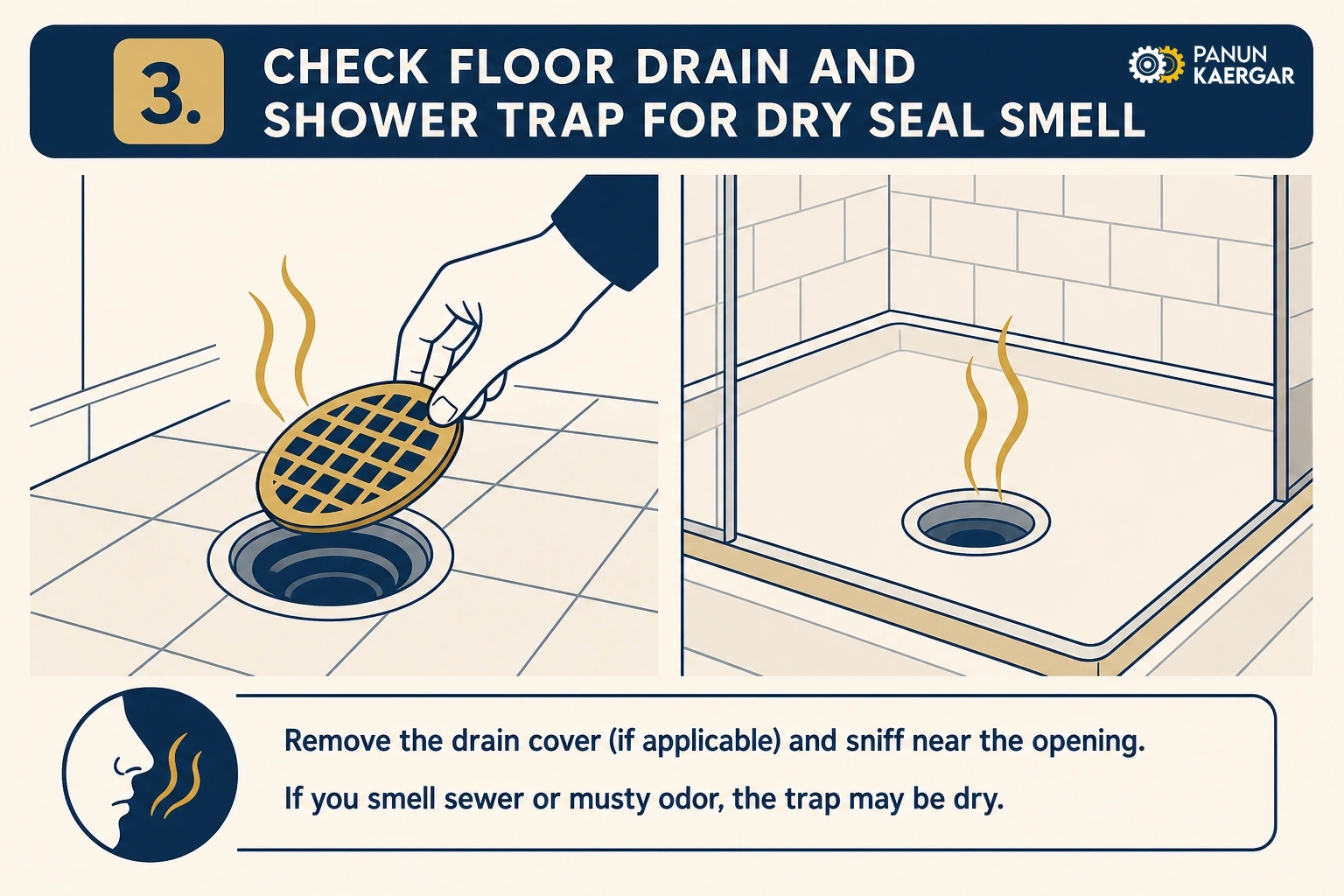
- Unused floor or guest drains letting traps dry out.
- Hair and soap scum rotting in the trap.
- Partial clog holding stagnant water.
Try these in order
Begin with the reversible checks. The goal is a clean fix, not winning an argument with a stubborn household thing.
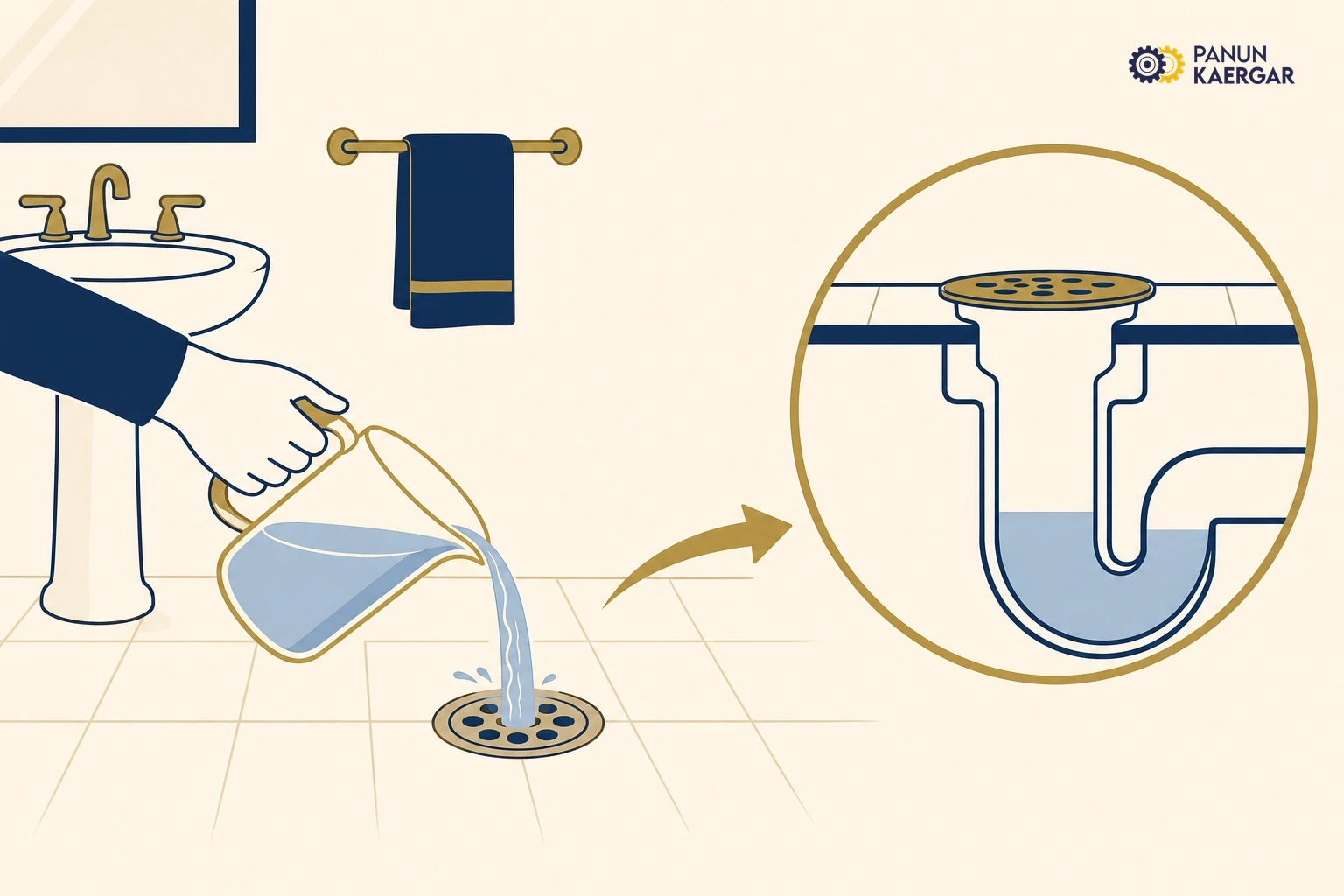
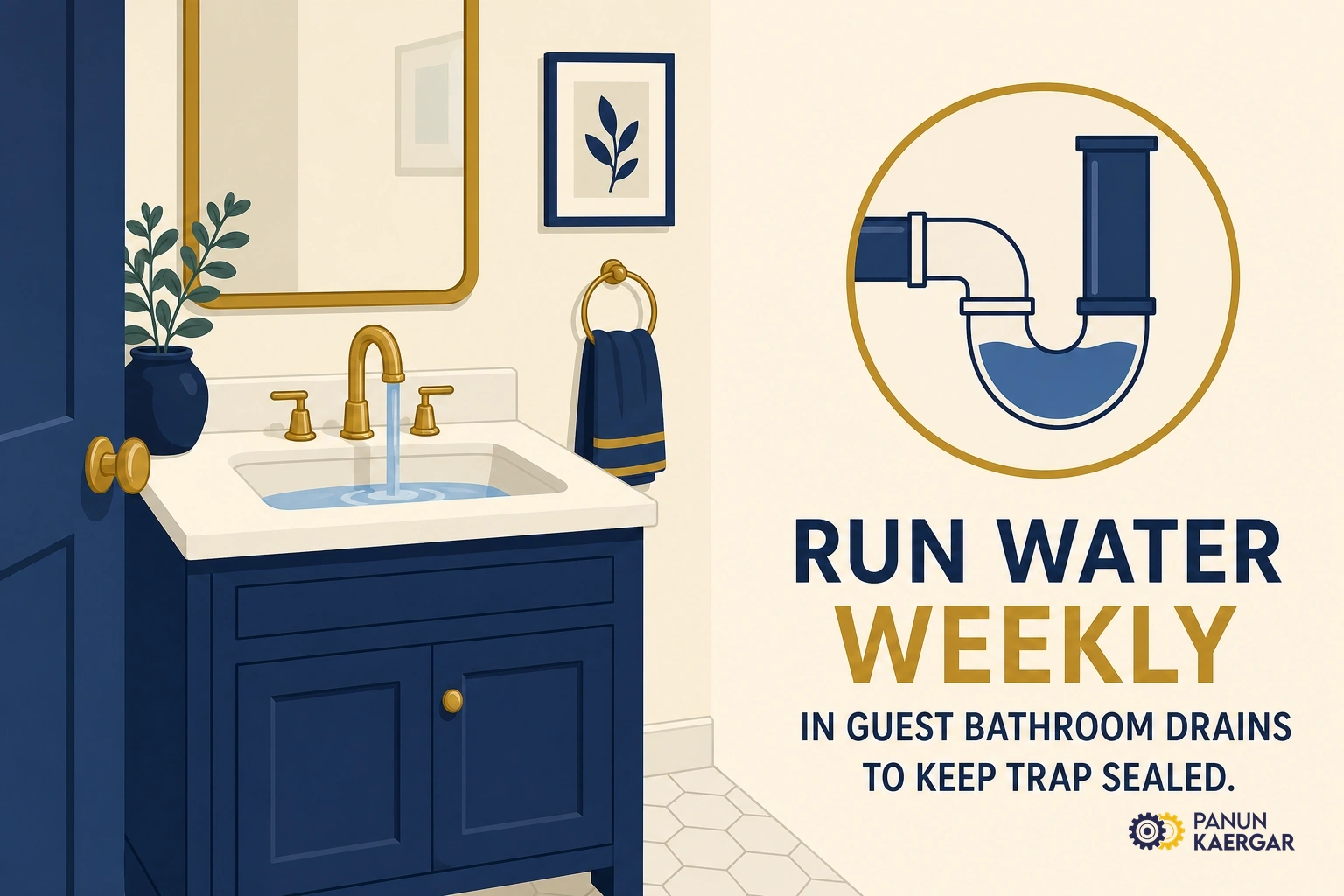
Run water in unused drains
Best for: guest bath or floor drain
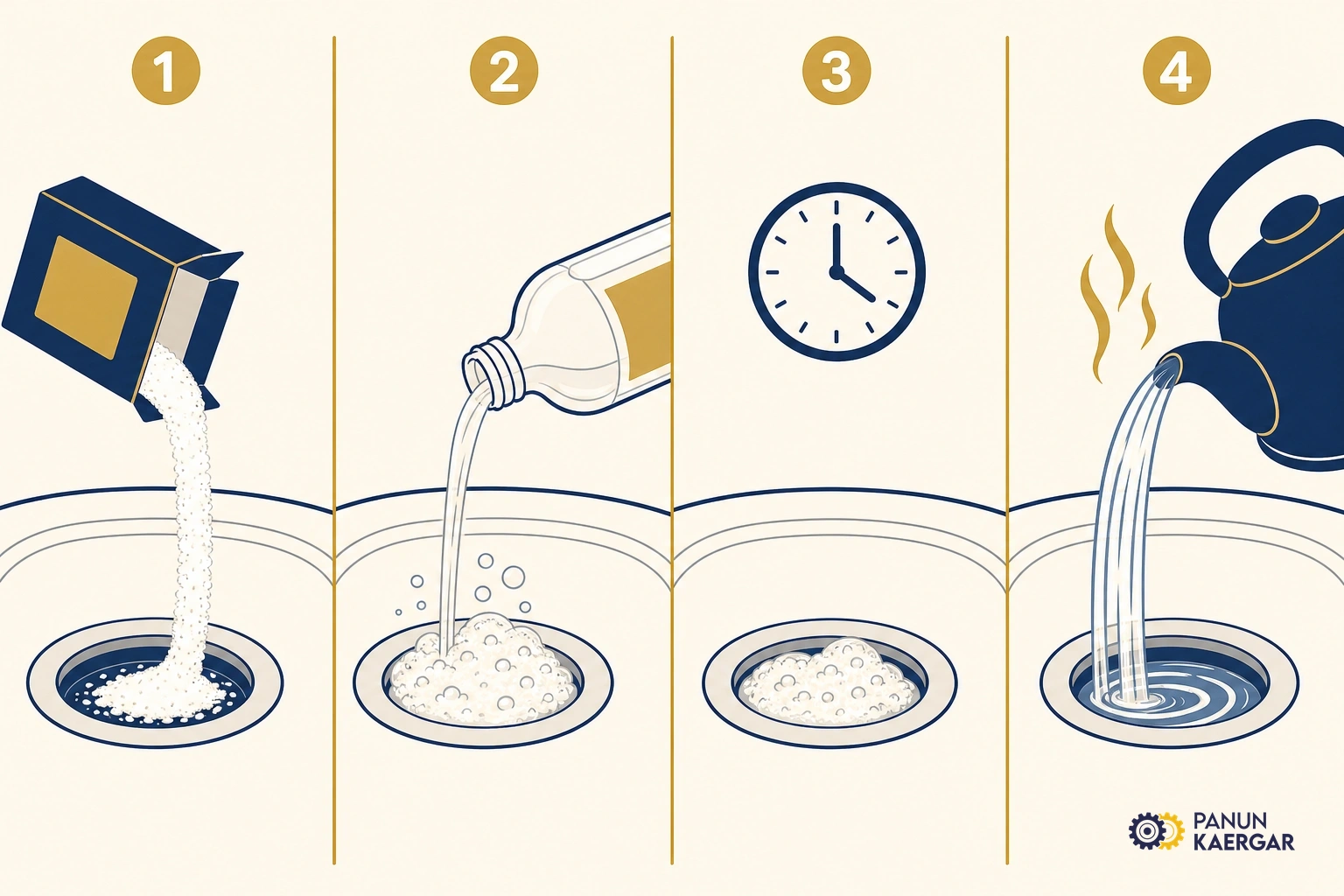
Pour water until the trap refills; repeat weekly in little-used rooms.
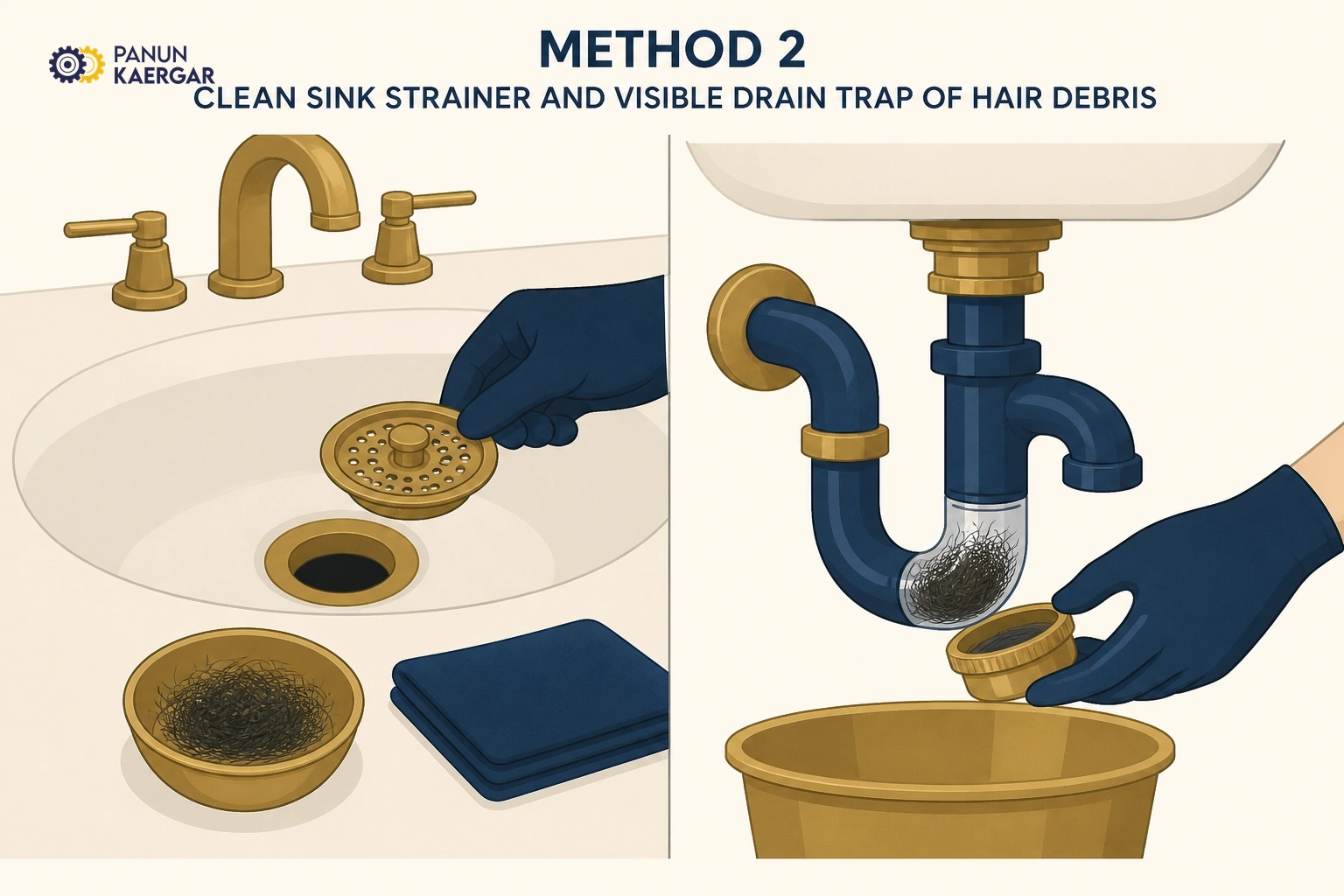
Clean strainers and visible traps
Best for: basin smell
Remove hair and debris; wash the strainer and flush with hot water.
Check for slow drainage
Best for: combined smell and slow sink
A partial clog can trap waste above the trap.
Inspect overflow and gaps
Best for: basin-only smell
Clean overflow holes and seal gaps around fittings.
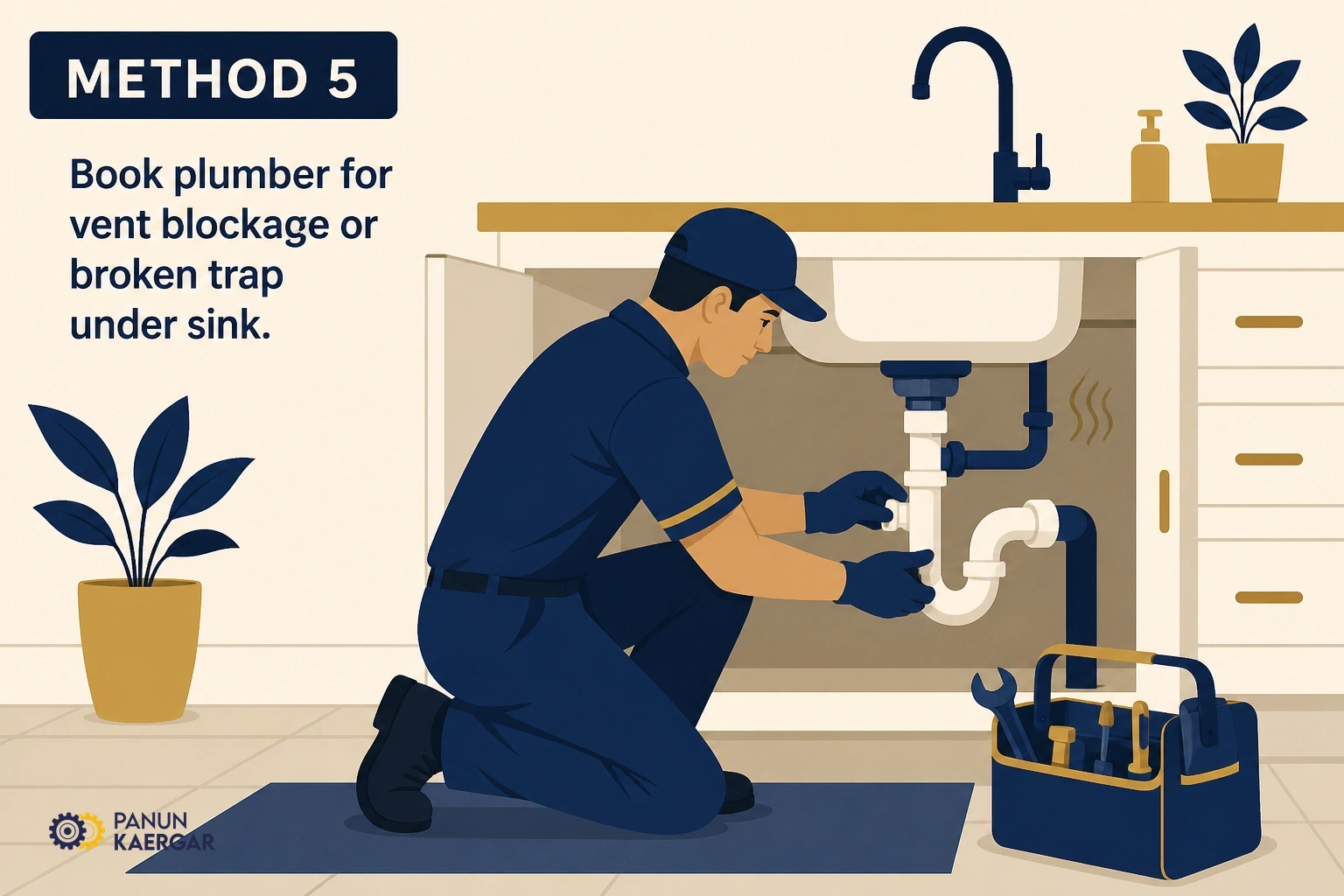
Book a plumber
Best for: whole-house smell
Shared venting or main-line issues need proper inspection.
Take one clear photo before taking anything apart. It helps a professional see the pattern and saves guesswork.
Kashmir home note
In cold months, guest rooms and floor drains go unused for weeks. A dried trap lets sewer gas in even when the room looks spotless.
Please don't do this
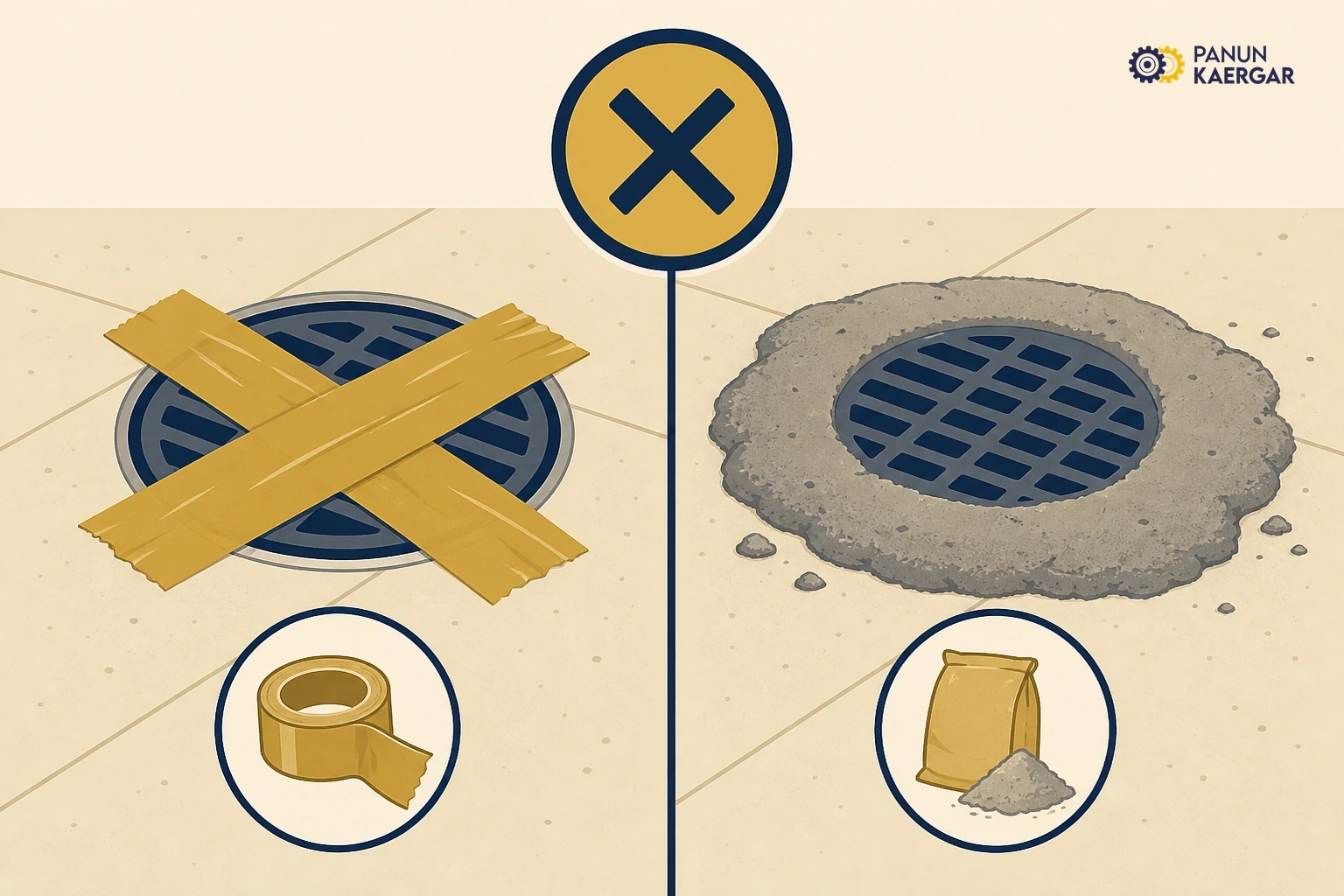
These shortcuts hide the smell briefly and often make the real fault harder to find.
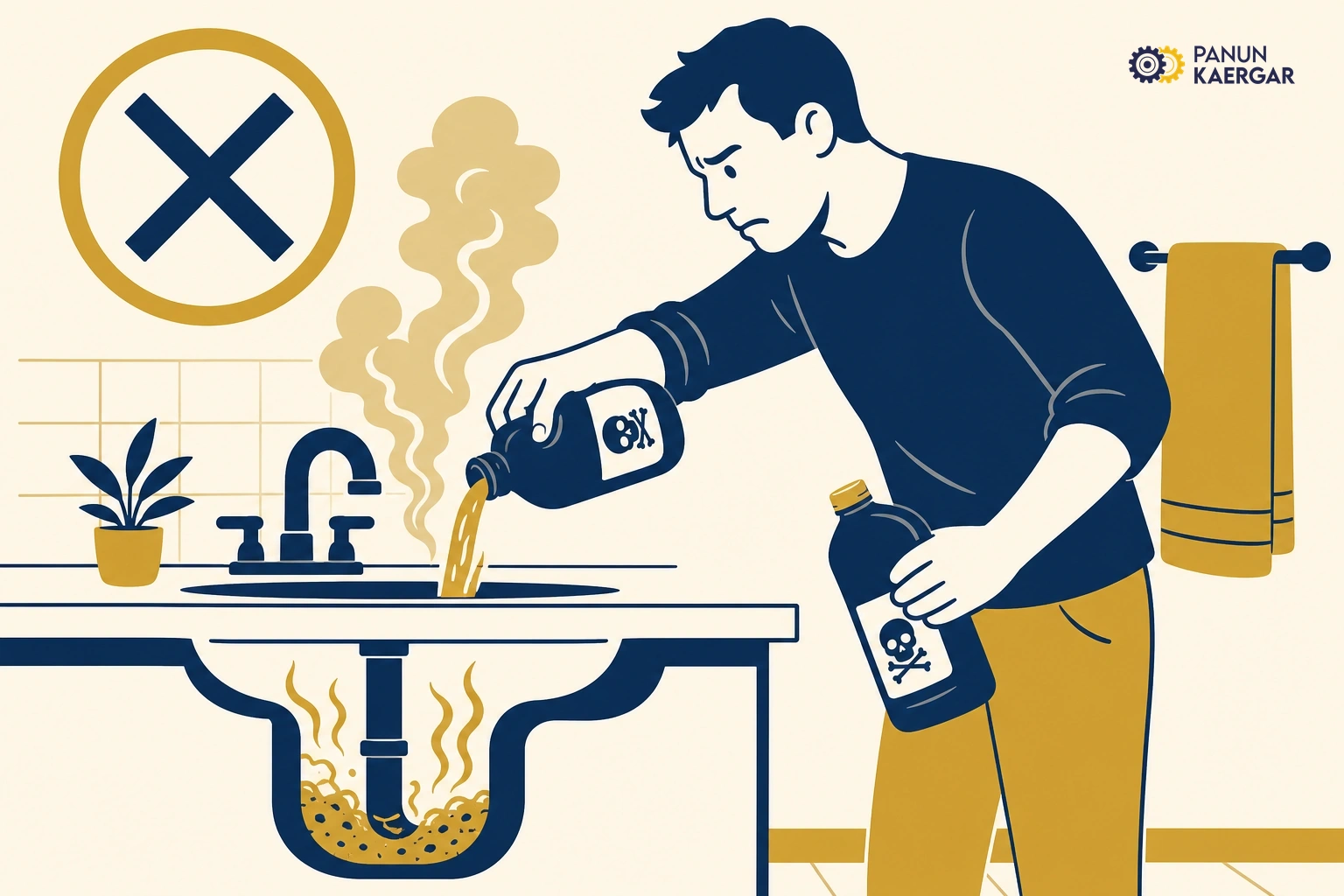
Mask the smell with bleach alone
Hides the symptom, not the cause
Repeated bleach pours do not refill a dry trap and can corrode fittings. Fix the seal or blockage first.
Ignore a gurgling toilet or slow drain
Often points to venting or a partial clog
Gurgling with smell usually means air or waste is not moving normally. Running water in one basin may not fix a shared line issue.
Mix different drain chemicals
Dangerous fumes and unpredictable reactions
Combining cleaners — or following one with another — can release harmful gas and leave a chemical soup in the trap for whoever opens it next.
Keep it from returning
Fix the small trigger, keep the area clean and dry where relevant, and deal with repeat symptoms before they become a replacement job.
When to book a professional
Book a plumber for sewage smell with slow drains, gurgling, backup in another fixture, or smell after every trap has water.
FAQs
What is the first check for bad smell from drains?
Pour water until the trap refills; repeat weekly in little-used rooms.
Can I keep using it?
Only if there is no safety risk or spreading damage. Stop when the symptom worsens.
Why did this start suddenly?
A change in load, moisture, wear, cleaning product, or season often exposes a weak point.
Will a temporary fix last?
It can buy time, but repeat symptoms need the cause corrected.
When should I book help?
Book a plumber for sewage smell with slow drains, gurgling, backup in another fixture, or smell after every trap has water.