
It’s dinner time. The rice is perfect. The sink is not. Water sits there like it’s thinking about life choices, and the smell from the drain has opinions.
A blocked kitchen sink is one of the most common plumbing headaches in Kashmir homes — especially after cooking oil, ghee, tea leaves, and “just a little” leftover become a permanent resident in the pipe. Many blockages clear at home. The skill is knowing the order of attempts — and when DIY becomes an expensive hobby.
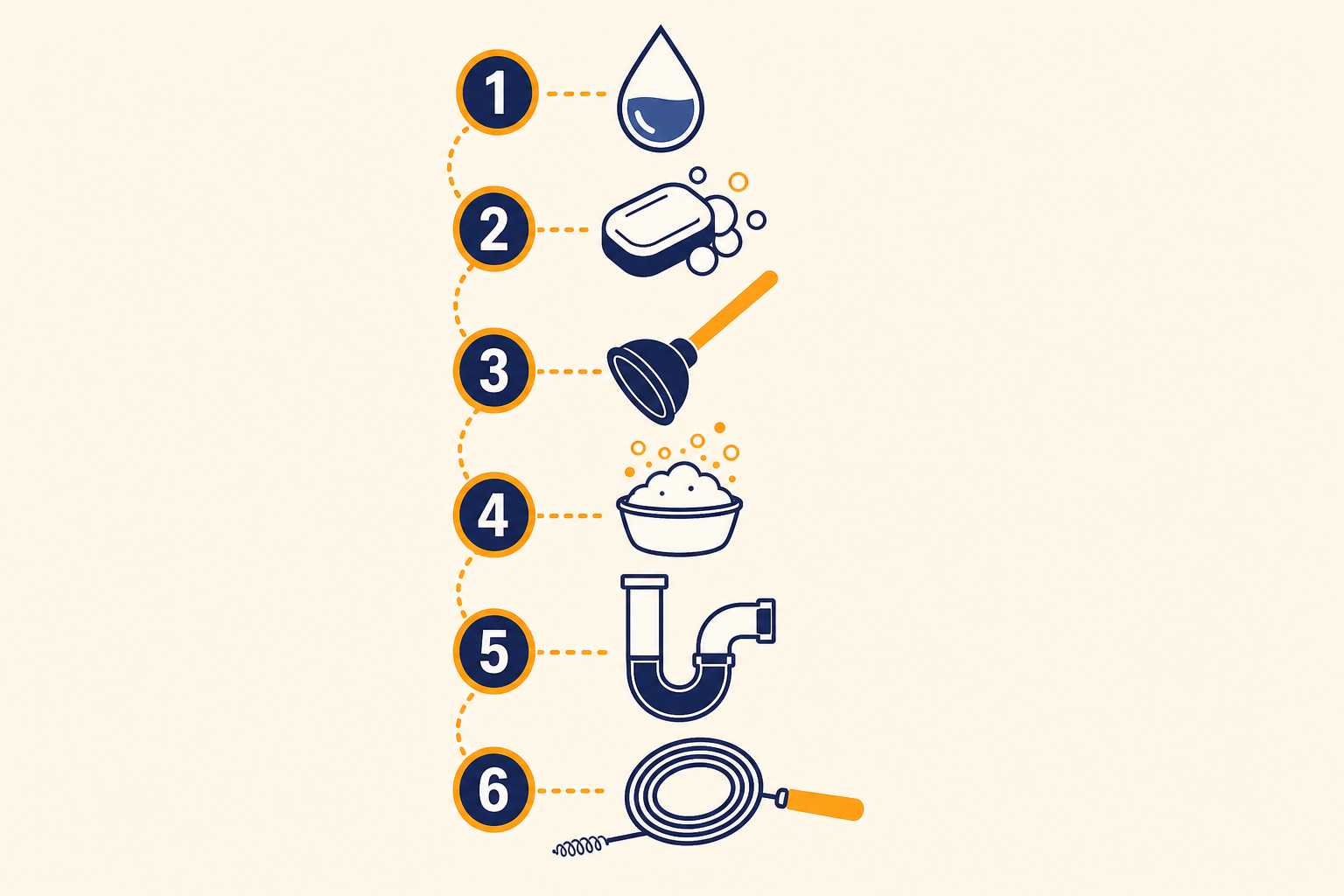
Bail standing water, clear the strainer, try hot (not boiling) water and dish soap, plunge with a flat cup plunger, then baking soda and vinegar for light buildup. If that fails, clean the P-trap under the sink. Skip harsh chemicals on a full blockage. Book a plumber if multiple drains are slow, water comes back up, sewage smell is strong, or the clog keeps returning.
Quick diagnosis map
Match the symptom before you open tools or pour anything.
| Symptom | Likely cause | First move |
|---|---|---|
| Slow drain, no smell | Grease / food near opening or trap | Hot water + dish soap, then plunge |
| Slow + sour smell | Rotting food in trap or pipe | Clean strainer, then P-trap |
| Standing water | Full or near-full blockage | Bail water first — don’t dilute remedies |
| Double sink both sides slow | Shared drain line clog | Seal one side, plunge the other |
| Kitchen + bathroom both slow | Deeper branch / main line | Stop DIY chemicals — book a plumber |
| Water backing up / rising | Serious blockage or sewage risk | Stop. Protect floor. Call help. |
| Gurgling, pipes “look fine” | Wall line buildup or venting issue | Snake after P-trap, or book inspection |
Strong sewage smell, water rising into another fixture, or pipes you opened and can’t reseal — book help. Wet floors and open waste lines turn a clog into a hygiene problem.
What causes kitchen sink clogs in Kashmir homes
Kitchen clogs are different from bathroom clogs. Bathrooms collect hair. Kitchens collect the sticky stuff:
- Ghee, oil, and cooking fat — liquid when hot, then cools and coats the pipe. Biggest repeat offender.
- Rice, pasta, tea leaves, coffee grounds — they swell, pack, or refuse to dissolve.
- Soap film + hard water scale — rough pipe walls that catch everything else.
- The P-trap bend — designed to hold water (and block sewer gas), so it also holds gunk.
Garbage disposals are less common in many Kashmir kitchens than in US guides. If you don’t have one, skip those steps. If you do, never put a hand inside — power off first.
Methods that actually work — try them in this order
Ranking guides all do this for a reason: start cheap and shallow, go deeper only if needed. Most kitchen clogs clear by method 3 or 5.
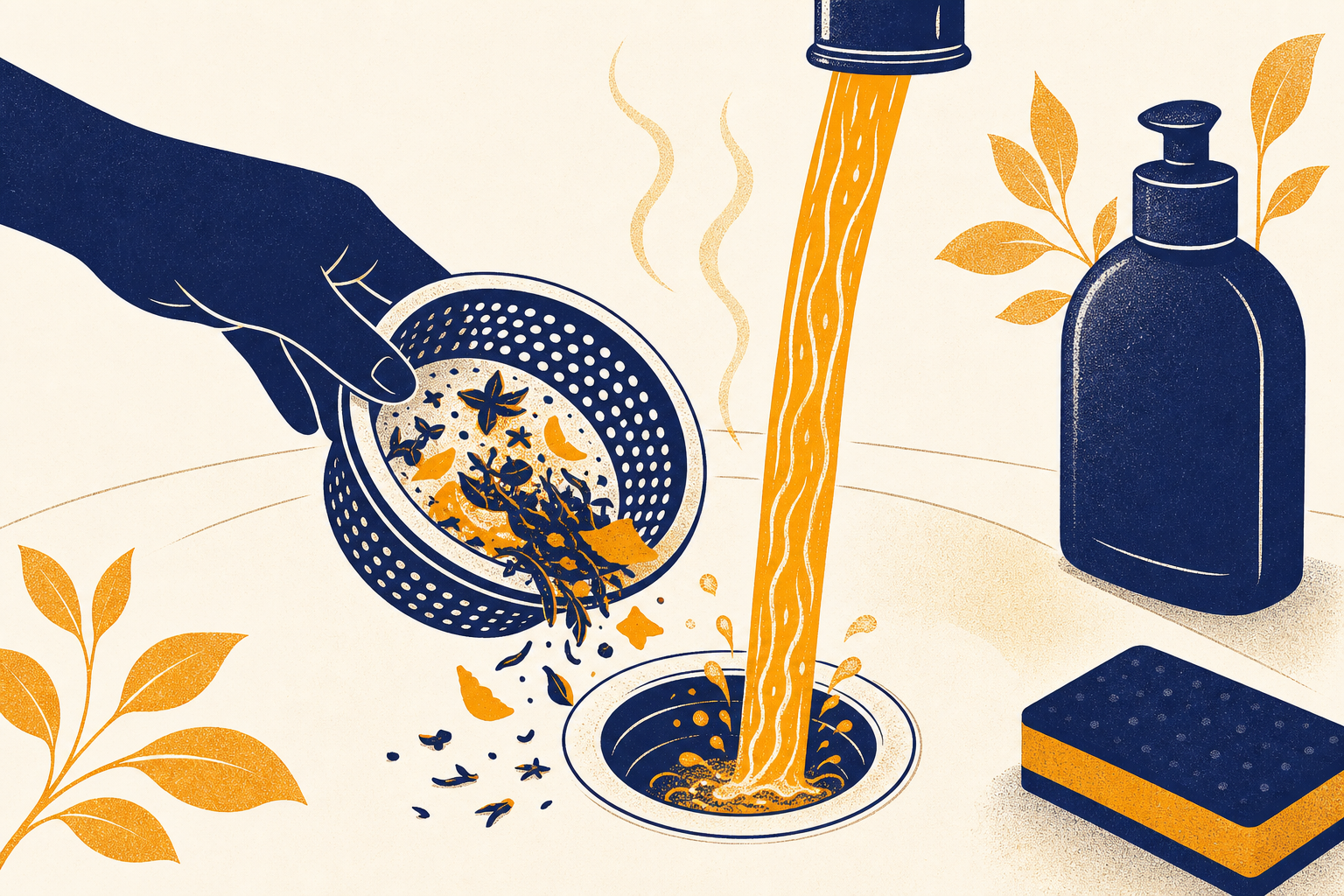
Bail, scoop, then hot water + dish soap
Best for: early grease film and slow drains
- Scoop standing water into a bucket. Remedies poured into a full basin just get diluted.
- Clear the strainer — peel, tea leaves, that one chickpea. Yes, that one.
- Squirt a generous amount of dish soap down the drain.
- Pour hot (not boiling) water in 2–3 stages. Boiling water can stress PVC joints common under sinks.
Look under the sink. White plastic fittings = PVC. Use hot tap / briefly cooled kettle water, not a rolling boil on repeat.
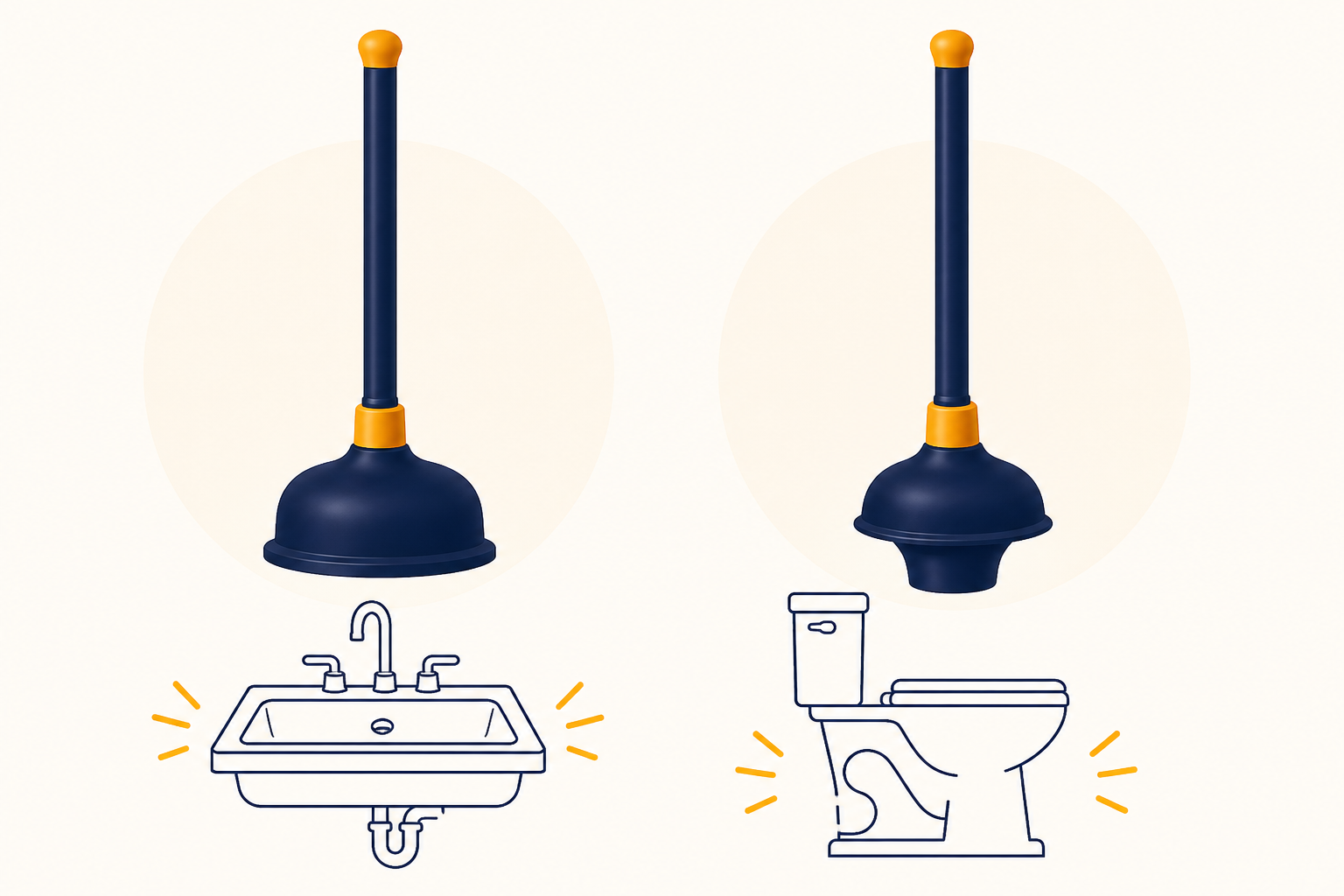
Plunge properly (cup plunger, not toilet plunger)
Best for: soft clogs near the drain
- Use a flat cup plunger — not the flanged toilet type.
- Leave 2–3 inches of water in the basin so the cup seals.
- If you have a double sink, seal the other drain with a wet rag so pressure doesn’t escape.
- 10–15 firm strokes. Short and sealed beats dramatic and splashy.
- Lift and check. If it clears, flush with hot water for a minute.
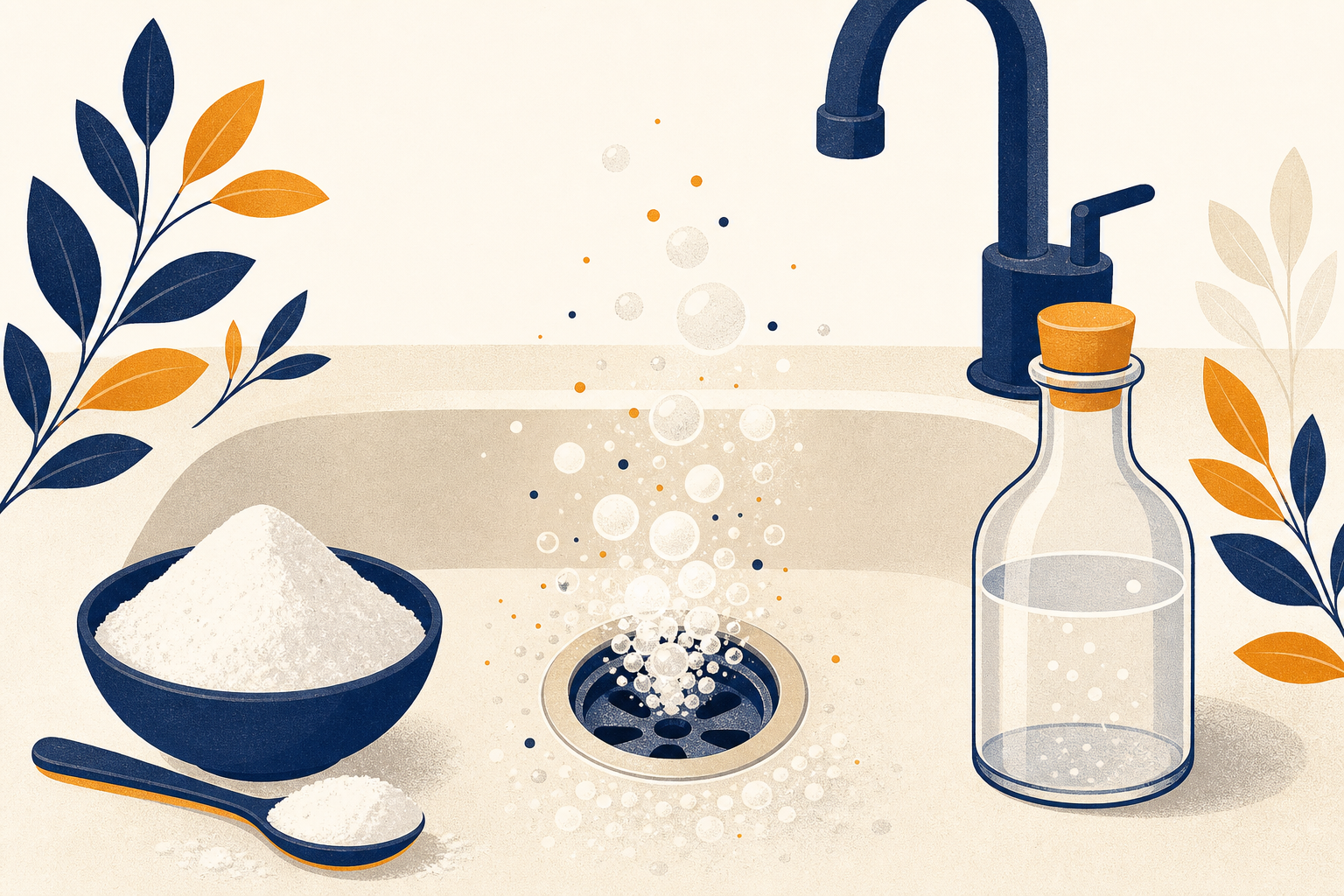
Baking soda + vinegar
Best for: light organic buildup and maintenance — not a fully packed drain
- Pour about 1 cup baking soda into the drain.
- Follow with about 1 cup white vinegar.
- Cover the drain so the fizz works downward. Wait 15–30 minutes.
- Flush with hot water.
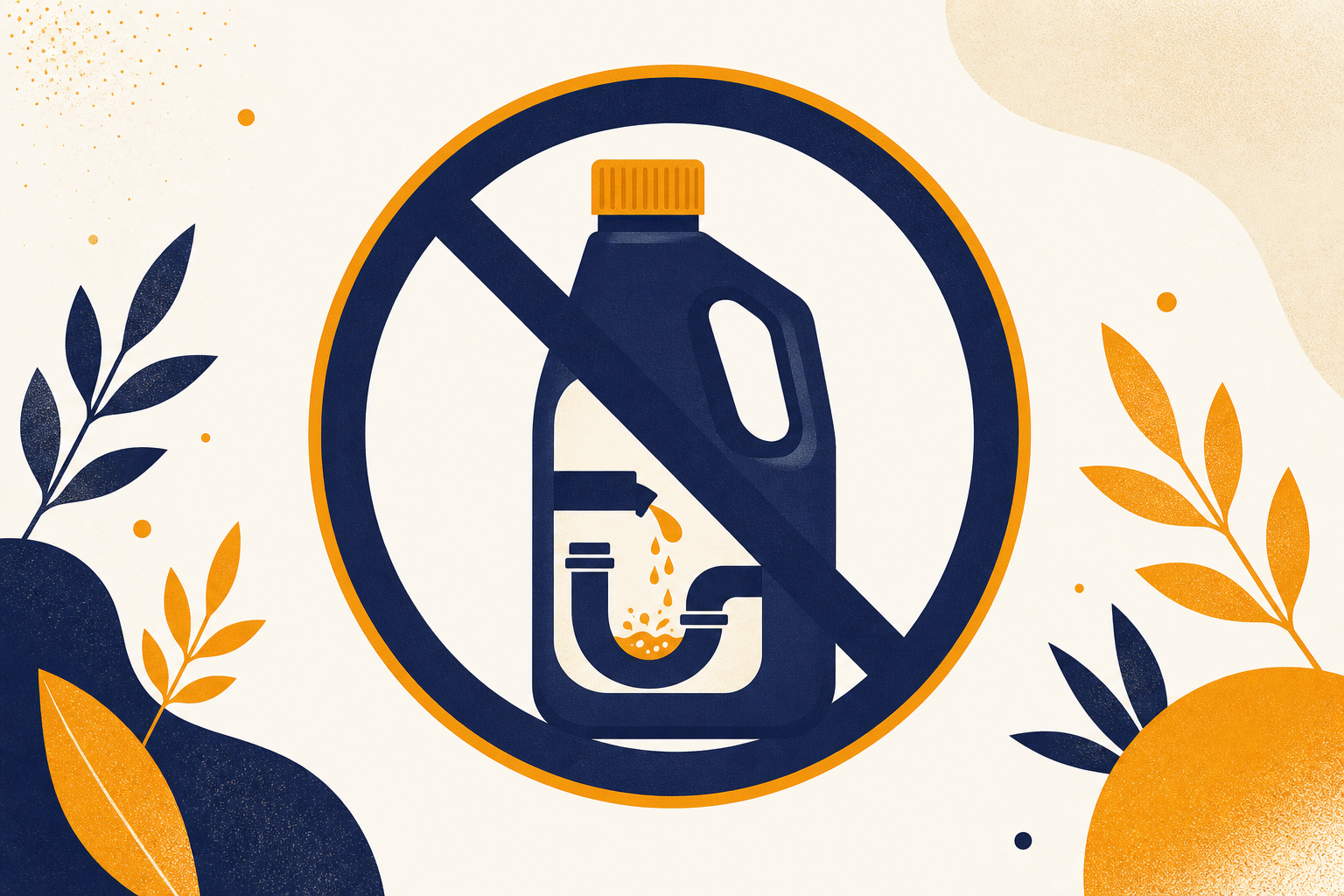
Skip harsh chemical drain openers (usually)
Best for: protecting pipes — and the next person who opens them
- Grease often ignores bathroom-style chemical cleaners.
- They can damage fittings and make a later trap opening unsafe (chemical splash).
- If you already poured chemicals and still need a plumber, say so when you book — and flush with plenty of water first if it’s safe to run any.
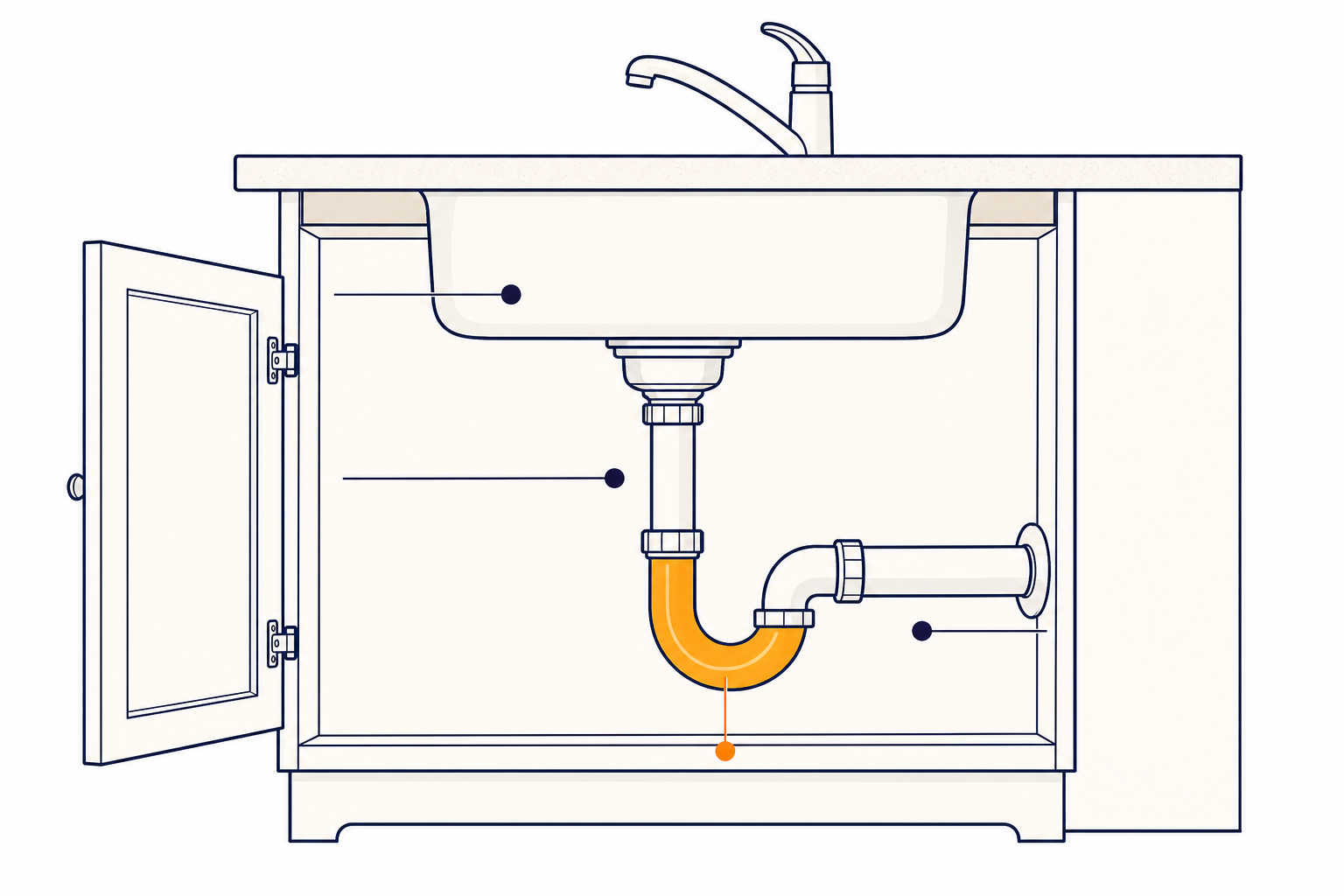
Clean the P-trap (the step most people skip)
Best for: stubborn clogs right under the sink
- Put a bucket under the curved pipe (P-trap / bottle trap).
- Loosen the slip nuts by hand; use pliers gently if stuck — don’t crush plastic.
- Lower the trap. Expect water and opinions.
- Clean inside with an old brush or cloth. Check for solid objects.
- Reassemble with washers seated. Hand-tight first, then a small snug. Run water and watch for drips.
If the trap is clean and water still sulks, the clog is past the trap — in the wall line.
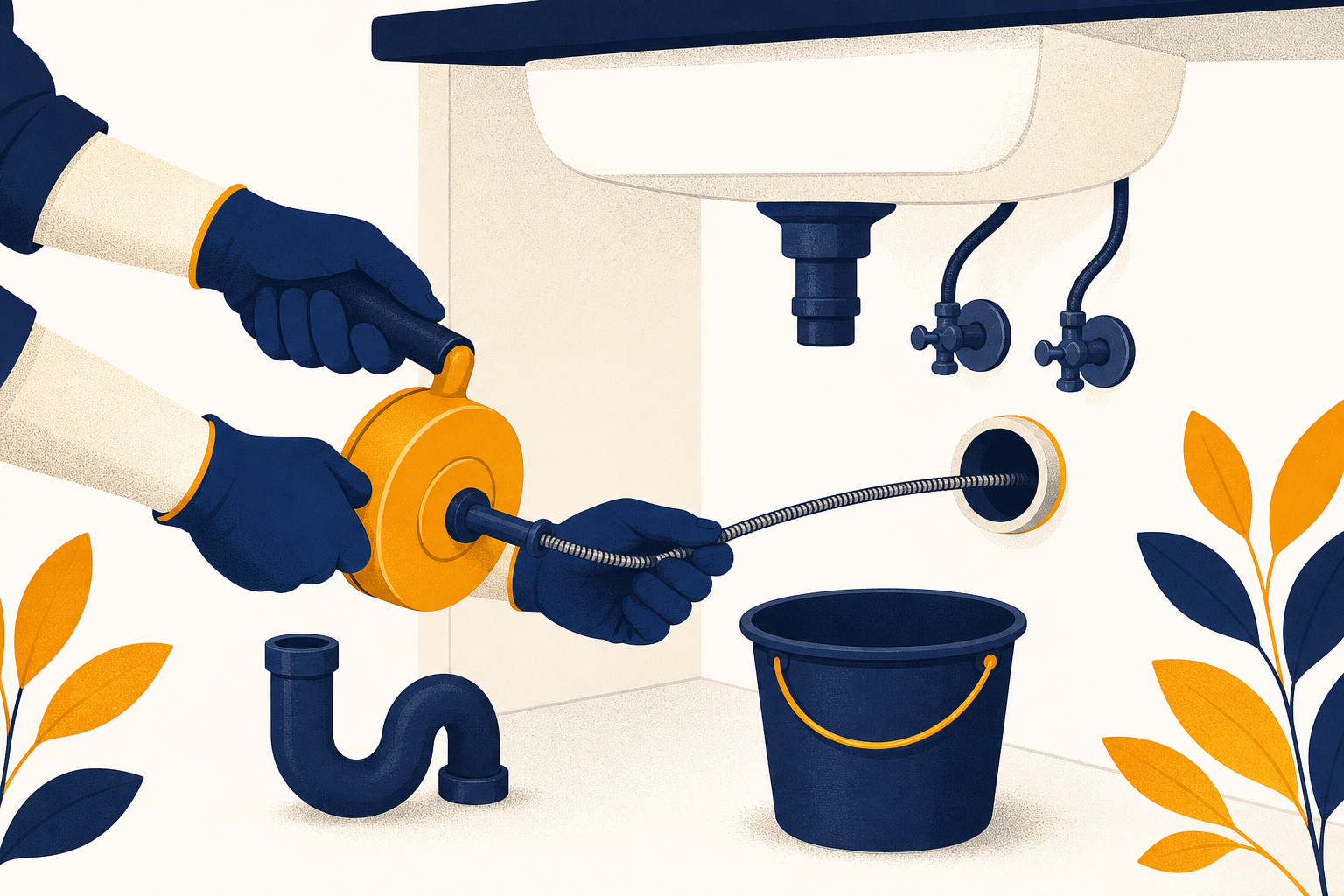
Hand drain snake (after the trap)
Best for: clogs a few feet into the wall pipe
- With the trap removed, feed a small hand snake into the wall-side pipe.
- Crank slowly. Don’t force old or fragile pipes.
- Pull back debris, reassemble the trap, flush with hot water.
Special cases: double sink, disposal, “pipes look fine”
Double kitchen sink
Both bowls usually share one line. Seal one side before plunging the other. If both back up together, the clog is after they join — treat it as one shared blockage.
Garbage disposal (if you have one)
Power off. Never reach inside. Try the reset button on the unit base. If it hums but won’t spin, it may be jammed — many units take an Allen key in the bottom centre. If it smells burned or keeps tripping, stop and book help.
P-trap clean, still won’t drain
Grease further down the wall line, or a venting issue (air can’t enter the system, so water gurgles and crawls). Multiple slow drains in the house = don’t keep treating only the kitchen.
Please don’t do this
These shortcuts look decisive and usually make the clog — or the cabinet — worse.
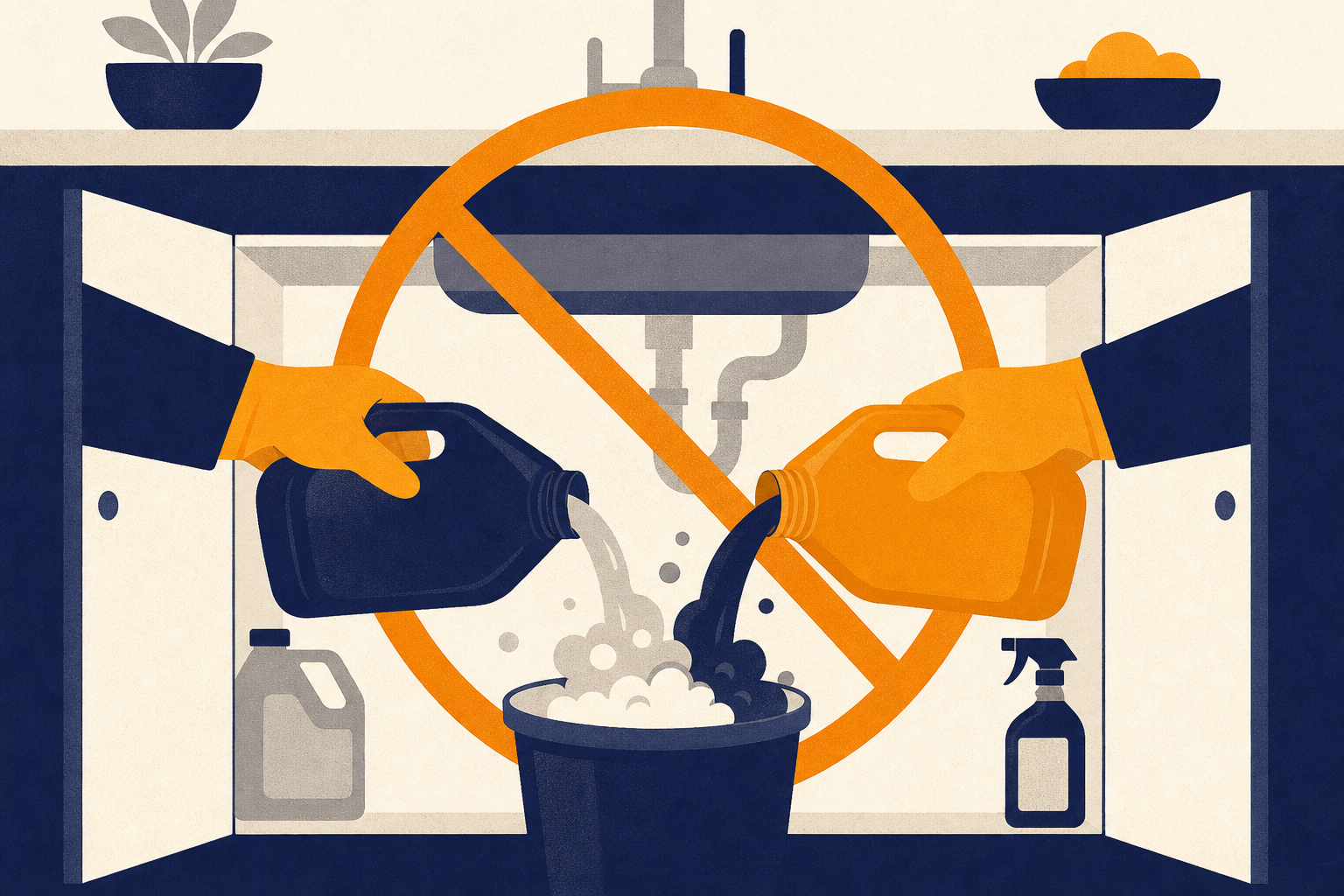
Mix different chemical cleaners
Fumes and reactions are not a personality trait you want in a cabinet
Combining drain openers (or following one brand with another) can create dangerous fumes and leave a chemical soup for whoever opens the trap next.
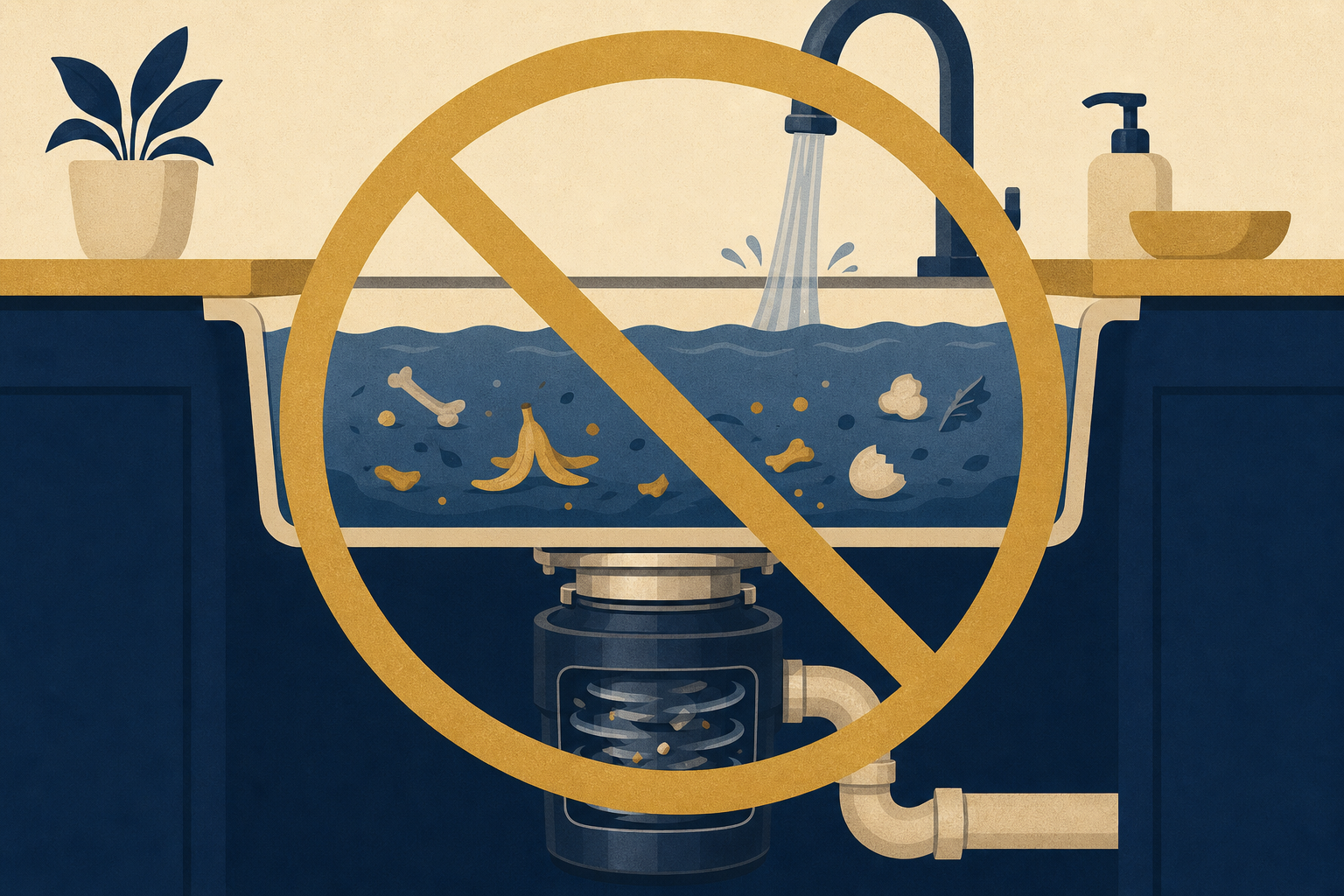
Run a disposal into standing water
Packs debris tighter and stresses the motor
A disposal spinning in a full basin doesn’t clear the line — it churns the clog and can burn out the unit. Bail first; power off before any reset.
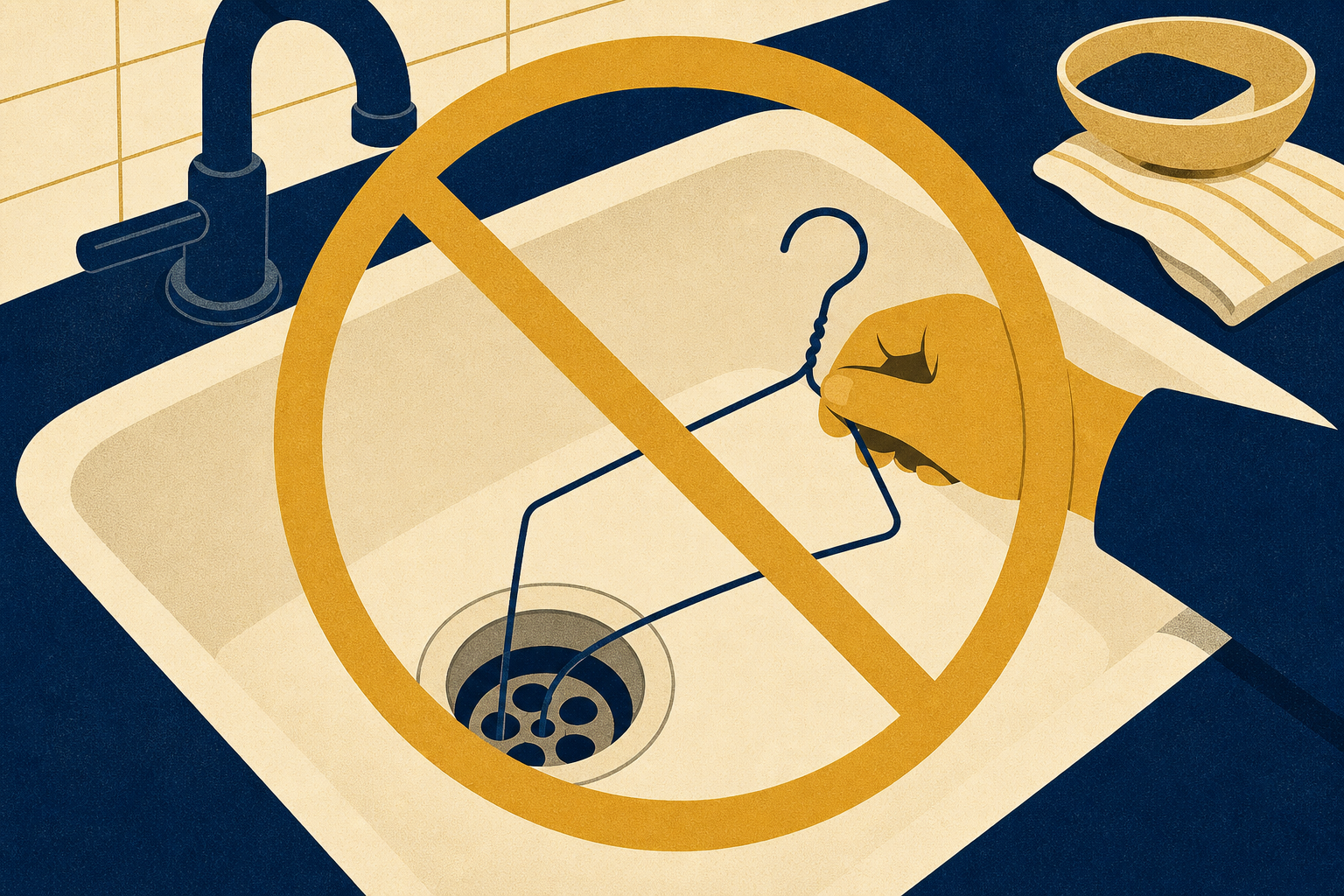
Stab deep with a wire hanger
Can scratch pipes or shove the plug further in
A bent hanger is not a drain snake. It can score plastic fittings and push grease deeper into the wall line. Use a proper hand snake — or book help.
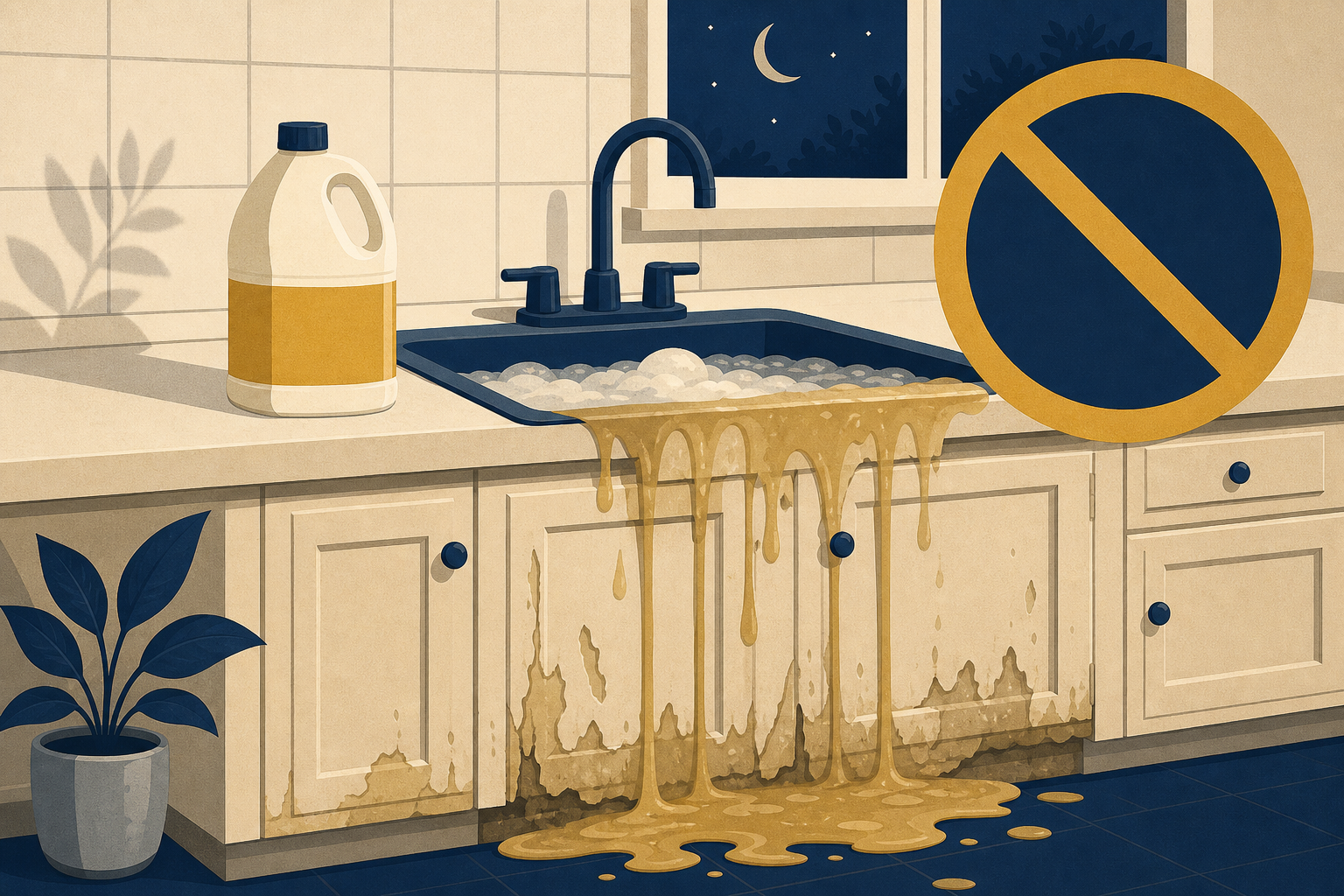
Leave chemicals sitting overnight in an overflowing sink
Cabinets and floors lose that fight
Harsh cleaner left in standing water can damage finishes, seep into cabinets, and make the next repair hazardous. If DIY has stalled, protect the floor and call a plumber.
How to keep the protest from returning
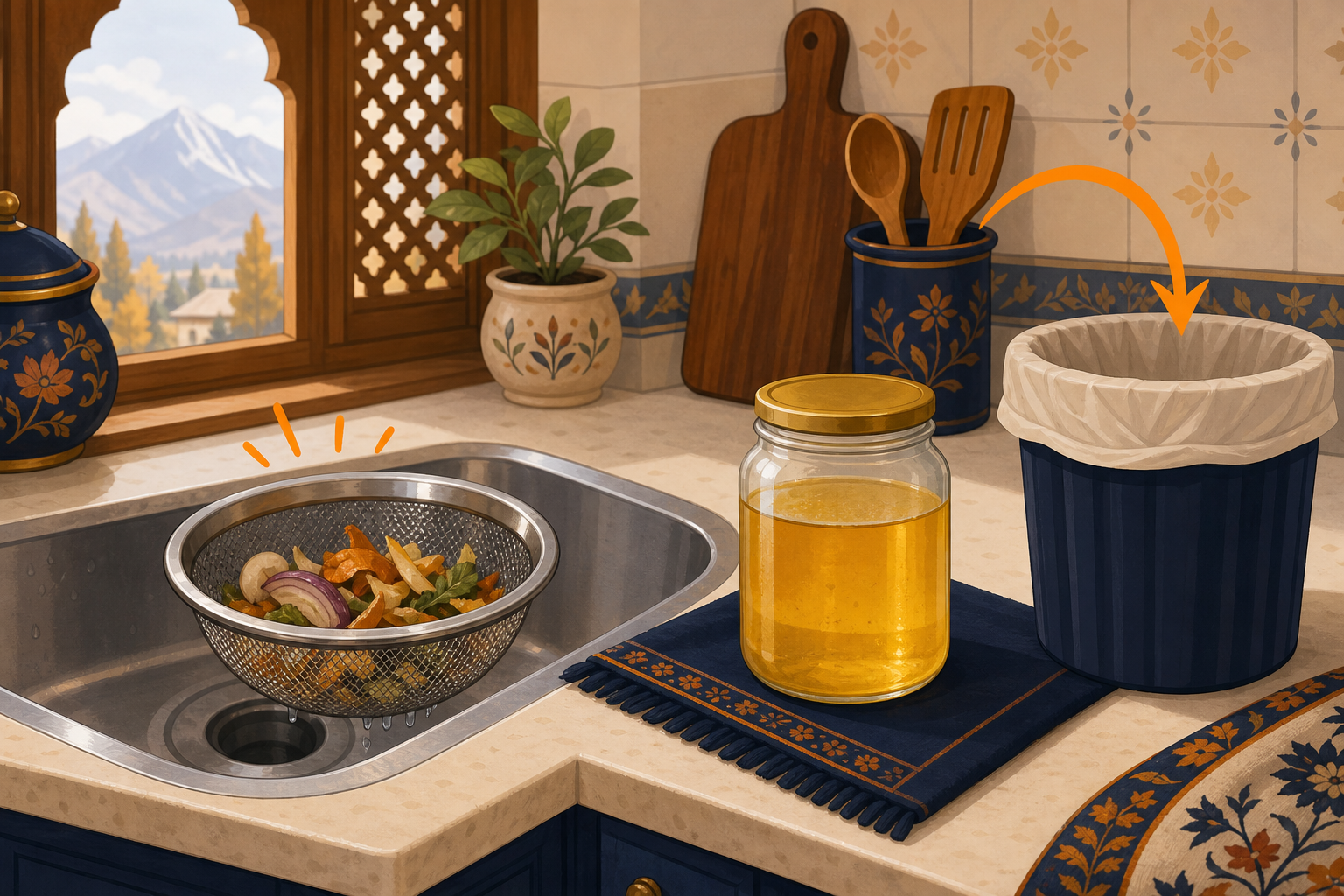
- Never pour ghee, oil, or fat down the drain — even with hot water chasing it. Cool it, bin it.
- Use a sink strainer. Five-rupee hero energy.
- After heavy cooking, a dish-soap + hot-water flush beats any “miracle” powder habit.
- Tea leaves and coffee grounds belong in the bin, not the pipe.
- If the same sink clogs every few weeks, something deeper is collecting — get it cleared properly once instead of monthly panic.
In Kashmir kitchens, cooled ghee and oil are the quiet villains. A monthly hot-water + mild soap flush after heavy cooking prevents more callouts than chemical heroics.
What a plumber visit usually involves (Kashmir)
We’re not inventing rupee numbers here — rates vary by district, time (evening / winter access), and whether it’s a simple trap clean vs a long grease run. What usually changes the quote:
- Is it only the kitchen, or multiple fixtures?
- Trap clean vs snaking the wall line vs camera inspection
- Access under modular cabinets / granite
- Same-day or emergency timing
- Whether chemicals were already poured (safety + time)
A good plumber doesn’t only “open” the drain. They tell you if it was local gunk, a long grease coat, or a main-line issue — so you’re not buying the same blockage again next month.
When to book a plumber (no shame clause)
- You’ve done methods 1–5 and water still sulks
- More than one drain is slow
- Sewage-level smell you can’t ignore
- Water backs up into another fixture
- The same clog returns every few weeks
Before the visit: photo of the sink, photo under the sink, note whether only the kitchen is affected, and mention any chemicals used. “Kitchen sink slow three days, smell yesterday, trap cleaned, still stuck” is a perfect briefing.
FAQs
Why is my kitchen sink not draining but I can’t see a clog?
Grease often builds further down the line, or the P-trap is packed where you can’t see from above. Clean the trap; if it’s clear, the blockage is likely in the wall pipe or there’s a venting issue.
Can I pour boiling water down the sink?
Use caution. Repeated boiling water can stress PVC joints. Hot water is safer for most Kashmir under-sink plastic fittings. Metal pipes tolerate heat better — still pour in stages.
Does baking soda and vinegar really work?
For light buildup and maintenance, yes. For a fully blocked sink, clean the P-trap or call help. Don’t expect a science-fair volcano to erase a solid grease plug.
Why does my double sink back up on both sides?
Both bowls share a drain section. When both fail together, the clog is usually after they join. Seal one side when plunging the other.
When should I stop DIY and book a plumber in or nearby districts?
After a clean P-trap attempt fails, if multiple drains are affected, if sewage smell is strong, or if the clog keeps returning. Book a verified plumber on Panun Kaergar for and other Kashmir districts.
Are chemical drain cleaners safe?
Often a poor fit for kitchen grease, and they can damage fittings or make later repairs hazardous. Prefer mechanical clearing (plunge, trap, snake) when you can.
Blocked drains are annoying, not mysterious. Treat early ones like a kitchen fire drill — quick, calm, limited tools. Save the deep line work for people with the right equipment and no fear of what lives in a pipe.