
On a cold winter morning, the heater, kettle and geyser all wake up before the family does. Then the kitchen goes dark and somebody says, “Just push that switch up again.”
An MCB that keeps tripping is doing its job — cutting power before a cable or appliance turns into a bigger problem. In Kashmir homes, winter is when this shows up most: blowers, oil heaters, immersion rods, geysers and kettles share the same evening hours on circuits that were fine in summer. Many trips are simple overloads. Some are a damaged cord or damp socket. The skill is finding which — without resetting until something burns.
Unplug everything on the affected circuit. Reset the MCB once. Plug appliances back one at a time until you find the trigger. If it trips with nothing connected, feels warm, smells burnt, sparks, or protects a bathroom / wet wall, stop and book an electrician. Never hold the lever up, never fit a bigger MCB yourself, and never ignore a board that crackles.
Quick diagnosis map
Match the symptom before you start resetting anything.
| Symptom | Likely cause | First move |
|---|---|---|
| Trips after several heaters / kettle / iron run | Circuit overload | Unplug heavy loads; reset once; spread the load |
| Trips the moment one appliance is used | Faulty appliance or short in that lead | Leave that item unplugged; test others |
| Trips with everything unplugged | Wiring fault, damp, or failed breaker | Stop resetting — book an electrician |
| Warm board, burning smell, scorch marks | Loose connection or damaged wiring | Main off if safe; keep clear; urgent help |
| Trips near bathroom, wet wall, or after leak | Moisture / earth leakage risk | Do not investigate live parts — book help |
| Only at night in winter | Peak heating load on one circuit | Reduce simultaneous heaters; check capacity |
| Whole house vs one wing dark | Main vs branch MCB | Note which rooms died — labels matter |
Burning smell, heat from the board, sparking, smoke, water near the DB, or an MCB that trips instantly again and again — this is not a DIY evening. Keep hands dry, keep children away, and book an electrician.
What makes an MCB trip in Kashmir homes
An MCB trips on overload (too many watts for too long) or a fault (short / leakage that asks for current in a hurry). Kashmir winters push both:
- Stacked heating load — blower + kettle + geyser element on one kitchen or living-room circuit.
- Old multi-plugs and thin extension boards — they get warm long before anyone looks at the MCB.
- Damaged cords — crushed under furniture, chewed, or frayed at the plug.
- Moisture — snowmelt, bathroom splash, a leak behind a socket, or damp in an outdoor-facing wall.
- Loose terminals — heat at a connection can trip protection and leave scorch clues.
A bigger MCB is not a solution. The breaker is sized to protect the cable. “Upgrading” it so it stops tripping can leave the wire as the fuse — the worst kind.
Methods that actually help — try them in this order
Start shallow. Most winter trips clear once the load is honest. Save board opening and insulation tests for a verified electrician.
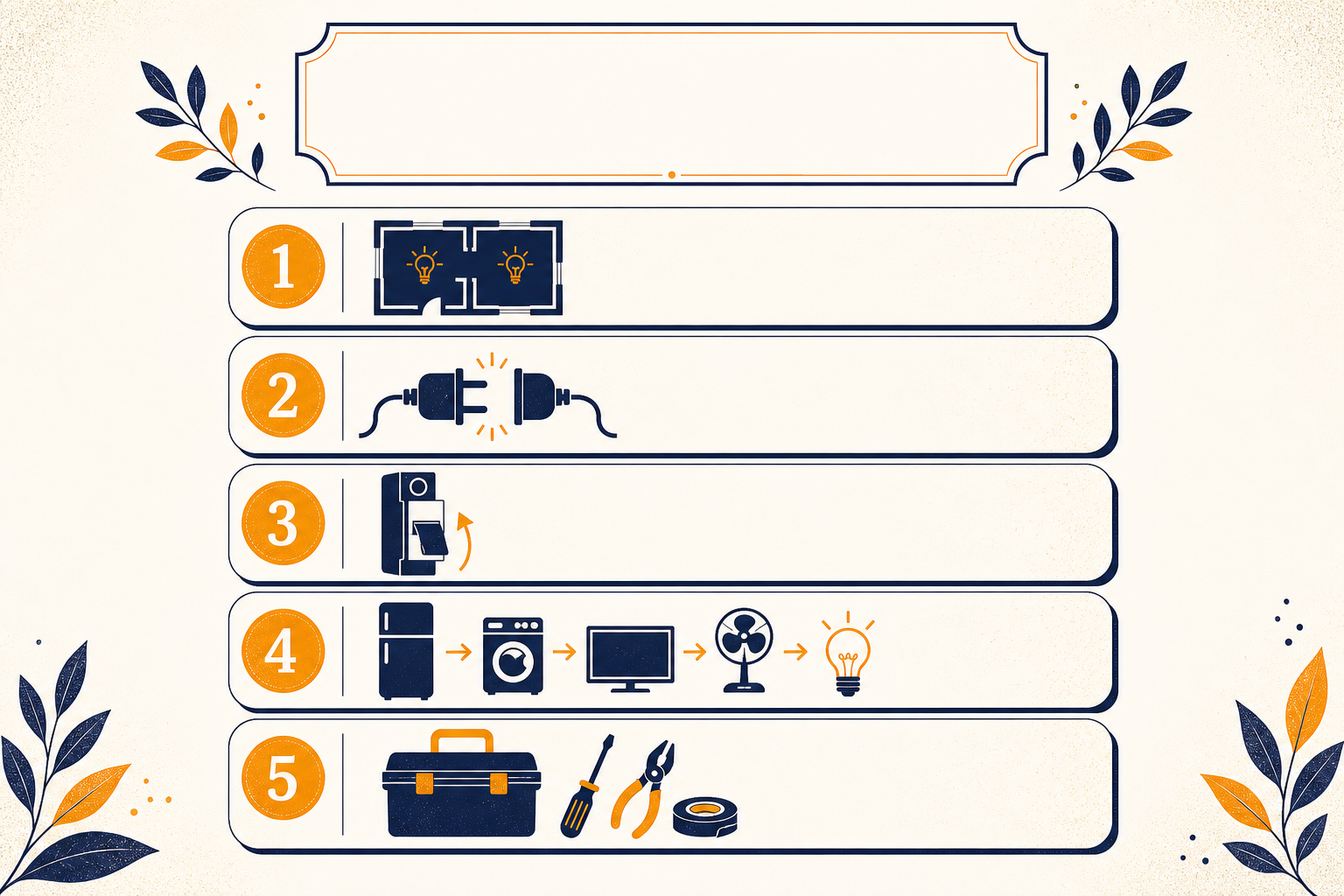
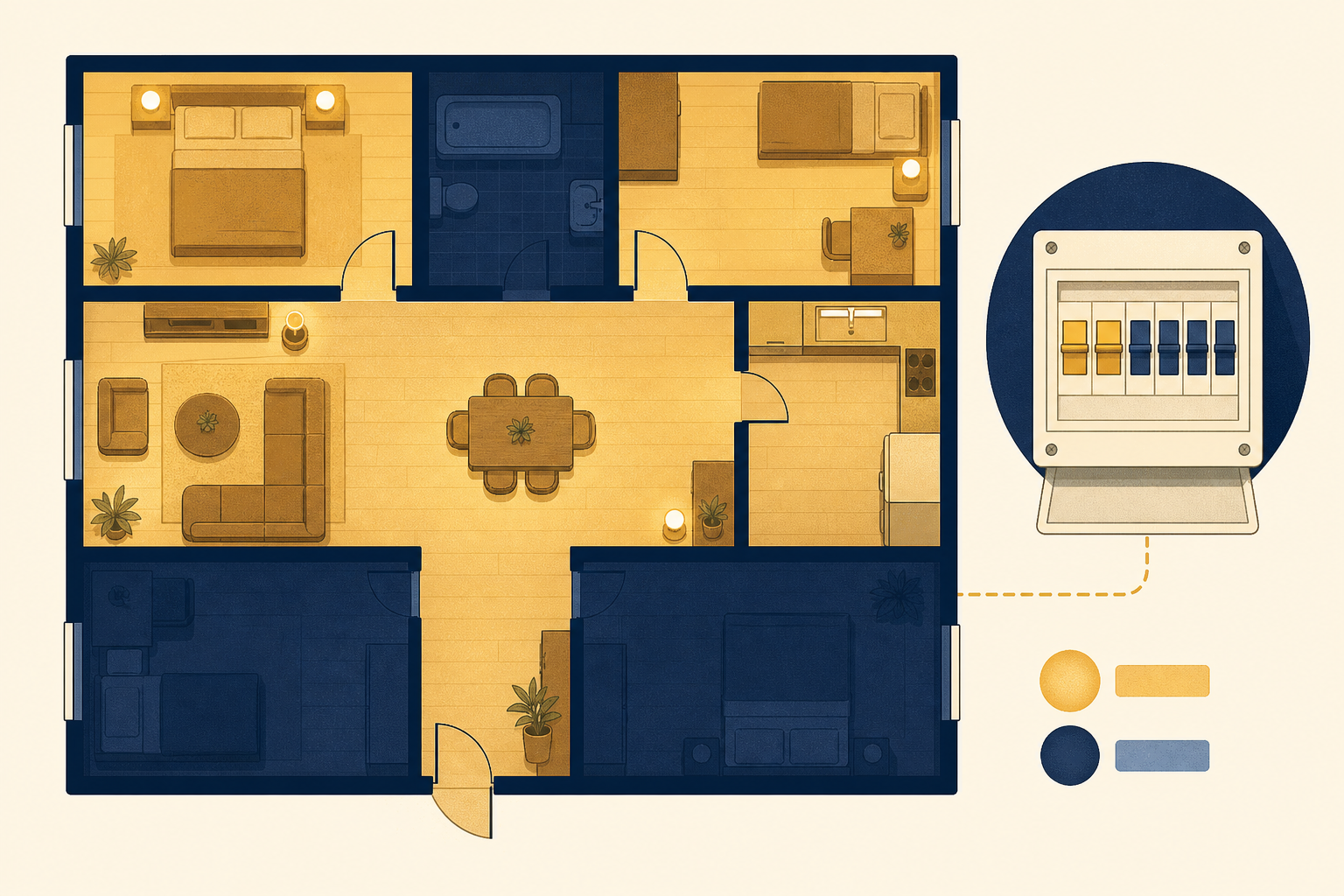
Note which rooms went dark
Best for: separating a branch trip from a whole-home outage
- Check lights and sockets room by room. Kitchen-only darkness is different from the whole flat.
- Look at the distribution board labels if any exist. Note which lever is down.
- Write it down: “Kitchen + living sockets off; bedrooms still on.” That sentence saves the electrician twenty minutes.
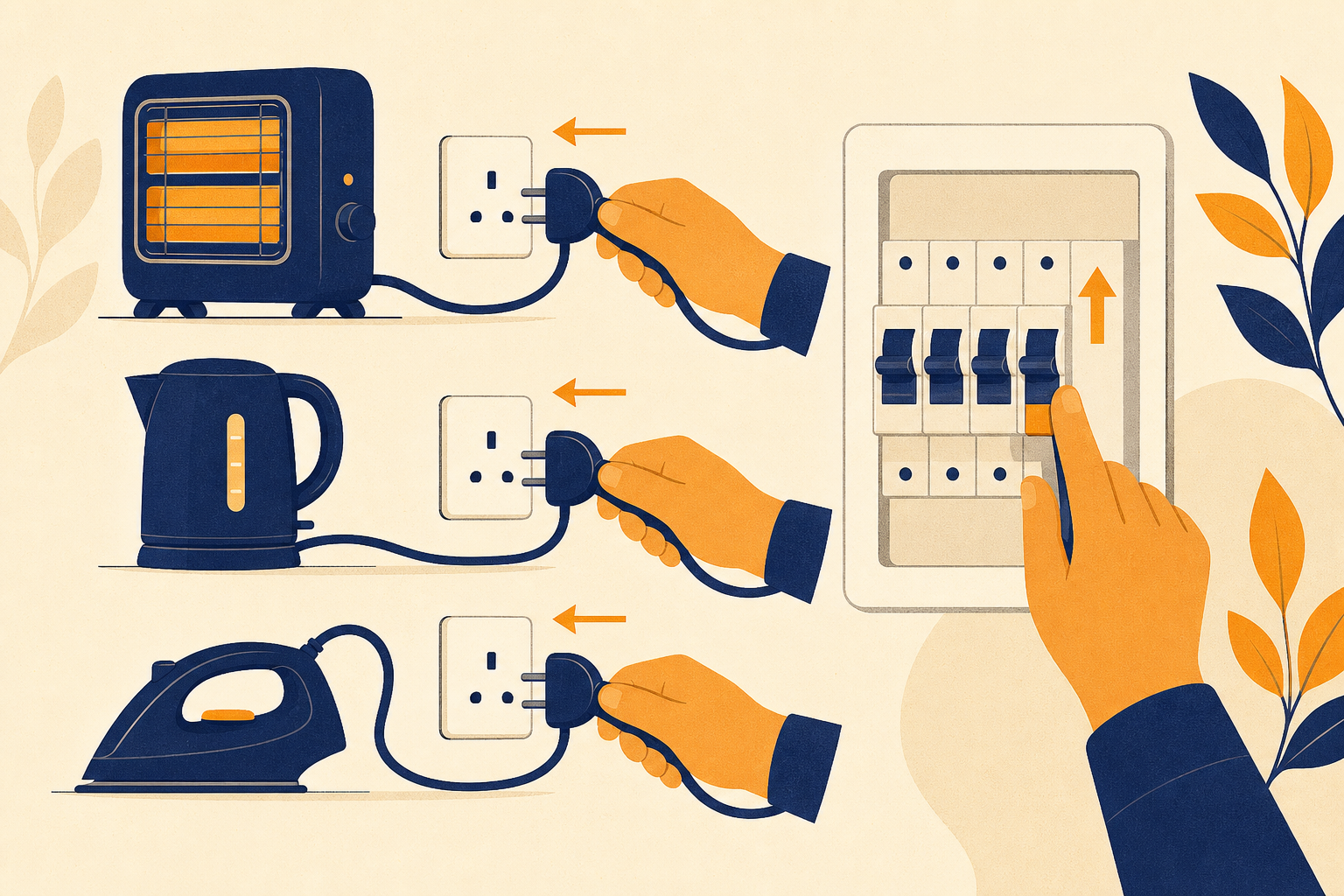
Unplug the heavy load before you reset
Best for: trips that happen when heaters and kitchen appliances run together
- On the dark circuit, unplug heaters, geysers (if on that line), irons, kettles, blow dryers, and multi-plug strips.
- Keep hands dry. Don’t open the board or sockets.
- Push the MCB fully to OFF, then firmly to ON — once.
- If it trips instantly with everything unplugged, stop. That’s a circuit fault, not a kettle argument.
Add appliances back one at a time
Best for: finding one faulty appliance or proving a simple overload
- Start with low loads: phone chargers, a lamp, the fridge if it shares the circuit.
- Add one heating appliance. Wait a few minutes. Then the next.
- When the MCB trips, the last item you added — or the combination — is your clue.
- Leave the suspect unplugged. Try the rest of the house’s normal load without it.
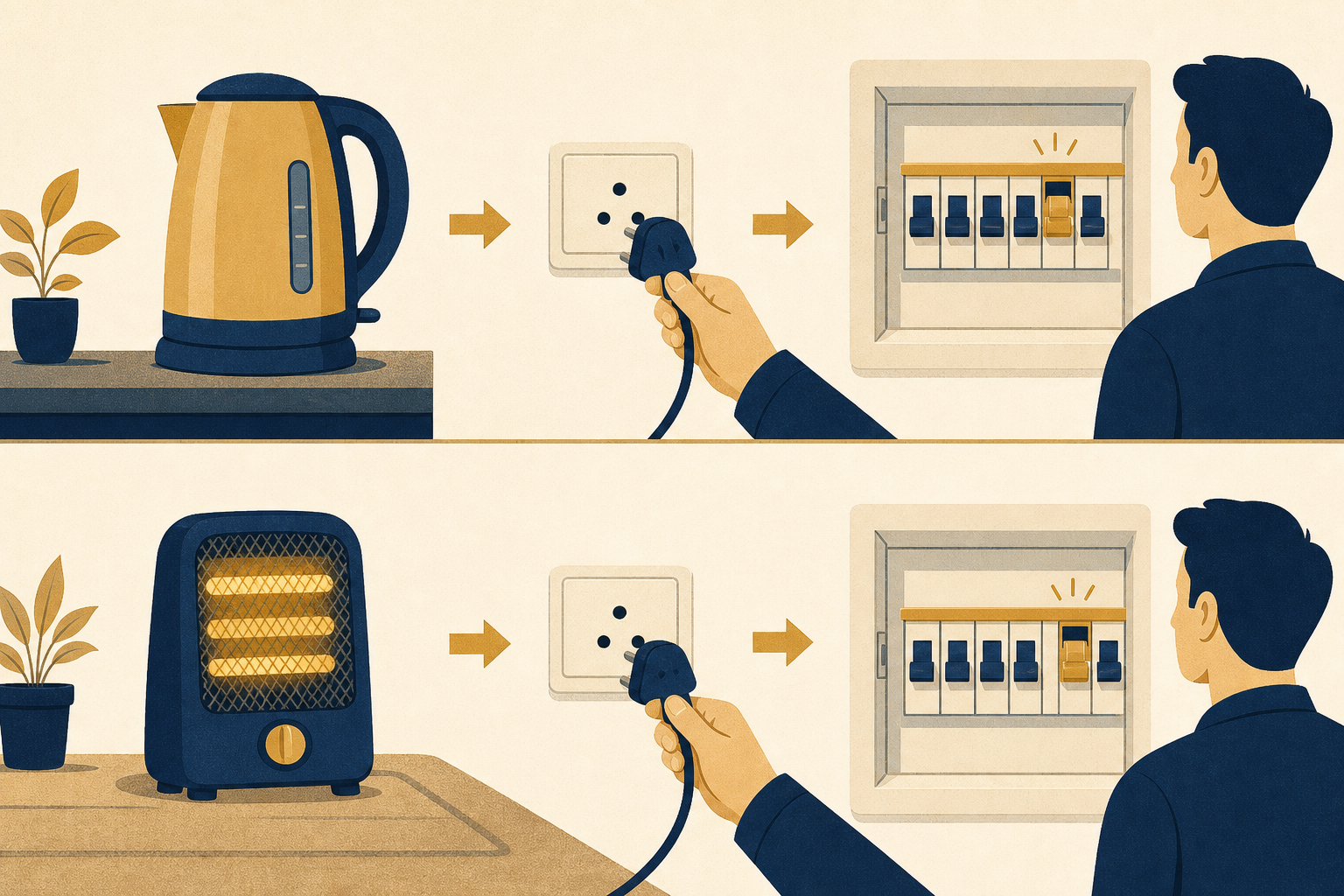
A trip that only happens when two heaters share one strip is overload. A trip the instant a single kettle is plugged in — even alone — is usually that kettle or its cord.
Check plugs and cords — without opening walls
Best for: visible damage you can spot safely
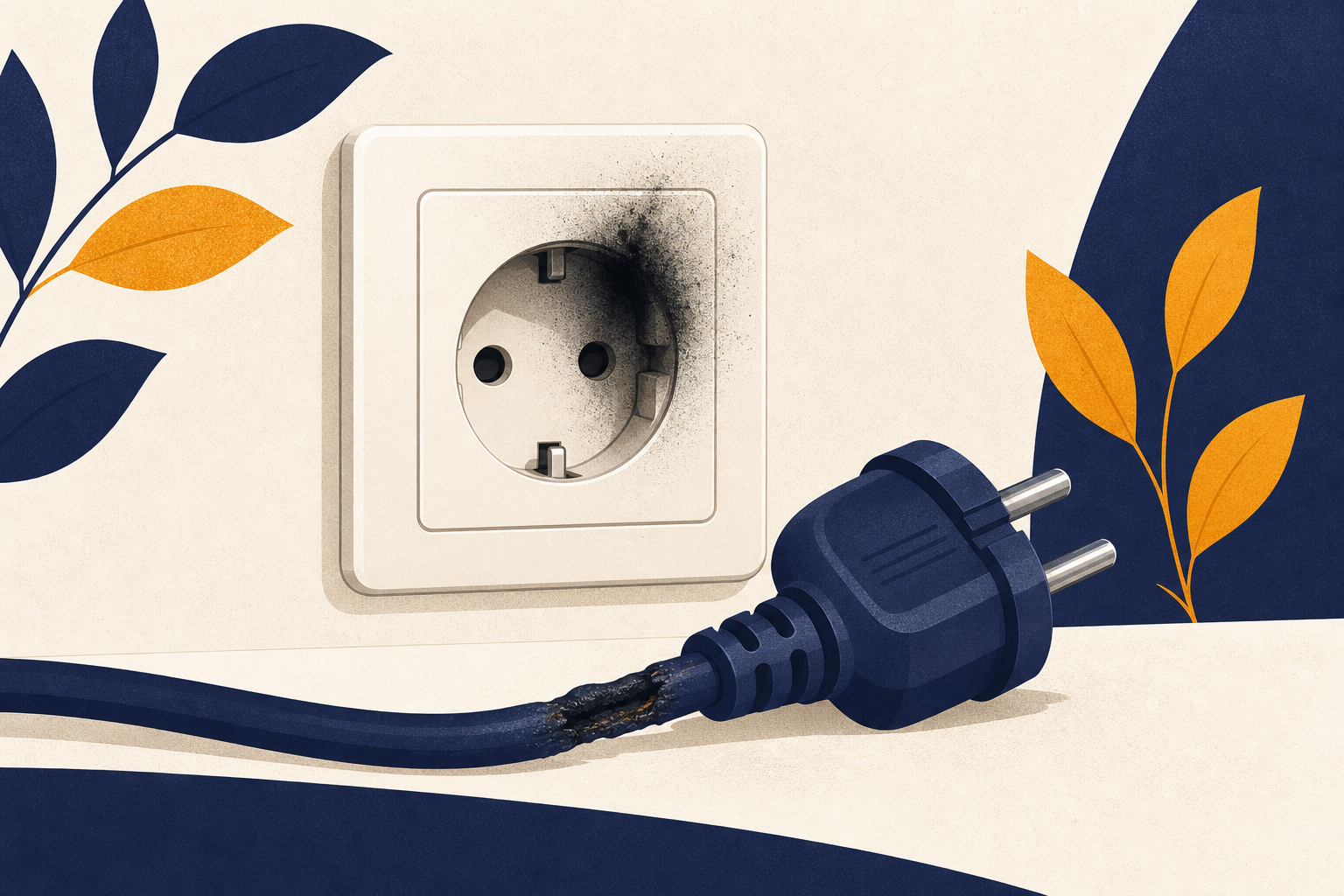
- Look for blackening at the plug, a soft or melted multi-plug, crushed cable, or a warm plug body after use.
- Wiggle-test nothing live. If a plug feels loose in the socket, stop using that point.
- Do not remove socket faceplates or open the DB cover screws yourself.
Reduce the winter load — or get the circuit checked
Best for: evening trips when heating piles up
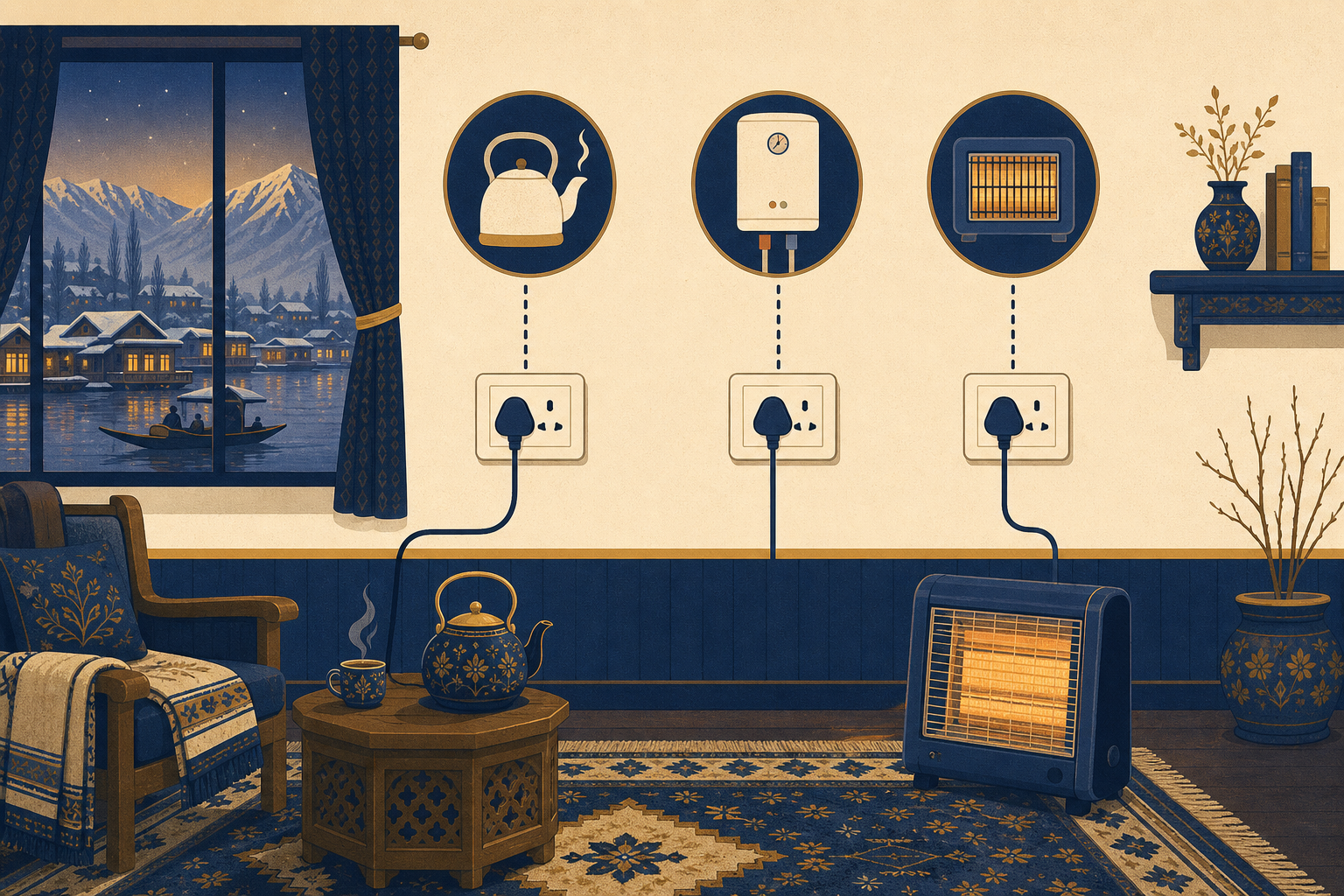
- Don’t run blower + kettle + iron + immersion on one strip “just for ten minutes.”
- Move high-watt appliances to different rooms / circuits where the board allows it.
- If the flat is older and labels are missing, an electrician can map circuits, tighten terminals, and advise on safe capacity — not a casual MCB swap.
Special cases: instant trip, warm board, wet areas
Trips instantly with nothing plugged in
That’s not overload. Suspect wiring, a failed appliance still somehow connected, moisture, or a tired breaker. Repeated resets here are how small faults become urgent ones.
Board feels warm or smells of burning
Heat at the DB means energy is being wasted as resistance — often a loose terminal. Switch off the main if you can do so safely, keep clear, and book urgent help. Don’t “air it out” and carry on.
Bathroom, balcony, or damp wall involved
Water and electricity share bad habits. Don’t dry a socket with a towel and hope. Isolation and a proper test come first.
Only the geyser or water heater trips its own breaker
Treat that appliance as suspect: element fault, thermostat issue, or damp inside the unit. Unplug / isolate and get it checked — don’t keep forcing the MCB.
Please don’t do this
Each of these “quick fixes” turns a warning into a hazard. If you’re tempted, stop and book an electrician instead.
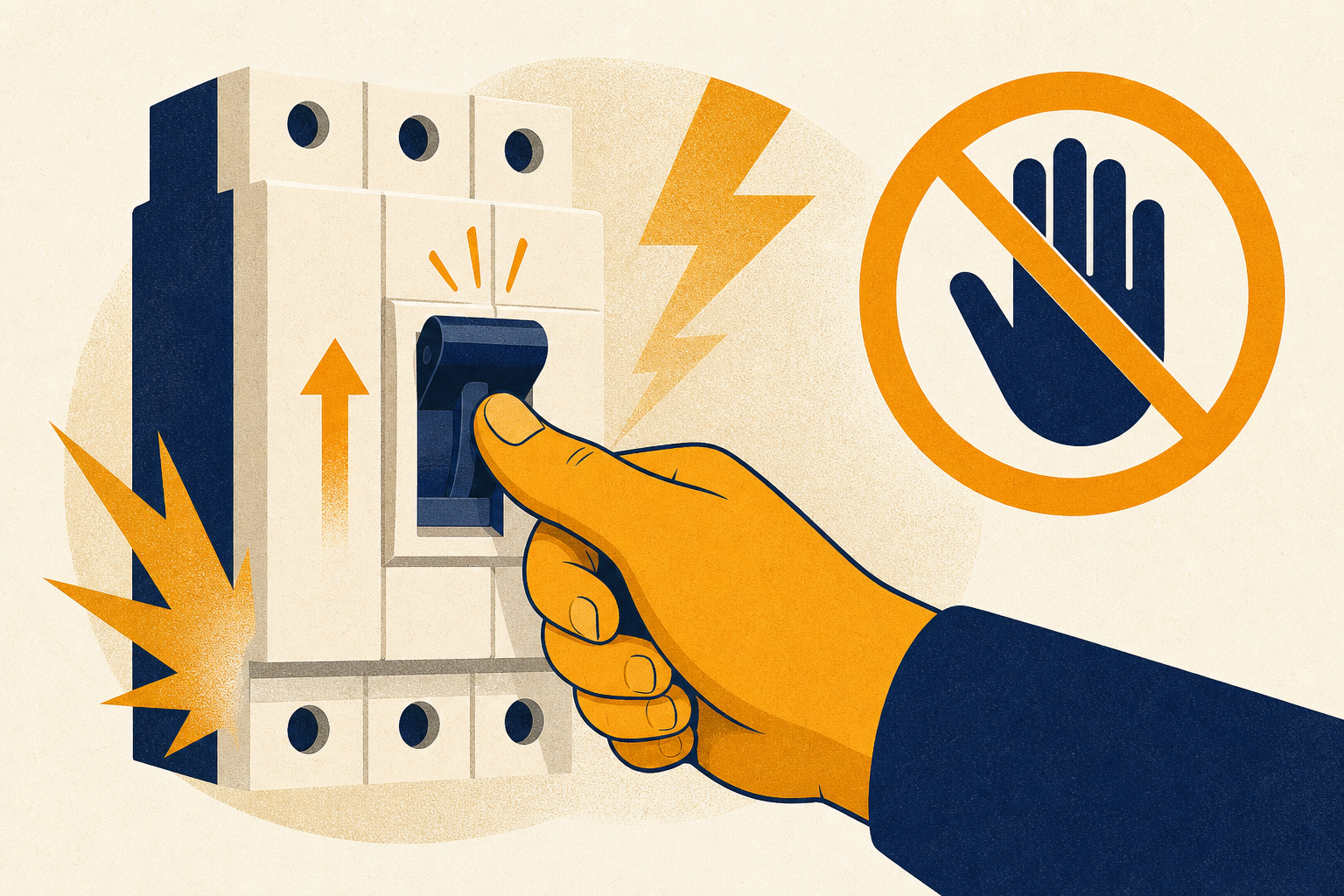
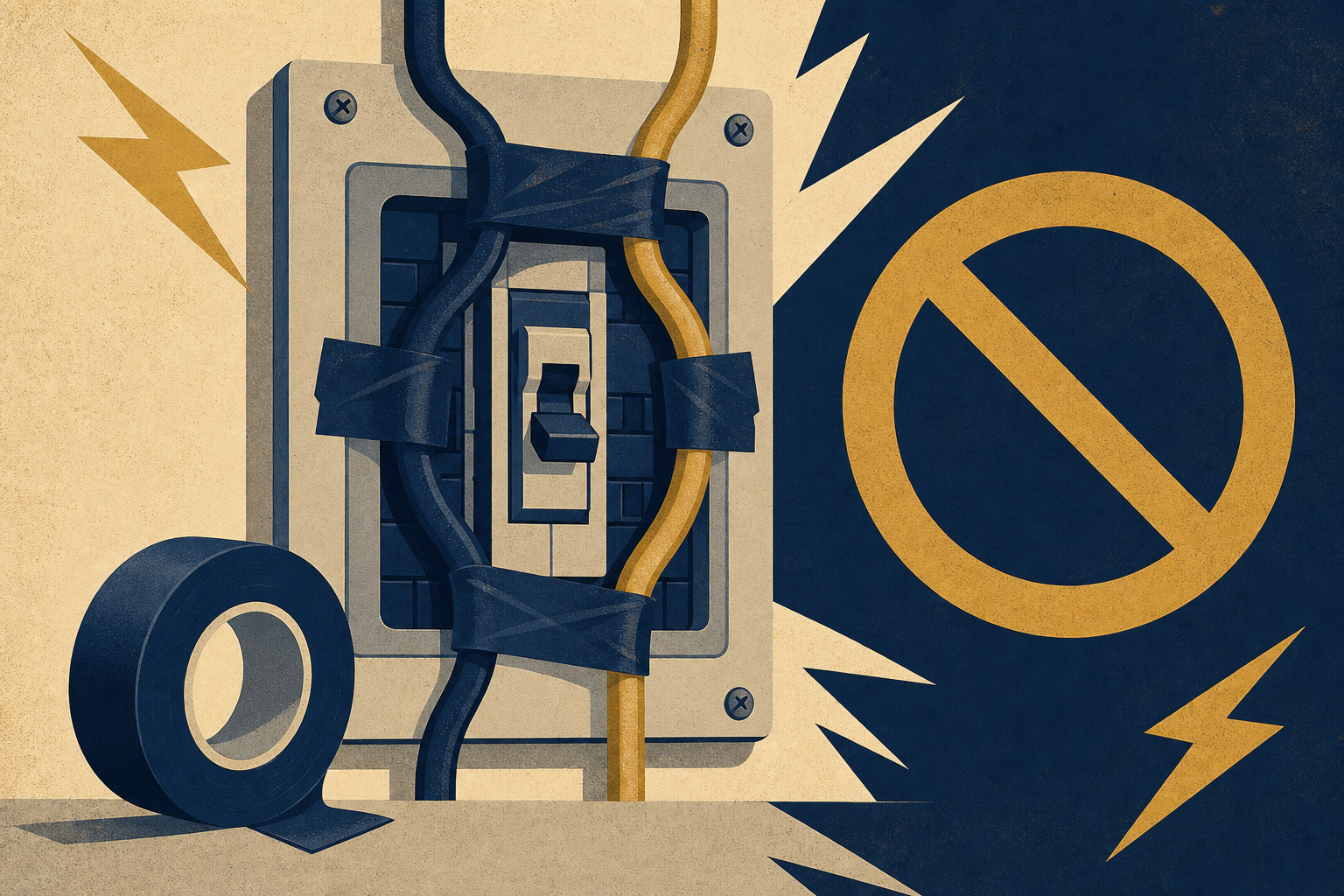
Hold the MCB lever up
You’re fighting the safety device
Forcing or taping the lever in the ON position keeps current flowing into a fault. The breaker is trying to protect the cable — and you.
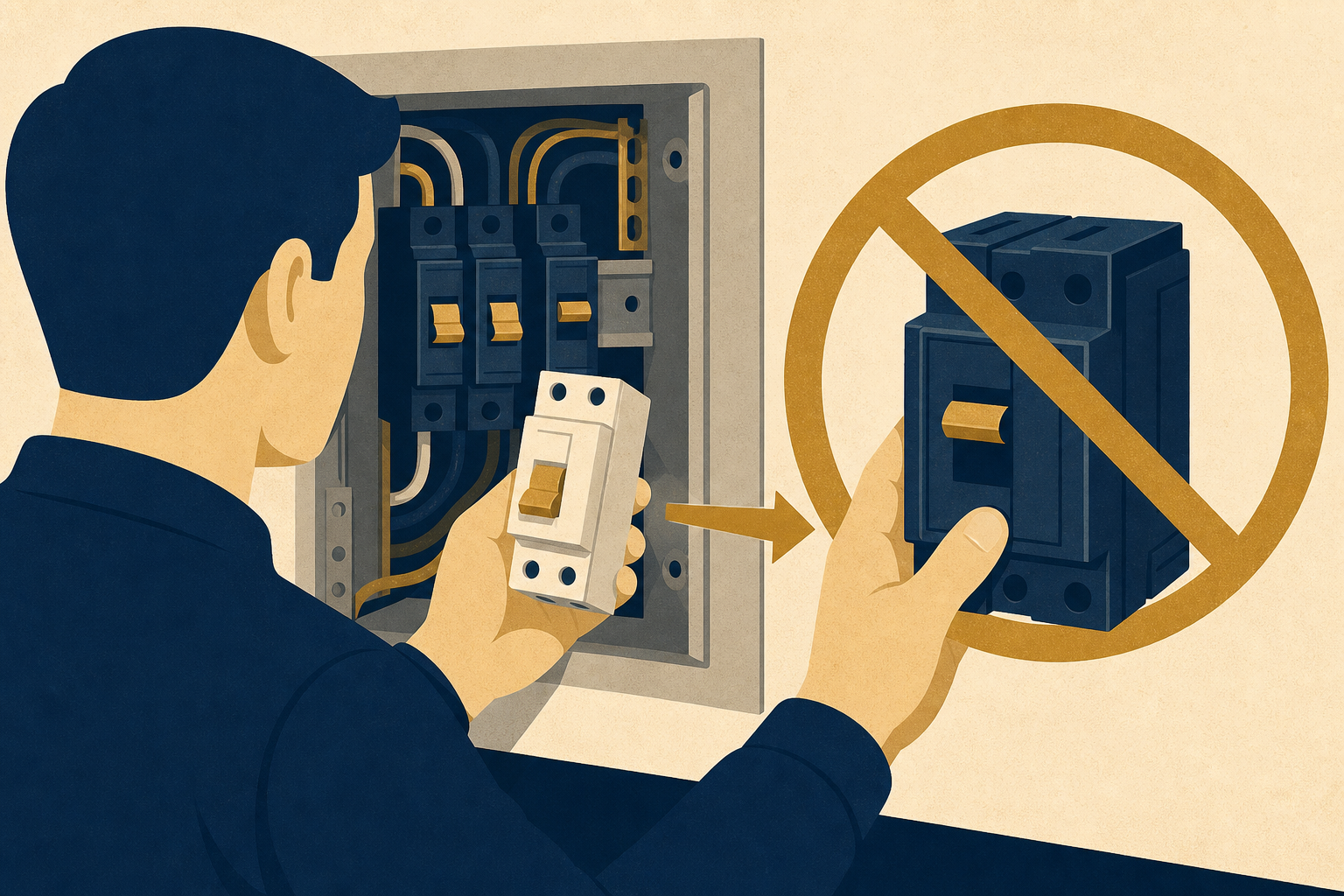
Fit a higher-rated MCB yourself
The cable may not match the new rating
A bigger breaker can stop the trips while leaving the wiring as the weak link. That’s how “it finally stays on” becomes a fire risk.
Tape, wire, or bypass the breaker
This is how house fires start
Bypassing protection so the lights stay on is never a temporary plan. If the board needs work, that work belongs to a verified electrician.
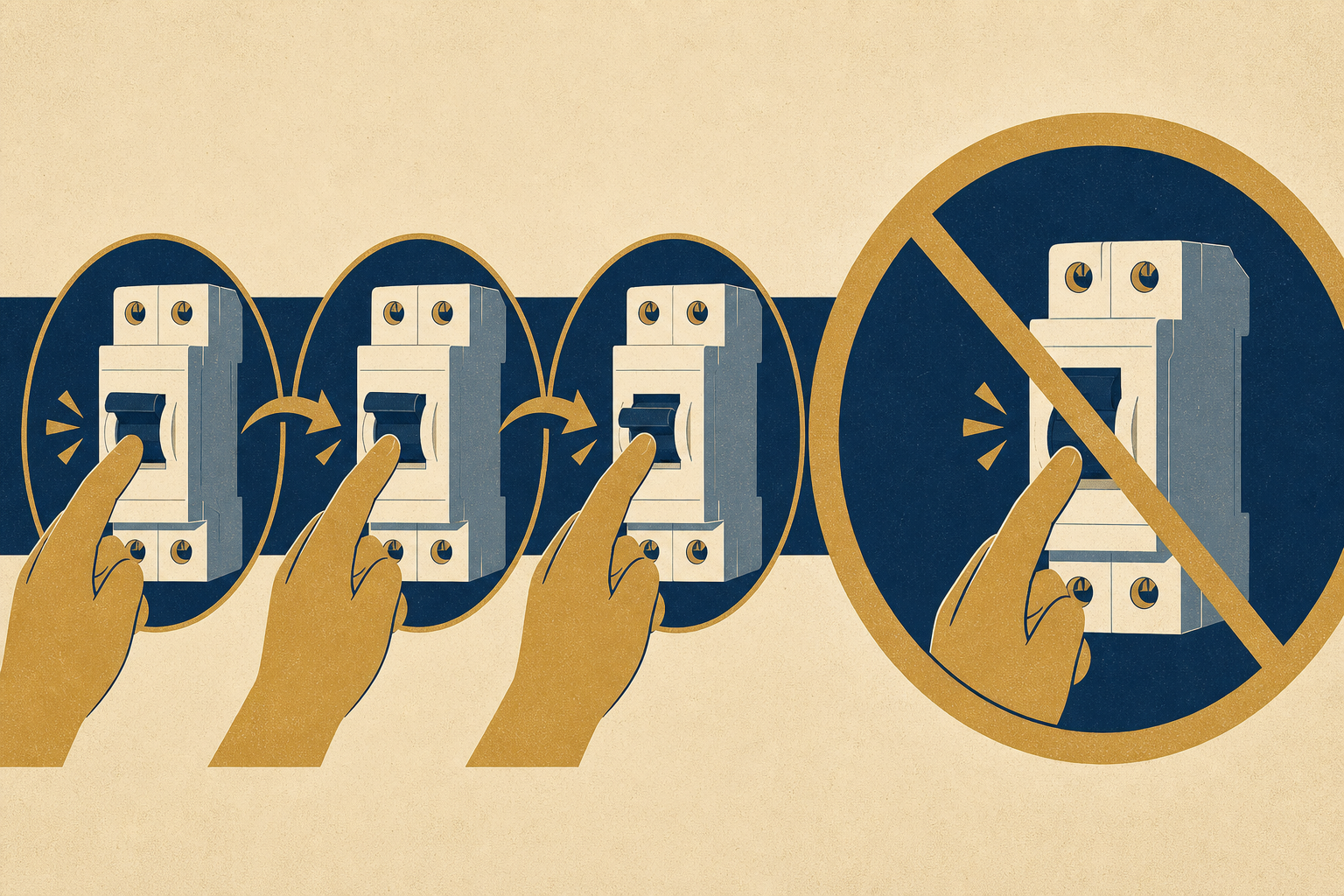
Reset ten times “to see”
Each instant trip is information — listen once
One careful reset after unplugging loads is reasonable. Hammering the lever after instant trips just stresses the fault.
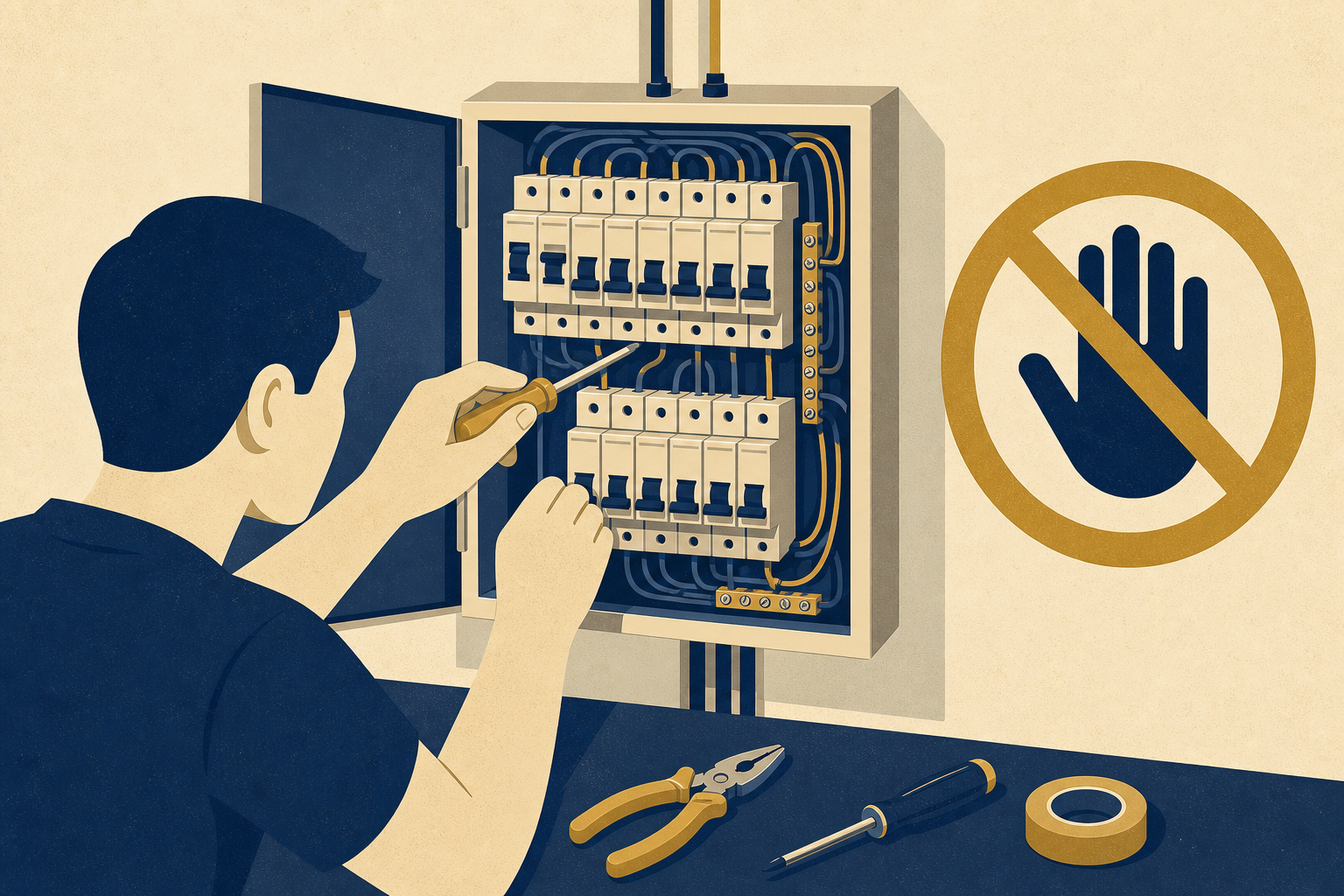
Open the DB or live sockets without training
Boards hide more than levers
Faceplates and DB covers expose live parts and loose terminals. Visible checks of plugs and cords are fine; opening the board is not a home experiment.
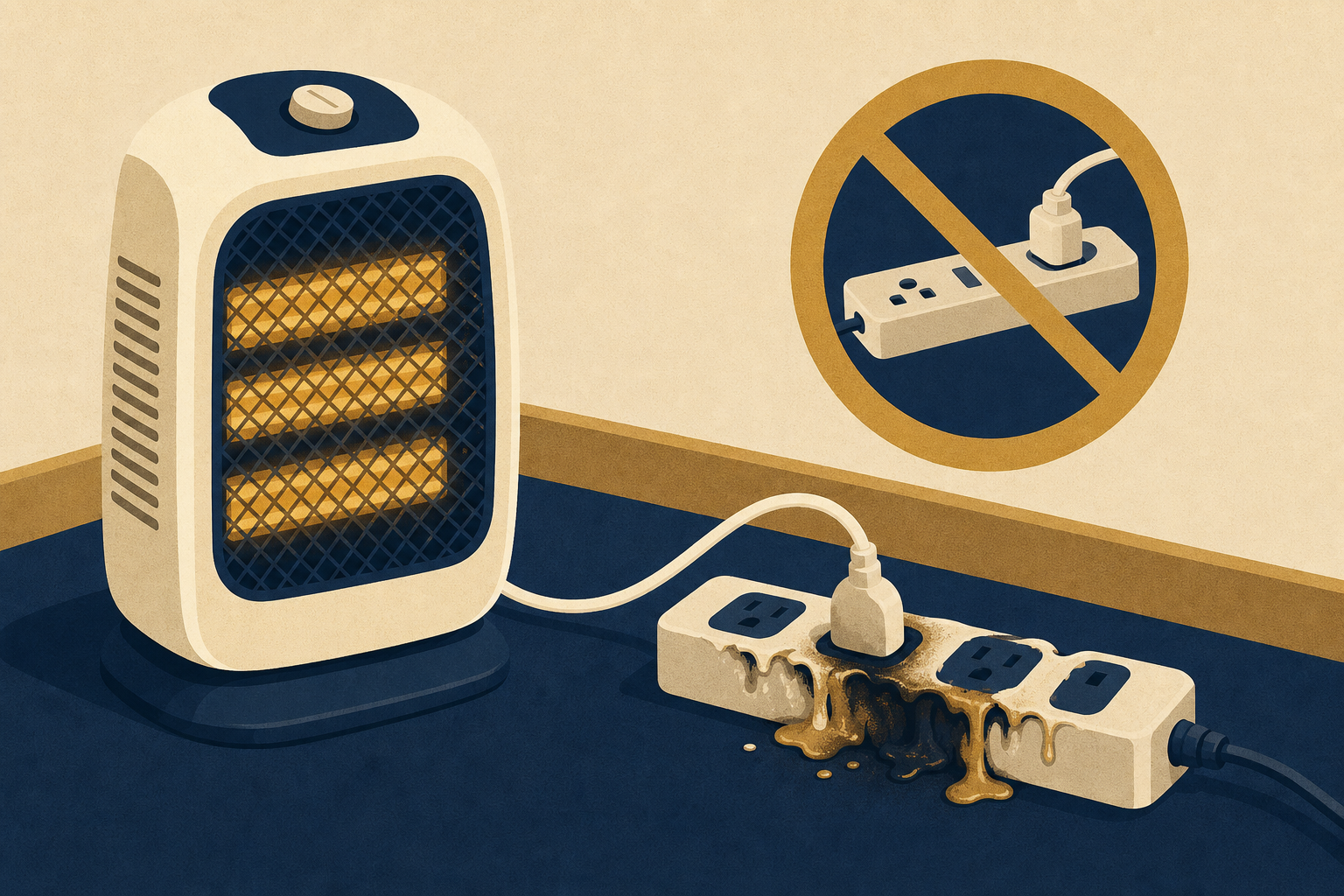
Run heaters from damaged extensions
The strip often fails before the MCB teaches the lesson
Soft, warm, or blackened multi-plugs under a heater load are a fire waiting for winter. Retire them; use a proper socket on a suitable circuit.
How to keep the protest from returning
- Label circuits while the electrician is there — “Kitchen sockets”, “Heaters”, “Lights”.
- Retire soft, warm, or blackened multi-plugs. Buy rated strips if you must use any.
- Before peak winter, test the usual evening combination once in daylight — better than discovering it at 9pm.
- Replace damaged appliance cords; don’t tape them “until next month.”
- After any leak near wiring, get the affected points checked before loading heaters again.
In Kashmir winters, the quiet villain is three heating loads on one old circuit — not a “weak” MCB. Fix the load map first; only then talk about board upgrades.
What an electrician visit usually involves (Kashmir)
We’re not inventing rupee quotes — access, evening callouts, and parts change the number. What usually shapes the job:
- Is it one branch MCB or the main?
- Simple overload advice vs insulation / earth tests
- Tightening terminals, replacing a damaged socket, or retiring a faulty appliance
- Whether the board needs relabelling or partial rewiring
- Damp or bathroom-related work (extra care and time)
A good electrician explains the cause — overload, appliance fault, loose joint, or moisture — so you’re not buying the same click every December.
When to book an electrician (no shame clause)
- MCB trips with everything unplugged
- Instant trip again after one careful reset
- Heat, burning smell, crackle, or scorch marks
- Water near the board or damp sockets
- Essential circuits (fridge, medical needs, whole flat) keep dropping
- You’re unsure which lever is safe to touch
Before the visit: photo of the board (levers visible), note which rooms died, list what was running, and say whether it trips empty or only with a named appliance. “Kitchen MCB trips when blower + kettle run; stays on with both unplugged” is a perfect briefing.
FAQs
Why does my MCB trip only when the heater is on?
Either the heater (or its cord) has a fault, or that heater pushes the circuit over its safe load — especially if something else is already running on the same line.
Can I replace the MCB with a higher rating?
Not as a DIY fix. The breaker protects the cable. A larger MCB can leave the wiring unprotected and create fire risk.
Is it safe to reset an MCB once?
Yes — after unplugging loads on that circuit, one deliberate reset is reasonable. Repeated instant trips mean stop.
Could damp weather or a leak cause trips?
Yes. Moisture at sockets, junctions, or appliances can cause protective devices to trip. Don’t keep using a wet point.
Why does it happen more at night in winter?
That’s peak heating hour — multiple high-watt appliances share circuits that looked fine in summer.
When should I book an electrician in or nearby districts?
If the MCB trips empty, trips instantly again, smells or feels hot, involves damp areas, or you can’t identify a safe load pattern. Book a verified electrician on Panun Kaergar across Kashmir.
A tripping MCB is annoying. A ignored one is dangerous. Treat the first clicks like a fire drill — calm, limited experiments, clear notes — and leave the deep testing to people with the right meters.