
The AC hums bravely while everyone shifts closer to the fan. The remote says 18°C; the room has other ideas.
An AC that “runs but doesn’t cool” is one of the most common summer callouts in Kashmir — especially after months of winter storage, dusty filters, and outdoor units that spent the cold season under a cover or behind stored boxes. Many weak-cooling jobs are simple: wrong mode, clogged filters, or blocked condenser airflow. Some need a technician with gauges. The skill is doing the safe checks first — without turning a filter problem into a refrigerant guess.
Set Cool mode, pick a sensible setpoint below room temperature, clean the indoor filters and let them dry fully before refitting. Close doors and windows. Clear leaves, covers and clutter from around the outdoor unit. If you see ice on the indoor coil or pipe, switch cooling off and thaw completely. If airflow is weak or air stays lukewarm after these steps, book appliance service. Don’t pressure-wash electrics or refill gas yourself.
Quick diagnosis map
Match the symptom before you assume the gas is “finished.”
| Symptom | Likely cause | First move |
|---|---|---|
| Air blows, barely cooler than room | Wrong mode, dirty filters, or low performance | Confirm Cool mode; clean/dry filters |
| Very weak airflow | Clogged filters or indoor fan issue | Clean filters; don’t run with wet filters |
| Outdoor unit silent / not spinning | Power, PCB, capacitor, or compressor issue | Check isolator/MCB; then book service |
| Ice on indoor coil or copper pipe | Restricted airflow or refrigerant fault | Turn cooling off; full thaw; then diagnose |
| Water dripping indoors | Blocked drain / freeze–thaw | Switch off if heavy; clear drain route safely |
| Cooling faded slowly over weeks | Dirty coils or refrigerant leak | Service + leak check — not blind top-up |
| Cools at night, struggles in afternoon heat | Dirty outdoor coil / poor outdoor airflow | Clear outdoor unit; professional coil clean |
Burning smell, repeated MCB trips, heavy ice that returns after thawing, oily residue on joints, or water near electrics — switch the unit off and book appliance repair. Don’t open refrigerant lines.
What stops an AC from cooling in Kashmir homes
Split ACs move heat outside. If indoor air can’t pass the coil cleanly, or the outdoor unit can’t reject heat, you get “fan weather” instead of cold air:
- Fan / Dry mode by accident — feels breezy, isn’t cooling.
- Dusty filters after winter storage — choke airflow and can lead to icing.
- Outdoor unit boxed in — covers left on, flower pots, debris, tight shafts.
- Dirty outdoor coil — common after dusty roads and pollen seasons.
- Refrigerant leak — gas doesn’t “get used up”; low charge usually means a leak that needs finding.
- Drainage problems — blocked drain pipes cause indoor drips and humidity complaints.
Methods that actually help — try them in this order
Start with free, reversible checks. Most “AC not cooling” jobs in Kashmir clear at filter or outdoor airflow — long before anyone should talk about gas.
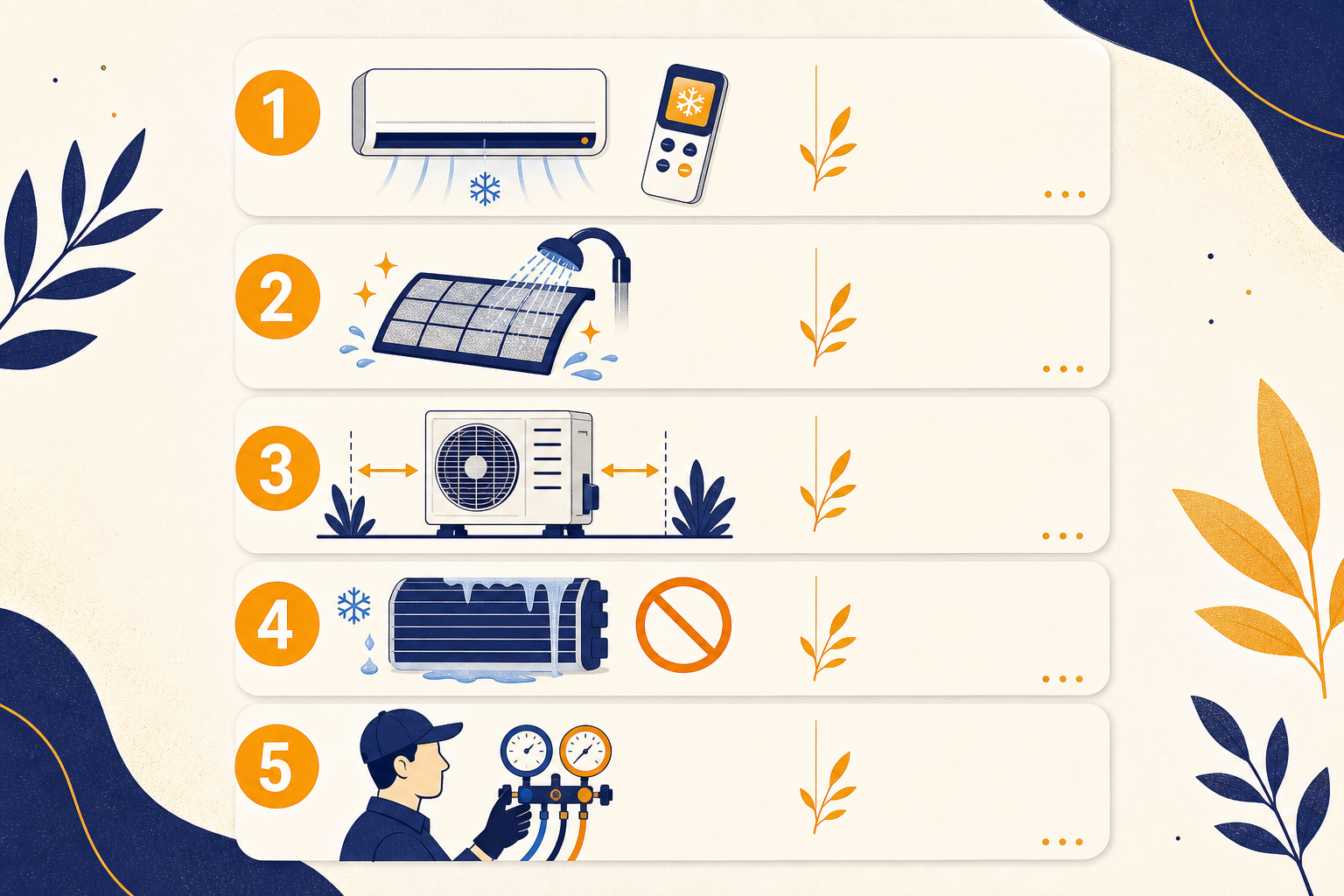
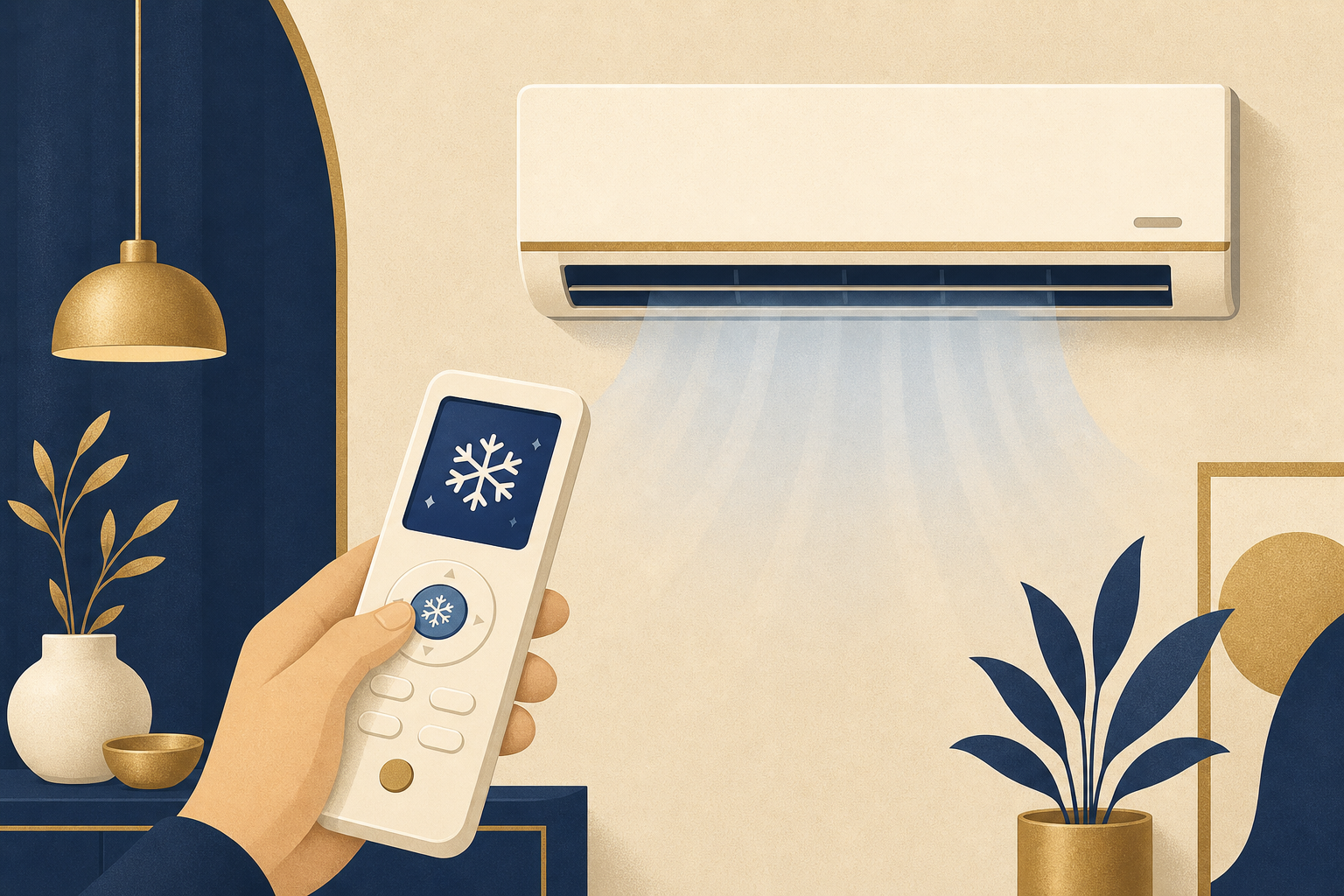
Confirm Cool mode and a sensible setpoint
Best for: remote-setting mistakes
- On the remote, choose Cool (not Fan or Dry). Check the mode icon carefully.
- Set temperature a few degrees below room temperature. Extreme 16°C with open windows just wastes power.
- Close doors and windows. Wait 10–15 minutes before judging.
- Feel the supply air at the grille — lukewarm breeze vs distinctly cold is the difference you’re testing.
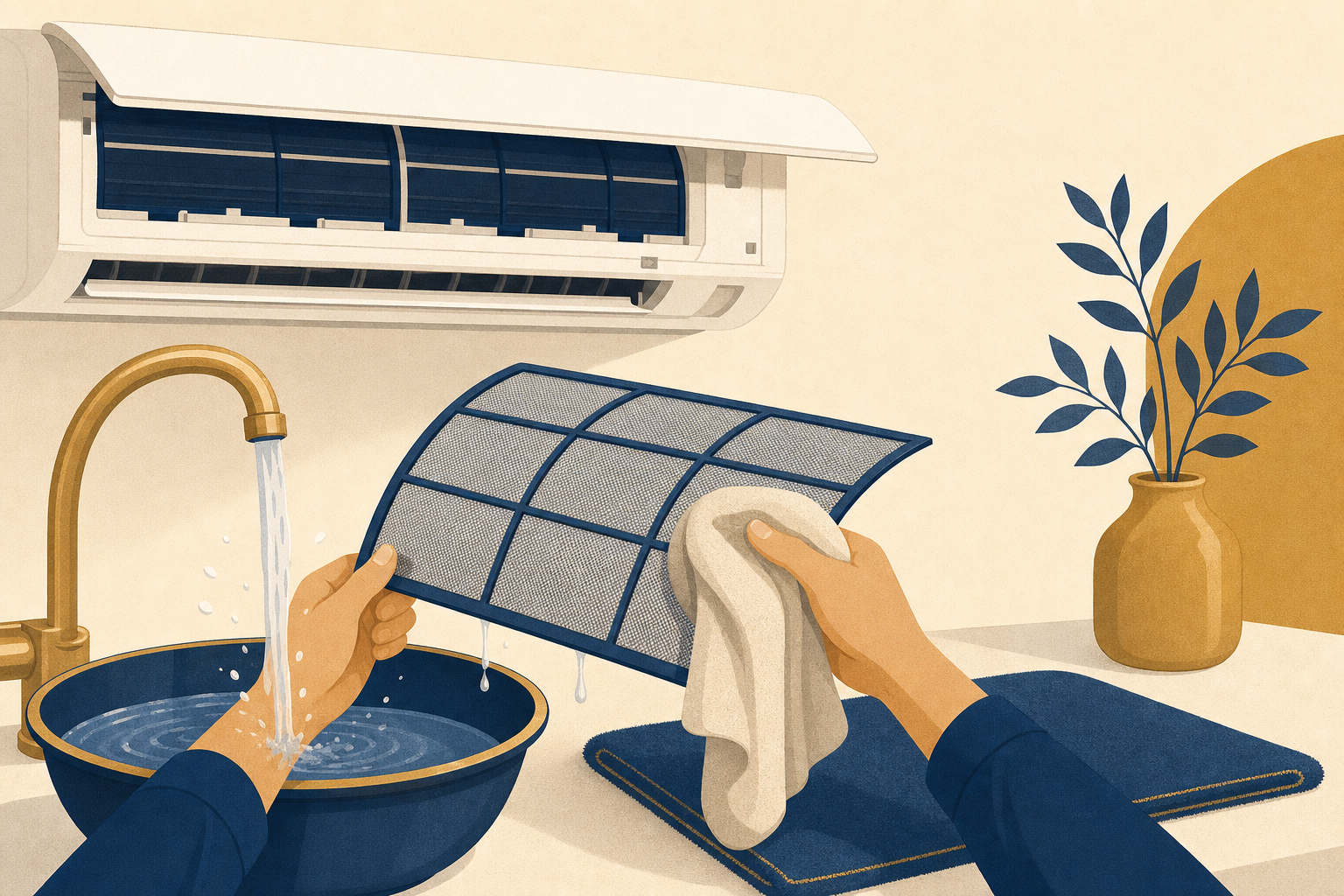
Wash the filters — and dry them fully
Best for: weak airflow and dusty winter storage
- Power the indoor unit off at the remote and isolator if handy.
- Open the front panel as the manual shows; slide filters out.
- Rinse gently with water. No harsh scrubbing that tears mesh.
- Dry completely in shade — never refit dripping wet filters.
- Refit, close the panel, run Cool mode again and compare airflow.
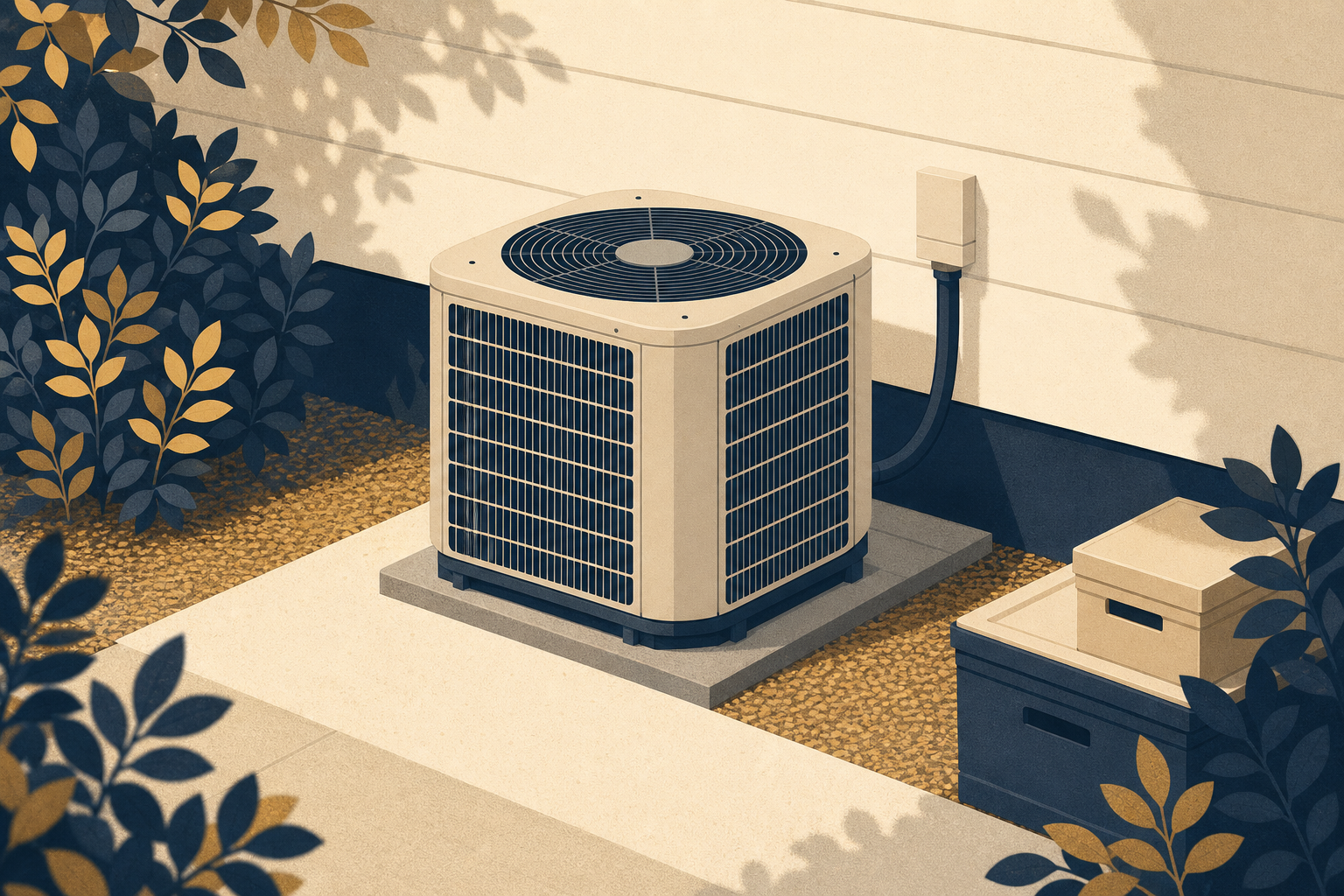
Give the outdoor unit breathing room
Best for: afternoon heat struggles and boxed-in condensers
- Remove seasonal covers before you expect cooling.
- Clear leaves, plastic bags, stored crates and plant pots from around the unit.
- Keep the discharge side open — don’t push it flush into a sealed corner if you can help it.
- Don’t bend fins or poke tools into the coil. Professional coil cleaning is safer for heavy dirt.
Treat ice as a stop sign
Best for: frozen coil or iced copper pipe
- If you see ice, switch cooling off (Fan-only to help thaw is sometimes used — follow your manual).
- Allow a full thaw. Running an iced coil can stress the compressor.
- After thaw, clean filters again and retest Cool mode briefly.
- Ice that returns quickly usually means airflow restriction or a refrigerant issue — book service.
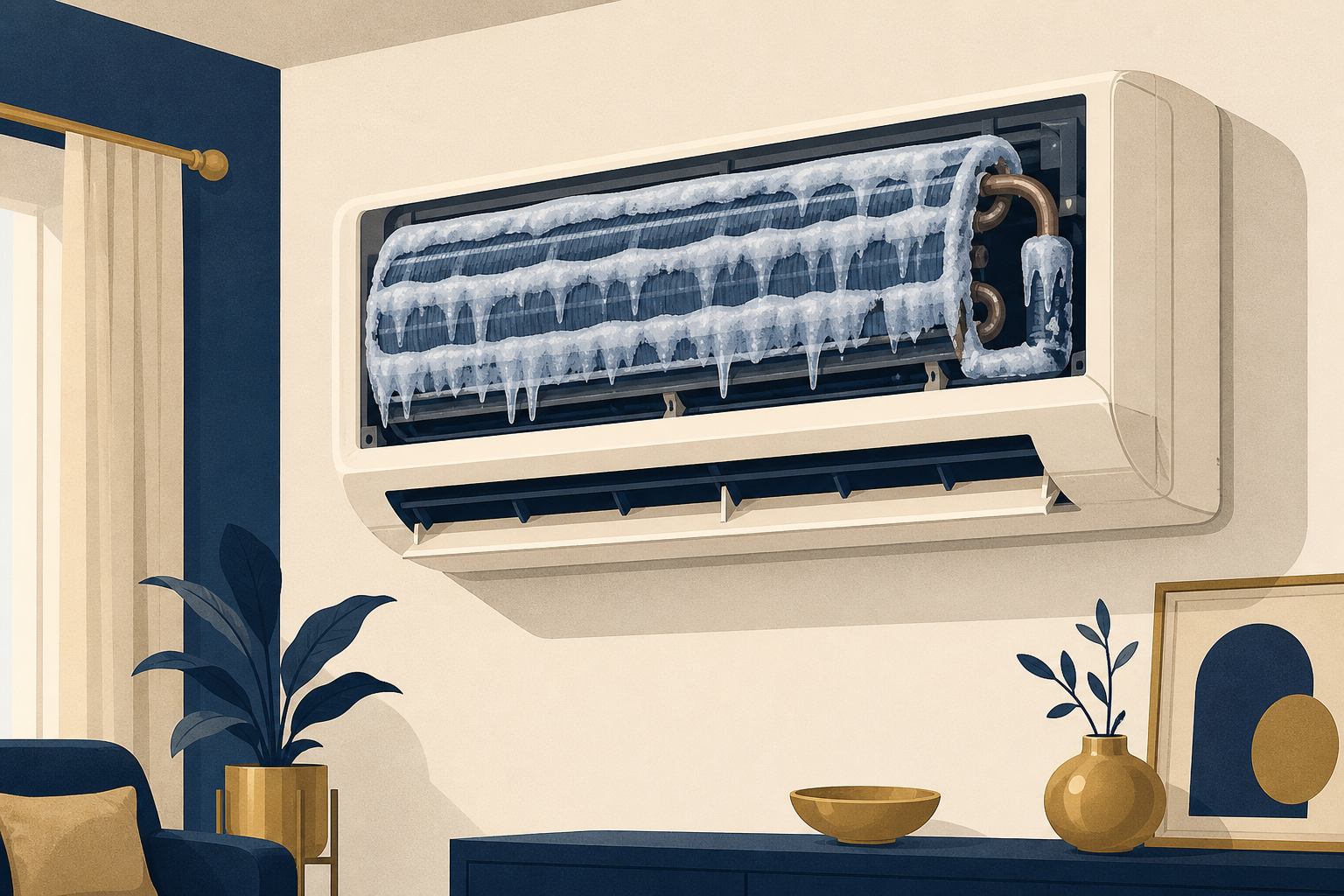
Refrigerant does not get “used up” like petrol. If charge is low, a leak test and repair beat monthly top-ups.
Book a performance check
Best for: still warm after filters and outdoor clearance
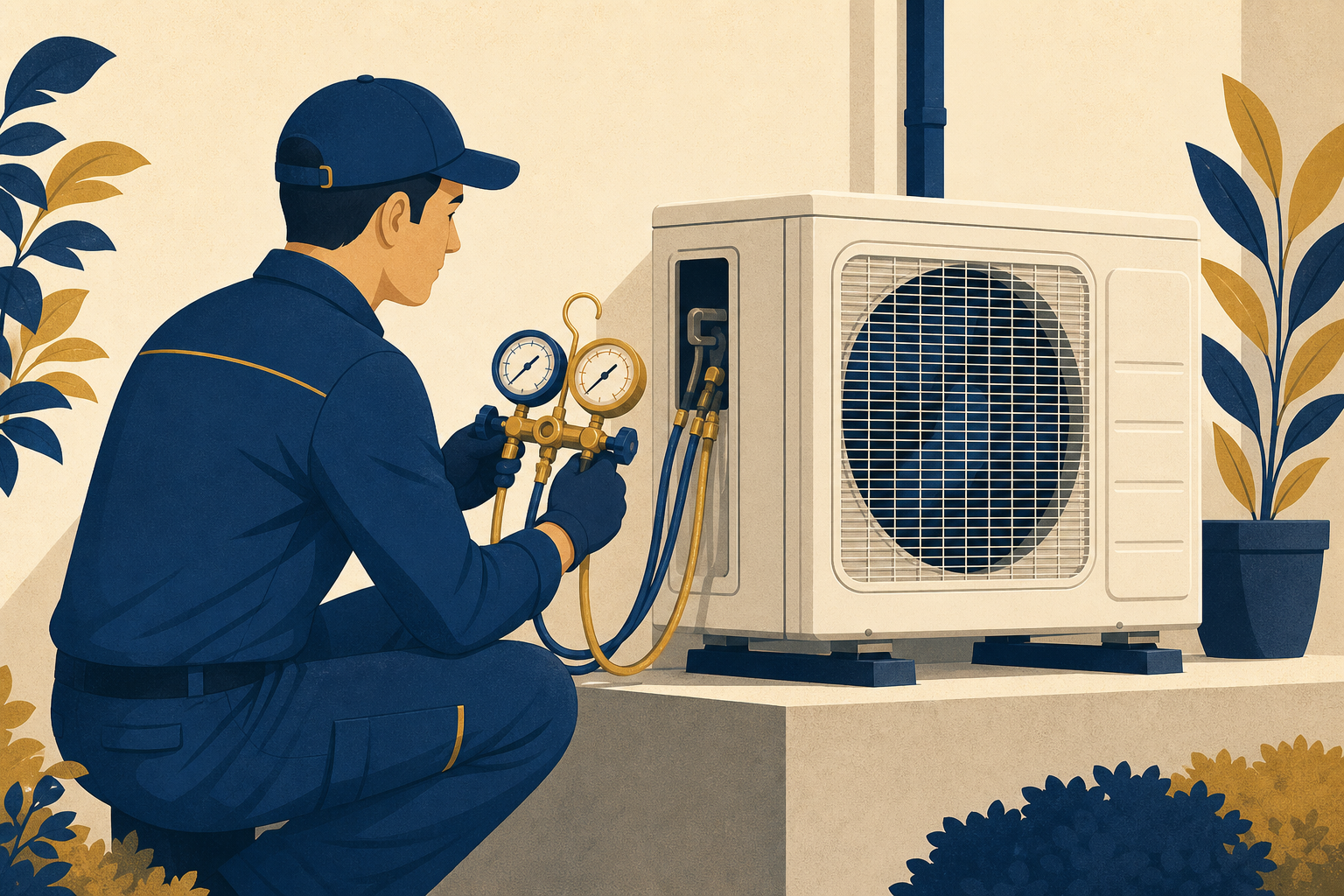
- A technician can check pressures, compressor behaviour, outdoor coil condition, and drainage.
- Ask for cause — dirty coil, leak, electrical fault — not only “gas filled.”
- Share what you already tried: mode, filter clean, ice, outdoor clearance.
Special cases: ice, indoor water, strange sounds
Water dripping from the indoor unit
Often a blocked drain pipe or freeze–thaw overflow. Switch off if it’s heavy, protect the floor, and get the drain cleared. Don’t keep running “just a little more.”
Outdoor unit vibrates loudly or won’t start
Could be mounting, fan, capacitor or compressor related. Note whether the indoor blows air while outdoor stays dead — that detail matters on the booking note.
Cools one room corner, not the bed
Sometimes airflow direction, dirty filters, or an undersized unit for a top-floor west-facing room. Clean first; sizing conversations come after basics.
Please don’t do this
These shortcuts are popular on chat groups and expensive in real life.
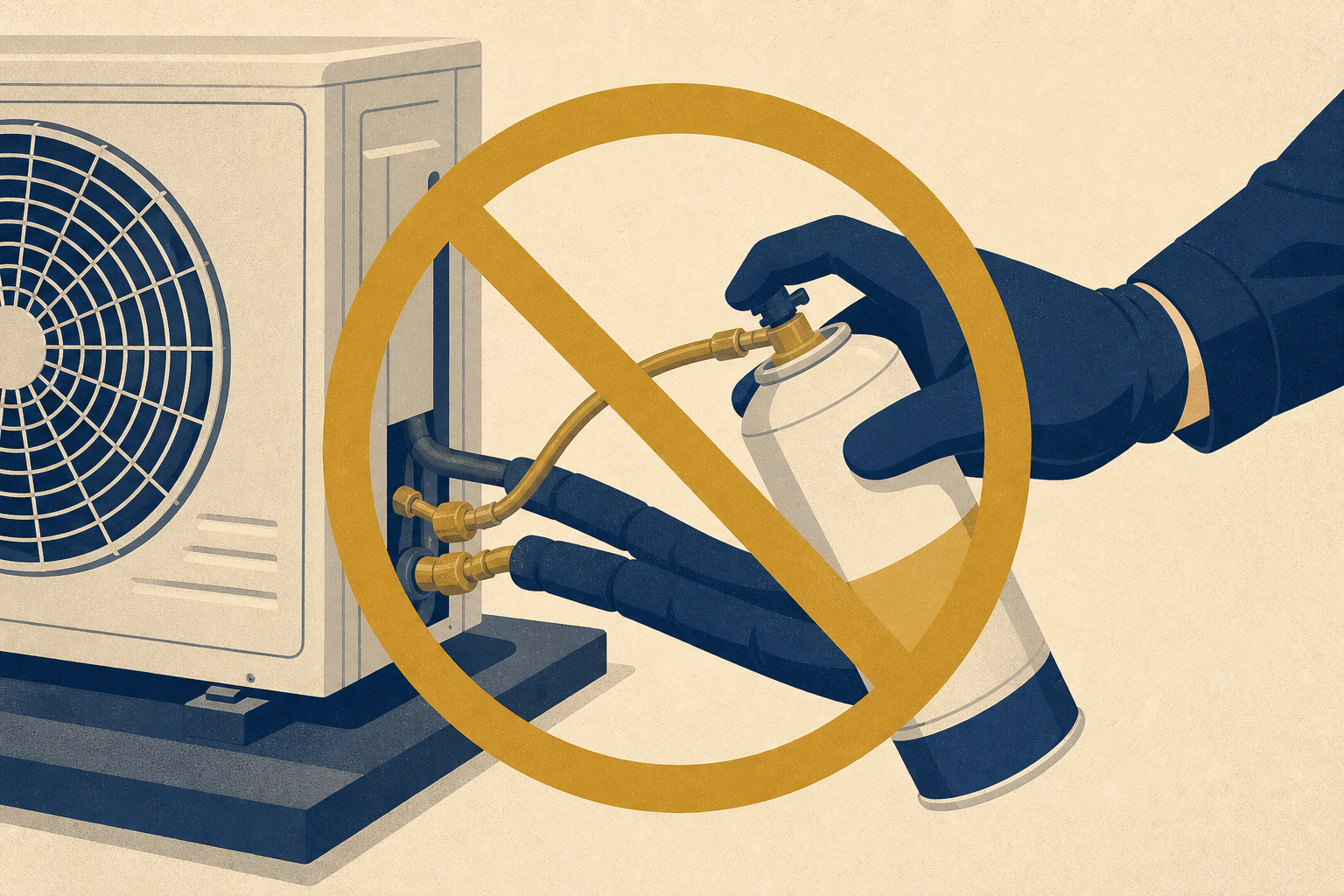
Demand a gas refill without a leak check
Low gas usually means a leak — top-ups return
DIY cans and “quick gas” without finding the leak waste money and can harm the system. Ask for diagnosis first.
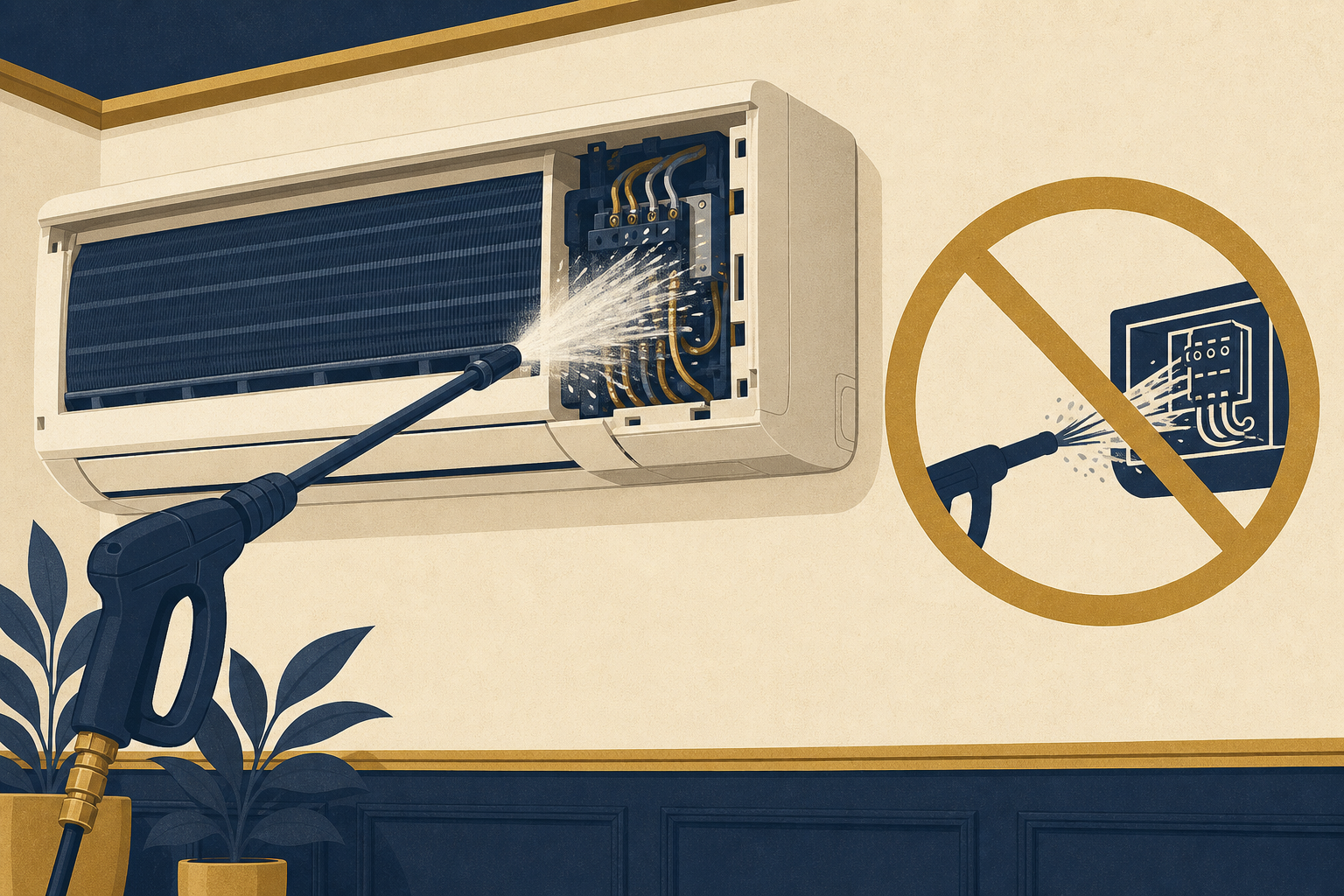
Pressure-wash the indoor electrical section
Water and PCBs are a bad couple
Filters like gentle rinsing. The indoor electronics and motor area do not like a jet wash. Leave deep cleans to people who isolate power properly.
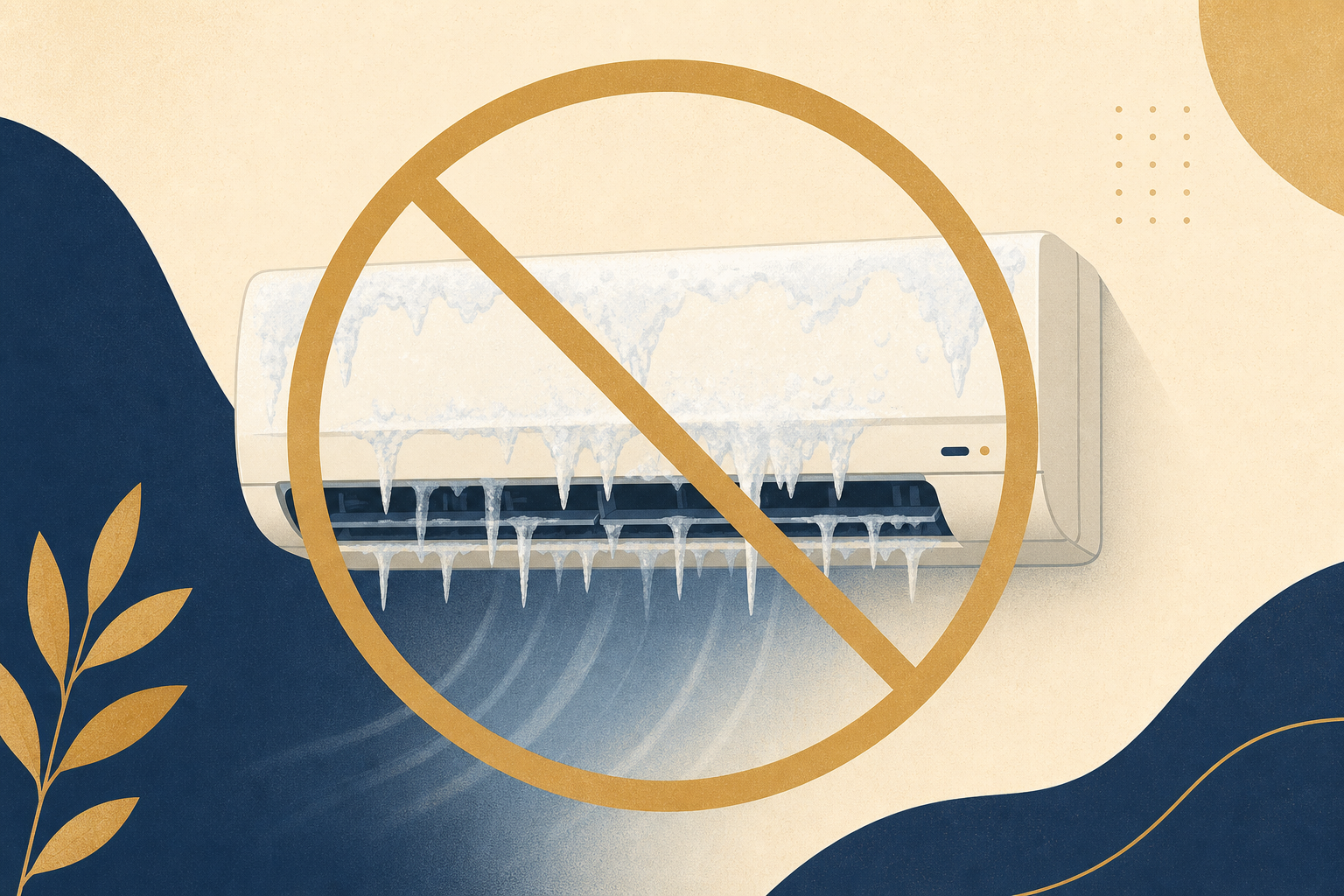
Keep running a visibly iced unit
Ice plus Cool mode stresses the compressor
Switch off, thaw fully, fix airflow, then retest. Ice that returns fast needs a technician — not more hours on Cool.
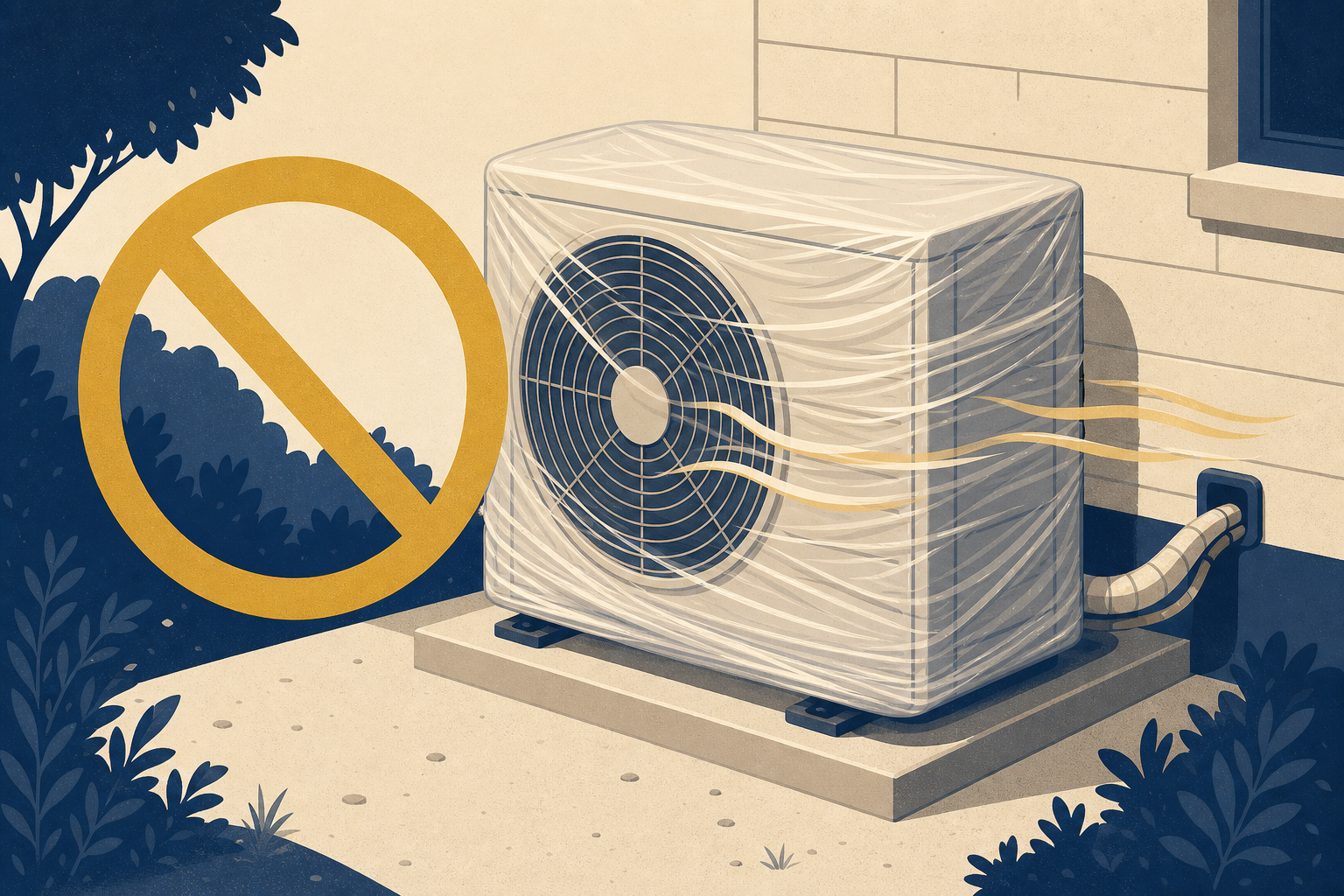
Leave a tight cover on while expecting cooling
The outdoor unit needs to breathe
Winter covers are for storage. Running under plastic or a sealed wrap traps heat and wrecks performance. Remove covers before the first hot day.
How to keep the protest from returning
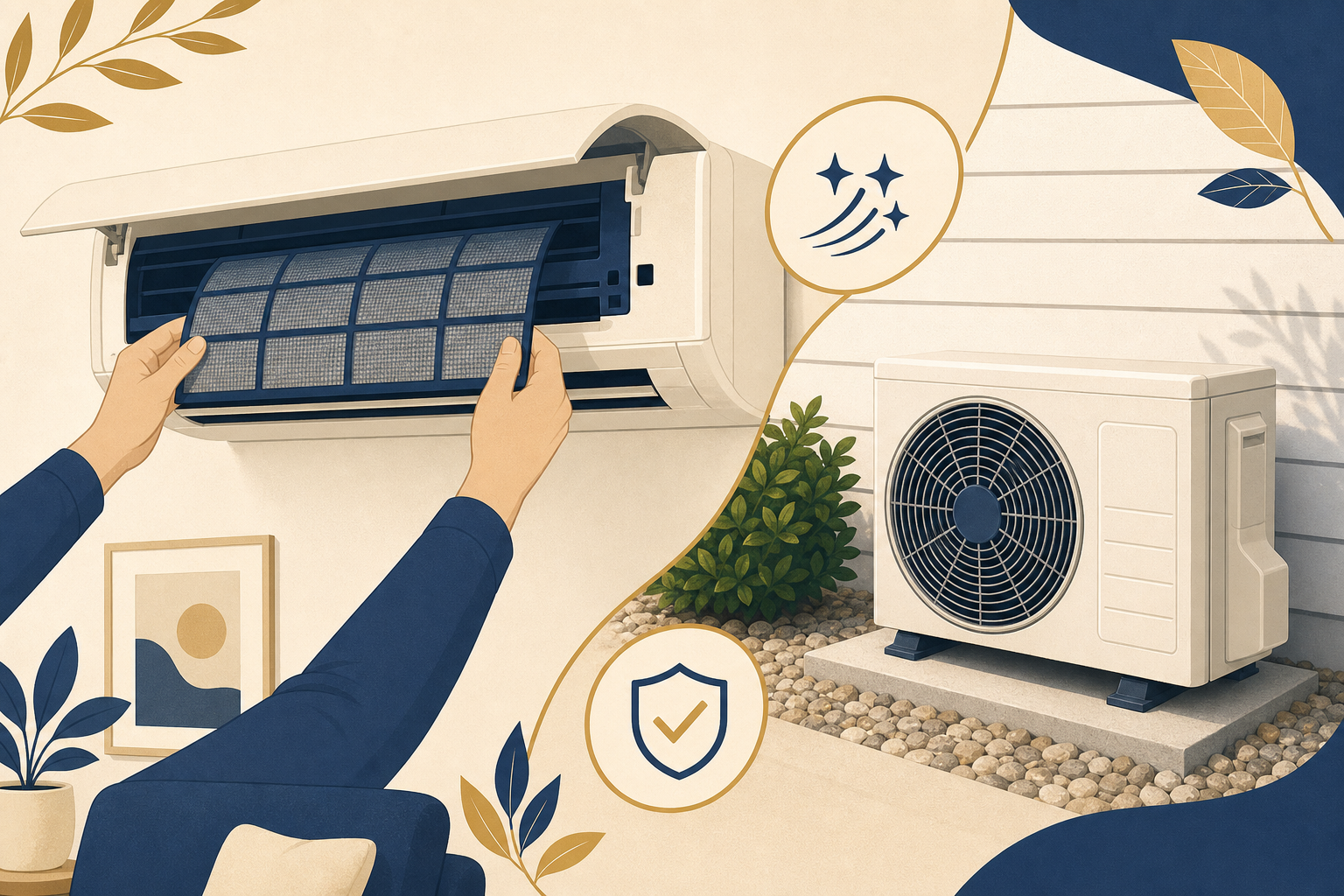
- Clean filters about monthly in regular use — sooner in dusty rooms.
- Before peak summer, run a 15-minute Cool test on a mild day so faults show early.
- Keep outdoor airflow clear year-round; don’t store junk against the condenser.
- Book a professional clean if last year’s cooling felt weaker by August.
- After any indoor water leak near the unit, check drainage before the next heatwave.
In Kashmir, ACs sleep all winter. The first hot weekend is when forgotten covers, grey filters and dusty outdoor coils all fail the same exam. A spring check beats an emergency Saturday booking.
What an AC service visit usually involves (Kashmir)
Rates vary by district, access (high outdoor mounts), and whether it’s a basic clean vs leak repair. What usually changes the job:
- Filter/coil clean only vs full performance test
- Drain clearing and indoor water complaints
- Refrigerant leak find-and-fix vs a simple top-up request
- Electrical faults (capacitor, outdoor fan, PCB)
- Difficult outdoor access or same-day timing
A good technician explains whether dirt, airflow, electrics or a leak caused the warmth — so you’re not buying the same complaint twice.
When to book appliance service (no shame clause)
- Filters clean, outdoor clear, still lukewarm air
- Ice returns after a full thaw
- Outdoor unit won’t run / odd compressor noise
- Indoor water leaks keep coming back
- Oily marks on joints or a suspected leak
- MCB trips when the AC starts
Before the visit: note mode used, whether filters were cleaned, photo of outdoor unit surroundings, and whether ice or indoor drip appeared. “Cool mode, filters washed yesterday, outdoor clear, air still warm, pipe iced last week” is a perfect briefing.
FAQs
Why does my AC blow air but not cool?
Common causes: Fan/Dry mode, dirty filters, blocked outdoor airflow, iced coil, or a refrigerant/electrical fault. Start with mode and filters.
Can I refill AC gas myself?
No. Refrigerant work needs recovery/charge equipment and a leak test. Blind top-ups are a temporary (and risky) habit.
How often should filters be cleaned?
About monthly in regular use; sooner if the home is dusty or the unit sat unused all winter.
Why is there ice on the AC?
Restricted airflow (dirty filters) or refrigerant problems can freeze the coil. Switch off, thaw fully, then diagnose — don’t keep forcing Cool.
Should I cover the outdoor unit in winter?
A breathable seasonal cover for storage can help — remove it completely before you expect cooling. Never run the unit sealed under plastic.
When should I book AC service in or nearby districts?
If basics fail, ice returns, water leaks indoors, the outdoor unit won’t run, or you suspect a leak. Book verified appliance repair on Panun Kaergar across Kashmir.
Weak cooling is usually a story with a simple first chapter — mode, filters, outdoor air. Read that chapter before anyone sells you a gas bottle.