
The blower is loud, the dashboard says AC, and everyone is still reaching for the window switch. Before blaming the refrigerant, give the system a fair, safe test.
A car air-conditioning system has two jobs: move cool air through the cabin and throw the heat away through the condenser at the front of the vehicle. A blocked cabin filter can make the vents feel feeble; a leaf-packed condenser grille can make cooling collapse in traffic. A refrigerant leak, compressor fault or electrical problem needs a workshop. The useful first step is knowing which story you are seeing.
With the engine running, close the windows, switch AC on, select recirculation, and use a middle fan speed. Check whether vent airflow is strong and whether it becomes noticeably cooler after a few minutes. Replace a dirty cabin filter if your car’s manual makes it a simple service item, and remove loose debris from the outside grille without touching fins. Persistent warm air, oily residue, rapid cooling loss or unusual compressor noise needs a proper leak and performance diagnosis — not a blind gas refill.
Quick diagnosis map
Match the pattern before you assume the system needs refrigerant.
| What you notice | Likely cause | First move |
|---|---|---|
| Strong airflow, but it is warm | Recirculation off, low refrigerant, compressor or control fault | Run the fair test below; book diagnosis if still warm. |
| Weak airflow from every vent | Clogged cabin filter or blower problem | Inspect or replace the cabin filter. |
| Cool while moving, warm in slow traffic | Condenser airflow or cooling-fan issue | Clear grille debris; have the fan checked. |
| Cooling fades over days or weeks | Refrigerant leak or dirty condenser | Request a leak test and performance check. |
| Oily residue, hissing, repeated clicking or belt noise | Leak, compressor clutch or mechanical fault | Stop DIY checks and book vehicle AC service. |
Do not open refrigerant fittings, use a leak-stop can, or reach through a grille with the engine running. A burning smell, smoke, damaged wiring, a loose belt or a loud grinding noise is a workshop problem.
What stops a car AC from cooling
Car AC is not just “gas in a pipe.” Refrigerant carries heat, the compressor circulates it, the condenser rejects it outside, and the blower sends cooled air through the cabin. A fault anywhere on that route changes the result.
- Fresh-air mode instead of recirculation — the system keeps trying to cool hot outside air.
- A loaded cabin filter — restricts airflow, so even cold air barely reaches you.
- A blocked condenser grille — leaves, insects and road debris reduce heat rejection.
- A condenser fan that is not doing its job — often shows up as poor cooling at idle or in traffic.
- A refrigerant leak — refrigerant is not a fuel; a low charge normally means it escaped.
- Compressor, clutch, sensor or electrical faults — need measured diagnosis, not guesses.
Methods that actually help — try them in this order
Begin with the safe, reversible checks. None of them involve refrigerant or removing engine-bay parts.
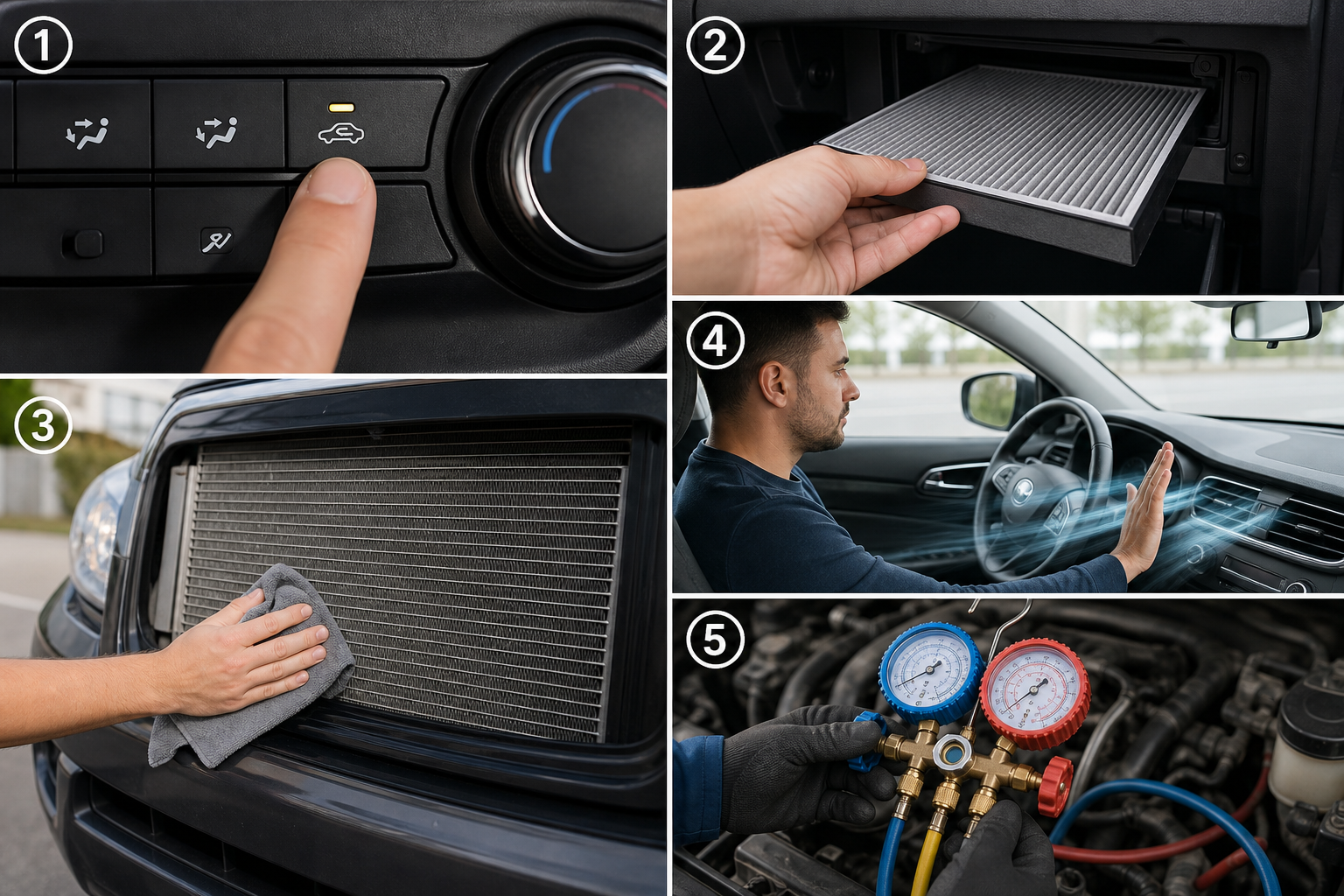
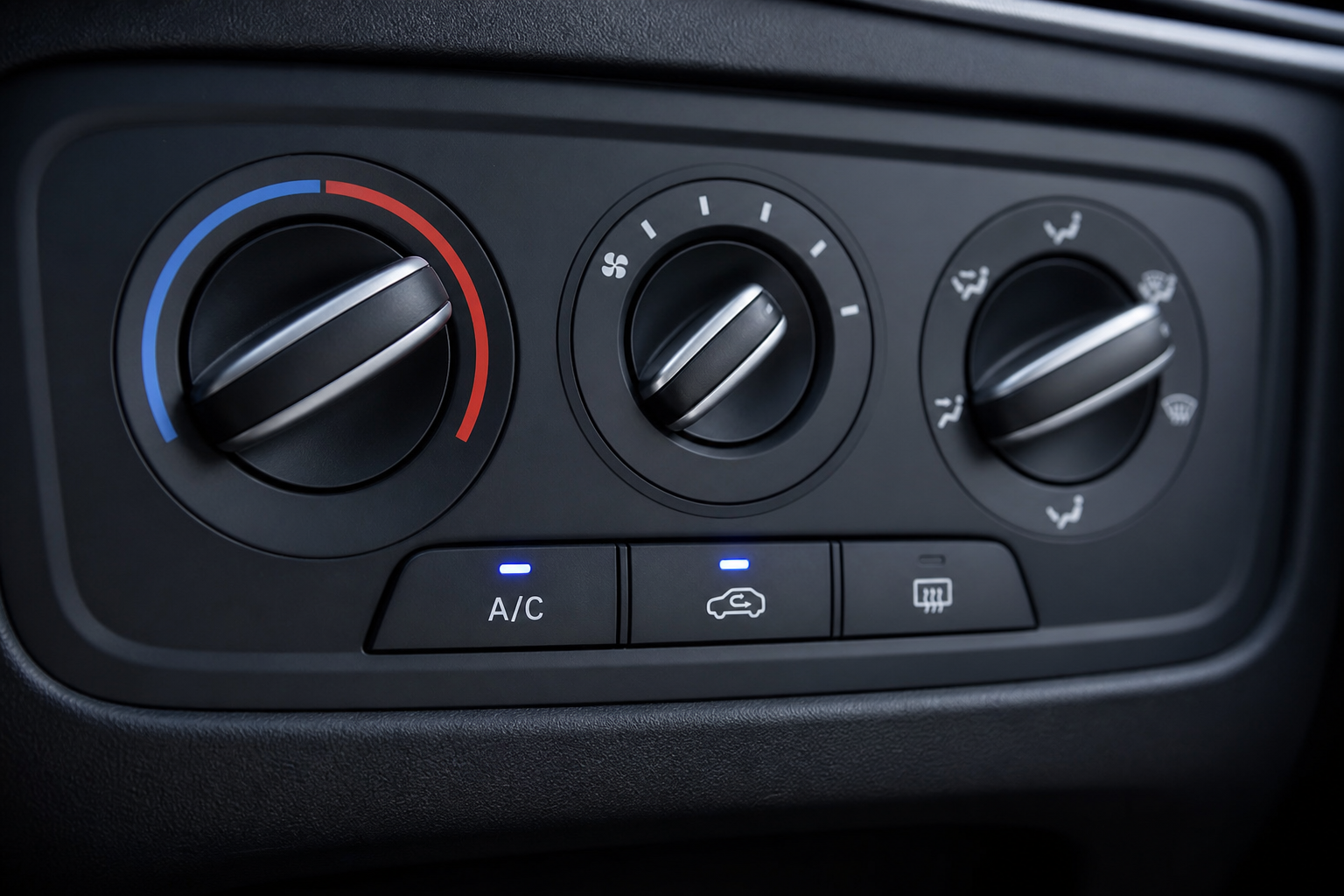
Give the AC a fair recirculation test
Best for: warm air after a setting change or open-window driving
- Park safely or test while stationary with the engine running in a well-ventilated area.
- Close the windows, switch AC on, select recirculation, and set a mid-level fan speed.
- Choose a low temperature setting and let the system run for three to five minutes.
- Compare the air from the centre vents with the cabin air — it should become distinctly cooler, not just breezy.
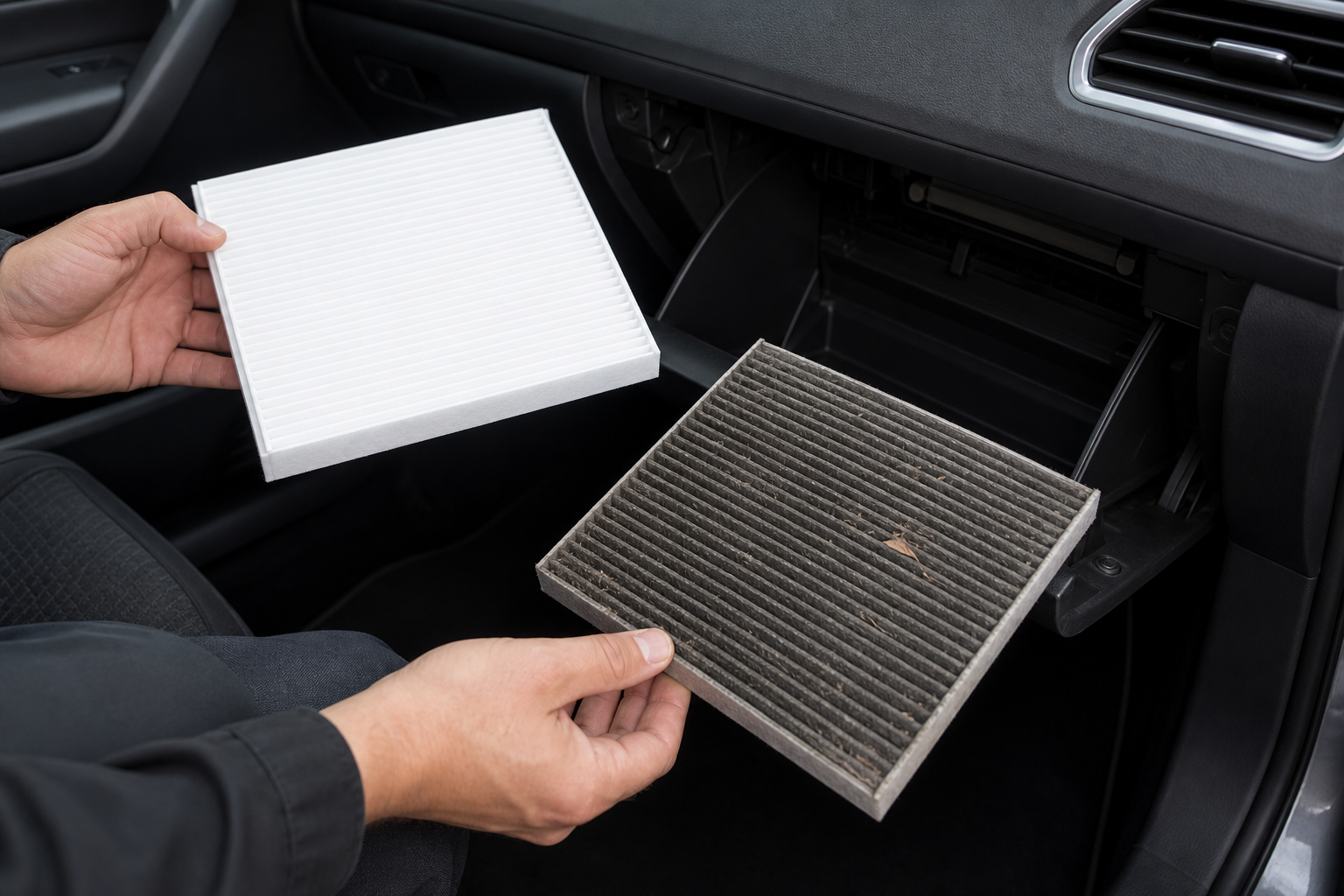
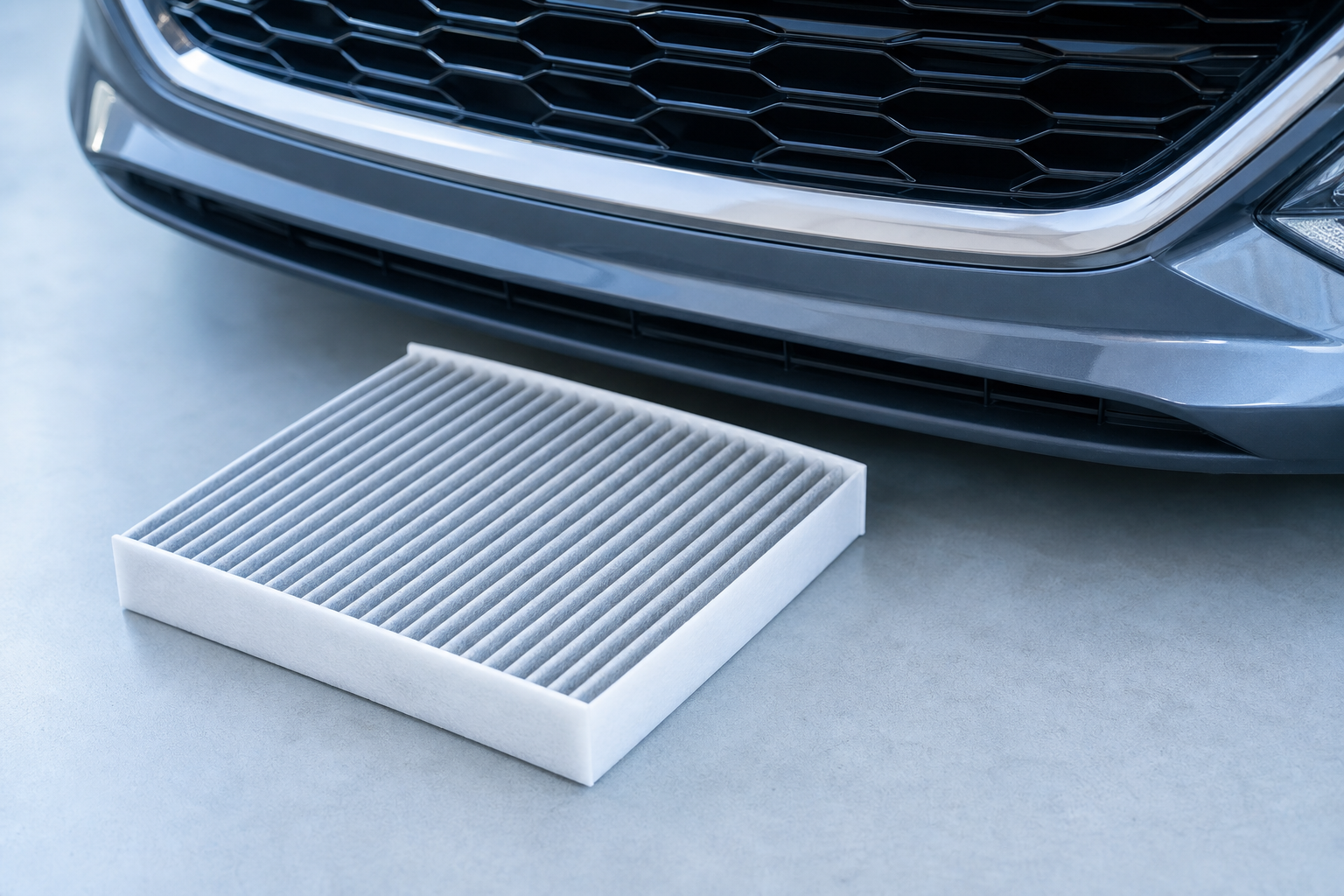
Check the cabin filter and vent airflow
Best for: a loud blower with weak air at every vent
- Find the cabin-filter procedure in the owner’s manual; it is commonly behind the glovebox or at the cowl, but varies by model.
- If it is a straightforward owner-service item, remove the filter carefully and note its airflow direction.
- Replace a dark, dusty, damp or damaged filter with the correct type. Do not shake debris into the blower housing.
- Refit it in the correct direction and compare vent airflow again.
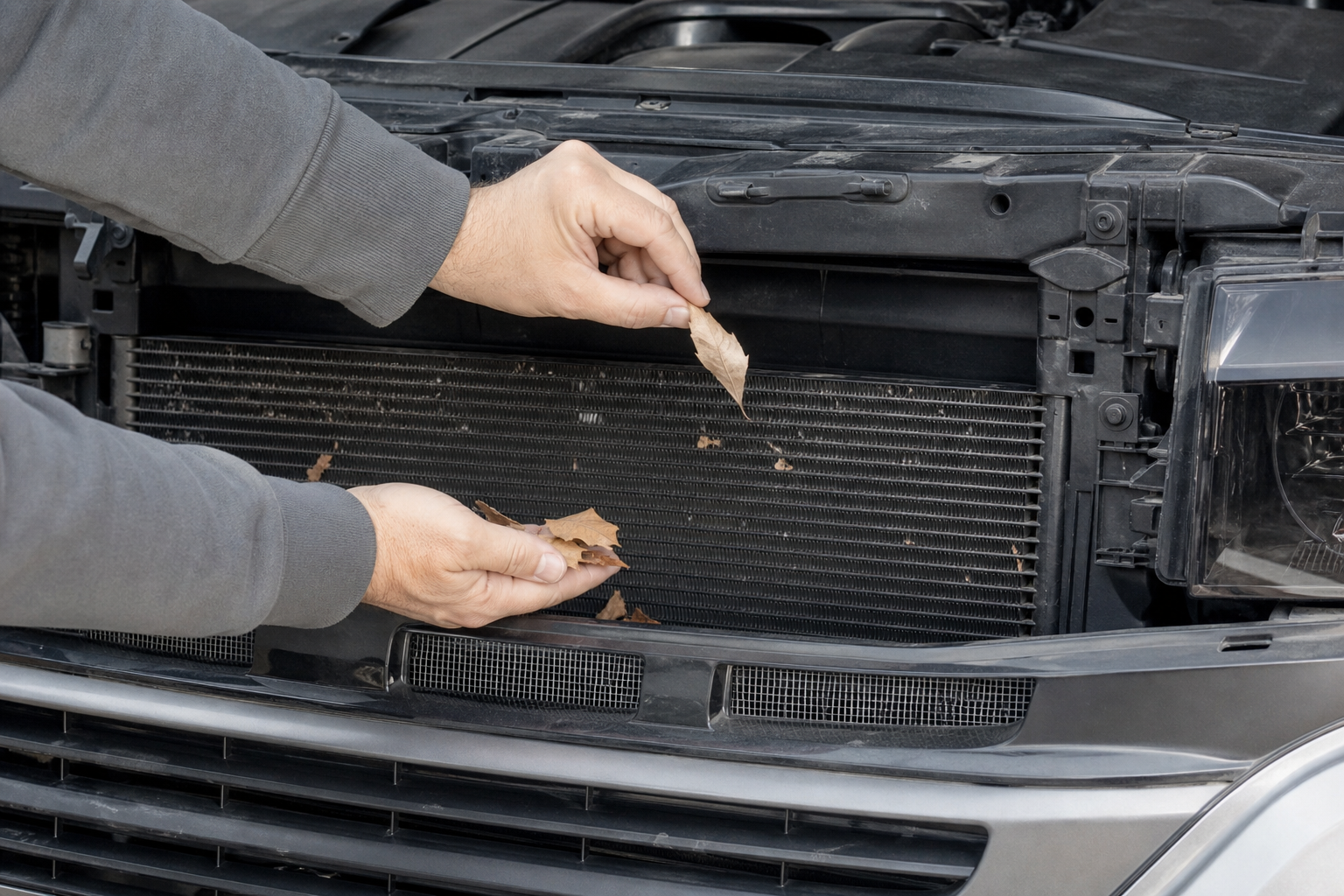
Clear loose debris from the condenser grille
Best for: weak cooling at low speed or a visibly blocked front grille
- Switch the engine fully off and let hot components cool before looking through the front grille.
- Remove only loose leaves, paper and insects you can reach without pushing through the grille.
- Do not poke tools into the delicate condenser fins or spray a high-pressure jet into the radiator stack.
- If fins are bent, packed with dirt or access requires trim removal, let a workshop clean it.
Notice the pattern, not just the temperature
Best for: cooling that changes with traffic, engine speed or time
- Note whether it cools better at road speed than while idling; this points toward condenser airflow or fan performance.
- Notice if the cooling starts cold then fades, or if one side of a dual-zone cabin behaves differently.
- Listen from inside the car for repeated clicking, squealing or grinding — do not lean into the engine bay to investigate.
- Share these observations with the technician; they save diagnostic time.

Book a leak and performance diagnosis
Best for: warm air after airflow checks, or cooling that keeps fading
- Ask the workshop to inspect pressures, condenser airflow, compressor operation and electrical controls.
- If refrigerant is low, ask how they will locate and repair the leak before recharging.
- Tell them about the cabin-filter condition, grille debris and the driving pattern you observed.
- Get the system charged only to the manufacturer’s specification after the cause is addressed.

Please don’t do this
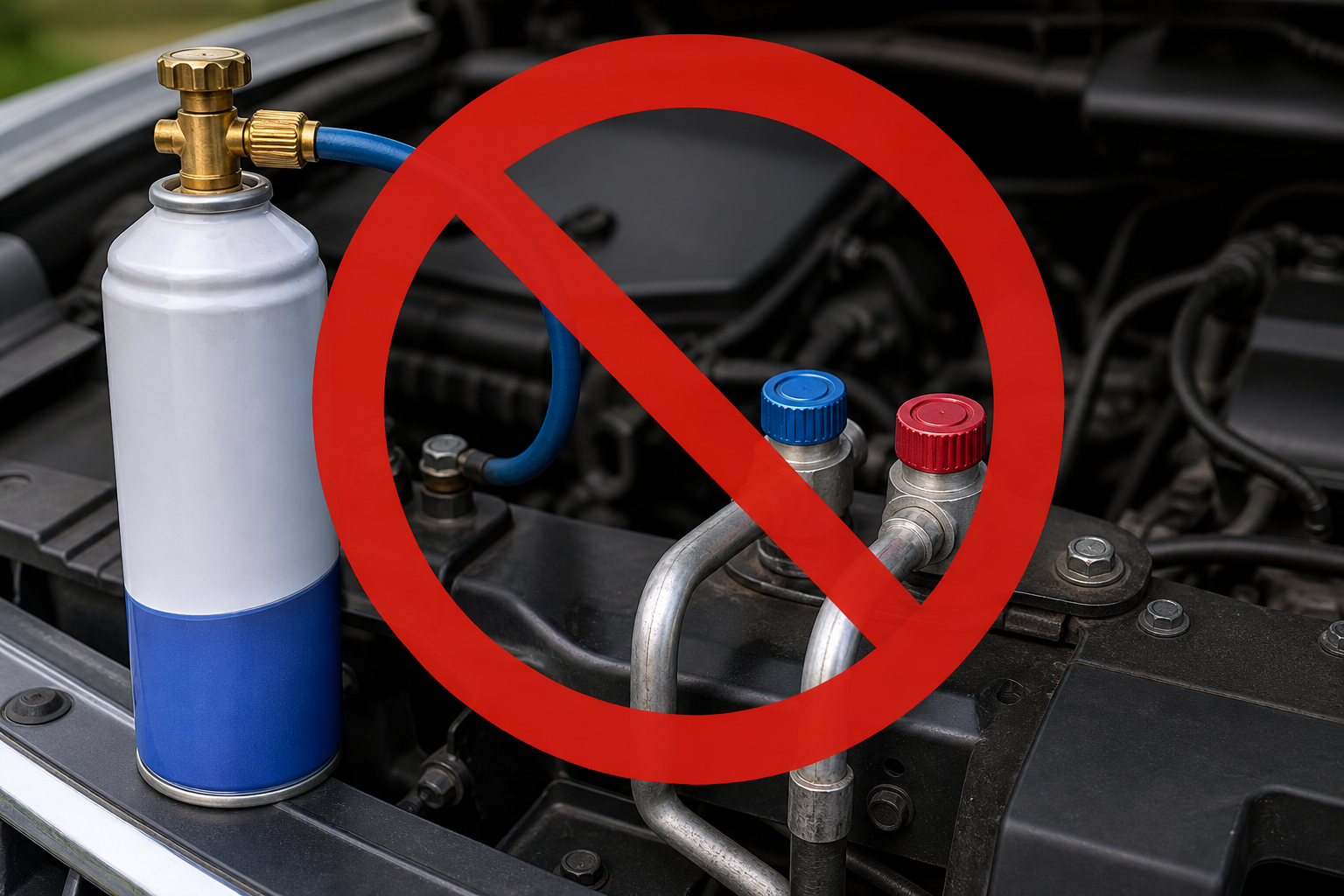
Buy a blind refrigerant refill
Low refrigerant normally has a cause
Refrigerant does not get consumed in normal use. A refill without checking for a leak can waste money, overcharge the system, and send the same problem back quickly.
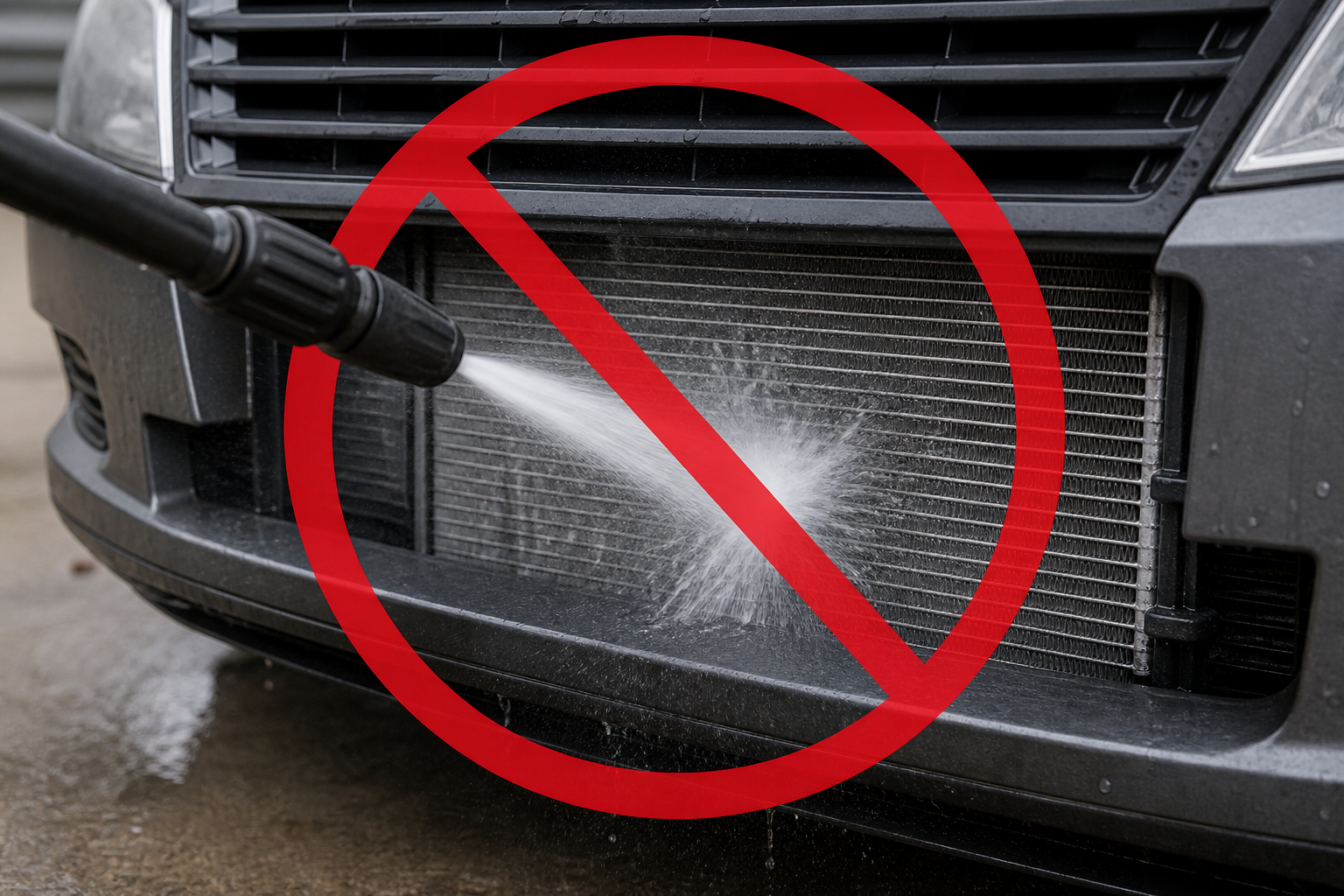
Pressure-wash the condenser through the grille
Fins bend easily and electrical areas do not like water jets
A strong jet can flatten fins or force water where it should not go. Remove loose debris by hand when safe; leave deep cleaning to a workshop.
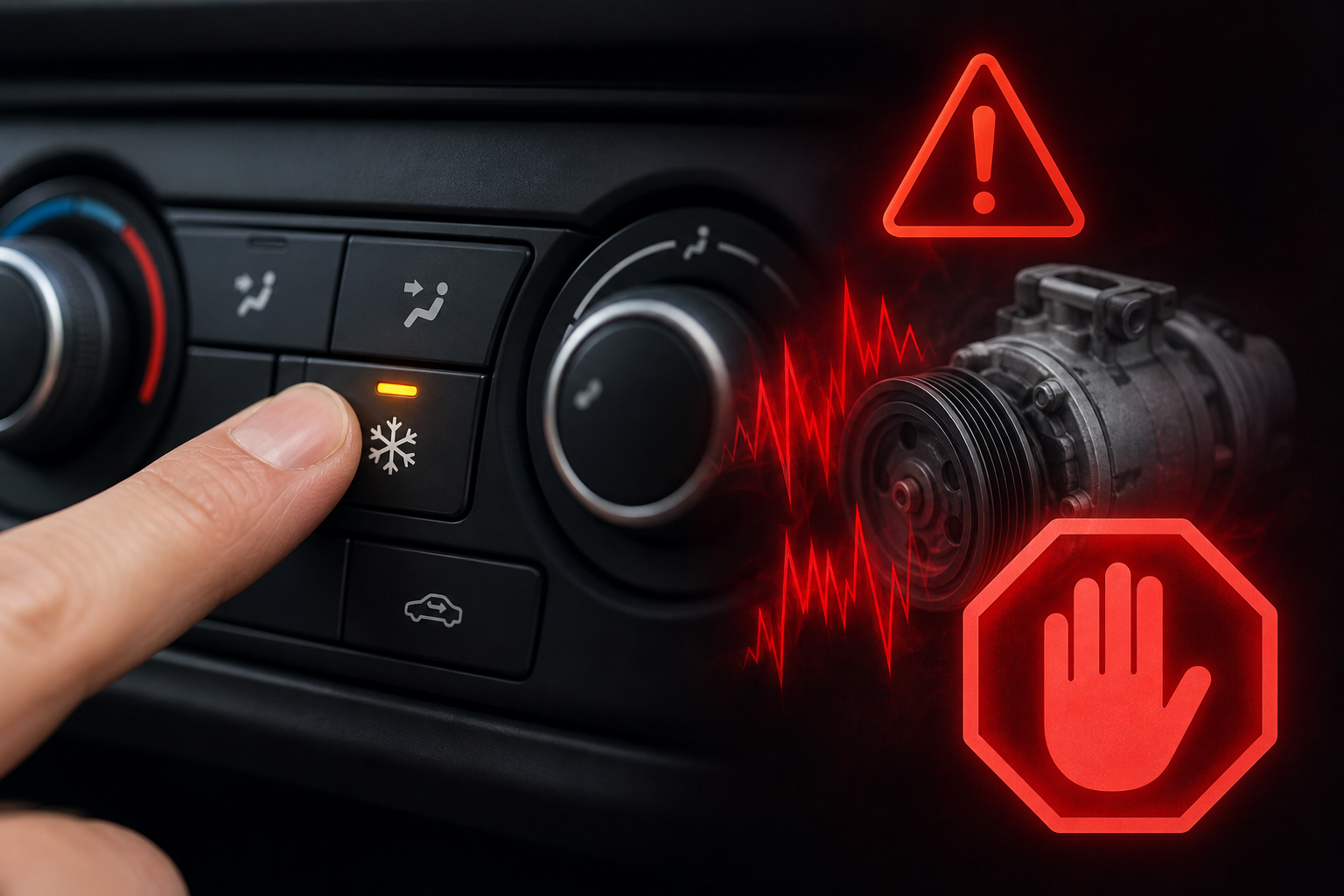
Run the system while chasing a burning or grinding noise
Noise plus warm air can indicate a mechanical or electrical fault
Switch the AC off and arrange inspection. More run time can turn a smaller clutch, belt or compressor issue into a larger repair.
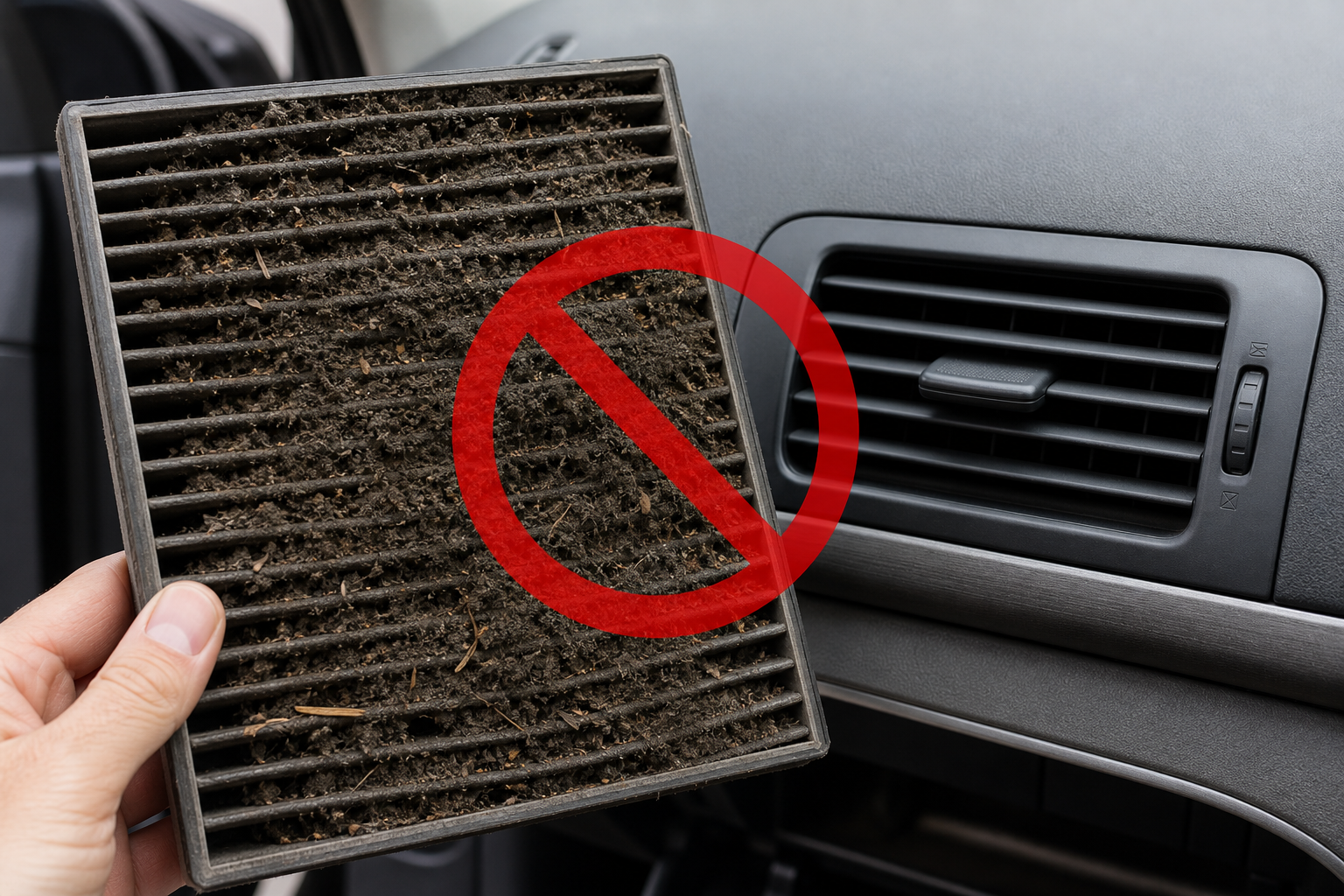
Ignore a dirty cabin filter after replacing refrigerant
A cold evaporator still needs airflow to reach the cabin
Even a newly serviced system will feel disappointing if the filter is restricted. Address airflow and refrigerant diagnosis as separate checks.
Keep cool air from becoming a surprise repair
- Run the AC periodically through the year so changing performance is easier to notice.
- Replace the cabin filter at the interval in your owner’s manual — sooner in dusty conditions.
- Clear leaves and loose debris from the front grille after parking under trees.
- Test cooling before a long hot-weather trip, not after the cabin is already uncomfortable.
- When cooling changes, note the pattern early and book a diagnosis before the system loses charge completely.
“It gets cold only when I am moving” is a useful clue. It often points a technician toward airflow through the condenser or the cooling fan, rather than the cabin filter alone.
When to book vehicle AC service
- Air stays warm after a proper recirculation and airflow test.
- Cooling fades repeatedly after a recharge.
- Cooling is poor in traffic but improves at speed.
- You see oily marks near AC hoses or a damaged condenser.
- The compressor area clicks repeatedly, squeals, grinds or smells hot.
- The blower works but airflow remains weak after replacing the cabin filter.
For the booking note, include the vehicle model, whether recirculation was on, the cabin-filter condition, and whether the problem changes at idle, at speed or after several minutes. That is more useful than asking only for “gas filling.”
FAQs
Why is my car AC blowing air but not cooling?
Common causes include recirculation being off, a clogged cabin filter, blocked condenser airflow, low refrigerant from a leak, or a compressor/control fault. Start with safe airflow checks.
Can a cabin filter stop my car AC from cooling?
It cannot remove refrigerant, but a clogged filter can severely reduce vent airflow, making a cold evaporator feel ineffective in the cabin.
Why is the car AC cold when moving but warm in traffic?
Airflow across the condenser is often the first suspect. Loose grille debris is safe to clear, but a cooling-fan or deeper condenser issue should be diagnosed professionally.
Does car AC gas get used up?
No. A sealed system should retain its charge. Low refrigerant usually means a leak or a previous service issue, so a leak diagnosis matters before recharging.
Can I wash the condenser myself?
You can remove loose surface debris from a cool, switched-off vehicle without touching the fins. Avoid high-pressure water, sharp tools and trim removal; have heavily packed or bent fins cleaned professionally.
When should I book a professional?
Book vehicle AC service for persistent warm air, rapid loss of cooling, oily residue, unusual noise, weak airflow after a filter change, or cooling that only works while moving.
Car AC faults are easier to solve when you separate airflow from refrigerant. Start with recirculation, the cabin filter and condenser clearance; then let a proper diagnosis find the real reason the cold air disappeared.