
A dog keeps scratching after a walk, then rubs its ears on the carpet. Changing shampoo twice may make the coat smell different; it does not explain why the skin is uncomfortable.
Itch can come from fleas, skin irritation, infection, ear trouble, parasites or an allergy. Gentle observation and grooming can keep a mild issue from getting worse, but persistent or painful itch needs a veterinary diagnosis rather than a stronger shampoo.
In good light, check the coat, paws and outer ears for fleas, redness, scabs, dampness or debris. Keep the dog and bedding clean and dry, and use only parasite products approved for that dog. Sores, swelling, bad odour, ear pain, hair loss or persistent scratching mean a veterinarian promptly.
Quick diagnosis map
Notice where, when and how your dog scratches. Those details give a veterinarian much better information than “itchy.”
| What you notice | Likely reason | First move |
|---|---|---|
| Tail base or back scratching | Fleas or flea allergy are common possibilities | Use a flea comb and inspect bedding |
| Ear rubbing or head shaking | Ear inflammation, debris or infection | Look at the outer ear only; book veterinary help |
| Paw licking after walks | Irritant, debris or allergy | Rinse and dry paws; check between toes |
| Sores, odour or hair loss | Skin infection or significant inflammation | See a veterinarian promptly |
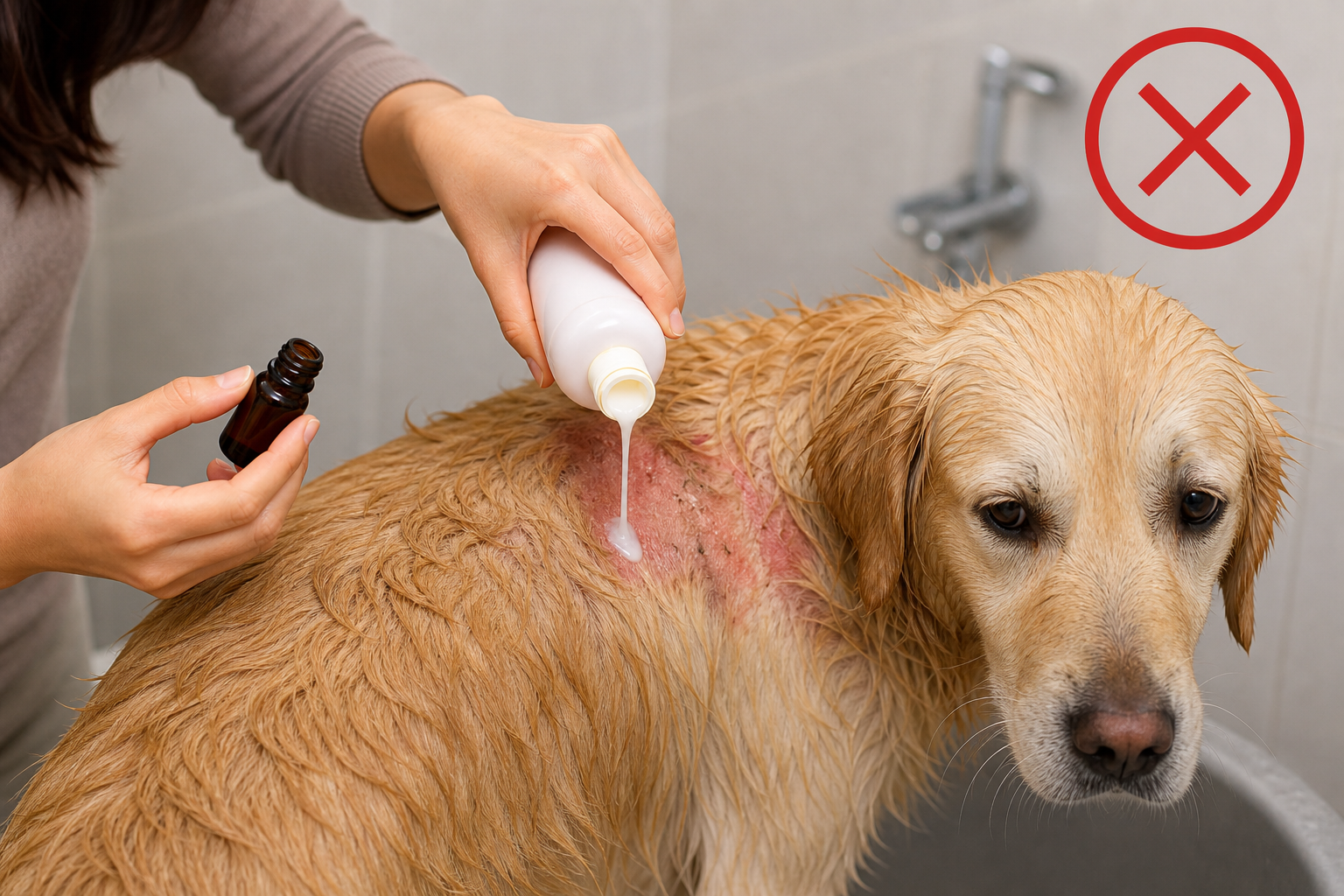
Do not use human anti-dandruff shampoo, essential oils, household insecticide or human medicines on a dog. Do not put anything into an ear canal.
What usually causes this
Common causes overlap, which is why a visible pattern is useful.
- Fleas, ticks or a parasite-control gap.
- Damp coat, skin folds or muddy paws after walks.
- Ear inflammation or infection.
- Food, environmental or product sensitivity.
- Secondary skin infection after repeated scratching.
Try these in order
Start with low-risk observation and hygiene. None of these steps replaces veterinary care for an itchy dog that is sore, distressed or not improving.
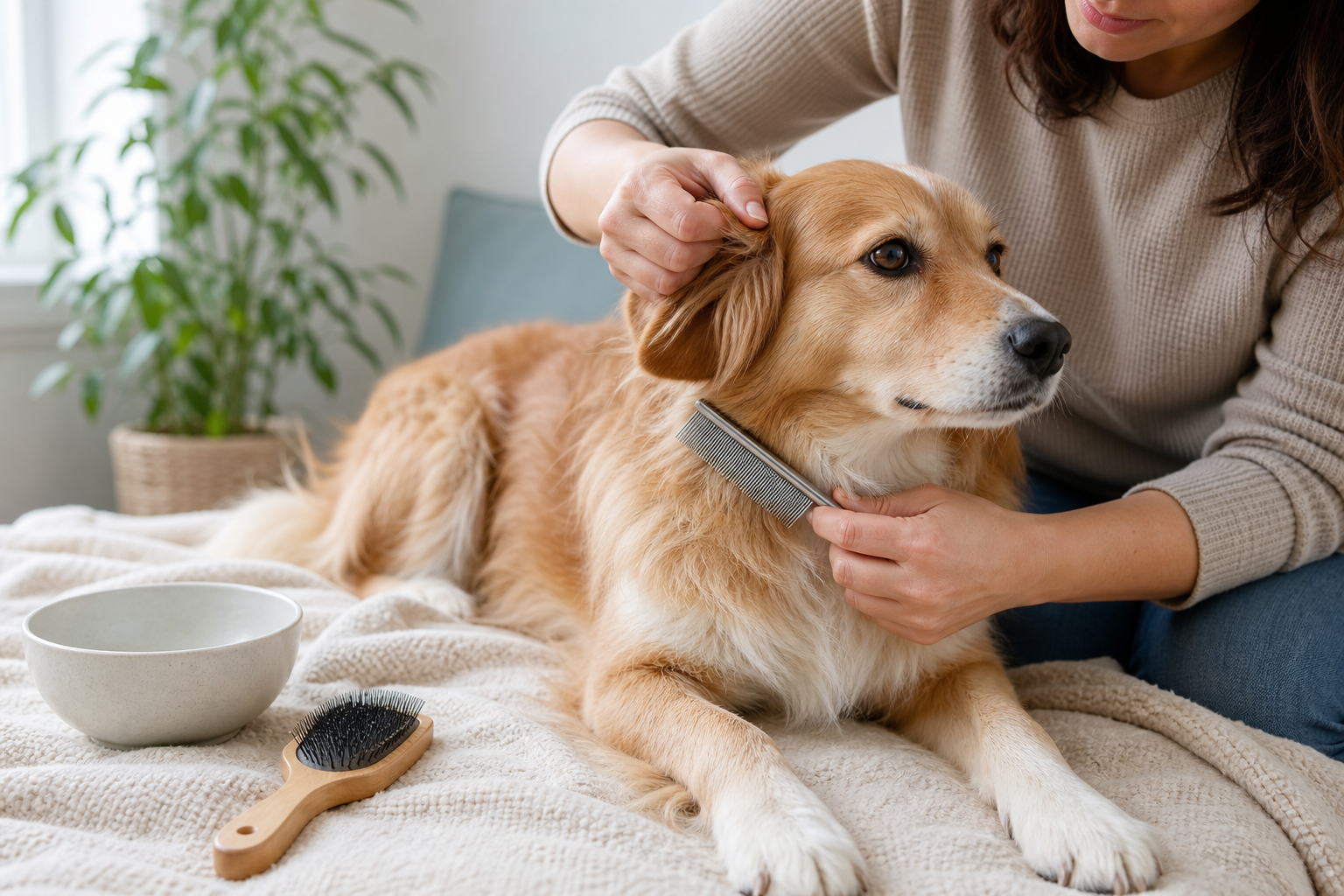
Look without digging
Best for: a mild new itch
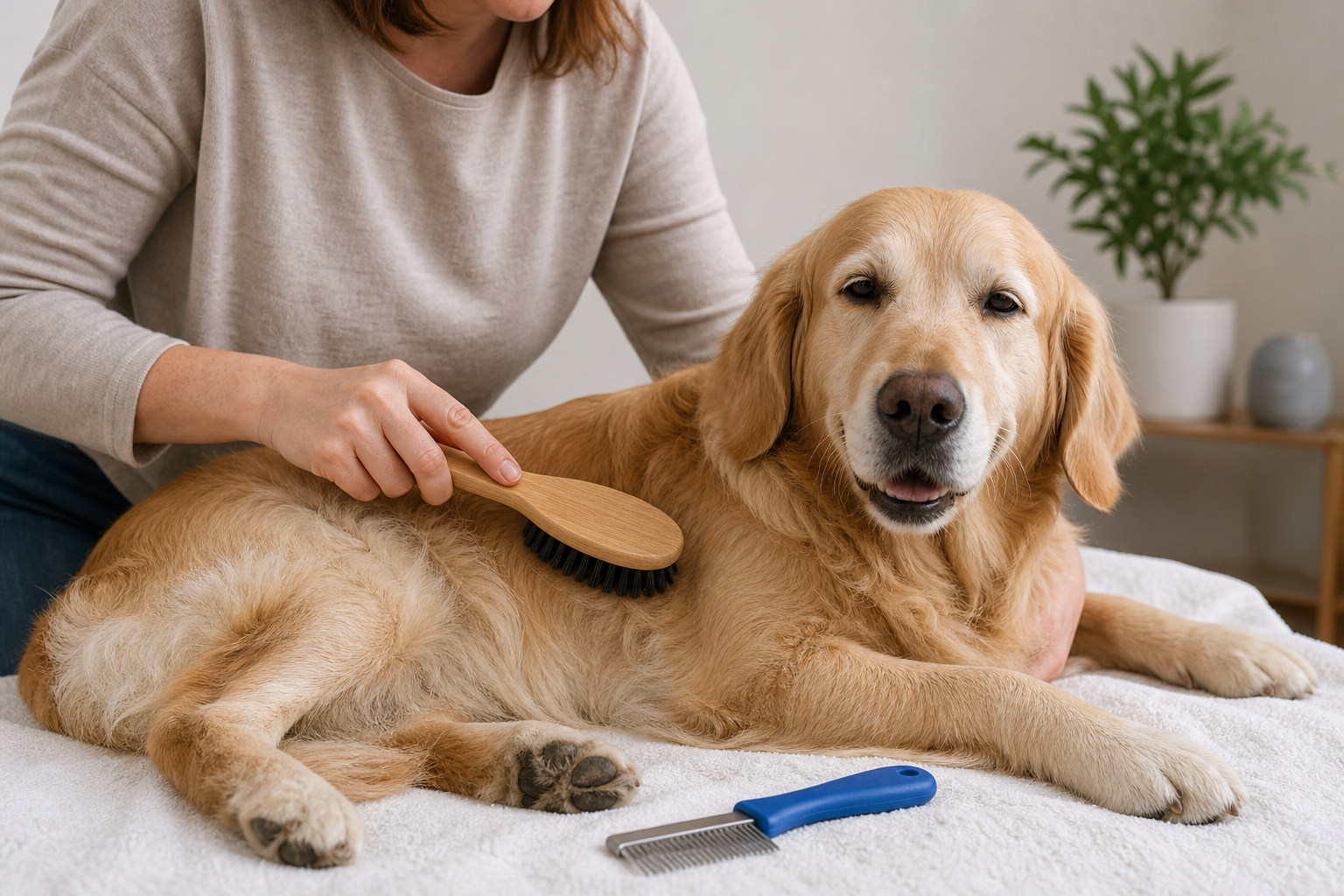
Part the coat in good light and check for fleas, flea dirt, redness, scabs, dampness and hot spots. Use a flea comb; do not dig at a sore area.
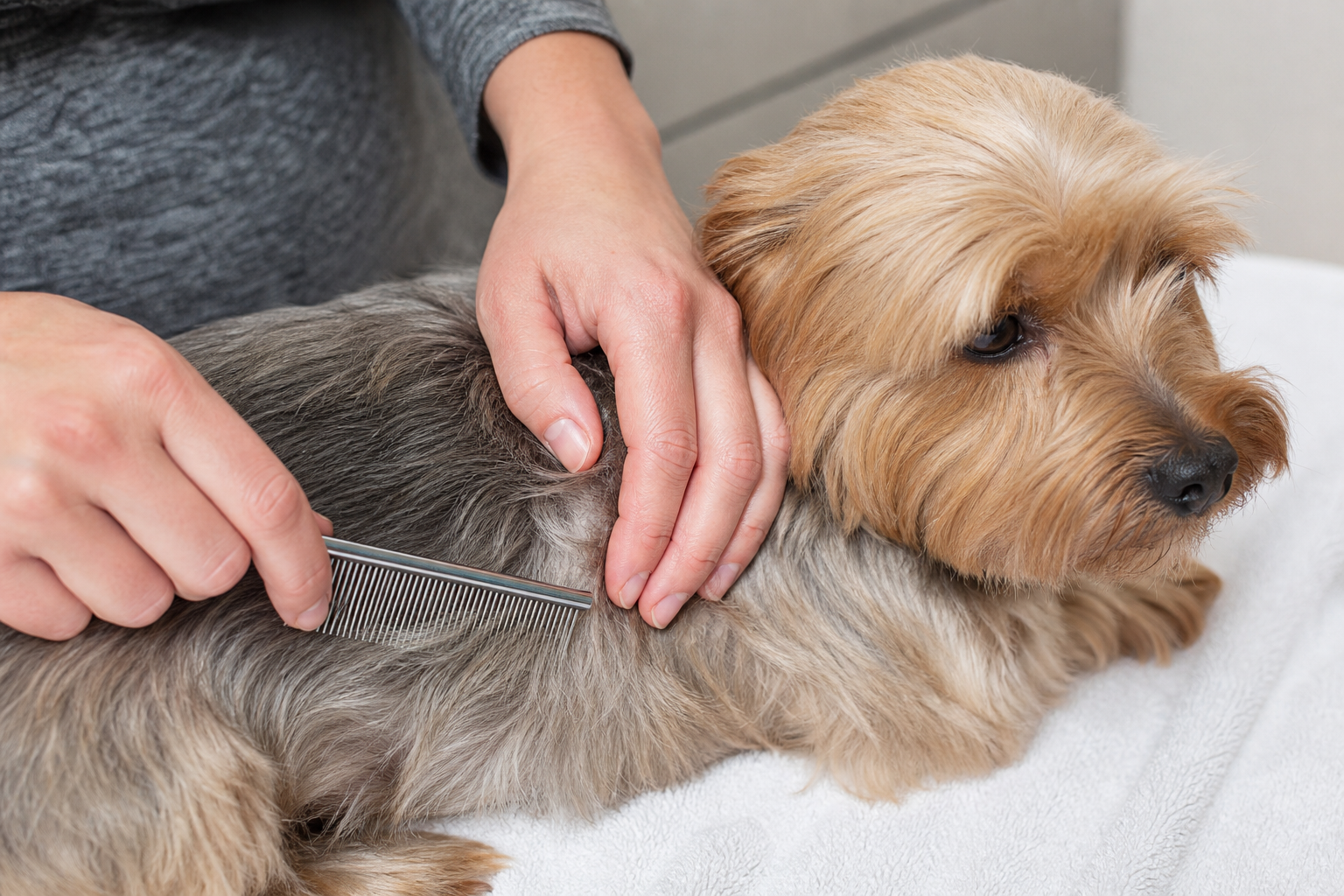
Keep the coat dry
Best for: after walks or baths
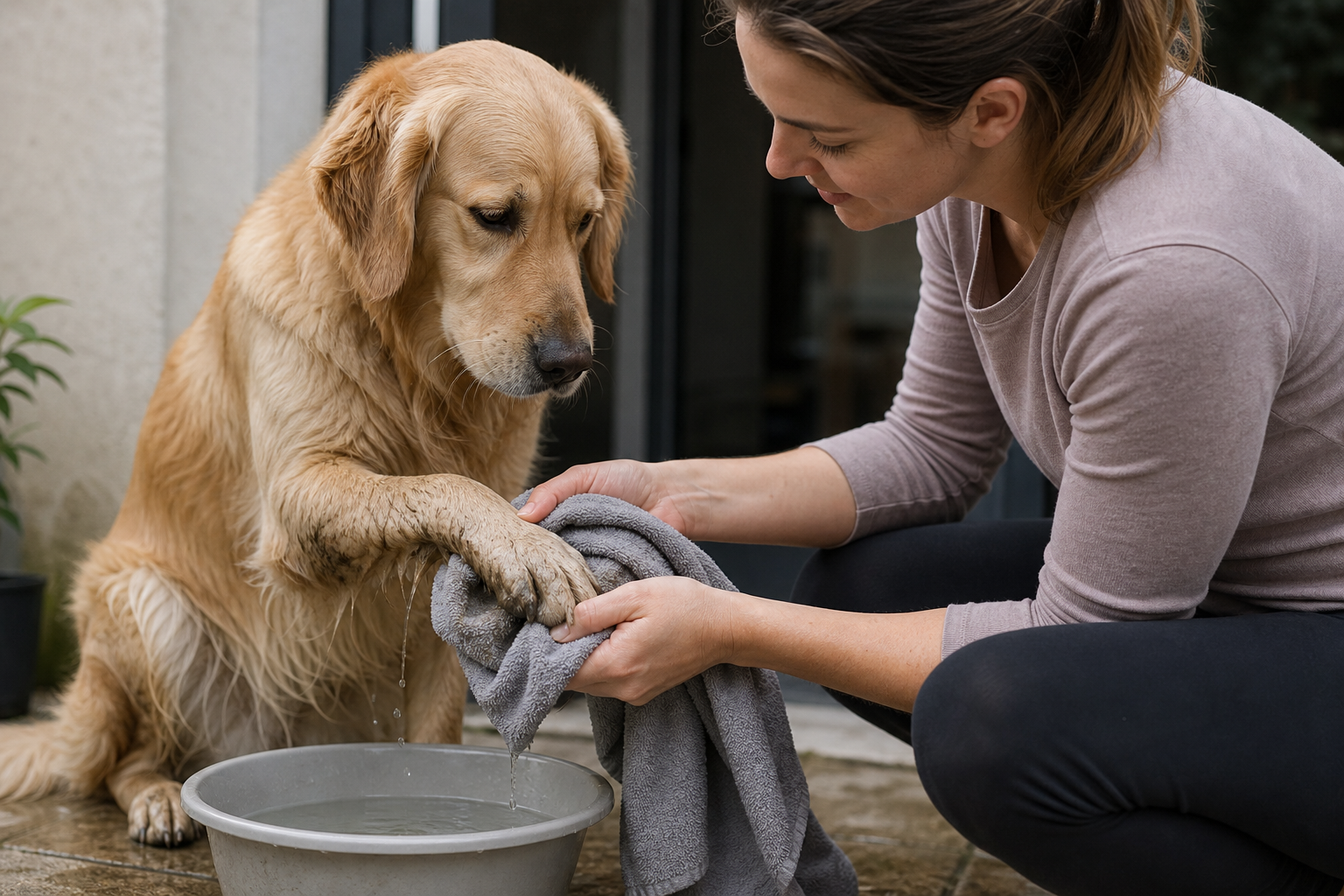
Towel-dry thoroughly after walks or bathing, especially paws, folds and the outside of ears. Do not push towels or cotton buds into ears.
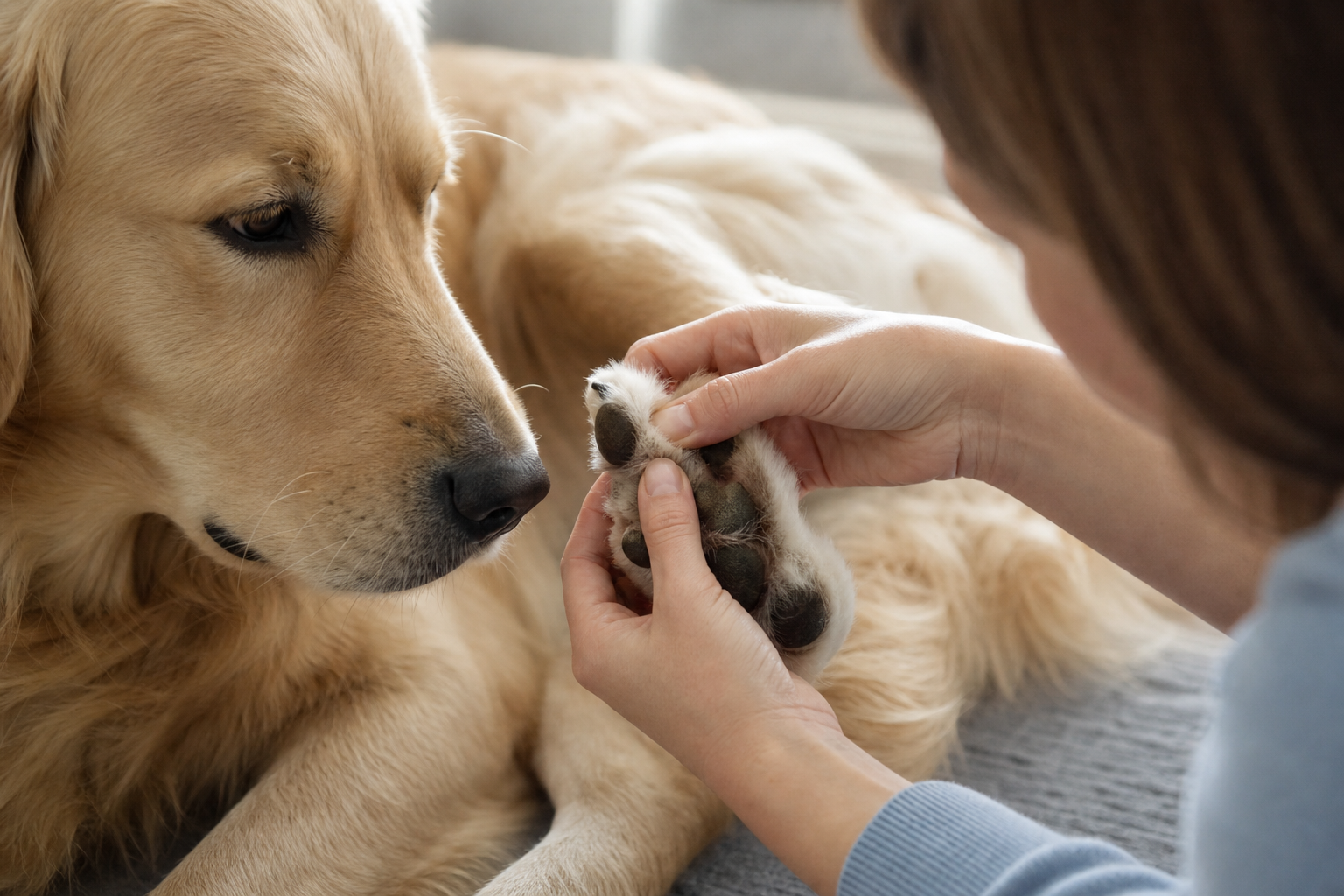
Check the outer ears and clean the environment
Best for: possible flea exposure
Look at the outer ear for redness, smell or discharge without inserting anything. Wash bedding, vacuum resting places and discuss parasite control with a veterinarian.
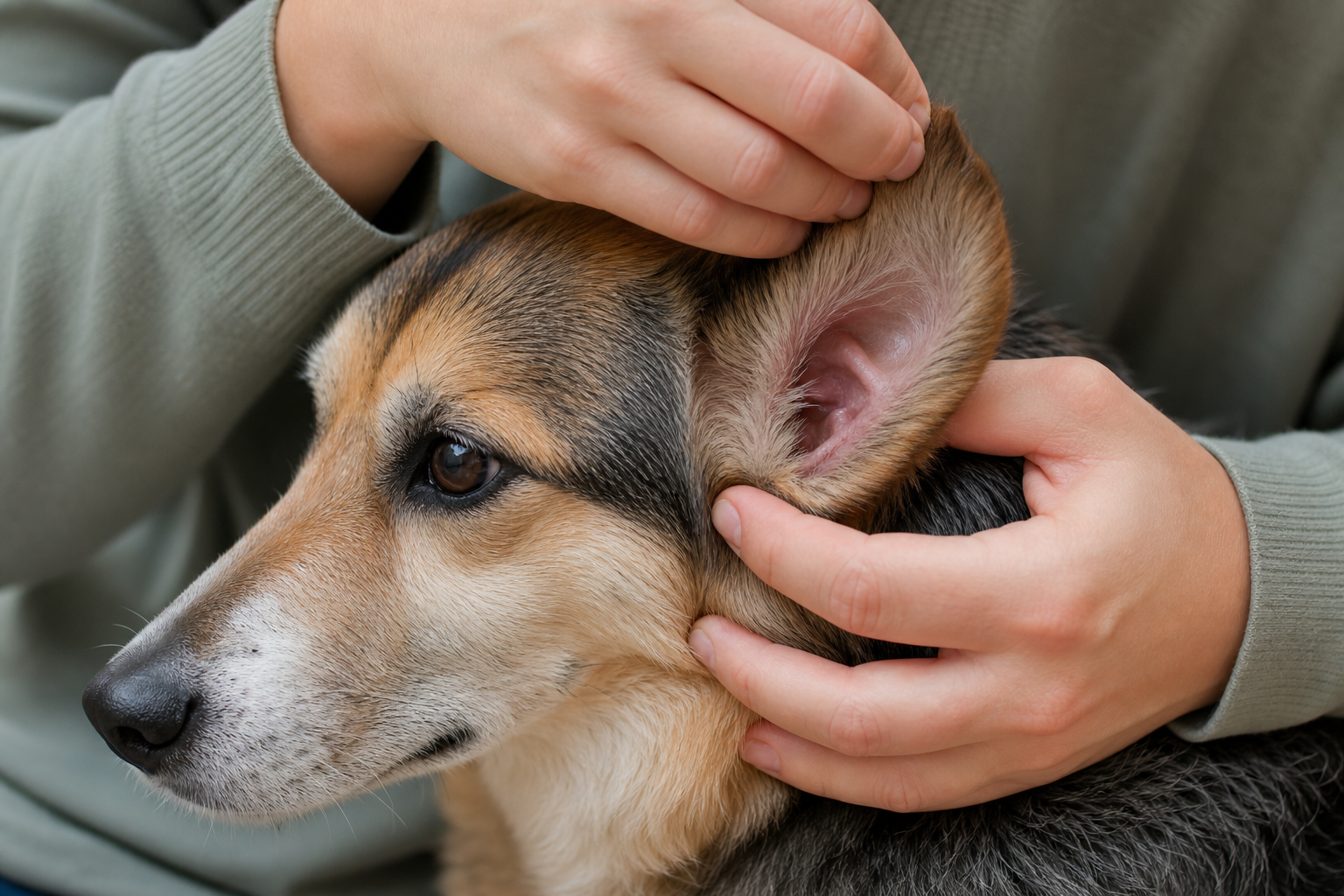
Use gentle grooming
Best for: loose coat and dirt
Brush carefully and stop if skin is sore or the dog reacts in pain. Rinse dirty paws with plain lukewarm water and dry them rather than repeatedly bathing the whole dog.
See a veterinarian
Best for: persistent or painful itch
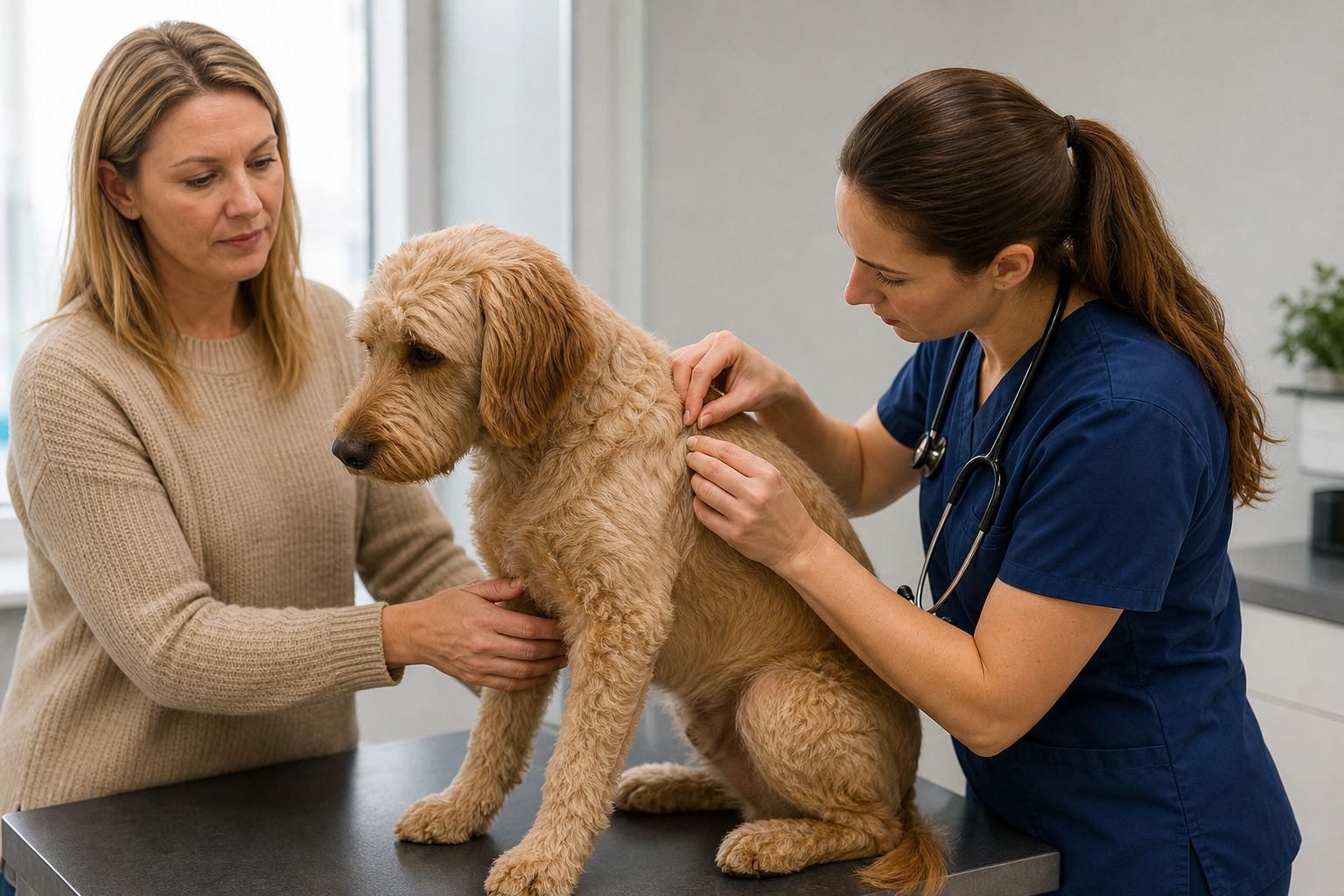
Skin infections, ear disease, parasites and allergies can look similar. Bring a timeline, product list and clear photos; do not apply new medicines just before the appointment unless advised.

Take one clear photo before taking anything apart. It helps a professional see the pattern and saves guesswork.
Common patterns
Itch mainly at the tail base
Fleas and flea allergy are common possibilities. Use a flea comb and check bedding before assuming it is only dry skin.
Ear rubbing after walks
Look at the outer ear for redness or smell, dry paws thoroughly, and book veterinary help if head shaking continues.
Itch that follows a new shampoo or food
Stop the newest product, note the timeline, and bring that list to the appointment.
What not to do
Give human medicines
Common human pain and allergy medicines can be dangerous to dogs.
Use household chemicals or strong fragrances
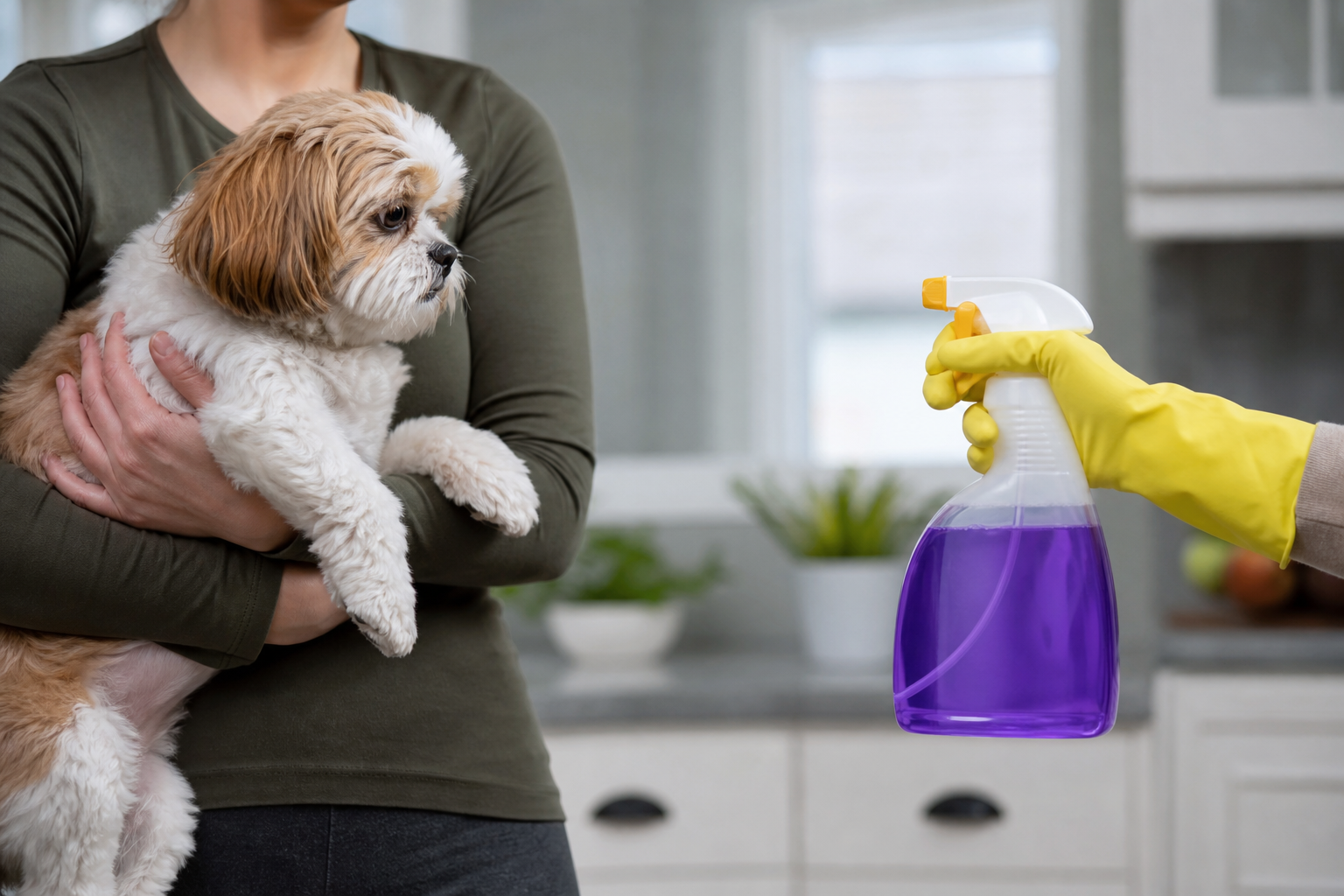
They can worsen irritation and are not parasite treatment.
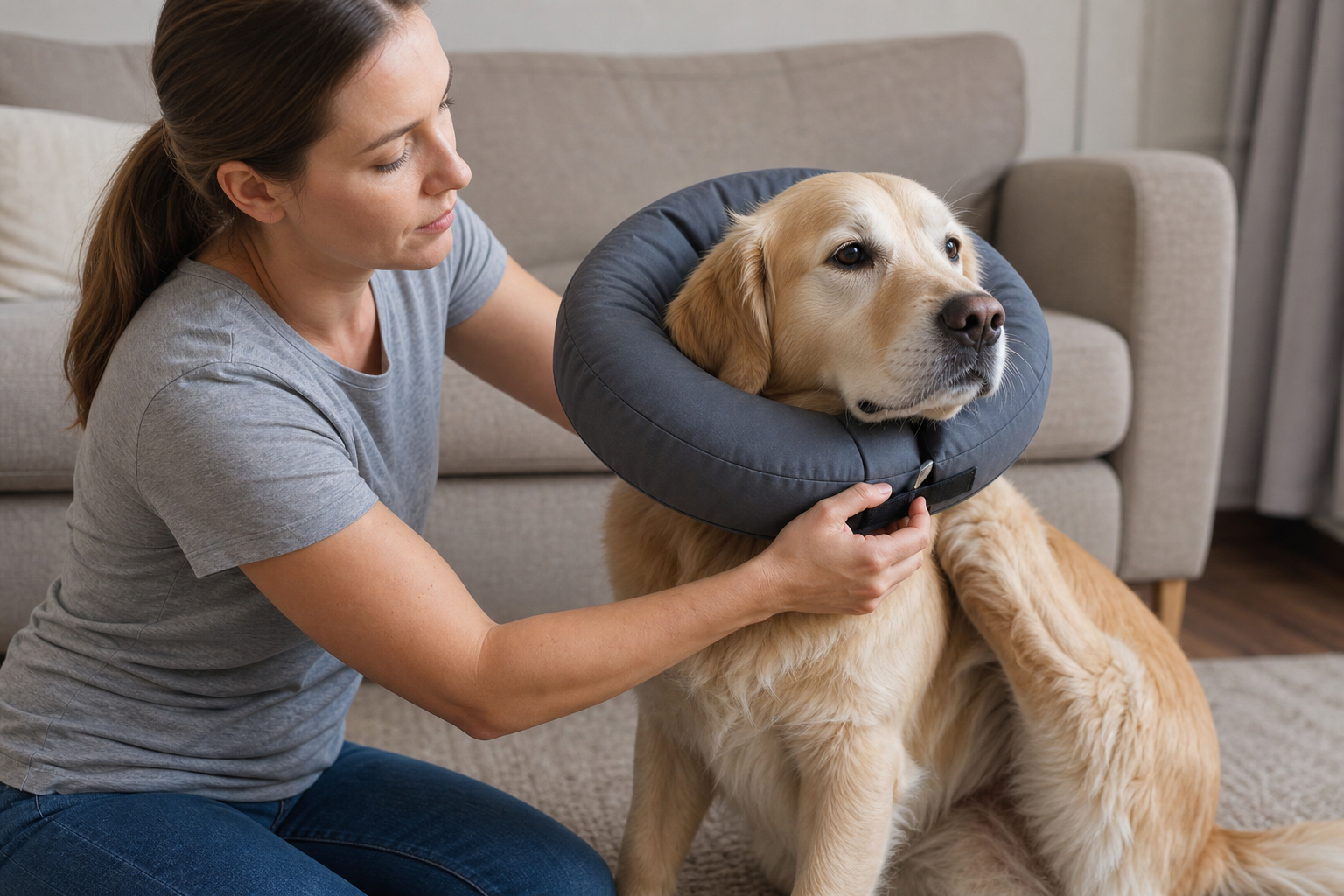
Let self-trauma continue
If the dog cannot stop scratching, ask a veterinarian about safe temporary protection.
Use human shampoo or essential oils on broken skin
They can irritate further and are not a substitute for diagnosis or approved parasite treatment.
Keep it from returning
Keep bedding clean, dry the coat after wet outings, use a veterinarian-approved parasite plan and introduce grooming products one at a time so a reaction is easier to identify.
When to book professional help
Book grooming for routine coat hygiene. See a veterinarian promptly for wounds, bad odour, ear discharge, pain, swelling, head shaking, hair loss, spreading redness, vomiting, lethargy or itching that persists beyond a day or two.
FAQs
What is the first check for dog itching and scratching?
Part the coat in good light and check for fleas, redness, scabs, or damp skin. Note where and when the scratching happens.
Can I treat ear itch at home?
Look at the outer ear only. Do not put drops, cotton buds or tools into the canal. Book veterinary help for smell, discharge or head shaking.
Why did this start suddenly?
New shampoo, food, parasite exposure, damp coat after walks, or seasonal allergens are common triggers. A timeline helps the vet.
Will bathing more fix it?
Not always. Repeated bathing can strip the coat and worsen irritation. Gentle drying and the right diagnosis matter more.
When should I book help?
Book grooming for coat hygiene; see a vet promptly for wounds, bad odour, ear discharge, pain, hair loss, or persistent scratching.