
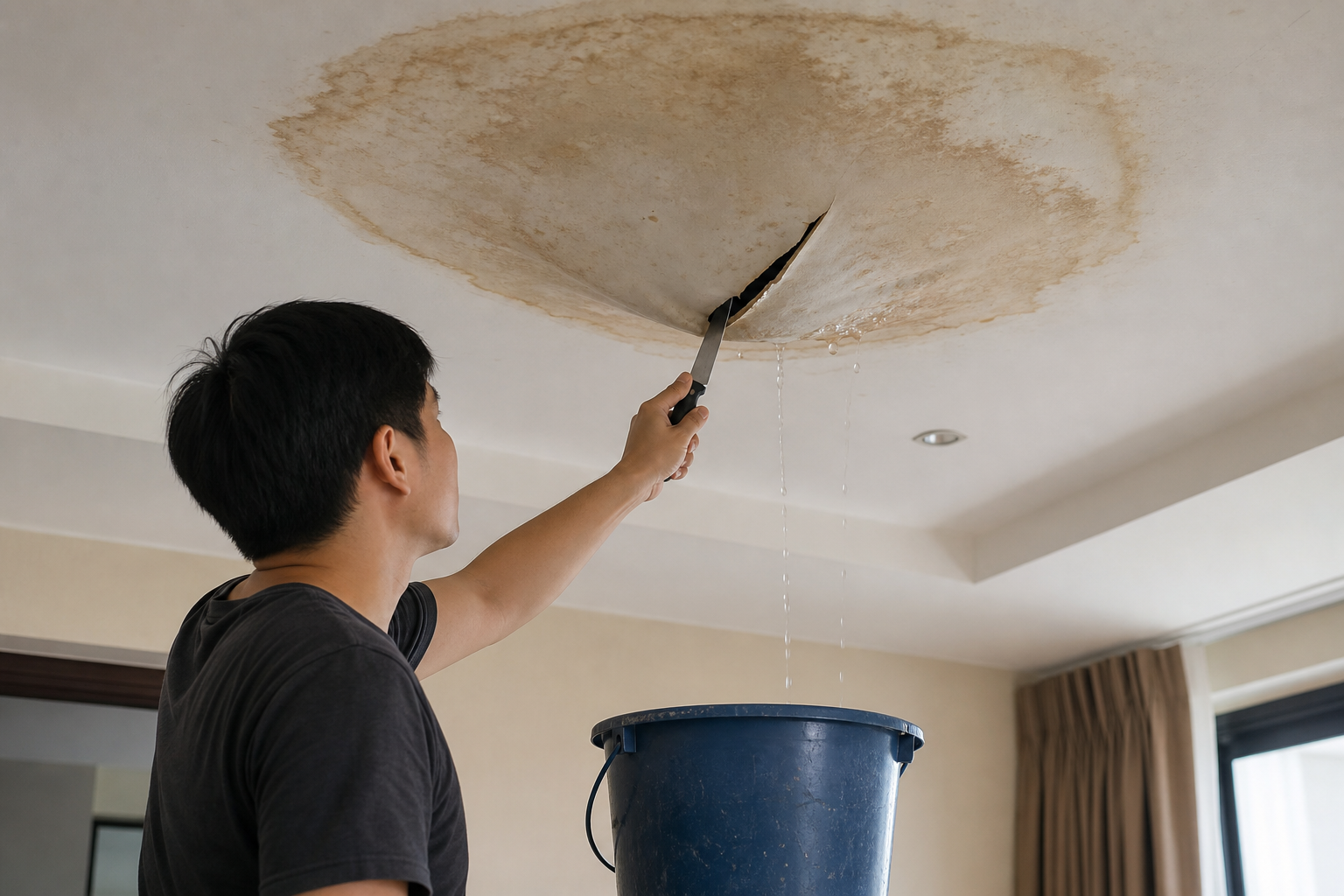
A tea-coloured ring appears on a false ceiling. The stain is evidence, not the repair: water may have travelled from a pipe, bathroom, roof edge or drain before it showed itself here.
Do not paint an active stain. Gypsum board can soften and lose strength, and water near downlights or wiring changes a cosmetic job into an electrical safety issue.
Protect the room, keep clear of a soft or sagging board, and switch off the affected circuit if water is near electrical fittings. Check whether the mark is active and trace the moisture source. Repair and fully dry the area before replacing board or repainting.
Quick diagnosis map
| What you notice | What it may mean | First move |
|---|---|---|
| Old dry ring, no growth | Previous leak or condensation | Confirm the source was repaired before cosmetic work |
| Stain expanding, damp or dripping | Active plumbing, roof or drain leak | Protect below; arrange source diagnosis |
| Soft, bowed or cracked board | Water-loaded ceiling | Clear the area and book urgent repair |
| Water near a light or fan | Electrical risk | Isolate the circuit; call an electrician |
Do not touch, puncture or stand below a sagging ceiling. Do not keep a light on near water, and do not repaint an active mark.
Common sources above a false ceiling
- A bathroom leak, failed waterproofing or appliance overflow above.
- A leaking water line, drain joint or air-conditioner condensate pipe.
- Roof or exterior water entry following rain or snowmelt.
- Condensation on a cold pipe within the ceiling void.
Methods that help — in the safe order
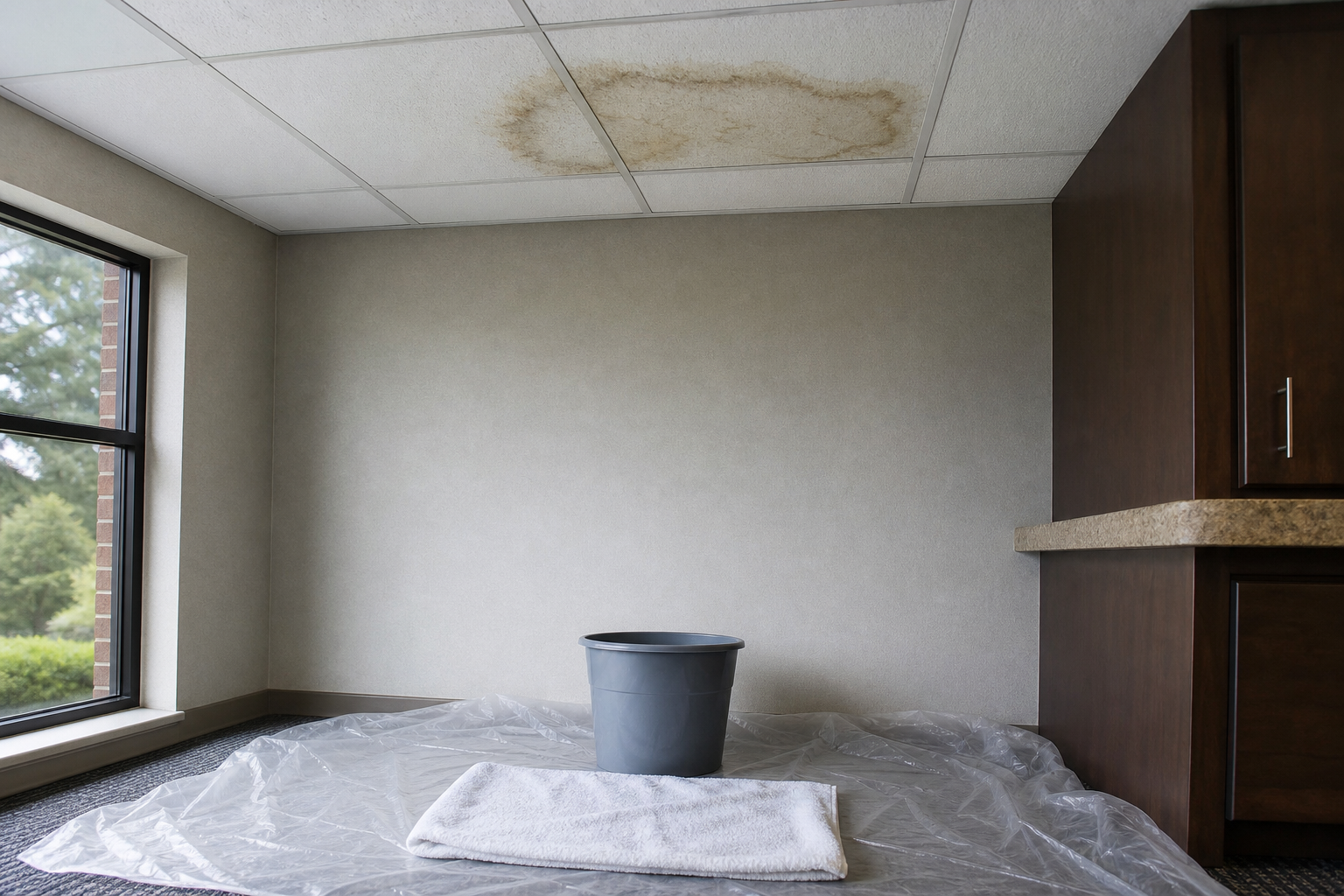
Contain without puncturing
Best for: an active drip or a newly discovered stain
Move furniture, lay towels or a waterproof sheet and place a bucket under a drip. Keep people out from beneath any soft or sagging section.
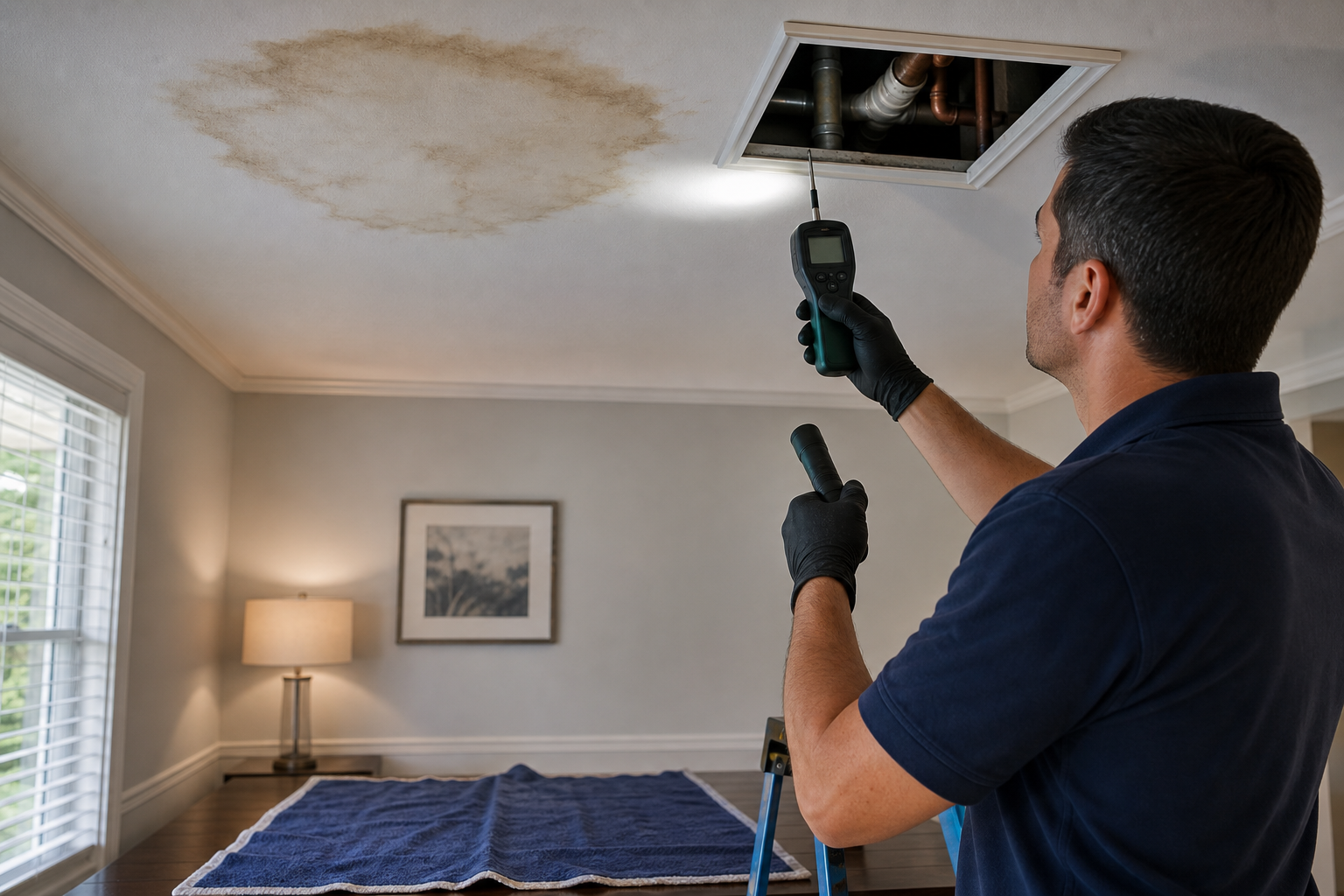
Work backwards to the source
Best for: a mark away from fittings
Check the room, bathroom, pipes, roof line or drain route above the mark. Record whether it worsens after showers, rain or appliance use; that timing is useful evidence.

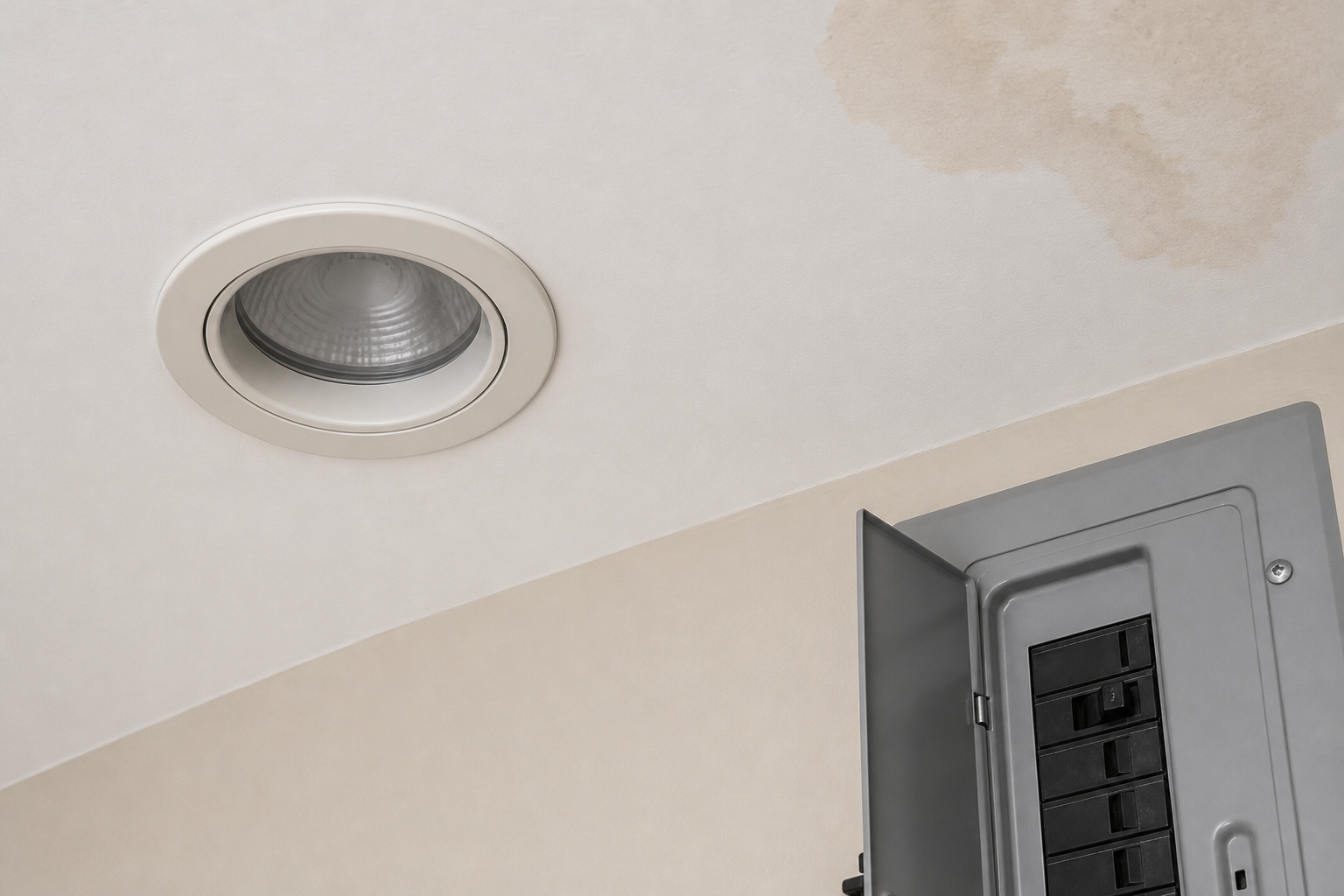
Isolate electrical risk
Best for: downlights, fans or wiring near water
Switch off the relevant circuit at the board if you can identify it safely. Leave fitting removal and testing to an electrician.
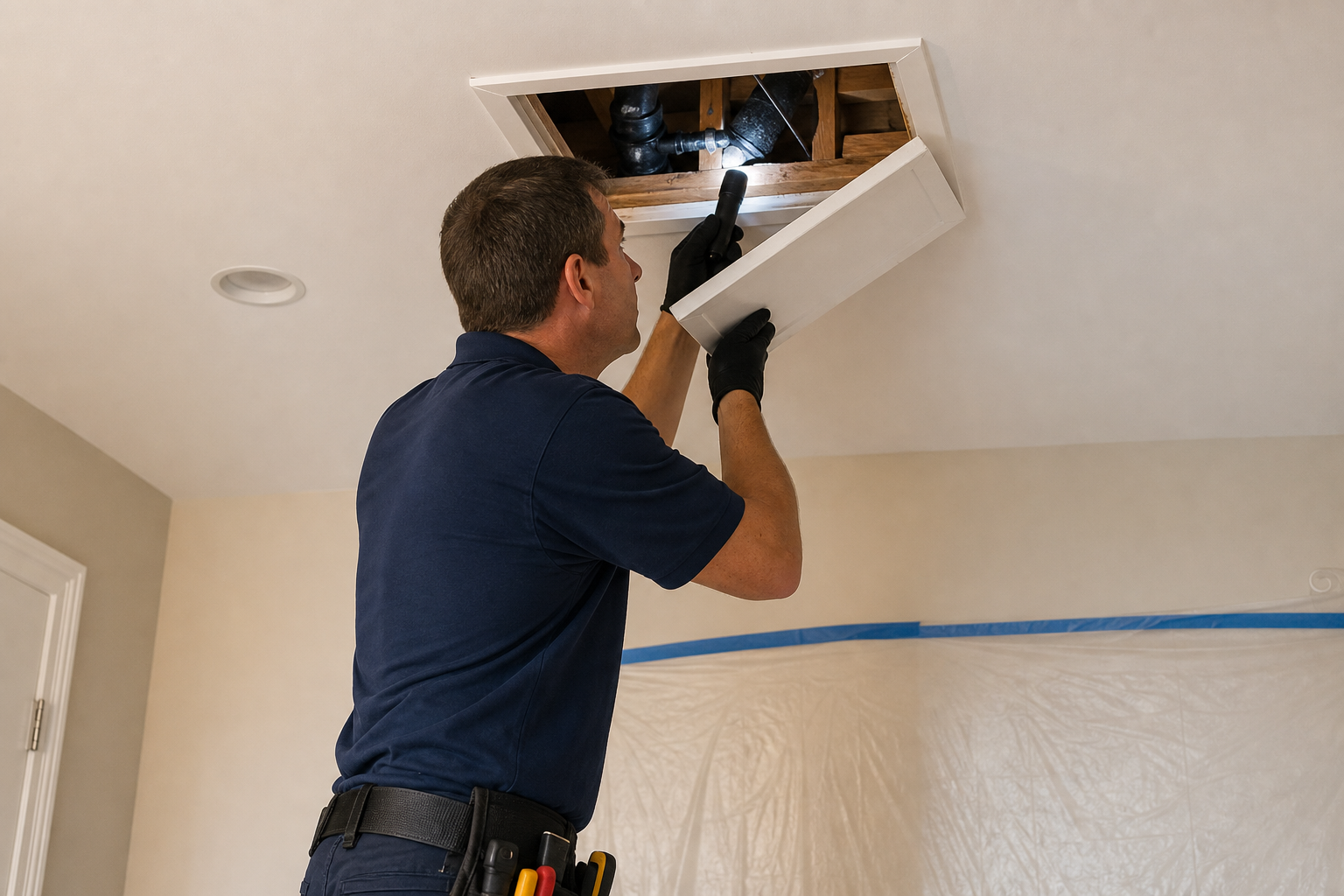
Repair the source before the board
Best for: a confirmed leak
Have the pipe, drain, waterproofing or roof defect repaired and document the repair. A ceiling patch only hides the clue until the water returns.
Dry, replace and finish
Best for: an inactive, fully dry area
Damaged gypsum may need cutting out and replacing. Prime only after drying is confirmed, then paint; stain-blocker is not a leak repair.
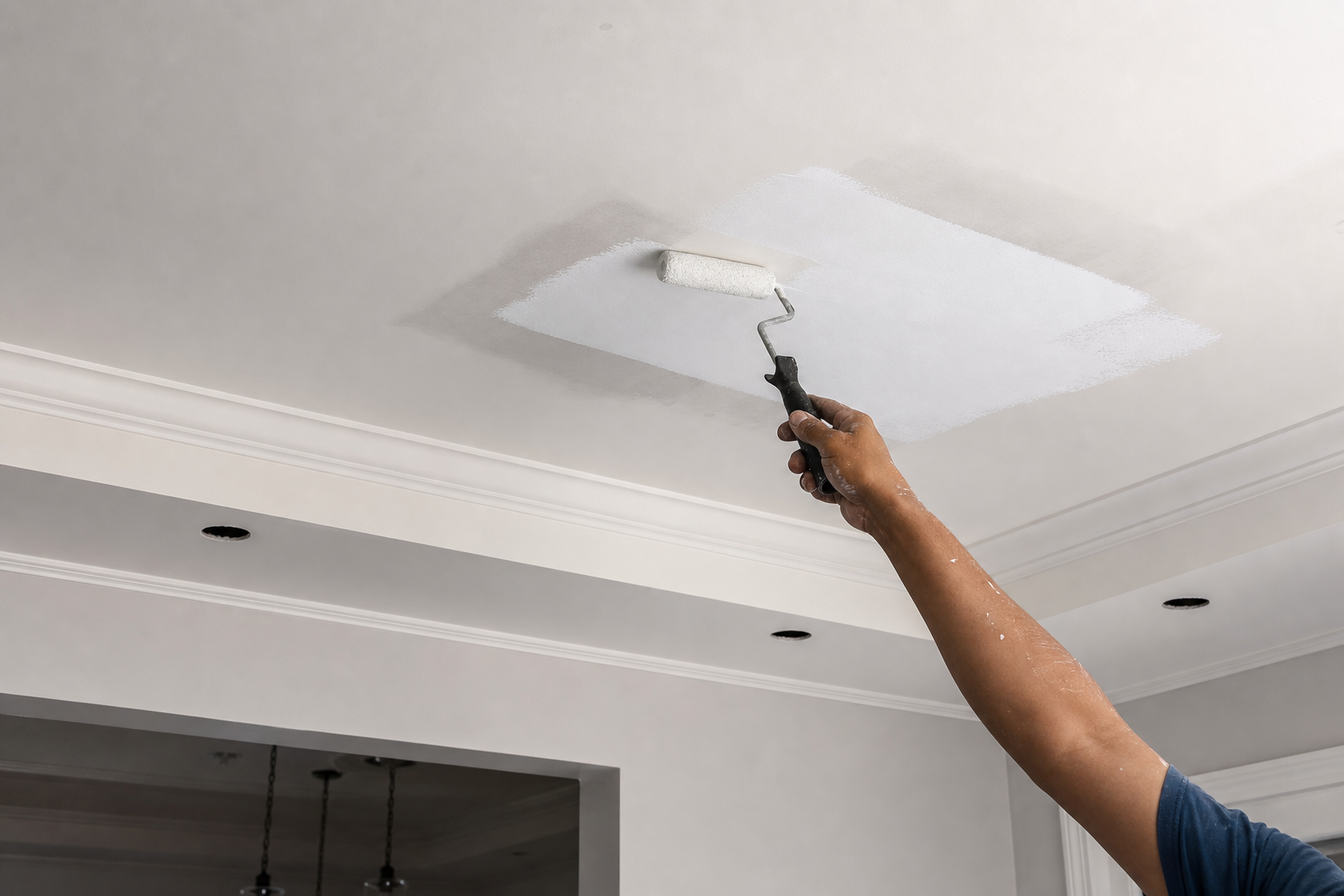
Note whether the stain worsens after showers, rain, or when an appliance runs upstairs. That timing often tells a plumber where to start.
Common scenarios
Stain grows after showers
Look above for bathroom waterproofing, pipe joints, or an overflow route before touching the ceiling finish.
Stain appears after heavy rain
Roof edge, terrace drainage, or an exterior wall defect may be sending water into the ceiling void.
Old dry ring with no new dampness
The source may already be repaired, but confirm the board is sound and dry before cosmetic work.
Please don’t do this
Paint over the ring
It may hide the warning briefly but cannot stop trapped moisture.
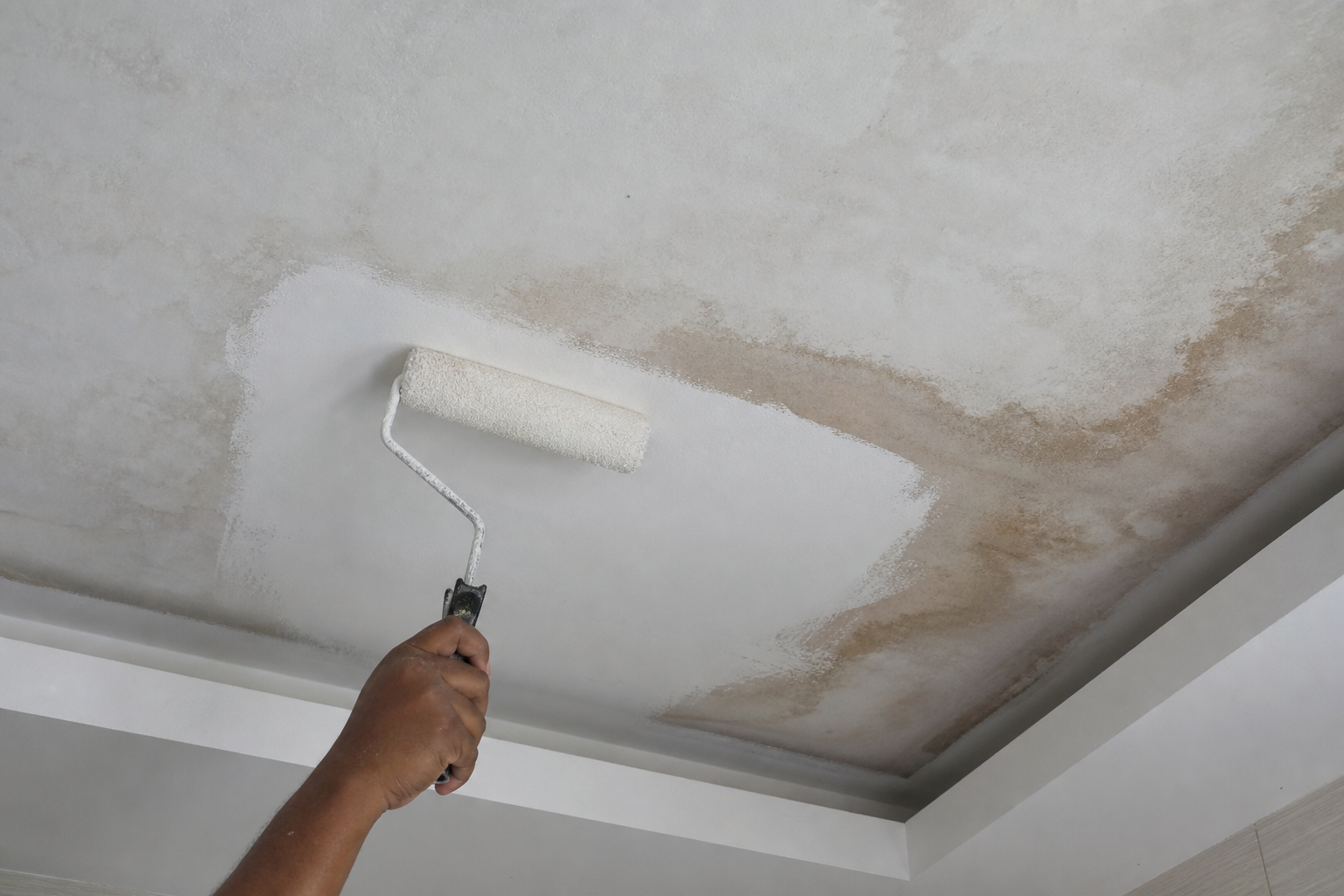
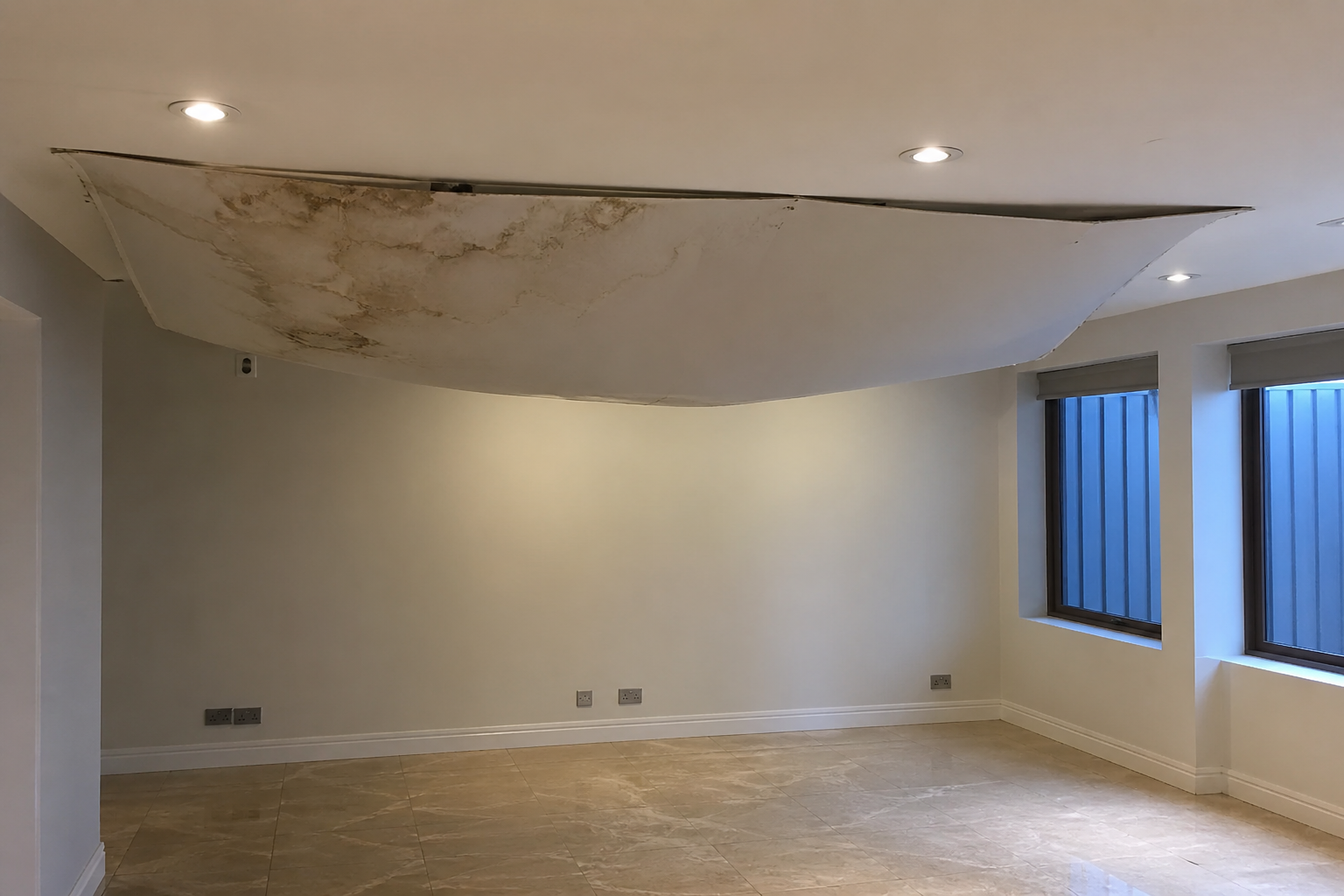
Poke a sagging board
A water-loaded ceiling can drop debris suddenly. Clear the space instead.
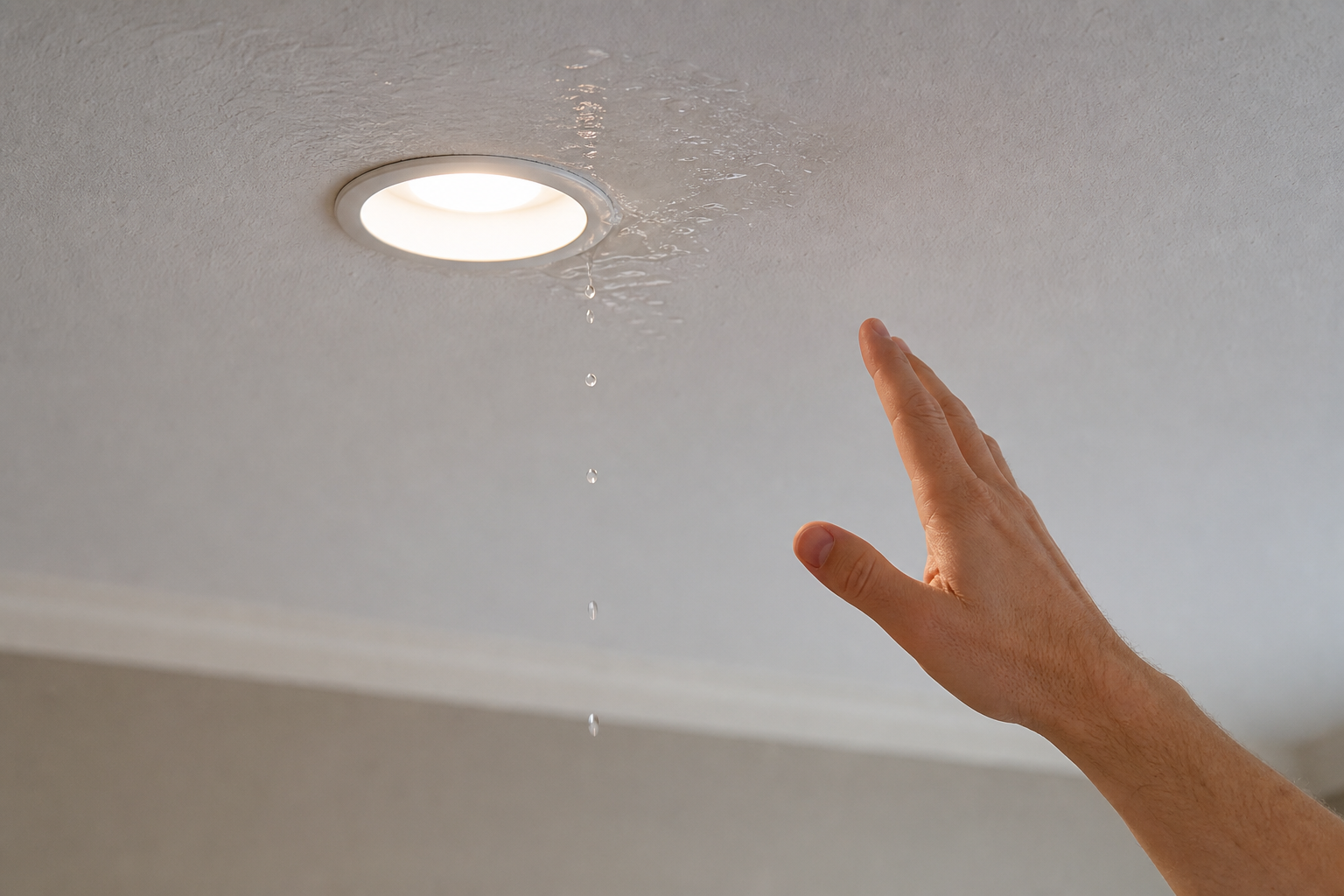
Ignore water near fittings
Isolate power and seek help rather than testing a wet light.
Cut into a sagging ceiling yourself
Water, wiring and loose gypsum make this unsafe. Contain the area and book professional help.
Preventing a repeat
- Check bathrooms, roof drainage and exposed pipes before the wet season.
- Act on recurring condensation and have drain lines tested after renovations.
- Keep a photo record of old stains so you can tell whether a mark is active again.
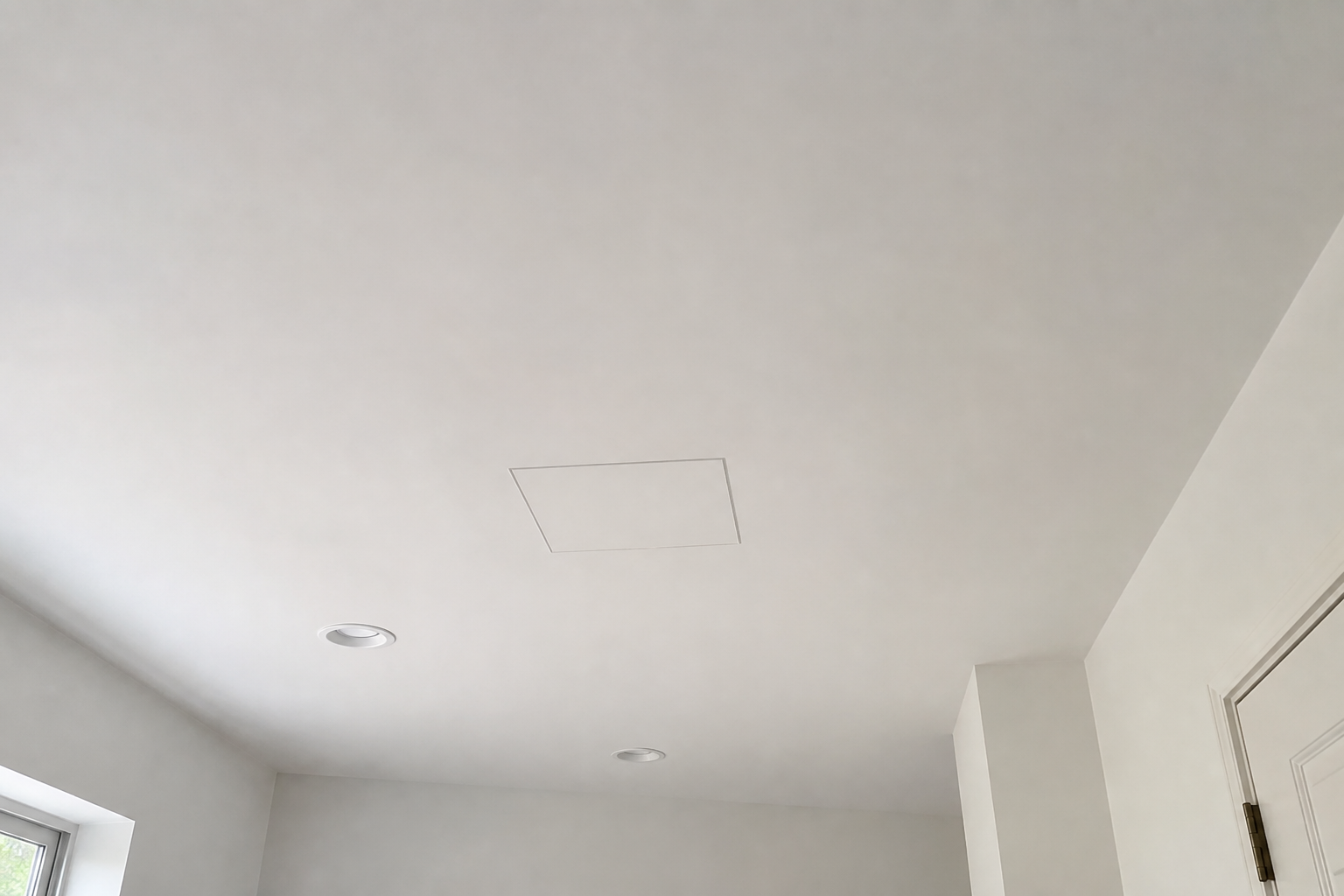
- Do not block ceiling access hatches with stored items after a repair.
When to book help
Book urgent help for sagging board, dripping, water near electrical fittings, rapid stain growth or mould smell. Book plumbing, waterproofing or roof diagnosis for an active source, then interior repair once the area is dry.
FAQs
Can I paint a water stain on a false ceiling?
Only after the source is repaired and the board is dry and sound. Otherwise it will return or the board may deteriorate.
How do I know whether a stain is active?
Look for growth, dampness, a cool soft patch, a new drip or a pattern linked to rain, plumbing use or an appliance.
Should I puncture a bulging false ceiling?
No. Clear the area and get professional advice; water and electrical fittings make this unsafe.
Can an old stain still be a problem?
Yes. It may signal old, weakened gypsum or a leak that only appears in certain weather or when plumbing is used.
Who should repair it?
First the specialist who can fix the moisture source; then an interior repair professional for replacement and finishing.