
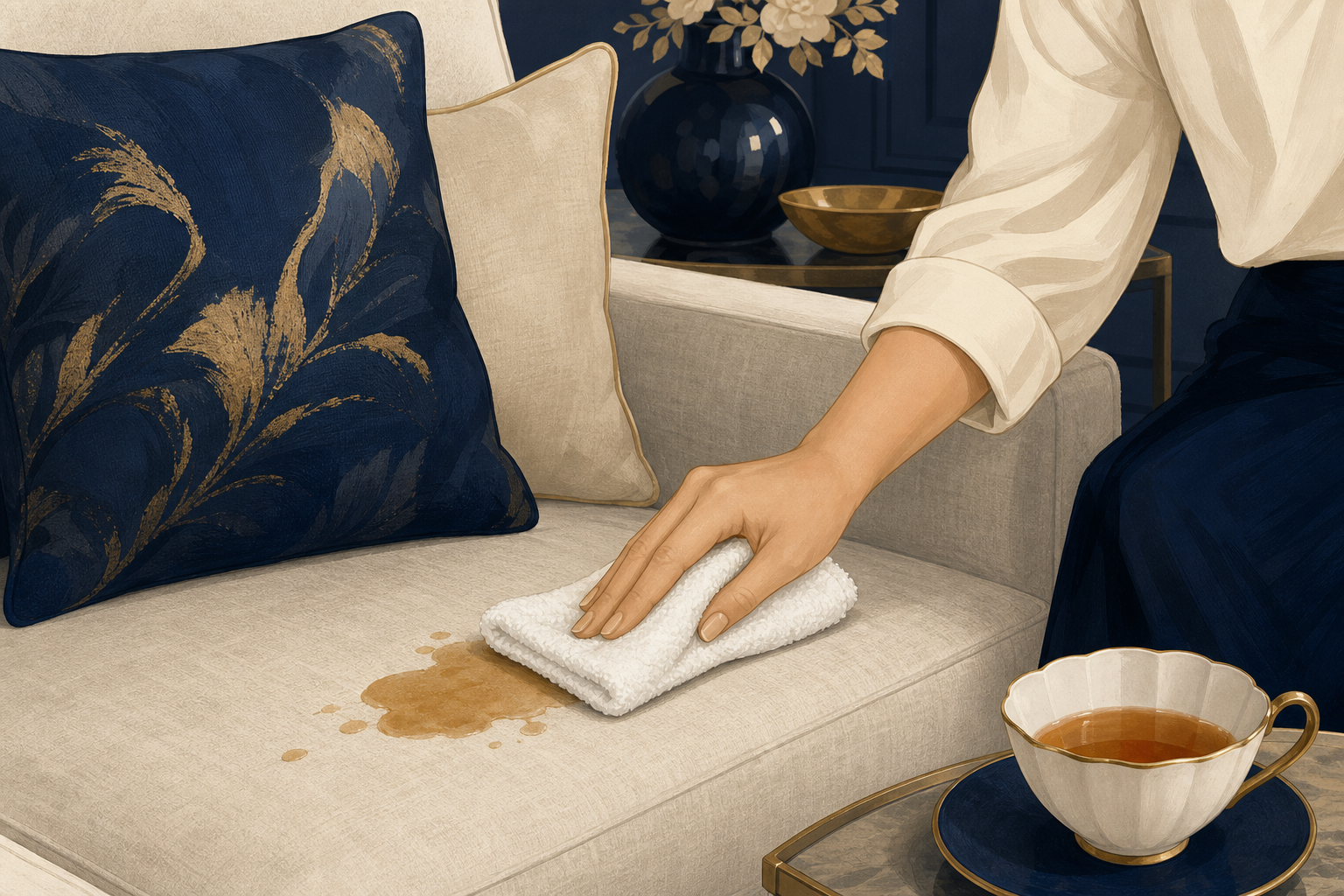
A cup of tea tips onto a sofa cushion. For a second, everyone looks at the mark and then at the nearest cleaning product. The helpful move is slower: blot first and identify the fabric.
A tea spill is recoverable when you move calmly: blot, check the fabric, and keep the cushion from becoming a waterlogged experiment.
Blot fresh spills, check the care tag, test any cleaner on a hidden seam, and use minimal moisture. Old odour, large stains, delicate fabric or a soaked cushion needs professional upholstery cleaning.
Quick diagnosis map
Match what you see to a first move. The right first check for sofa stain or odour is usually safer and cheaper than the strongest possible fix.
| What you notice | Likely reason | First move |
|---|---|---|
| A fresh drink or food spill | May contribute to sofa stain or odour | Inspect carefully and deal with the cause before a cosmetic fix. |
| Body oils and everyday dust | May contribute to sofa stain or odour | Inspect carefully and deal with the cause before a cosmetic fix. |
| Pet accidents or damp cushions | May contribute to sofa stain or odour | Inspect carefully and deal with the cause before a cosmetic fix. |
| Over-wetting from past cleaning | May contribute to sofa stain or odour | Inspect carefully and deal with the cause before a cosmetic fix. |
| Smoke or cooking odours | May contribute to sofa stain or odour | Inspect carefully and deal with the cause before a cosmetic fix. |
| Cleaning product residue | May contribute to sofa stain or odour | Inspect carefully and deal with the cause before a cosmetic fix. |
If there is a safety risk, spreading damage, severe mould, pests near food, or anything you cannot identify safely, pause DIY work and book professional cleaning.
What commonly causes this
Upholstery rarely become a problem for one dramatic reason. Look for the ordinary conditions that let the issue keep returning:
- A fresh drink or food spill — inspect it before treating the visible symptom.
- Body oils and everyday dust — inspect it before treating the visible symptom.
- Pet accidents or damp cushions — inspect it before treating the visible symptom.
- Over-wetting from past cleaning — inspect it before treating the visible symptom.
- Smoke or cooking odours — inspect it before treating the visible symptom.
- Cleaning product residue — inspect it before treating the visible symptom.
Methods that actually help — try them in this order
Start with the lowest-risk, reversible method. Move on only if it does not explain or improve the sofa stain or odour.
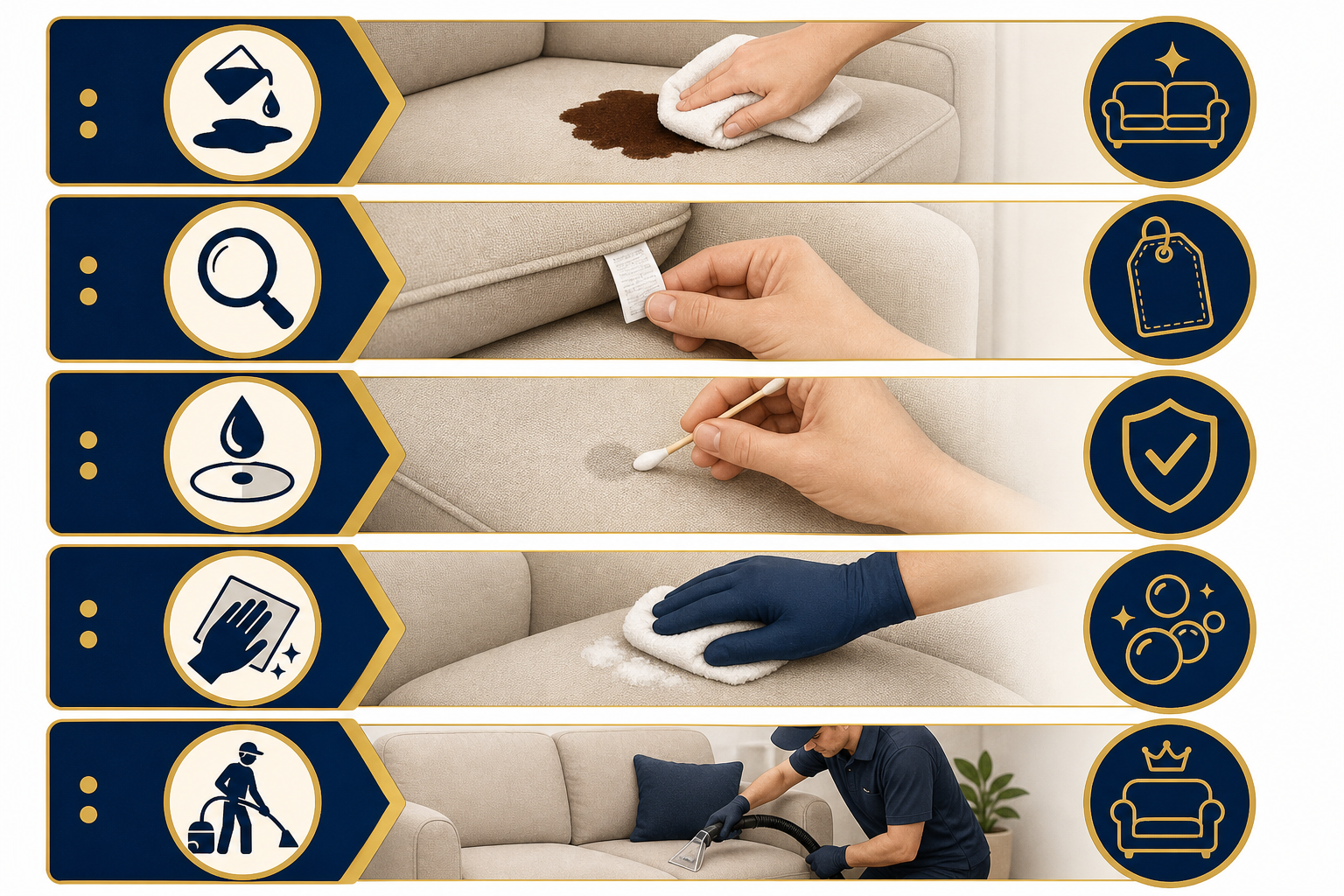
Blot, never scrub
Best for: a new liquid spill
- Press a clean white cloth from the outer edge inward; replace it as it absorbs liquid.
- Work in good light and take a photo before changing anything.
- Change one variable at a time so you can tell what helped.
- Stop if the issue worsens or exposes a safety concern.
Read the care tag
Best for: an unfamiliar fabric
- Check the manufacturer code and removable-cover instructions before using water or solvent.
- Work in good light and take a photo before changing anything.
- Change one variable at a time so you can tell what helped.
- Stop if the issue worsens or exposes a safety concern.

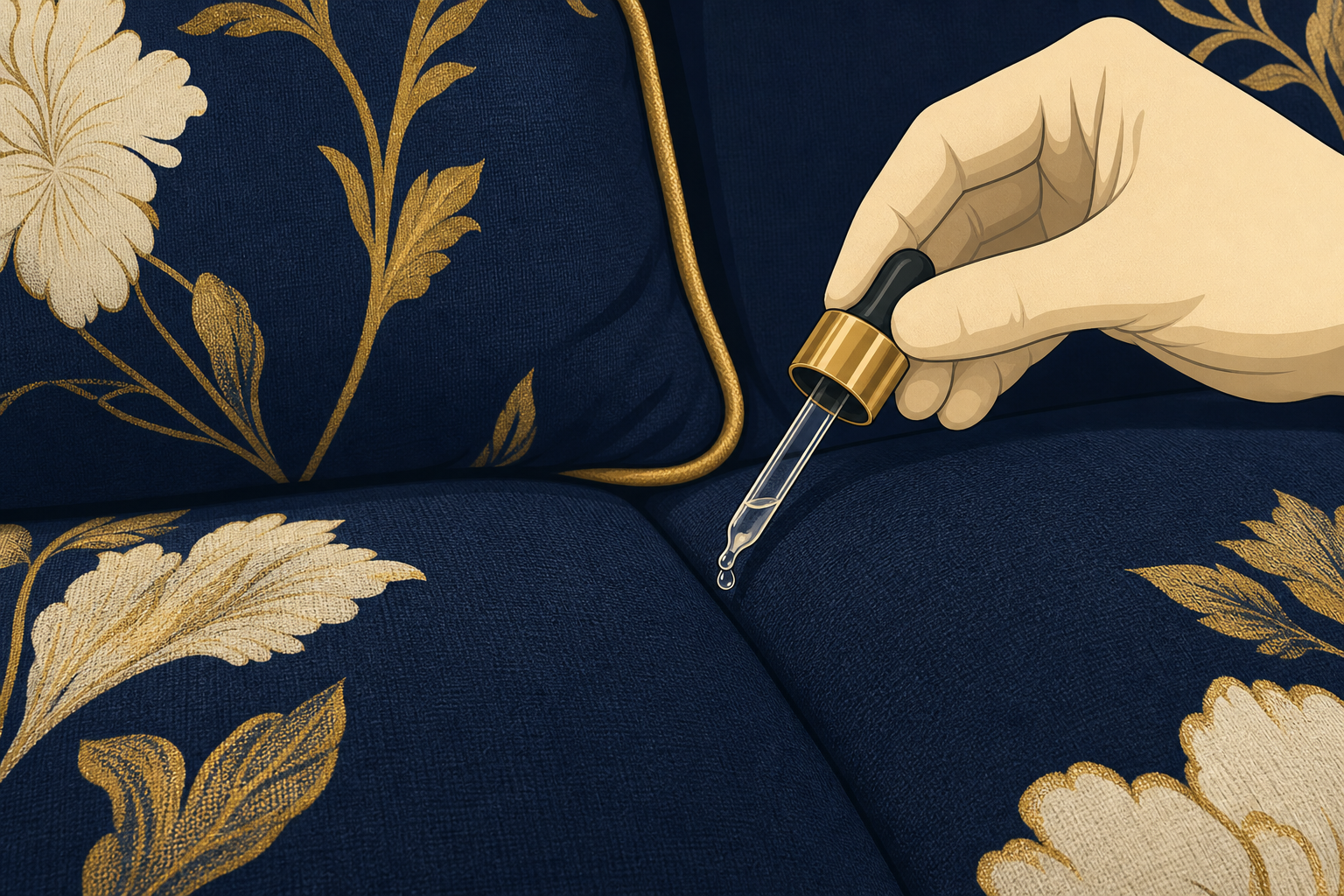
Spot-test a mild cleaner
Best for: a small visible mark
- Test a tiny amount on a hidden seam, wait for it to dry, then check for colour transfer.
- Work in good light and take a photo before changing anything.
- Change one variable at a time so you can tell what helped.
- Stop if the issue worsens or exposes a safety concern.
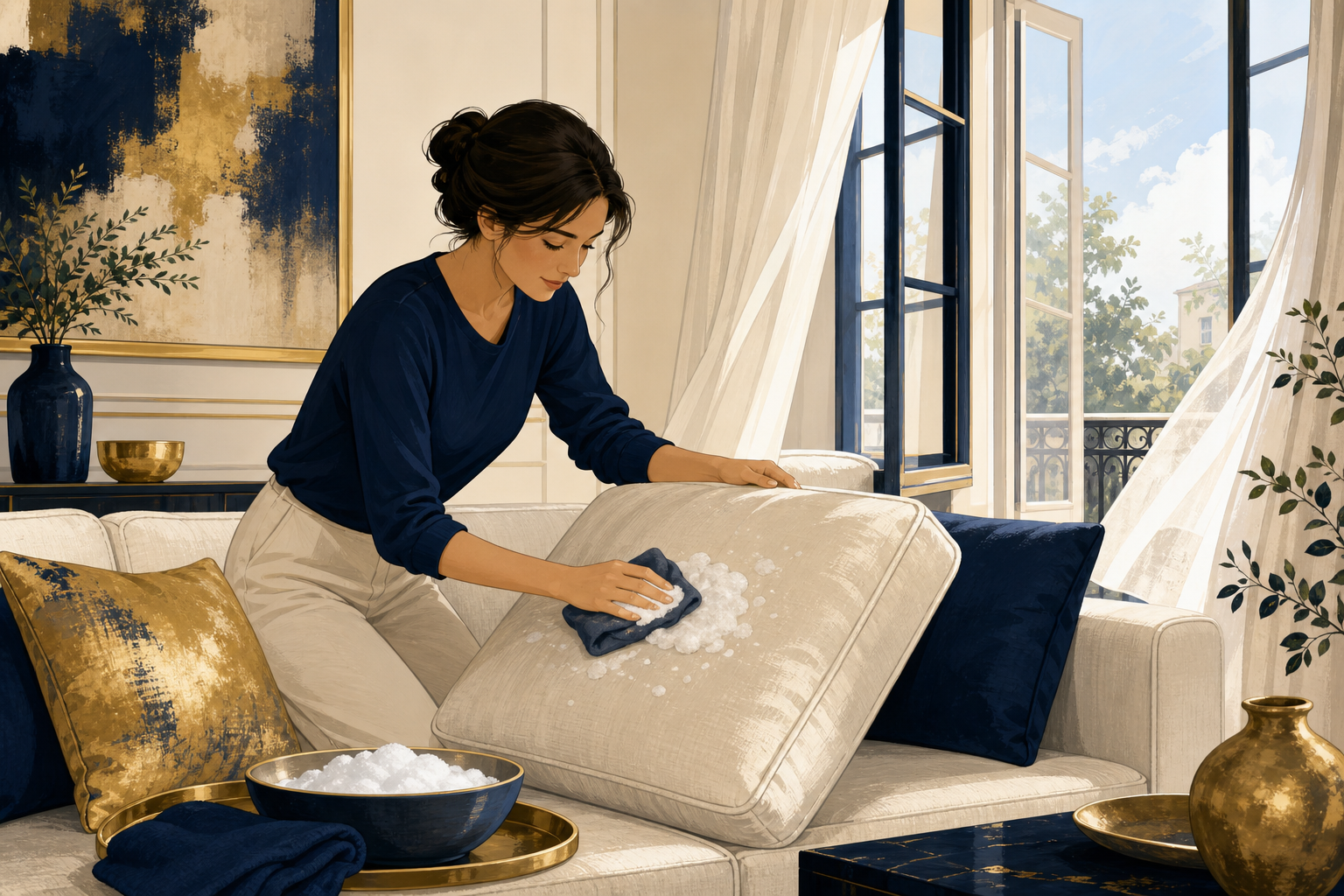
Clean lightly and dry evenly
Best for: a safe washable fabric
- Use minimal suitable solution, dab gently, then ventilate the room and support the cushion shape.
- Work in good light and take a photo before changing anything.
- Change one variable at a time so you can tell what helped.
- Stop if the issue worsens or exposes a safety concern.
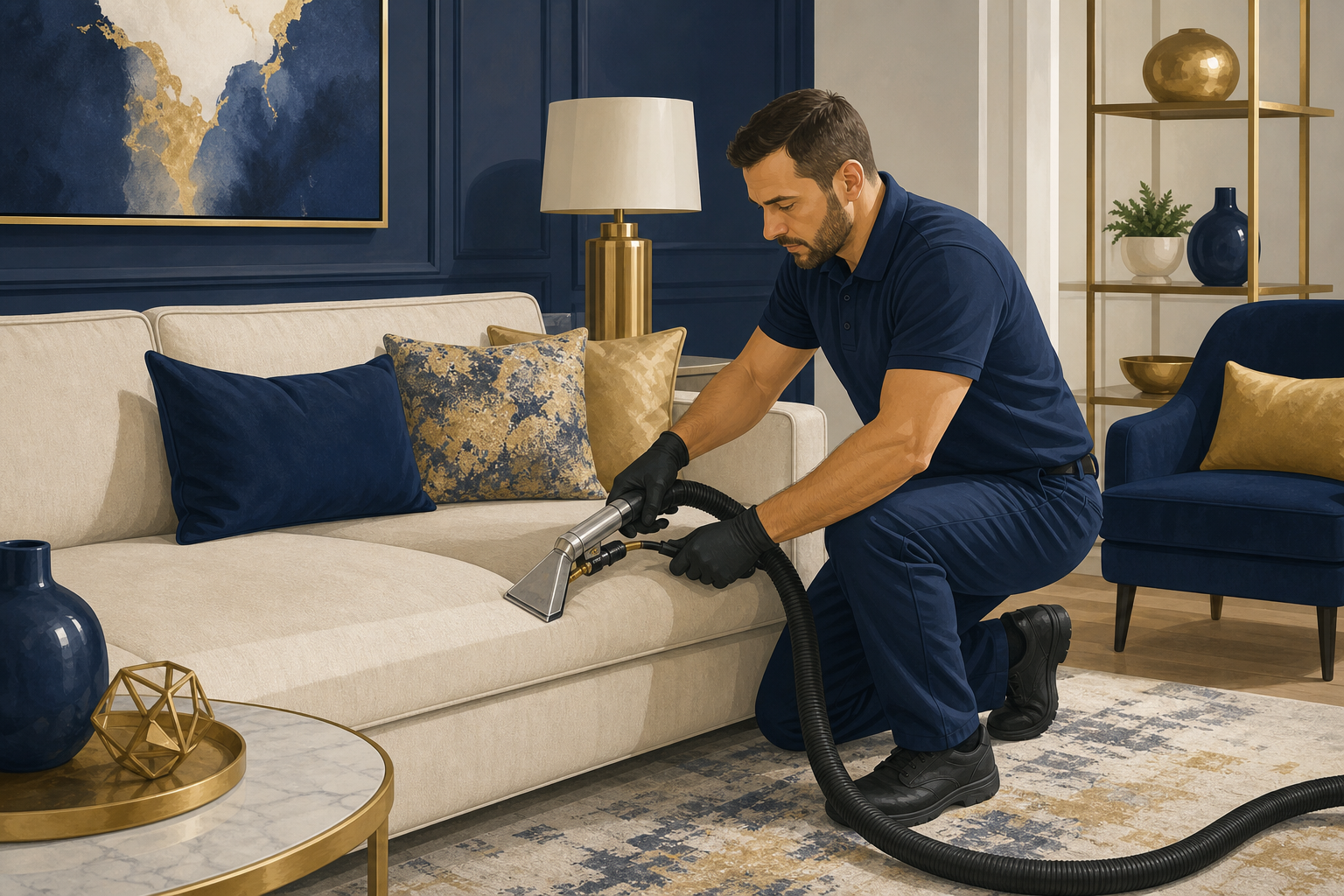
Book upholstery cleaning
Best for: old smells or deep staining
- Tell the cleaner the fabric, stain source and anything already used so cleaning can be matched to it.
- Work in good light and take a photo before changing anything.
- Change one variable at a time so you can tell what helped.
- Stop if the issue worsens or exposes a safety concern.
Common scenarios
Tea or coffee just spilled
Blot immediately; do not rub or add several products at once.
The sofa smells musty
Check for a damp cushion, poor airflow or an old spill before deodorising.
The cover is silk, velvet or unlabelled
Avoid DIY wet cleaning and arrange a professional assessment.
Please don’t do this
These shortcuts can make a small problem harder to diagnose or more expensive to repair.
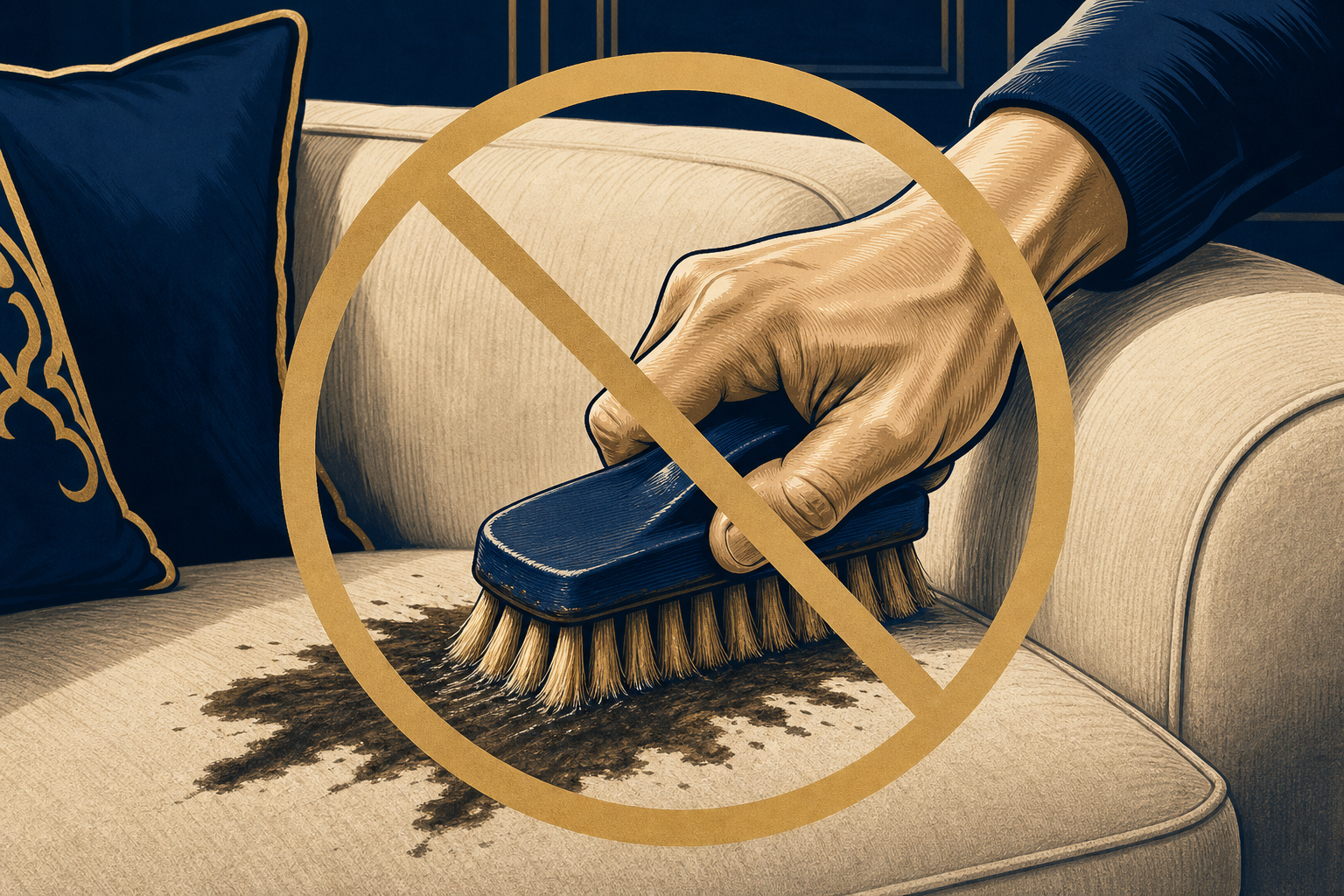
Scrub a wet stain
Best for: avoiding a costly false shortcut
Hard brushing drives pigment deeper and roughens fibres.
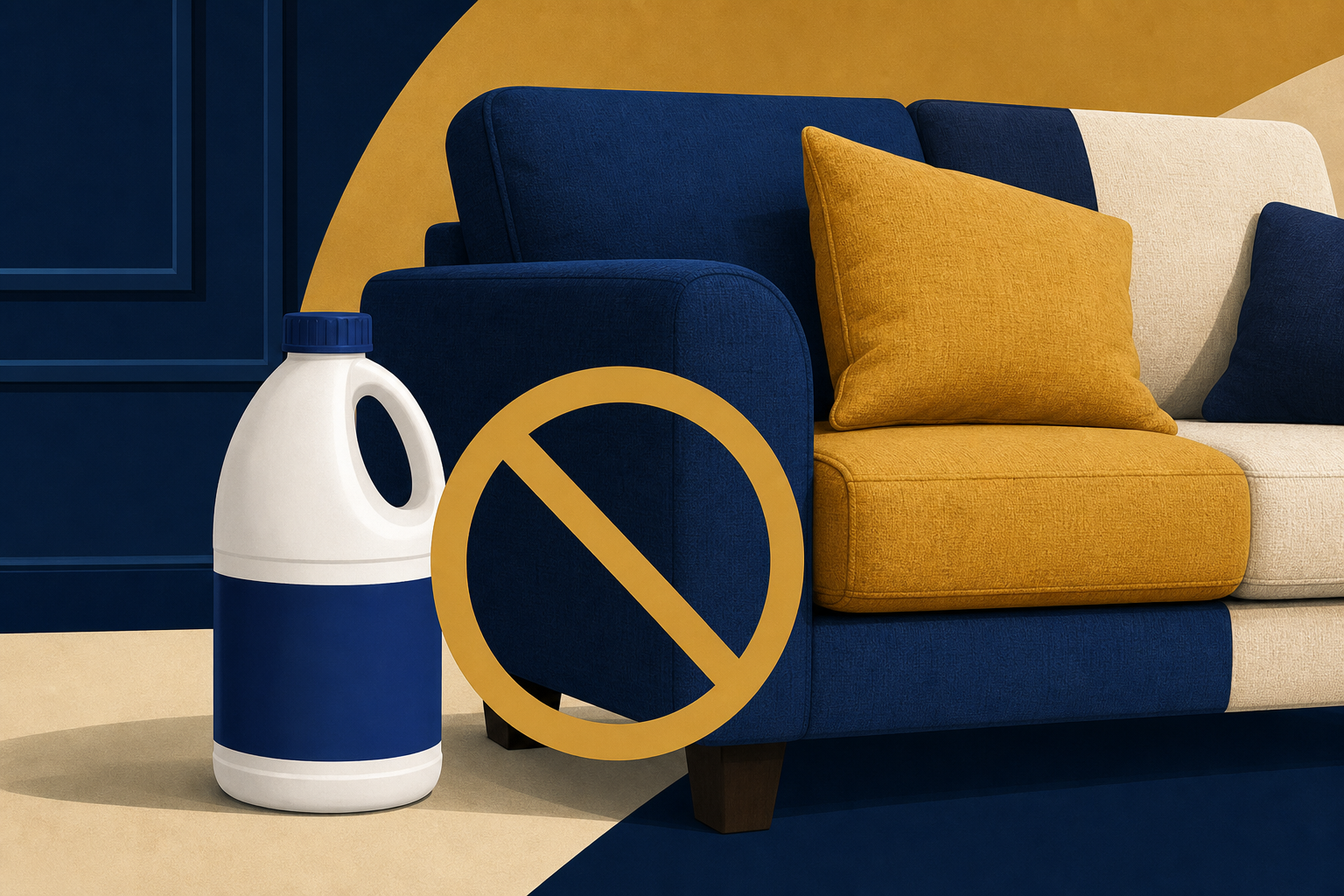
Use bleach or random solvents
Best for: avoiding a costly false shortcut
They can strip colour, damage backing and leave permanent rings.
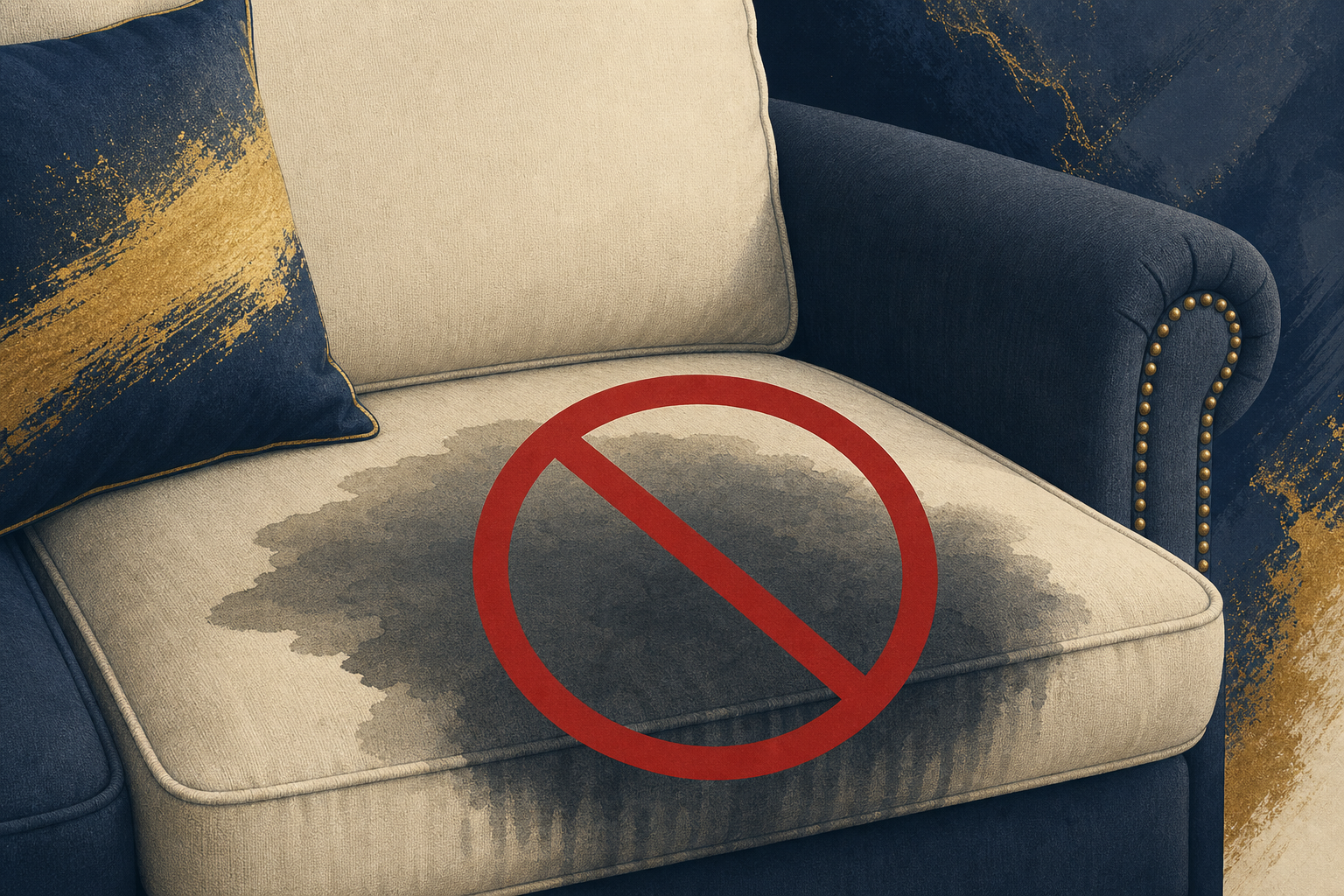
Soak the cushion
Best for: avoiding a costly false shortcut
Too much water can leave odour, mould risk and slow-drying foam.
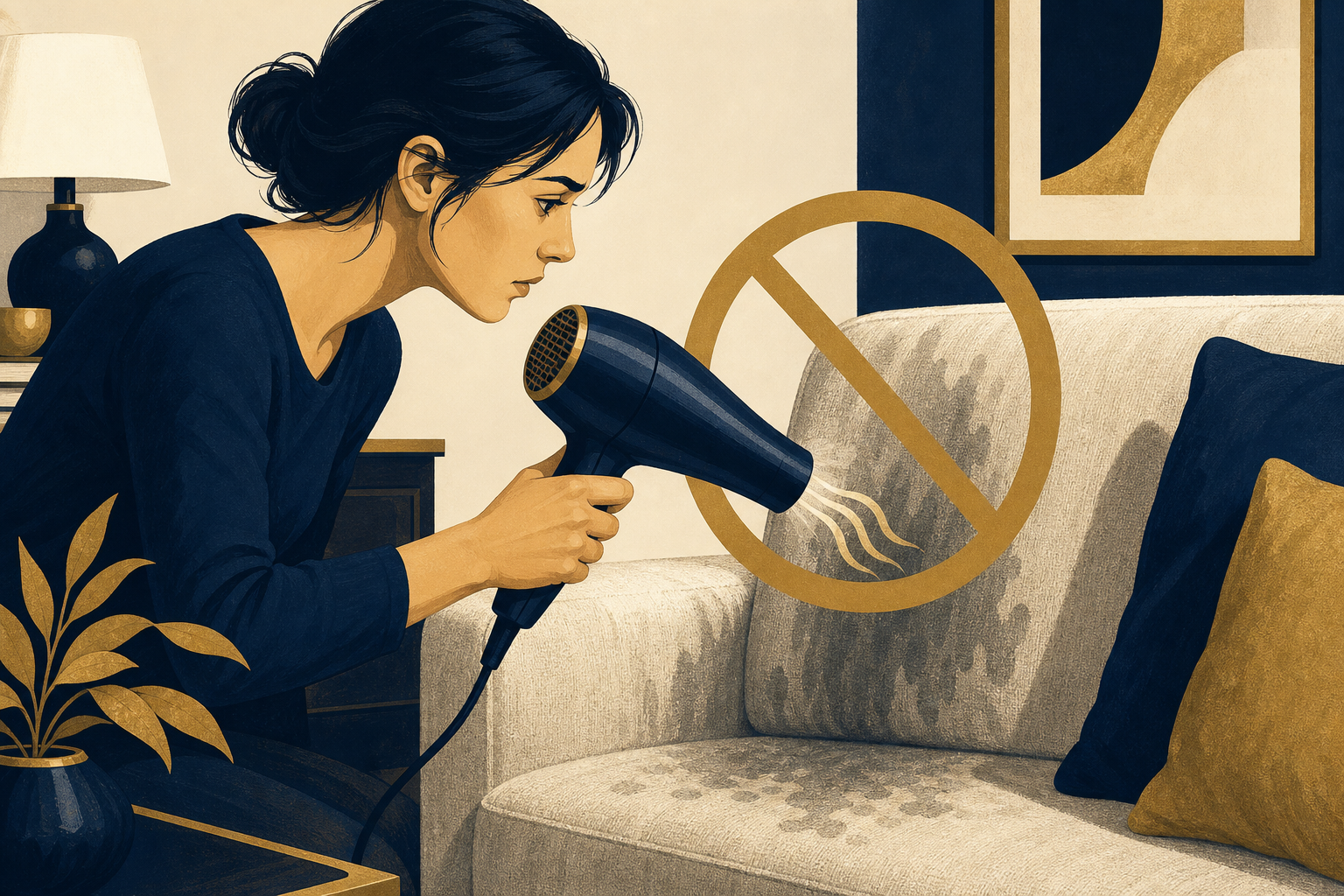
Blast it with heat
Best for: avoiding a costly false shortcut
High heat can set protein stains and shrink or distort some fabrics.
How to keep it from returning

- Use washable throws in high-use seats.
- Blot spills as they happen.
- Vacuum seams and under cushions weekly.
- Air cushions after any damp incident.
- Keep food and drinks on a stable tray.
Keep a simple note of when and where you first see the sofa stain or odour. That pattern makes a professional visit faster and more useful.
What the work usually involves
Cost depends on seat count, fabric type, stain age, access, drying time and whether extraction is suitable. A good cleaner will ask about the fabric and stain before promising a result.
When to book {d["service"]}
- The issue returns after the safe checks.
- You see spreading damage or a safety concern.
- The cause is hidden behind a wall, appliance, frame or fixed furniture.
- You need a repair that would be costly to reverse.
- You want the source confirmed before spending on a finish.
Before the visit, share clear photos, when the sofa stain or odour started, what changed, and the safe checks you already completed. Book verified professional cleaning across Kashmir.
FAQs
What is the safest first step for sofa stain or odour?
Start by observing the pattern and using the first low-risk method above. Do not jump to a permanent or chemical fix.
Can I fix sofa stain or odour myself?
You can do simple cleaning, observation and basic maintenance when safe. Stop for hidden damage, specialised work or any safety concern.
Why does sofa stain or odour keep returning?
The visible symptom may have been treated while the source, route or contributing condition remained.
When should I book professional cleaning?
Book when it is recurring, widespread, damaging, unsafe, or not improved by the safe checks.
What should I tell the professional?
Explain where it appears, when it started, what triggers it and what you have already tried.
Is help available across Kashmir for sofa stain or odour?
Yes. Use Panun Kaergar to book the relevant verified service across Kashmir.
The best repair for sofa stain or odour starts with the right cause. Take the careful first step, keep notes, and bring in a professional when the job asks for one.