
A favourite outfit catches a bright splash just before you leave. The instinct is to rub, rinse, or reach for the strongest product nearby. For a delicate garment, the calm first move is usually the one that saves it.
Blot fresh stains, keep heat away, and read the care label. Silk, wool, embellished clothes, oil stains, and unknown marks should go to a dry cleaner with the stain identified.
Quick diagnosis map
Identify the fabric and stain before adding water, heat, or a chemical.
| What you notice | Likely reason | First move |
|---|---|---|
| Fresh spill on washable cotton or polyester | Food, drink, or soil has not yet set | Lift solids and blot; follow the care label. |
| Silk, wool, suede, leather, or embroidery | Delicate fibre or finish | Blot only and use a professional cleaner. |
| Oil, ink, dye, makeup, or an unknown mark | Stain may spread or set with home treatment | Do not experiment; identify it for the cleaner. |
| Old yellow stain or previous product marks | Oxidised stain or chemical damage | Book dry cleaning; explain what has been tried. |
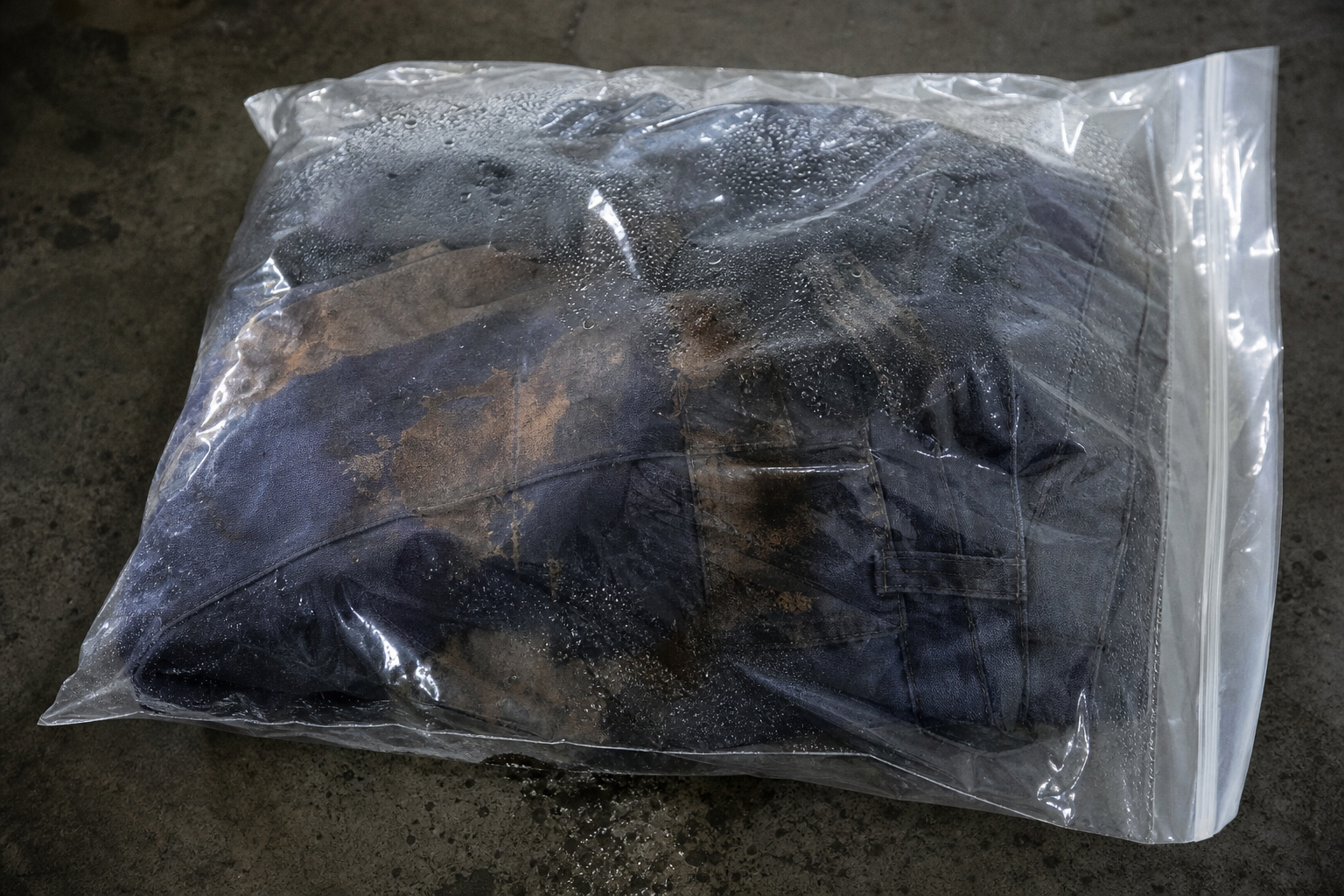
Do not use bleach on an unknown fabric, iron a stain, or leave a wet garment in a sealed bag.
Why stains become permanent
Heat can set protein stains, rubbing pushes oil and pigment deeper, and an untested cleaner can remove colour before it removes the stain. The fibre matters as much as the spill: a washable shirt and a lined, embellished garment do not get the same treatment.
- Protein: milk, egg, blood, and sweat can set with heat.
- Oil: cooking oil and makeup spread with scrubbing.
- Dye and ink: water or solvent can make them travel.
- Delicate fibres: wool, silk, velvet, suede, leather, and embellishment need specialist handling.
Try these in order
These steps preserve the garment and give a cleaner useful information. They are not a substitute for treatment on a dry-clean-only item.
Read the label
Best for: every special garment
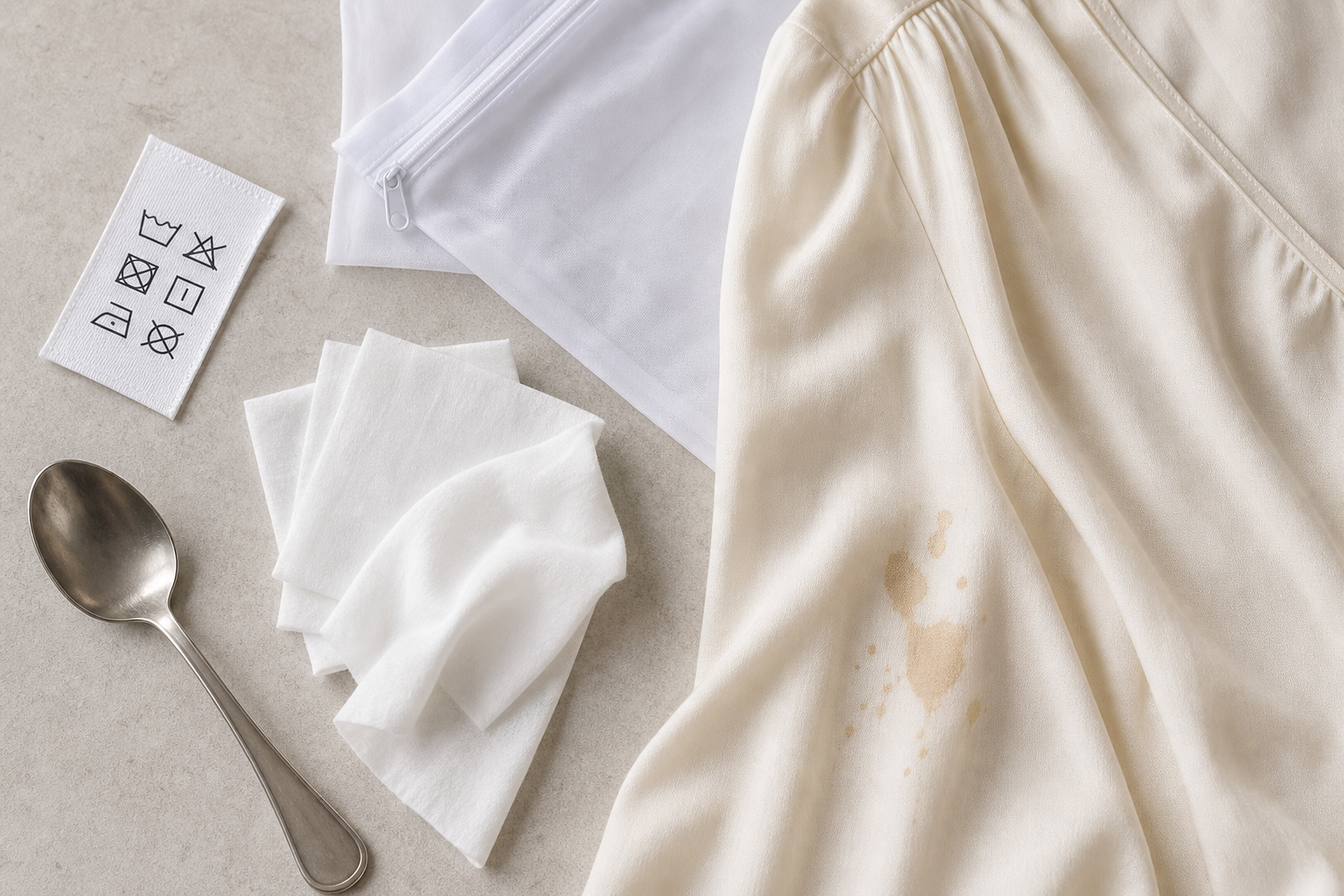
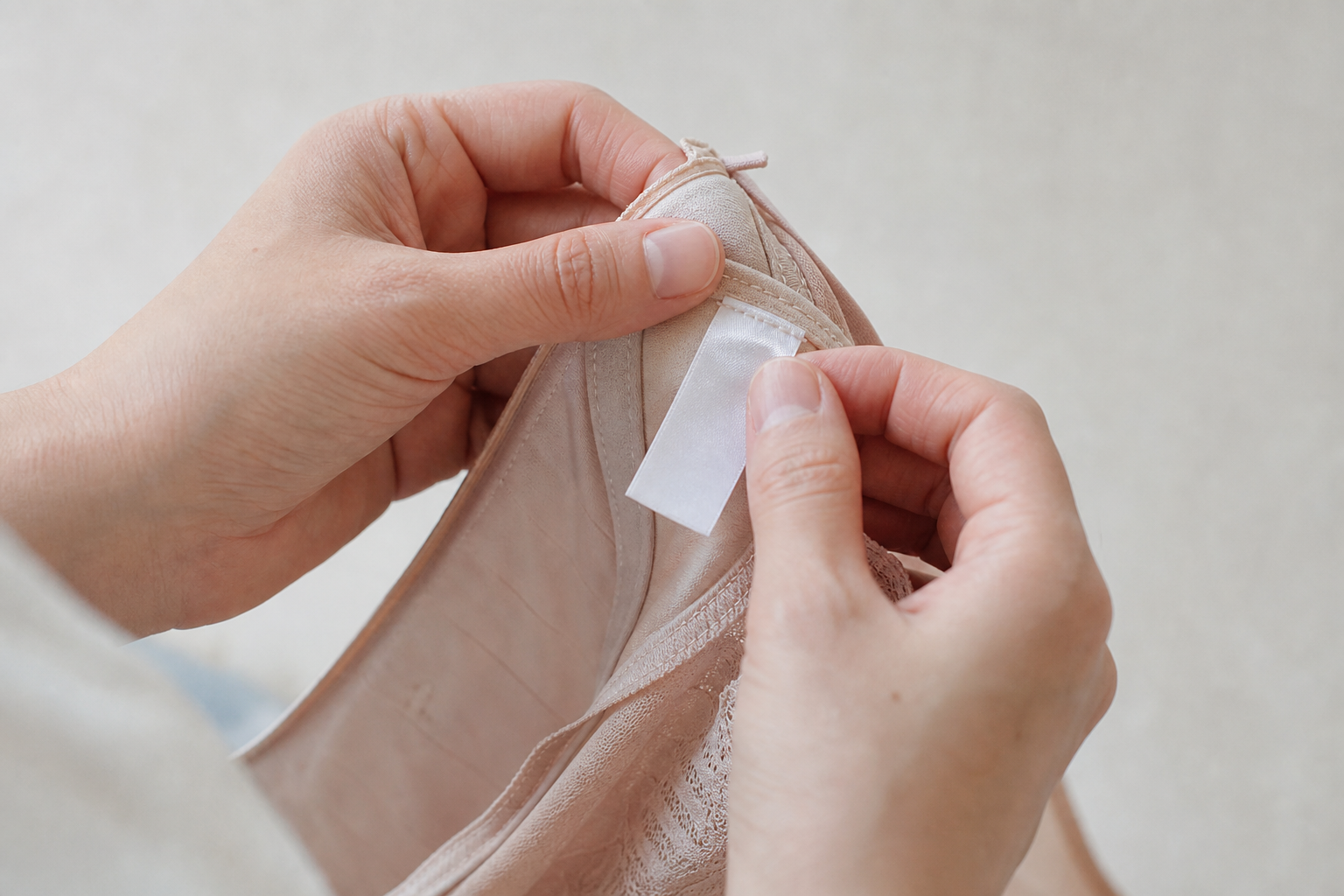
Read the fibre and care label. “Dry clean only,” silk, wool, leather, suede, lining, beads, or embroidery are reasons to stop at blotting.
Blot and lift solids
Best for: fresh food spill
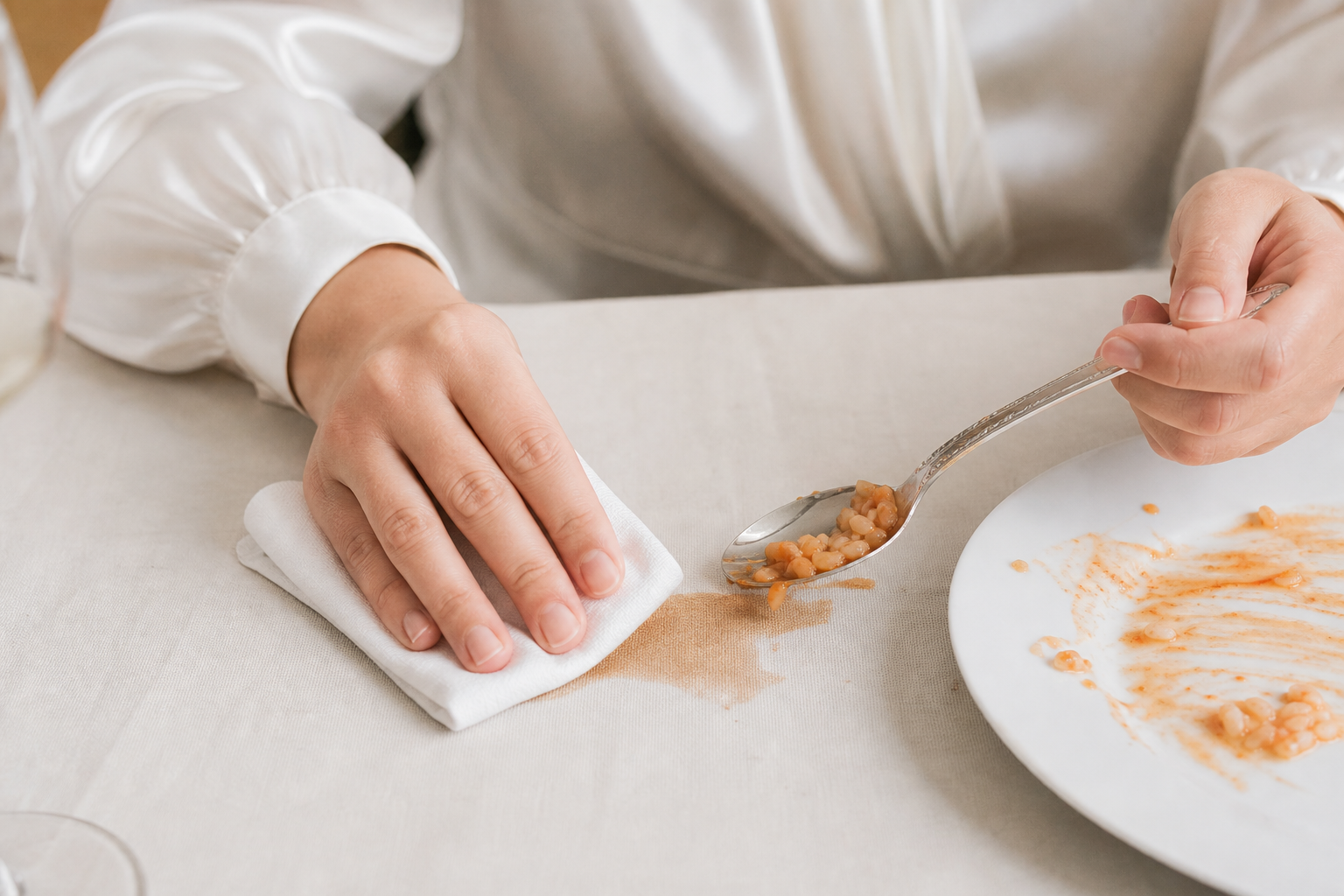
Lift solids with a spoon or blunt edge. Then blot with a clean white cloth, working from the outside inward. Do not scrub.
Keep it cool and unheated
Best for: protein or unknown stain
Keep heat away. Do not iron, tumble-dry, steam, or use hot water until the stain is gone.
Tell the cleaner what happened
Best for: professional treatment
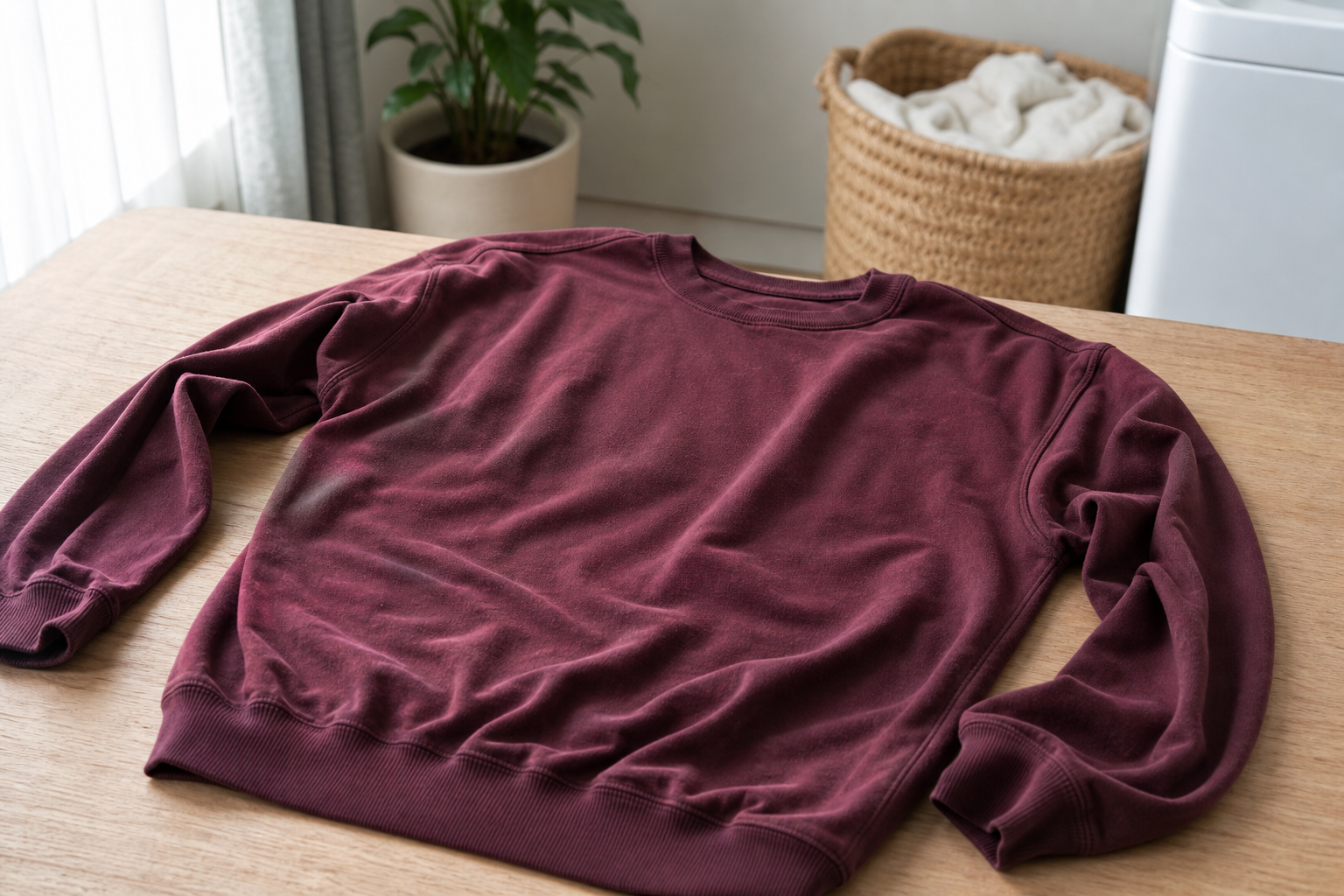
Tell the cleaner the stain, fabric, when it happened, and every product already used. A photo taken before blotting can help.

Store it breathable
Best for: before drop-off
Keep the garment dry and loose in a breathable bag. Never seal a damp item in plastic.
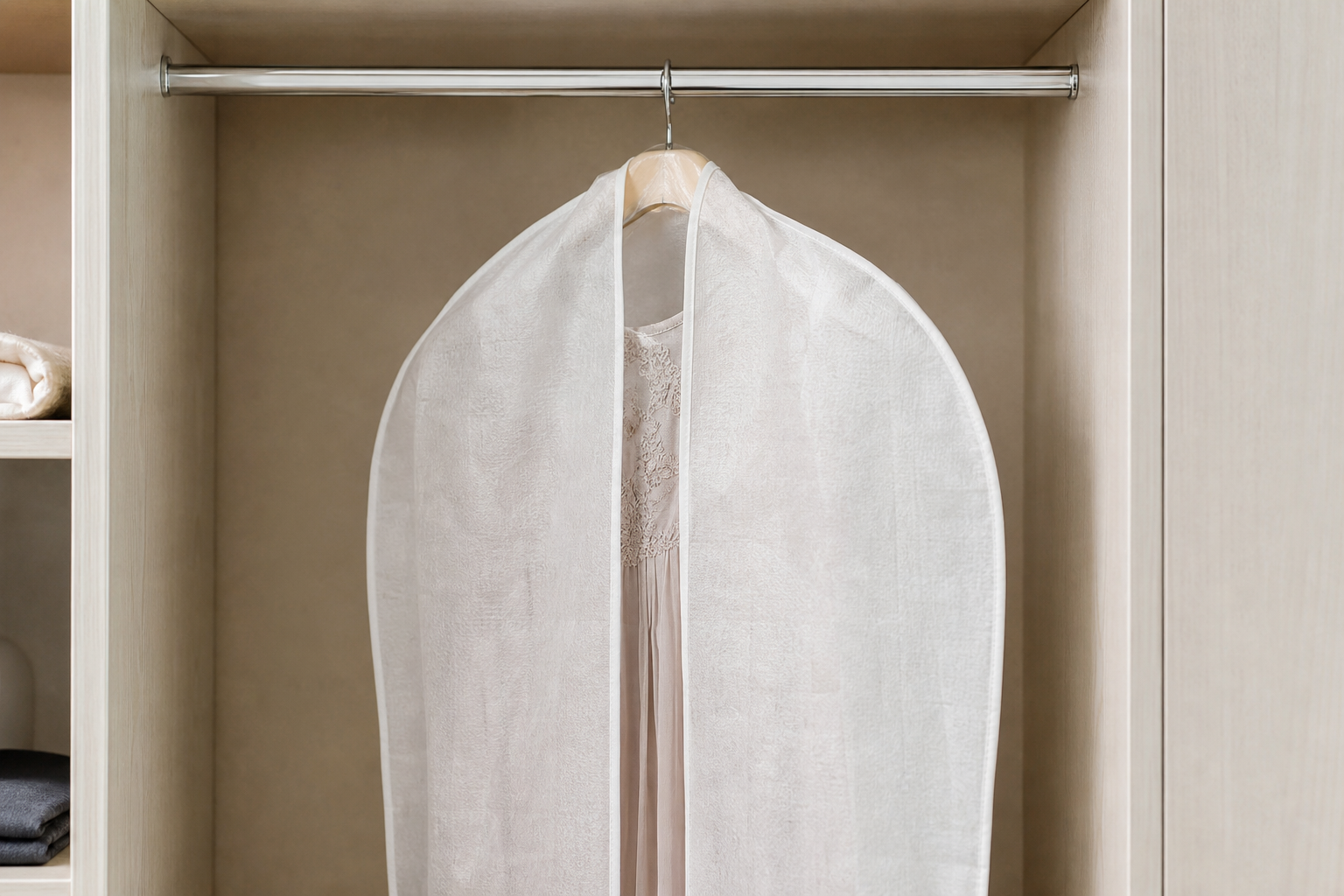
For a special item, preserve the evidence: blot, photograph, label the stain, and stop. A cleaner can remove a stain; they cannot undo colour loss from a home experiment.
Common scenarios
Fresh food spill on a special garment
Lift solids, blot from the outside in, and check the label before water or heat.
Oil or makeup on embellished fabric
Do not scrub. Identify the stain for the cleaner and keep the garment cool and dry.
Yellow mark after a previous home attempt
Tell the cleaner every product already used. Older oxidation is harder to remove but still worth professional assessment.
What not to do
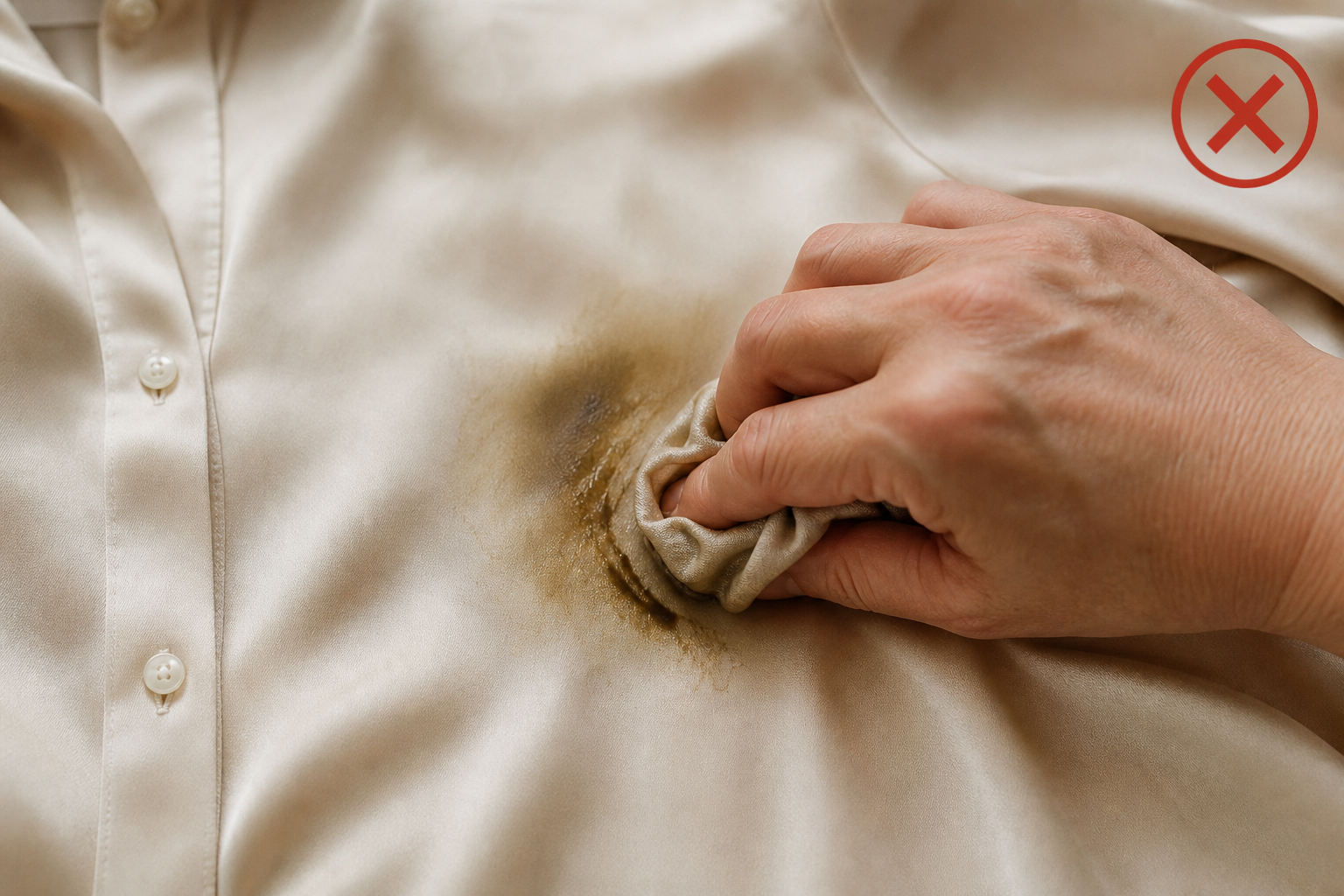
Rub an oil stain
Rubbing drives grease into the fibres and enlarges the mark.
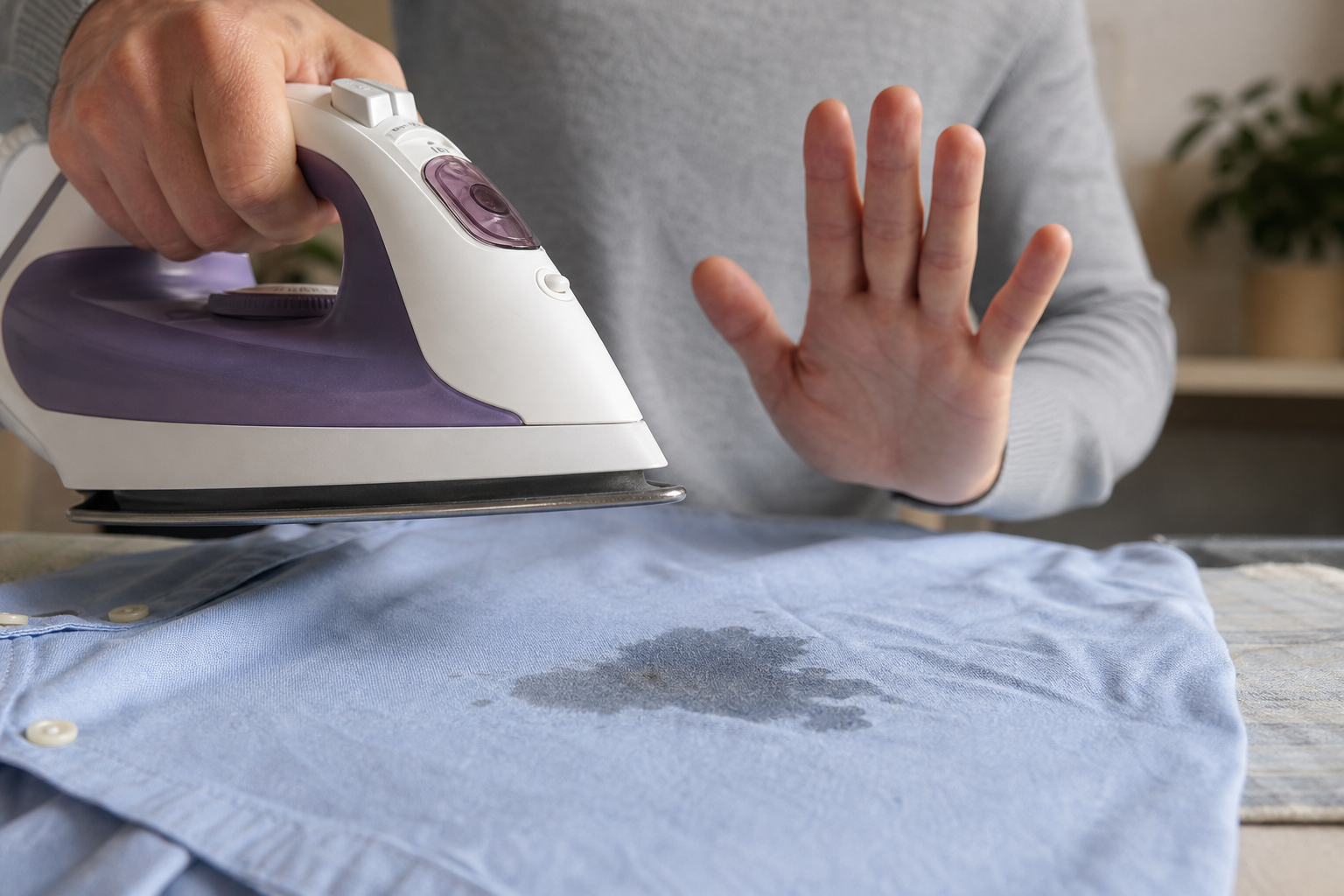
Iron over a stain
Heat can set food, drink, protein, and unknown stains.
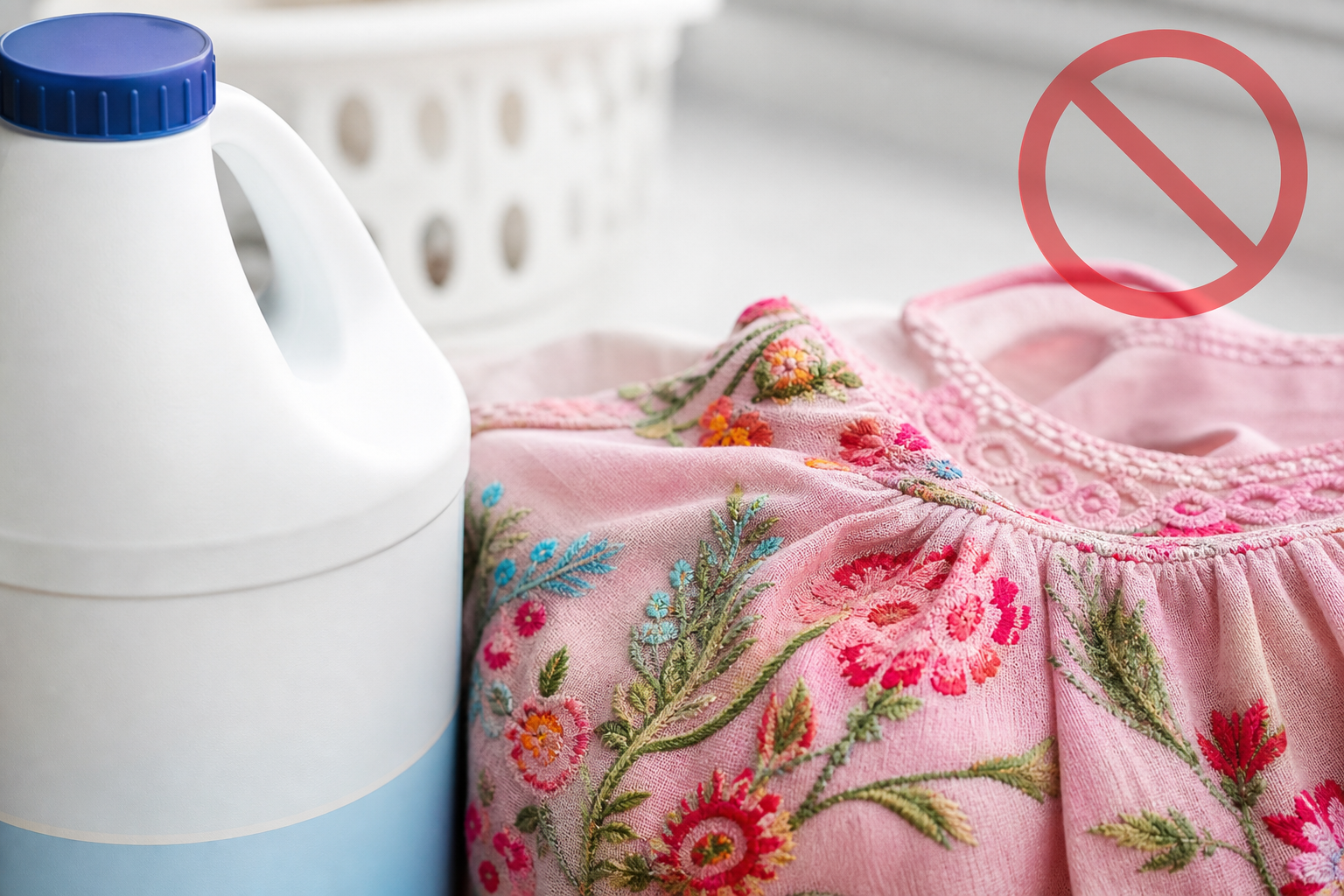
Bleach an unknown or embellished fabric
Bleach can strip colour, weaken fibres, and damage embroidery.
Seal a wet garment in plastic
Trapped damp causes odour, mould, and colour transfer.
Keep it from returning
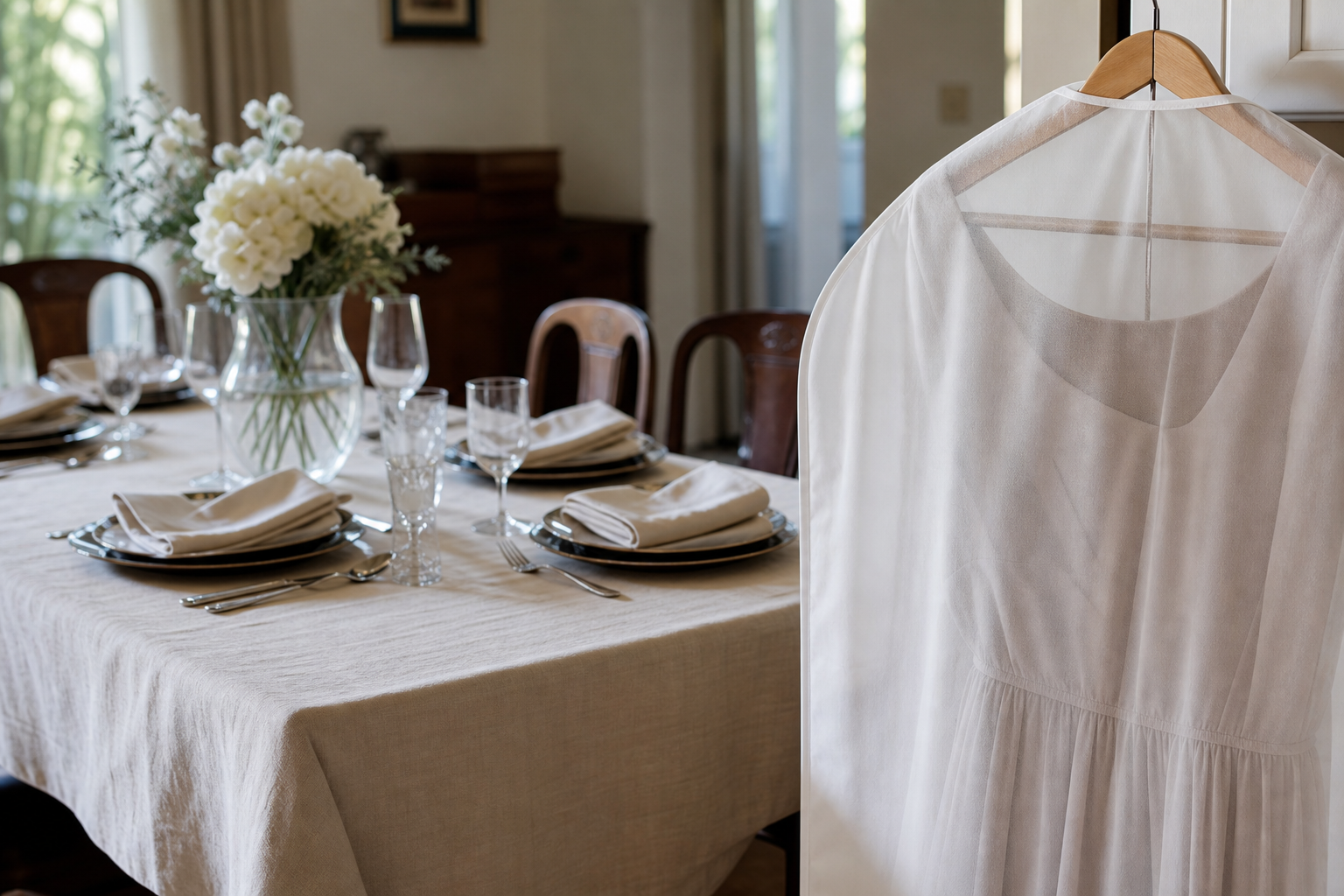
Use a napkin at meals, keep cosmetics and oil away from special fabrics, and store cleaned garments dry in breathable covers.
When to book a professional
Book dry cleaning for silk, wool, suede, leather, embroidery, oil stains, old yellowing, and garments with a dry-clean-only label.
FAQs
Should I use water on every fresh stain?
No. Check the care label first. Water can spread dye, alter delicate fibres, and set some stains when combined with heat.
What should I tell a dry cleaner?
Name the stain, the fabric, when it happened, and what you have already applied.
Can a dry cleaner remove an old stain?
Sometimes, but older stains and previous treatment make removal less certain. Take it in promptly.
Which garments should go straight to dry cleaning?
Dry-clean-only clothing, silk, wool, suede, leather, embellished pieces, valuable garments, and anything with oil, ink, dye, or an unknown stain.