
After a week of caps, sweat, styling product, and rushed showers, flakes show up on a dark shirt before the day has properly started. Scratching harder is not a treatment plan.
Use a suitable anti-dandruff shampoo regularly, rinse fully, and avoid heavy oil on an inflamed scalp. Pain, pus, hair loss, or stubborn scaling needs a dermatologist.
Quick diagnosis map
Most dandruff improves with a steady routine. Pain, infection signs, patchy hair loss, or thick persistent scale belongs with a dermatologist.
| What you notice | Likely reason | First move |
|---|---|---|
| Loose white or yellowish flakes with mild itch | Common dandruff or product buildup | Use an anti-dandruff shampoo consistently. |
| Itch after gel, wax, or heavy oil | Residue or irritation | Rinse fully and simplify products. |
| Flakes mainly under a cap or helmet | Sweat and product trapped at the scalp | Wash the scalp gently and clean caps regularly. |
| Red, sore, crusted, or oozing scalp | Possible infection or skin condition | Stop self-treatment and see a dermatologist. |
| Round patches or marked hair loss | Not routine dandruff | Get medical advice promptly. |
Do not share combs, scratch until the skin breaks, or apply undiluted household ingredients to an inflamed scalp.
What usually causes this
Dandruff is common and can flare with skin oil, scalp yeast, irritation, sweat, product buildup, and inconsistent washing. It is not a cleanliness failure, but piling oils and harsh home remedies onto an inflamed scalp can keep it going.
- Sweat and product trapped under caps or helmets.
- Heavy oils, waxes, or incomplete rinsing.
- A shampoo routine that is too irregular or too harsh.
- Skin conditions that need a clinician’s diagnosis.
Try these in order
Begin with the reversible checks. The goal is a clean fix, not winning an argument with a stubborn household thing.
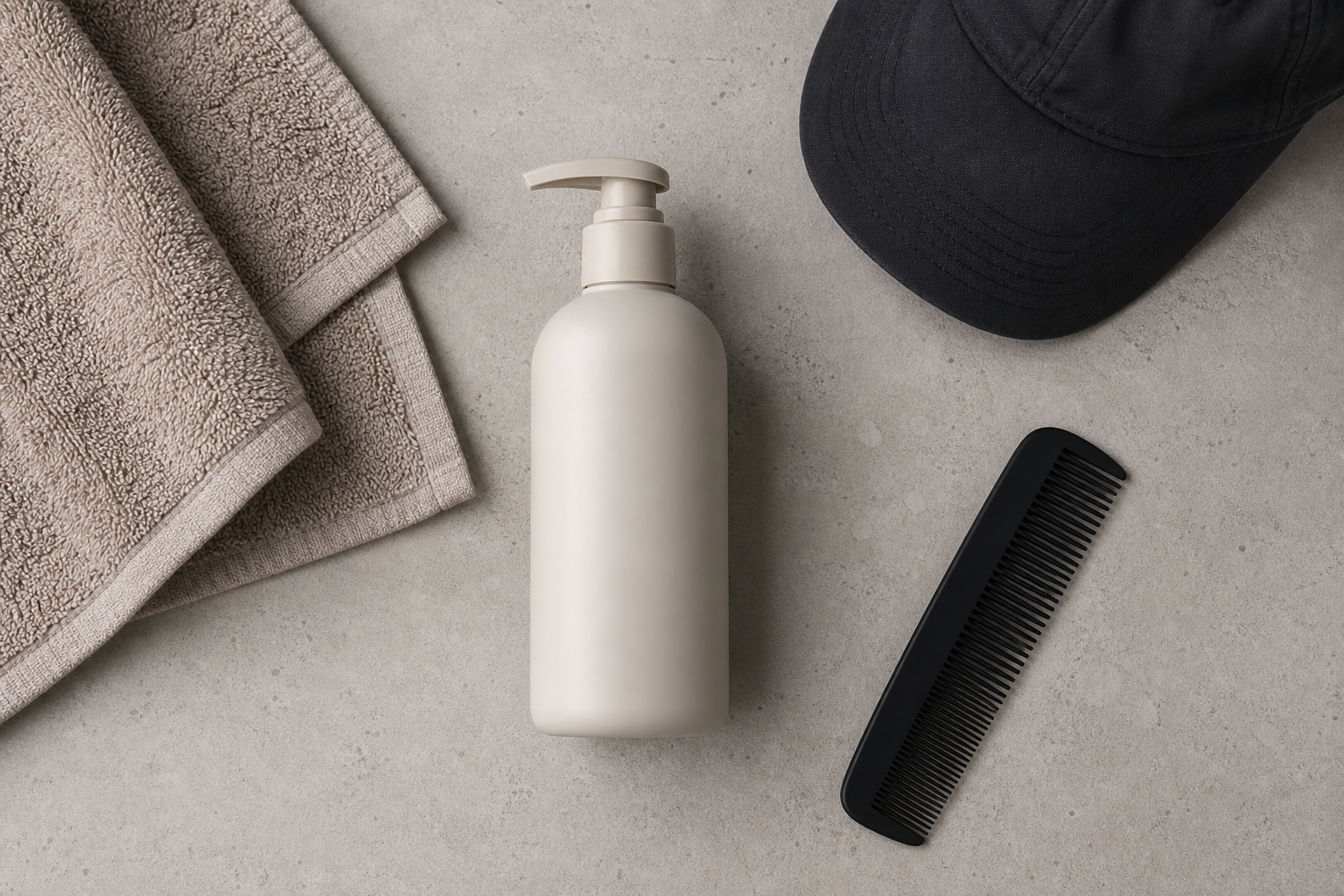
Wash gently and regularly
Best for: ordinary flakes
- Use lukewarm water — hot water can increase irritation.
- Massage shampoo gently onto the scalp, not only through the hair.
- Rinse until the water runs clear and the scalp feels clean, not coated.
- Dry the scalp gently; avoid aggressive towel rubbing.

Use an anti-dandruff shampoo correctly
Best for: recurring dandruff
Choose a suitable anti-dandruff shampoo and leave it on for the label time before rinsing. Consistency matters more than using extra product.
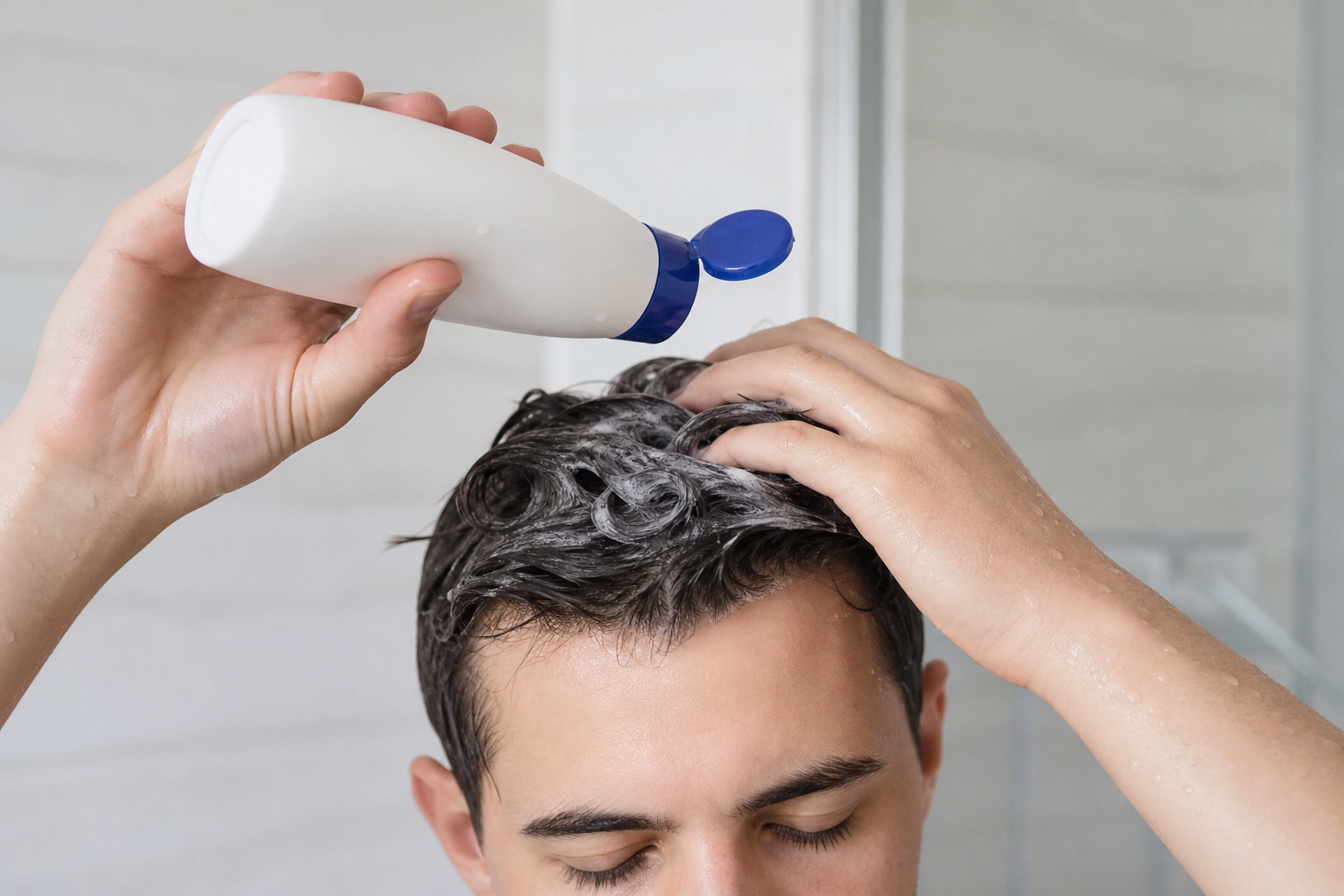
Rinse product fully
Best for: itch after styling
Remove wax, gel, and shampoo residue rather than layering more oil over the itch.

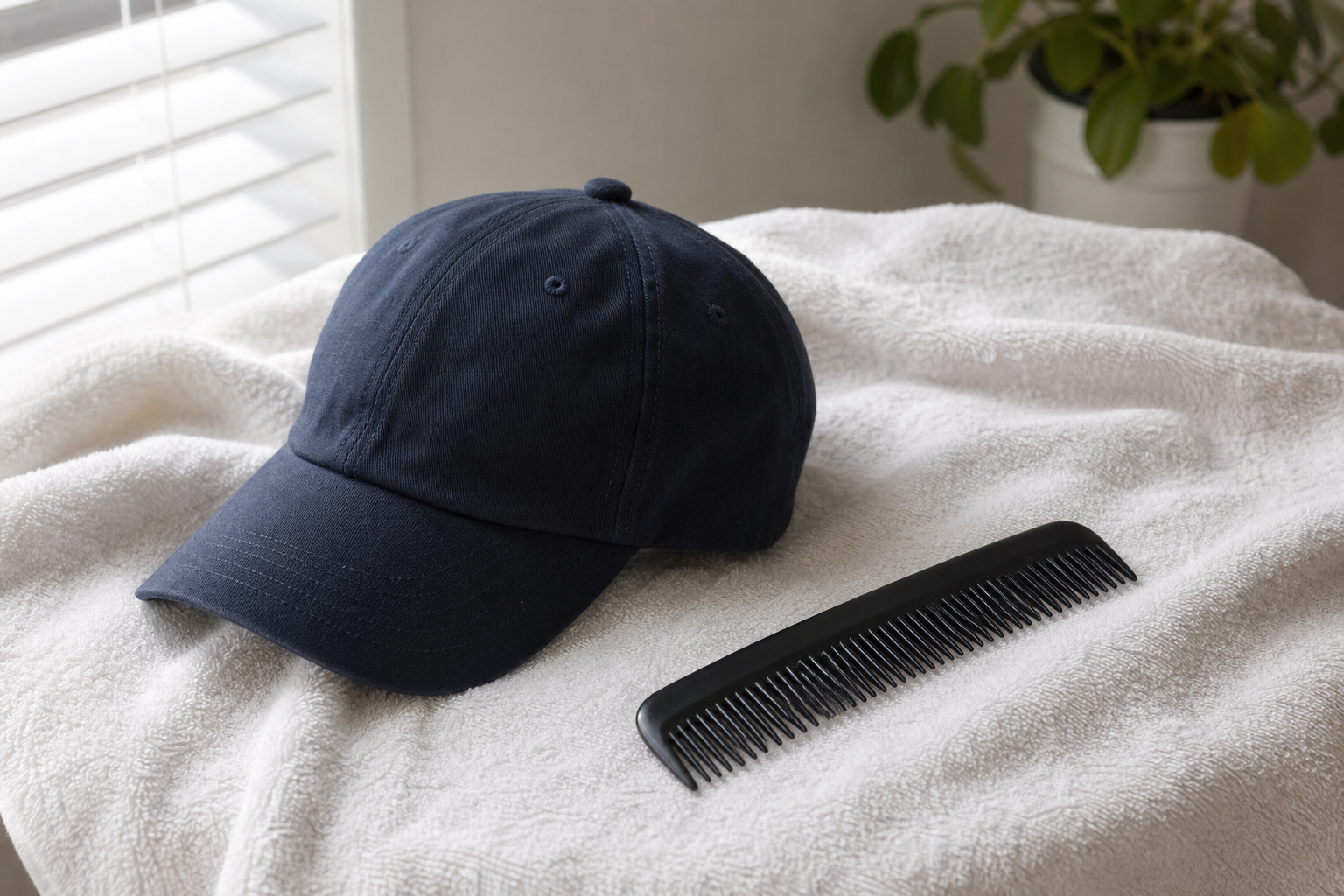
Clean caps and combs
Best for: repeat flakes
Wash caps, pillowcases, combs, and brushes regularly. Do not share them when there is an active scalp problem.
Seek medical advice
Best for: red flags
Pain, pus, round hair loss, thick persistent plaques, or no improvement after several weeks are not salon problems.

Give a suitable shampoo enough time to work before swapping products every few days. If the scalp is getting sore, step down—not up—to gentler care and medical advice.
Common scenarios
Flakes after caps, helmets, or long days
Sweat and product buildup under a cap can flare itch. Wash the scalp gently, dry it, and clean caps and combs regularly.
Itch that follows a new styling product
Stop the newest product, rinse thoroughly, and simplify the routine for two weeks before adding anything else.
Thick scale that will not shift
That is not ordinary dandruff. A dermatologist should assess it rather than stronger home washing.
What not to do
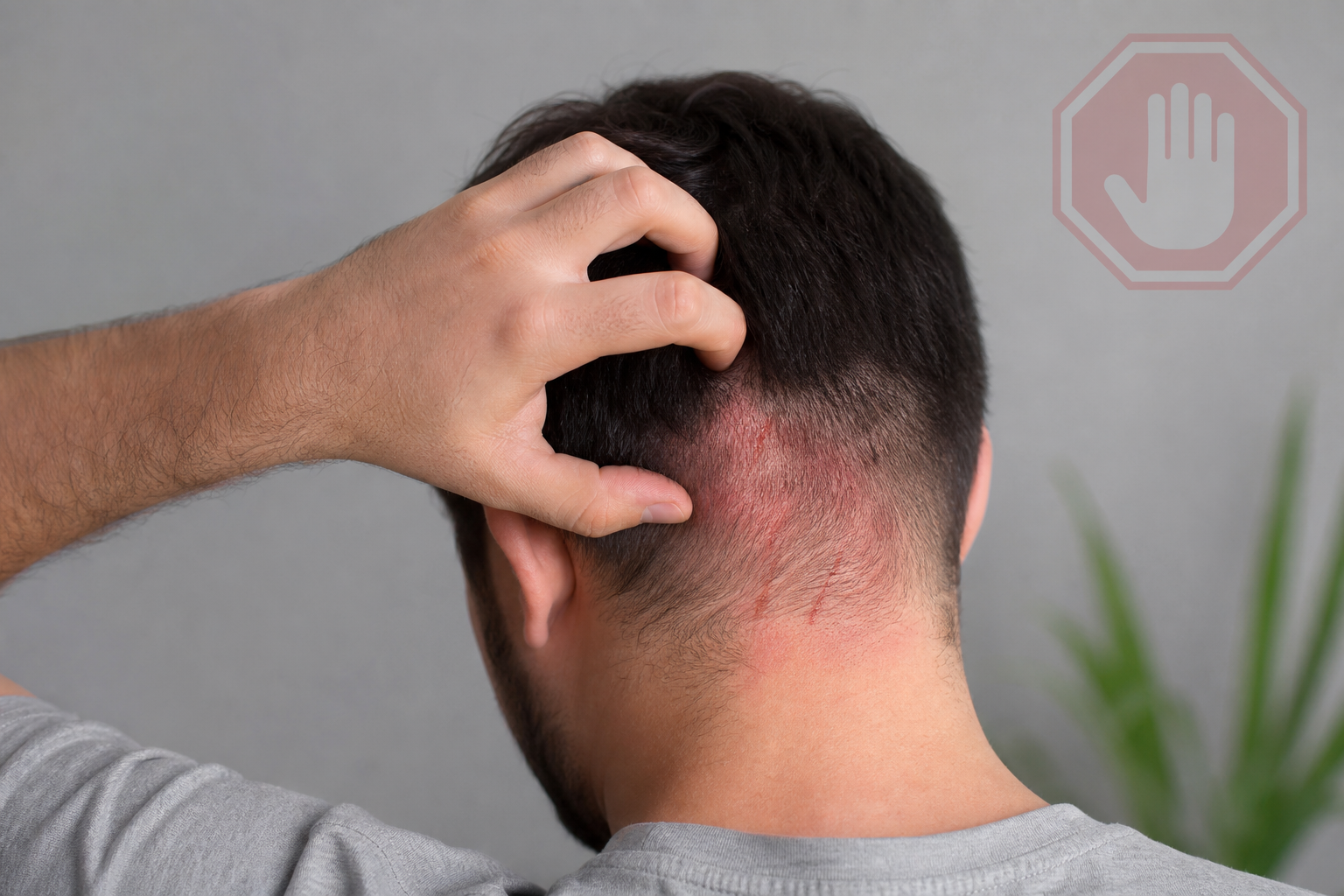
Scratch until skin breaks
Broken skin can introduce infection and prolong irritation.
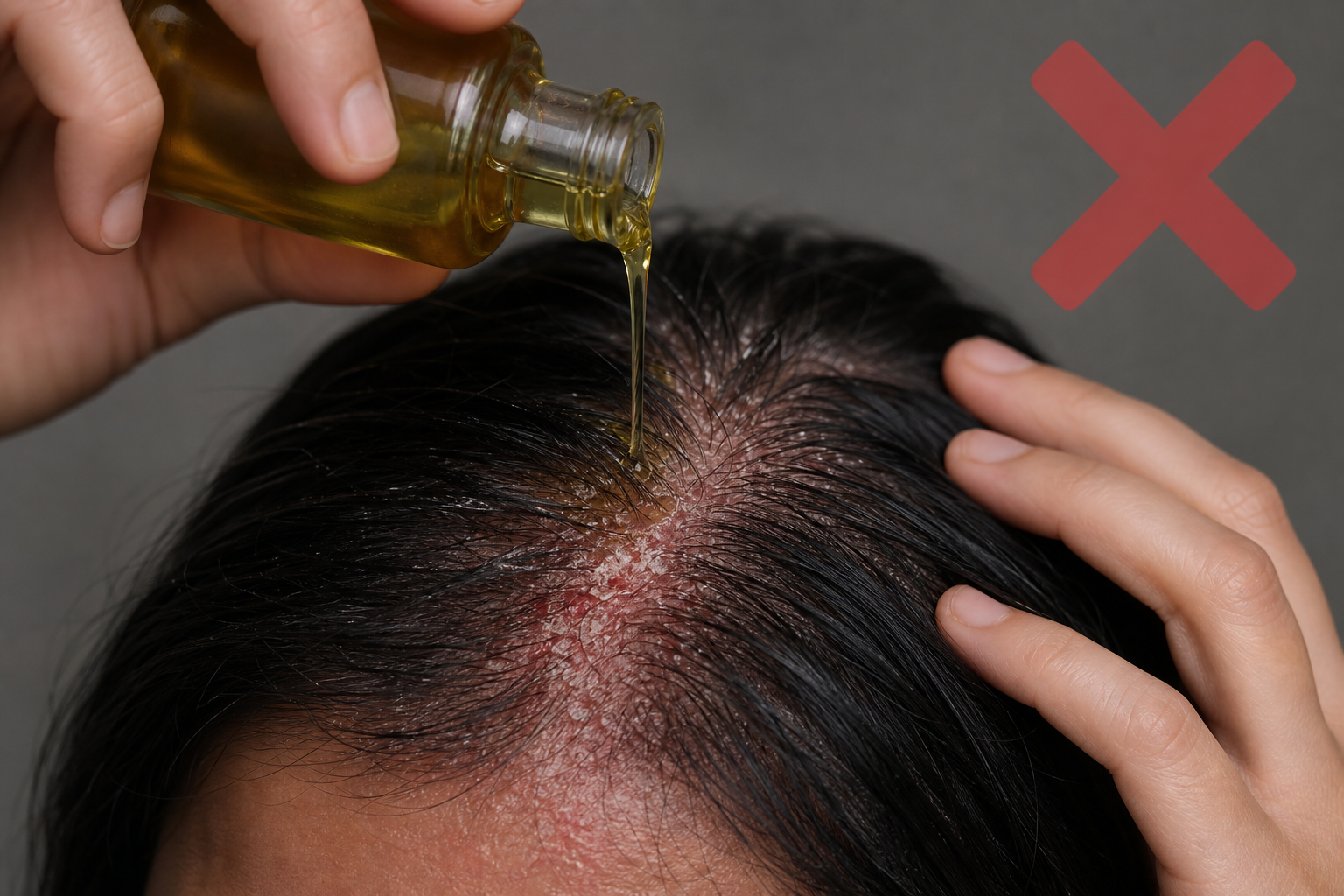
Pour heavy oil onto an inflamed scalp
It may worsen residue and does not treat every cause of flaking.
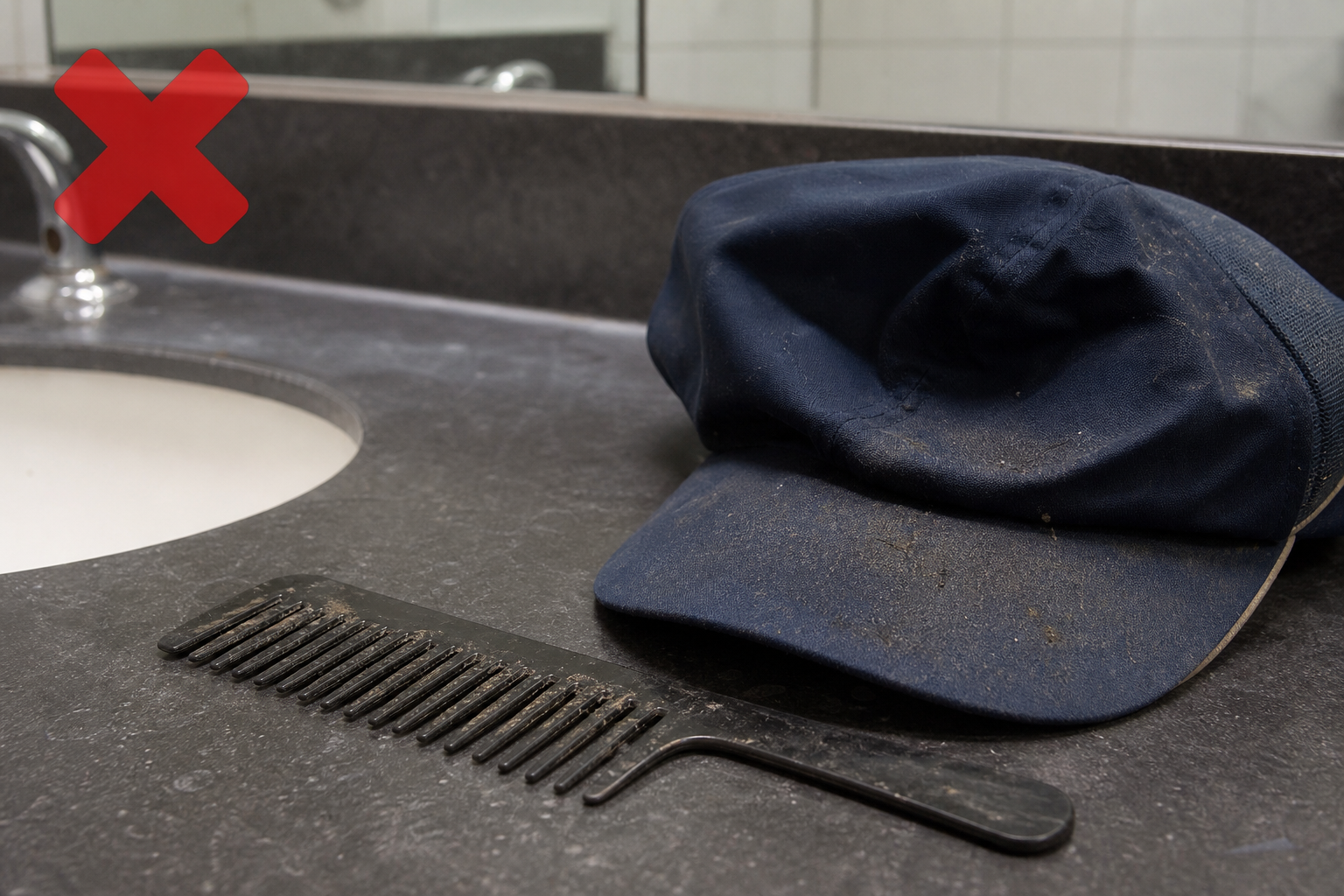
Share dirty caps or combs
Keep items that touch the scalp clean and personal.
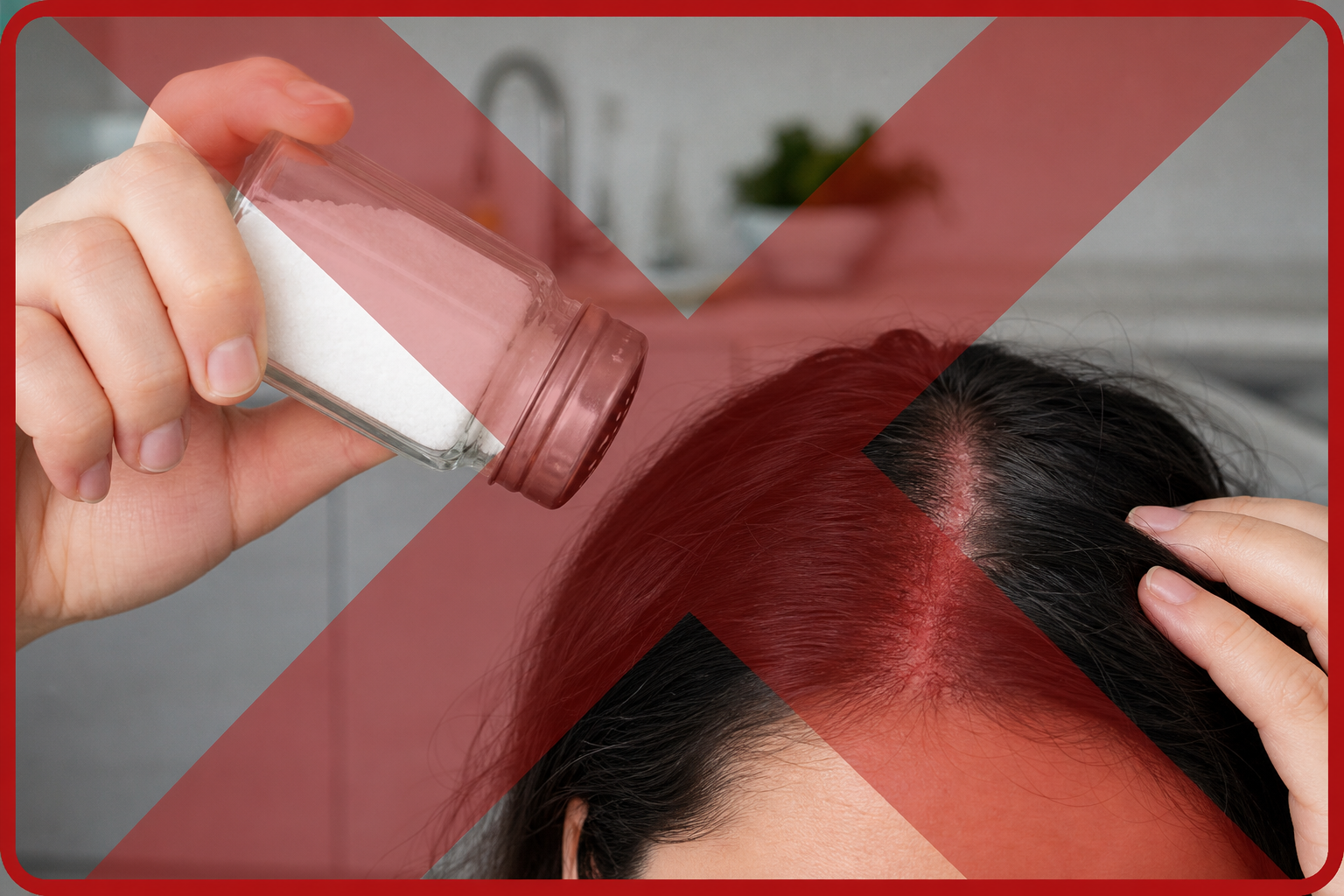
Use harsh household remedies
Undiluted household ingredients can irritate or burn skin.
Keep it from returning
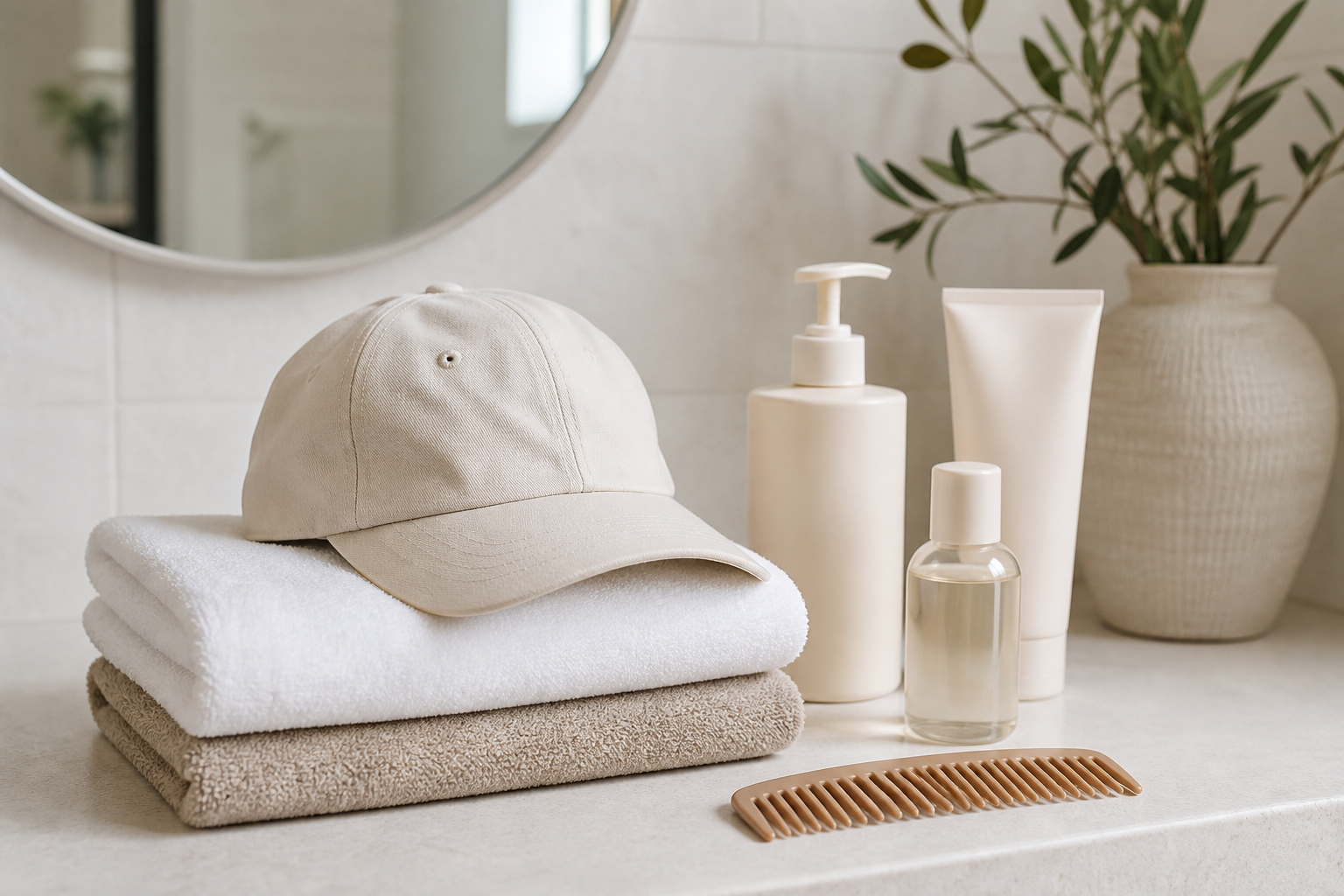
Wash after heavy sweat, dry the scalp gently, clean the things that touch it, and use fewer styling products while symptoms settle.
When to book a professional
Book grooming for routine scalp and hair care; see a dermatologist for infection signs, pain, marked hair loss, thick persistent scale, or no improvement after several weeks of consistent care.
For a grooming visit, mention how often you wash, which products you use, whether you wear caps or helmets daily, and whether the itch follows styling products. That history saves guesswork.
FAQs
How often should I use anti-dandruff shampoo?
Follow the product directions. It usually needs regular use for several weeks, not one wash, to judge whether it helps.
Can hair oil cure dandruff?
Not reliably. Heavy oil can add buildup or irritate some scalps, especially when they are already inflamed.
When should I see a dermatologist?
See one for pain, pus, spreading redness, thick persistent scale, round hair loss, or no improvement after a sensible routine.