
After a colour appointment, the new shade looks good but the ends feel rough, stretchy, or oddly fragile. The fastest route back is usually a pause—not another chemical service.
Pause further bleach or colour, use gentle cleansing and conditioning, reduce heat, and trim splitting ends. A strand test and a skilled colourist matter before any corrective service.
Quick diagnosis map
Colour damage affects the hair shaft, so it cannot be permanently reversed by a mask. Gentle care can improve feel and manage breakage while a trim removes the most compromised ends.
| What you notice | Likely reason | First move |
|---|---|---|
| Dry, rough ends after colour | Raised cuticle and moisture loss | Pause chemicals; use gentle conditioning. |
| Hair stretches, snaps, or feels gummy when wet | Significant chemical weakening | Stop colour and heat; book a skilled colourist. |
| Split or white-frayed ends | Mechanical and heat damage | Trim damaged length before it travels upward. |
| Uneven bands after home correction | Different sections processed differently | Stop box dye; book professional assessment. |
| Burning scalp, swelling, or rash after colour | Possible reaction | Rinse and seek medical advice; do not recolour. |
Do not bleach again at home, use a straightener daily on snapping hair, or pull through wet fragile hair.
What usually causes this
Bleach and permanent colour change the hair shaft. Overlapping bleach, high developer, repeated corrections, hot tools, and rough detangling can push weakened lengths past their limit.
- Bleach overlapping already-lightened hair.
- Another colour service before the hair has recovered.
- Daily straightening or curling without heat protection.
- Pulling through wet, fragile lengths.
Try these in order
Think recovery, not rescue. These steps protect the length you have while a professional works out whether any future colour is safe.
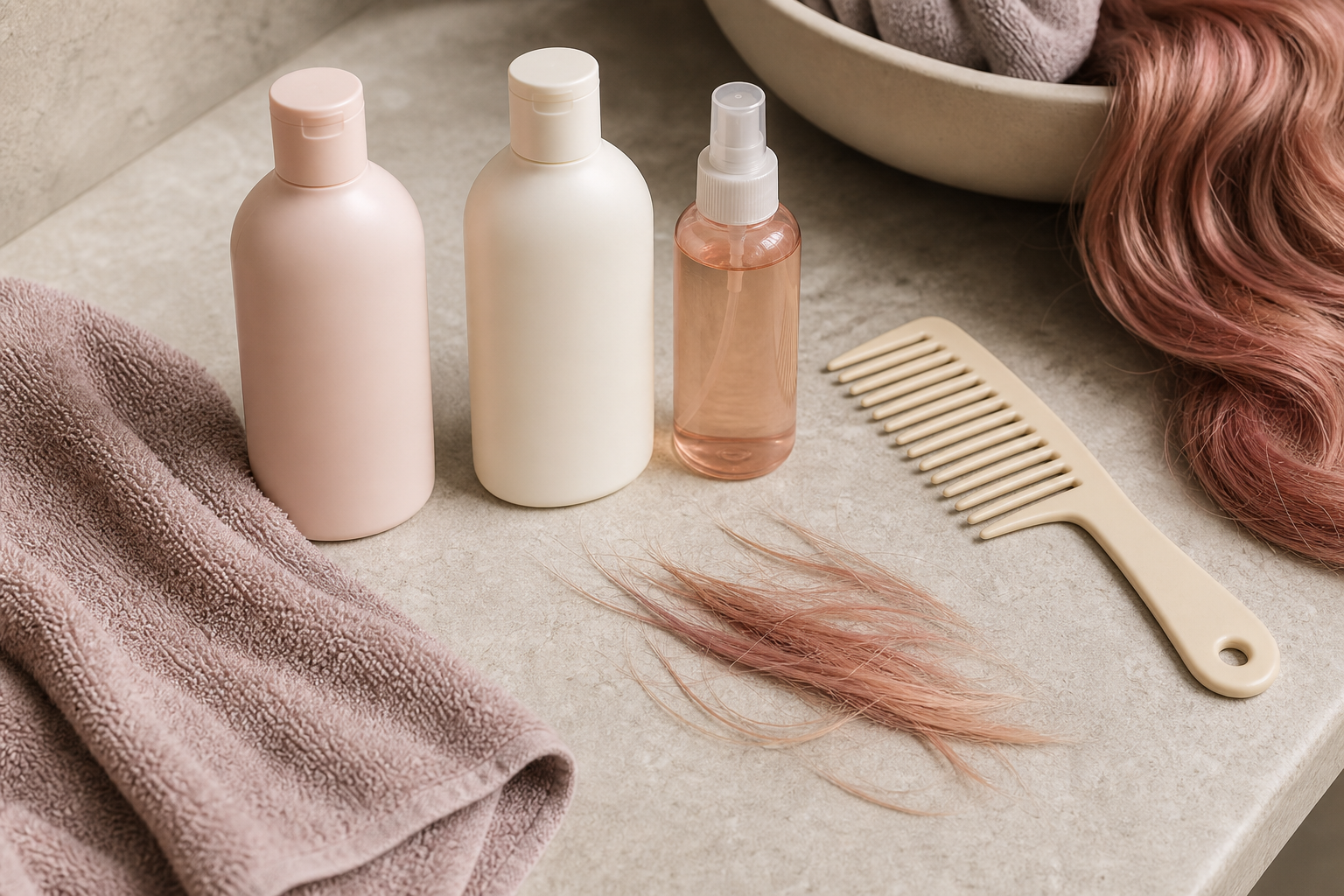
Pause chemical services
Best for: new breakage
Pause bleach, permanent colour, relaxers, and major correction work. More processing cannot repair a weakened strand.
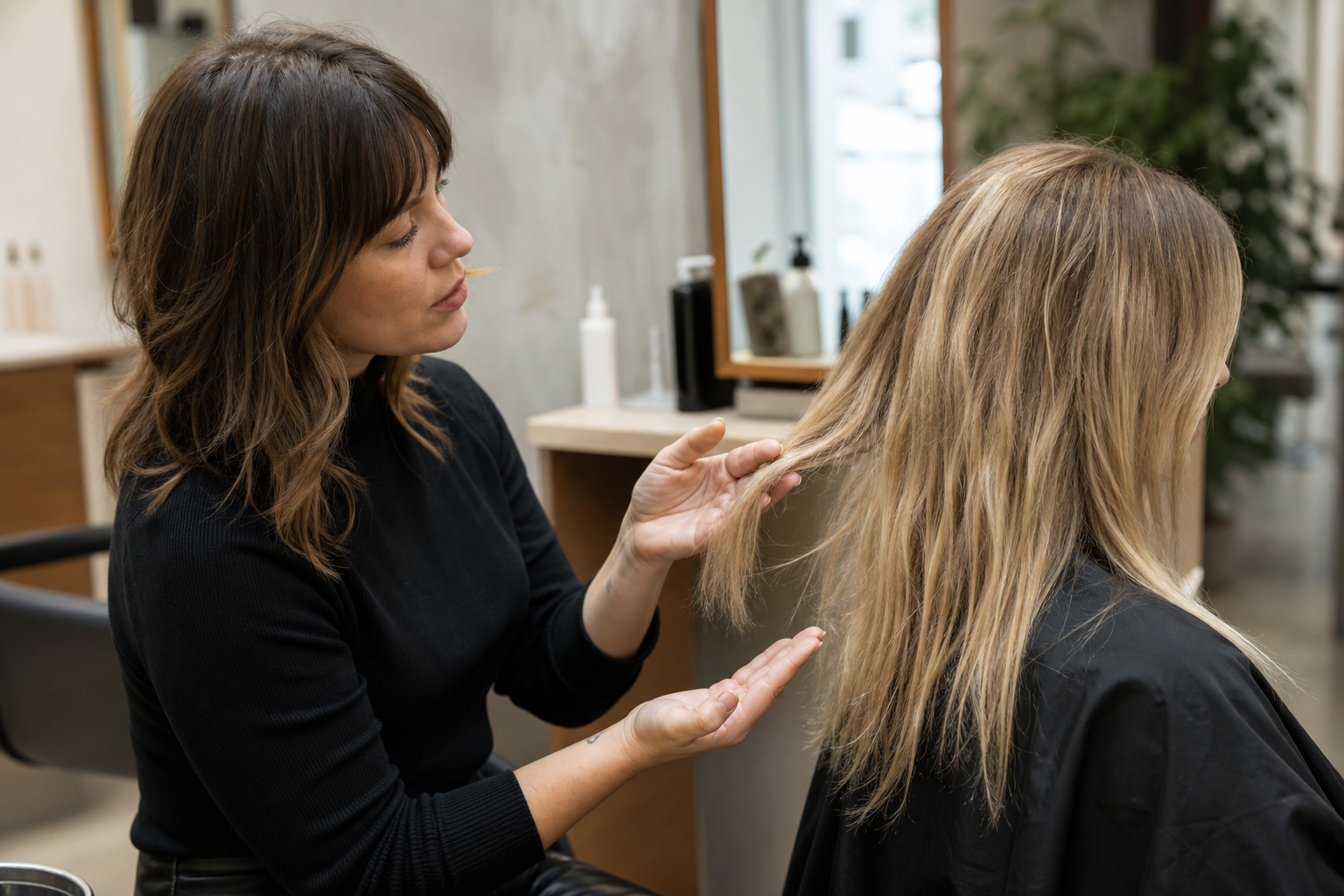
Wash gently
Best for: dry rough hair
Use a mild shampoo and conditioner, focusing conditioner on mid-lengths and ends. Detangle slowly with a wide-tooth comb.
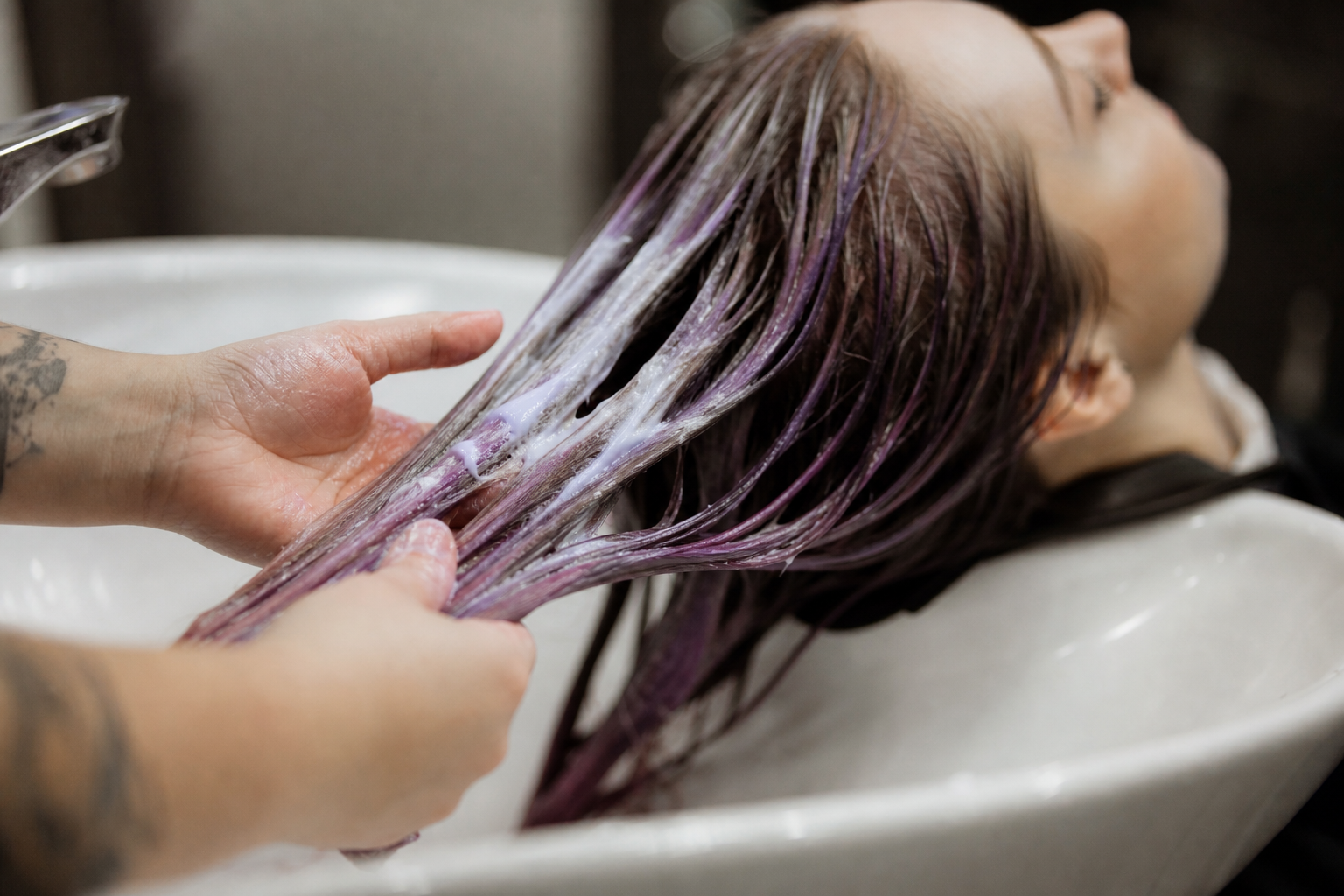
Reduce heat
Best for: fragile ends
Air-dry when possible. When heat is necessary, use protection and the lowest effective setting.
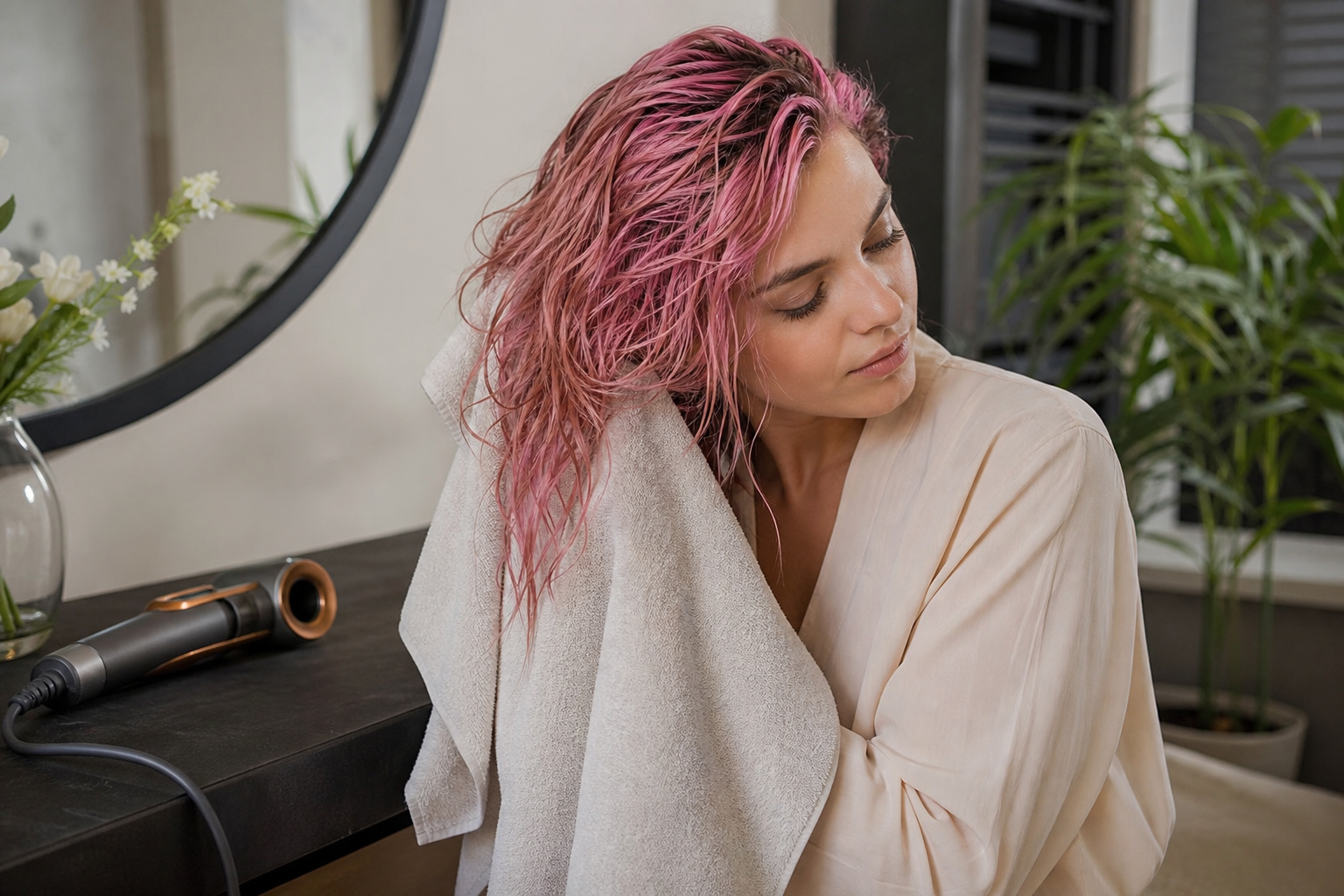
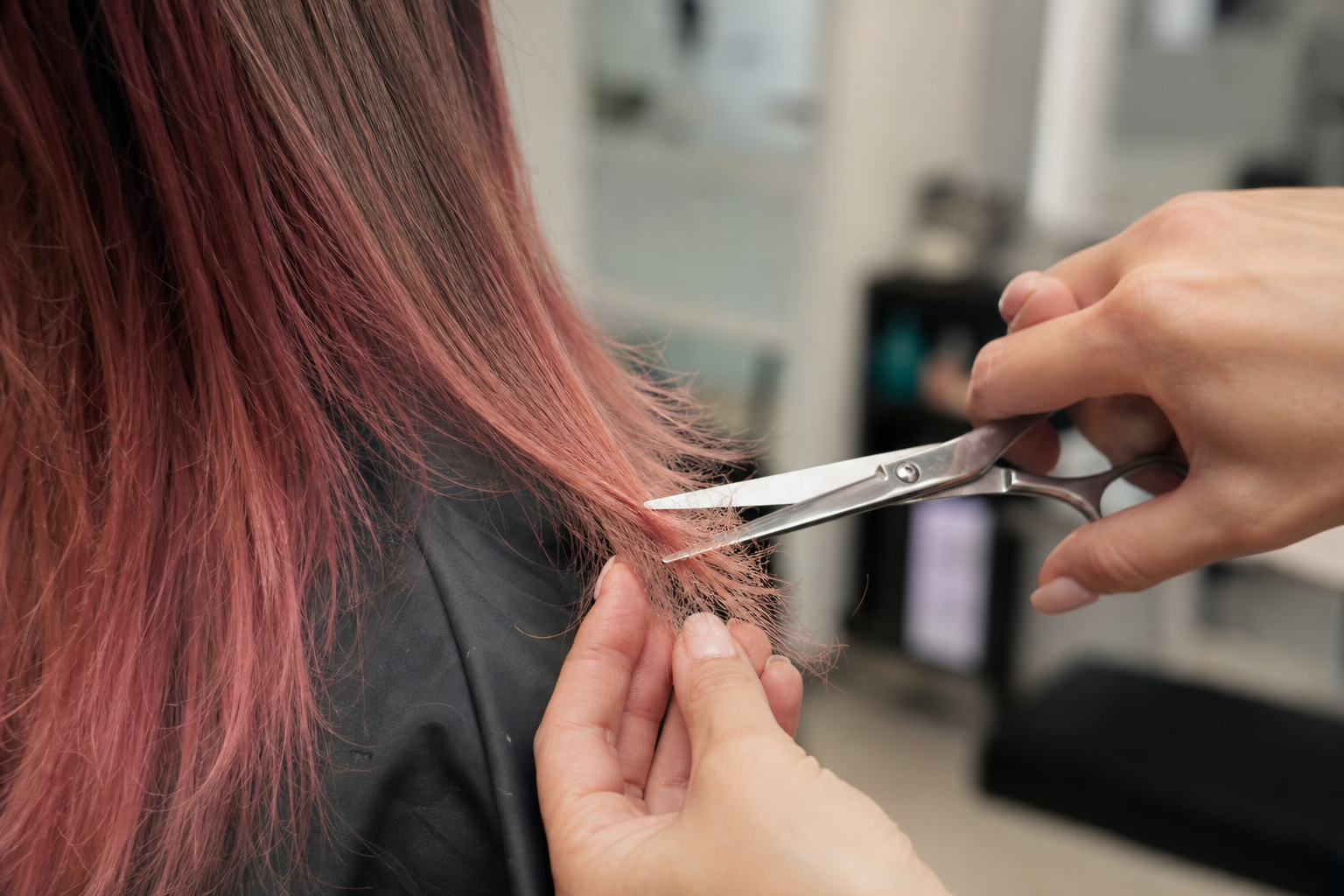
Trim split ends
Best for: fraying tips
A small trim removes split ends before they continue travelling up the shaft. It will not make hair grow faster, but it can stop a rough end becoming a bigger loss.
Ask for a strand test
Best for: corrective colour
A professional should test a hidden strand for elasticity before promising any correction. “Possible” and “safe today” are different answers.
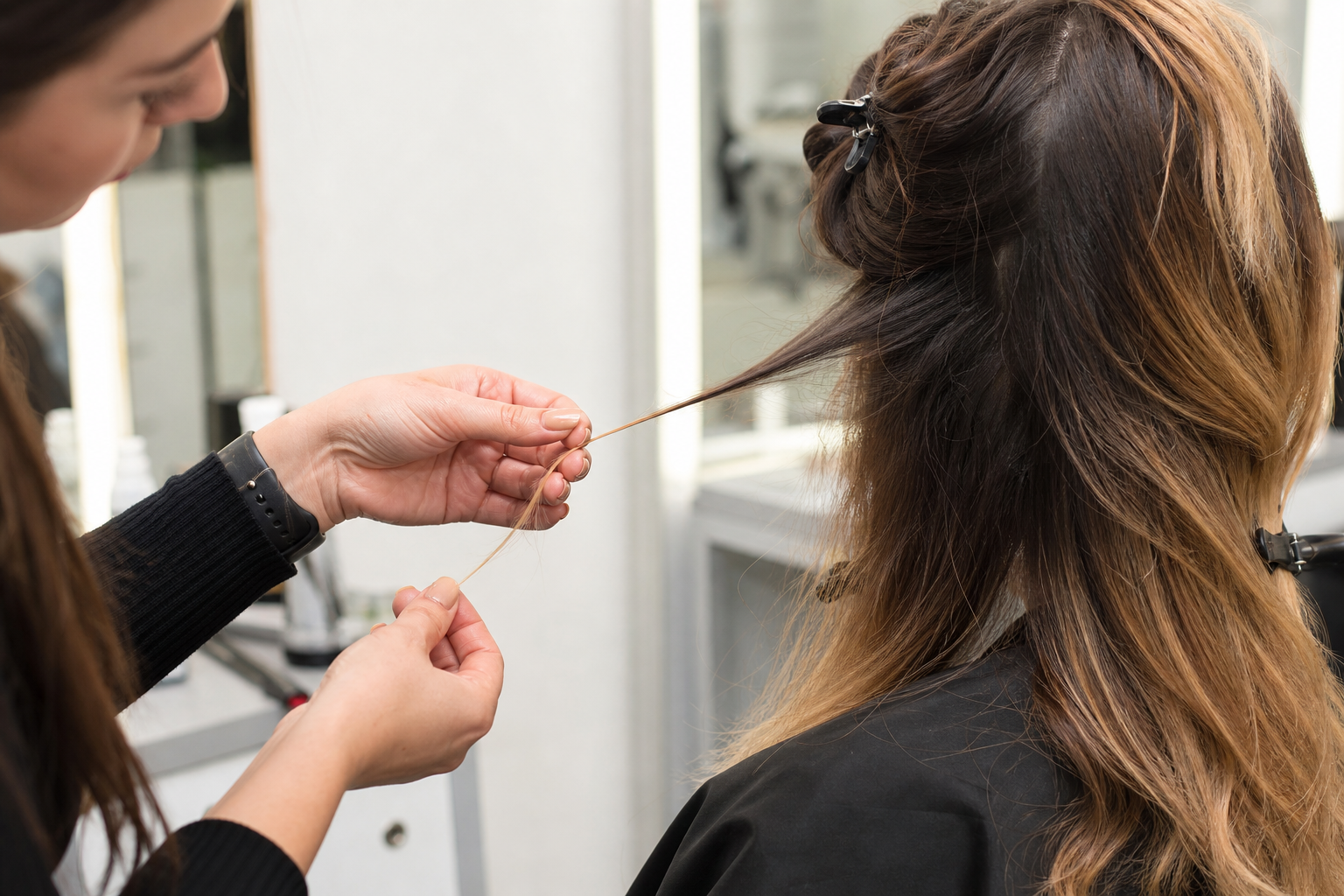
Tell your colourist exactly what was used, when it was used, and whether hair felt stretchy afterward. Honest history is what makes a strand test useful.
Common scenarios
Rough ends after a fresh colour
Often moisture loss and raised cuticle. Pause chemicals, condition gently, and reduce heat before asking for another service.
Hair that stretches then snaps when wet
Significant chemical weakening. Stop colour and heat; book a skilled colourist for assessment.
Uneven bands after home correction
Different sections need different formulas. A strand test and professional plan beat another box dye.
What not to do
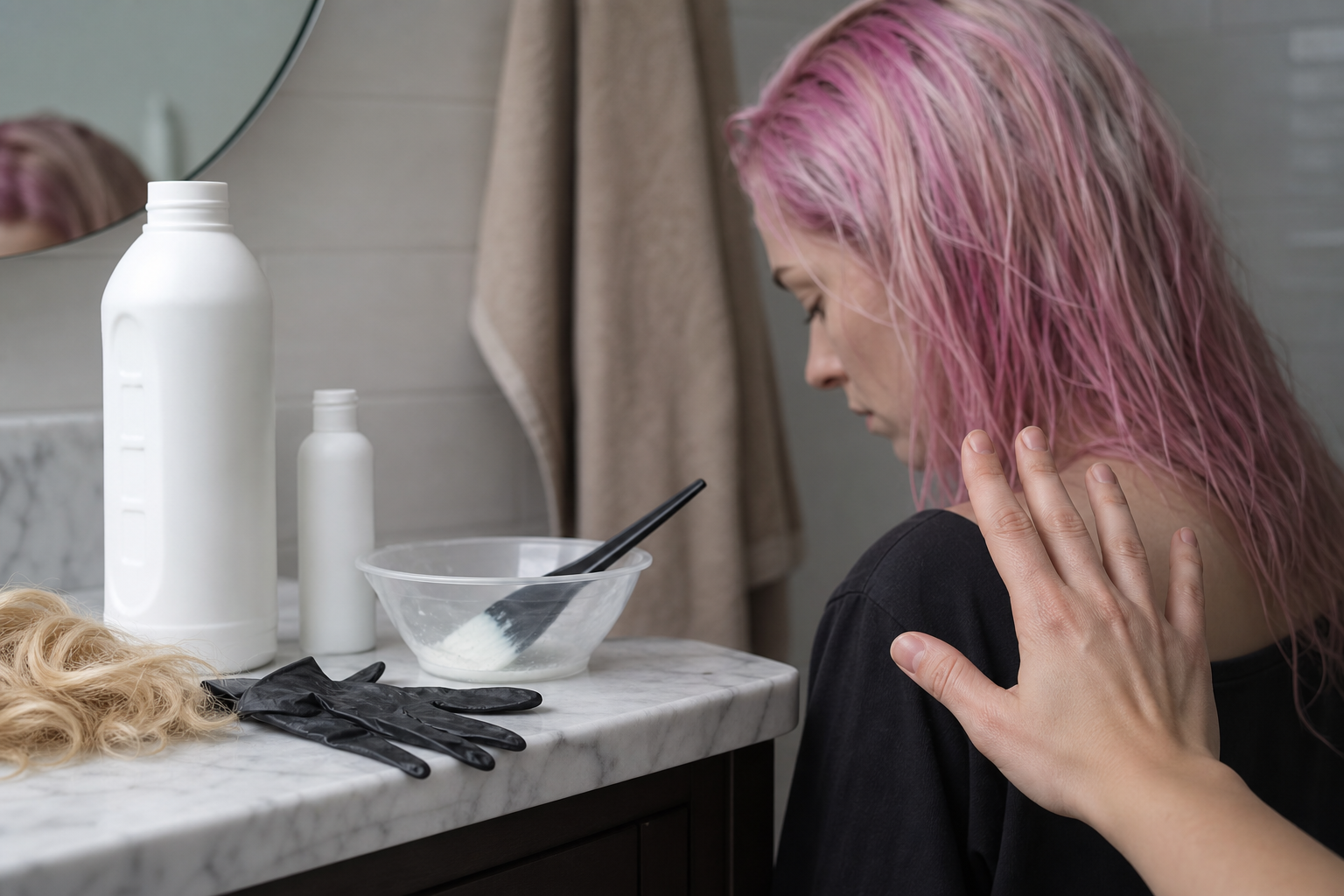
Bleach again at home
Another round of bleach on compromised hair can turn breakage into a major cut.
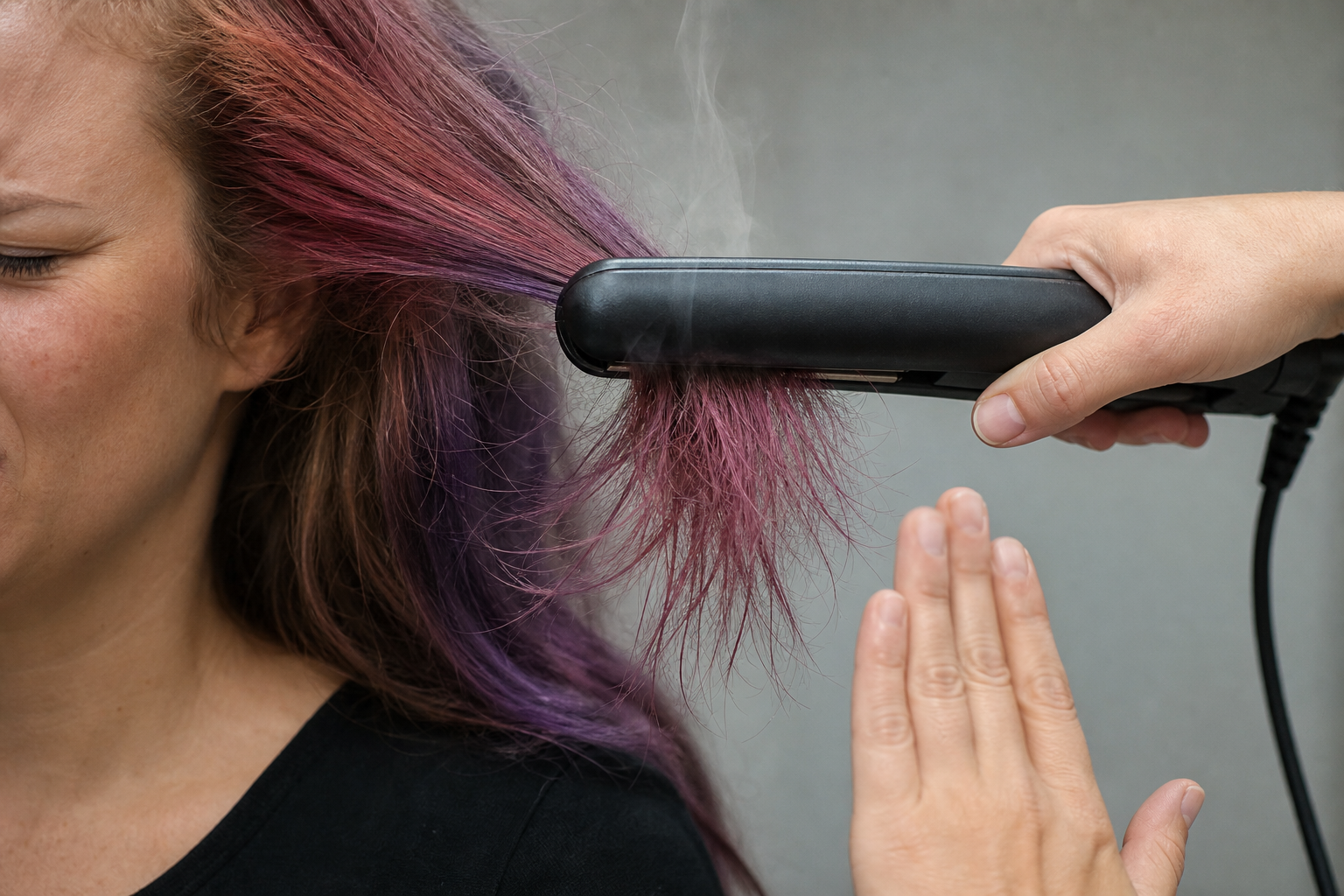
Use high heat to make it look smoother
Heat can temporarily mask roughness while worsening the damage underneath.
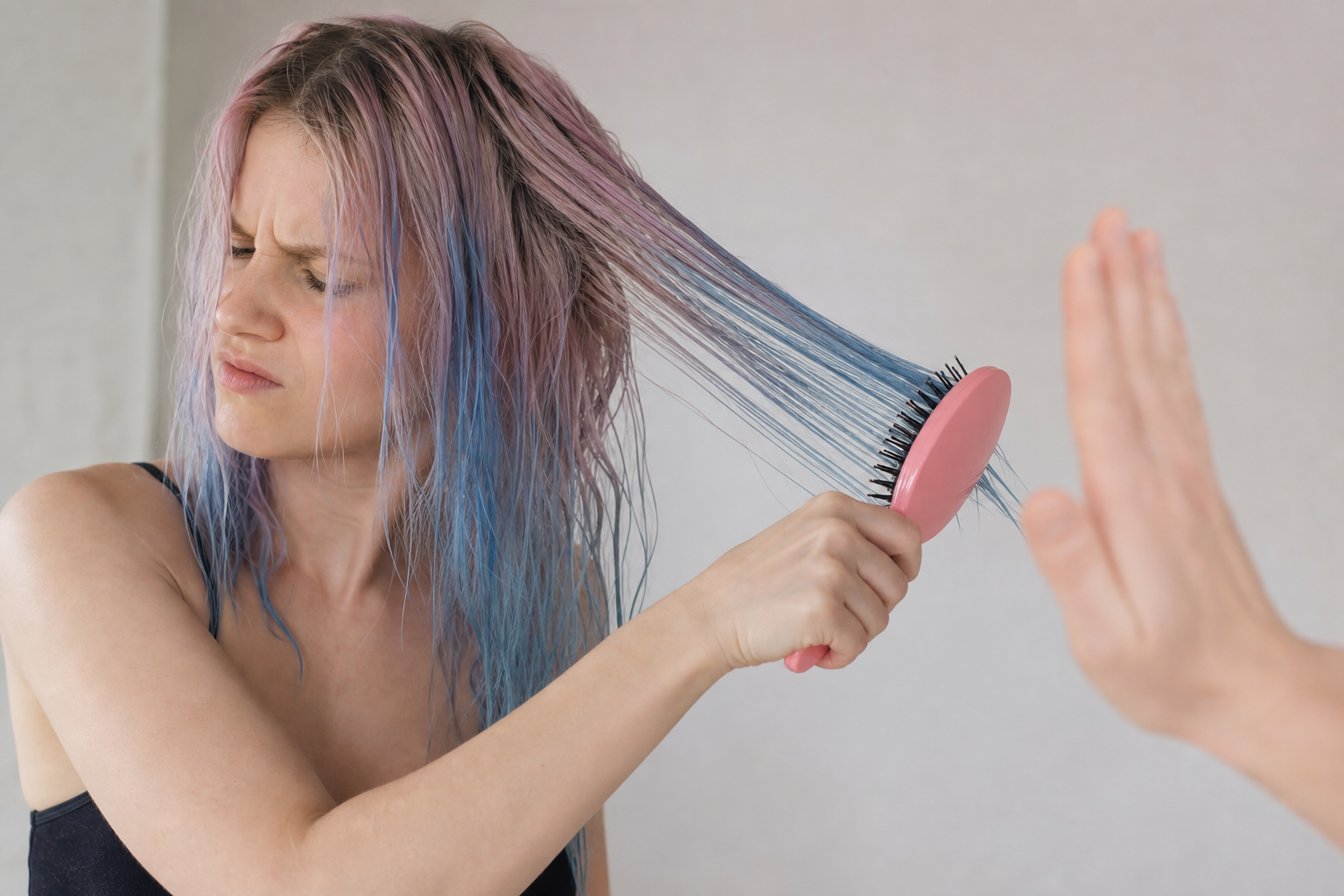
Brush hard while it is wet
Wet chemically processed hair stretches more easily and needs patient detangling.
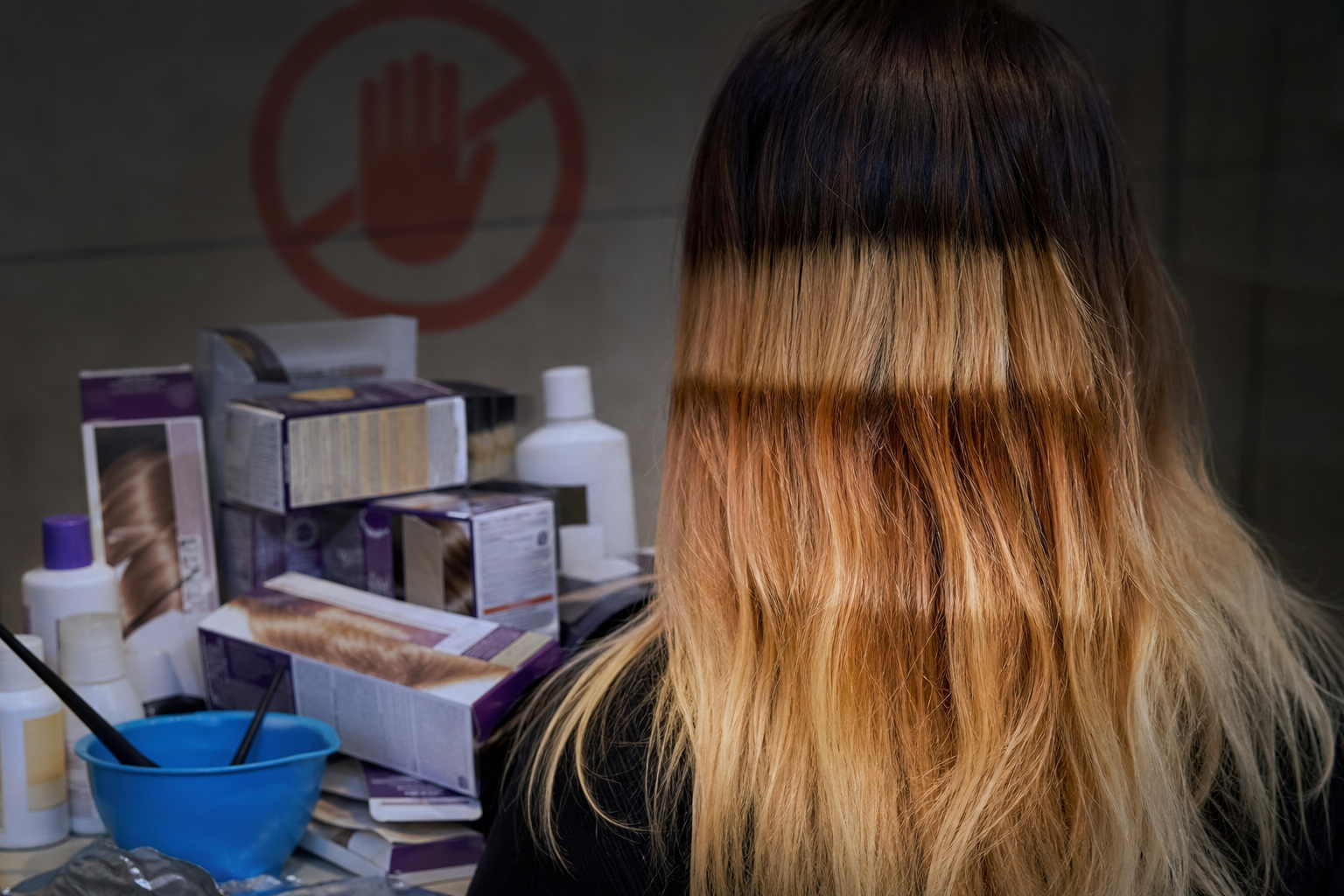
Correct uneven bands with another box dye
Different sections often need different formulas. A box can make banding and dryness worse.
Keep it from returning
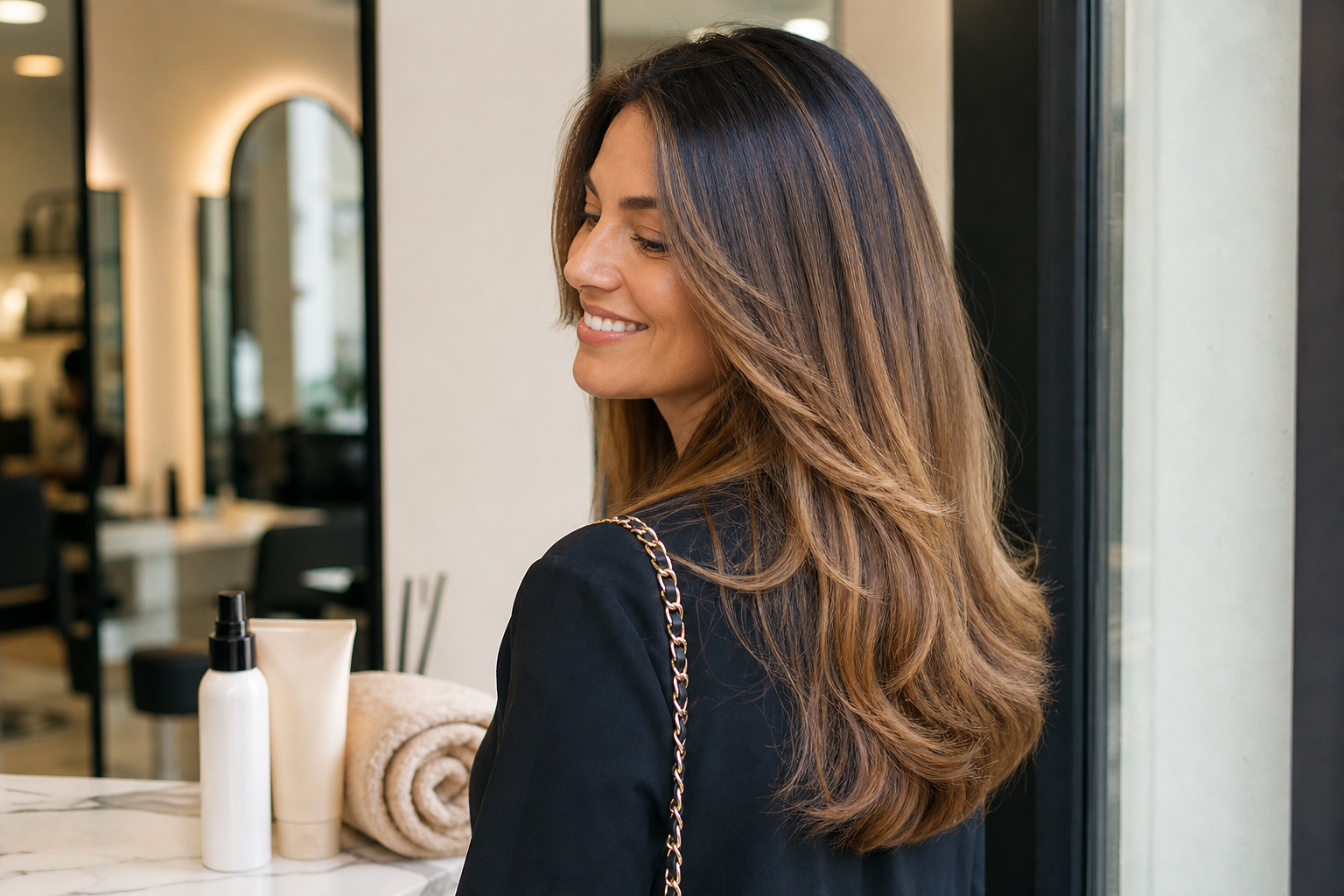
Use a strand test for big colour changes, avoid overlapping bleach, condition the lengths, and plan trims before ends become thin and frayed.
When to book a professional
Book a colourist for corrective work, uneven bands, major breakage, or any service after a recent bleach. Bring photos, product names, and an honest timeline of what was done and when.
If the scalp burned, swelled, or developed a rash, seek medical advice before any further colour work.
FAQs
Can damaged coloured hair be repaired?
Products can improve softness and manageability, but severely damaged hair shaft cannot be permanently restored. Pausing chemicals, reducing heat, and trimming are the practical recovery steps.
When is it safe to colour again?
Only after a skilled colourist assesses the hair and a strand test supports the plan. Timing depends on the damage and desired result.
Should I cut all damaged hair off?
Not necessarily. A professional can remove the most compromised ends and build a care plan that preserves healthy length.