
After winter, a lawn can look like old rope: flat, pale and determined to make you think it has given up. Before you drown it or cut it to the soil, check whether it is simply waking slowly.
A brown lawn is not automatically a dead lawn. Cold, shade, leaf mats, compacted soil and slow spring growth can all make healthy crowns look hopeless. The useful first question is not “Which fertiliser?” but “Is there living growth at the base?”
Part the grass and inspect the crowns. Firm bases with pale green shoots mean the lawn is likely dormant or recovering. Rake only loose debris, avoid walking on saturated soil, and water deeply only when the soil is genuinely dry. Persistent bare patches, mushy areas, rings or pests need a gardener.
Quick diagnosis map
| What you see | Likely cause | First move |
|---|---|---|
| Tan blades; green at the base | Dormancy or delayed spring growth | Wait, rake lightly and monitor new shoots |
| Wet, soft area with no recovery | Poor drainage or compacted soil | Keep traffic off; trace where water collects |
| Round patch, orange dust, or spreading brown | Fungal disease or pest damage | Photograph it; avoid blanket chemicals |
| Dry patch beside a wall or tree | Shade, root competition or uneven watering | Check soil moisture below the surface |
Do not scalp, fertilise or heavily water frozen, waterlogged or visibly diseased turf. A lawn that sinks underfoot, smells sour or stays puddled needs a drainage assessment before treatment.
Why a lawn can look finished before spring has started
- Dormancy: grass blades brown back in cold weather while the crown remains alive.
- Leaf and snow mat: trapped moisture and shade flatten growth and invite disease.
- Compaction: wet foot traffic closes the air spaces roots need.
- Drainage: meltwater or a low spot can keep roots too wet.
- Real damage: grubs, fungus, salt, pet urine or an unsuitable grass mix need a specific response.
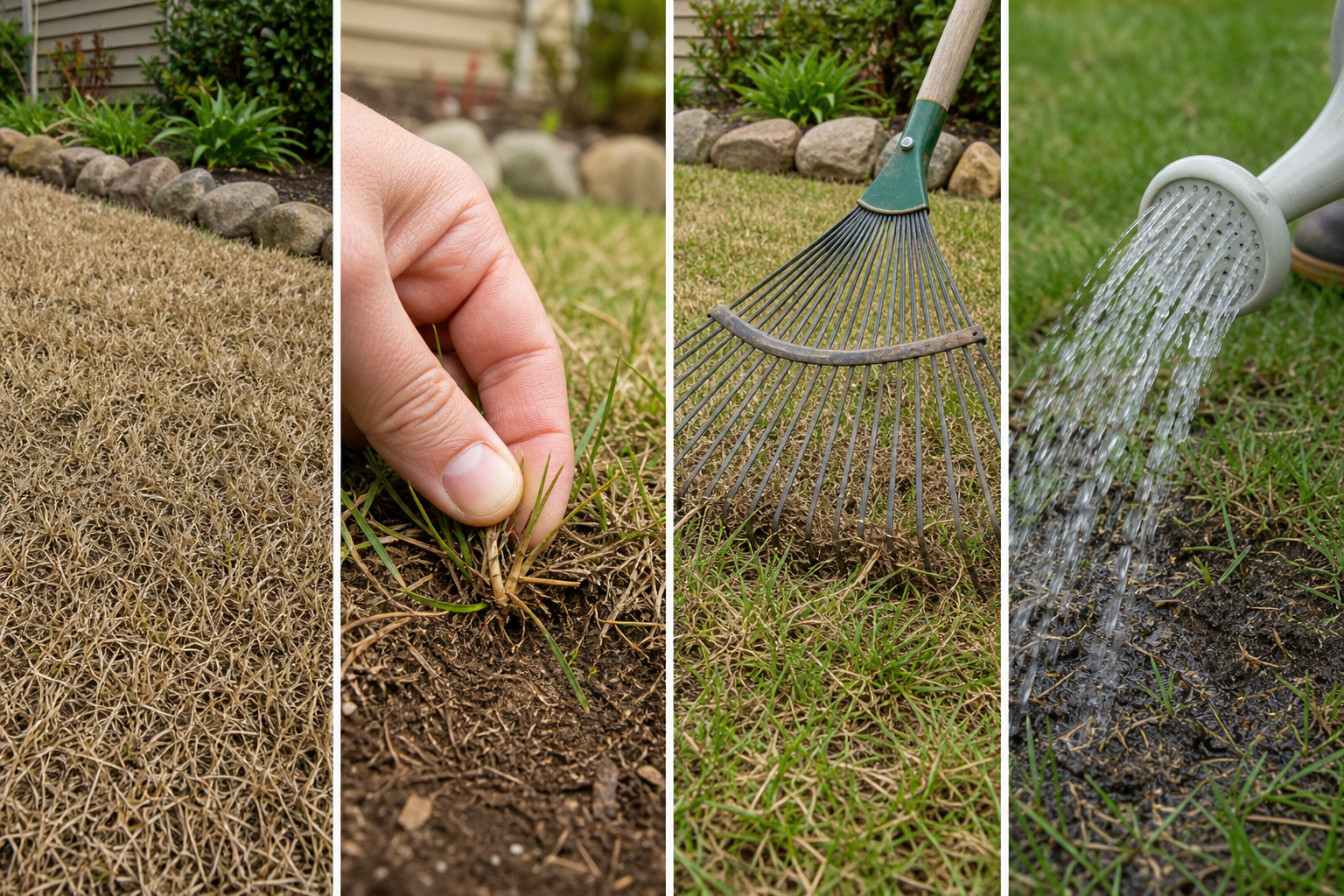
Methods that help — in the right order
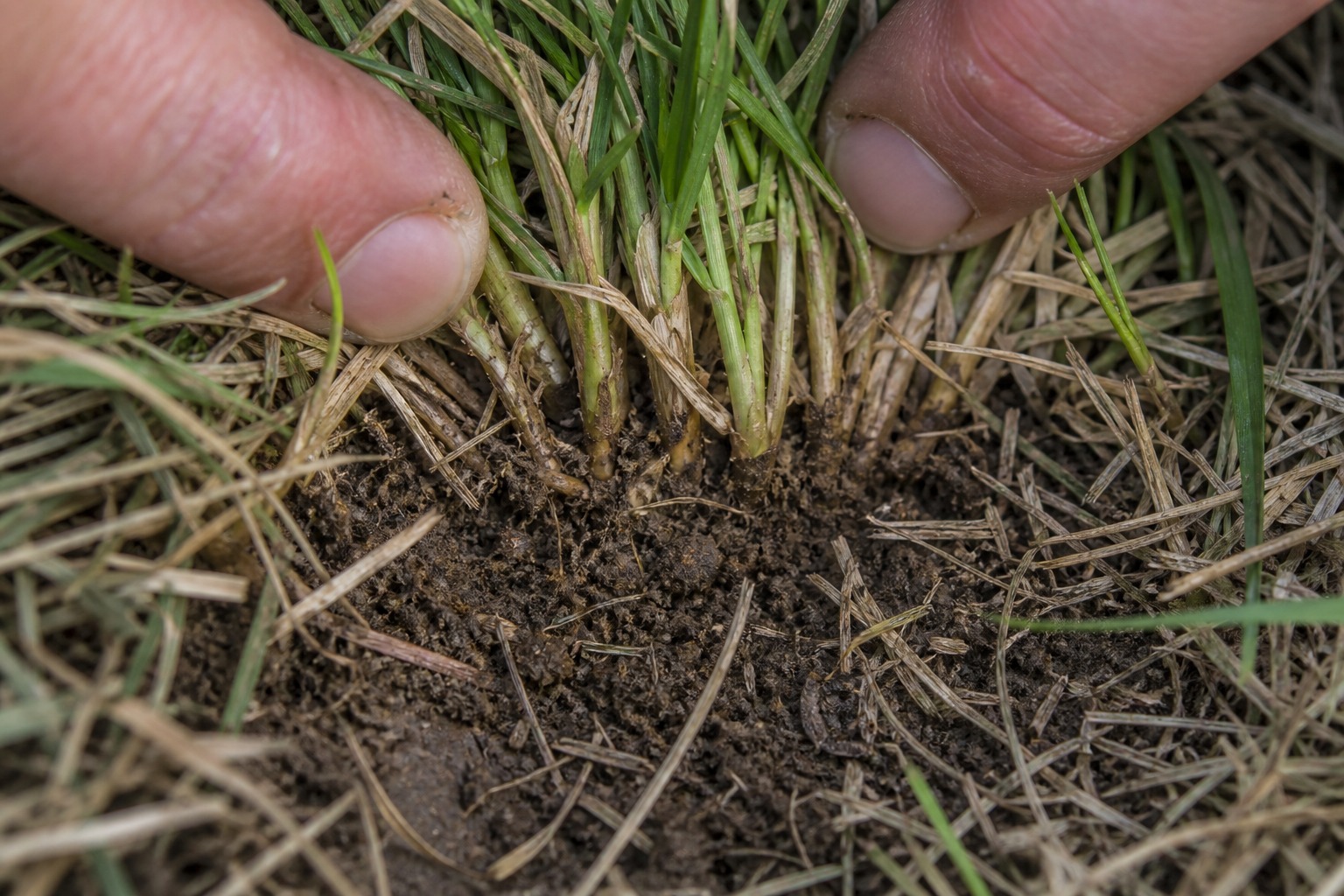
Check the crown, not the blade tip
Best for: a lawn that is uniformly pale after winter
- Choose several spots, including one near an edge and one in the centre.
- Part the dry blades at soil level; do not pull the plant out.
- Look for firm crowns and tiny green or cream shoots.
- Soft black crowns or roots that lift easily are a different problem.
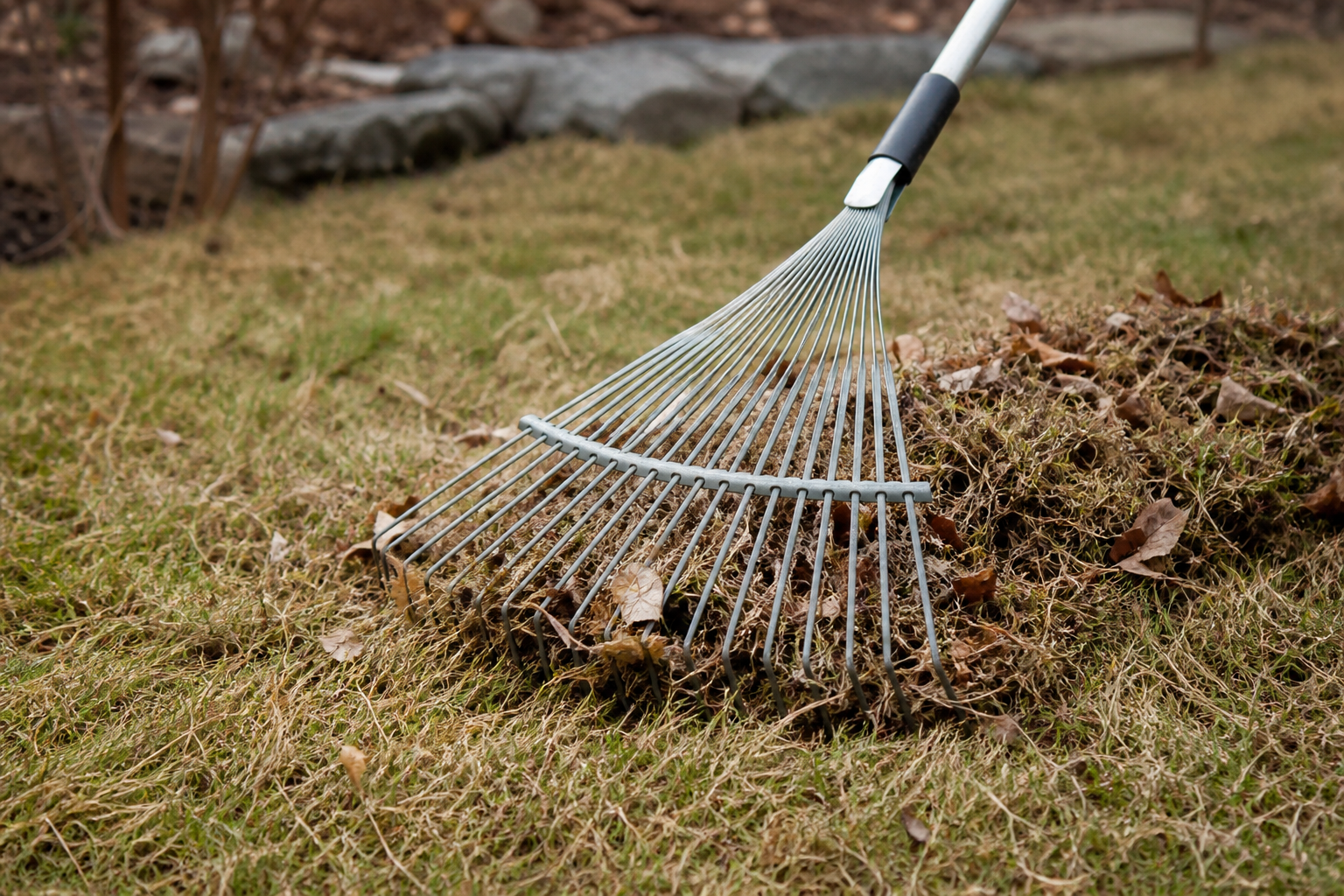
Lift the winter mat gently
Best for: leaves, twigs and flattened grass
Use a flexible rake only when the surface is no longer soggy. Lift leaves and loose thatch; aggressive raking tears new shoots and exposes wet soil.
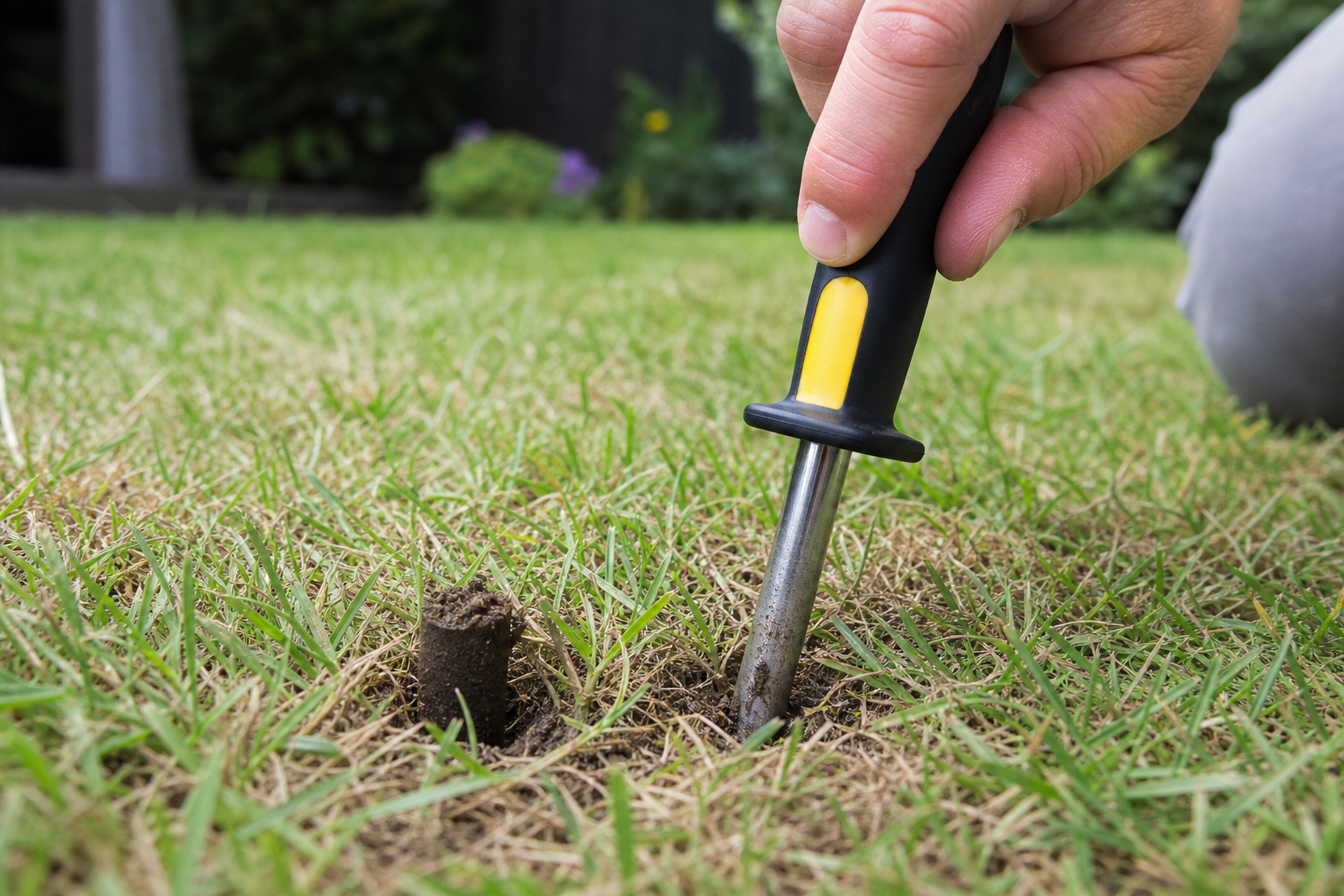
Map the wet and hard spots
Best for: one patch that stays thin or muddy
After rain or snowmelt, note where water stands and where soil feels brick-hard. Keep people and vehicles off wet turf. A gardener can decide whether aeration, levelling or drainage is appropriate once the ground is workable.
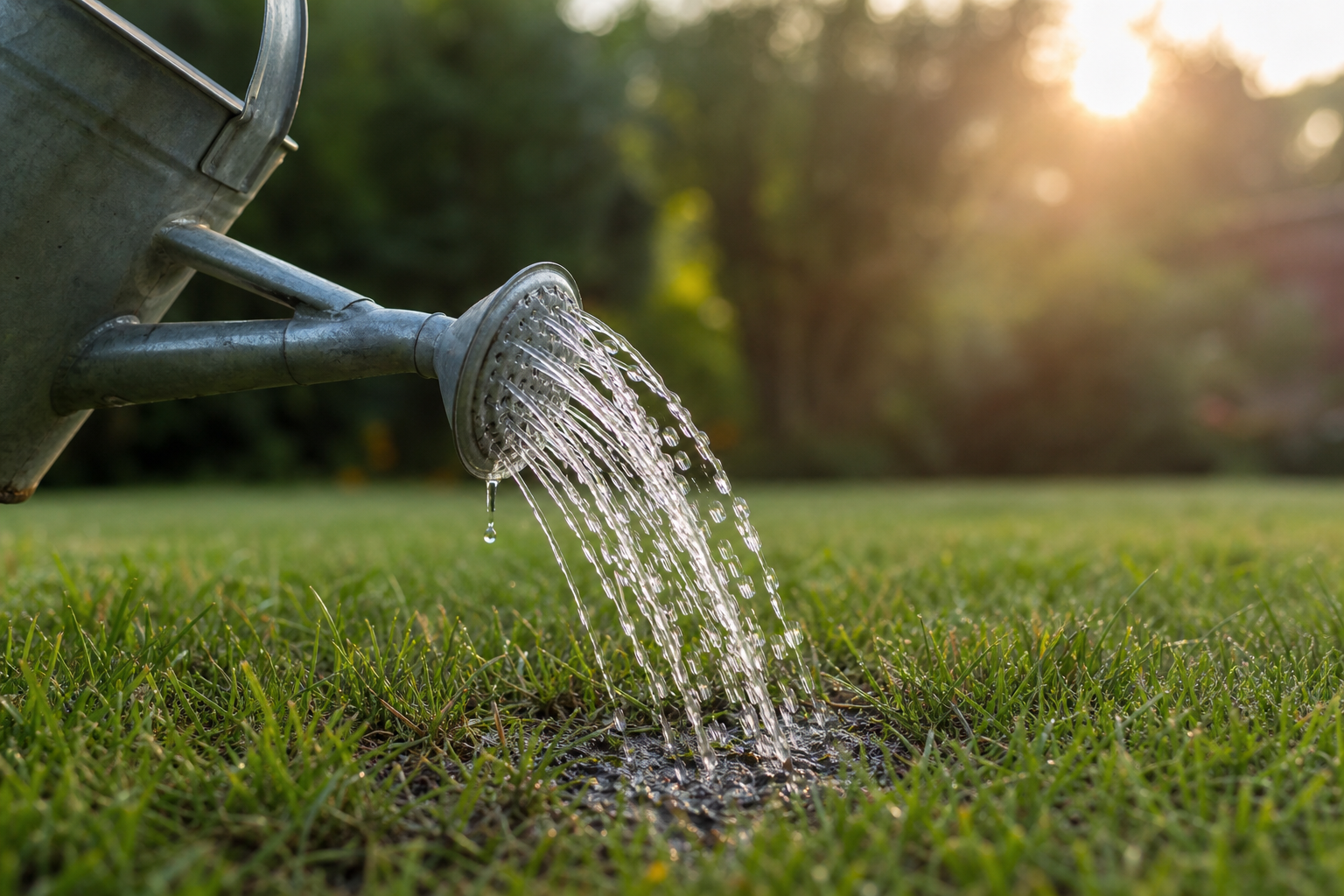
Water by the soil, not guilt
Best for: a dry spell after the ground has thawed
Push a finger a few centimetres into the soil. If it is damp below the surface, wait. If it is dry, water slowly enough to soak the root zone, then let it drain. Daily surface splashing encourages shallow roots.
Patch after the cause is clear
Best for: a genuinely bare area that is no longer wet or active
Remove dead material, loosen only the top layer, use a suitable seed mix, keep it evenly moist while germinating and protect it from traffic. If the same patch fails every year, fix shade, drainage or root competition before reseeding again.
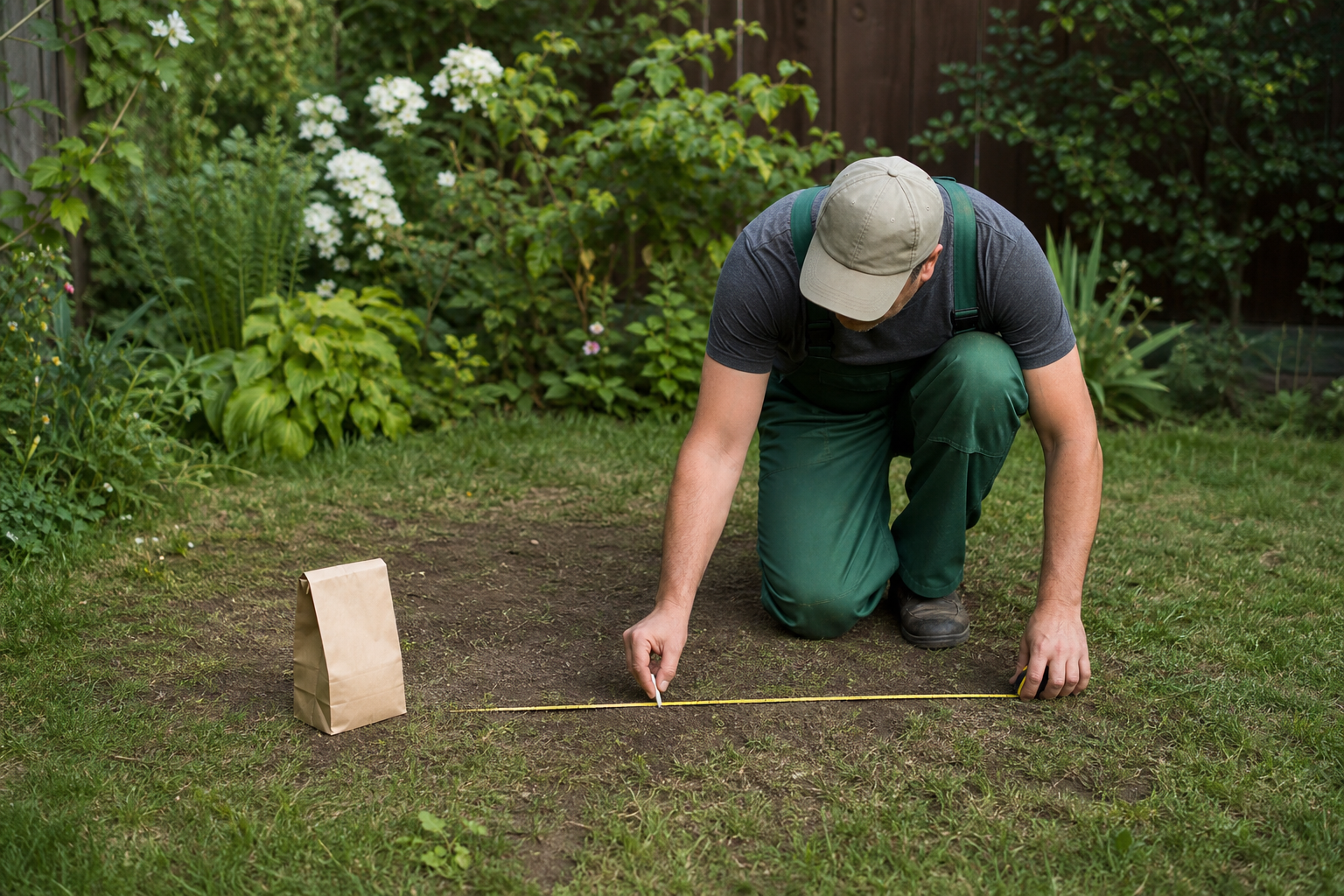
Take photos of the same patch every seven days. New shoots and an expanding brown edge tell very different stories, and the sequence helps a gardener diagnose the cause.
Common scenarios
Uniform brown after snow or a cold spell
Often dormancy, not death. Check crowns before reseeding or feeding.
One muddy patch that never greens up
Look for drainage, shade from a tree, buried roots, or repeated foot traffic. Reseeding without fixing the site usually fails again.
Round brown patches with orange dust
Photograph the pattern and avoid blanket fungicide until a gardener identifies it.
Please don’t do this
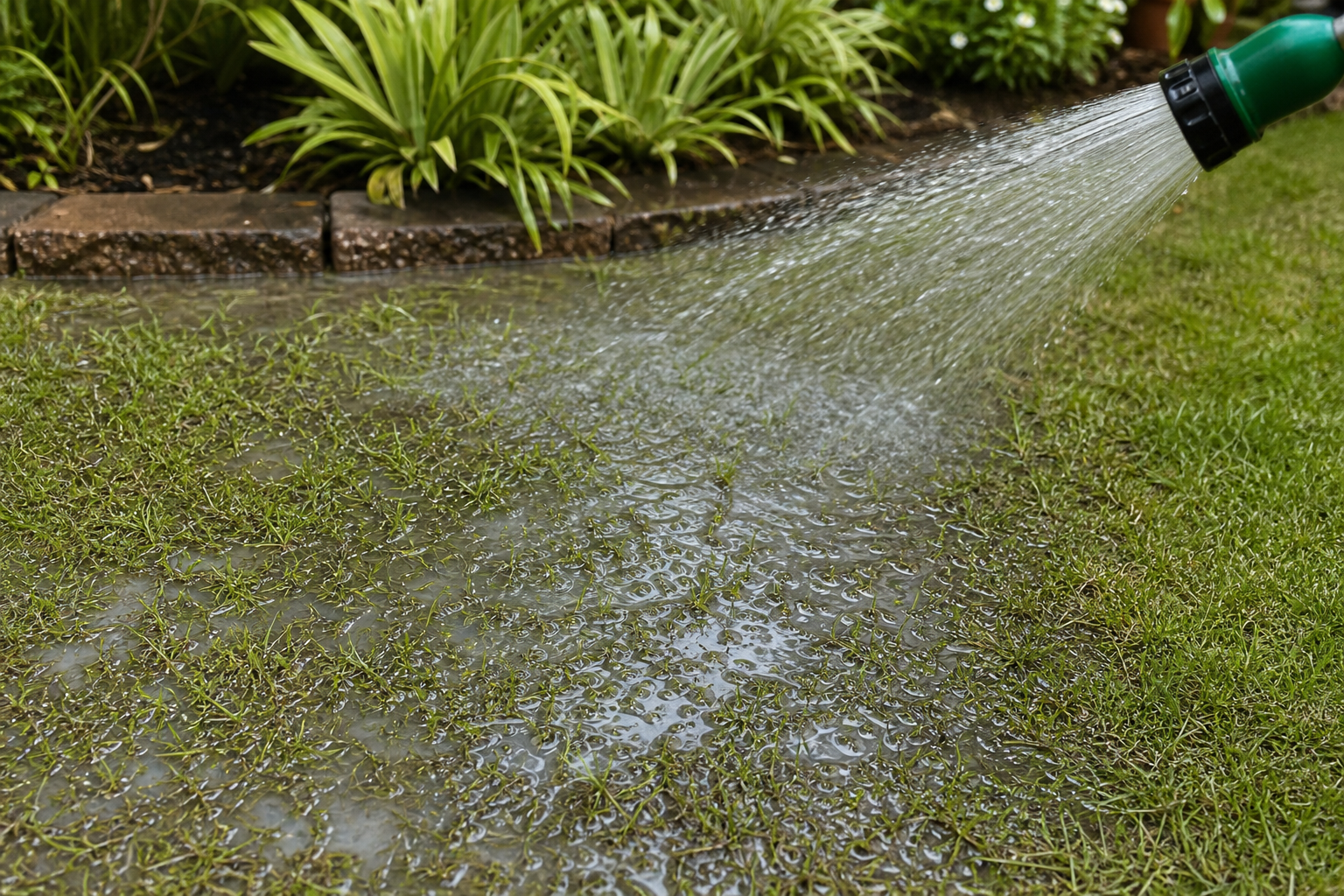
Flood a wet lawn
Standing water removes air from the root zone. Water only when the soil below the surface is dry.
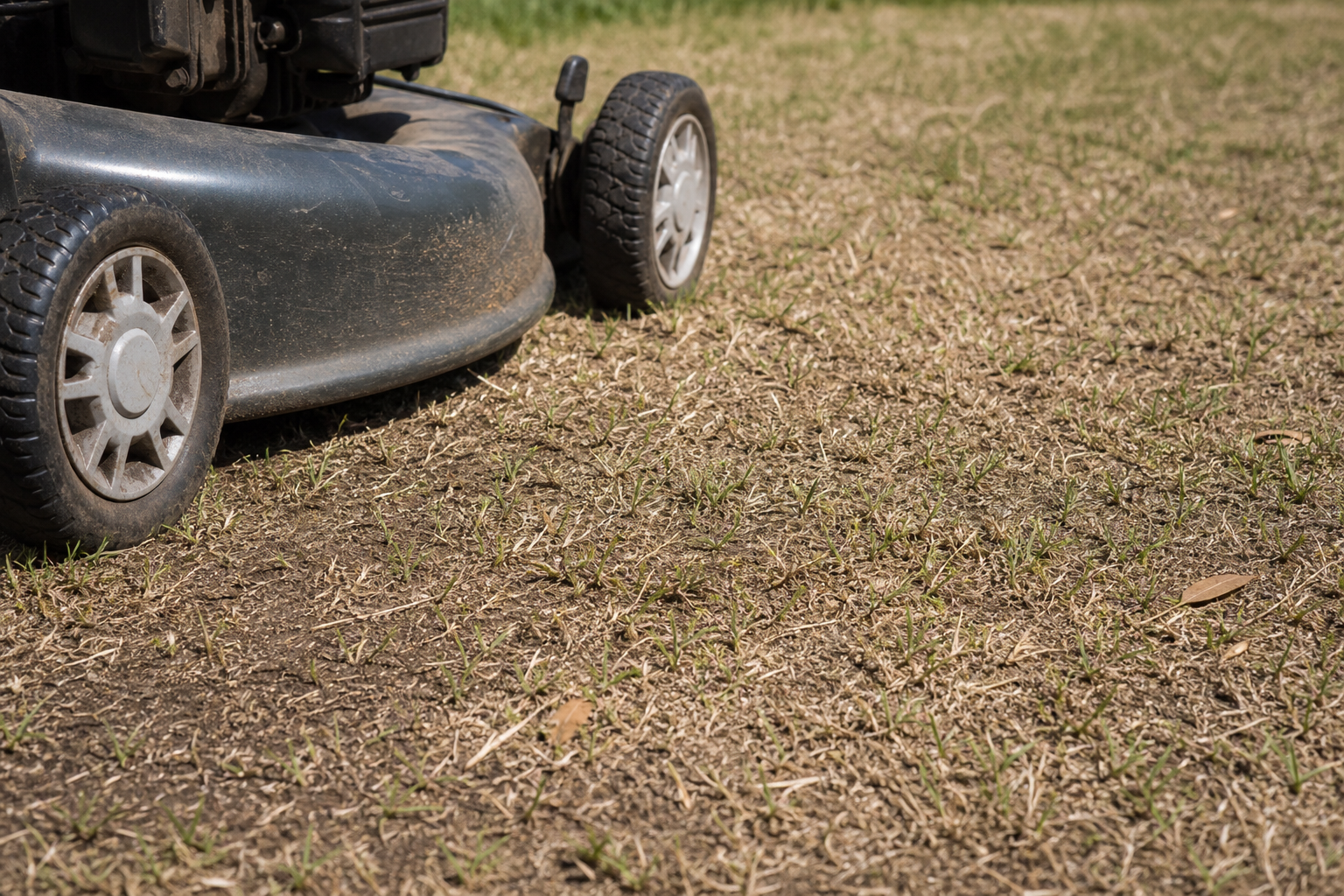
Cut it extremely short to make it look tidy
Scalping removes the little green tissue the plant needs to recover and leaves soil exposed.
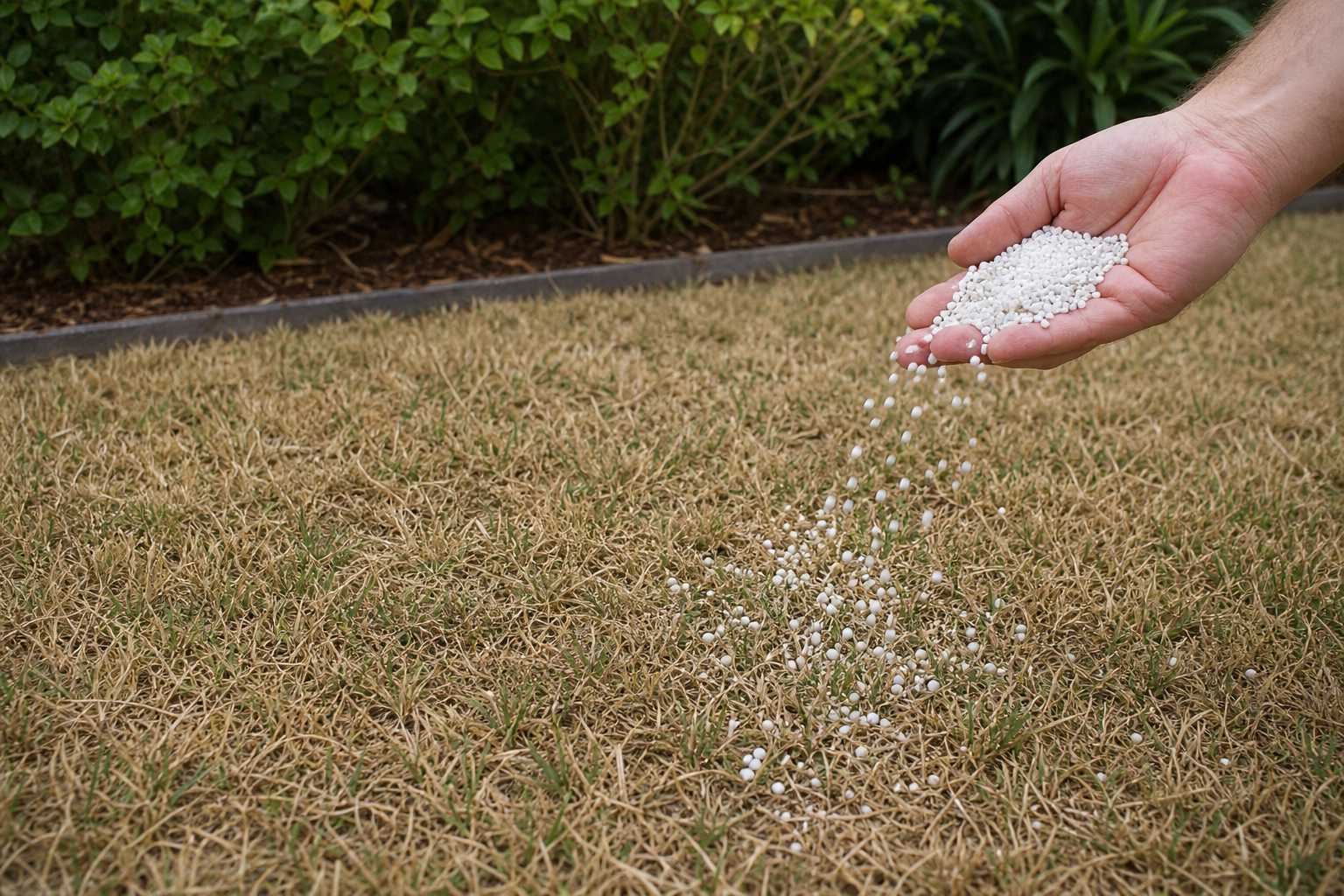
Throw fertiliser at a stressed lawn
Feed only once active growth and soil conditions justify it; excess fertiliser can burn roots and run off.
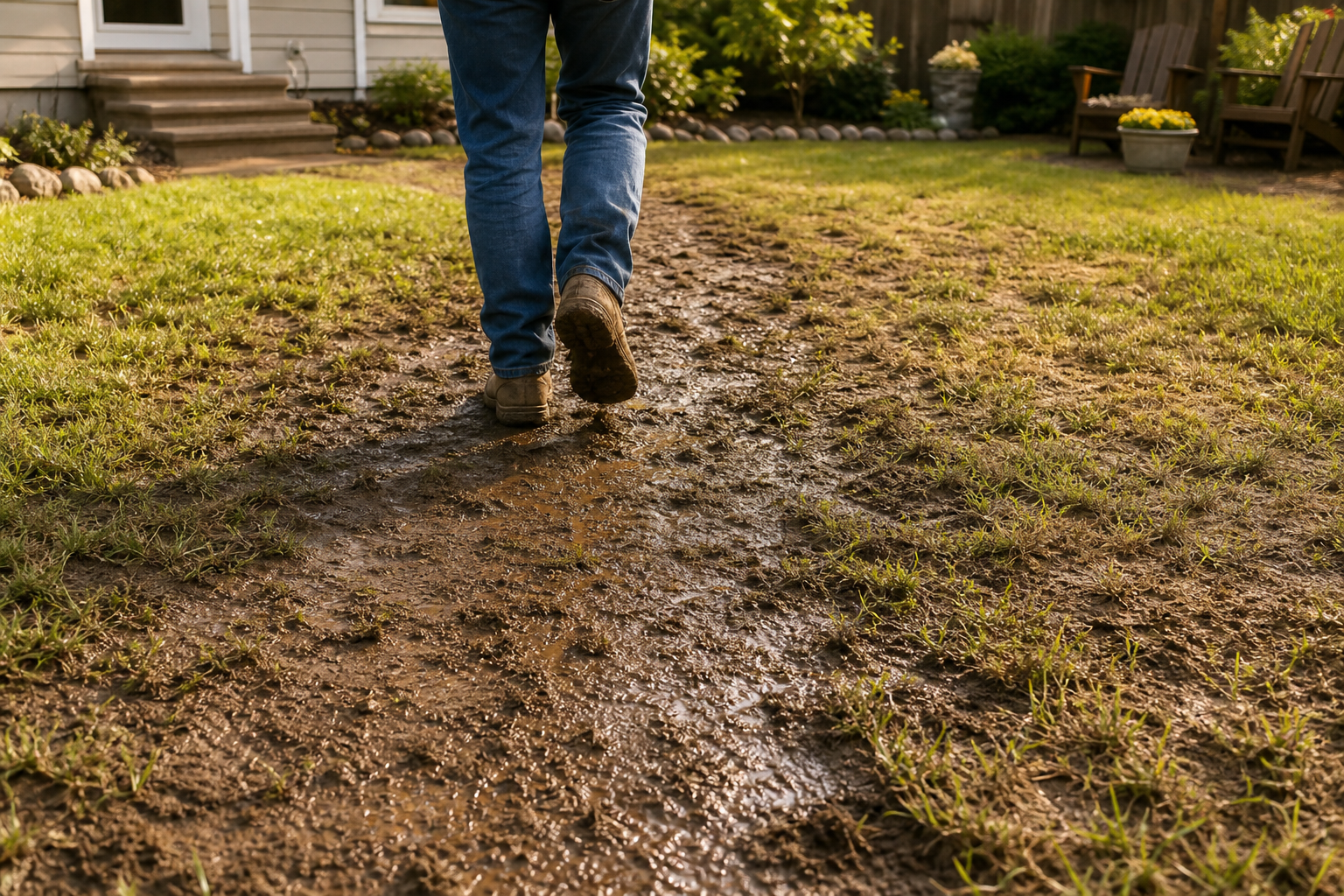
Keep walking on wet turf
Repeated foot traffic on saturated soil compacts it and tears fragile new shoots before they can establish.
Keep recovery on track
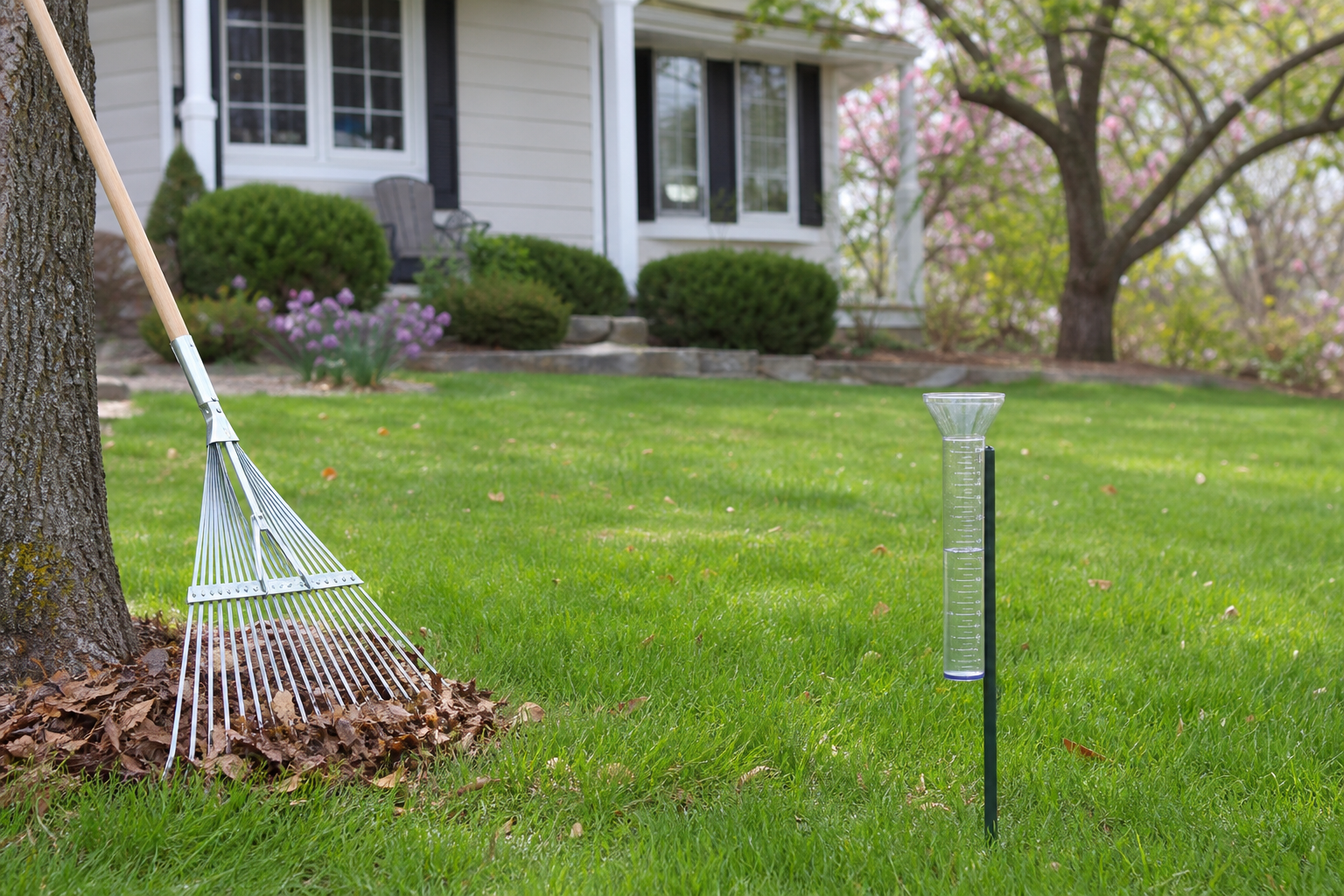
- Remove heavy leaf cover before it mats down.
- Keep gutters and nearby drains from dumping water onto the lawn.
- Use boards or paths instead of repeatedly walking wet grass.
- Mow only when it is actively growing, with a sharp blade and a modest cut.
- Record repeated patches so the underlying site condition can be corrected.
When to book gardening help
Book a gardener for patches that remain bare after the growth season begins, mushrooms or rings spreading across the lawn, pest damage, persistent puddling, severe compaction, or a lawn that needs reseeding and levelling together.
FAQs
How do I know whether winter grass is dead or dormant?
Part the grass at its base. Firm crowns with green shoots usually mean dormancy or recovery; soft, dark or loose crowns suggest damage.
Should I fertilise brown grass in early spring?
Not until soil is workable and the grass has begun active growth. Feeding a stressed or waterlogged lawn is rarely the answer.
Why is only one patch dead?
Check drainage, shade, a buried root, pet traffic, grubs and compacted soil. A localised pattern usually points to a localised cause.
Can I mow a dormant lawn?
Wait until new growth is established and the ground is dry enough not to rut. Never scalp it.
When should I reseed?
After you have corrected the reason the old grass failed and conditions are suitable for germination.