
A new modular kitchen looks perfect in photos until the soft-close drawer starts rubbing and the laminate edge lifts near the sink. Small misalignments become daily annoyances fast.
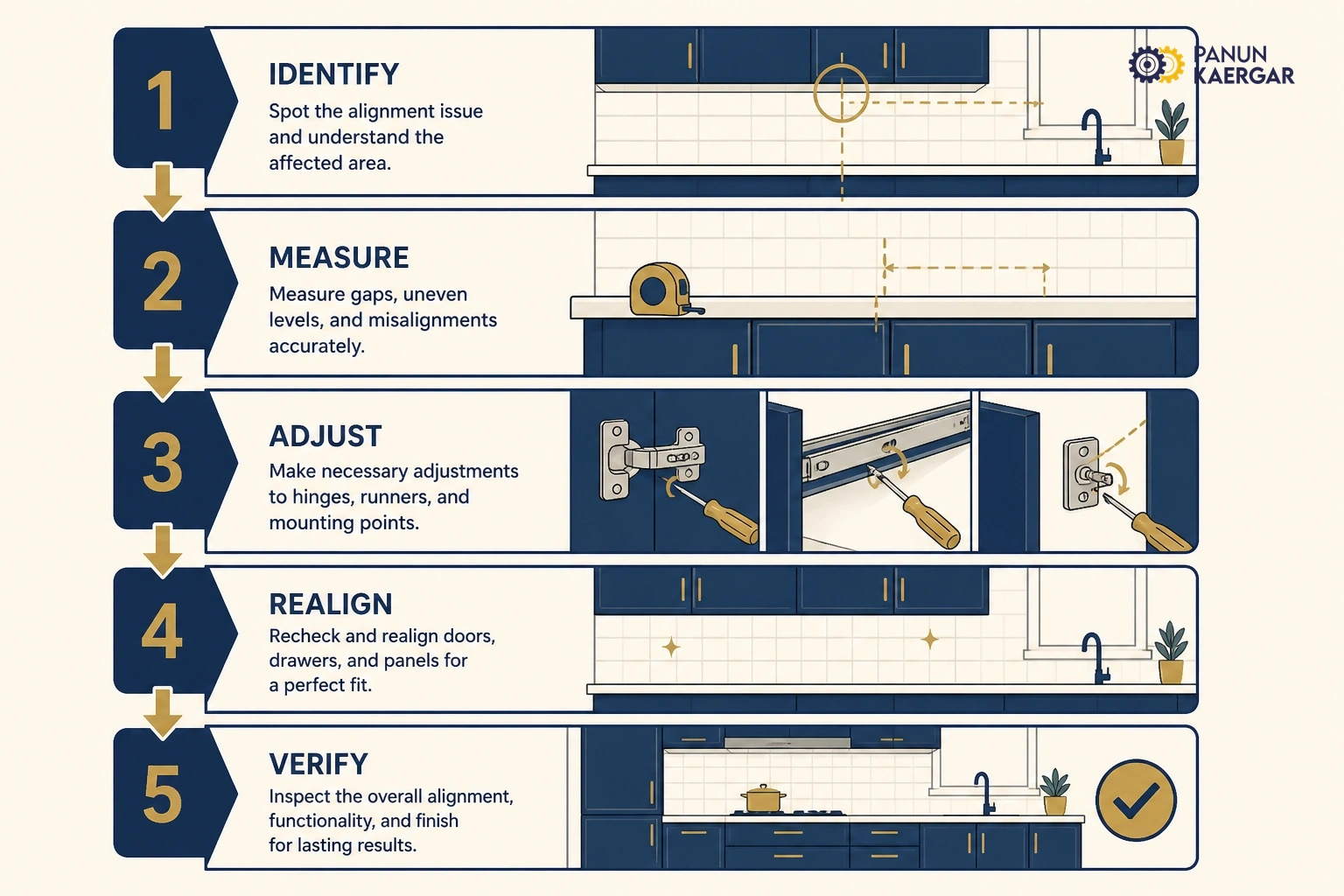
Check hinges and runners, look for swelling near wet zones, tighten loose fixings, and note which panels rub or sag. Do not force drawers or drill random holes in finished boards.
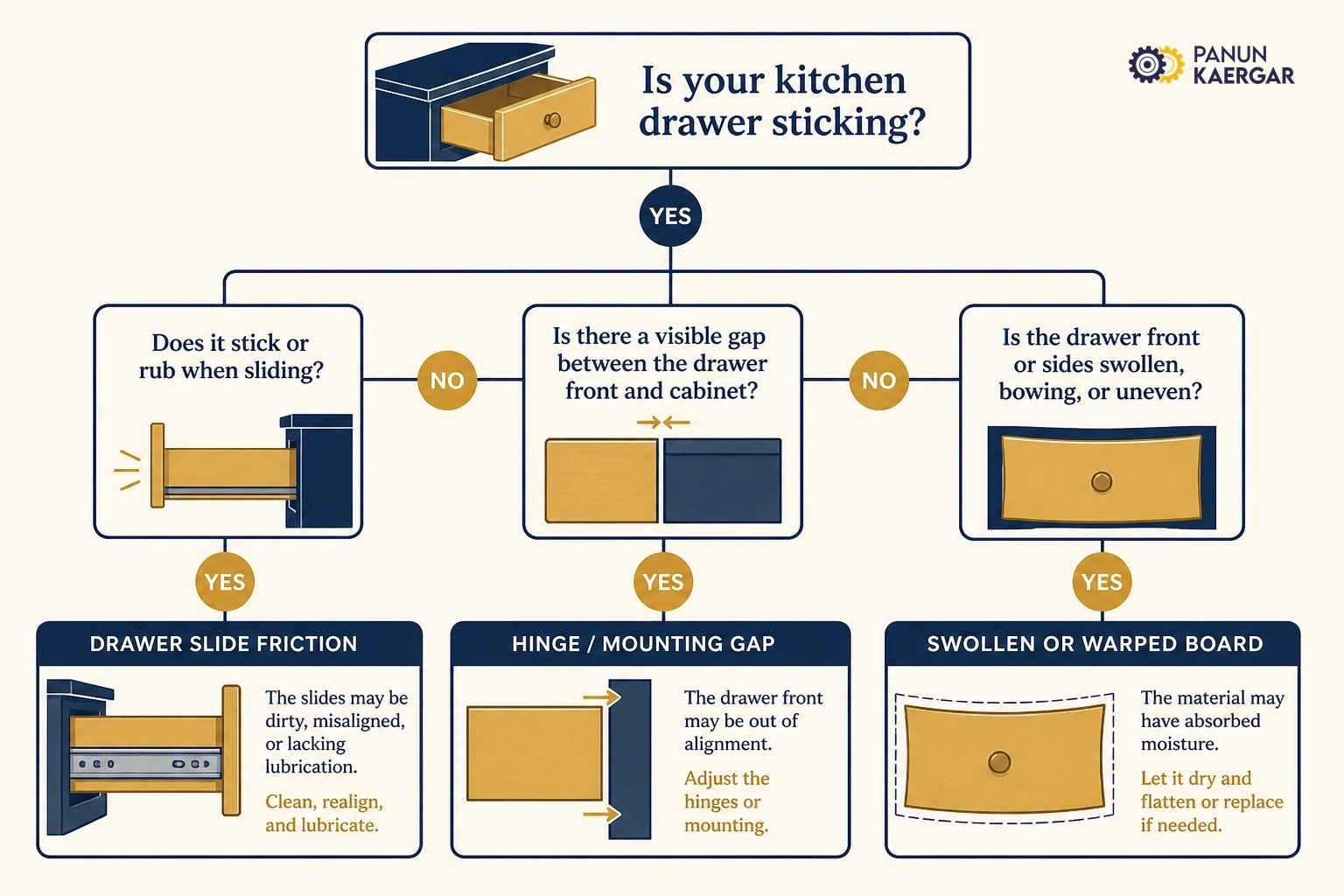
Quick diagnosis map
Start with the symptom, not the most dramatic fix. A small check now can save a cabinet, appliance, or Sunday afternoon.
| What you notice | Likely reason | First move |
|---|---|---|
| Drawer sticks, door gaps uneven, or laminate lifting | Misaligned hinges, swollen board, or loose hardware | Open slowly and note exactly where contact happens. |
| Problem worsens after use | An underlying fault or hidden damage | Stop adding load; inspect safely. |
| Heat, burning smell, leak, or sudden pain | Safety issue, not a DIY puzzle | Switch off / isolate / get help. |
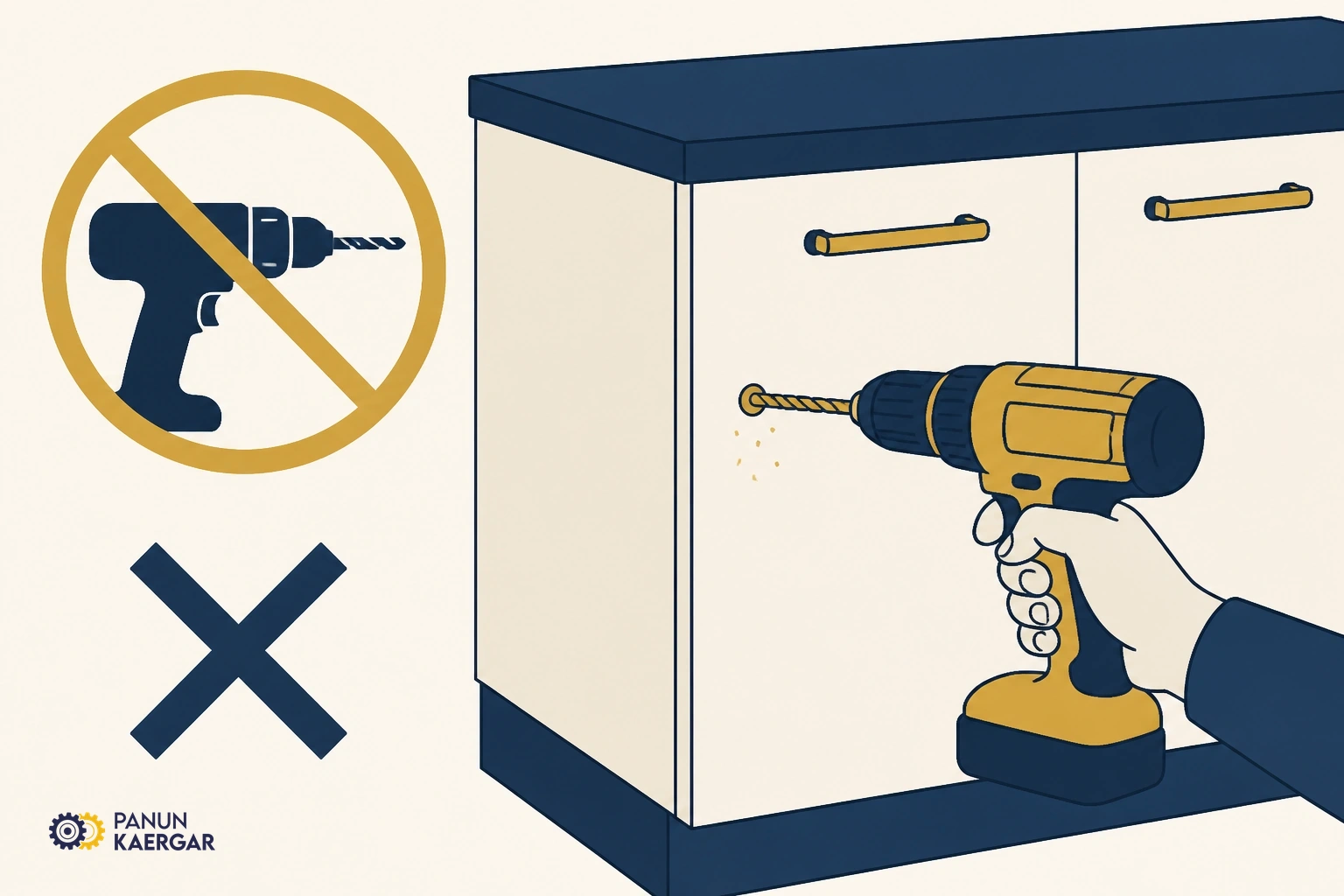
Do not force soft-close drawers, drill new holes in finished fronts, or ignore swelling near water.
What usually causes this
The visible symptom is useful, but the small detail around it usually tells the real story.
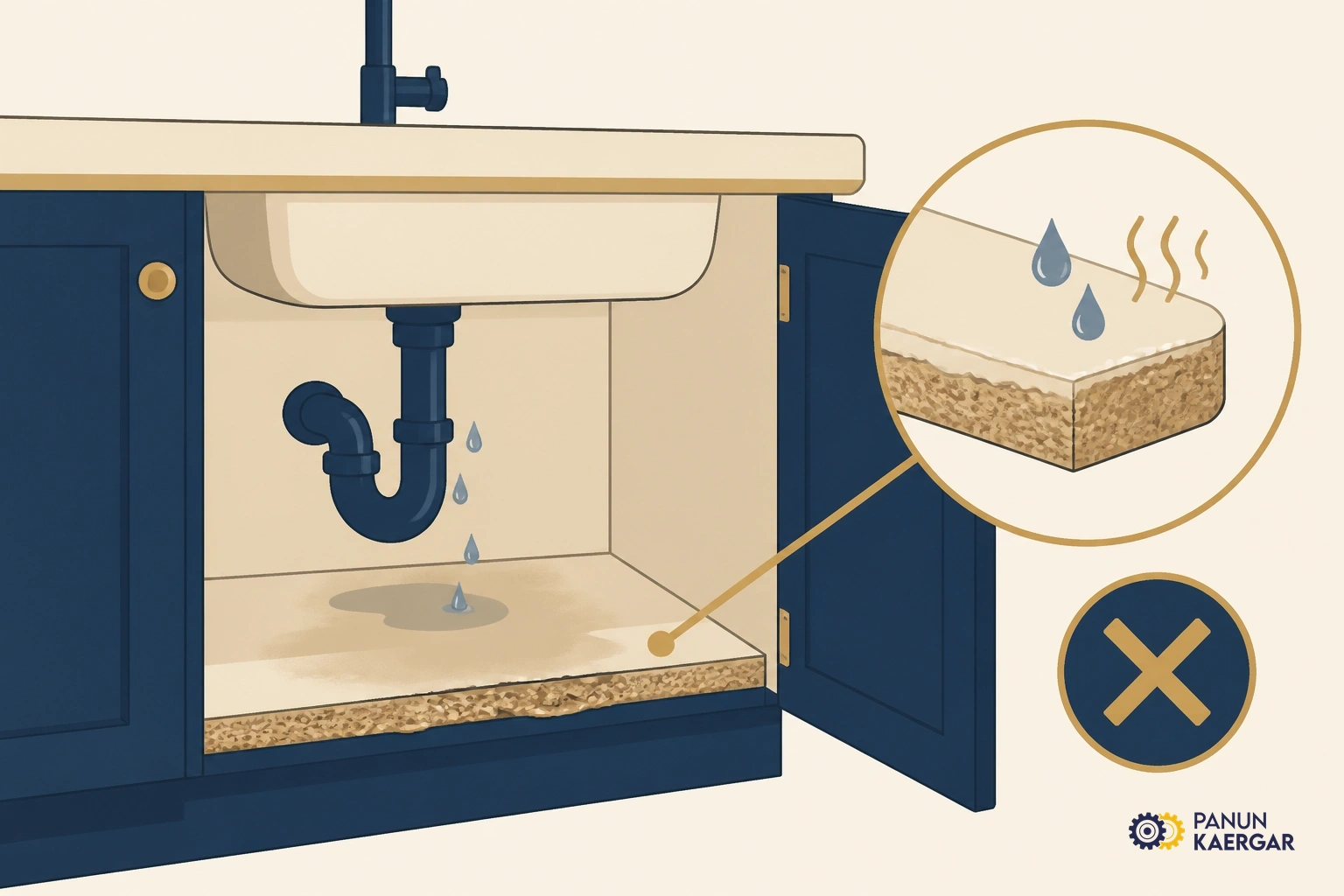
- Humidity swelling particleboard near the sink.
- Runners knocked out of alignment during install.
- Loose hinge screws letting doors hang crooked.
Try these in order
Begin with the reversible checks. The goal is a clean fix, not winning an argument with a stubborn household thing.
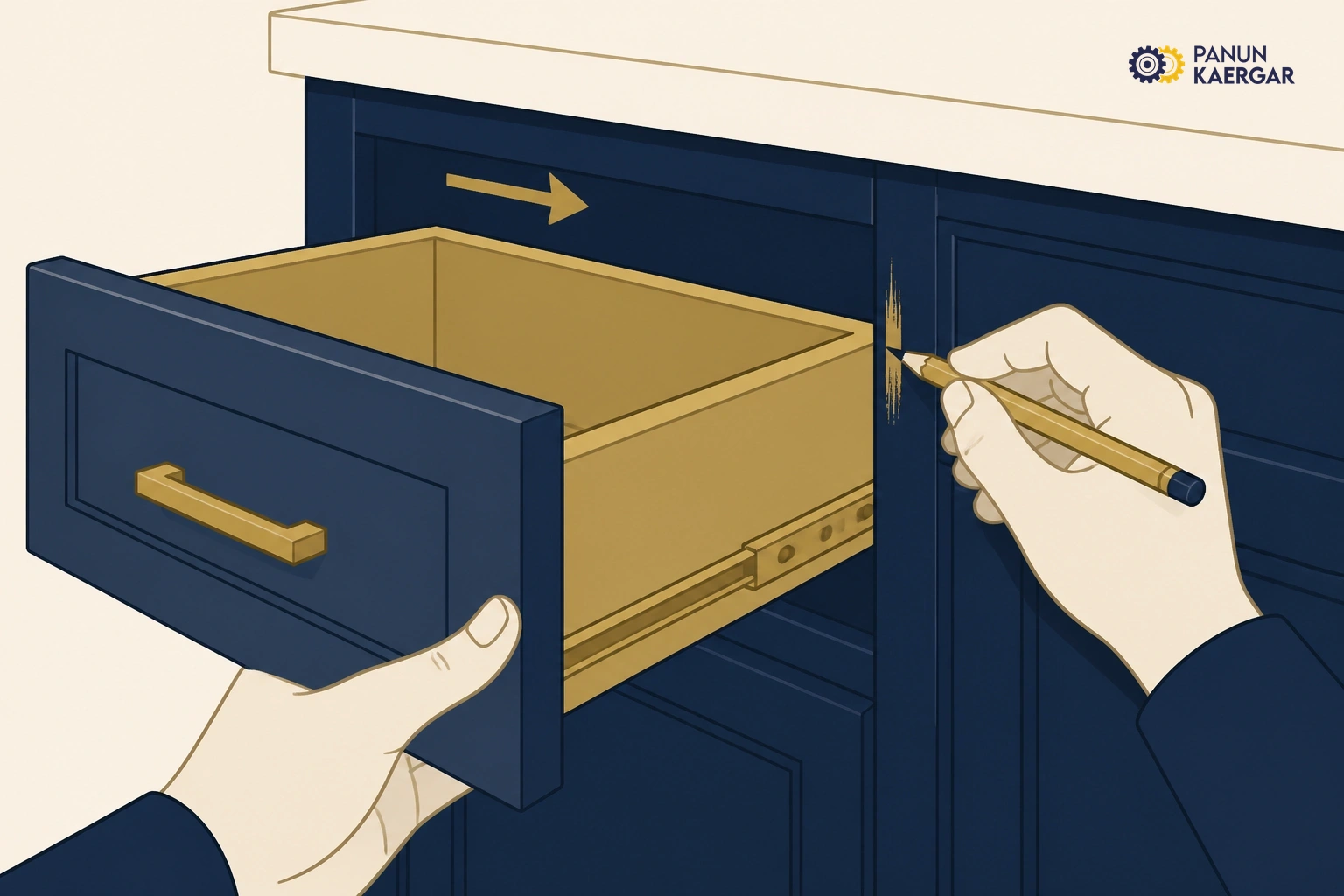
Mark what rubs
Best for: any sticking door or drawer
Open slowly and note exactly where contact happens.
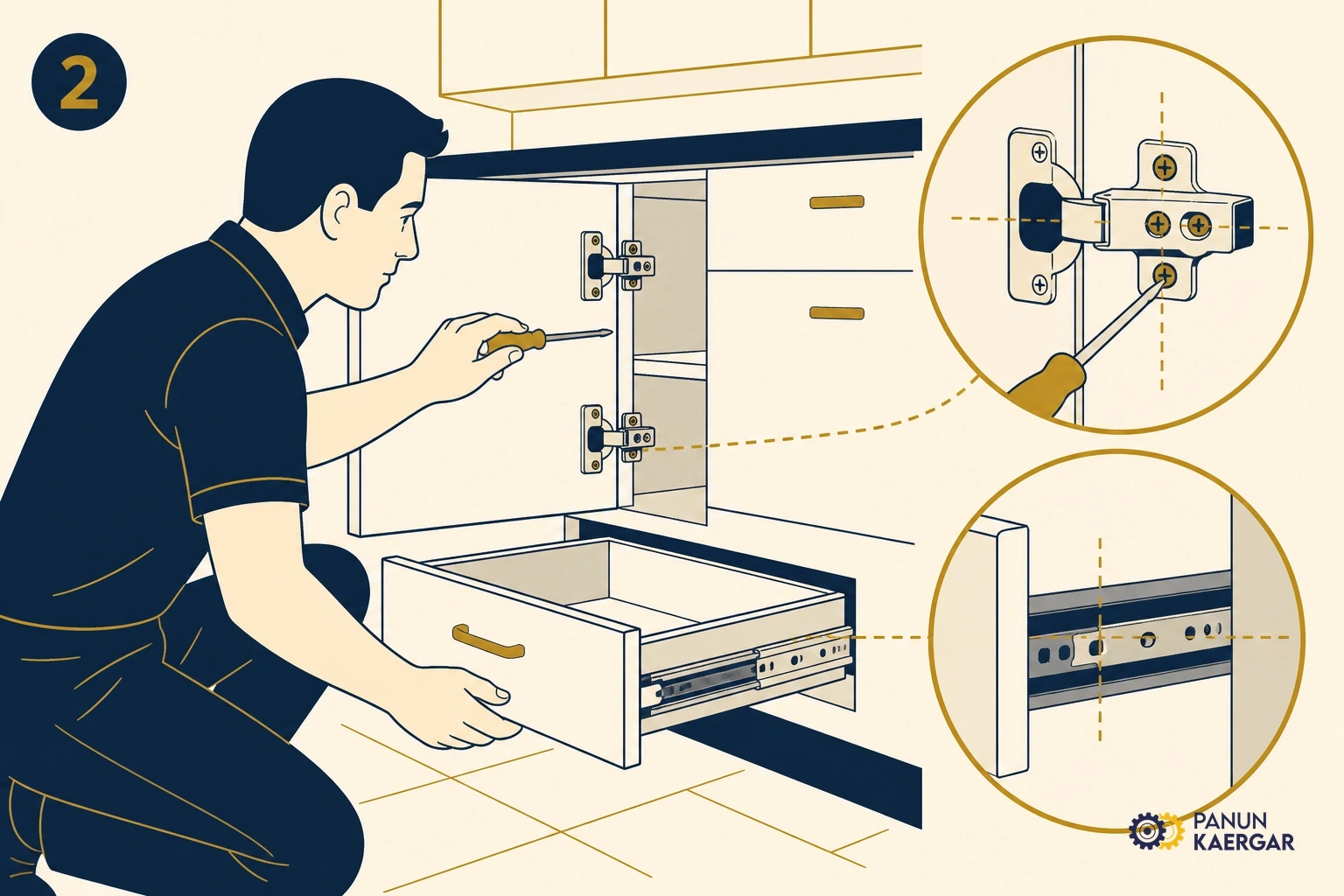
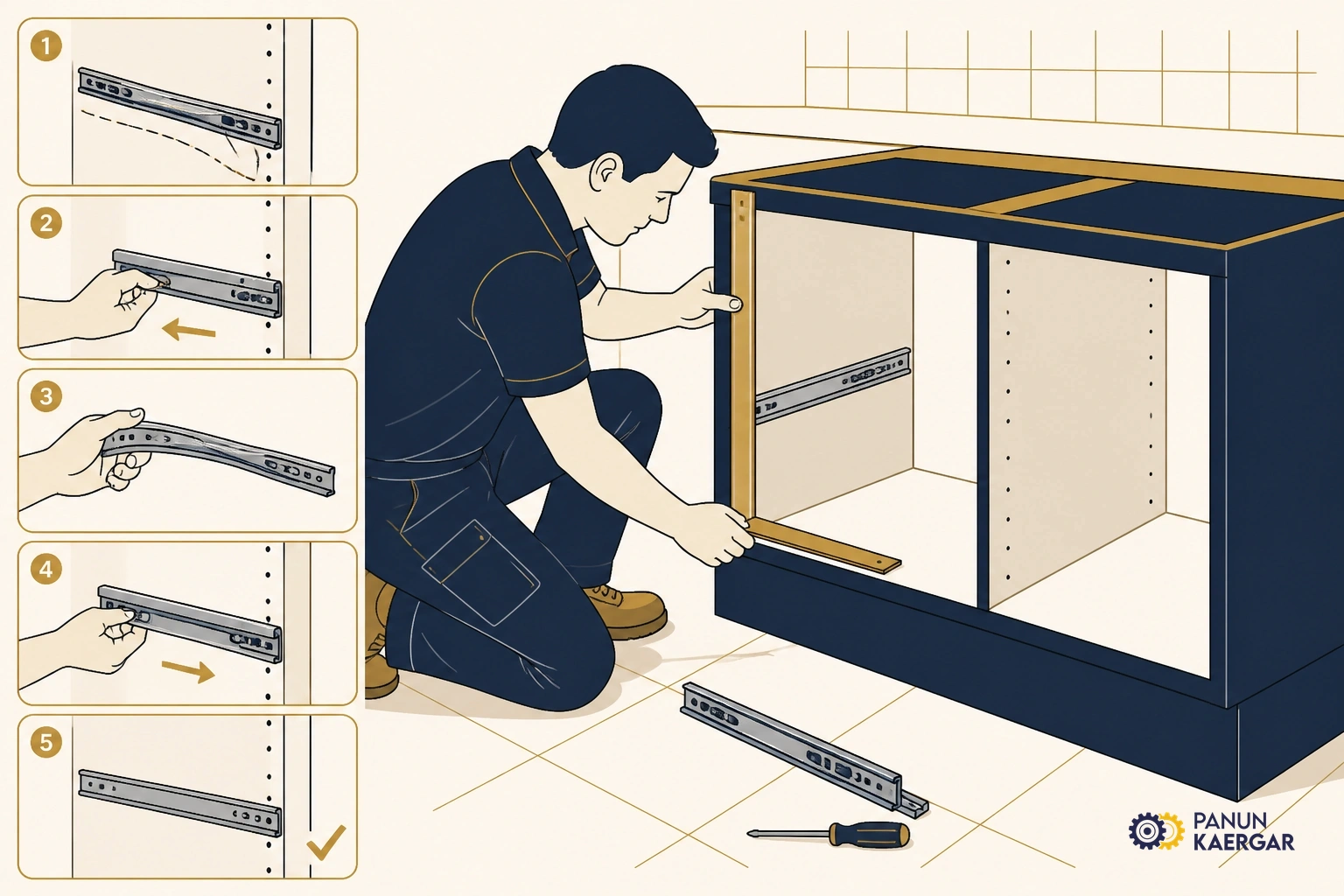
Check hinges and runners
Best for: misaligned fronts
Look for bent runners, loose screws, and doors sitting uneven.
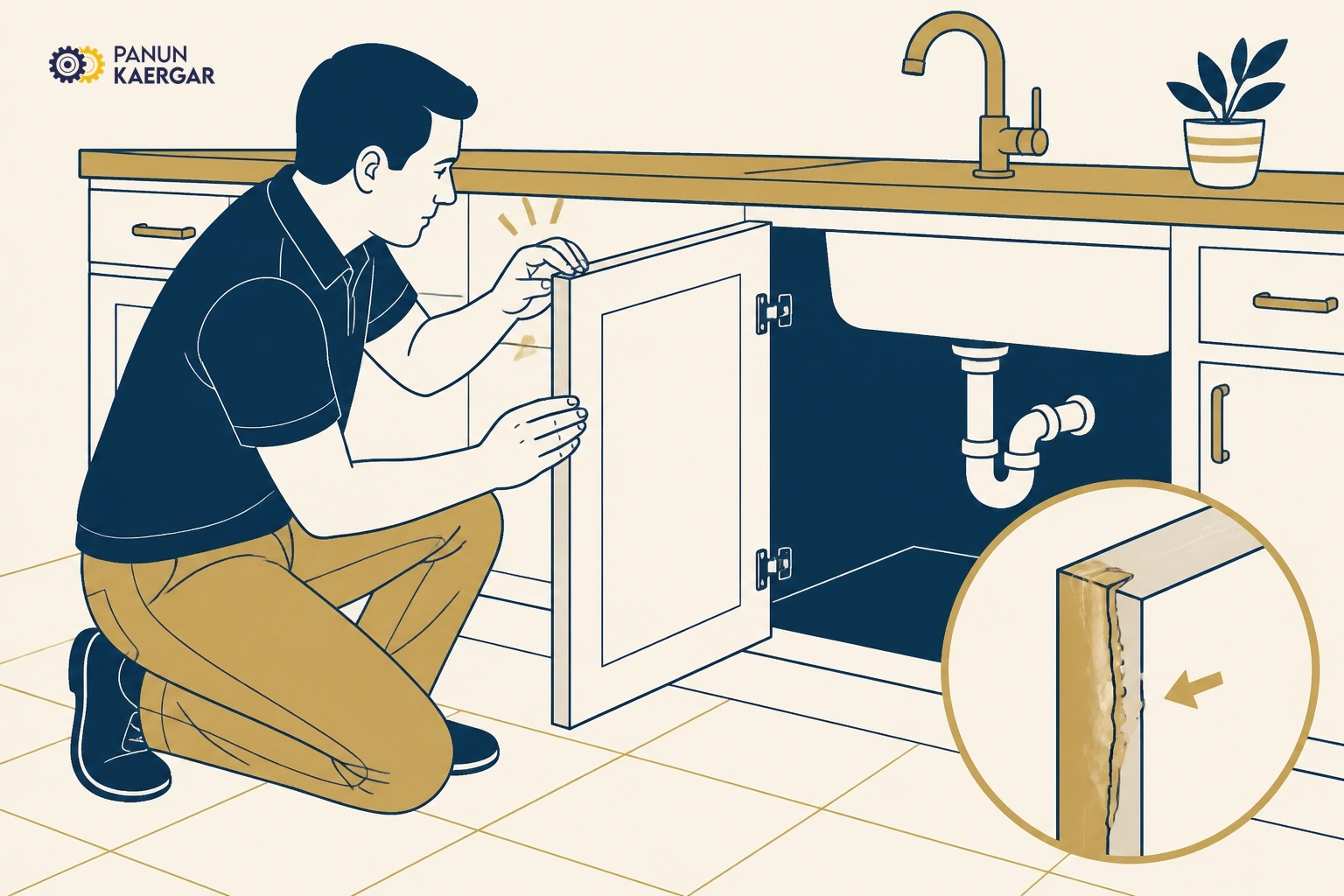
Inspect wet zones
Best for: swelling near sink
Look for puffing laminate or a board that feels thicker at the edge.
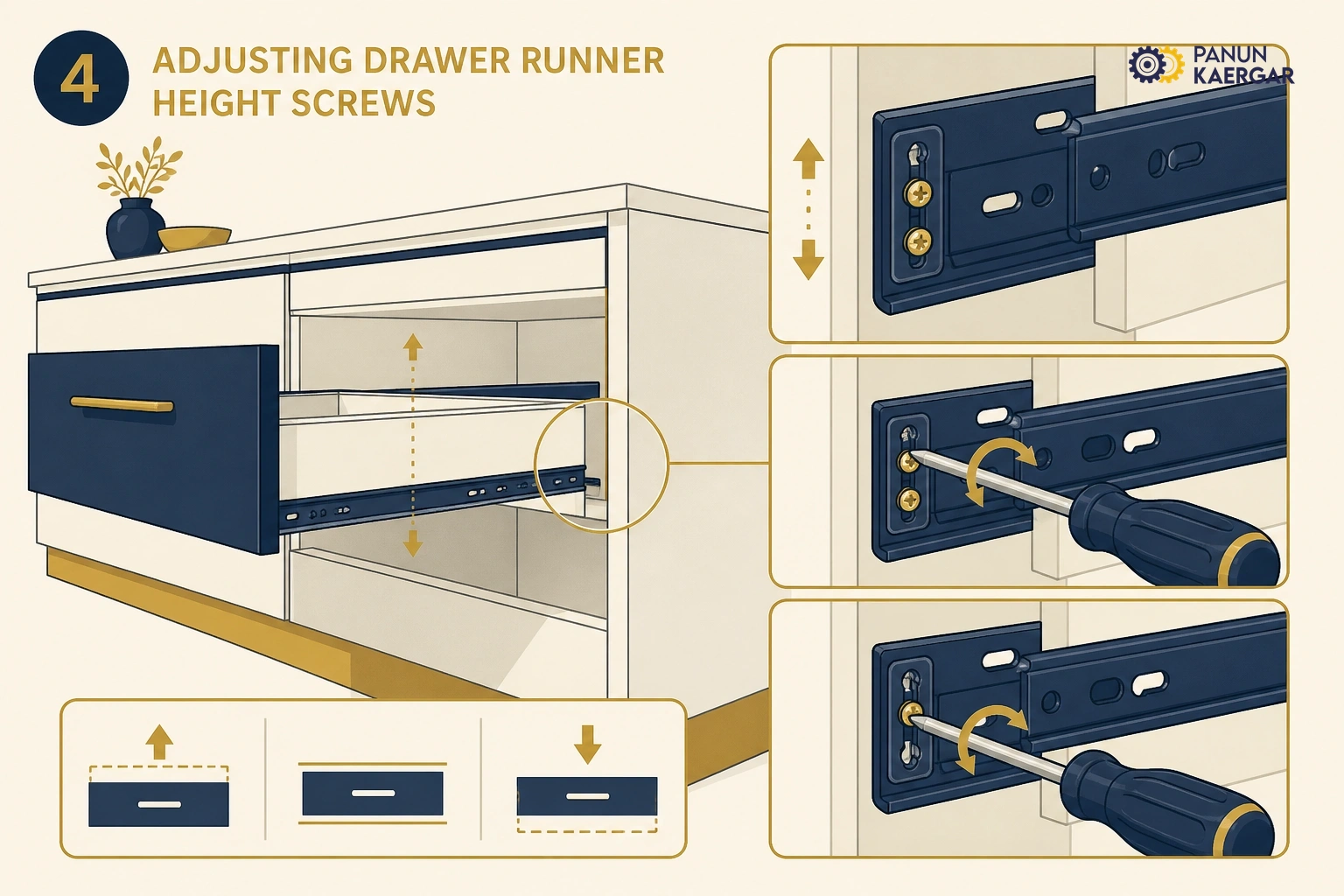
Tighten and adjust
Best for: minor misalignment
Use the correct screwdriver; adjust runner height in small steps.
Call a carpenter
Best for: warped panels or repeated failure
A pro can re-square carcasses, replace runners, or re-edge swollen boards.
Take one clear photo before taking anything apart. It helps a professional see the pattern and saves guesswork.
Kashmir home note
Steam from cooking and damp dishcloths test modular kitchens harder than showroom demos. Edges near the sink deserve a look before monsoon humidity sets in.
What not to do
These shortcuts usually cost more than they save.
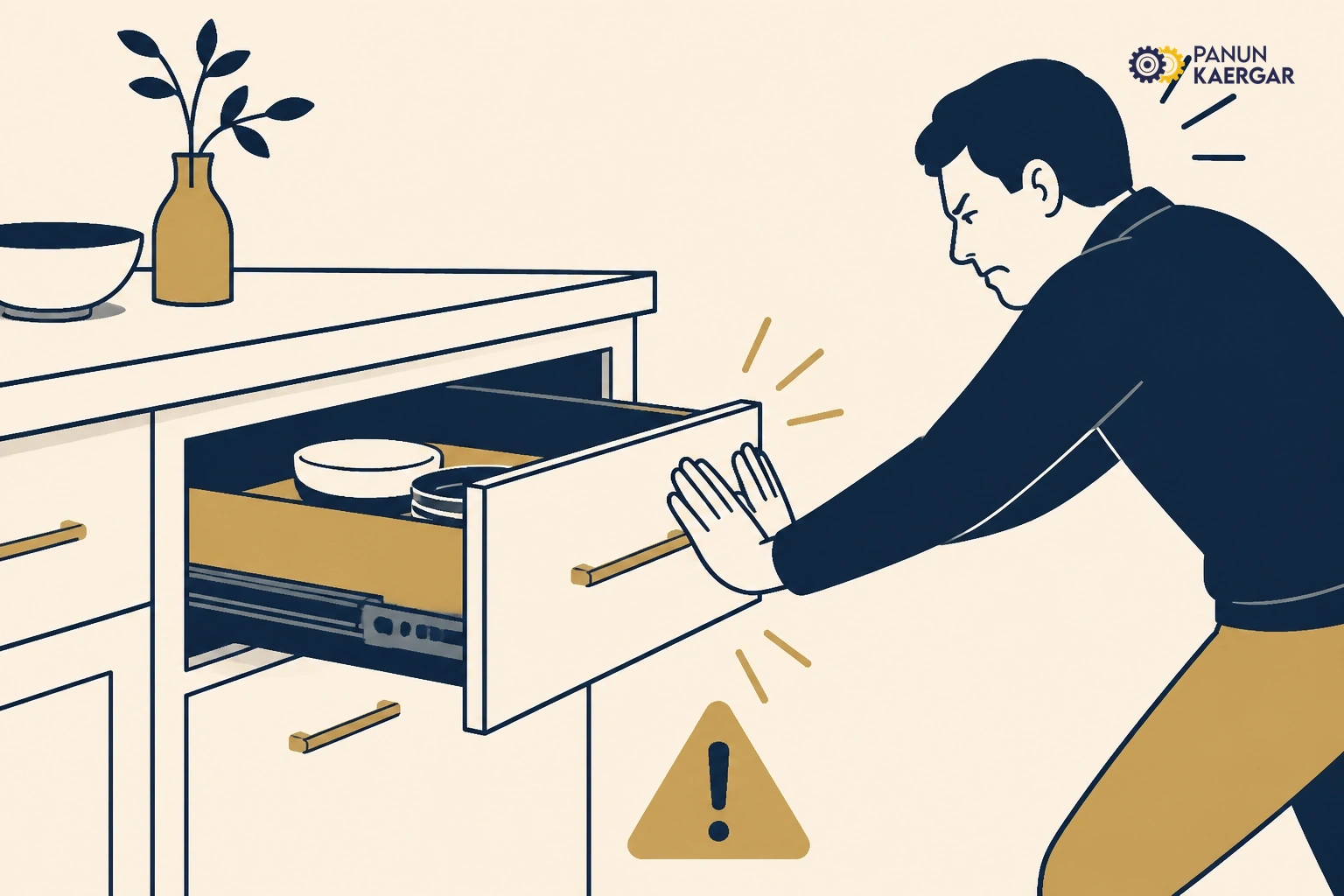
Force soft-close drawers
Can bend runners and chip laminate
Forcing a stuck drawer stresses the runner and front edge; swelling needs adjustment, not muscle.
Drill new holes in finished fronts
Ruins the panel and rarely fixes alignment
Random holes in laminate fronts are hard to hide and may miss the real hinge or runner fault.
Ignore swelling near the sink
Board damage spreads with moisture
Puffing laminate at the sink edge usually means water is getting into the core; it will not flatten on its own.
Keep it from returning
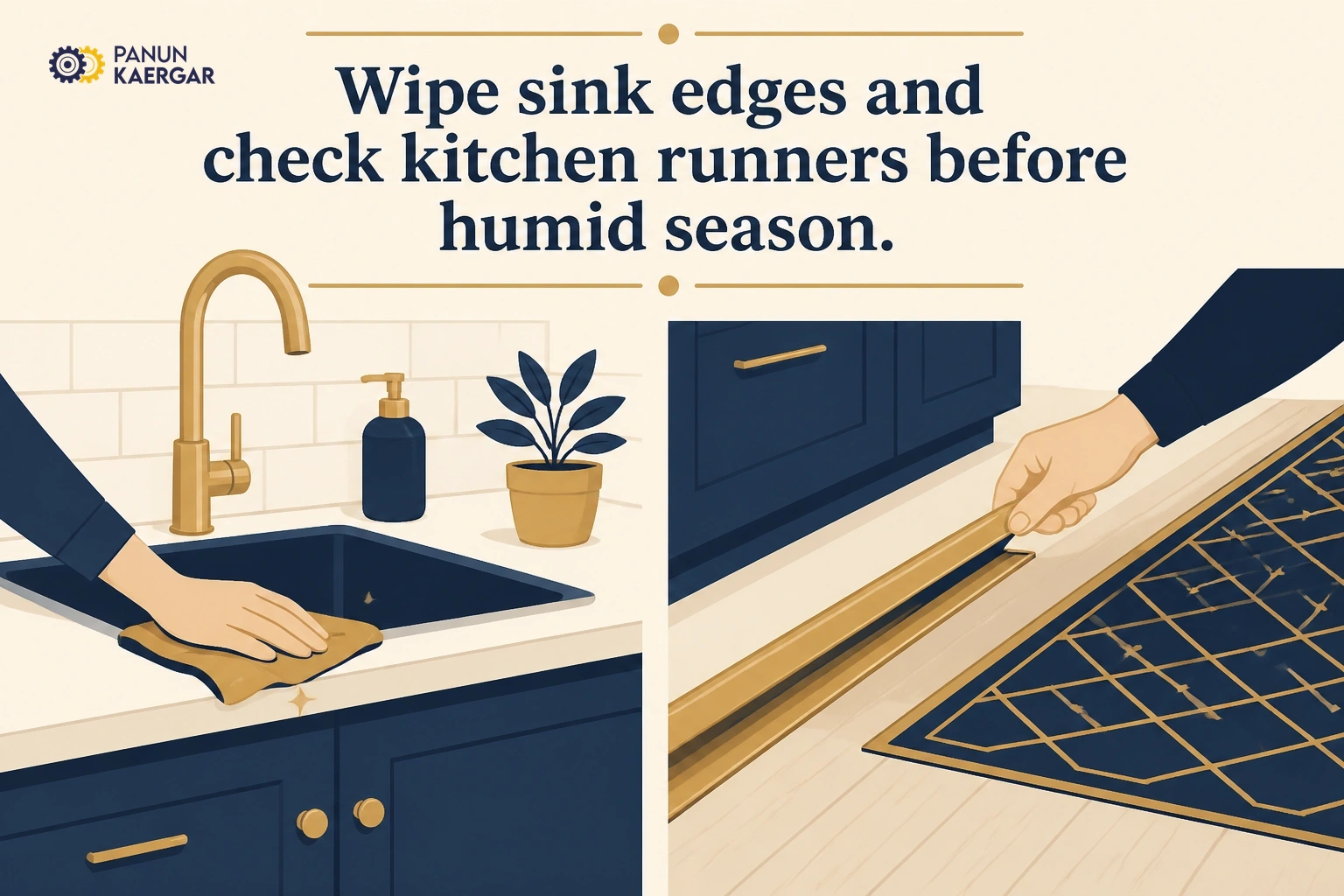
Fix the small trigger, keep the area clean and dry where relevant, and deal with repeat symptoms before they become a replacement job.
When to book a professional
Book a carpenter for warped carcass panels, delaminating edges, repeated runner failure, or doors that will not align after basic adjustment.
FAQs
What is the first check for modular kitchen problems?
Open slowly and note exactly where contact happens.
Can I keep using it?
Only if there is no safety risk or spreading damage. Stop when the symptom worsens.
Why did this start suddenly?
A change in load, moisture, wear, cleaning product, or season often exposes a weak point.
Will a temporary fix last?
It can buy time, but repeat symptoms need the cause corrected.
When should I book help?
Book a carpenter for warped carcass panels, delaminating edges, repeated runner failure, or doors that will not align after basic adjustment.