
A mirrored wardrobe in a bedroom refuses to close on a humid morning. The mirror is innocent; the top runner is carrying the whole argument.
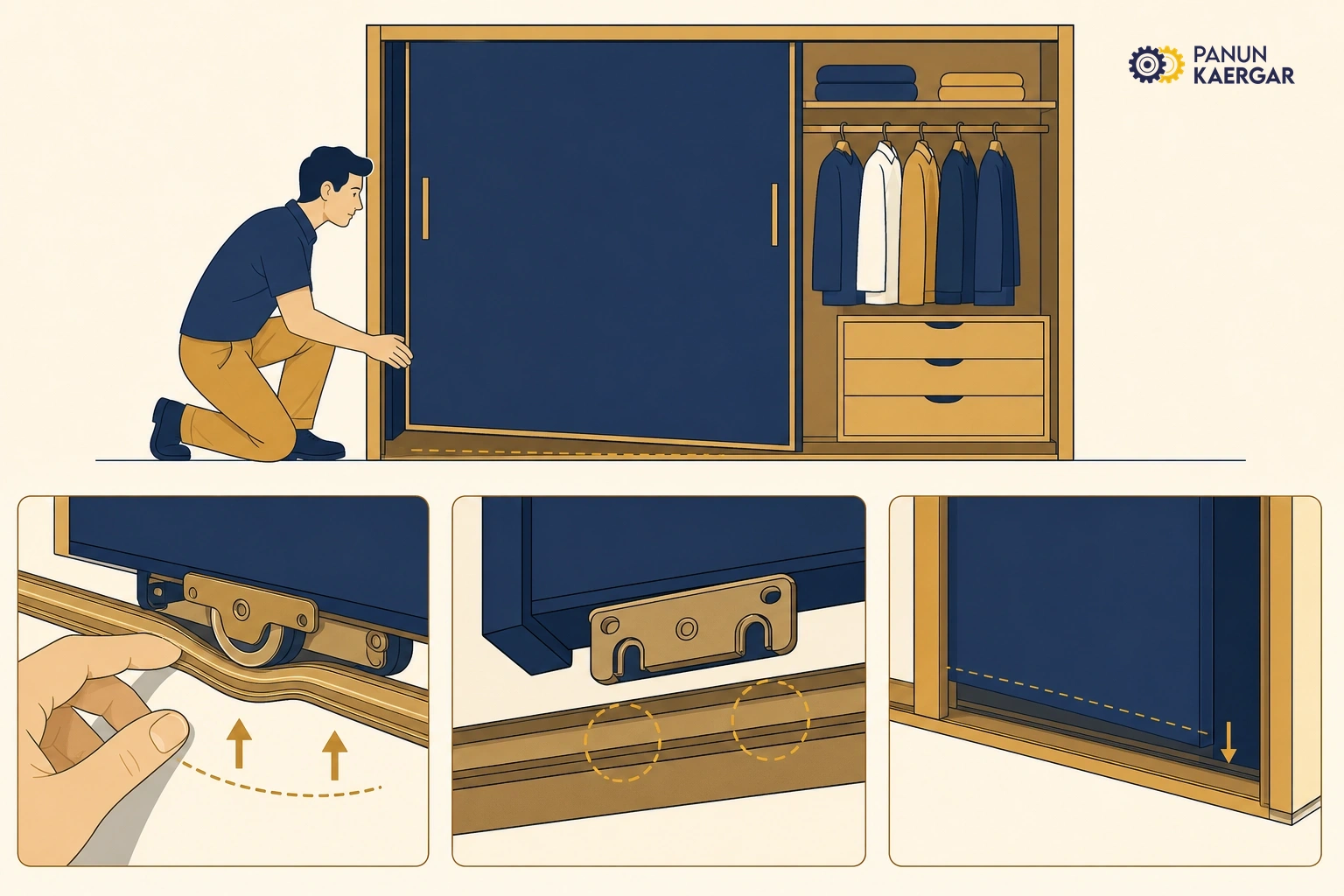
Locate where the door catches, clean the track, tighten loose fixings, and check whether the runner is bent or the door has sagged. Do not force a heavy mirrored door.
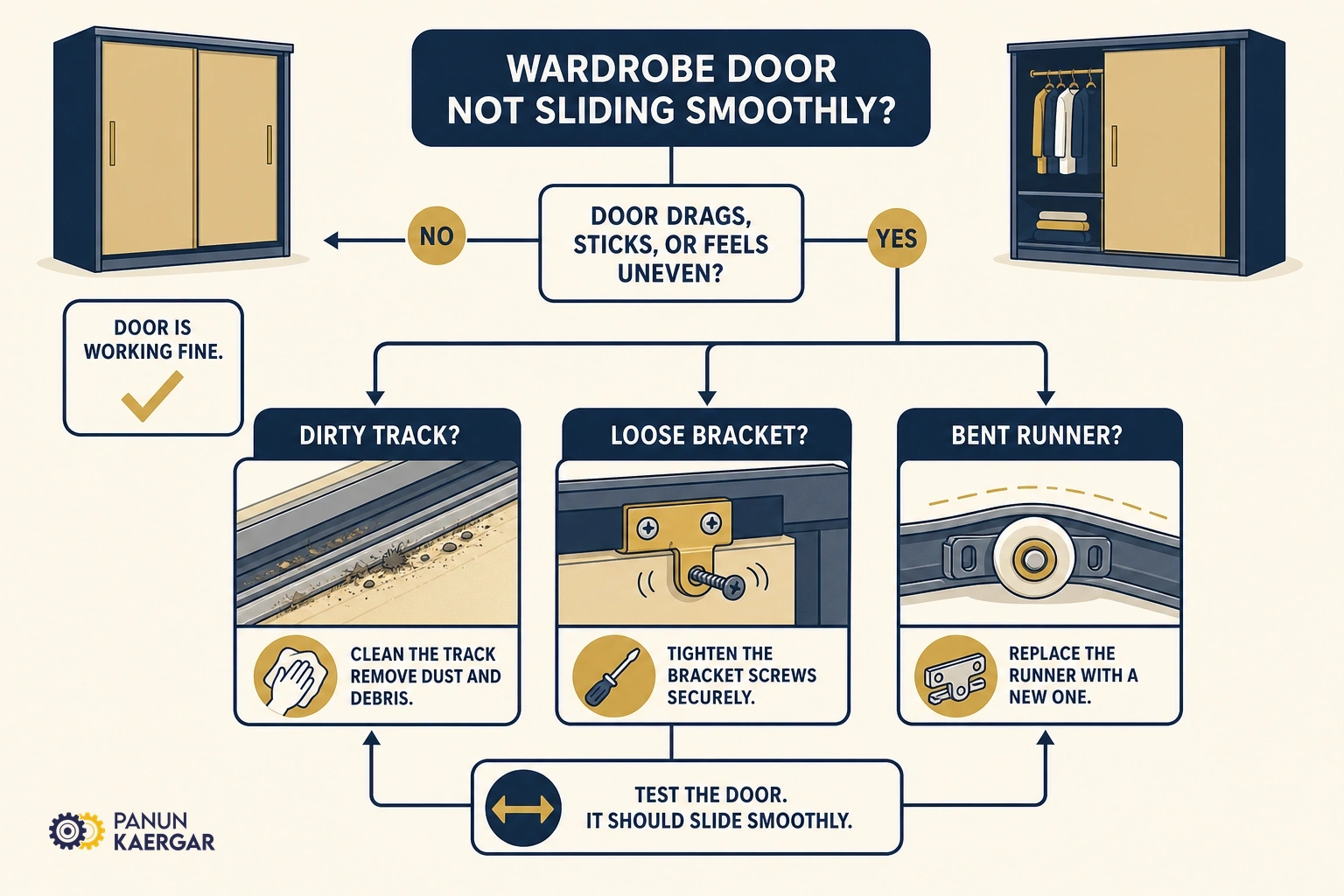
Quick diagnosis map
Start with the symptom, not the most dramatic fix. A small check now can save a cabinet, appliance, or Sunday afternoon.
| What you notice | Likely reason | First move |
|---|---|---|
| Sliding wardrobe door jumps, drags, or falls off track | Dirty track, loose brackets, bent runner, or swollen board | Open slowly and note exactly where it catches or lifts. |
| Problem worsens after use | An underlying fault or hidden damage | Stop adding load; inspect safely. |
| Heat, burning smell, leak, or sudden pain | Safety issue, not a DIY puzzle | Switch off / isolate / get help. |
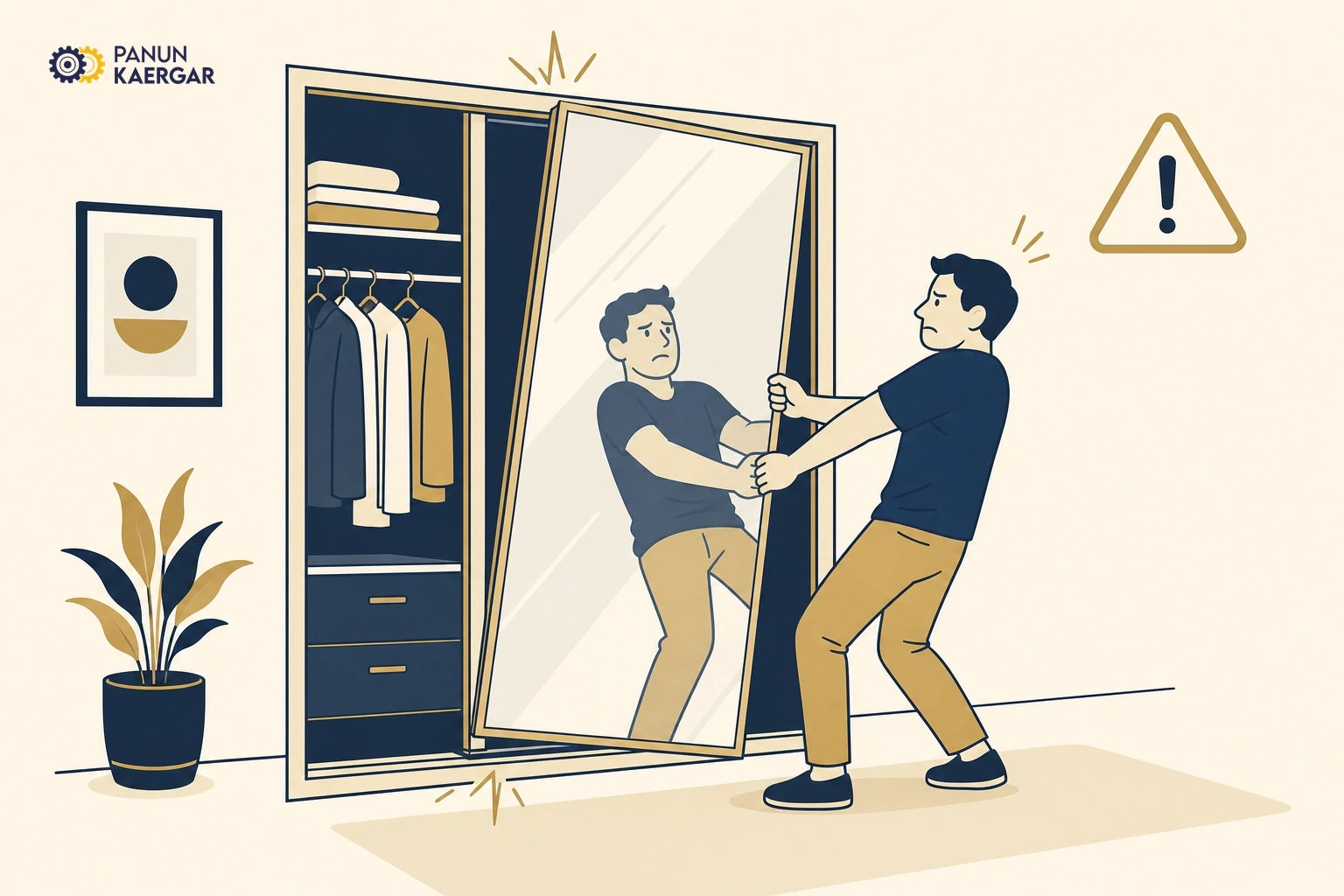
Do not yank a mirrored door, spray oil into a full track, or plane wood while the door is hanging crooked.
What usually causes this
The visible symptom is useful, but the small detail around it usually tells the real story.
- Dust and clothing fibres packed in the top or bottom track.
- Loose screws letting the door hang at an angle.
- A bent aluminium runner or swollen particleboard edge.
Try these in order
Begin with the reversible checks. The goal is a clean fix, not winning an argument with a stubborn household thing.
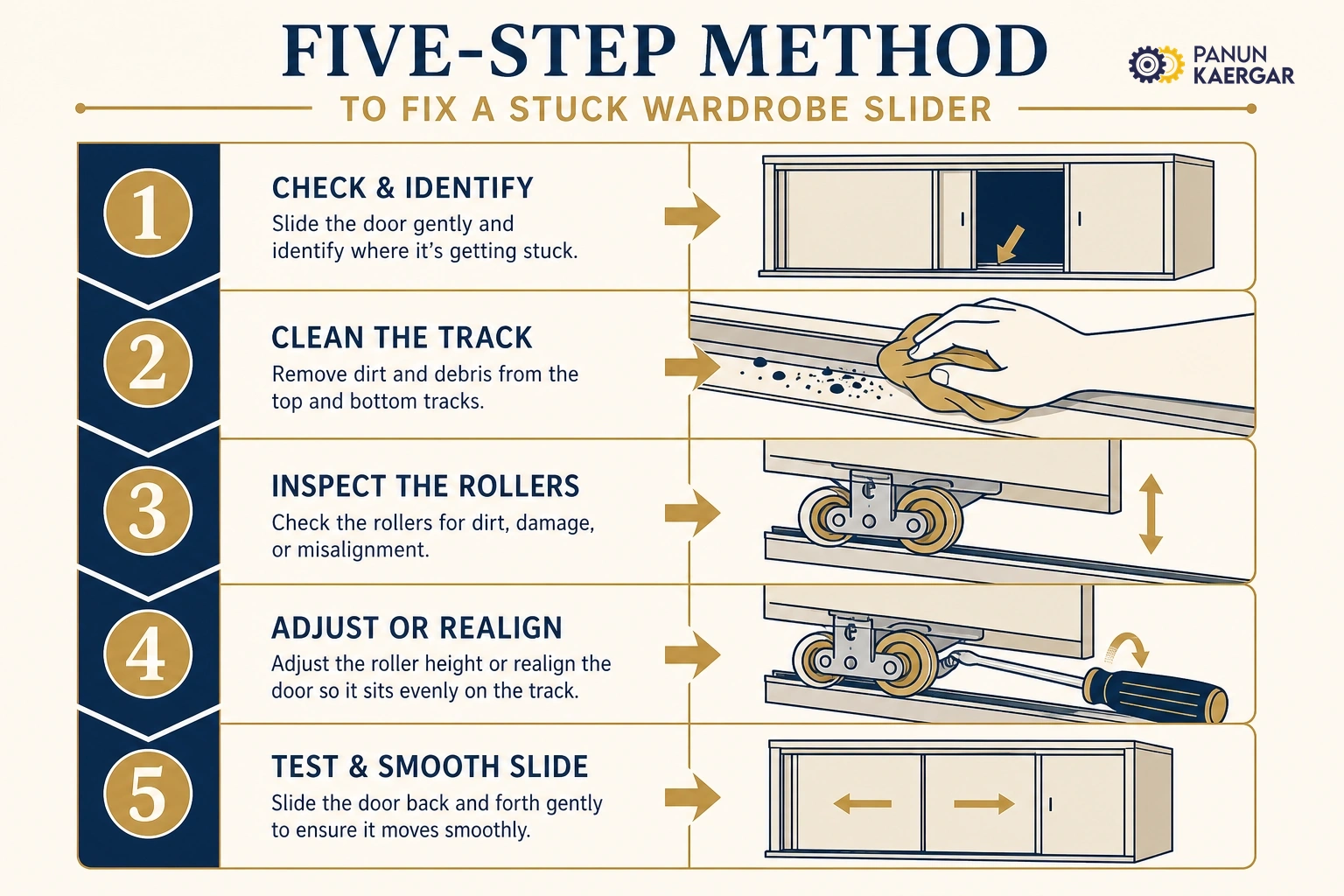
Stop forcing it
Best for: any stuck slider
Open slowly and note exactly where it catches or lifts.
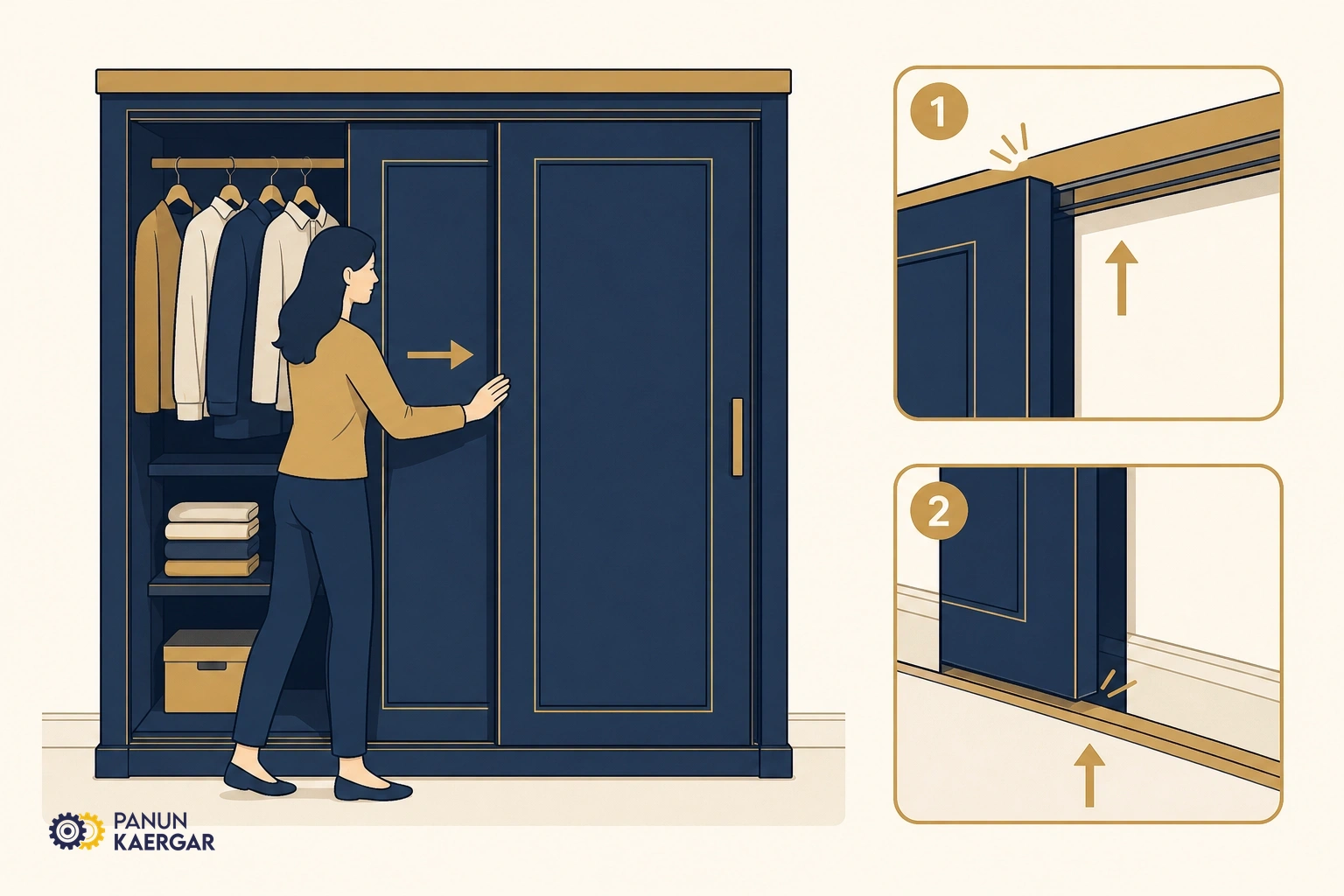
Clean the track
Best for: grit and lint
Vacuum the channel and wipe with a dry cloth; do not flood it with oil.
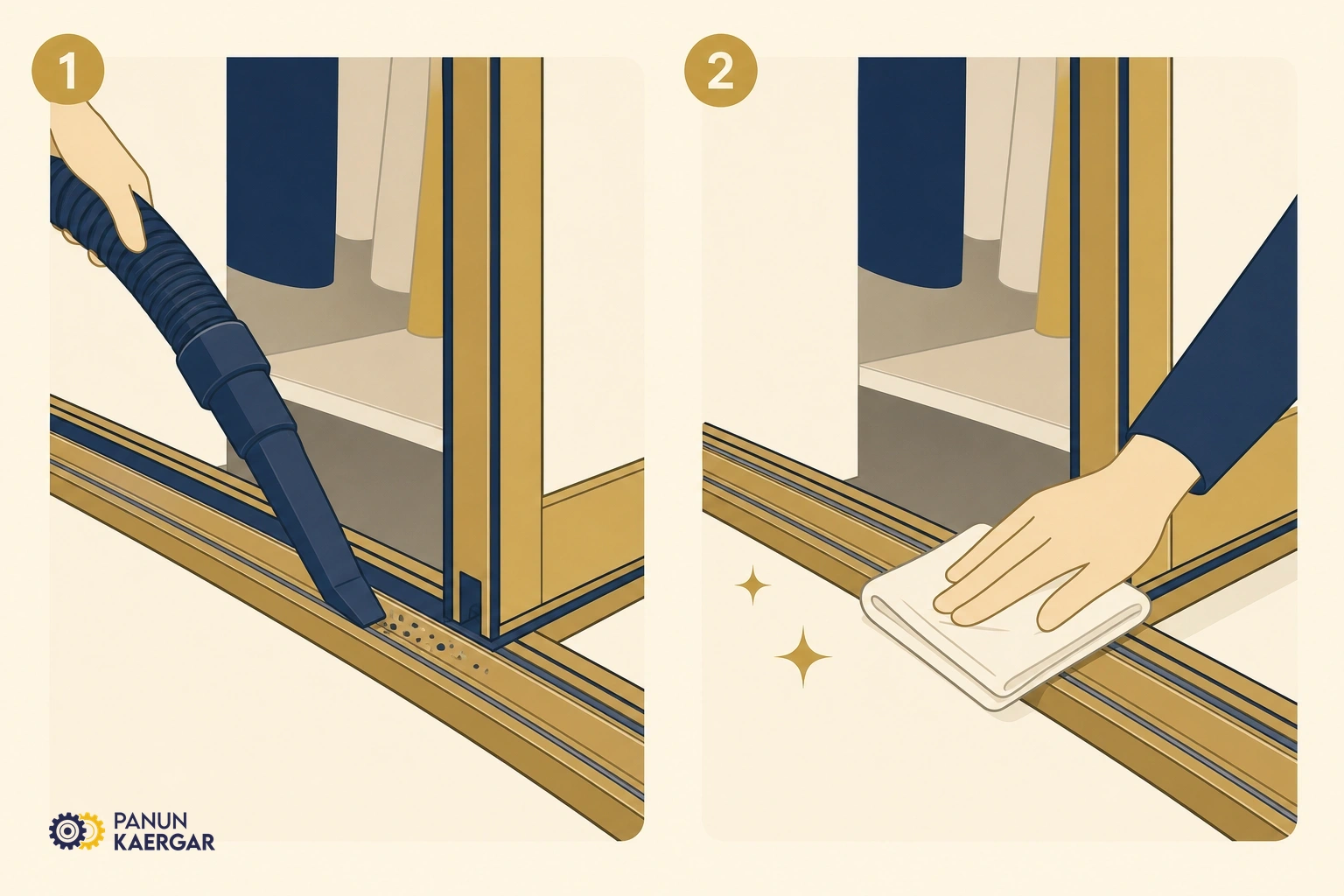
Tighten visible brackets
Best for: a sagging door
Check top guide screws and side fixings with the correct screwdriver.
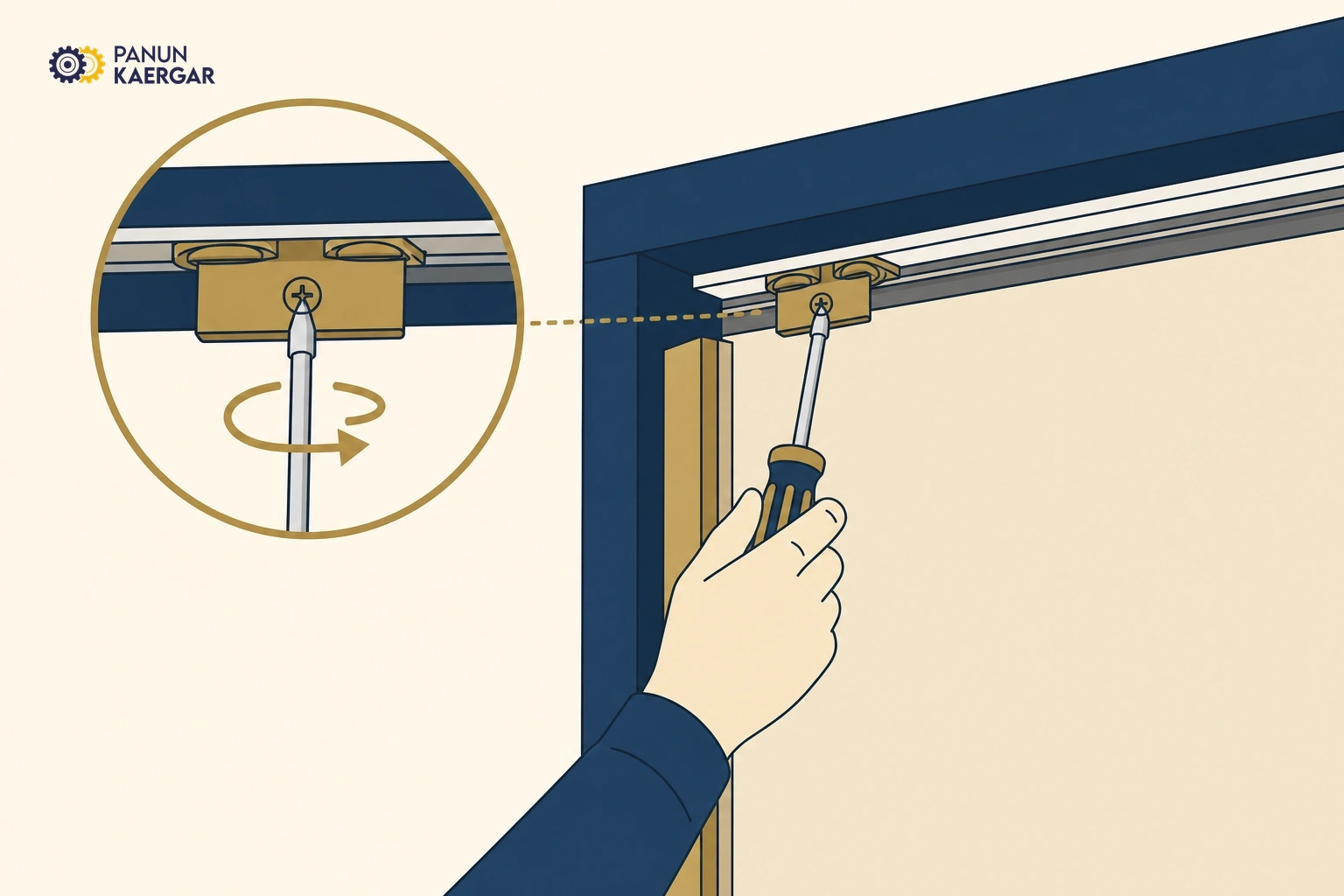
Check the runner
Best for: repeated derailment
Look for bends, missing wheels, or a door sitting lower on one side.
Call a carpenter
Best for: mirrored or heavy doors
Large doors need proper alignment; a small shave or runner swap beats a broken mirror.
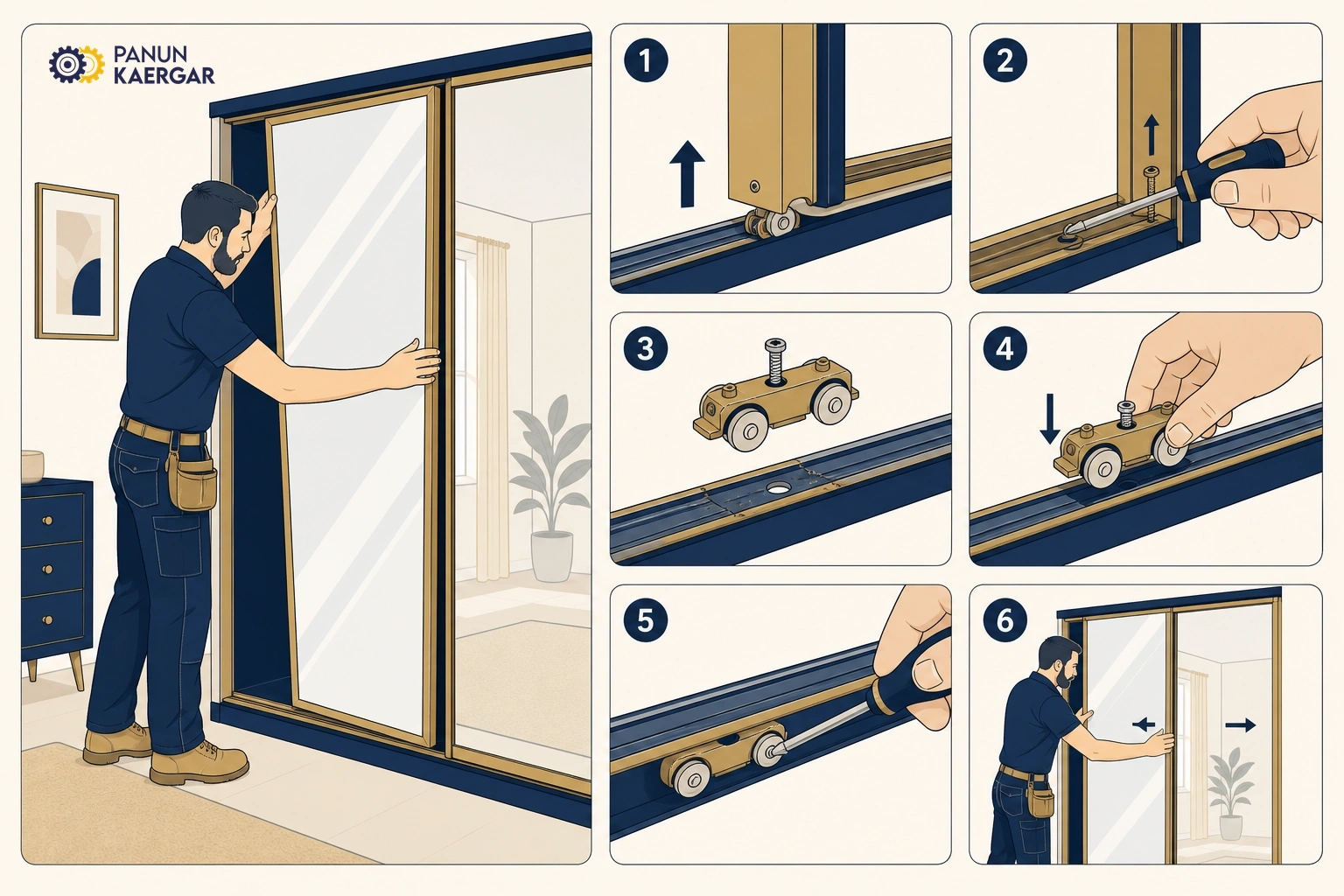
Take one clear photo before taking anything apart. It helps a professional see the pattern and saves guesswork.
Kashmir home note
Modular wardrobes in heated winter rooms can dry and shift slightly; damp spells can swell edges. Both feel like a broken slider until you look closely.
What not to do
These shortcuts usually cost more than they save.
Yank a mirrored door
Can shatter the mirror or bend the runner
Heavy mirrored panels need slow, even pressure. Forcing one corner stresses the glass and top guide.
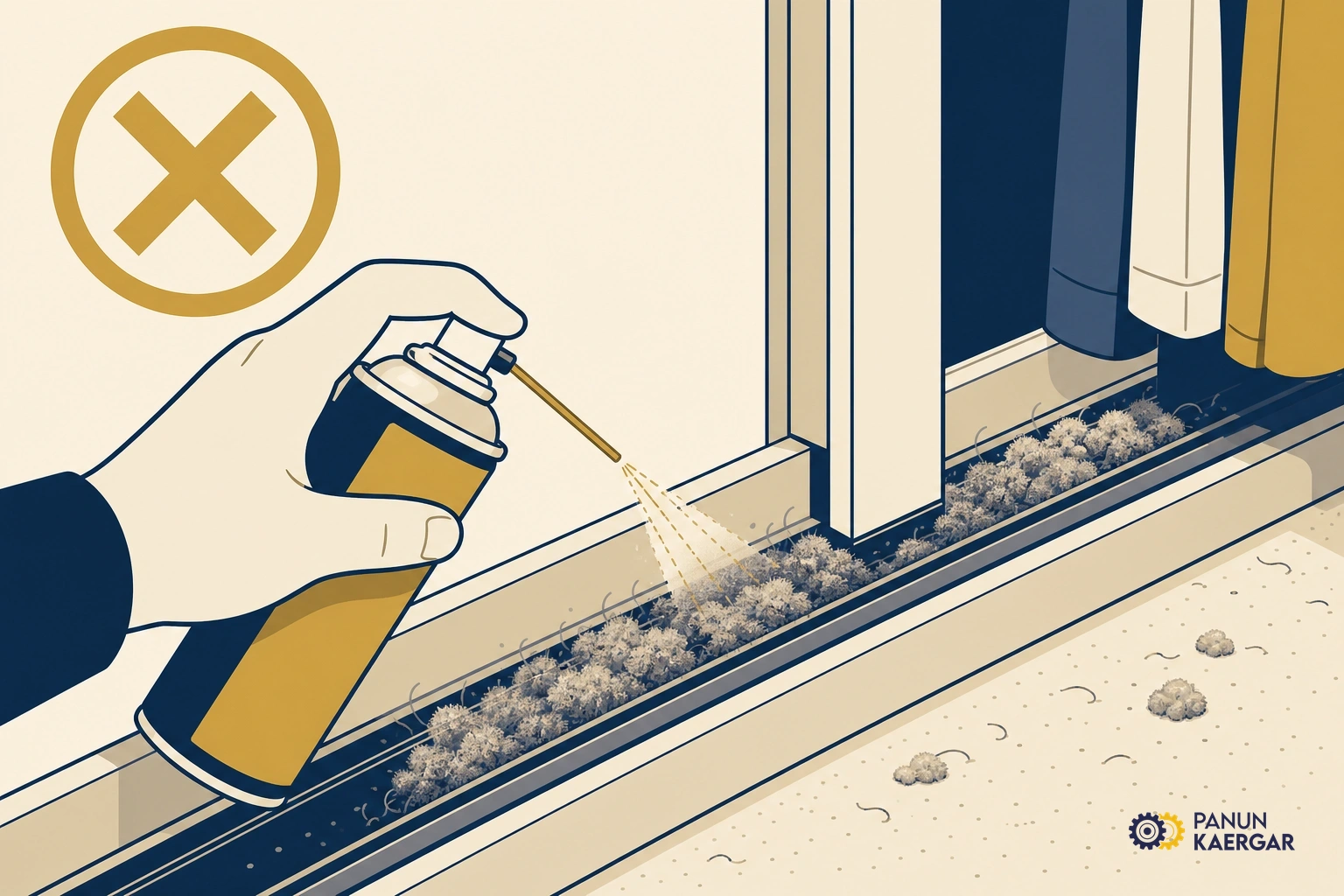
Spray oil into a full track
Turns lint and dust into sticky paste
Flooding a dirty top or bottom channel with oil traps grit and makes the door ride worse over time.
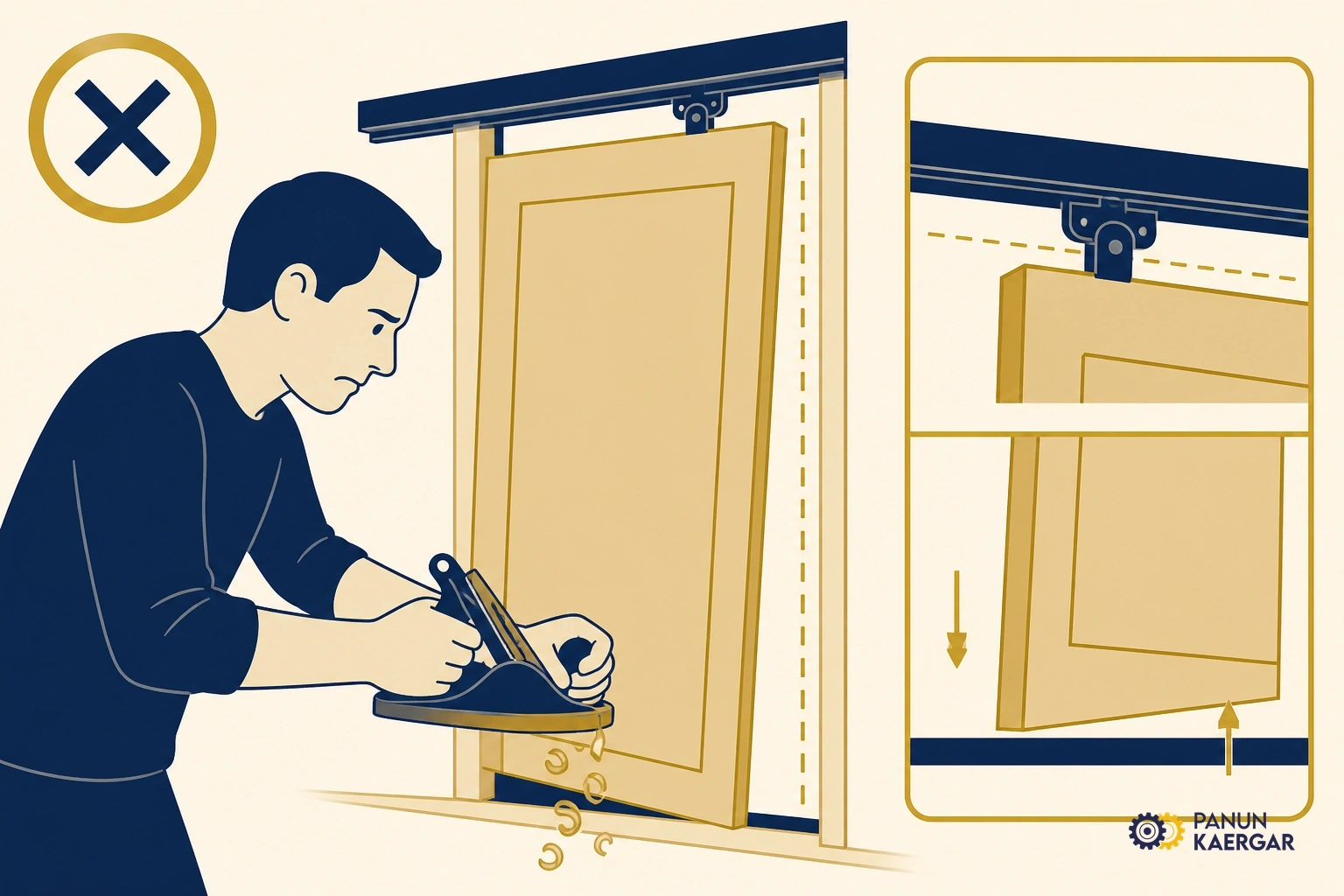
Plane wood while the door hangs crooked
Trims the wrong edge and hides the real fault
Shaving a swollen edge before the door is aligned removes material you may need once brackets are fixed.
Keep it from returning
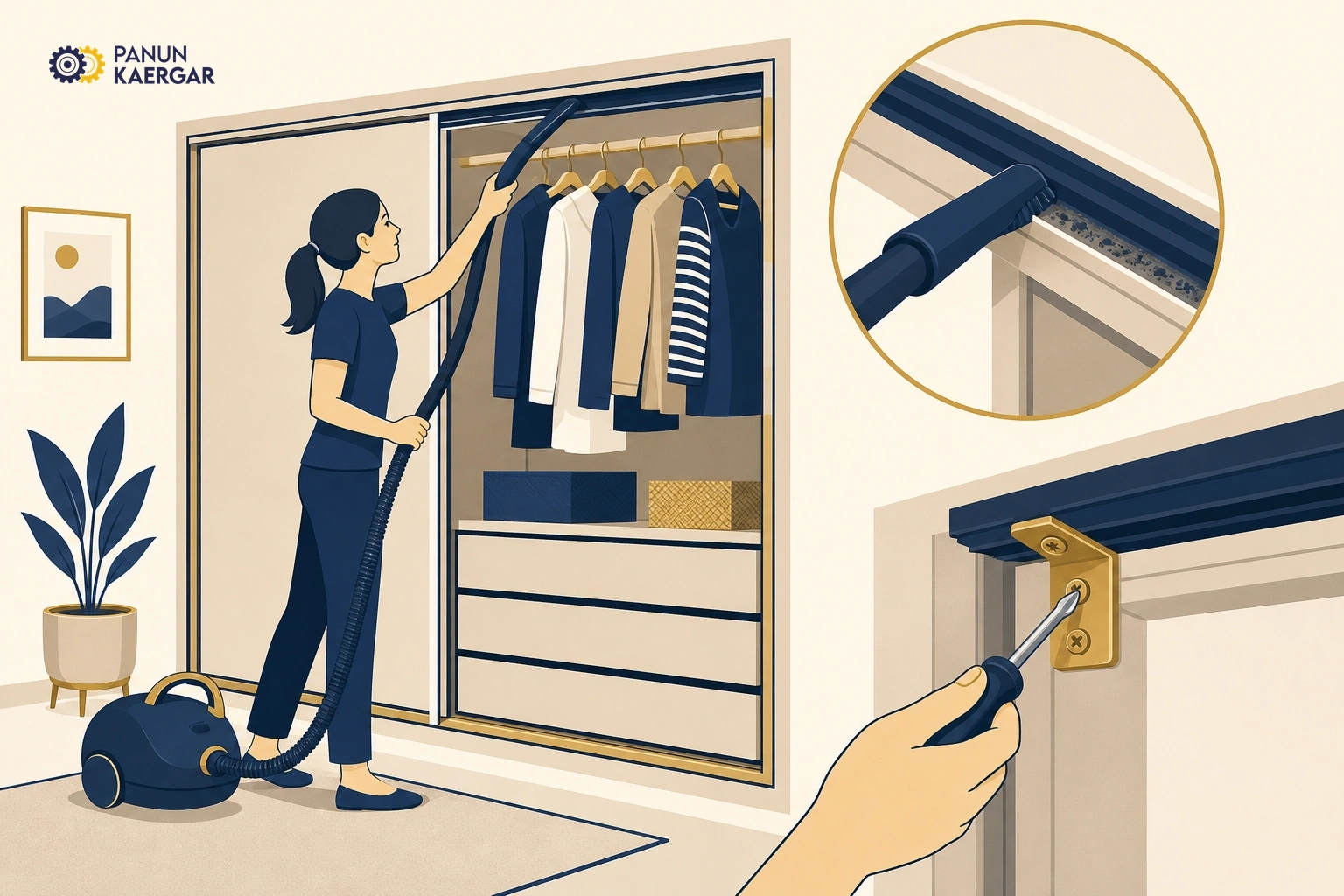
Fix the small trigger, keep the area clean and dry where relevant, and deal with repeat symptoms before they become a replacement job.
When to book a professional
Book a carpenter for a derailed heavy door, cracked mirror, broken runner, or a door that will not stay closed.
FAQs
What is the first check for wardrobe door or slider stuck?
Open slowly and note exactly where it catches or lifts.
Can I keep using it?
Only if there is no safety risk or spreading damage. Stop when the symptom worsens.
Why did this start suddenly?
A change in load, moisture, wear, cleaning product, or season often exposes a weak point.
Will a temporary fix last?
It can buy time, but repeat symptoms need the cause corrected.
When should I book help?
Book a carpenter for a derailed heavy door, cracked mirror, broken runner, or a door that will not stay closed.