
The upper cupboard door hangs crooked after months of heavy spice jars on the shelf, someone props it shut with a tea towel, and the soft-close hinge scrapes the neighbouring door every time it opens.
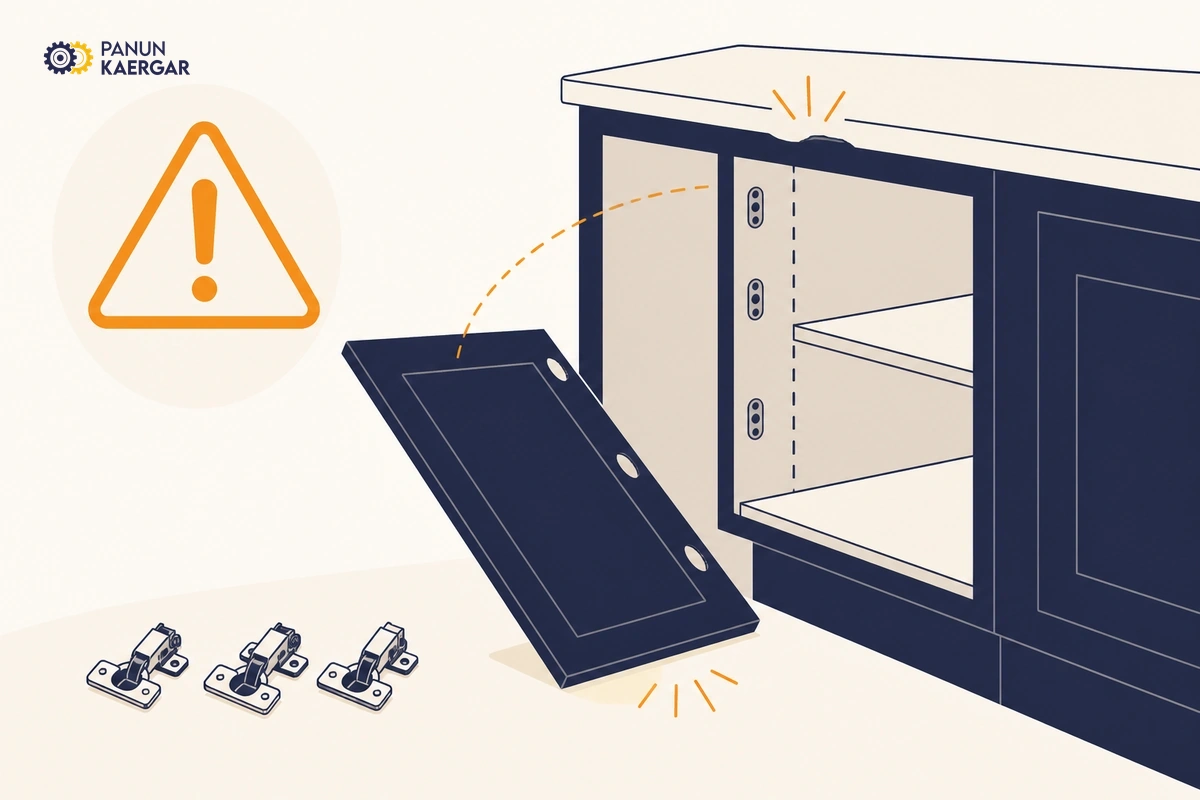
Support the door, tighten hinge screws into solid carcass wood, adjust the side-to-side and depth screws on a modern cup hinge, and check that the mounting plate is not pulling out. Stripped screw holes, a cracked door, or a ripped particleboard edge needs a carpenter.
Quick diagnosis map
Start with the symptom, not the most dramatic fix. A small check now can save a cabinet, appliance, or Sunday afternoon.
| What you notice | Likely reason | First move |
|---|---|---|
| Cabinet door hangs low, rubs, or will not stay shut | Loose hinge screws, misadjusted cup hinge, or a failing mounting plate in soft board | Have someone hold the door level, then tighten the hinge screws into the carcass and door — stop if a screw spins freely in a stripped hole. |
| Problem worsens after use | An underlying fault or hidden damage | Stop adding load; inspect safely. |
| Heat, burning smell, leak, or sudden pain | Safety issue, not a DIY puzzle | Switch off / isolate / get help. |
Do not prop a heavy door with cloth forever, force a misaligned soft-close shut, or drive longer screws blindly into a thin carcass wall near a pipe or sink.
What usually causes this
The visible symptom is useful, but the small detail around it usually tells the real story.
- Hinge screws worked loose from daily open-close and heavy door weight.
- Cup-hinge adjustment screws drifted so the door sits low or out of line.
- Particleboard holes stripped or the mounting plate pulling away from the carcass.
Try these in order
Begin with the reversible checks. The goal is a clean fix, not winning an argument with a stubborn household thing.
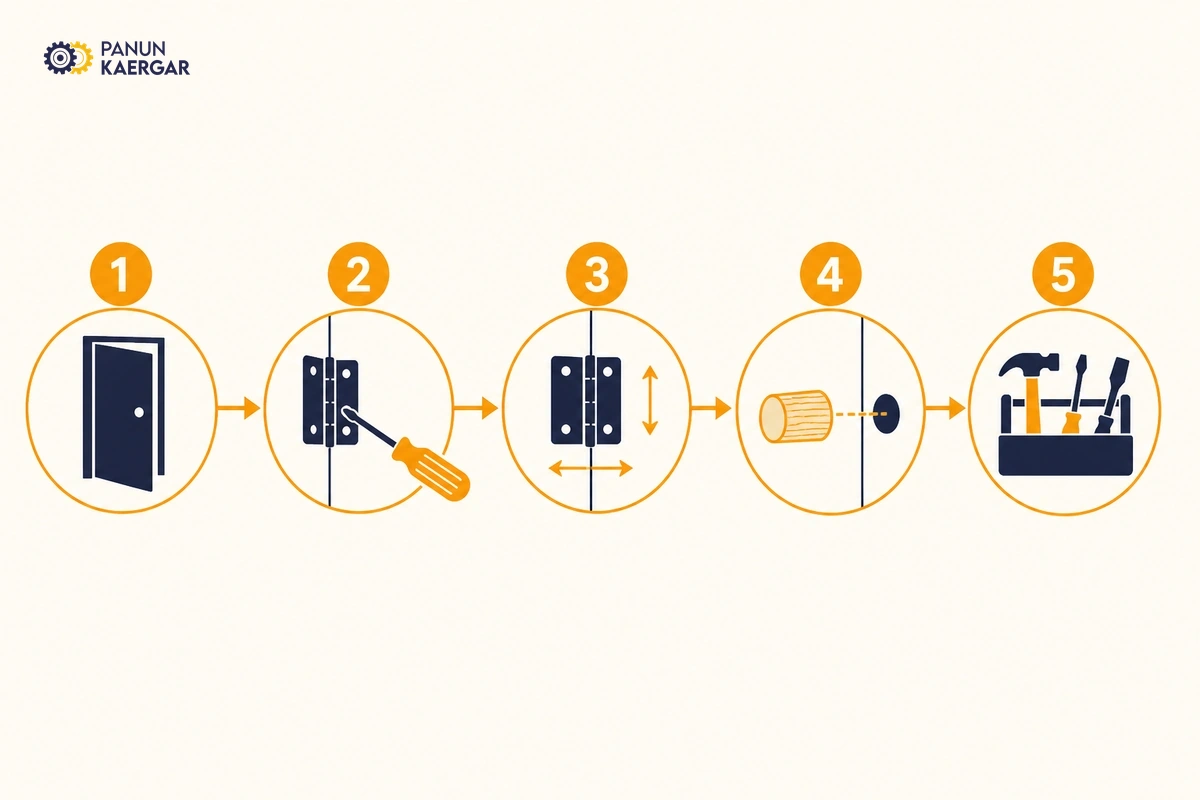
Support the door and snug the screws
Best for: a drooping or rattling door
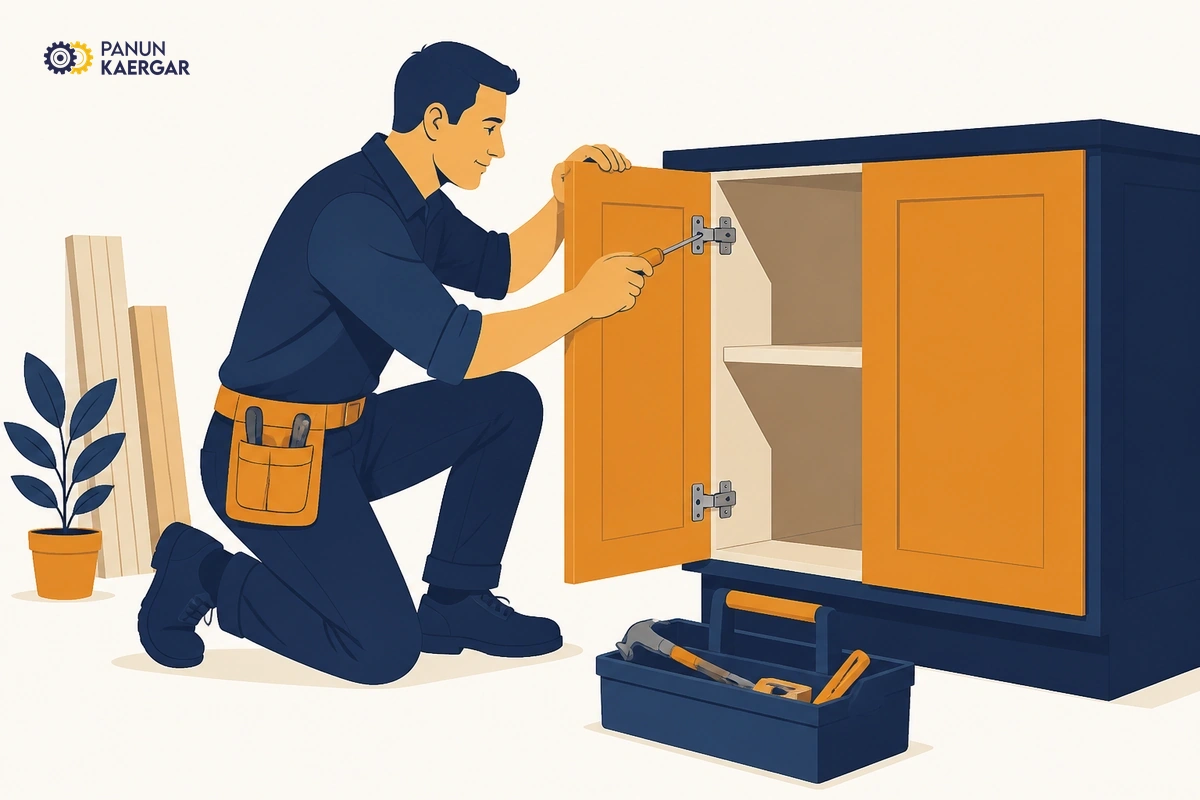
Have someone hold the door level, then tighten the hinge screws into the carcass and door — stop if a screw spins freely in a stripped hole.
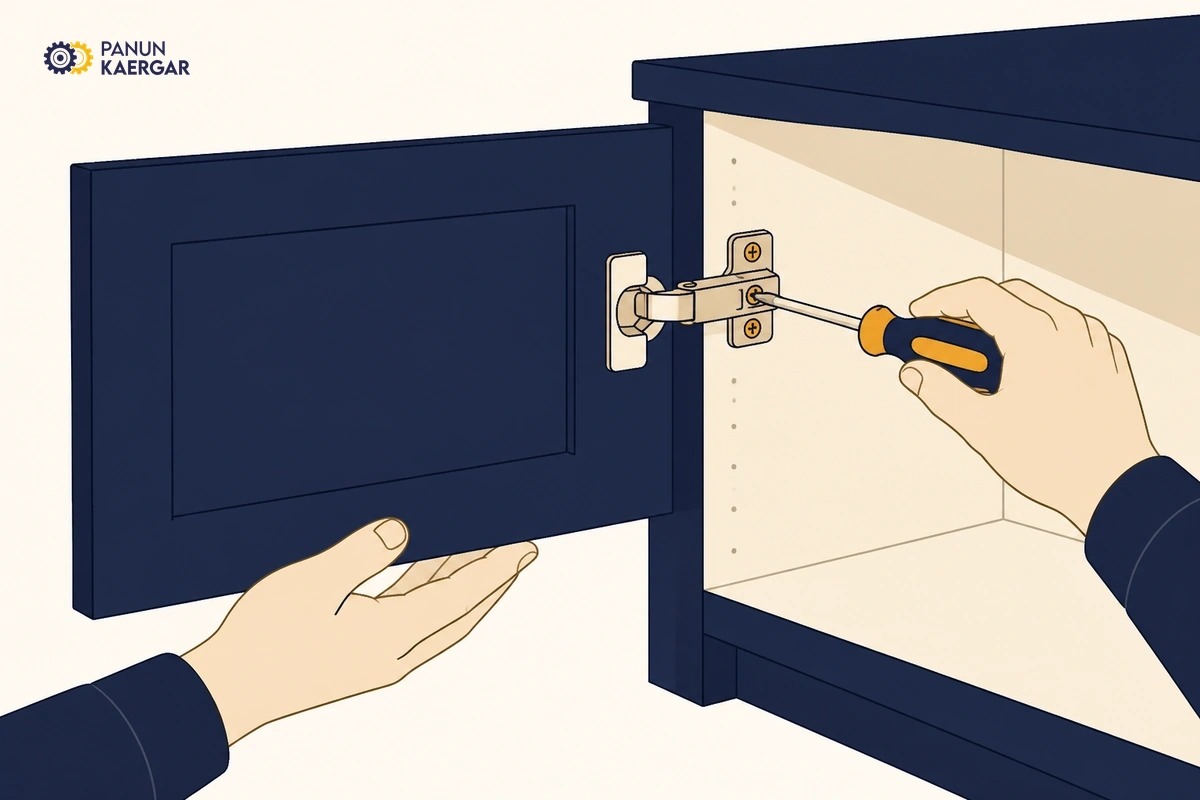
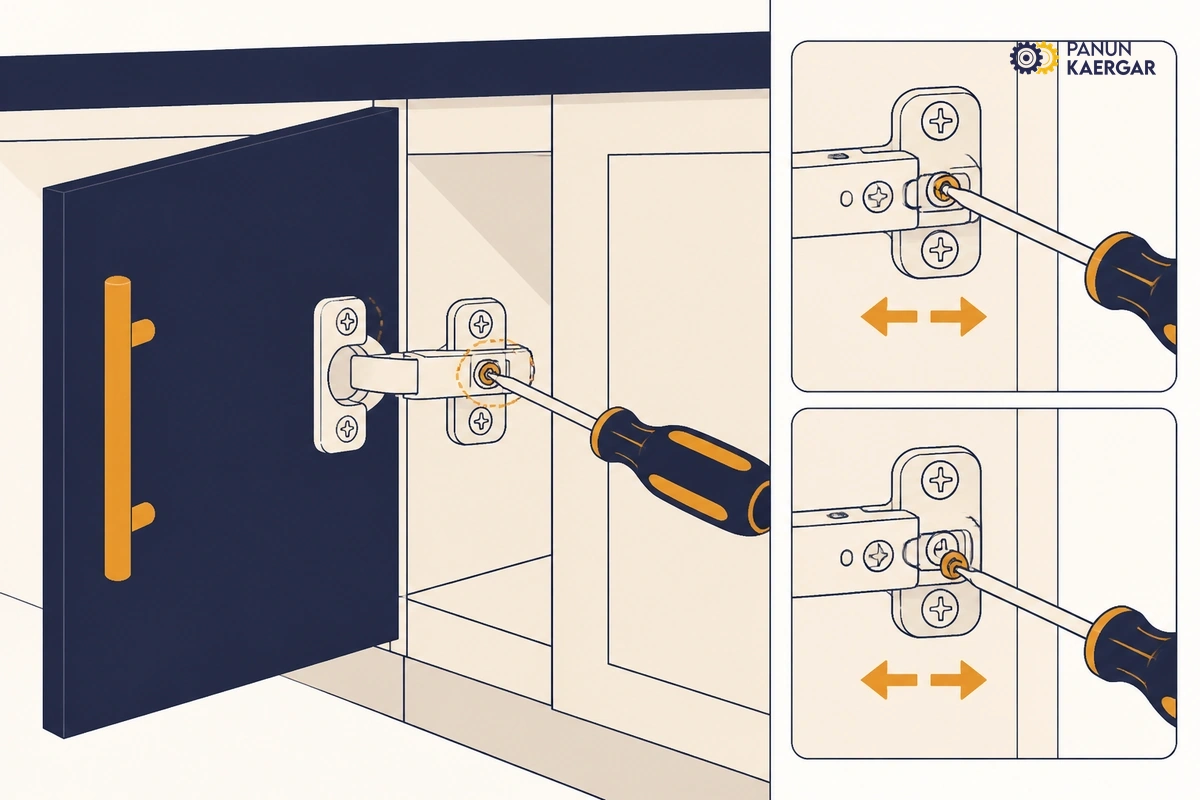
Adjust the cup-hinge screws
Best for: a modern soft-close or Euro hinge
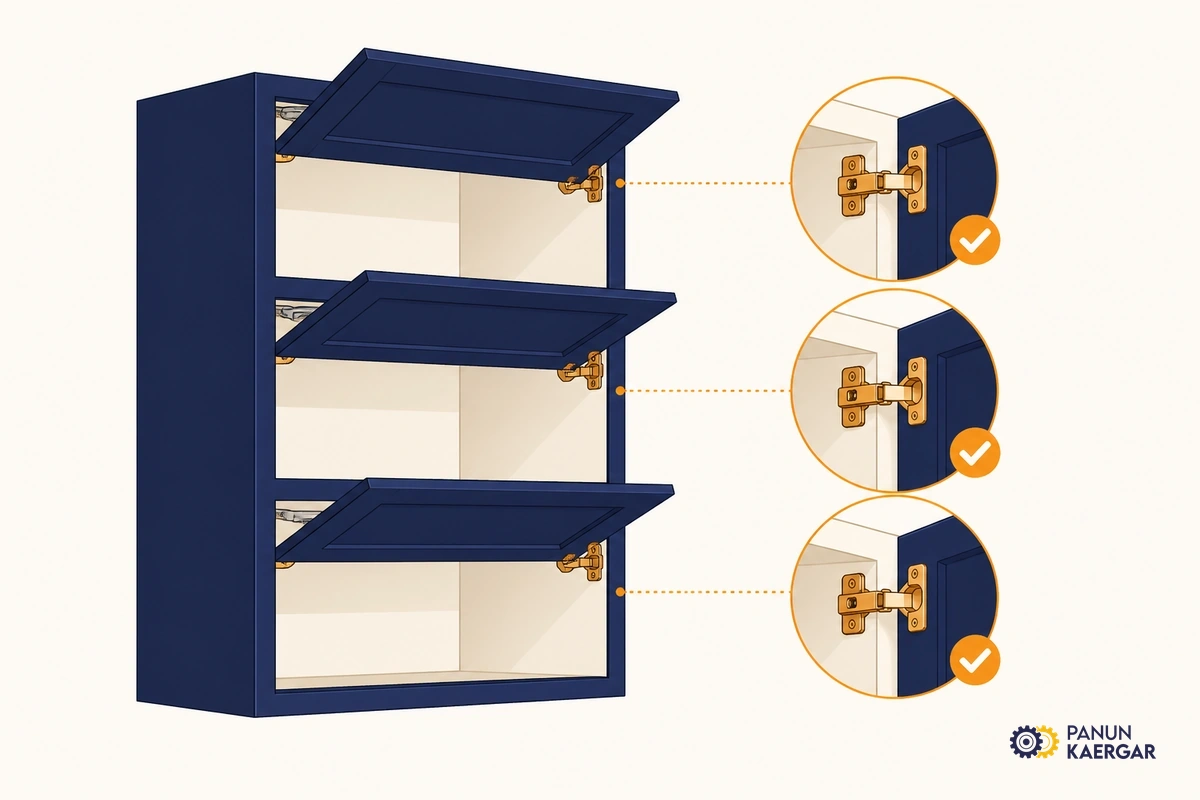
Use the side and depth adjustment screws in small turns so the door aligns with its neighbour and clears the frame without forcing.
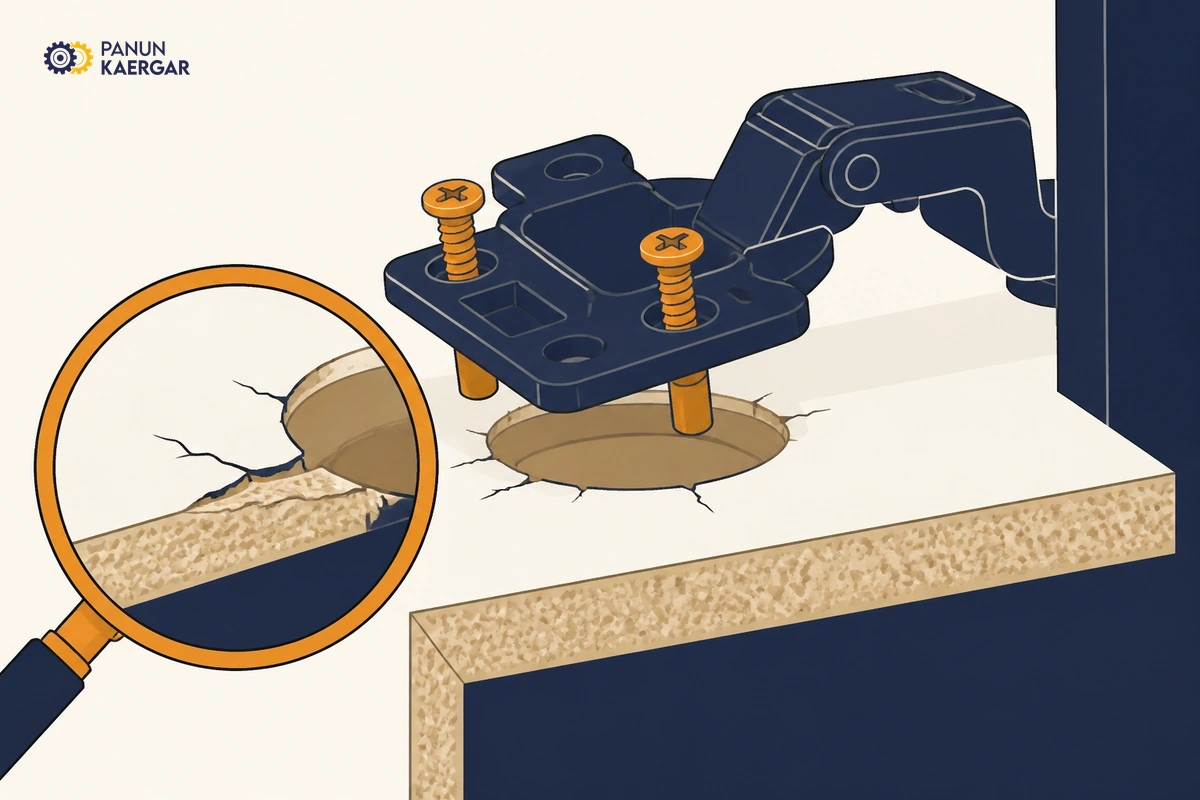
Check the mounting plate and cup
Best for: a plate lifting from the board
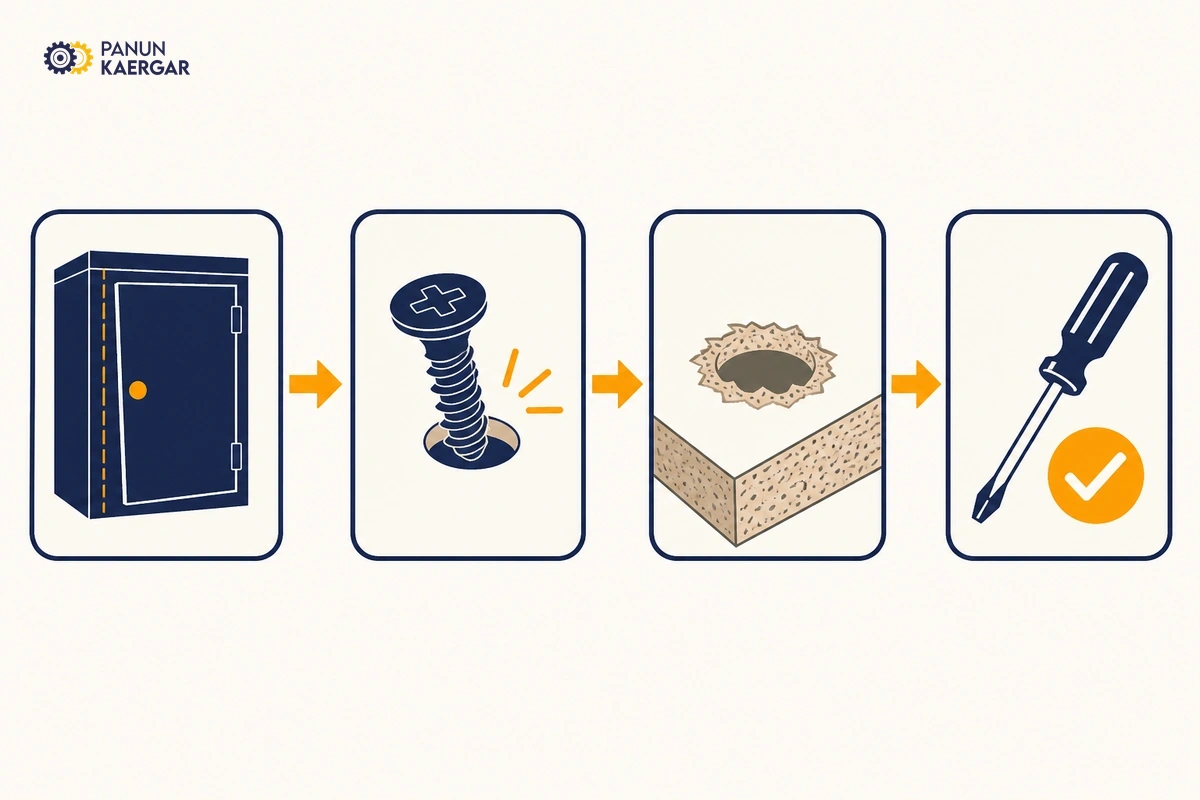
Look for gaps under the plate, cracked laminate around the cup, or screws that no longer bite — those need repair, not more torque.
Rescue a stripped hole carefully
Best for: a spinning screw in soft board
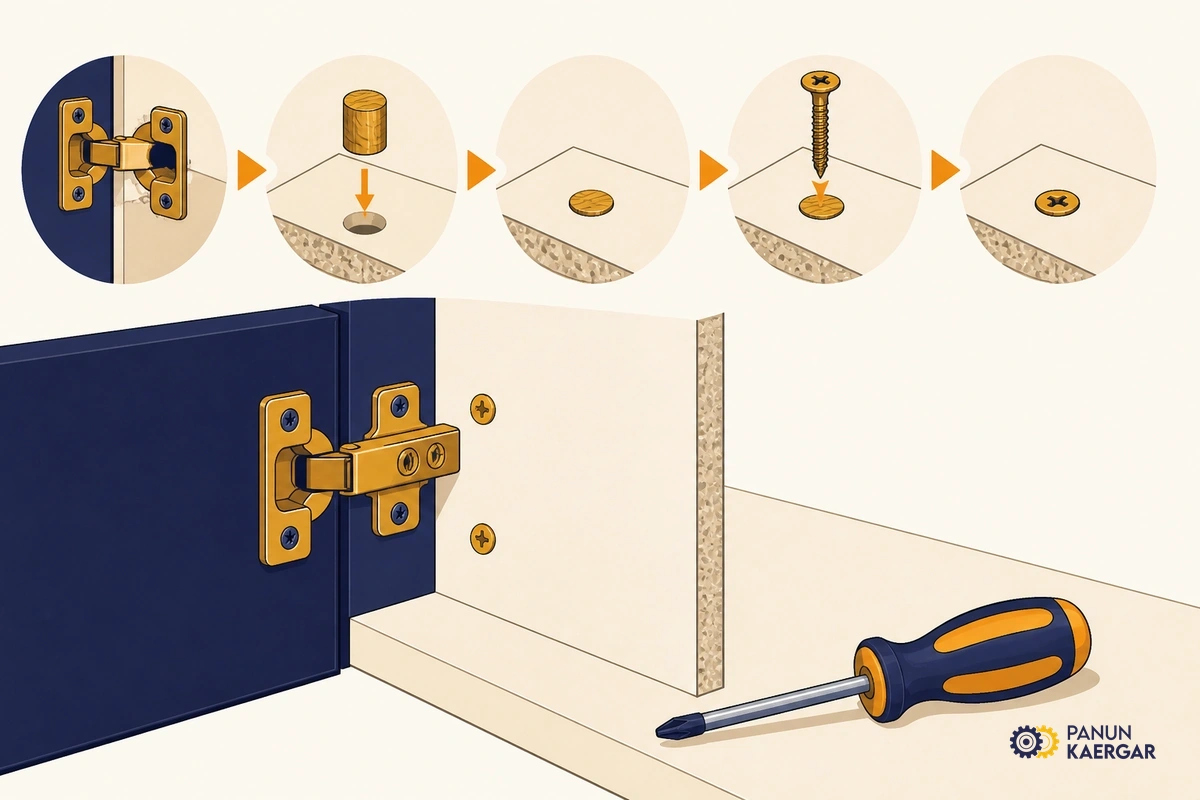
A wood plug, longer screw into solid timber, or a proper repair kit can restore grip; do not keep driving a larger screw into crumbling chipboard.
Book a carpenter
Best for: ripped board, cracked door, or repeat sag
A pro can relocate hinges, reinforce the carcass, replace worn soft-close units, and realign a run of doors properly.
Take one clear photo before taking anything apart. It helps a professional see the pattern and saves guesswork.
Kashmir home note
Kashmir kitchens mix heavy wooden shutters, soft particleboard carcasses, and damp seasons that swell doors. A slight hang after monsoon or winter heating is often a hinge job, not a full cabinet remake.
What not to do
These shortcuts usually cost more than they save.
Force the door shut every time
Rips the hinge plate
Slamming a sagging door tears screw holes wider and can crack the door edge or carcass.

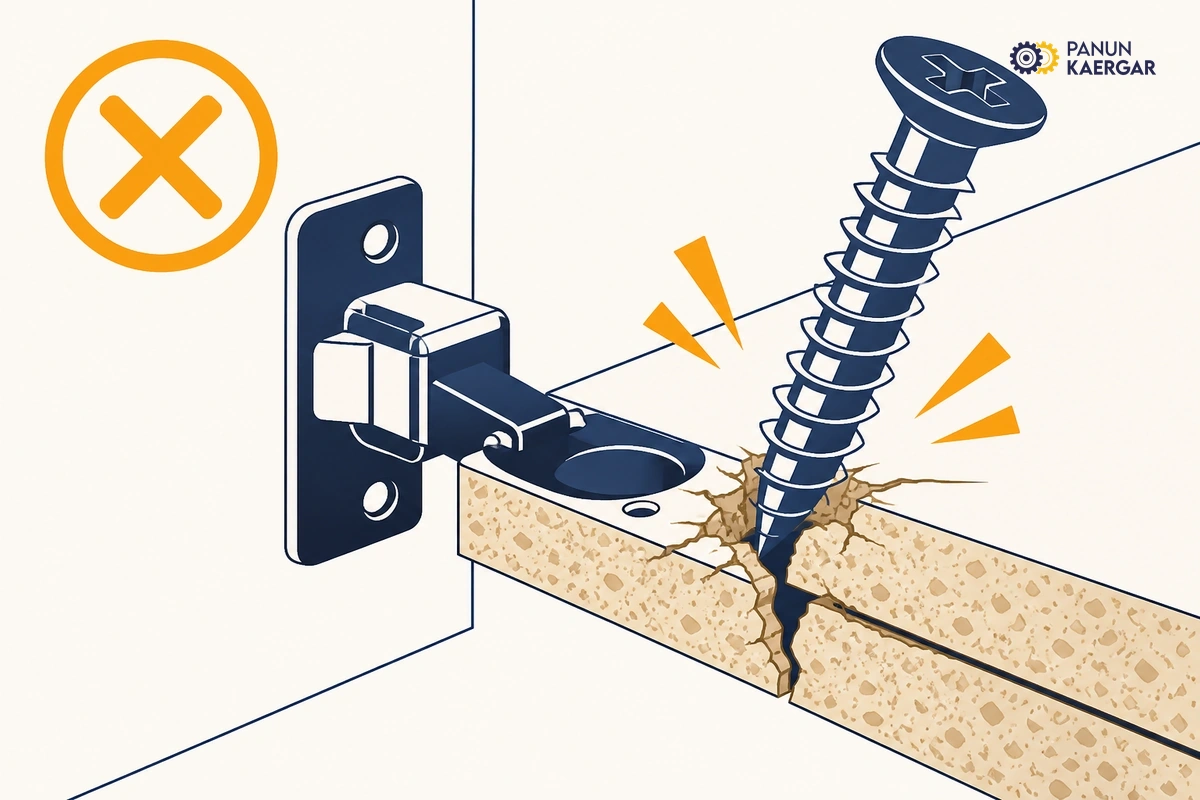
Drive a much larger screw into chipboard
Splits the carcass
Oversized screws often split thin particleboard and leave nothing for a proper repair later.
Remove all hinges at once unsupported
Door drops and chips
Take one hinge at a time with the door supported, or the shutter can fall and damage the worktop.
Keep it from returning
Fix the small trigger, keep the area clean and dry where relevant, and deal with repeat symptoms before they become a replacement job.
When to book a professional
Book a carpenter for stripped hinge holes, a cracked or delaminating door, a mounting plate torn from the board, doors that still sag after careful adjustment, or a full run of cupboards out of line.
FAQs
What is the first check for kitchen cabinet door sagging?
Have someone hold the door level, then tighten the hinge screws into the carcass and door — stop if a screw spins freely in a stripped hole.
Can I keep using it?
Only if there is no safety risk or spreading damage. Stop when the symptom worsens.
Why did this start suddenly?
A change in load, moisture, wear, cleaning product, or season often exposes a weak point.
Will a temporary fix last?
It can buy time, but repeat symptoms need the cause corrected.
When should I book help?
Book a carpenter for stripped hinge holes, a cracked or delaminating door, a mounting plate torn from the board, doors that still sag after careful adjustment, or a full run of cupboards out of line.