
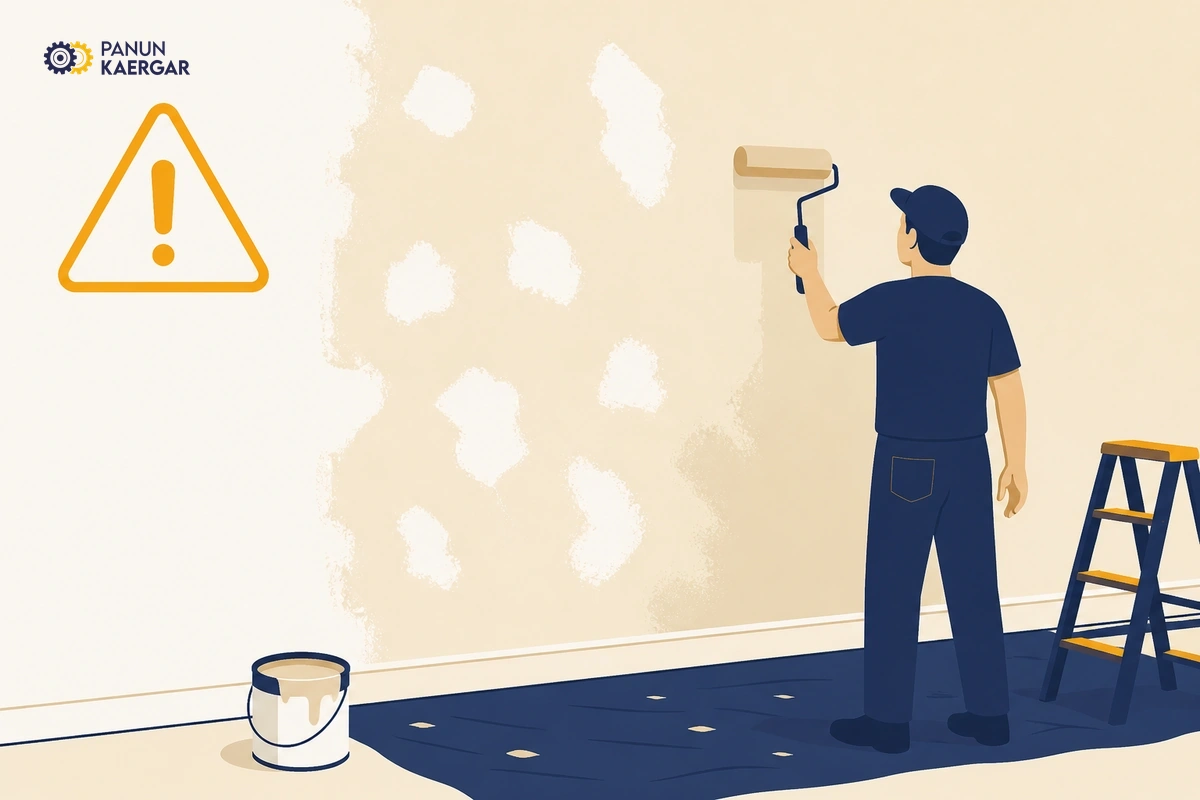
The living-room wall looks mottled the morning after a rushed weekend paint job, roller lines catch every afternoon light, and someone is already opening a third tin hoping more colour will hide the mess.
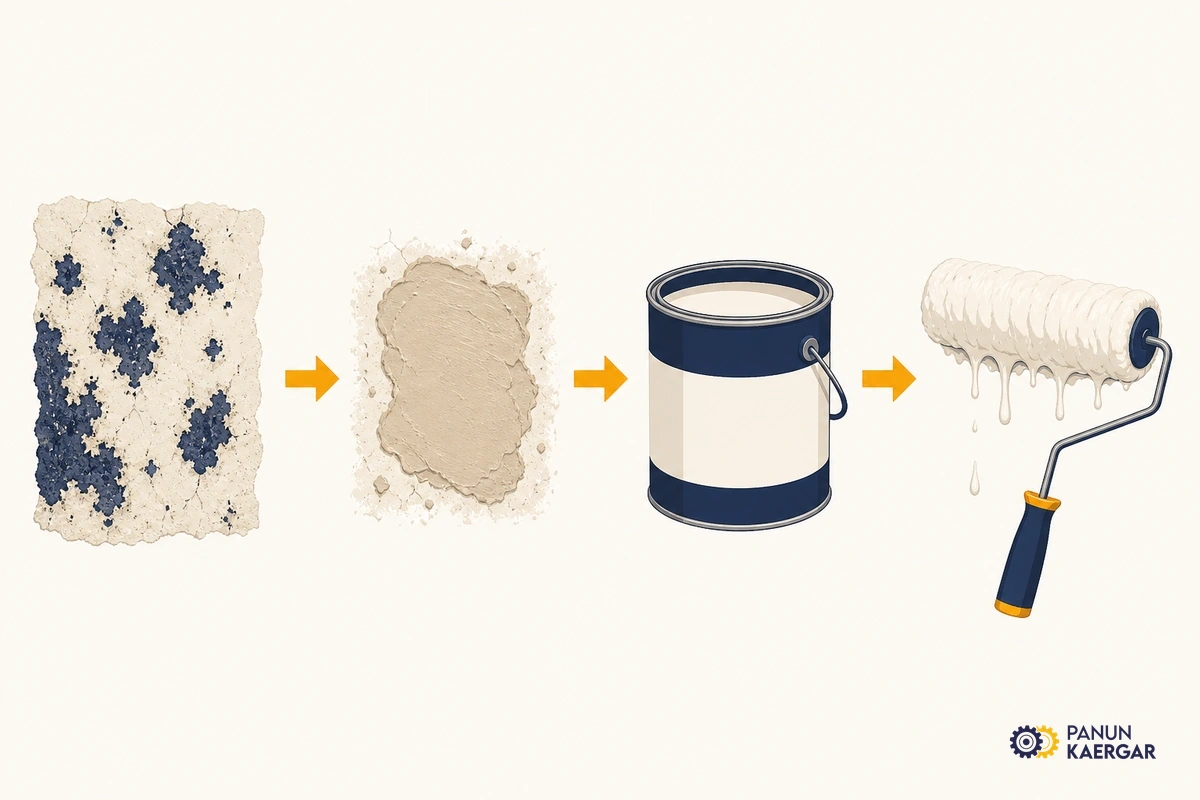
Stop adding wet coats over a weak base. Sand high ridges lightly, wipe dust, spot-prime bare or patched areas, then roll thin even coats with a quality roller — keeping a wet edge. Active damp, peeling layers, or large colour mismatch needs a painter.
Quick diagnosis map
Start with the symptom, not the most dramatic fix. A small check now can save a cabinet, appliance, or Sunday afternoon.
| What you notice | Likely reason | First move |
|---|---|---|
| Fresh paint looks blotchy, streaky, or shows roller marks | Poor surface prep, skipped primer, overloaded roller, or coats applied too thick or too fast | Look across the surface with side light; mark high ridges, missed spots, and areas where old colour still ghosts through. |
| Problem worsens after use | An underlying fault or hidden damage | Stop adding load; inspect safely. |
| Heat, burning smell, leak, or sudden pain | Safety issue, not a DIY puzzle | Switch off / isolate / get help. |
Do not keep flooding a wet wall with thicker paint, paint over active damp or peeling film, or sand lead-suspect old coatings without protection.
What usually causes this
The visible symptom is useful, but the small detail around it usually tells the real story.
- Dust, grease, or unsanded putty patches absorbing paint unevenly.
- Bare plaster or filler left without primer so colour sinks in patches.
- A dripping roller, dried edge lines, or coats stacked before the previous one cured.
Try these in order
Begin with the reversible checks. The goal is a clean fix, not winning an argument with a stubborn household thing.

Judge the wall in daylight
Best for: any patchy finish
Look across the surface with side light; mark high ridges, missed spots, and areas where old colour still ghosts through.

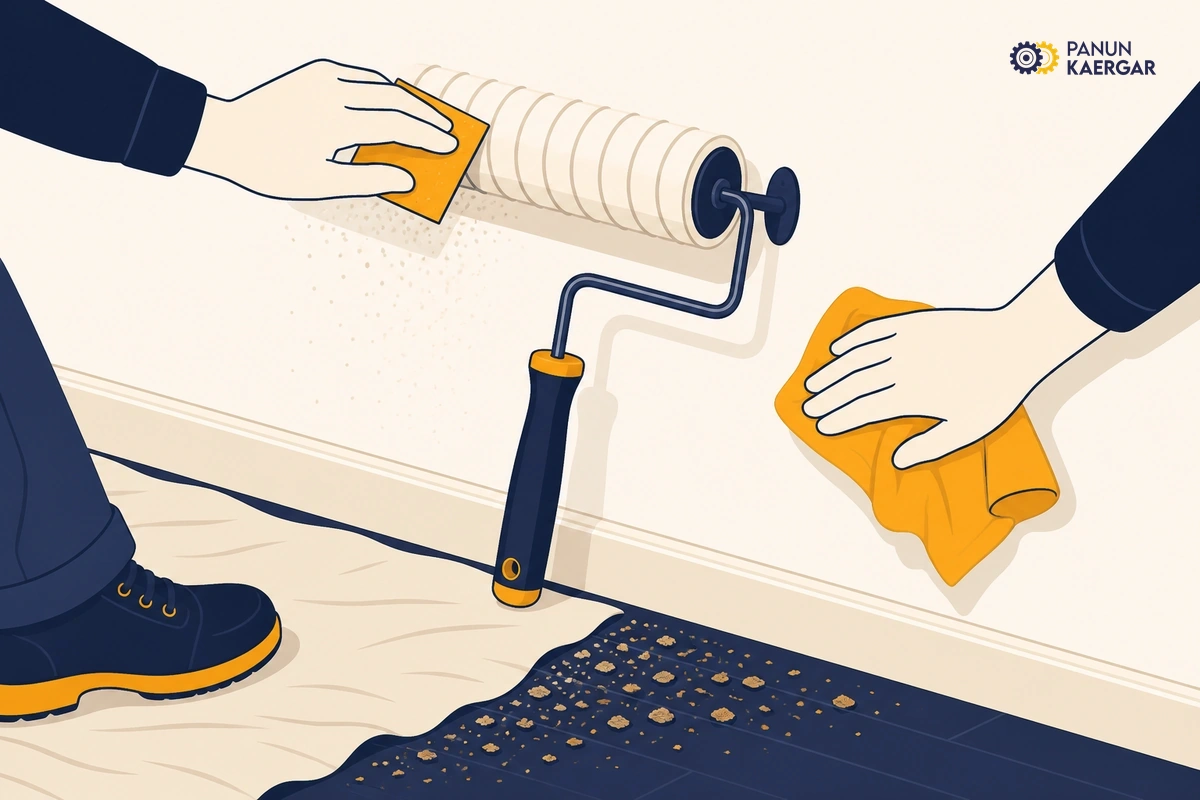
Sand and dust the problem zones
Best for: roller ridges or rough putty
Lightly sand shiny or raised lines, wipe with a clean dry cloth, and keep the floor free of grit before you open paint again.
Spot-prime bare and patched areas
Best for: absorbent blotches
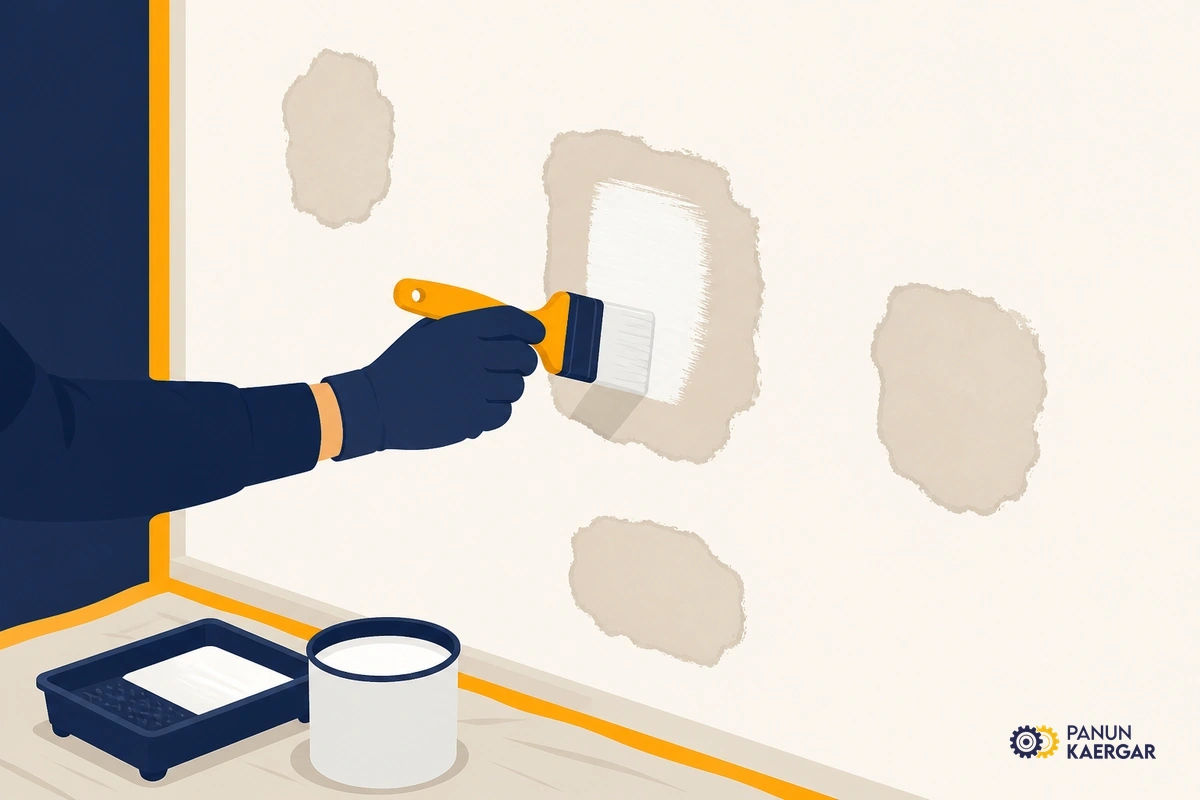
Prime filler patches and scraped spots so the finish coat sits evenly instead of sinking into thirsty plaster.
Roll thin coats with a wet edge
Best for: streaks and lap marks
Load the roller evenly, work in overlapping W patterns, and finish each section before the edge dries — two thin coats beat one heavy coat.

Book a painter
Best for: still patchy after careful rework
A pro can assess damp, strip failing layers, level large areas, and match sheen across a full room without another wasted tin.
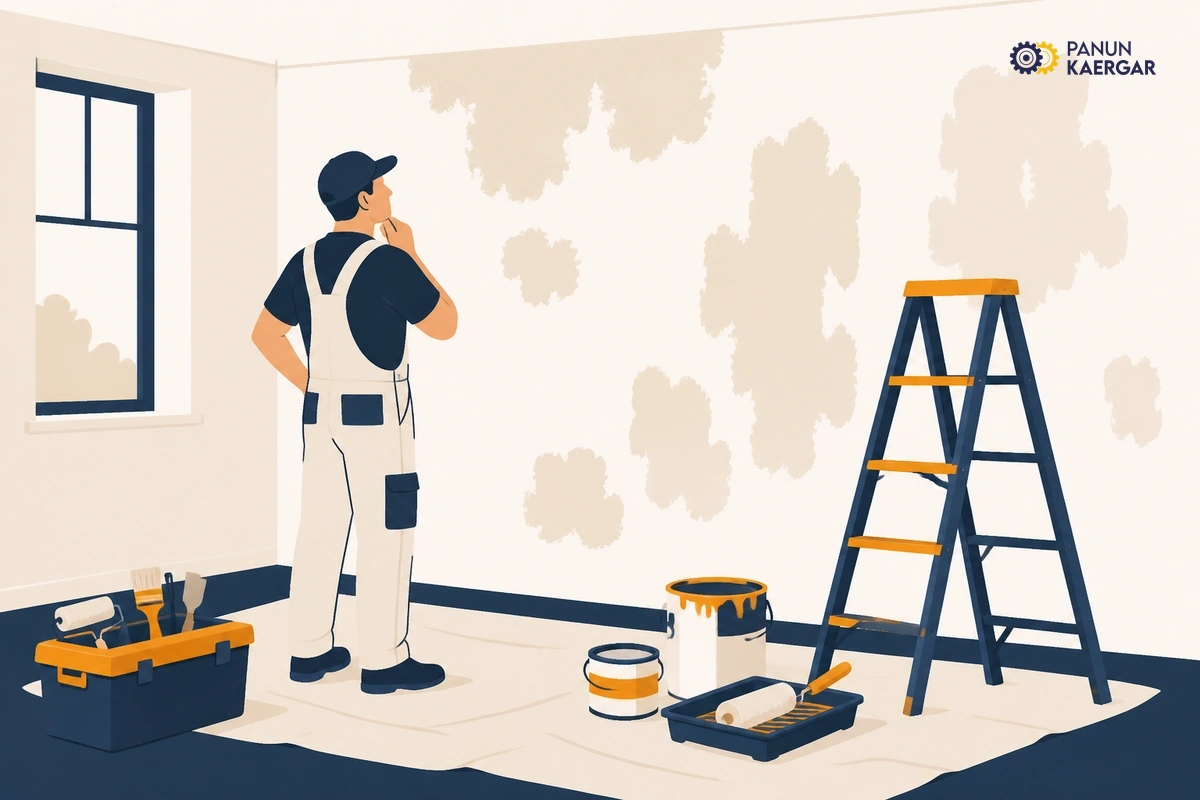
Take one clear photo before taking anything apart. It helps a professional see the pattern and saves guesswork.
Kashmir home note
Kashmir rooms often mix old limewash, modern emulsion, and winter dust from bukhari heat. Skipping primer on patched walls shows up fast once low afternoon sun hits the surface.
What not to do
These shortcuts usually cost more than they save.
Slap on a thicker coat to hide it
Runs, sags, and longer dry time
Heavy wet coats trap marks and drip; thin even coats over a primed surface hide better.

Paint over active damp or peeling film
Fails again within days
Moisture and loose old paint will telegraph through any new colour — fix the base first.

Skip primer on bare putty patches
Blotches return
Unprimed filler absorbs finish unevenly and leaves permanent light and dark zones.
Keep it from returning

Fix the small trigger, keep the area clean and dry where relevant, and deal with repeat symptoms before they become a replacement job.
When to book a professional
Book a painter for large patchy rooms after basic sand-and-prime fails, peeling or bubbling paint, suspected damp, ceiling work at height, or a full flat where colour and sheen must match.
FAQs
What is the first check for paint looking patchy or streaky?
Look across the surface with side light; mark high ridges, missed spots, and areas where old colour still ghosts through.
Can I keep using it?
Only if there is no safety risk or spreading damage. Stop when the symptom worsens.
Why did this start suddenly?
A change in load, moisture, wear, cleaning product, or season often exposes a weak point.
Will a temporary fix last?
It can buy time, but repeat symptoms need the cause corrected.
When should I book help?
Book a painter for large patchy rooms after basic sand-and-prime fails, peeling or bubbling paint, suspected damp, ceiling work at height, or a full flat where colour and sheen must match.