
A patch of plaster bubbles in a ground-floor room every spring. Fresh putty lasts one season because the wall is still drinking from somewhere.
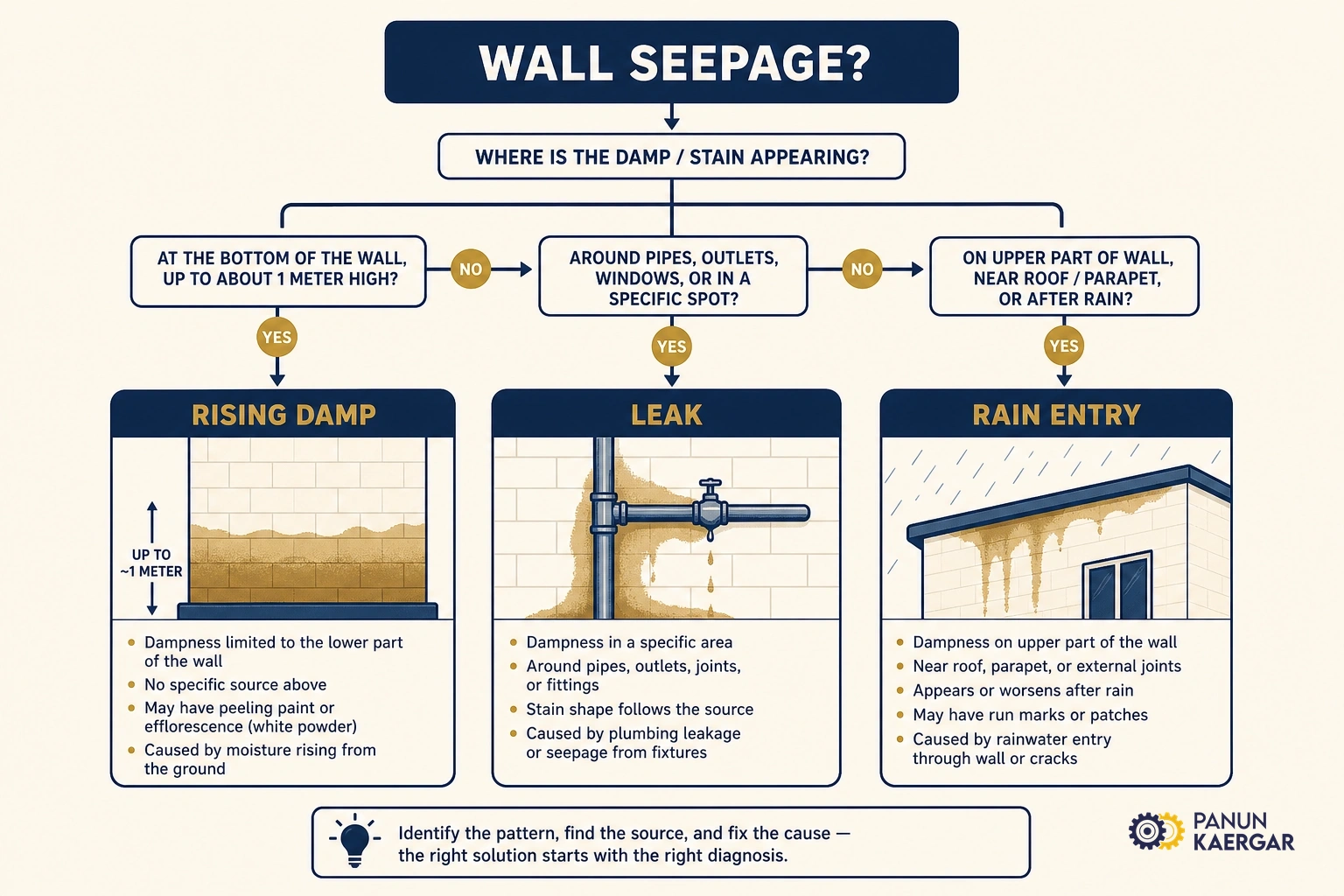
Trace whether moisture is rising, leaking from above, or entering from outside. Dry the wall, fix the source, then repair plaster. Painting or skimming over active seepage fails quickly.
Quick diagnosis map
Start with the symptom, not the most dramatic fix. A small check now can save a cabinet, appliance, or Sunday afternoon.
| What you notice | Likely reason | First move |
|---|---|---|
| Damp patch, flaking plaster, or salty white bloom | Hidden leak, rain entry, rising damp, or cold-wall condensation | Note height, seasonality, and whether it grows after rain or use upstairs. |
| Problem worsens after use | An underlying fault or hidden damage | Stop adding load; inspect safely. |
| Heat, burning smell, leak, or sudden pain | Safety issue, not a DIY puzzle | Switch off / isolate / get help. |
Do not skim over active damp, use ordinary paint as a barrier, or hack plaster open near live wires.
What usually causes this
The visible symptom is useful, but the small detail around it usually tells the real story.
- Bathroom or pipe leak on the other side.
- Cracks or failed pointing on an exterior wall.
- Ground moisture or poor external drainage.
Try these in order
Begin with the reversible checks. The goal is a clean fix, not winning an argument with a stubborn household thing.
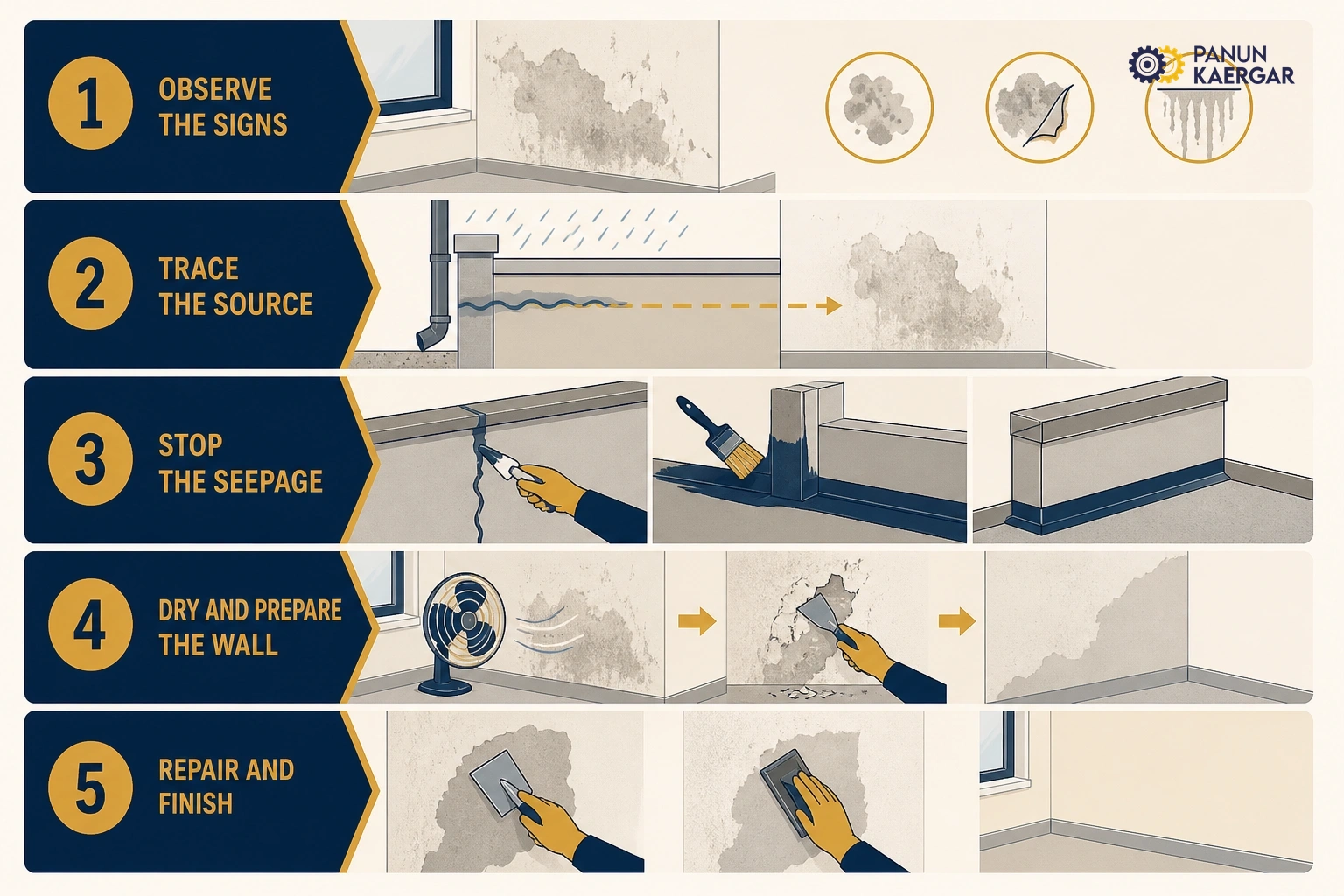
Map the patch
Best for: any damp zone
Note height, seasonality, and whether it grows after rain or use upstairs.

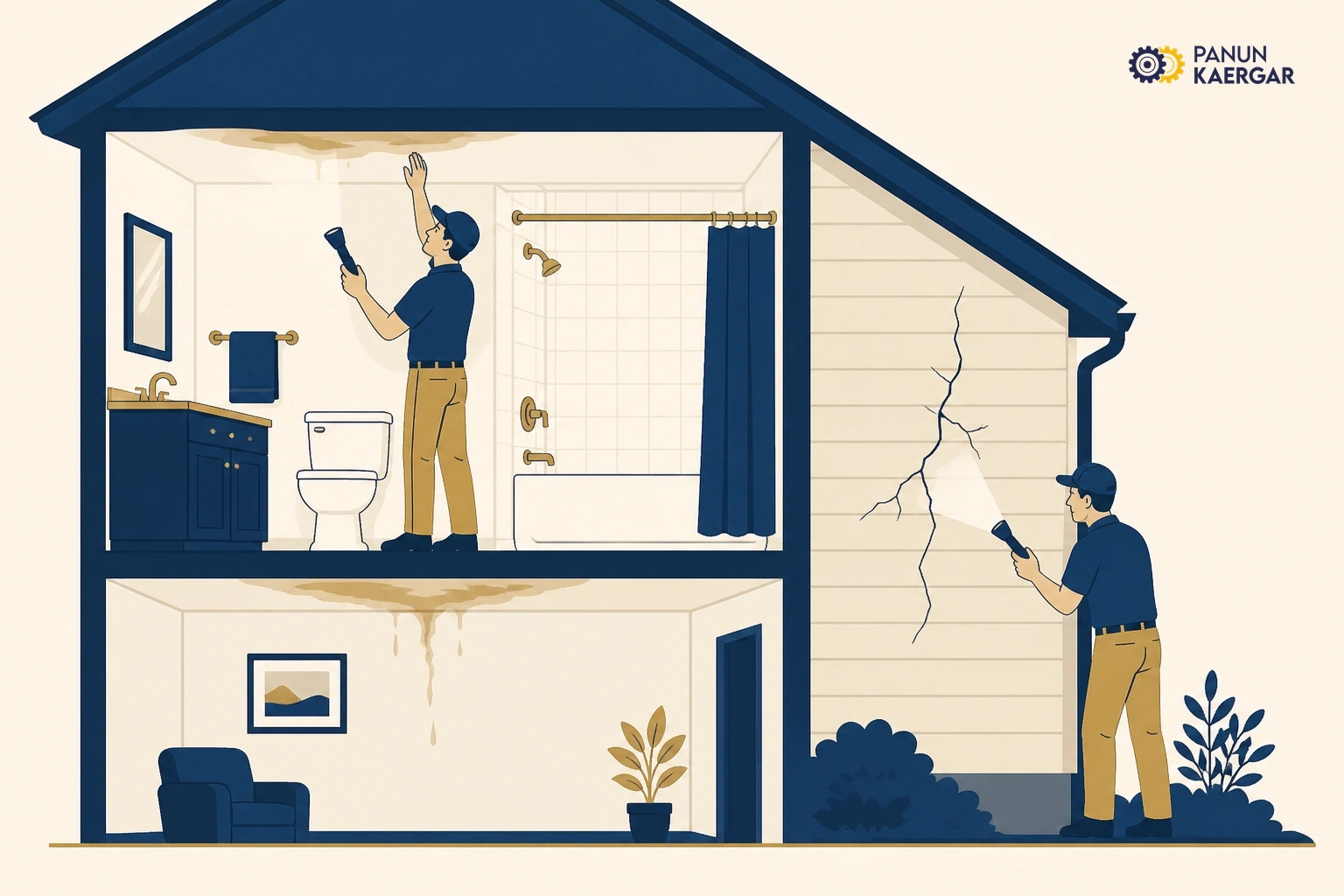
Check upstairs and outside
Best for: hidden source
Inspect bathrooms, windows, roof edges, and exterior cracks.
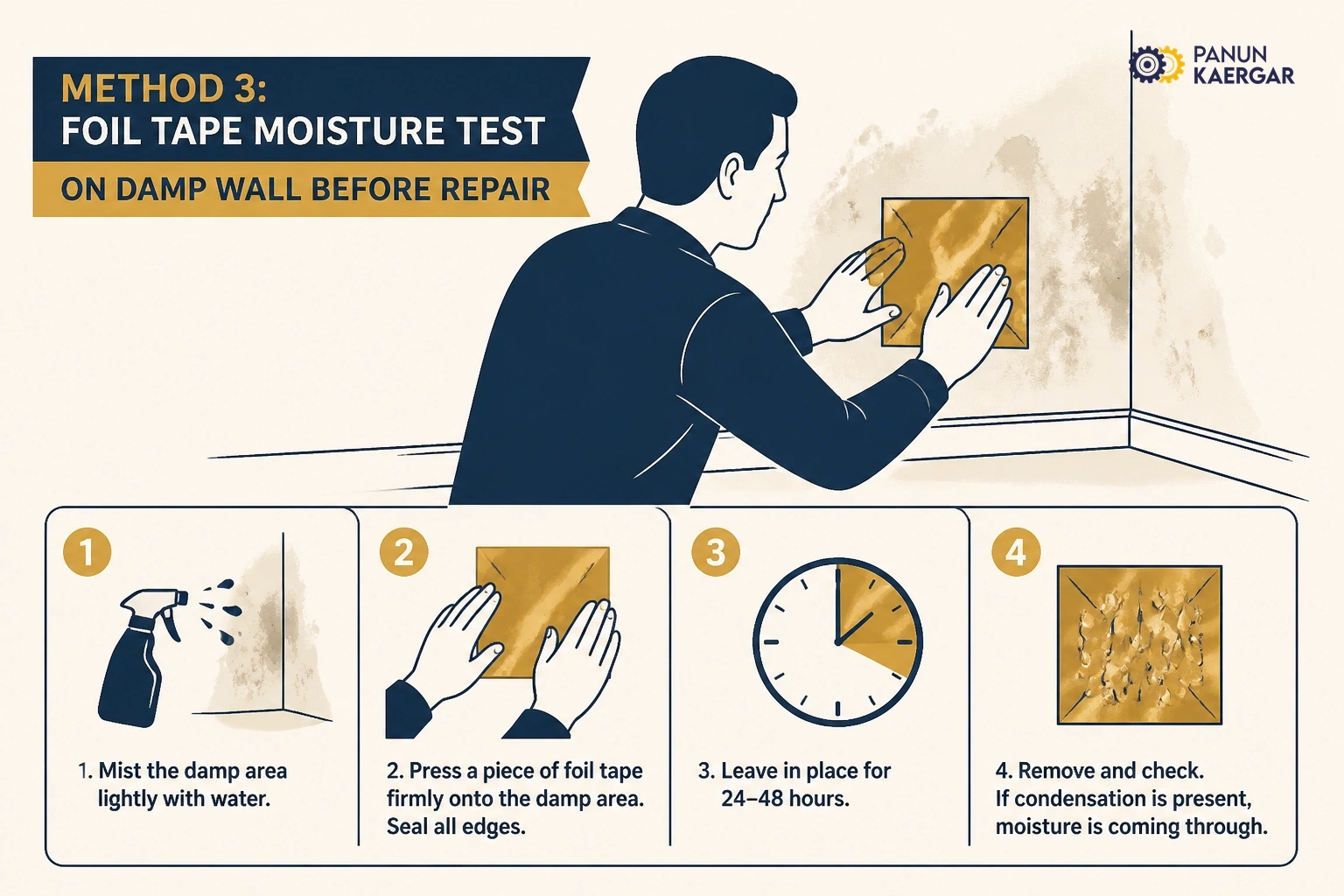
Test for active moisture
Best for: before repair
A foil tape test or moisture meter helps confirm whether the wall is still wet.
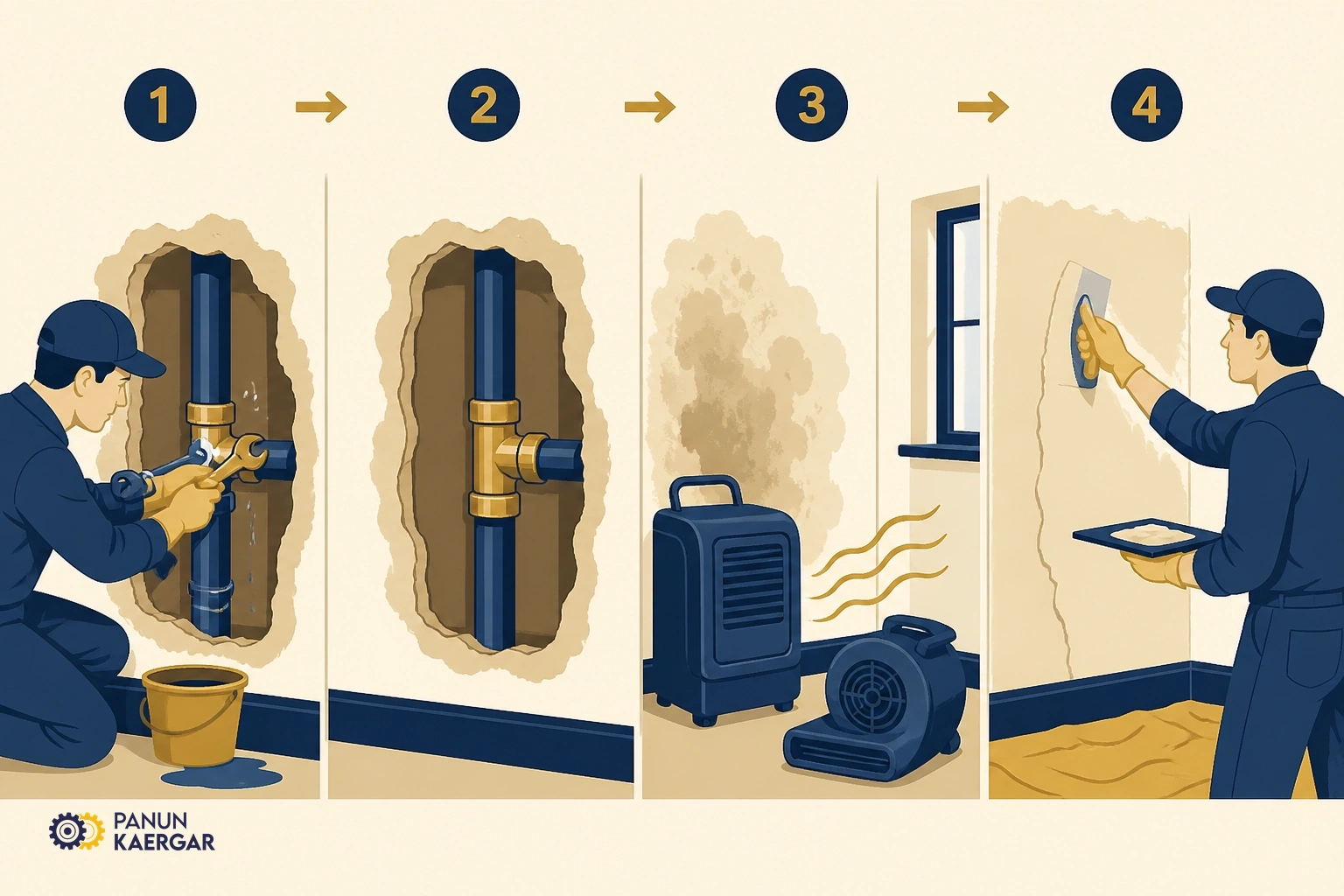
Fix the source and dry
Best for: confirmed leak
Repair plumbing or exterior entry and allow real drying time.
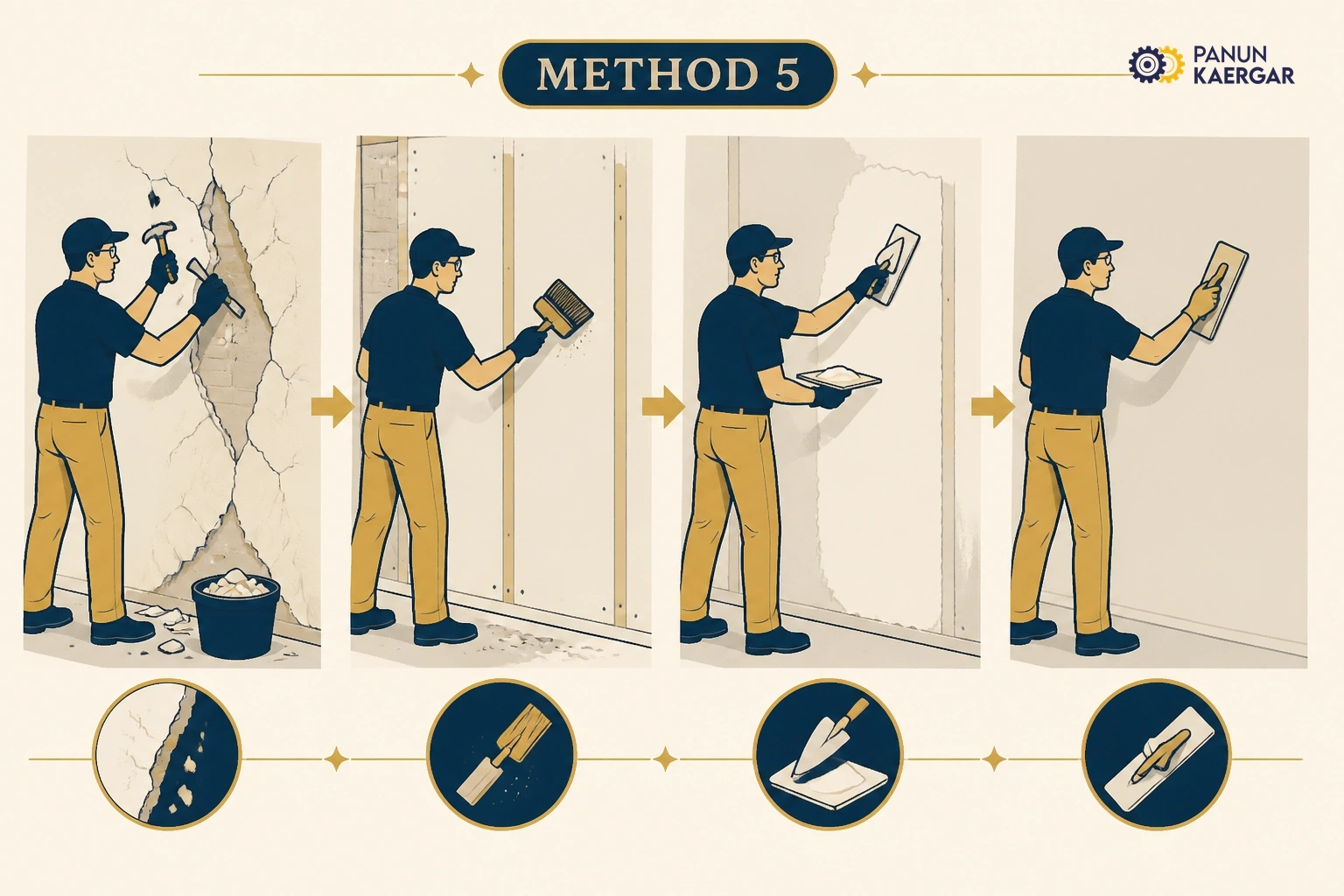
Repair plaster properly
Best for: a dry wall
Remove failed material, treat salts if needed, then replaster and paint.
Take one clear photo before taking anything apart. It helps a professional see the pattern and saves guesswork.
Kashmir home note
Snowmelt, driving rain, and old stone walls make seepage seasonal in Kashmir. The stain location is a clue, not always the leak itself.
What not to do
These shortcuts usually cost more than they save.
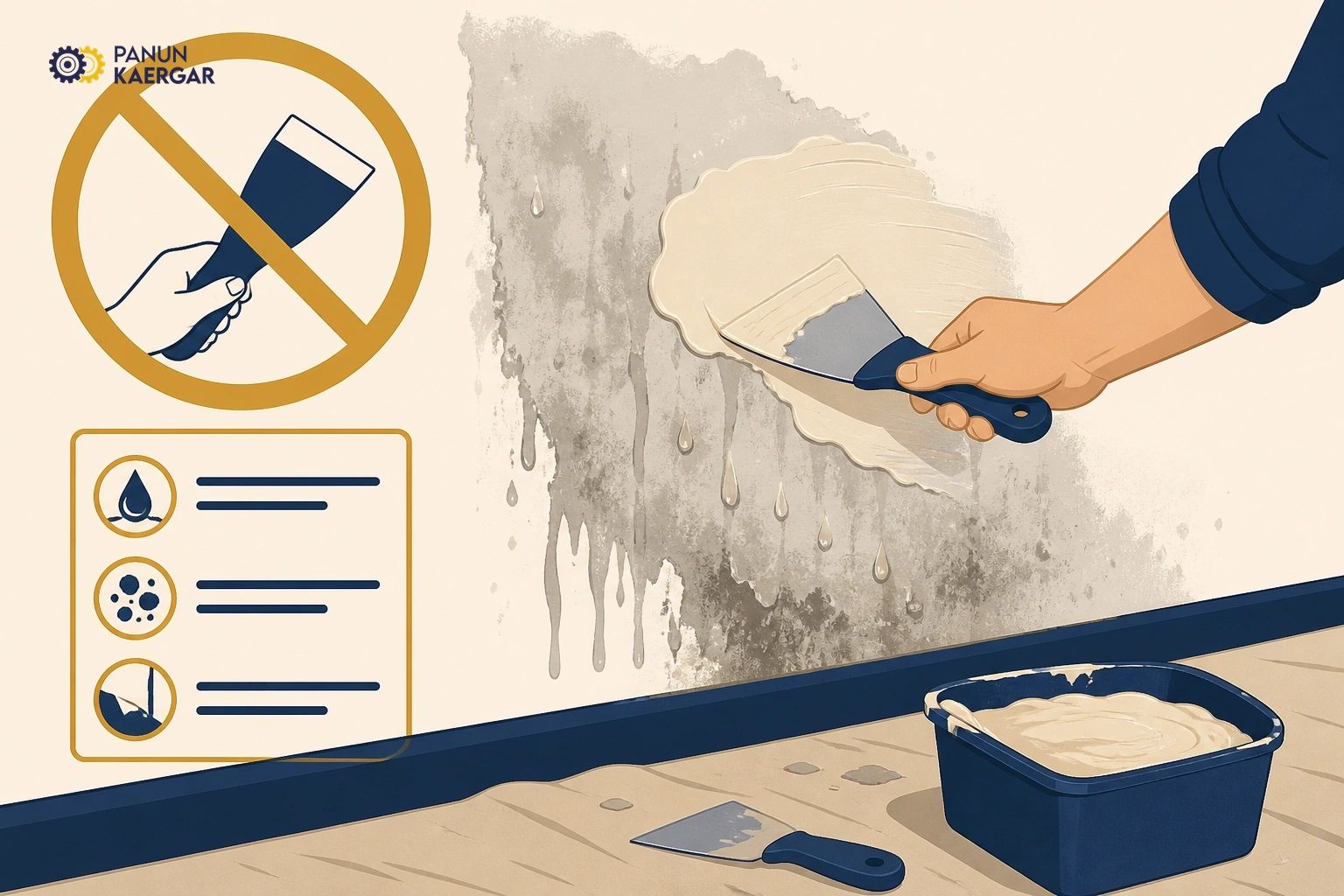
Skim over active damp
Peeling returns within one season
Fresh putty on a wet wall traps moisture and fails quickly.
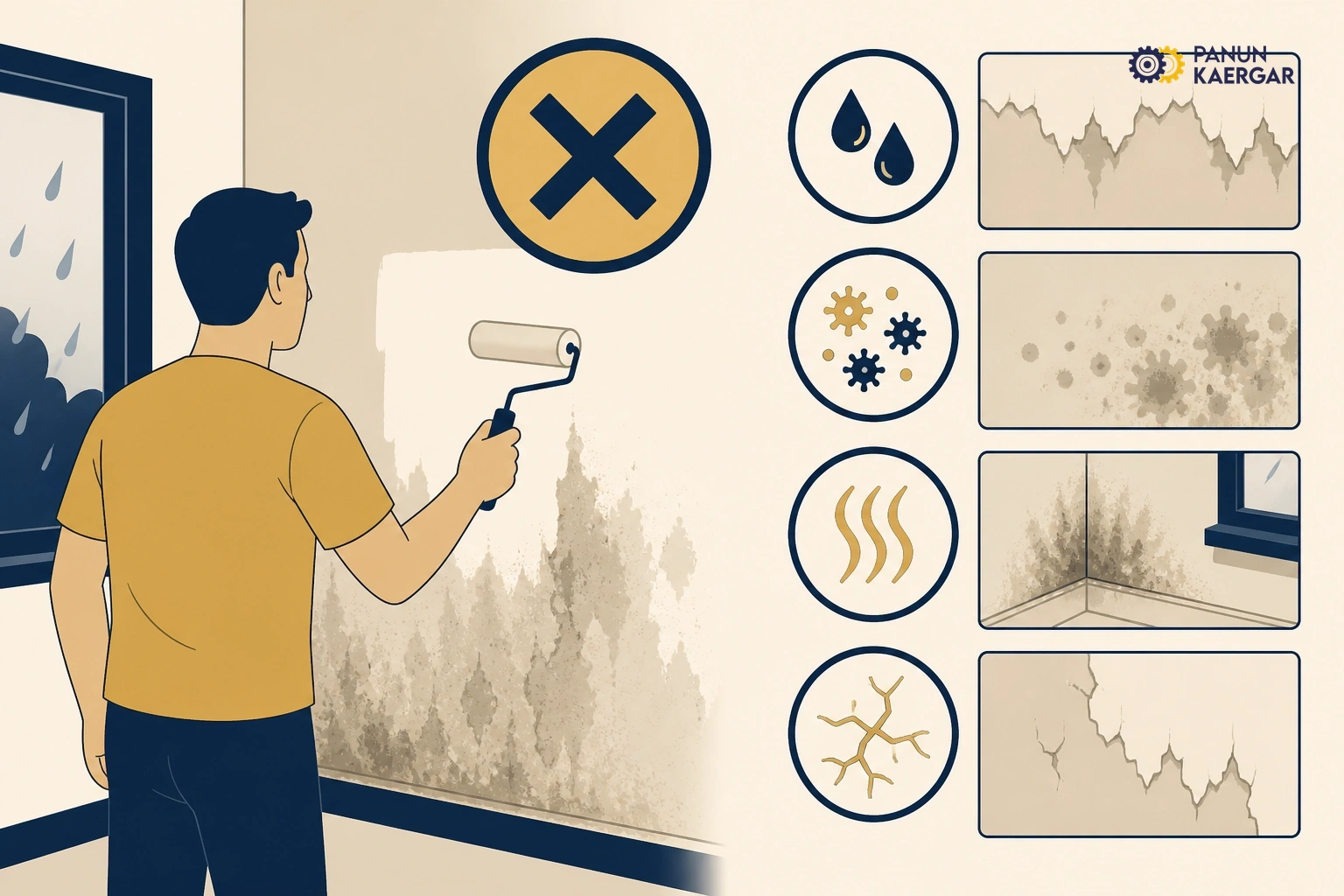
Use ordinary paint as a barrier
Paint lifts when moisture moves
Emulsion alone does not stop water entry; it only hides it briefly.
Hack plaster open near live wires
Shock and damage risk
Cutting into a damp wall without knowing what is behind it is dangerous.

Keep it from returning
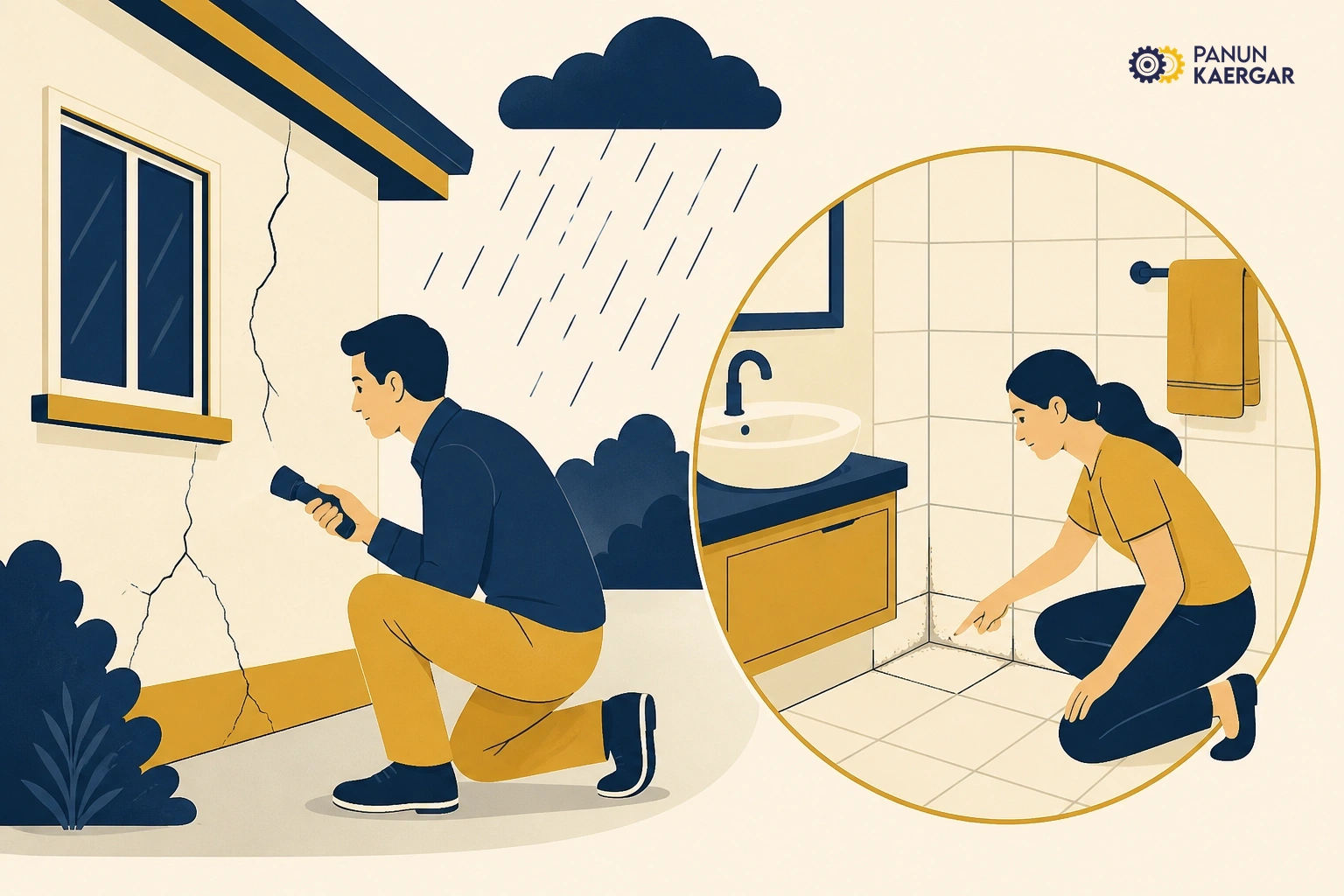
Fix the small trigger, keep the area clean and dry where relevant, and deal with repeat symptoms before they become a replacement job.
When to book a professional
Book a mason urgently for a bulging wall, spreading mould, salt-heavy bloom after repeated repair, or damp near electrics.
FAQs
What is the first check for wall seepage and plaster damage?
Note height, seasonality, and whether it grows after rain or use upstairs.
Can I keep using it?
Only if there is no safety risk or spreading damage. Stop when the symptom worsens.
Why did this start suddenly?
A change in load, moisture, wear, cleaning product, or season often exposes a weak point.
Will a temporary fix last?
It can buy time, but repeat symptoms need the cause corrected.
When should I book help?
Book a mason urgently for a bulging wall, spreading mould, salt-heavy bloom after repeated repair, or damp near electrics.