
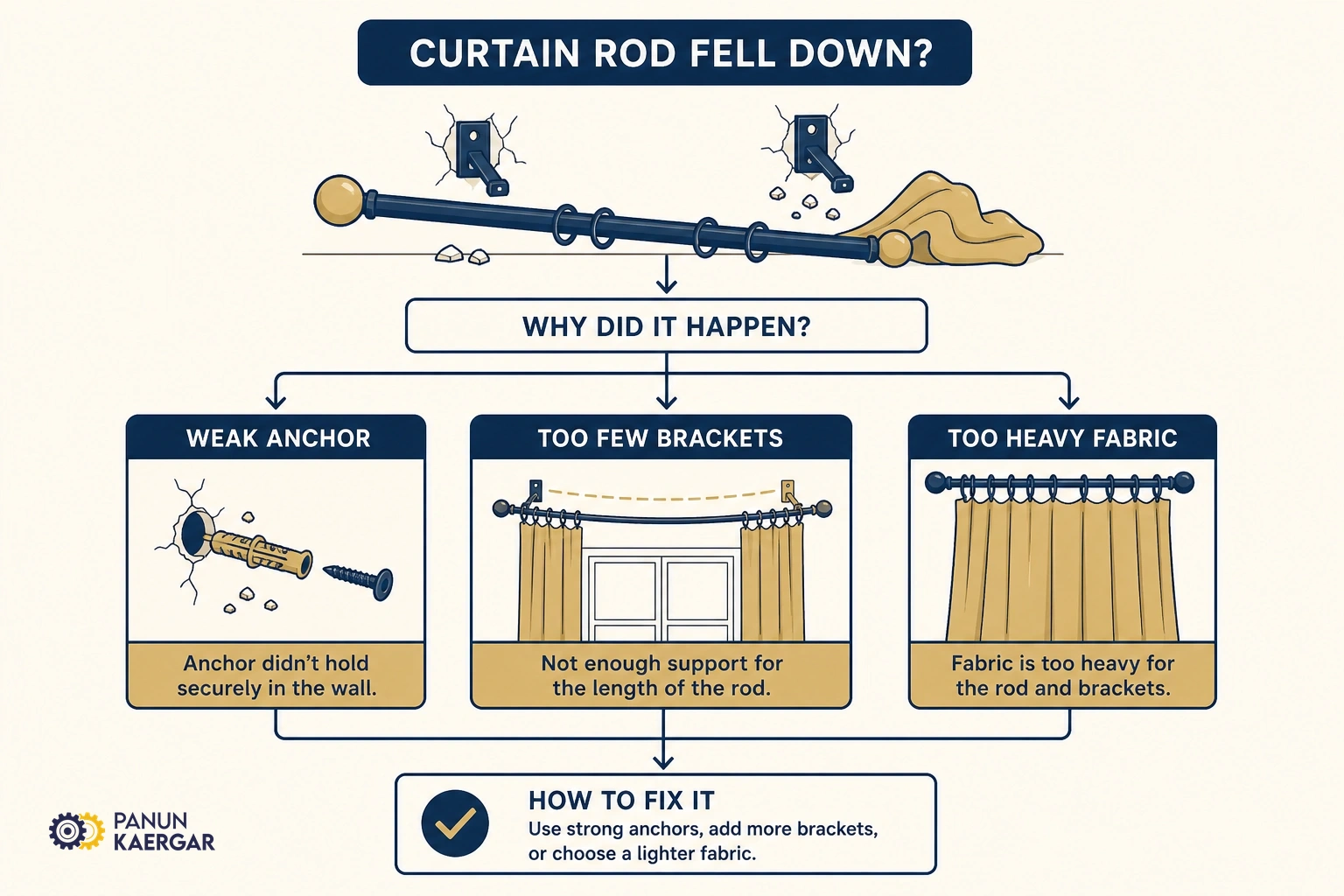
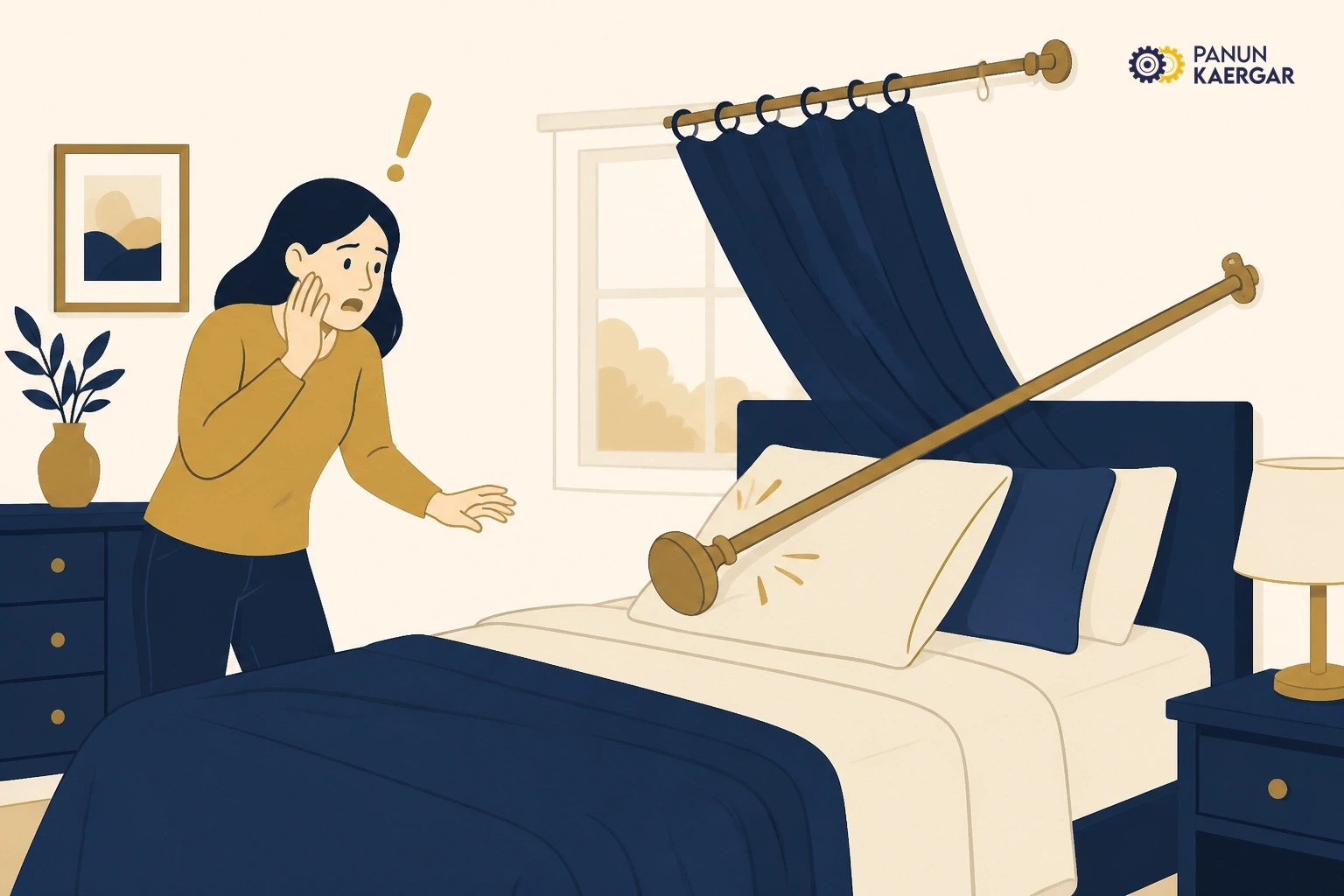
A heavy blackout curtain in a Sopore bedroom pulls the rod down with a soft crack on a windy night. The curtain is not too dramatic; the wall anchor is.
Remove load, inspect brackets and fixings, move anchors to solid material if needed, and distribute weight across enough support points. Do not keep drilling into crumbling plaster.
Quick diagnosis map
Start with the symptom, not the most dramatic fix. A small check now can save a cabinet, appliance, or Sunday afternoon.
| What you notice | Likely reason | First move |
|---|---|---|
| Rod sags, bracket pulls away, or finial drops | Weak anchors, too few brackets, or heavy fabric on hollow wall | Remove curtains and check whether brackets are bent or screws are loose. |
| Problem worsens after use | An underlying fault or hidden damage | Stop adding load; inspect safely. |
| Heat, burning smell, leak, or sudden pain | Safety issue, not a DIY puzzle | Switch off / isolate / get help. |
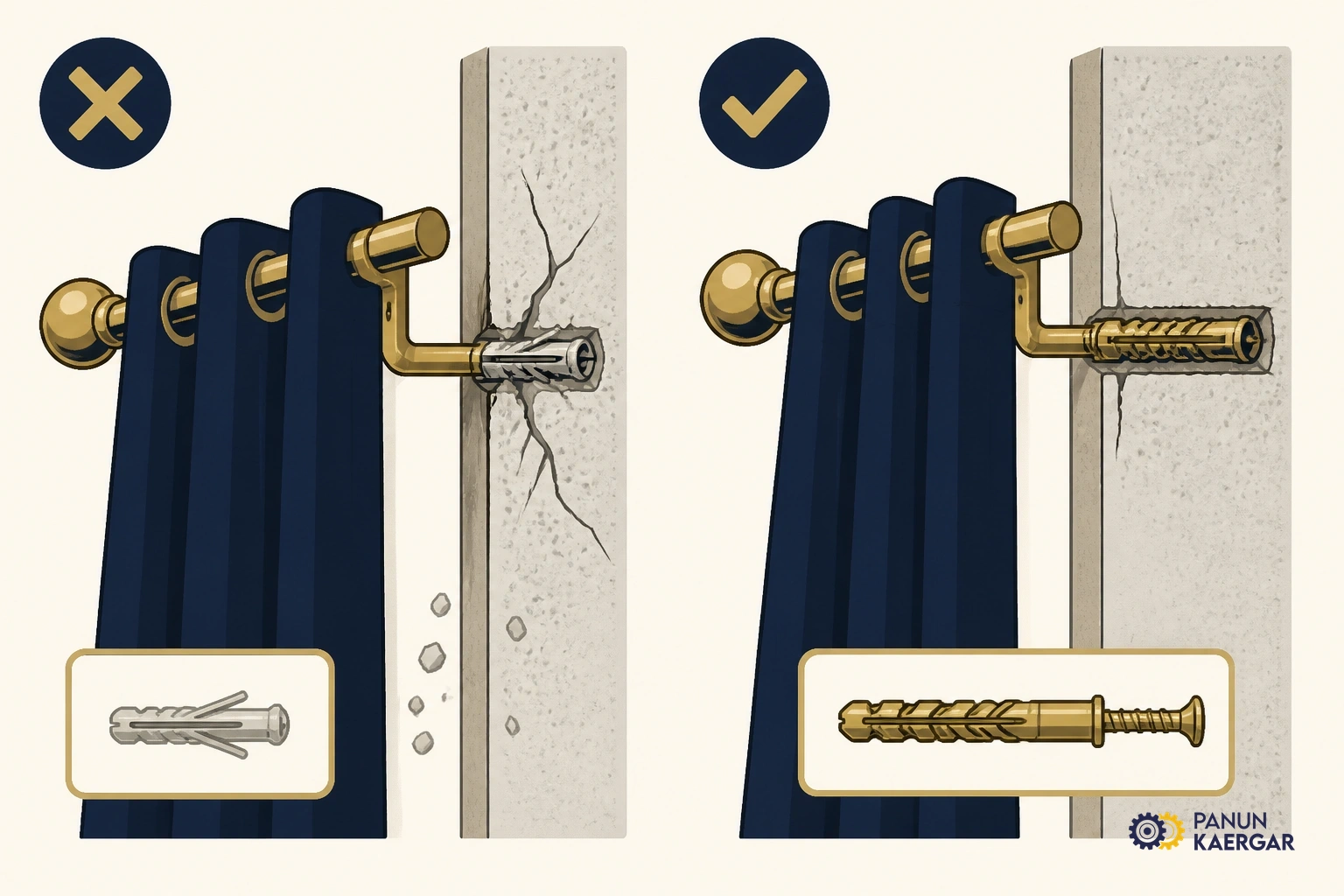
Do not screw back into the same crumbled hole, use mismatched rawlplugs, or ignore a rod near a sleeping area that keeps falling.
What usually causes this
The visible symptom is useful, but the small detail around it usually tells the real story.
- Plastic plugs in soft or crumbling plaster.
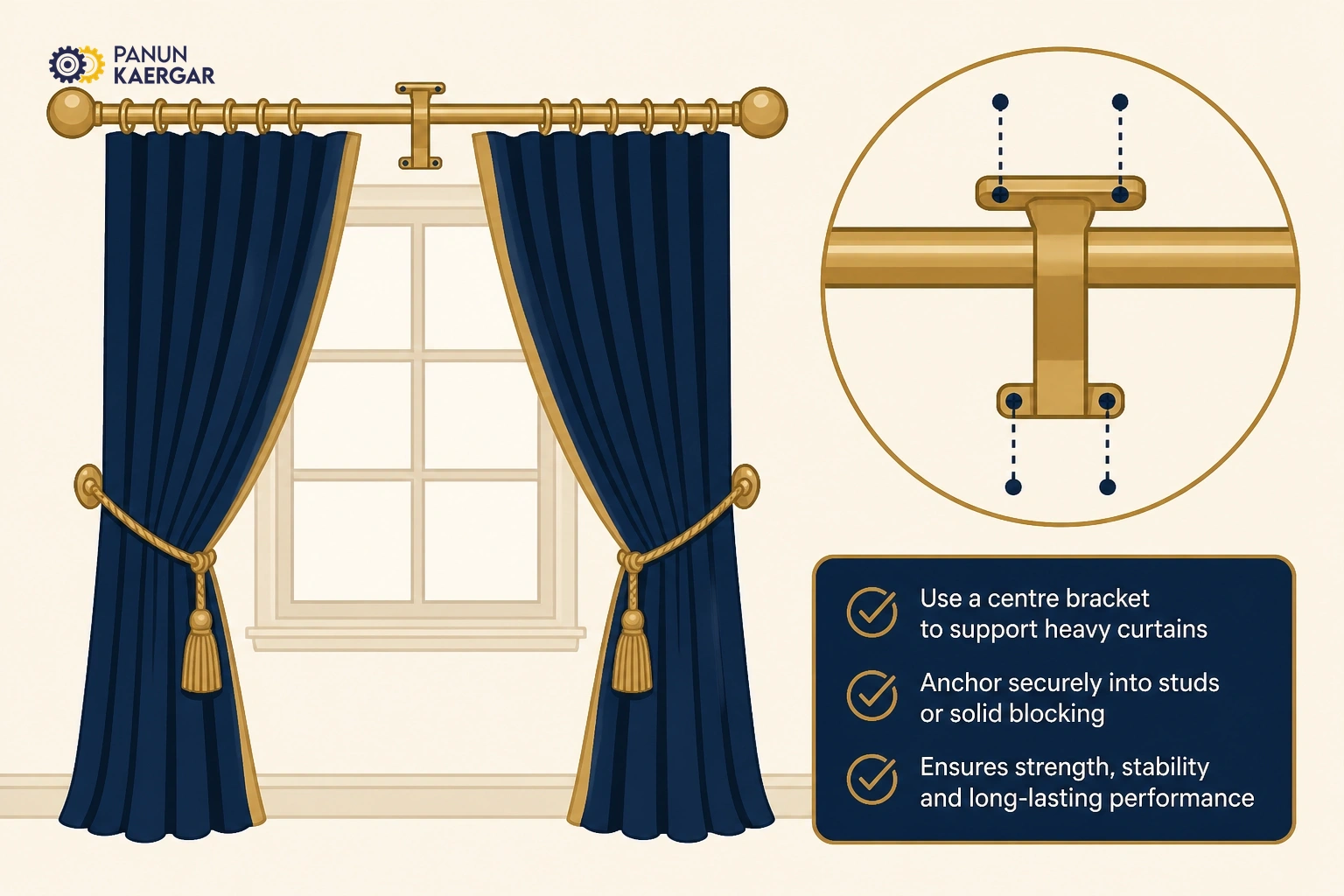
- Too few brackets for long or heavy curtains.
- Repeated pulling on one end when opening.
Try these in order
Begin with the reversible checks. The goal is a clean fix, not winning an argument with a stubborn household thing.
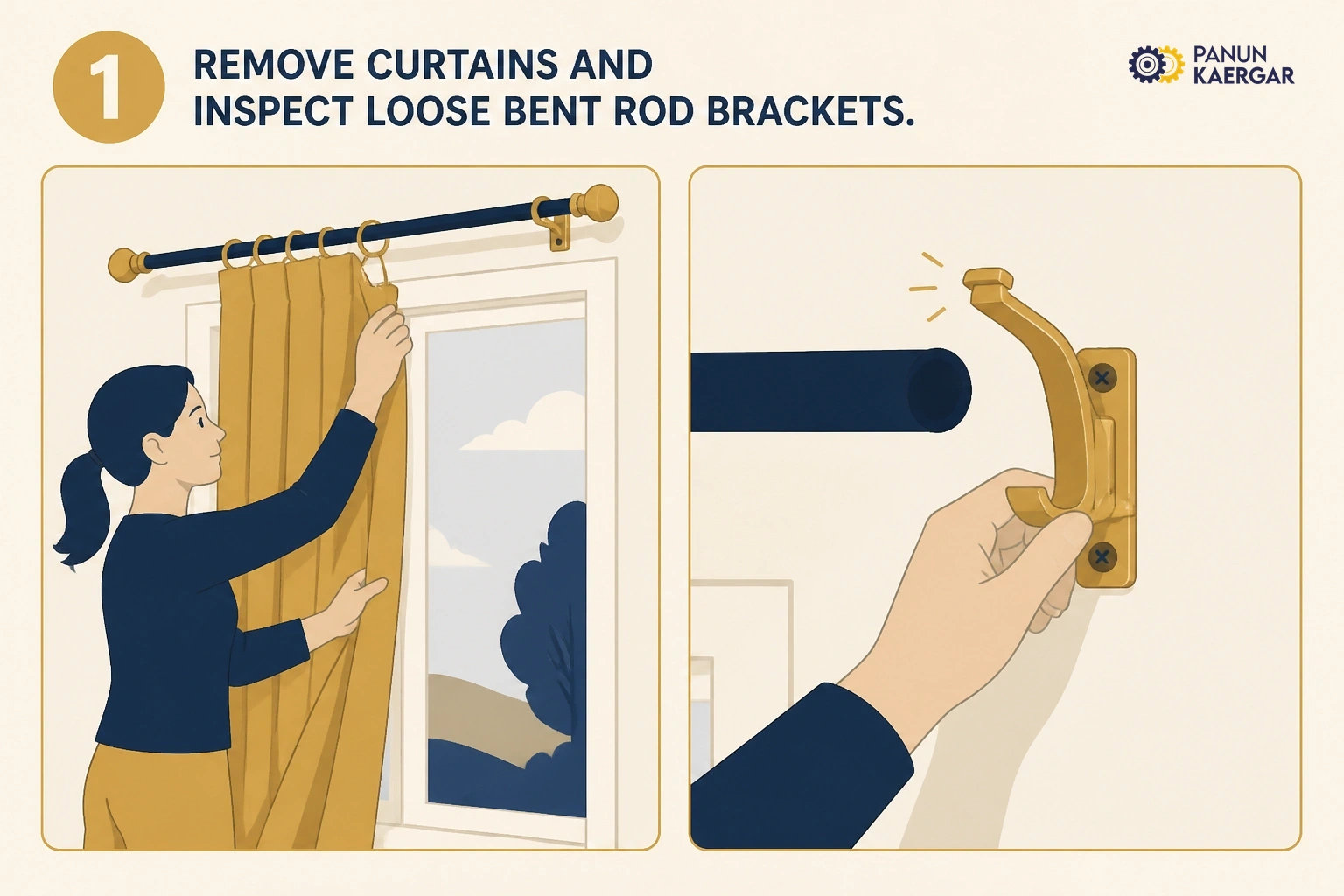
Take the weight off
Best for: a failing bracket
Remove curtains and check whether brackets are bent or screws are loose.
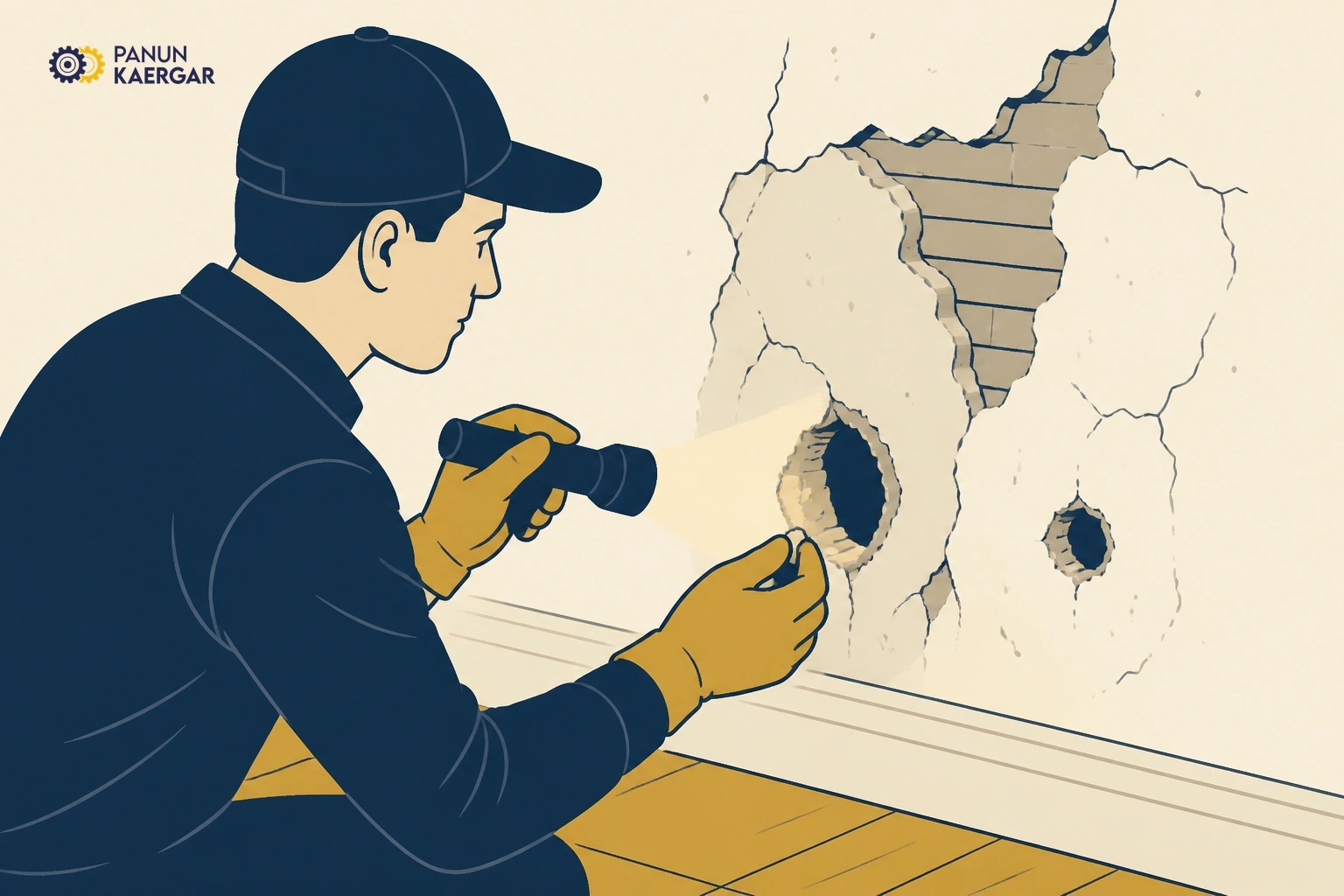
Inspect the wall
Best for: pull-out holes
Look for crumbling plaster, hollow sound, or previous patch failures.
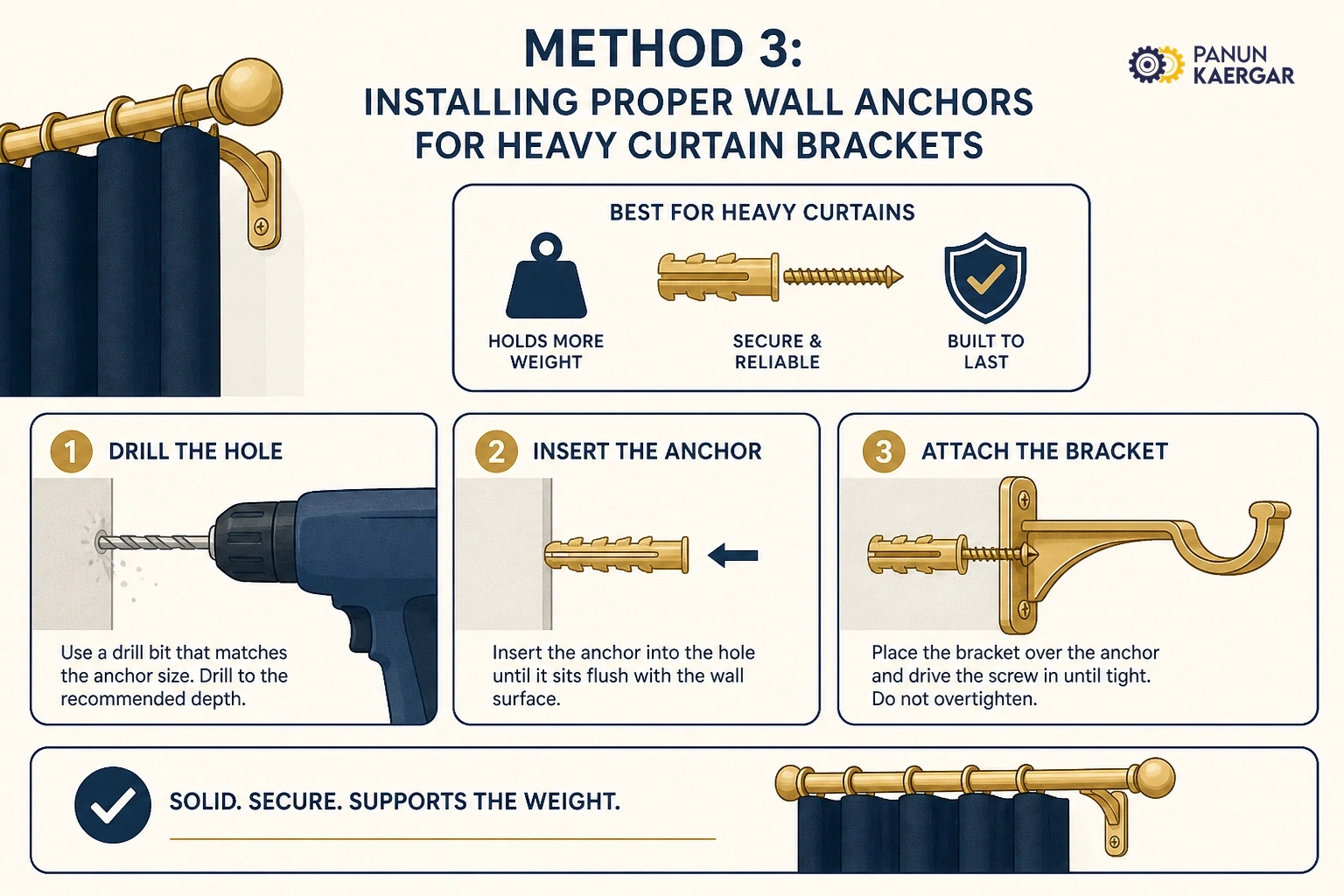
Use proper anchors
Best for: weak original fixings
Match fixings to wall type; heavy curtains need solid anchors and enough points.
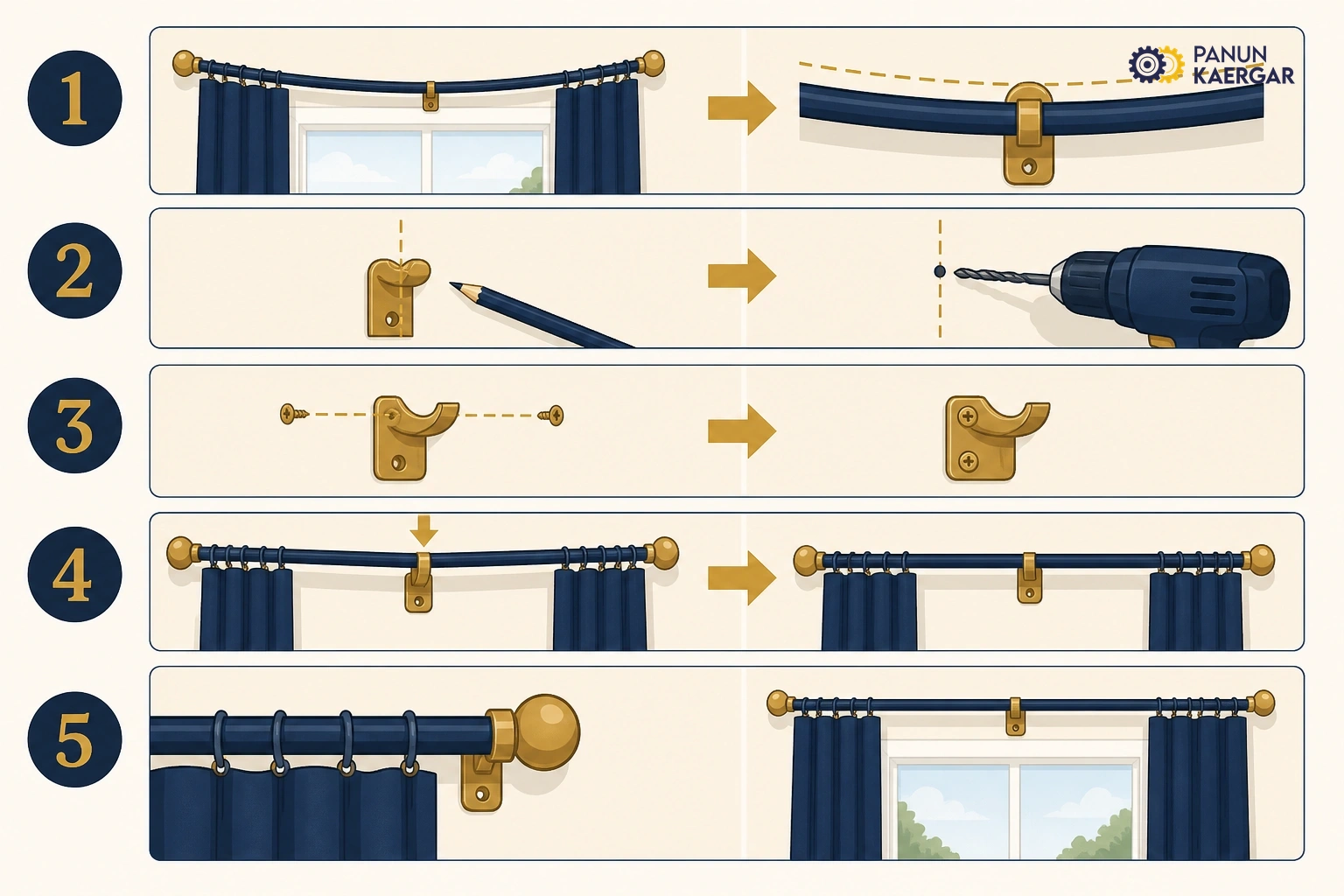
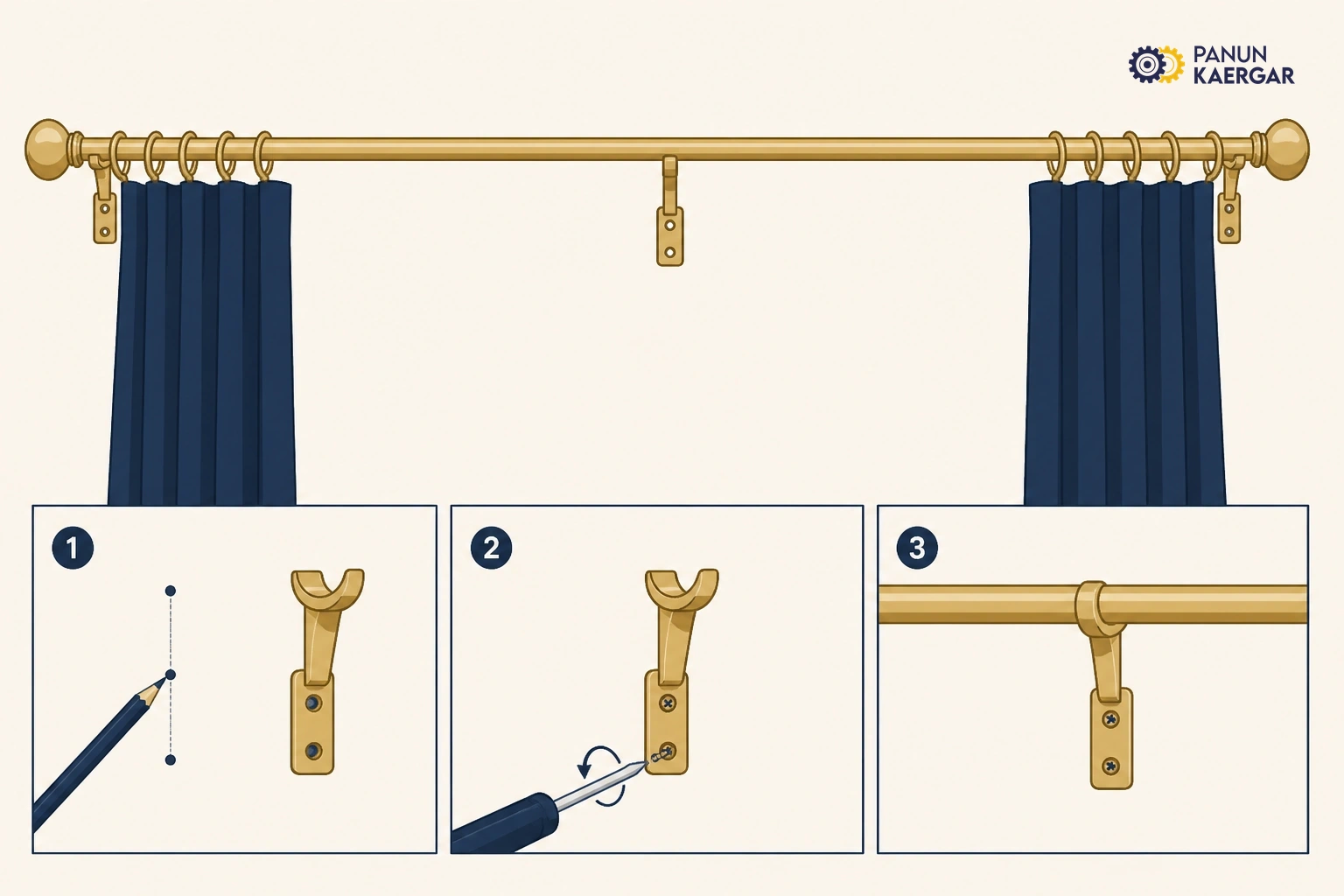
Add a centre support
Best for: long spans
A middle bracket stops sag on wide windows.
Rehang evenly
Best for: repeat failure
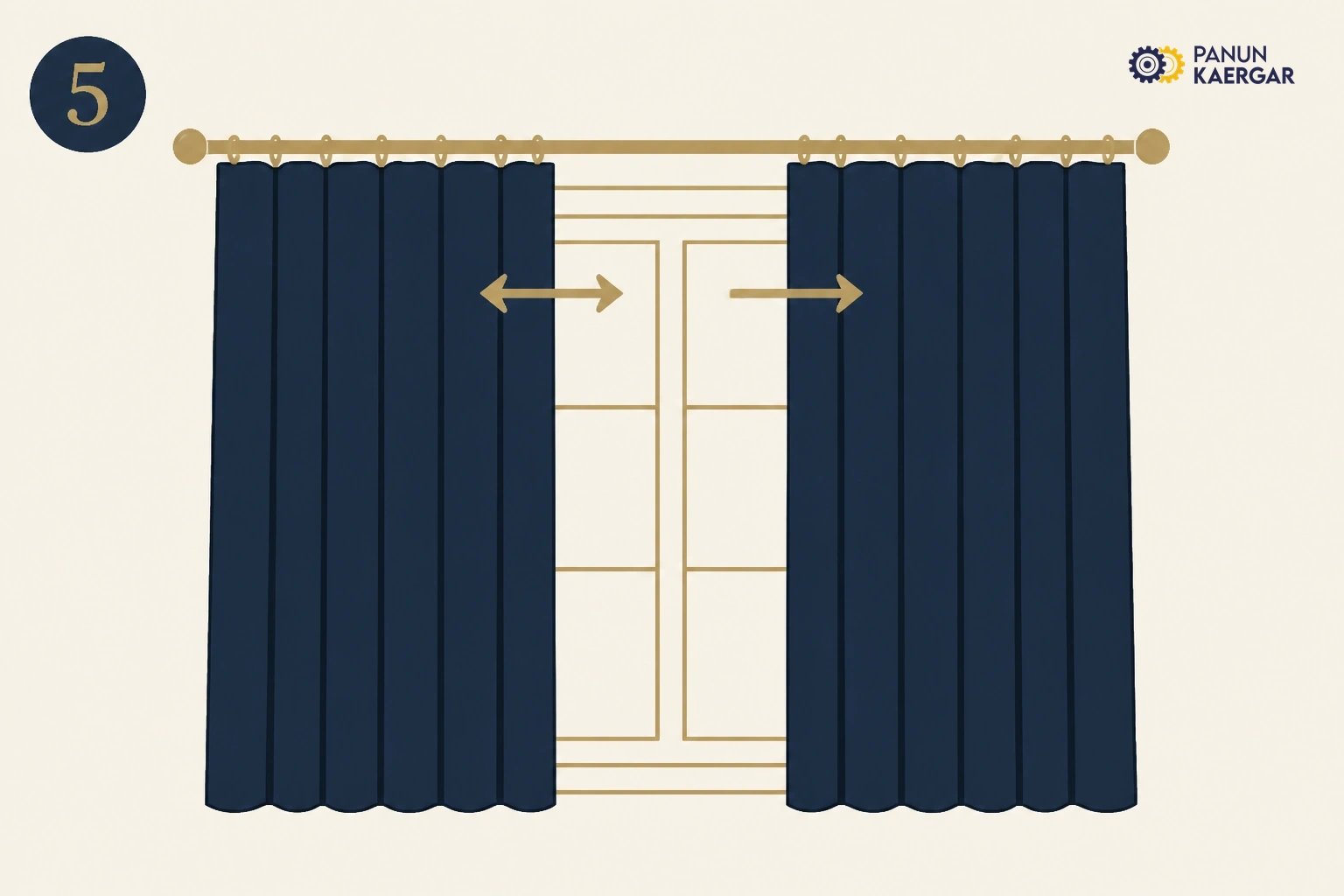
Open and close from the middle where possible to reduce side strain.
Take one clear photo before taking anything apart. It helps a professional see the pattern and saves guesswork.
Kashmir home note
Heavy winter curtains and long damp spells can test old plaster harder than lightweight sheers. Anchor choice matters as much as rod quality.
What not to do
These shortcuts usually cost more than they save.
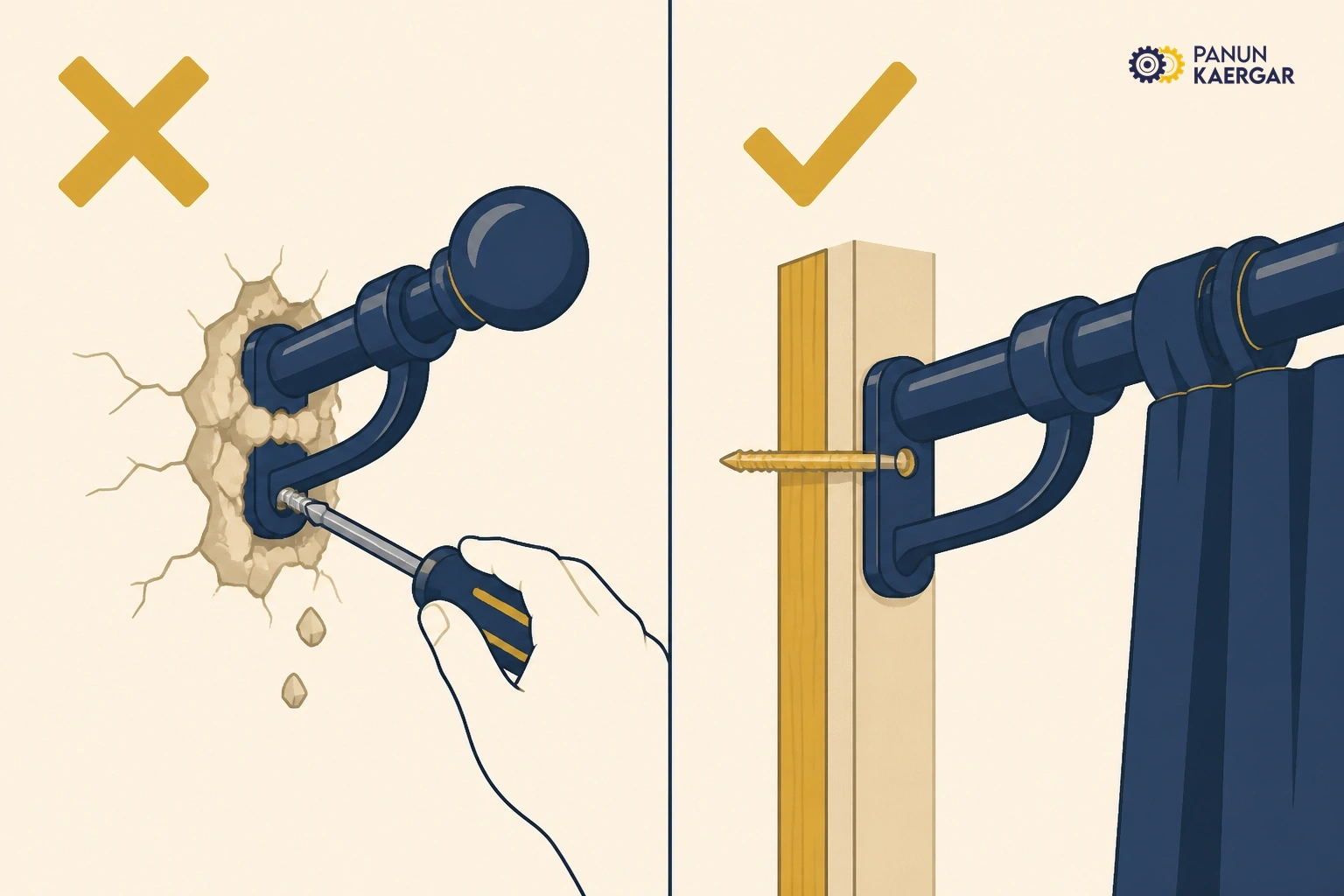
Screw back into the same crumbled hole
The bracket will pull out again
Soft plaster cannot hold the same rawlplug twice; move the anchor to solid material.
Use mismatched rawlplugs
Wrong fixings fail under curtain weight
Plastic plugs meant for light loads will not hold heavy blackout curtains.
Ignore a rod that keeps falling
Risk of injury near the bed
A rod that drops repeatedly can hit someone sleeping below.
Keep it from returning
Fix the small trigger, keep the area clean and dry where relevant, and deal with repeat symptoms before they become a replacement job.
When to book a professional
Book interior repair for repeated pull-out, large heavy drapes, ceiling-mounted tracks, or damage to the window reveal.
FAQs
What is the first check for curtain rod falling or sagging?
Remove curtains and check whether brackets are bent or screws are loose.
Can I keep using it?
Only if there is no safety risk or spreading damage. Stop when the symptom worsens.
Why did this start suddenly?
A change in load, moisture, wear, cleaning product, or season often exposes a weak point.
Will a temporary fix last?
It can buy time, but repeat symptoms need the cause corrected.
When should I book help?
Book interior repair for repeated pull-out, large heavy drapes, ceiling-mounted tracks, or damage to the window reveal.