
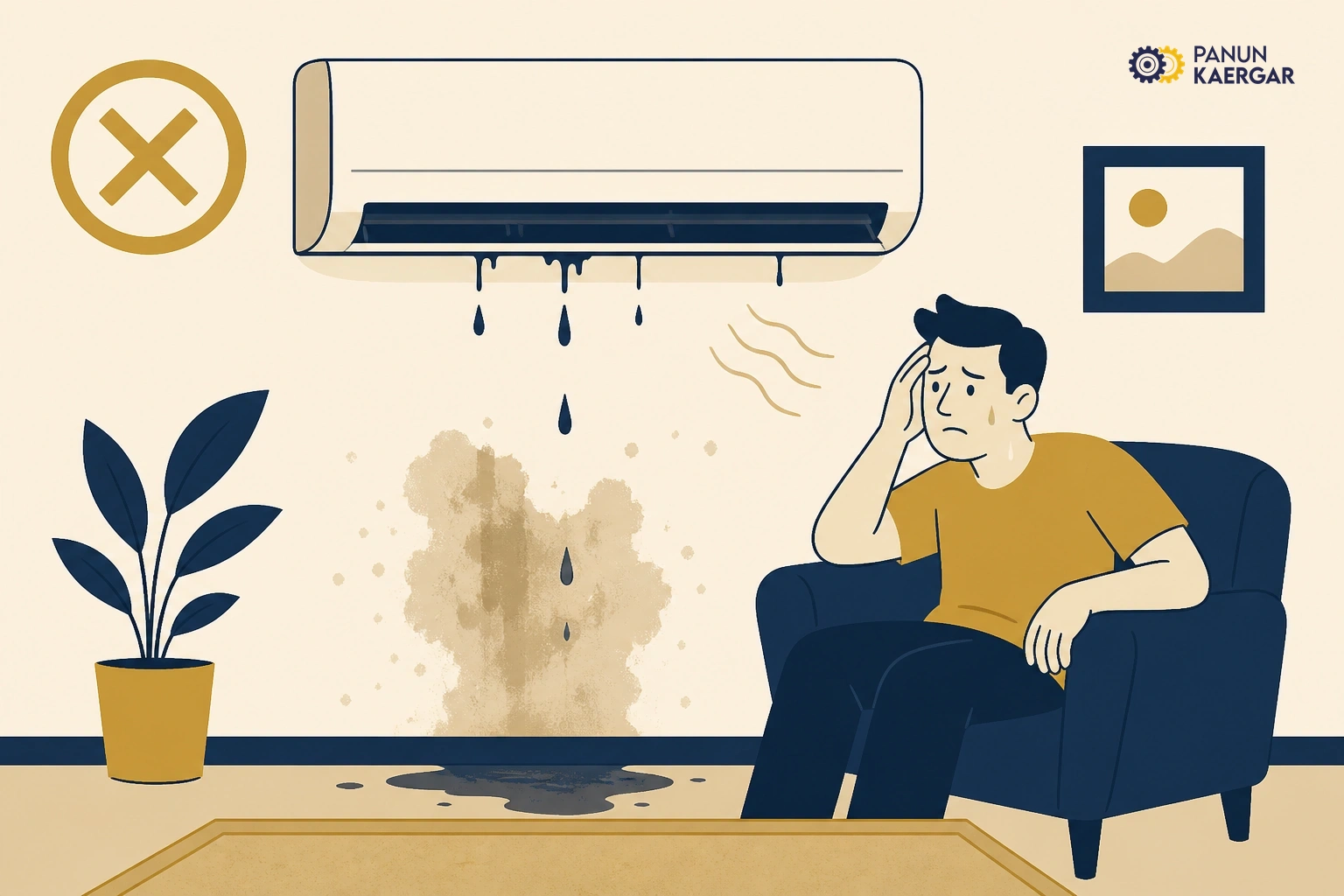
On a humid July afternoon, a split AC starts dripping from the indoor unit onto the floor. Everyone assumes the refrigerant is escaping; often it is just blocked condensate.
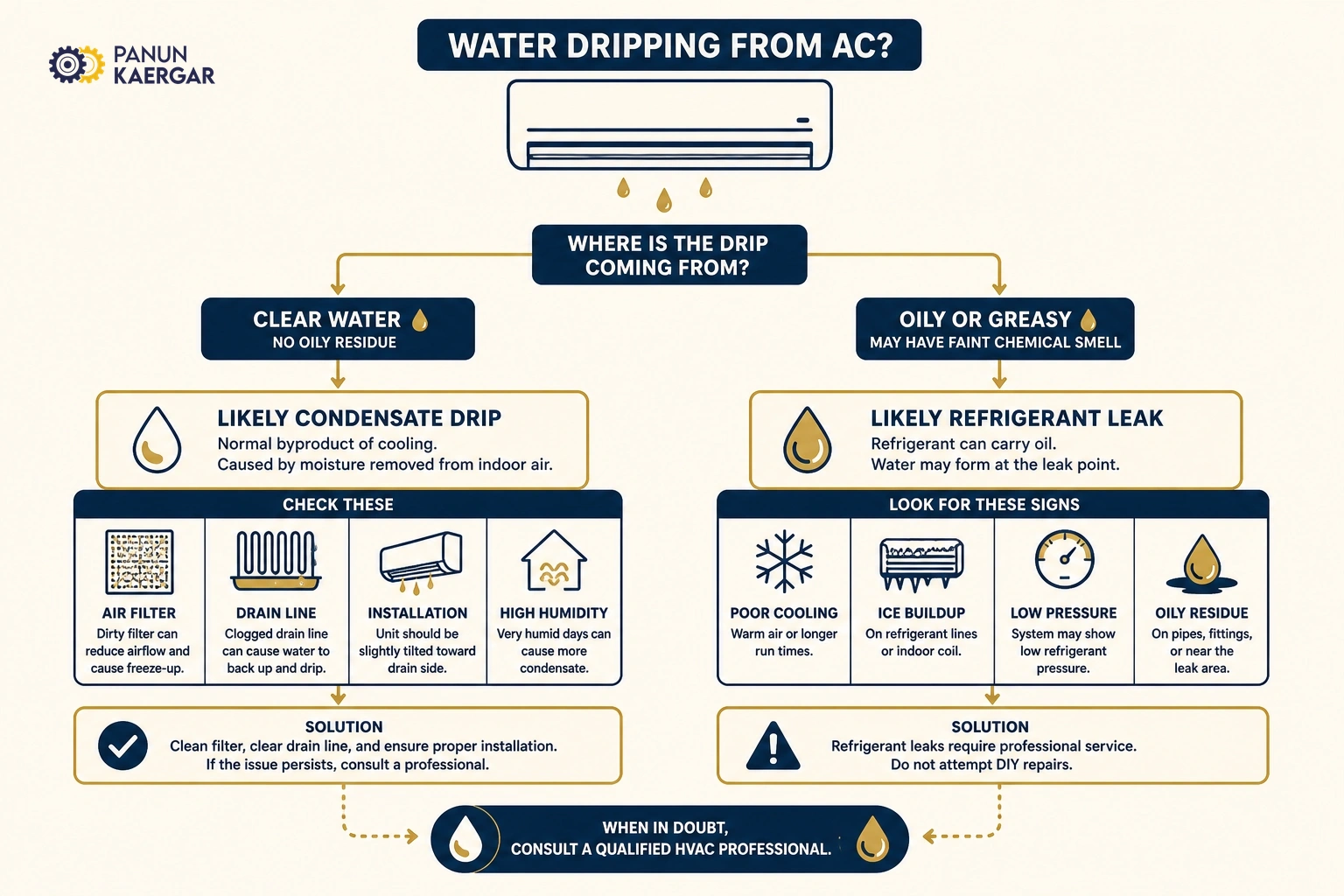
Switch off, check whether water is condensate or oily refrigerant, inspect the drain pipe and filter, and clear blockages gently. Oily marks, no cooling, or electrical smell need appliance service.
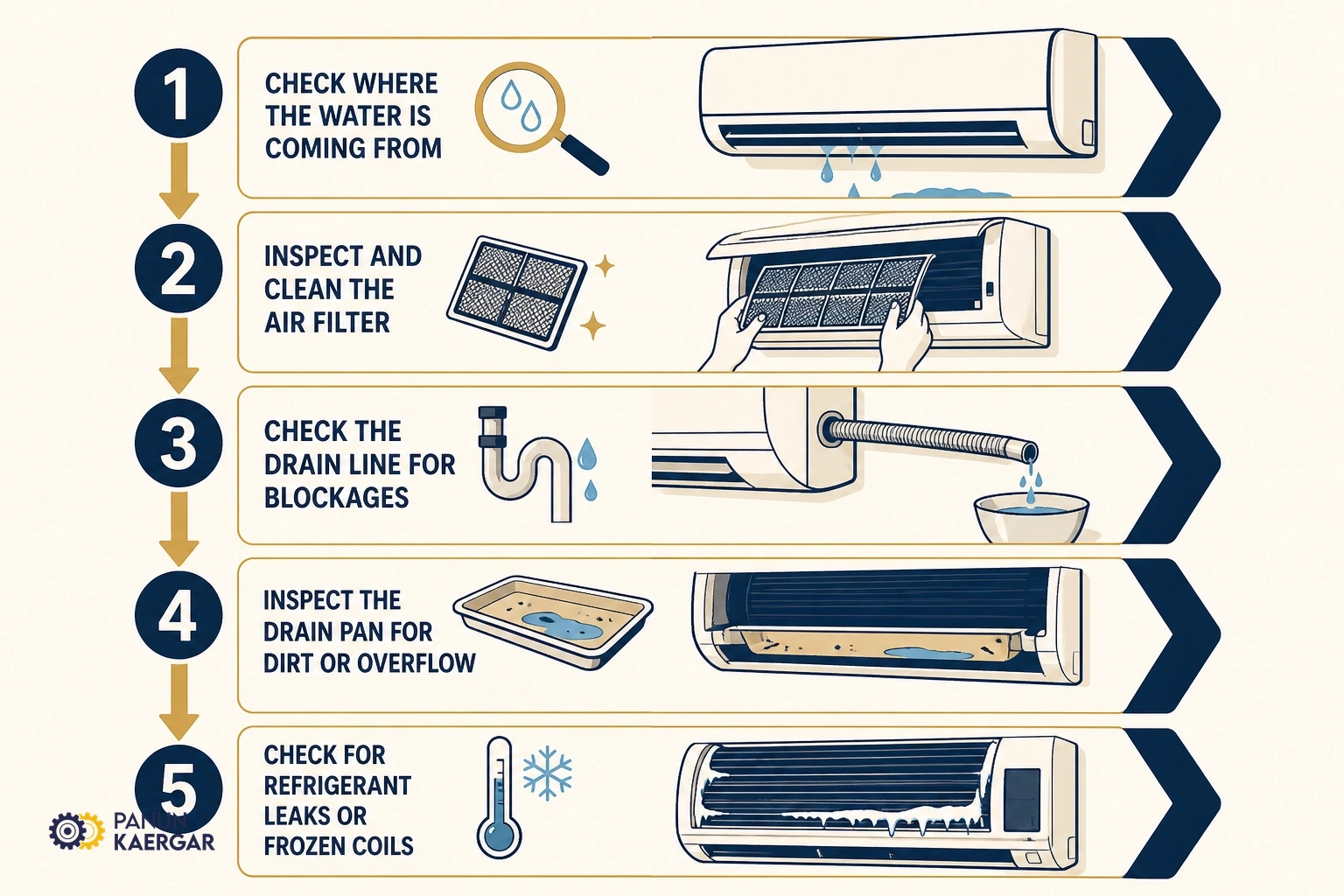
Quick diagnosis map
Start with the symptom, not the most dramatic fix. A small check now can save a cabinet, appliance, or Sunday afternoon.
| What you notice | Likely reason | First move |
|---|---|---|
| Water dripping from indoor unit or wall stain below | Blocked drain, tilt issue, dirty filter, or frozen coil melting | Note whether water is clear condensate or oily, and whether cooling has stopped. |
| Problem worsens after use | An underlying fault or hidden damage | Stop adding load; inspect safely. |
| Heat, burning smell, leak, or sudden pain | Safety issue, not a DIY puzzle | Switch off / isolate / get help. |
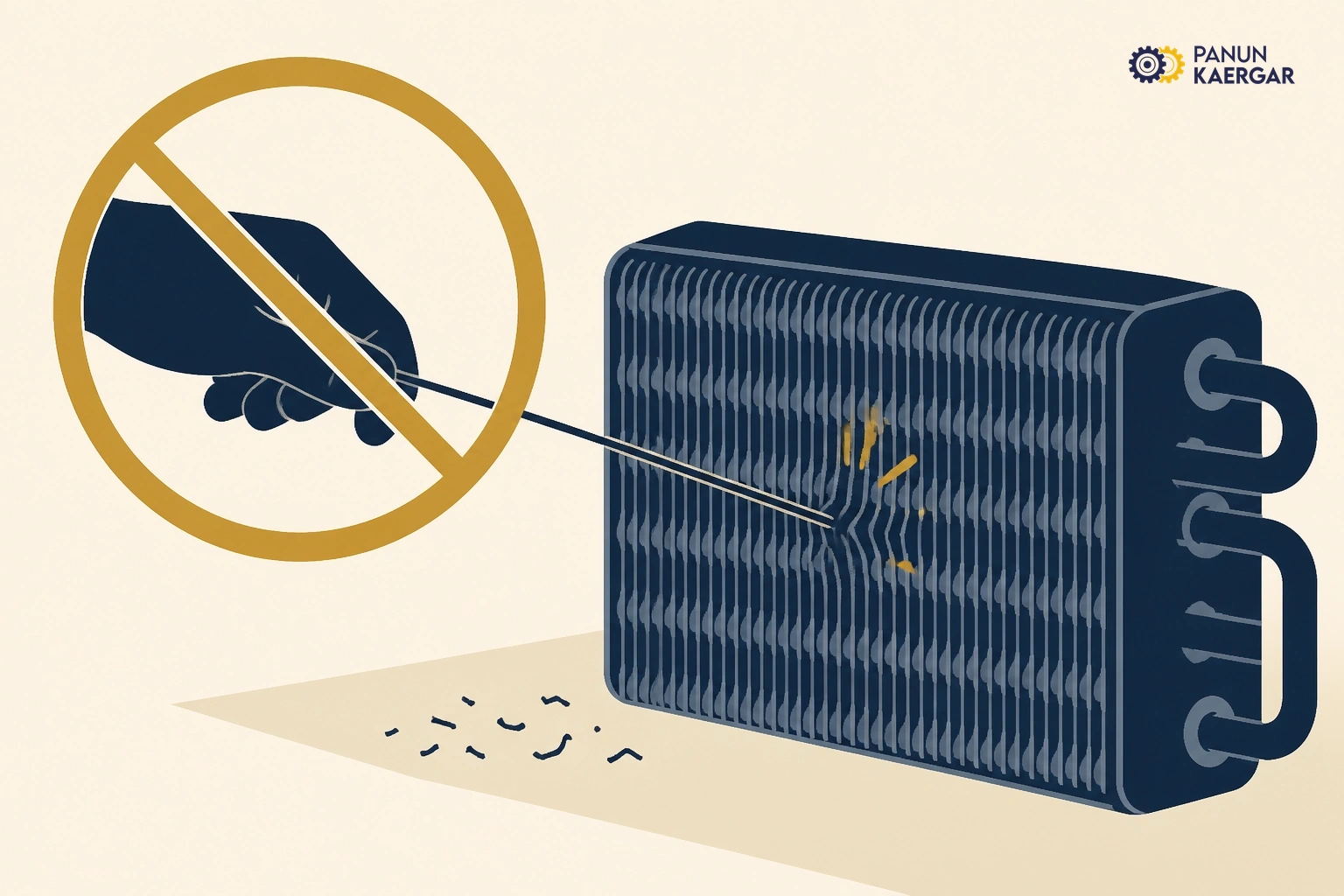
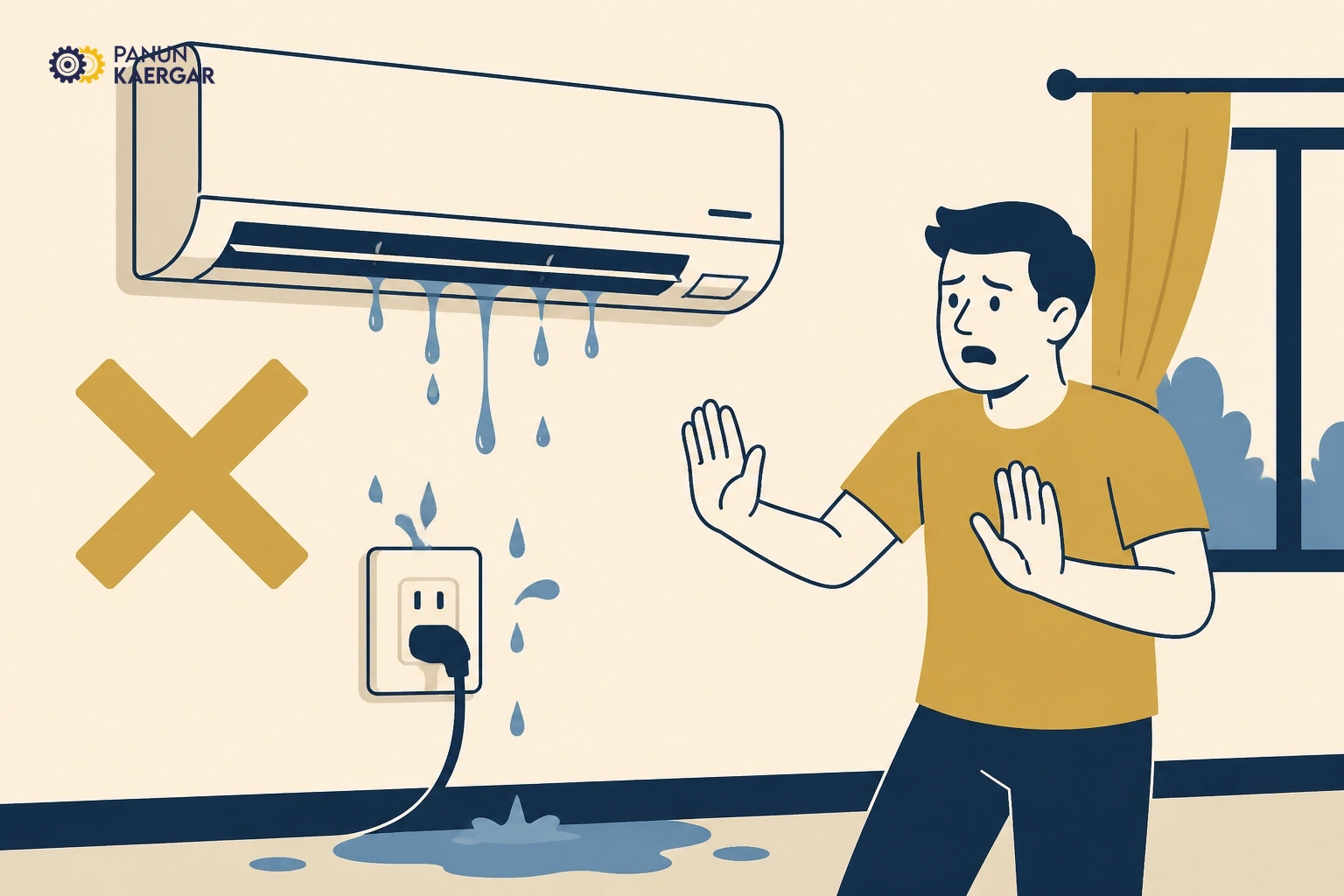
Do not poke the coil with wire, ignore oily stains, or run a leaking unit near electrical points.
What usually causes this
The visible symptom is useful, but the small detail around it usually tells the real story.
- Clogged drain hose or full drain tray.
- Dirty filters causing ice that later melts.
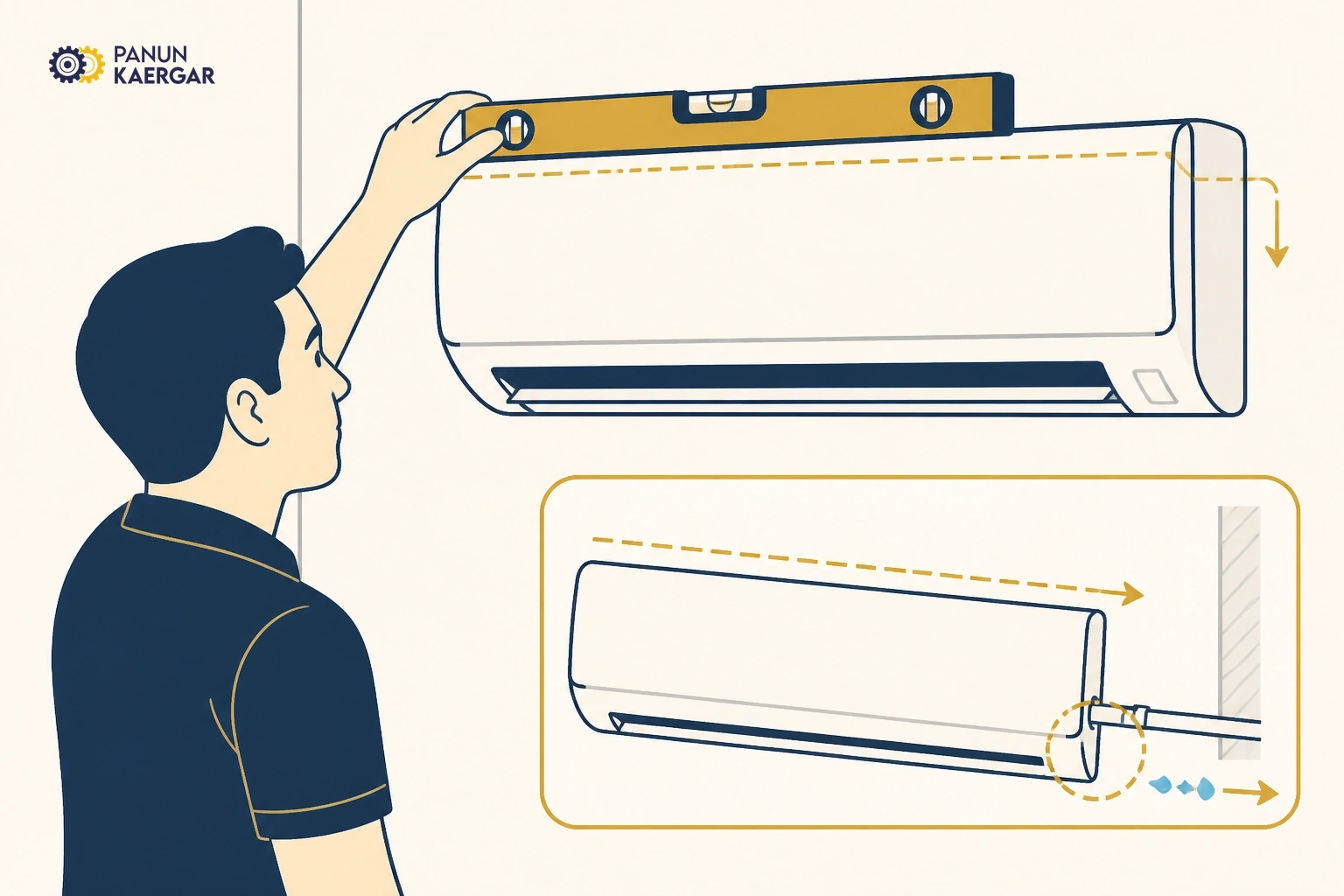
- Improper slope letting water pool inside the unit.
Try these in order
Begin with the reversible checks. The goal is a clean fix, not winning an argument with a stubborn household thing.
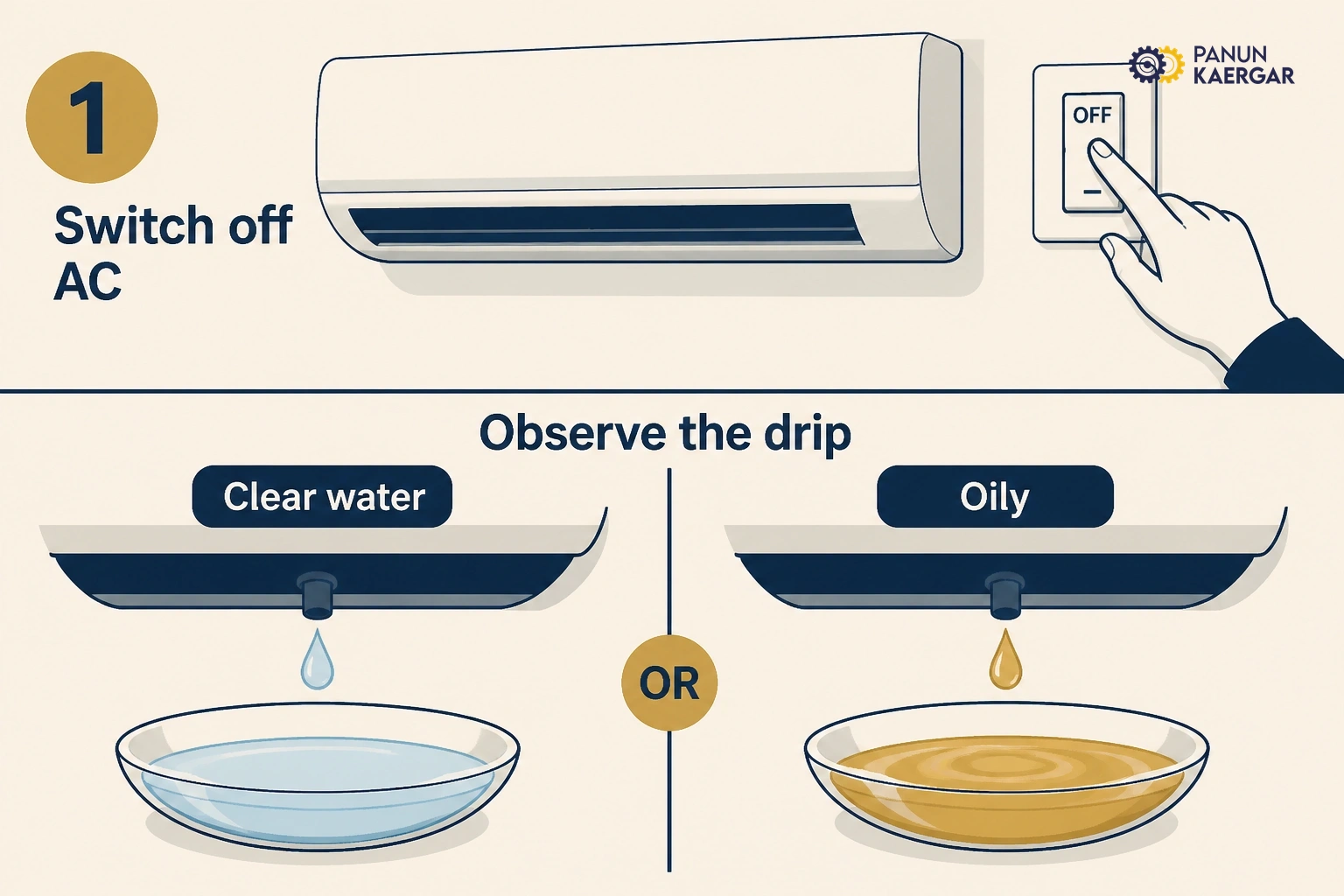
Switch off and observe
Best for: active drip
Note whether water is clear condensate or oily, and whether cooling has stopped.
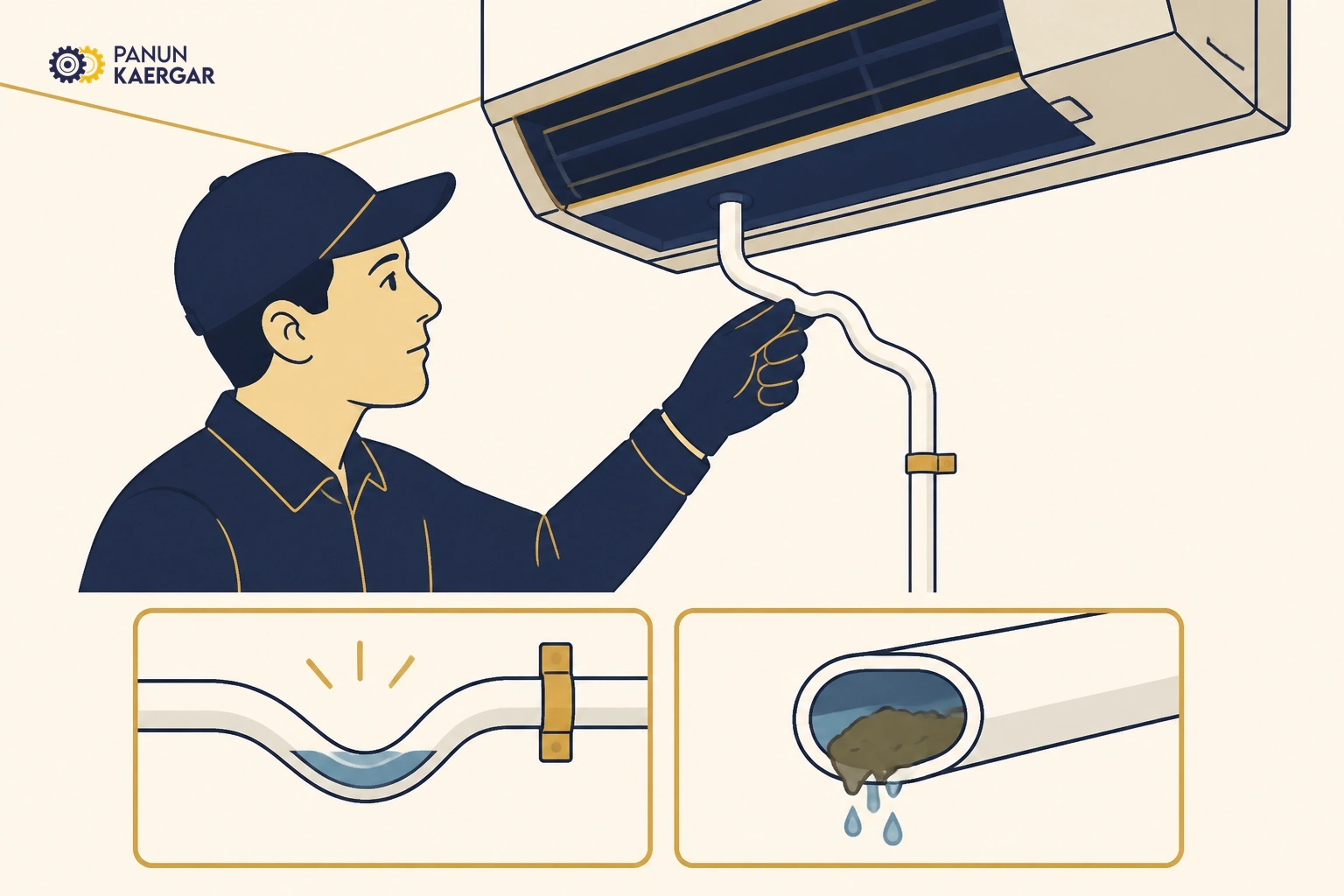
Check the drain pipe
Best for: blocked condensate
Look for kinks, clogs, or a disconnected outlet; clear gently.
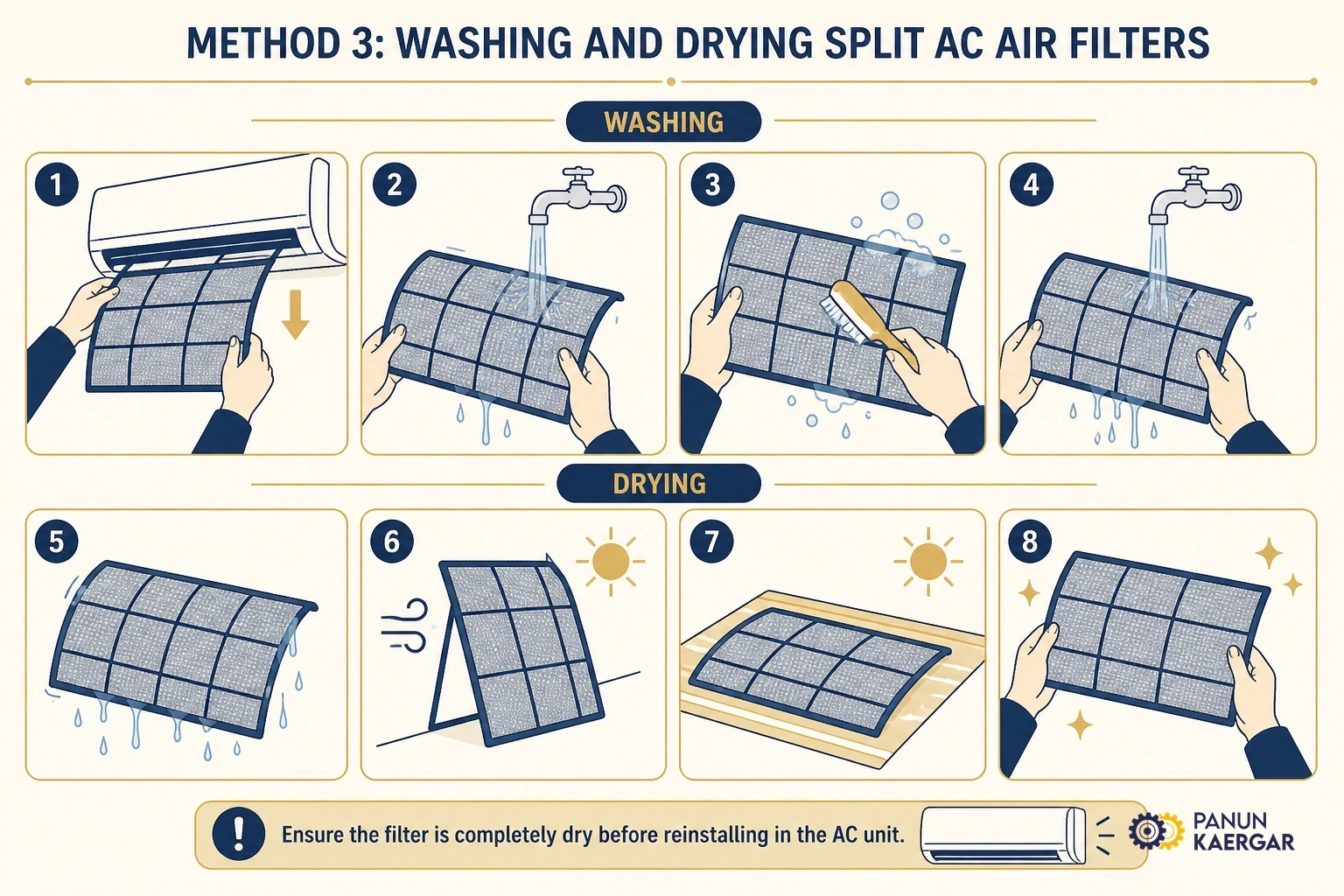
Clean filters
Best for: ice then melt
Wash and fully dry filters before restarting.
Check installation tilt
Best for: pooling water
The indoor unit should slope slightly toward the drain side.
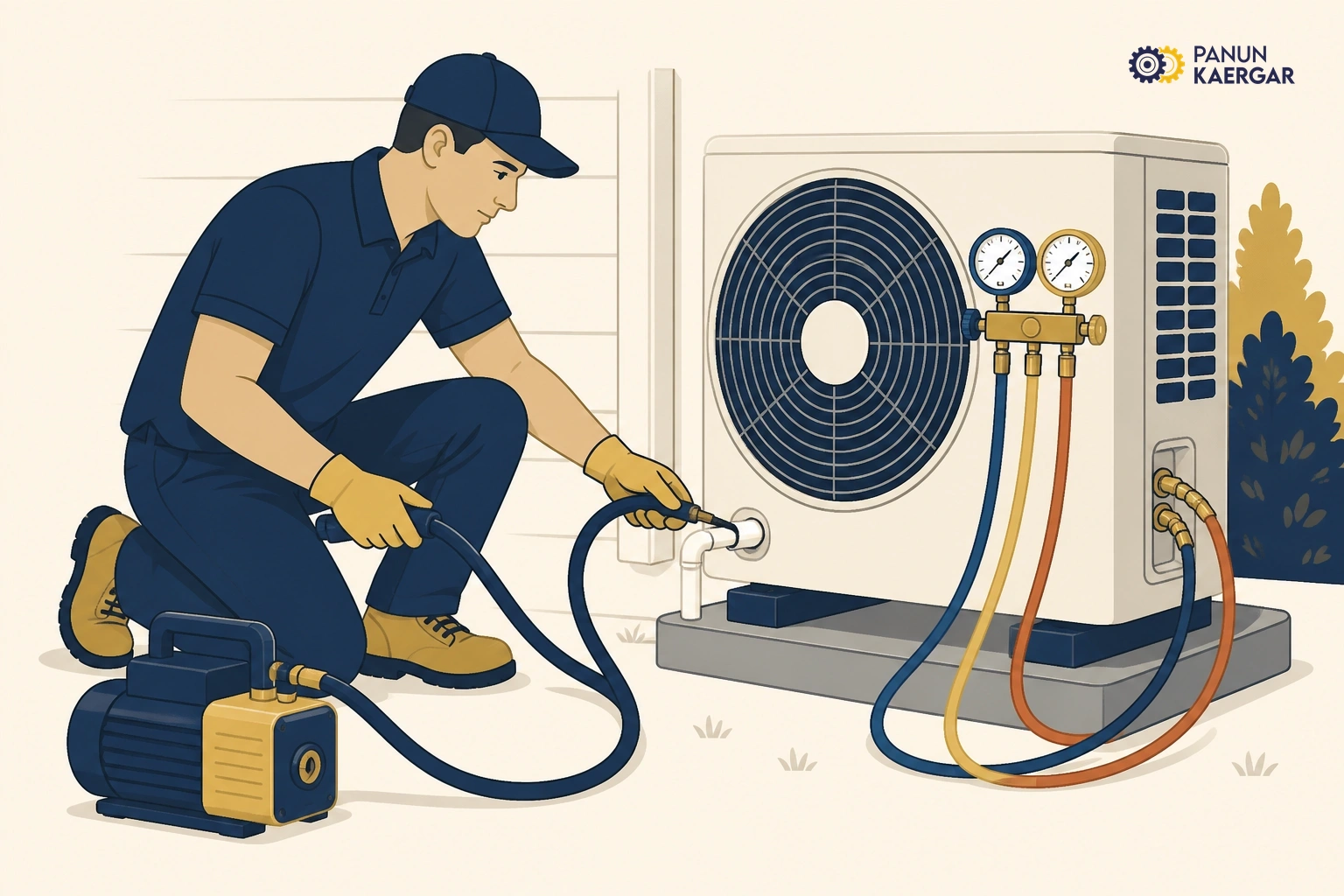
Book service
Best for: repeat leak or oily residue
A technician can vacuum the drain, test refrigerant, and fix installation.
Take one clear photo before taking anything apart. It helps a professional see the pattern and saves guesswork.
Kashmir home note
Humid summers and dusty filters combine to clog AC drains quickly in Kashmir. A pre-season filter wash and drain check prevents many indoor puddles.
What not to do
These shortcuts usually cost more than they save.
Poke the coil with wire
Can puncture fins and cause a gas leak
Wire or sharp tools damage delicate coil fins and rarely clear a drain properly.
Ignore oily stains
May mean refrigerant leak, not condensate
Oily residue under the unit with poor cooling needs a technician, not more mopping.
Run a leaking unit near electrics
Water and power do not mix
Active dripping near sockets or wiring risks shock and short circuits.
Keep it from returning
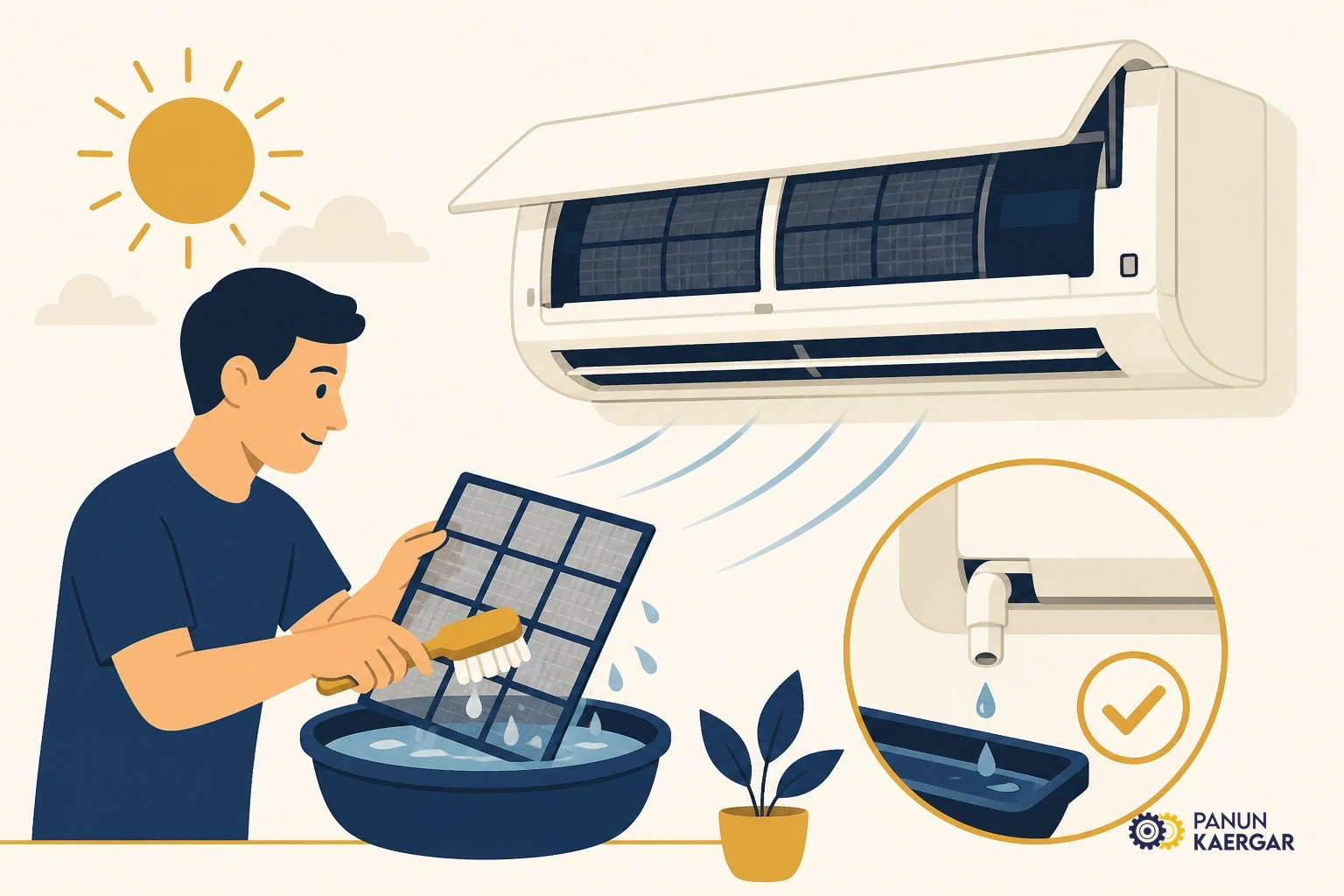
Fix the small trigger, keep the area clean and dry where relevant, and deal with repeat symptoms before they become a replacement job.
When to book a professional
Book appliance repair for oily residue, poor cooling with leak, repeated overflow, electrical tripping, or a ceiling stain spreading below the unit.
FAQs
What is the first check for ac leaking water indoors?
Note whether water is clear condensate or oily, and whether cooling has stopped.
Can I keep using it?
Only if there is no safety risk or spreading damage. Stop when the symptom worsens.
Why did this start suddenly?
A change in load, moisture, wear, cleaning product, or season often exposes a weak point.
Will a temporary fix last?
It can buy time, but repeat symptoms need the cause corrected.
When should I book help?
Book appliance repair for oily residue, poor cooling with leak, repeated overflow, electrical tripping, or a ceiling stain spreading below the unit.