
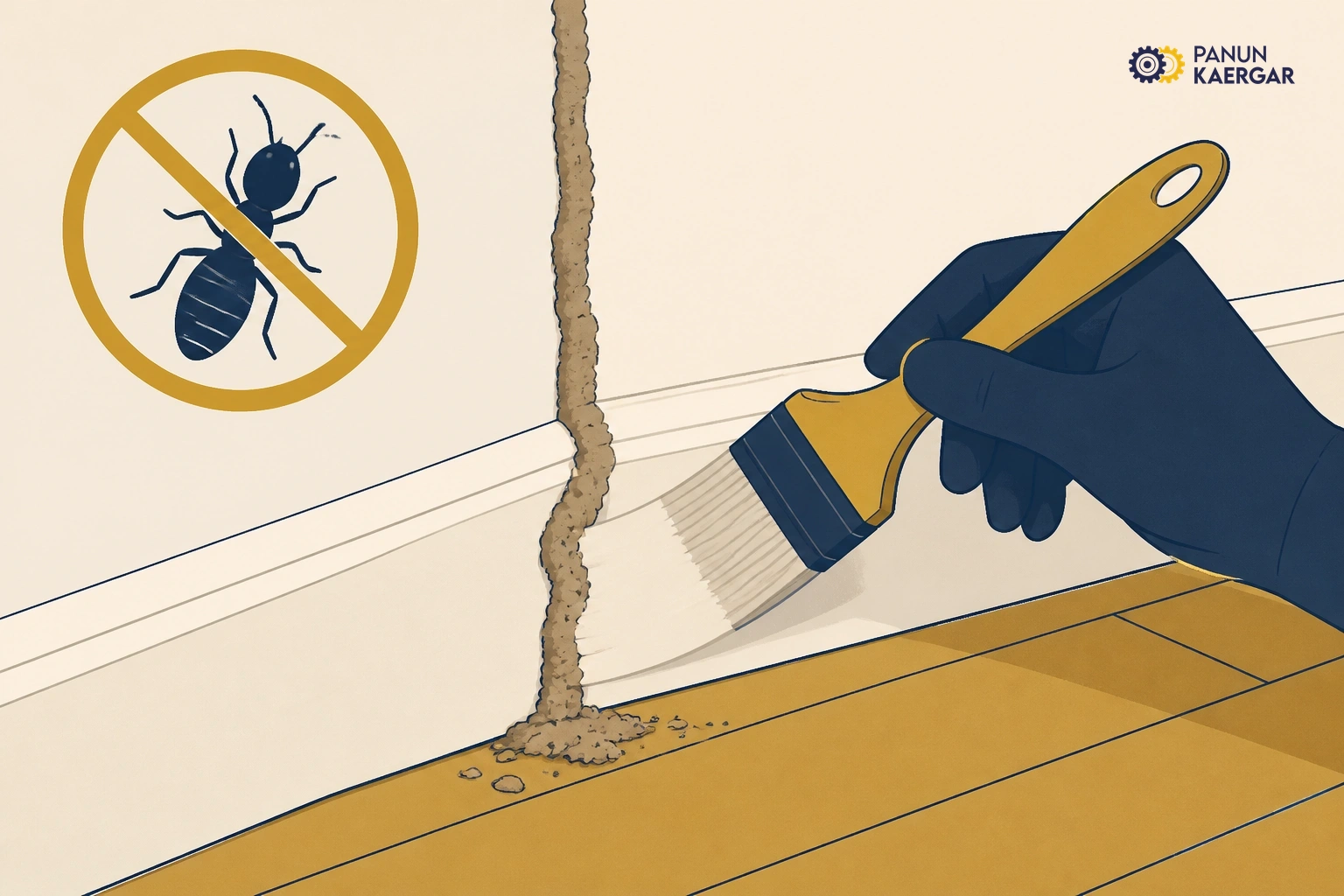
A thin muddy line appears up a skirting board in a house after monsoon. The family wipes it once; by autumn the door frame sounds hollow when tapped.
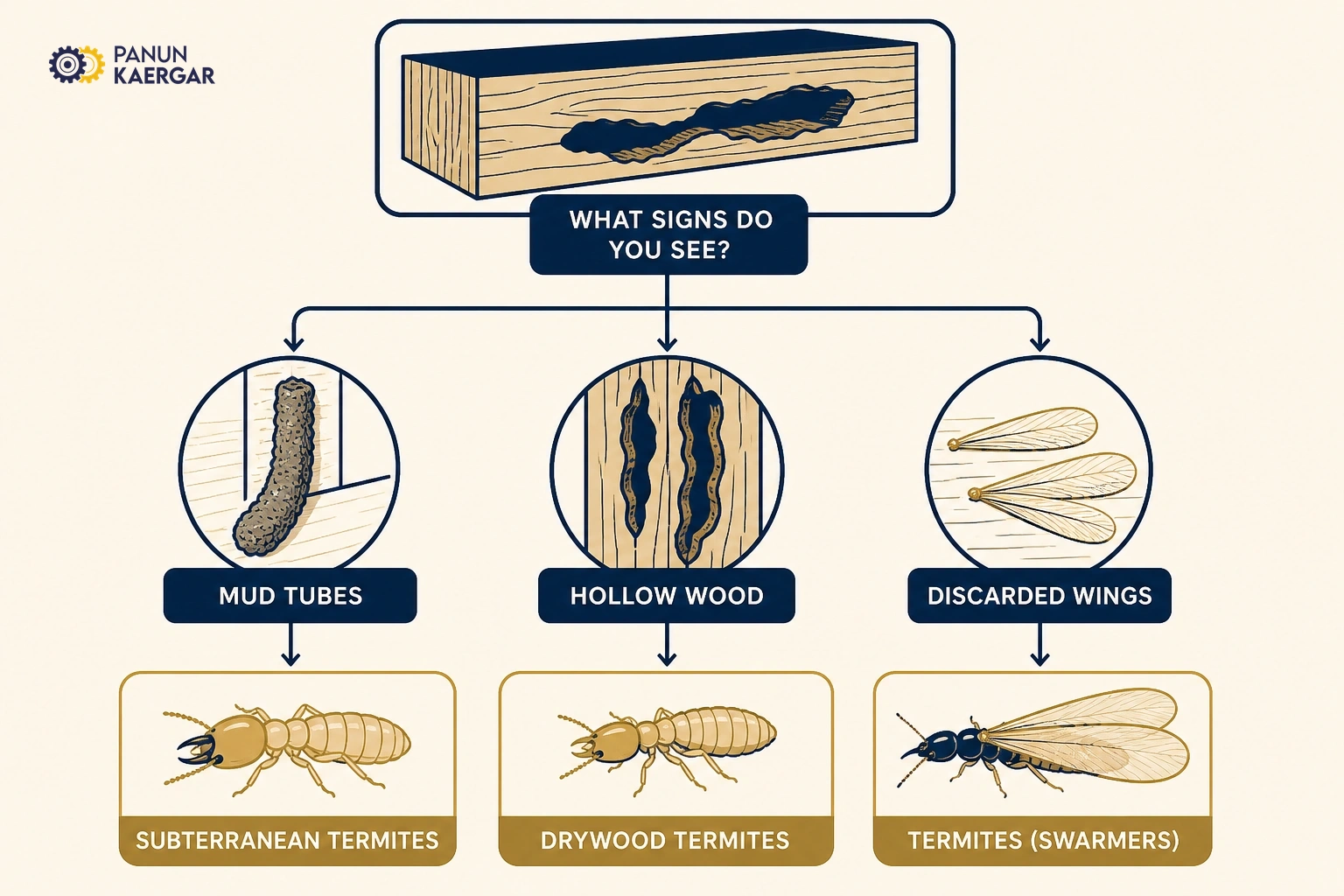
Look for mud tubes, hollow wood, discarded wings, and fine sawdust. Do not break open active tubes or spray randomly. Professional inspection and targeted treatment matter.
Quick diagnosis map
Start with the symptom, not the most dramatic fix. A small check now can save a cabinet, appliance, or Sunday afternoon.
| What you notice | Likely reason | First move |
|---|---|---|
| Mud lines, hollow-sounding wood, or fine dust | Subterranean termites using hidden routes to wood | Check skirting, door frames, stored cardboard, and damp zones with a torch. |
| Problem worsens after use | An underlying fault or hidden damage | Stop adding load; inspect safely. |
| Heat, burning smell, leak, or sudden pain | Safety issue, not a DIY puzzle | Switch off / isolate / get help. |
Do not spray household insecticide along the whole house, cover tubes with paint only, or ignore hollow wood.
What usually causes this
The visible symptom is useful, but the small detail around it usually tells the real story.
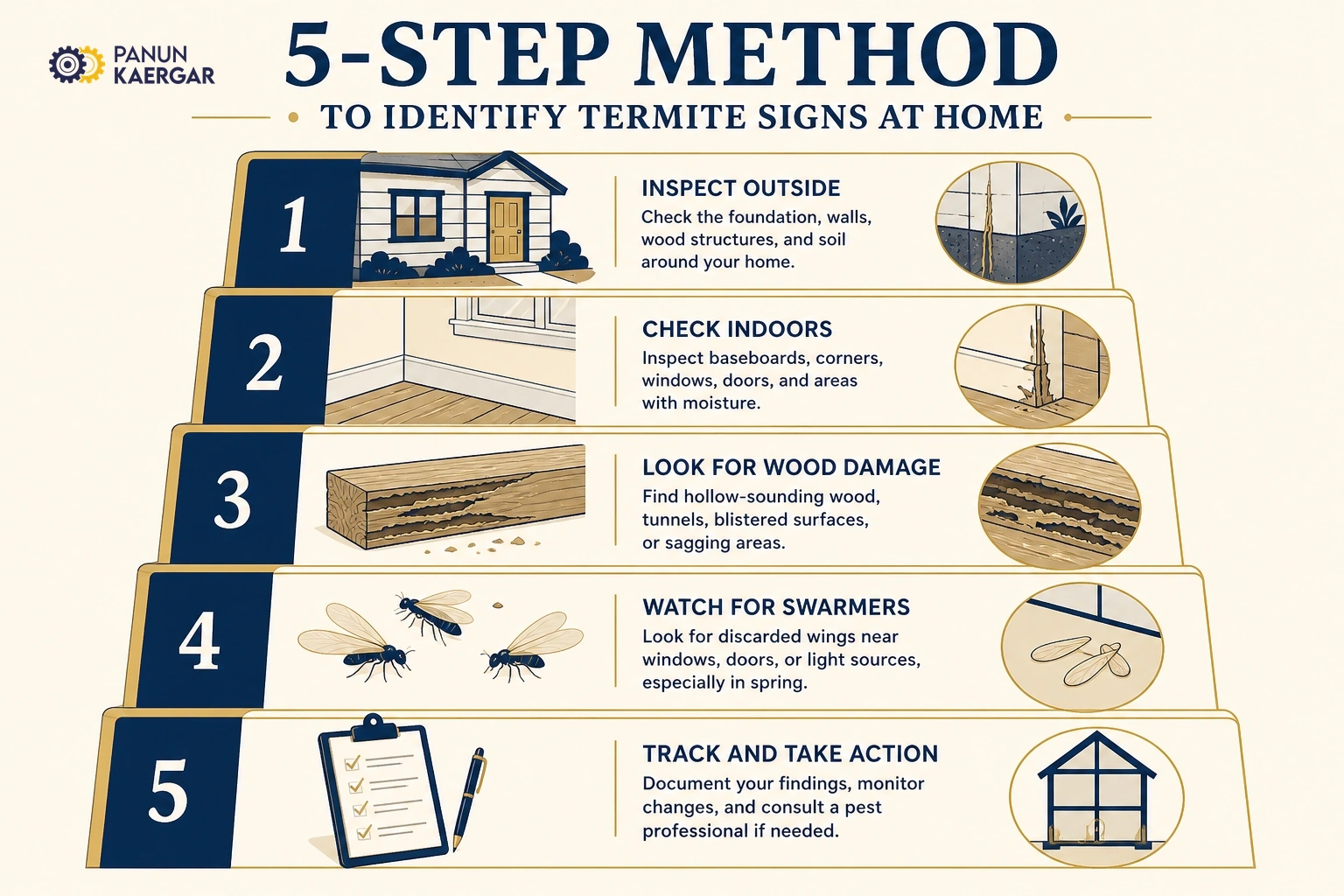
- Mud shelter tubes along walls or foundations.
- Hollow door frames, skirting, or furniture edges.
- Swarmers or discarded wings near windows.
Try these in order
Begin with the reversible checks. The goal is a clean fix, not winning an argument with a stubborn household thing.
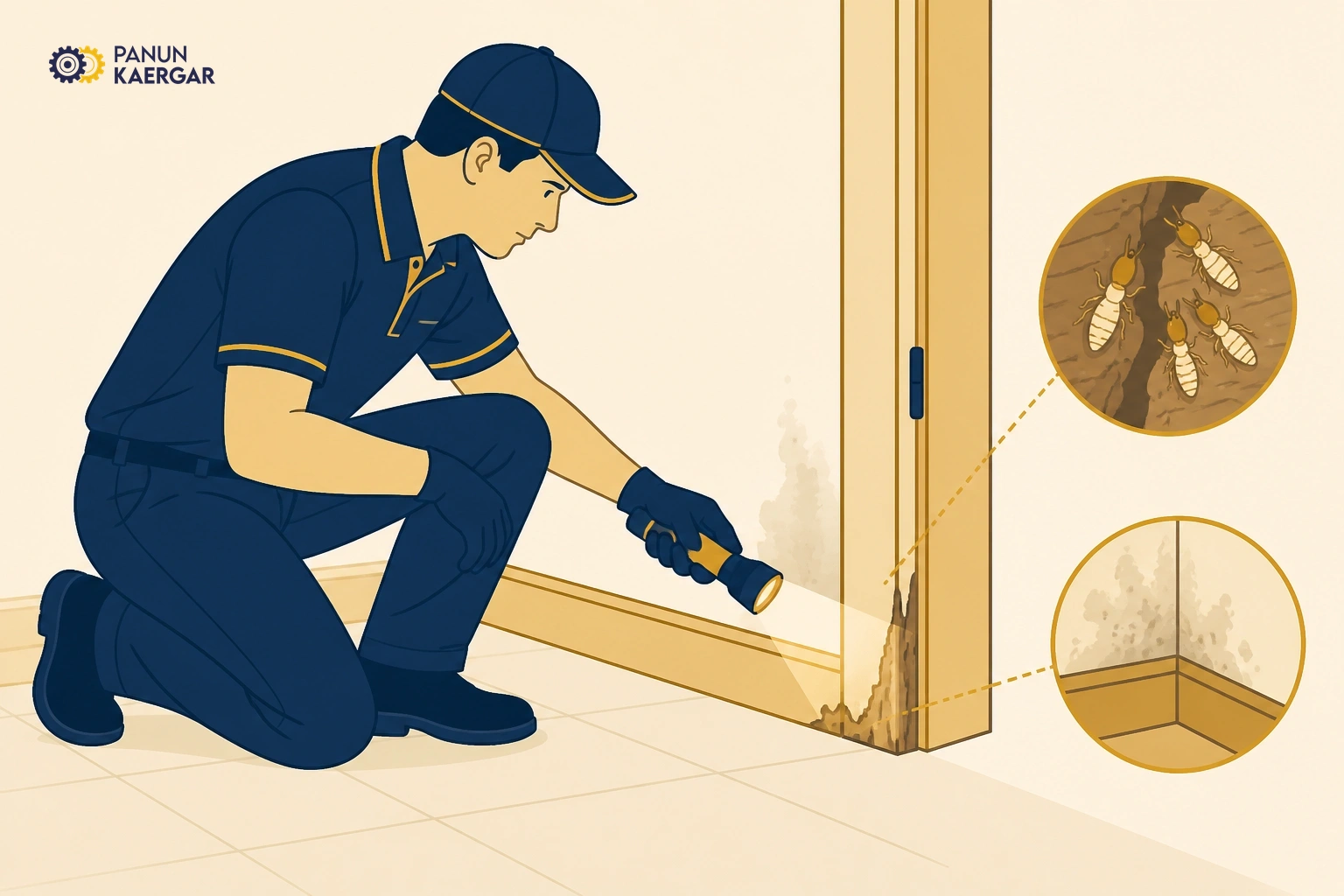
Inspect quietly
Best for: first suspicion
Check skirting, door frames, stored cardboard, and damp zones with a torch.
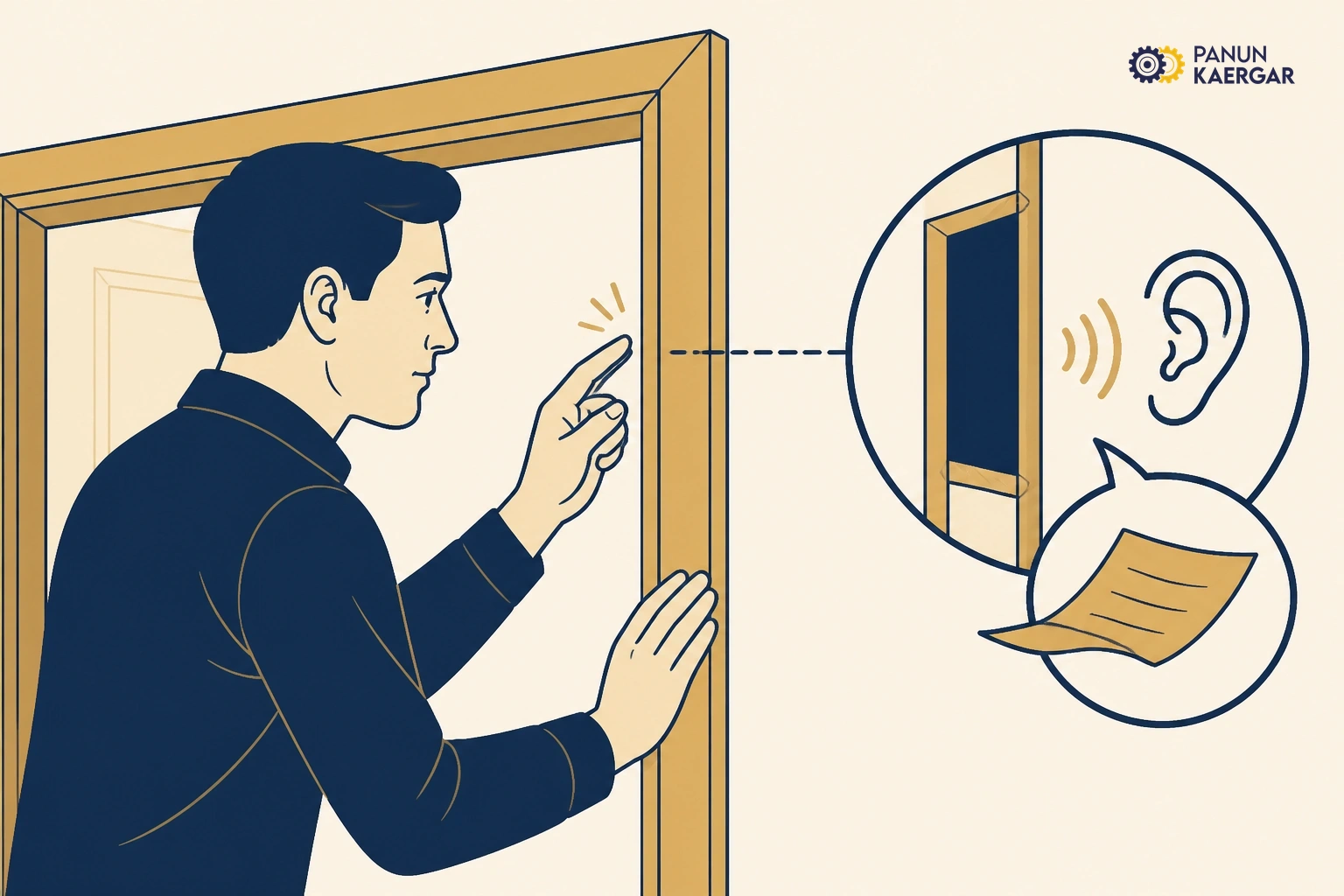
Tap and listen
Best for: hidden damage
Hollow or papery sound suggests eaten wood beneath paint.
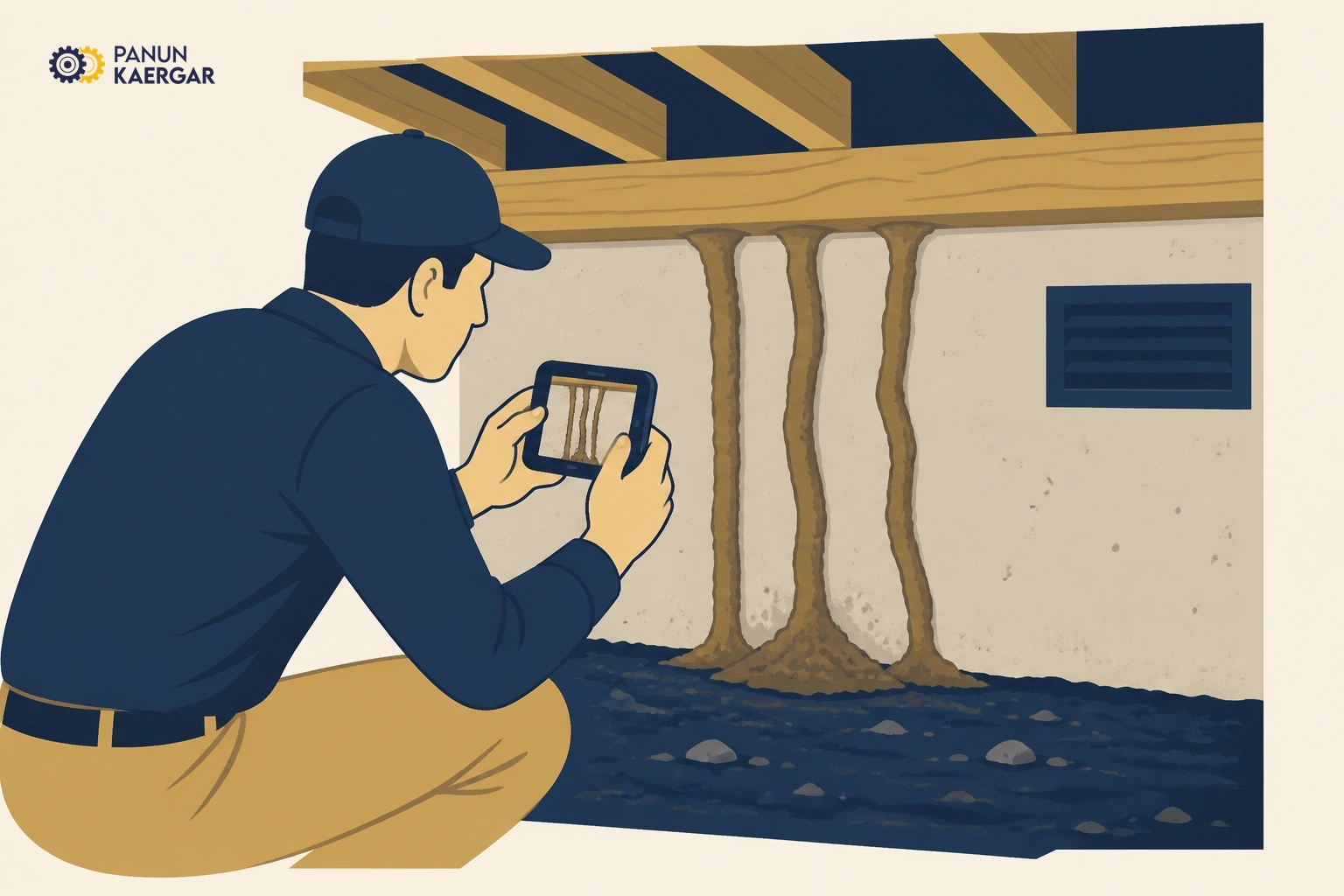
Photograph
Best for: active tubes
Document before cleaning; breaking tubes can scatter the colony.
Remove food sources
Best for: prevention support
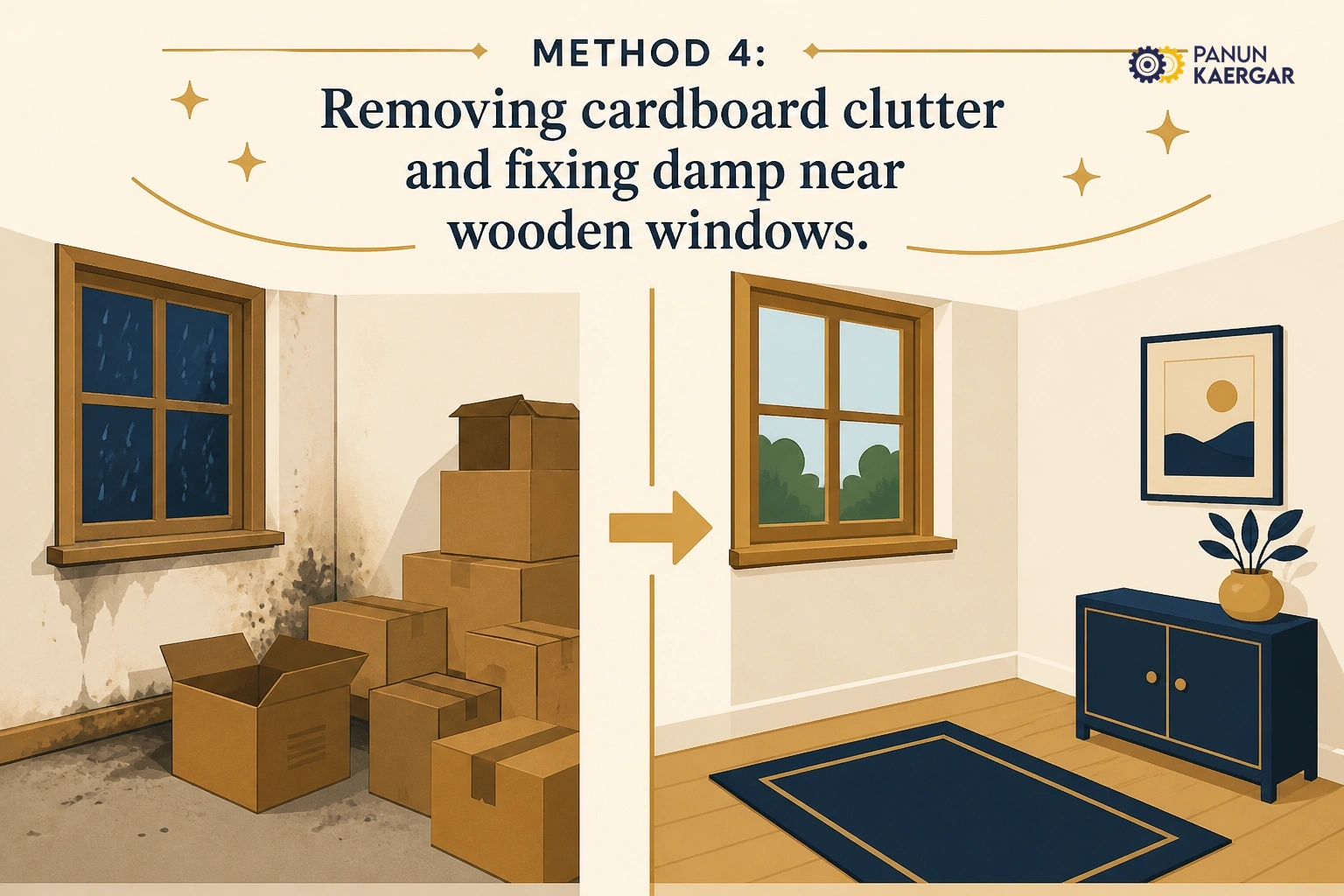
Lift wood off floors, fix damp, and reduce cardboard clutter.
Book termite inspection
Best for: any confirmed sign
Treatment needs mapping the route and choosing the right method.
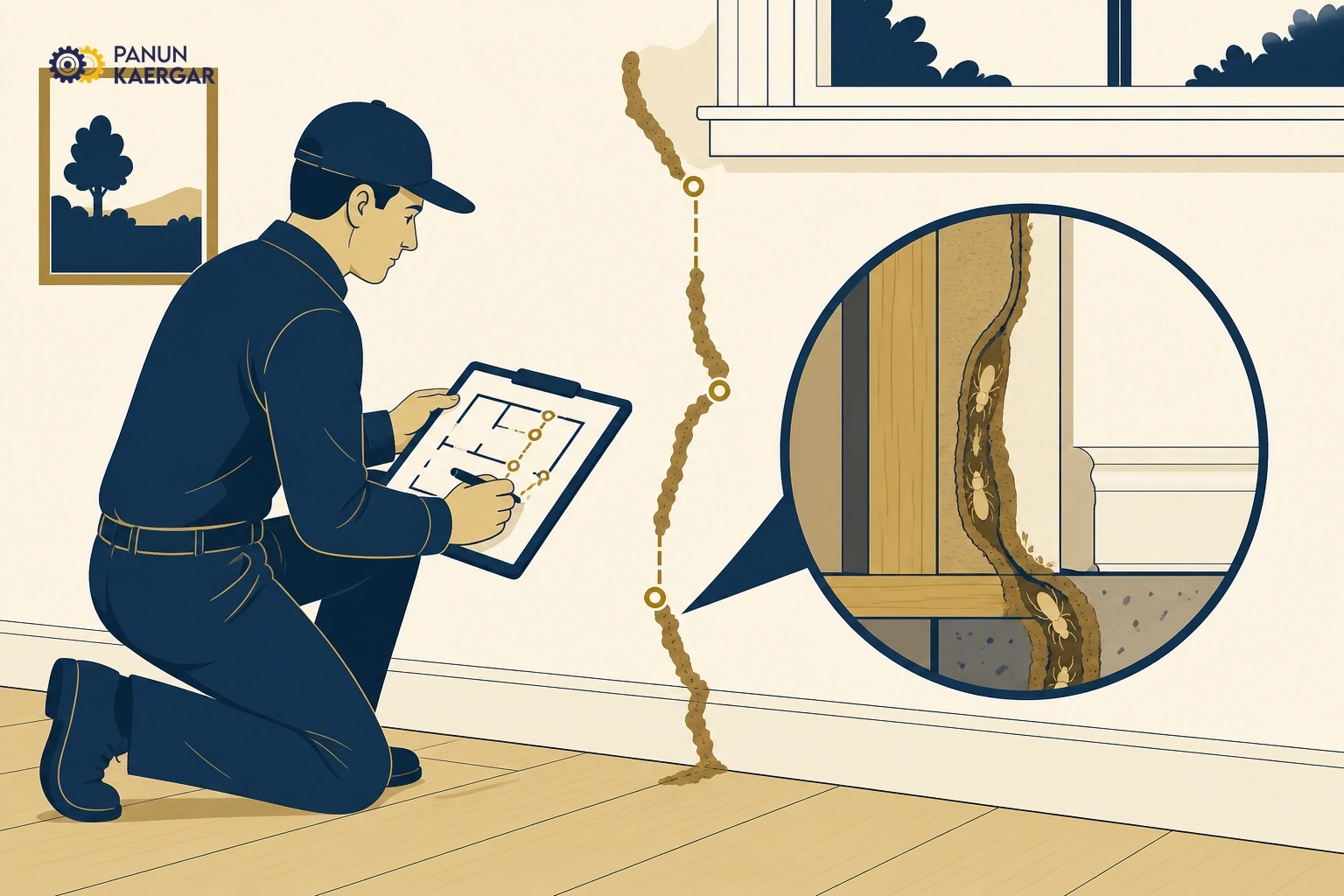
Take one clear photo before taking anything apart. It helps a professional see the pattern and saves guesswork.
Kashmir home note
Damp skirting, stored firewood, and old wooden windows give termites quiet routes in Kashmir homes. Early mud tubes are cheaper than a hollow door frame.
What not to do
These shortcuts usually cost more than they save.
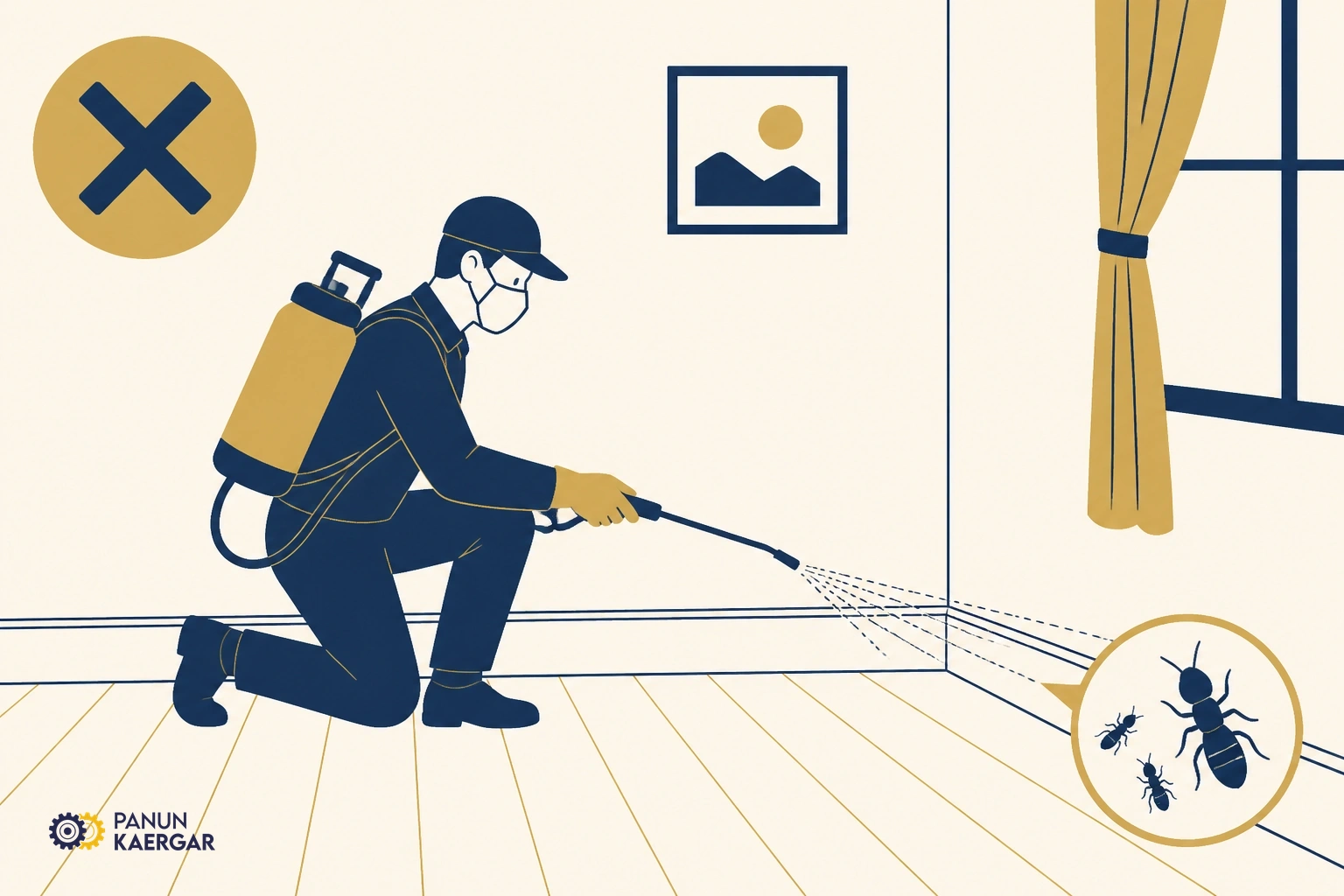
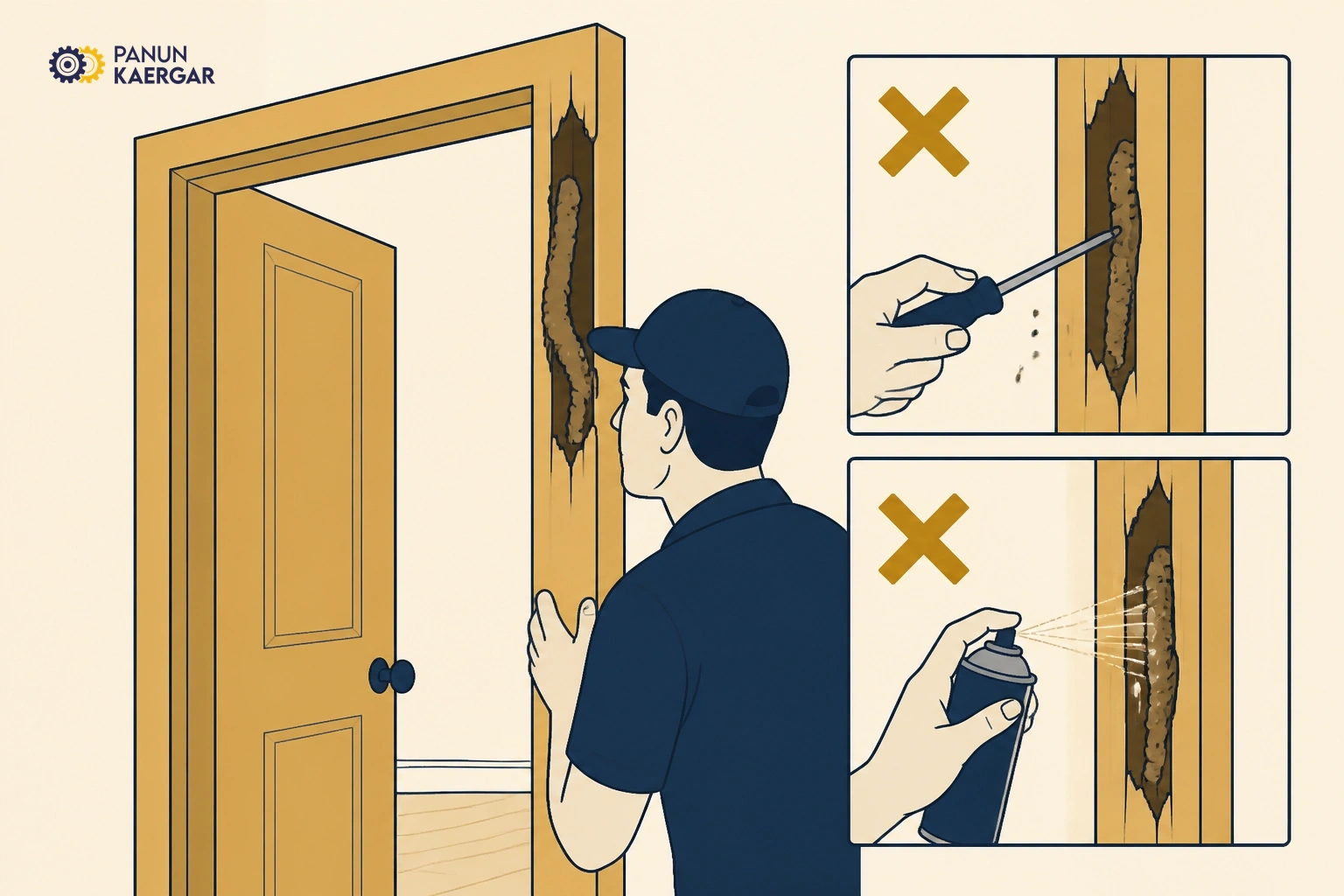
Spray insecticide along the whole house
Scatters colony, hides routes
Random spraying drives termites deeper and makes professional mapping harder.
Cover tubes with paint only
Hides active infestation
Painting over mud tubes does not kill termites; damage continues beneath.
Ignore hollow wood
Frame damage spreads quietly
A papery tap sound means eaten timber; waiting risks door frames and floors.
Keep it from returning
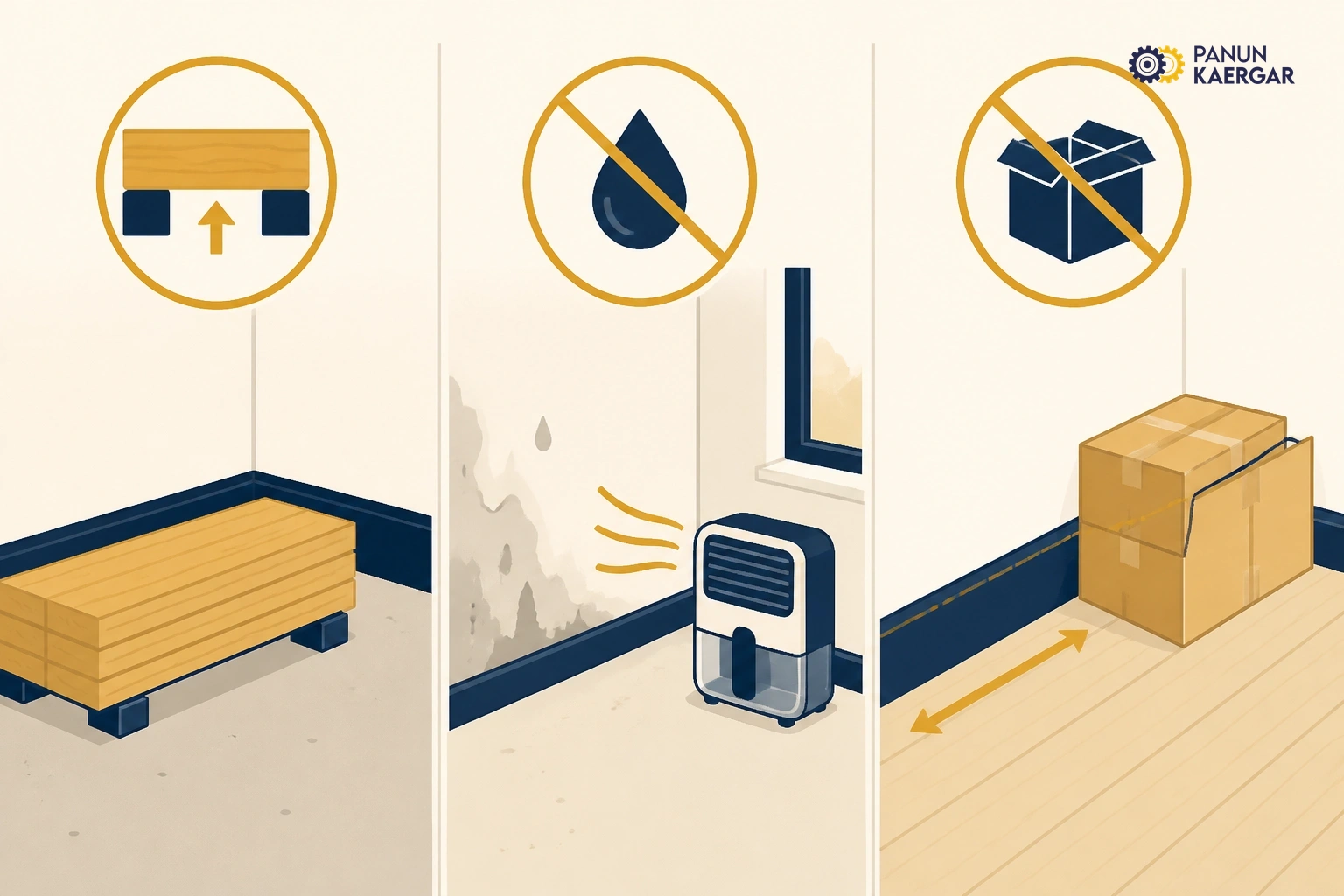
Fix the small trigger, keep the area clean and dry where relevant, and deal with repeat symptoms before they become a replacement job.
When to book a professional
Book pest control for mud tubes, hollow timber, swarmers, or repeat activity after DIY treatment.
FAQs
What is the first check for termite signs at home?
Check skirting, door frames, stored cardboard, and damp zones with a torch.
Can I keep using it?
Only if there is no safety risk or spreading damage. Stop when the symptom worsens.
Why did this start suddenly?
A change in load, moisture, wear, cleaning product, or season often exposes a weak point.
Will a temporary fix last?
It can buy time, but repeat symptoms need the cause corrected.
When should I book help?
Book pest control for mud tubes, hollow timber, swarmers, or repeat activity after DIY treatment.