
A bedroom door needs an extra nudge to close. The latch almost meets the plate, but the top edge brushes the frame. Before anyone forces it, the door needs a calm look at where it is rubbing.
A sticking door needs a diagnosis before a plane. Find the rub, tighten what is loose, and separate a simple latch adjustment from moisture or frame movement.
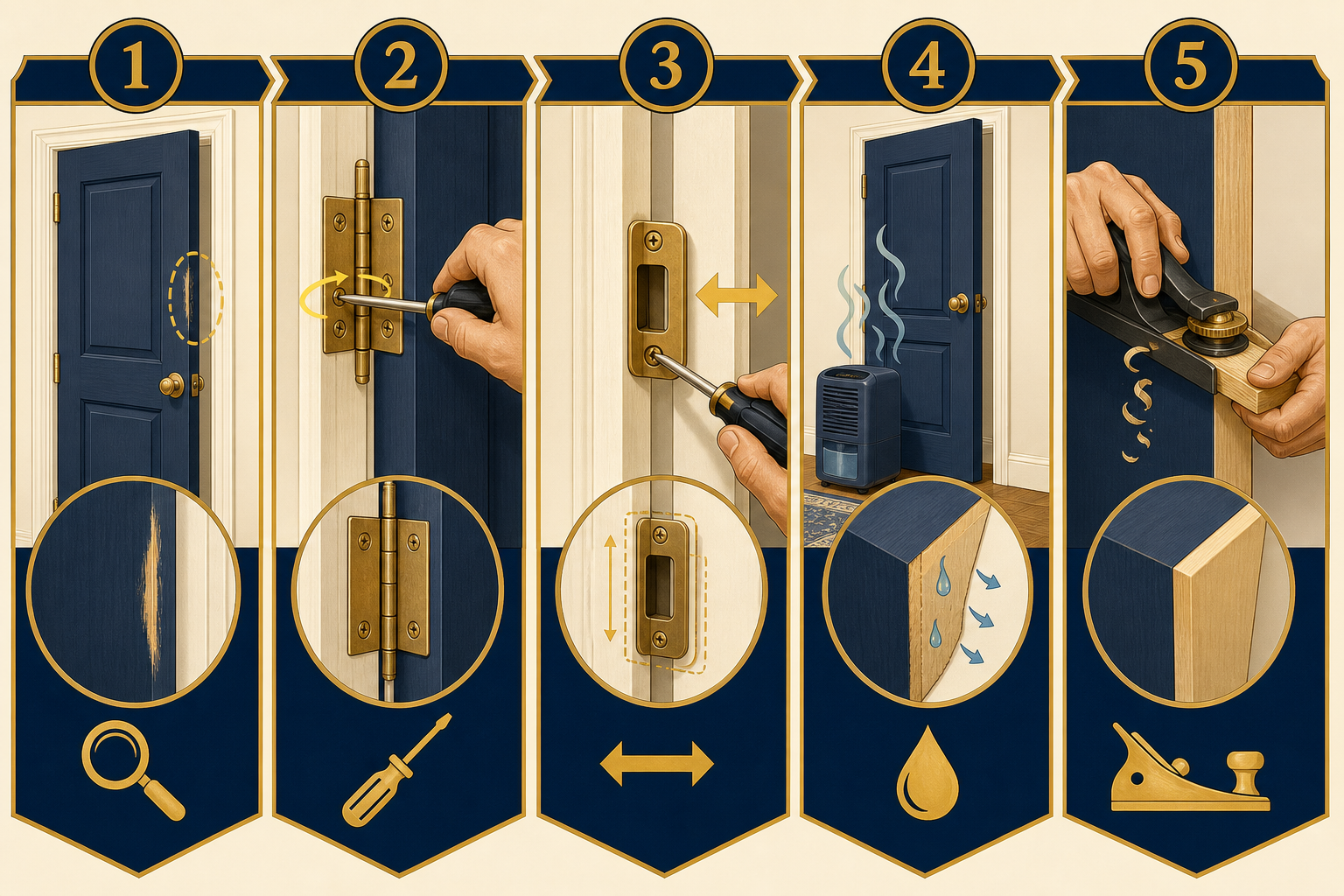
Find where the door rubs, tighten hinge screws, and check latch alignment before making any cut. Do not force or plane a door until you know whether loose hinges, humidity, a swollen edge or a moving frame is the cause.
Quick diagnosis map
Match what you see to a first move. The right first check for sticking door is usually safer and cheaper than the strongest possible fix.
| What you notice | Likely reason | First move |
|---|---|---|
| Loose hinge screws | May contribute to sticking door | Inspect carefully and deal with the cause before a cosmetic fix. |
| A swollen wood edge from humidity | May contribute to sticking door | Inspect carefully and deal with the cause before a cosmetic fix. |
| A misaligned strike plate | May contribute to sticking door | Inspect carefully and deal with the cause before a cosmetic fix. |
| Paint buildup on an edge | May contribute to sticking door | Inspect carefully and deal with the cause before a cosmetic fix. |
| A settling or damaged frame | May contribute to sticking door | Inspect carefully and deal with the cause before a cosmetic fix. |
| A warped door leaf | May contribute to sticking door | Inspect carefully and deal with the cause before a cosmetic fix. |
If there is a safety risk, spreading damage, severe mould, pests near food, or anything you cannot identify safely, pause DIY work and book carpentry.
What commonly causes this
Doors rarely become a problem for one dramatic reason. Look for the ordinary conditions that let the issue keep returning:
- Loose hinge screws — inspect it before treating the visible symptom.
- A swollen wood edge from humidity — inspect it before treating the visible symptom.
- A misaligned strike plate — inspect it before treating the visible symptom.
- Paint buildup on an edge — inspect it before treating the visible symptom.
- A settling or damaged frame — inspect it before treating the visible symptom.
- A warped door leaf — inspect it before treating the visible symptom.
Methods that actually help — try them in this order
Start with the lowest-risk, reversible method. Move on only if it does not explain or improve the sticking door.
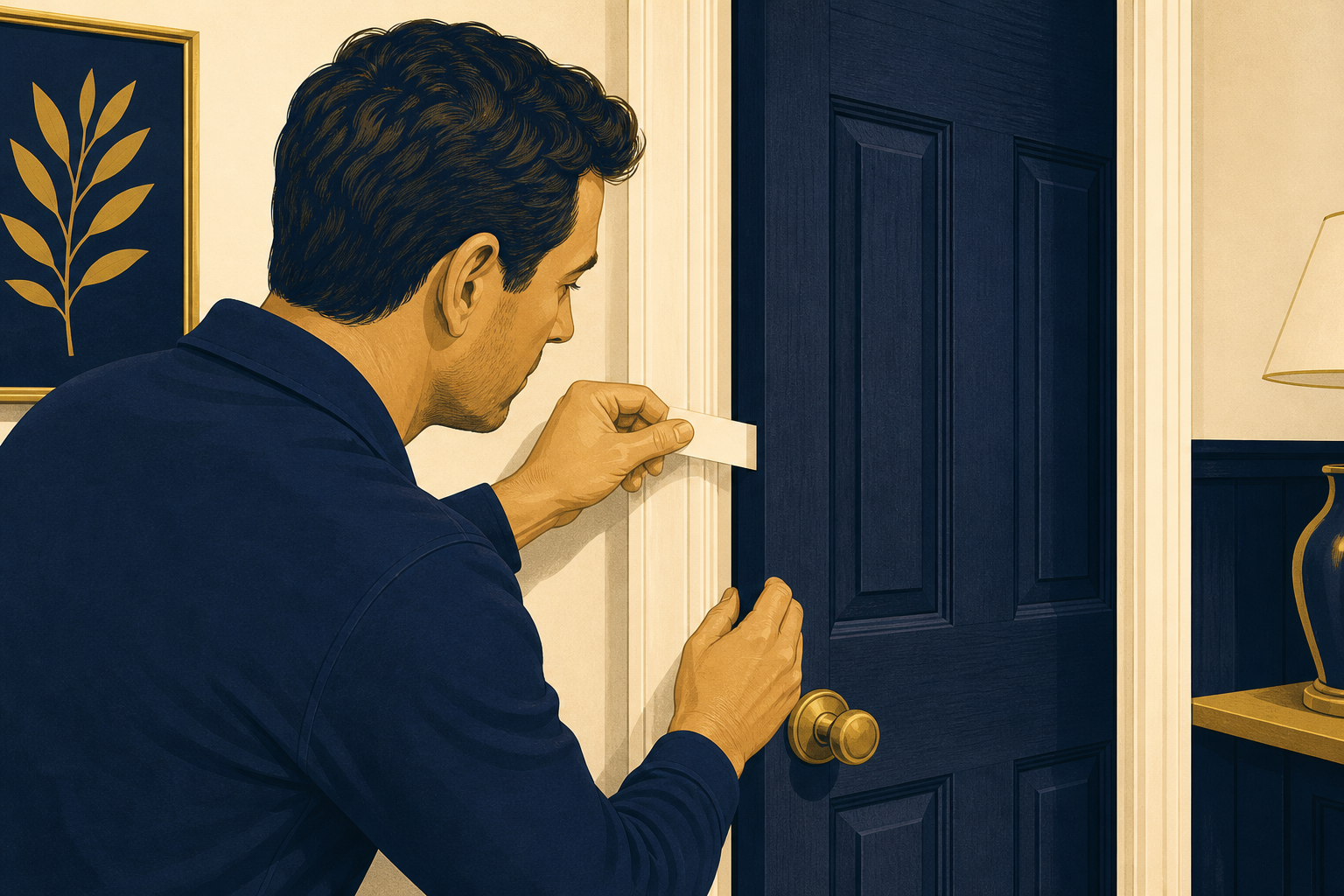
Locate the rub
Best for: a door that catches
- Close it slowly, look for shiny rub marks or use a thin paper strip around the gap to identify the tight point.
- Work in good light and take a photo before changing anything.
- Change one variable at a time so you can tell what helped.
- Stop if the issue worsens or exposes a safety concern.
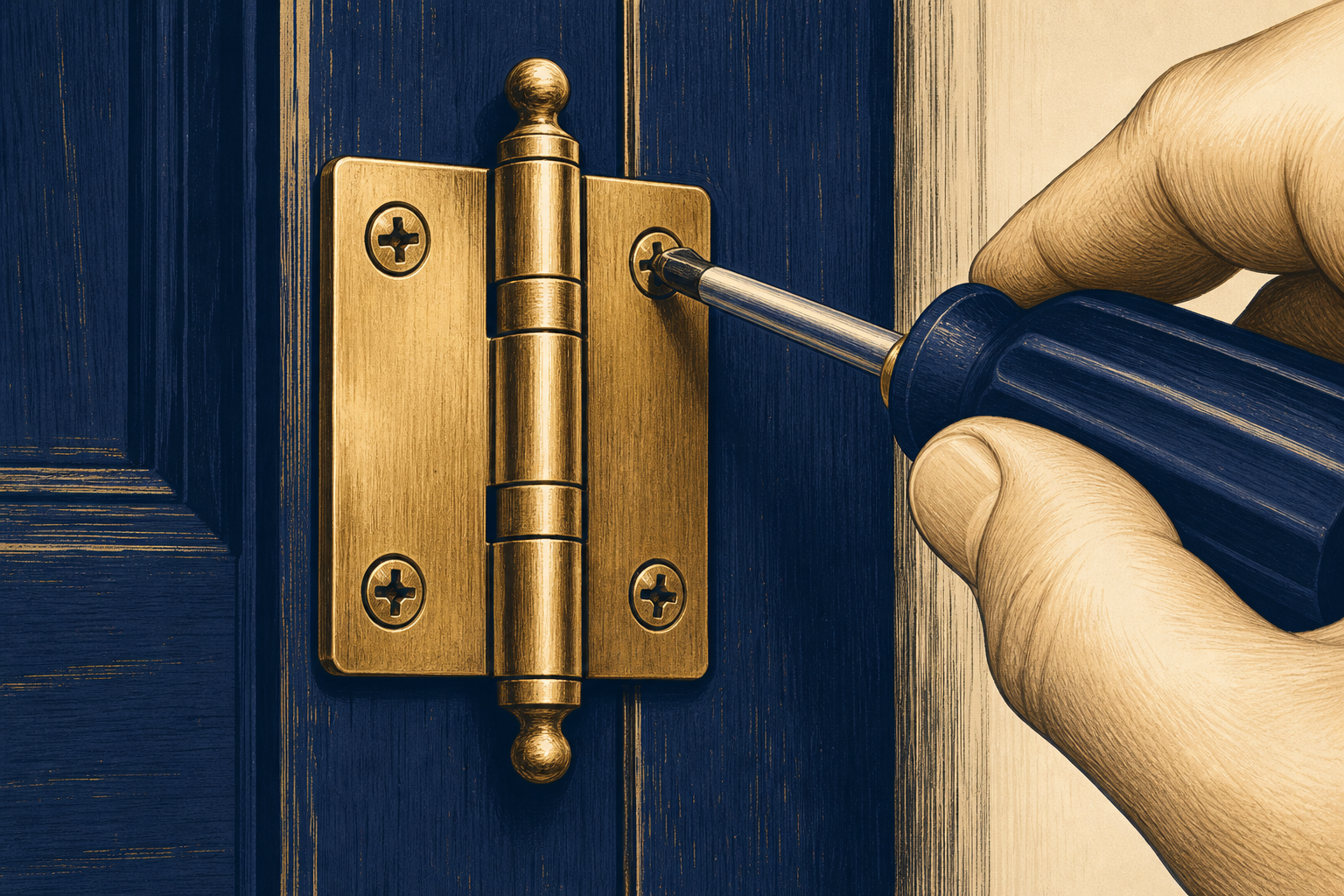
Tighten hinges first
Best for: a sagging latch side
- Support the door and tighten loose hinge screws by hand; replace stripped fixings only with the correct repair.
- Work in good light and take a photo before changing anything.
- Change one variable at a time so you can tell what helped.
- Stop if the issue worsens or exposes a safety concern.
Check latch alignment
Best for: the door reaches the frame but will not latch
- Mark where the latch meets the plate and make only a small, deliberate adjustment if the frame is sound.
- Work in good light and take a photo before changing anything.
- Change one variable at a time so you can tell what helped.
- Stop if the issue worsens or exposes a safety concern.
Reduce moisture and retest
Best for: seasonal swelling
- Ventilate the room, address nearby damp, and let the timber stabilise before removing material.
- Work in good light and take a photo before changing anything.
- Change one variable at a time so you can tell what helped.
- Stop if the issue worsens or exposes a safety concern.

Book a carpenter for controlled trimming
Best for: persistent rubbing or frame movement
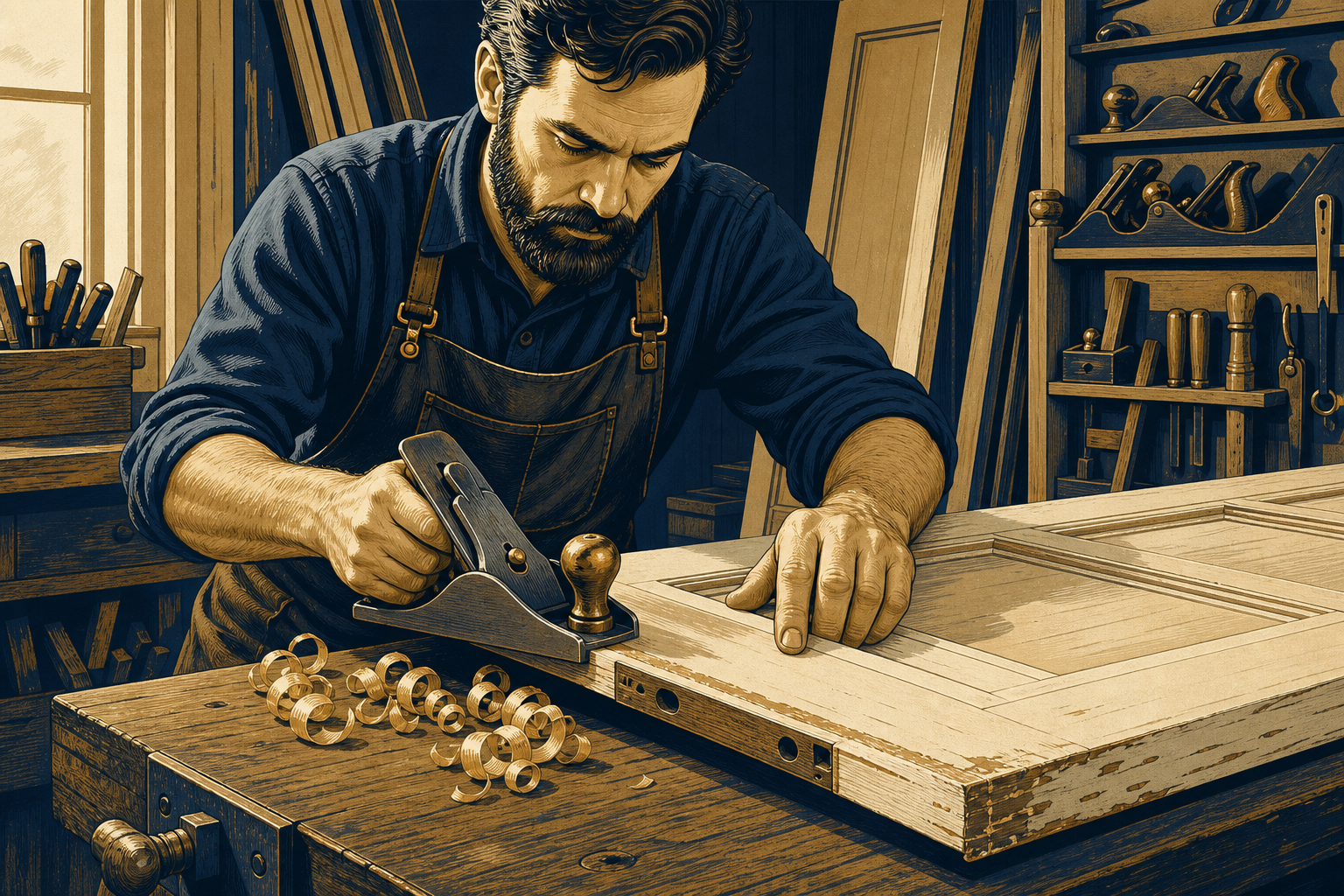
- A professional can assess hinges, frame and door leaf, then plane or repair only the confirmed contact point.
- Work in good light and take a photo before changing anything.
- Change one variable at a time so you can tell what helped.
- Stop if the issue worsens or exposes a safety concern.
Common scenarios
It sticks only in humid weather
Check ventilation and nearby damp; avoid permanent trimming until it stabilises.
The latch misses but the gaps look even
The strike plate may need a minor alignment check.
The door suddenly will not close
Look for a loose hinge, swollen edge, obstruction or visible frame movement.
Please don’t do this
These shortcuts can make a small problem harder to diagnose or more expensive to repair.
Shoulder the door shut
Best for: avoiding a costly false shortcut
Forcing can damage hinges, latch hardware and the frame.

Plane a large edge at once
Best for: avoiding a costly false shortcut
Removing too much wood leaves a gap when conditions change.

Paint over loose hardware
Best for: avoiding a costly false shortcut
Paint is not a fastener and can make later repairs harder.

Ignore a cracked or moving frame
Best for: avoiding a costly false shortcut
A frame problem needs assessment before latch adjustment.

How to keep it from returning
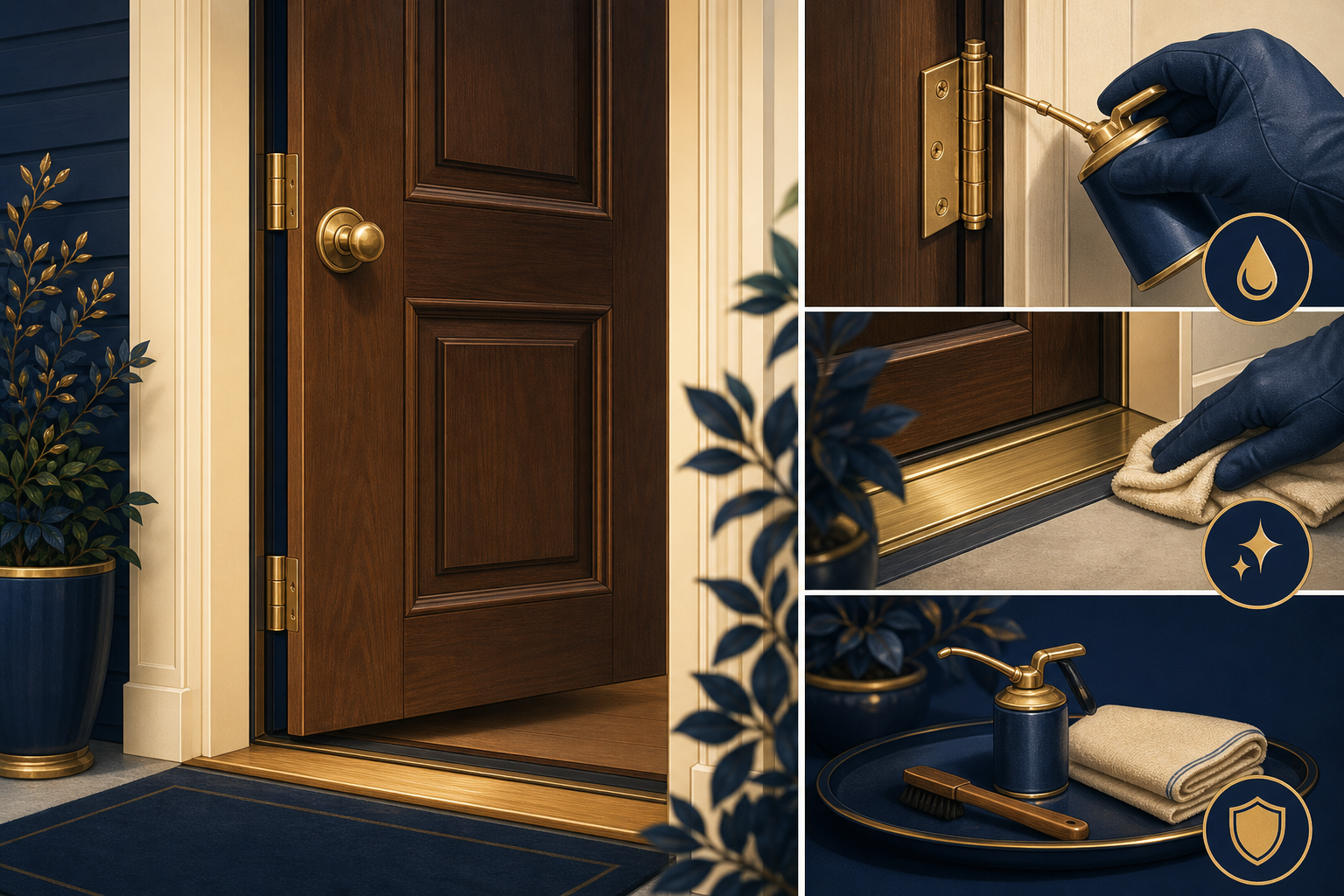
- Tighten hinge screws during routine cleaning.
- Keep thresholds and frames dry.
- Lubricate hinges lightly with a suitable product.
- Avoid repeated slamming.
- Address leaks near timber early.
Keep a simple note of when and where you first see the sticking door. That pattern makes a professional visit faster and more useful.
What the work usually involves
Cost depends on whether the issue is simple hinge or strike adjustment, controlled trimming, new hardware, or a frame repair. Clear photos of the hinge side, latch side and rub mark help a carpenter estimate accurately.
When to book a carpenter
- The issue returns after the safe checks.
- You see spreading damage or a safety concern.
- The cause is hidden behind a wall, appliance, frame or fixed furniture.
- You need a repair that would be costly to reverse.
- You want the source confirmed before spending on a finish.
Before the visit, share clear photos, when the sticking door started, what changed, and the safe checks you already completed. Book verified carpentry services in Kashmir or find a carpenter near you on Panun Kaergar.
FAQs
What is the safest first step for sticking door?
Start by observing the pattern and using the first low-risk method above. Do not jump to a permanent or chemical fix.
Can I fix sticking door myself?
You can do simple cleaning, observation and basic maintenance when safe. Stop for hidden damage, specialised work or any safety concern.
Why does sticking door keep returning?
The visible symptom may have been treated while the source, route or contributing condition remained.
When should I book carpentry?
Book when it is recurring, widespread, damaging, unsafe, or not improved by the safe checks.
What should I tell the professional?
Explain where it appears, when it started, what triggers it and what you have already tried.
Is help available across Kashmir for sticking door?
Yes. Use Panun Kaergar to book the relevant verified service across Kashmir.
The best repair for sticking door starts with the right cause. Take the careful first step, keep notes, and bring in a professional when the job asks for one.