
After a winter of closed windows, the living-room sofa smells faintly stale. Someone suggests vinegar; someone else says dry clean everything.
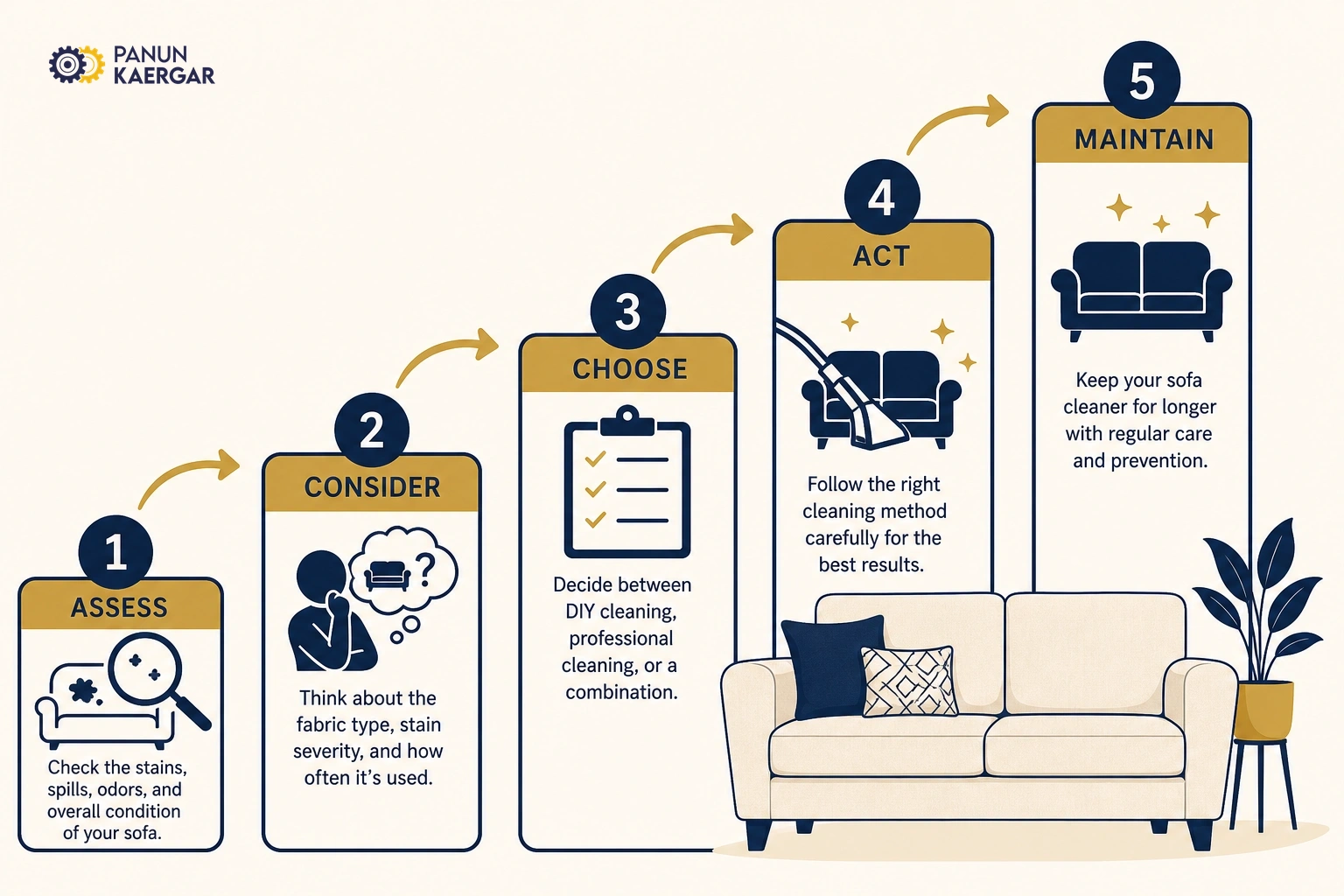
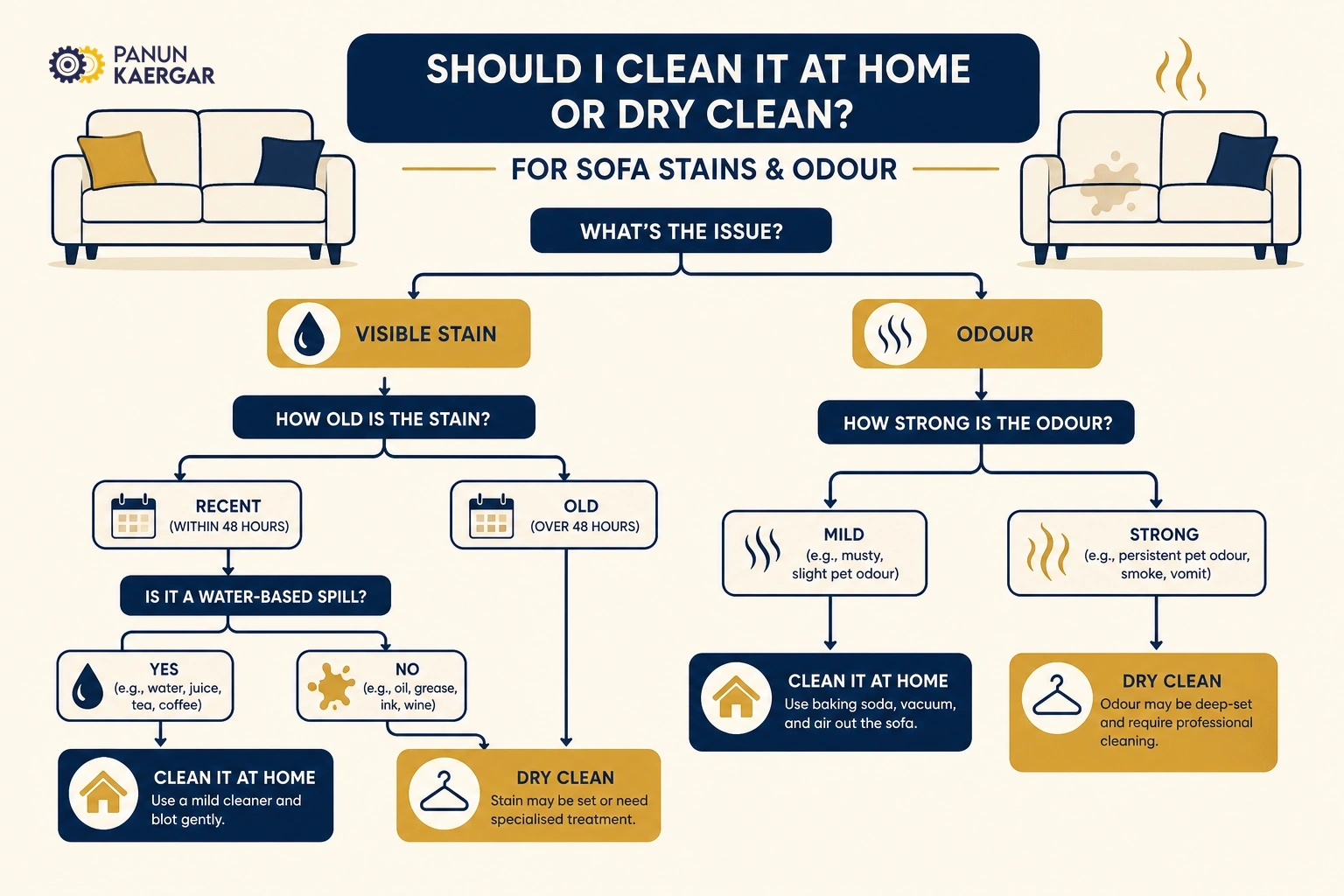
Read the fabric tag, test in a hidden seam, and choose home spot-clean only for washable, water-safe upholstery. Odour, oil, delicate fabric, or old stains usually need professional extraction or dry cleaning.
Quick diagnosis map
Start with the symptom, not the most dramatic fix. A small check now can save a cabinet, appliance, or Sunday afternoon.
| What you notice | Likely reason | First move |
|---|---|---|
| Stale smell, visible stain, or unclear fabric care | Trapped moisture, residue, or a stain type the fabric cannot take wet | Check whether the cover is removable and whether water is allowed. |
| Problem worsens after use | An underlying fault or hidden damage | Stop adding load; inspect safely. |
| Heat, burning smell, leak, or sudden pain | Safety issue, not a DIY puzzle | Switch off / isolate / get help. |
Do not saturate foam, mix cleaners, or iron a stain.
What usually causes this
The visible symptom is useful, but the small detail around it usually tells the real story.
- Food, tea, or body oil pushed deeper by rubbing.
- Too much home shampoo left in the foam.
- Silk, wool, velvet, or dry-clean-only blends.
Try these in order
Begin with the reversible checks. The goal is a clean fix, not winning an argument with a stubborn household thing.
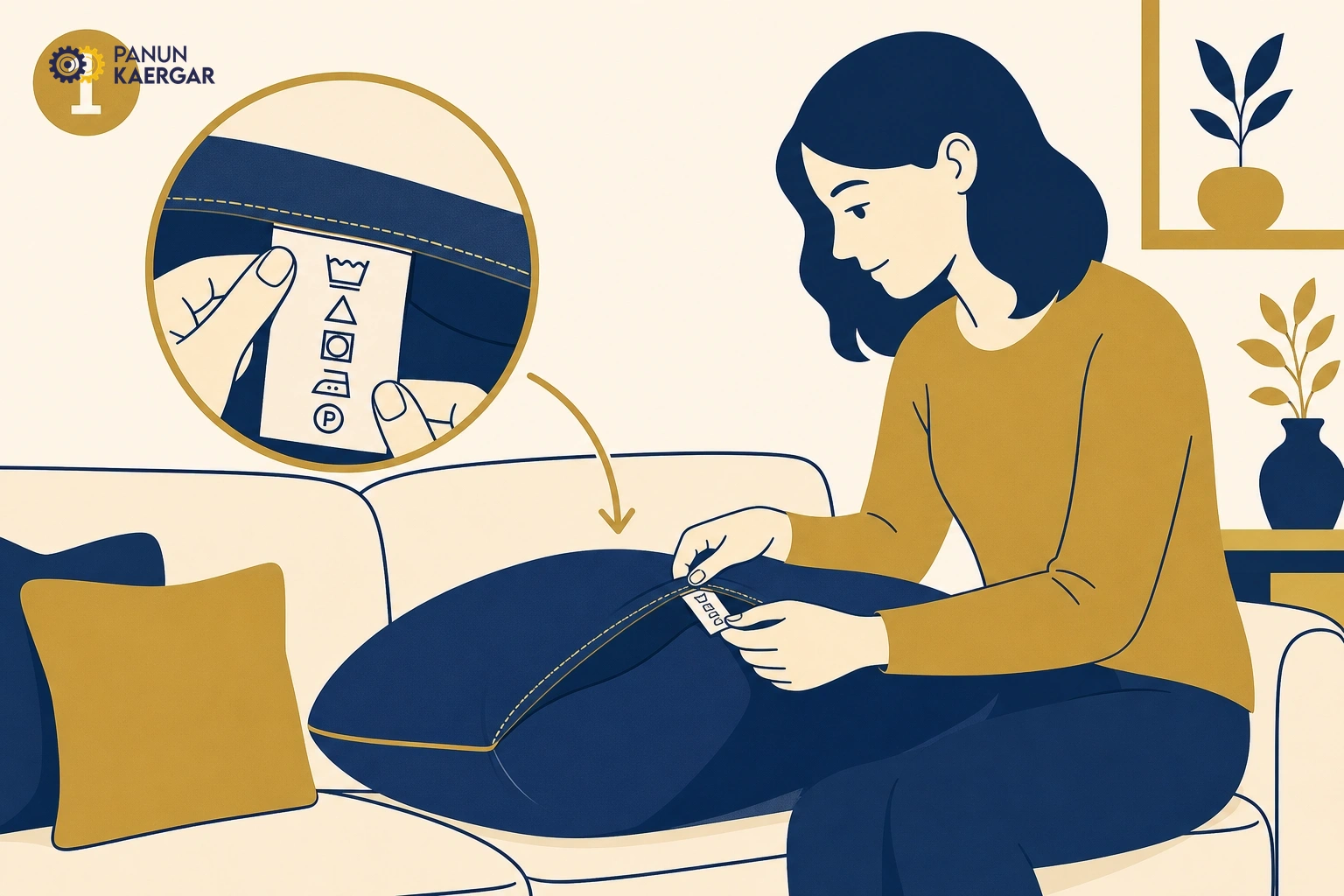
Find the care tag
Best for: every sofa
Check whether the cover is removable and whether water is allowed.
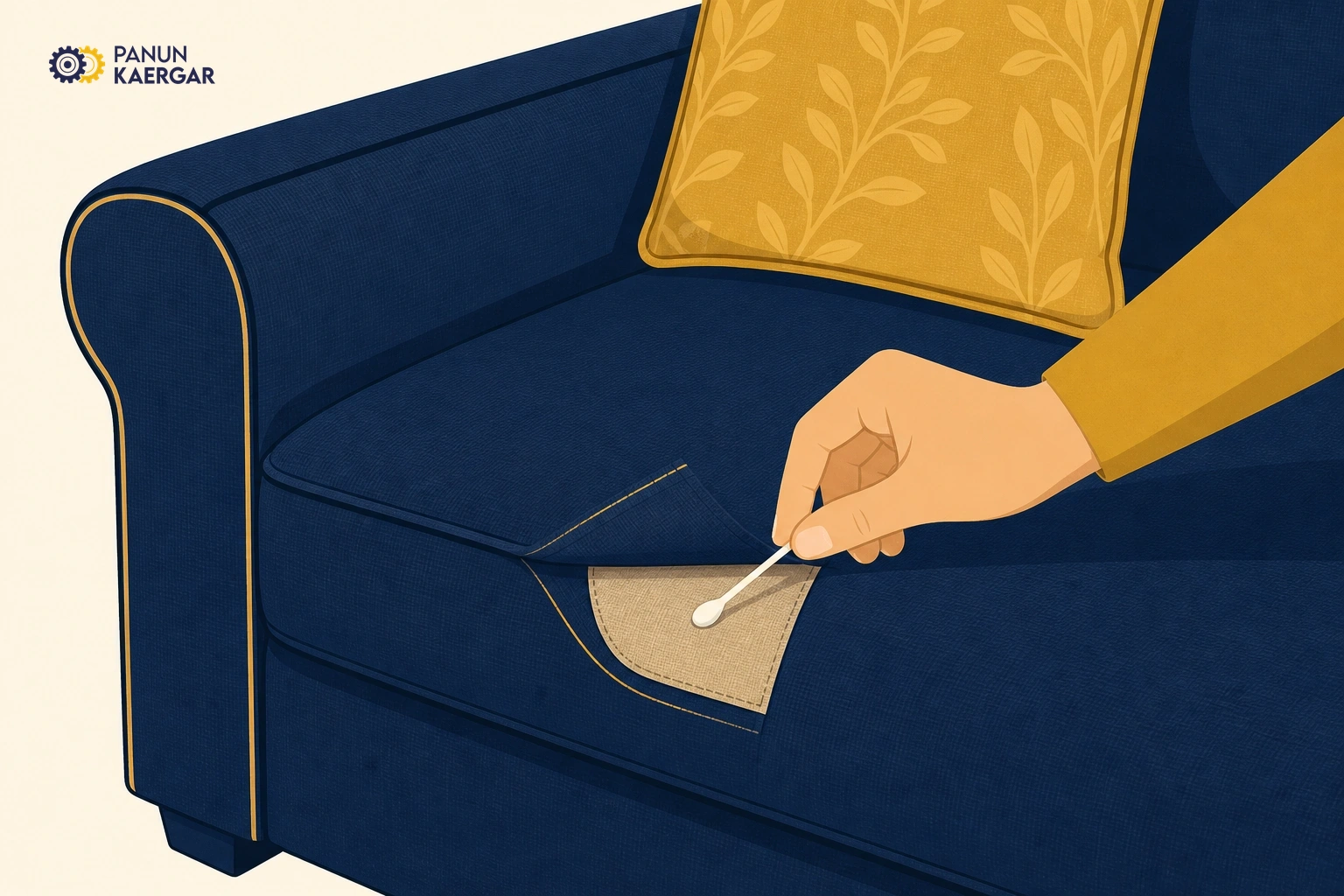
Test a hidden patch
Best for: unknown fabric
Dab a tiny amount of your cleaner and let it dry before treating the mark.
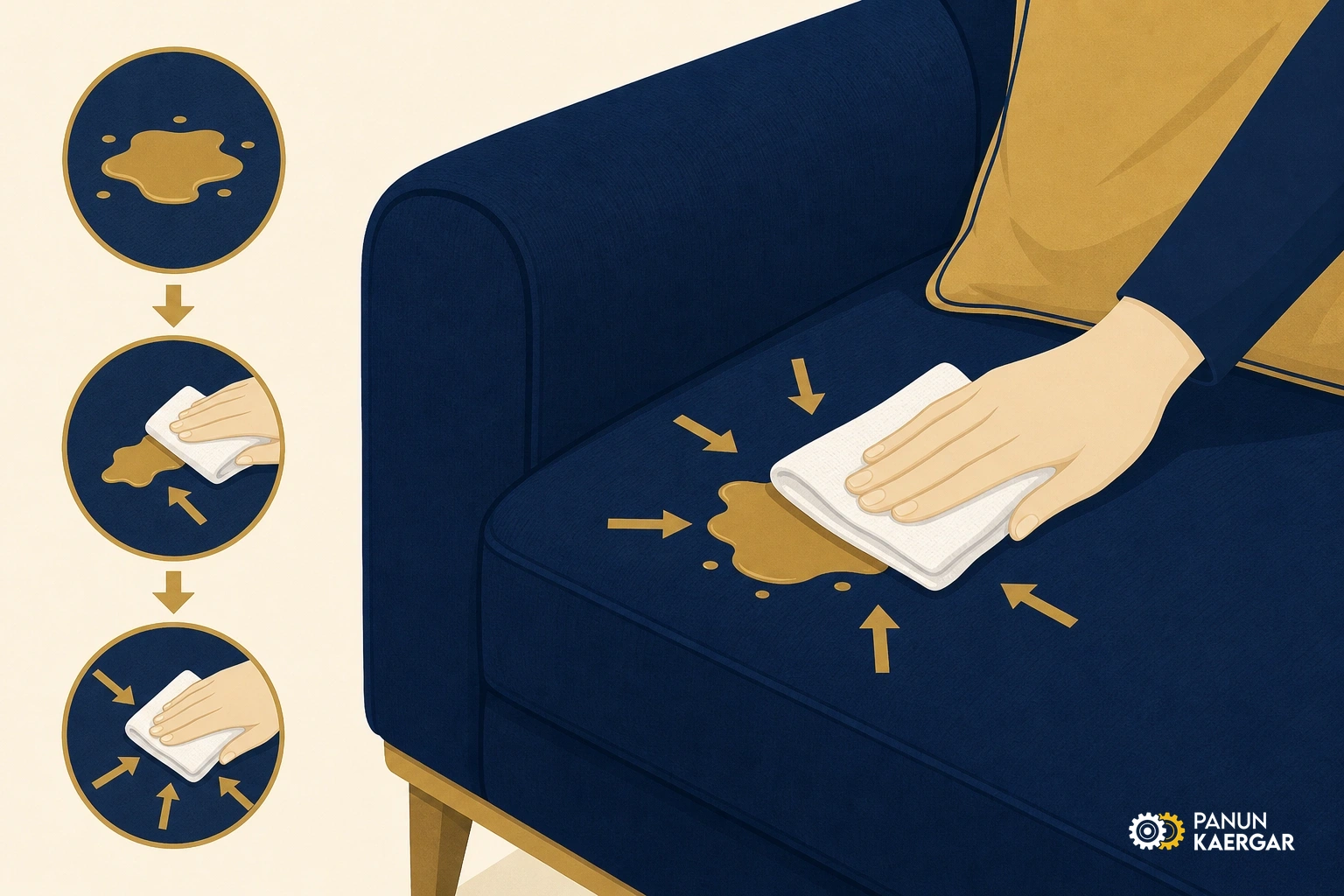
Blot fresh spills only
Best for: a new stain
Press from the edge inward with a white cloth; do not scrub.
Air and vacuum
Best for: light odour
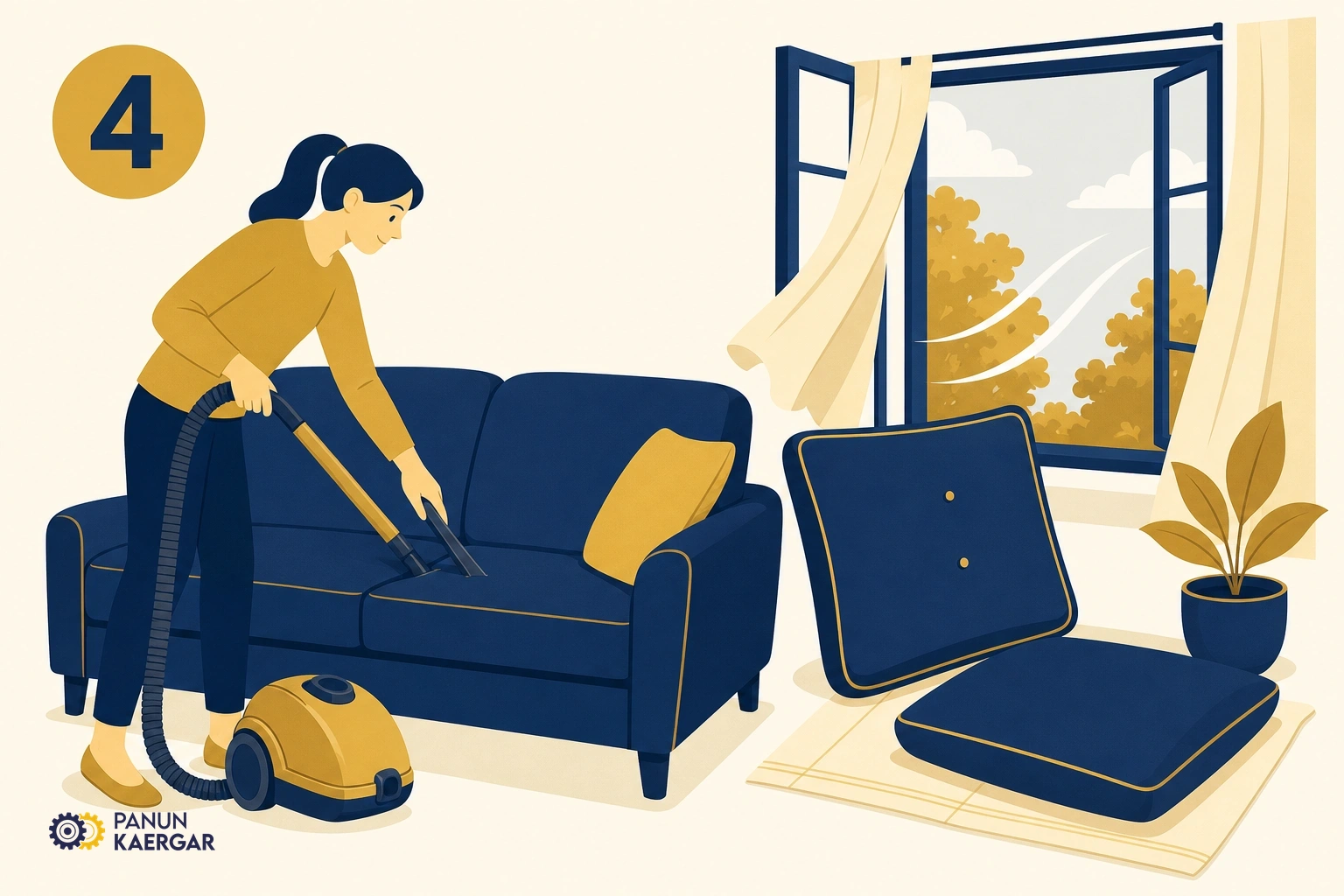
Vacuum crevices and give cushions airflow before assuming chemical cleaning.
Book extraction or dry clean
Best for: old odour or delicate fabric
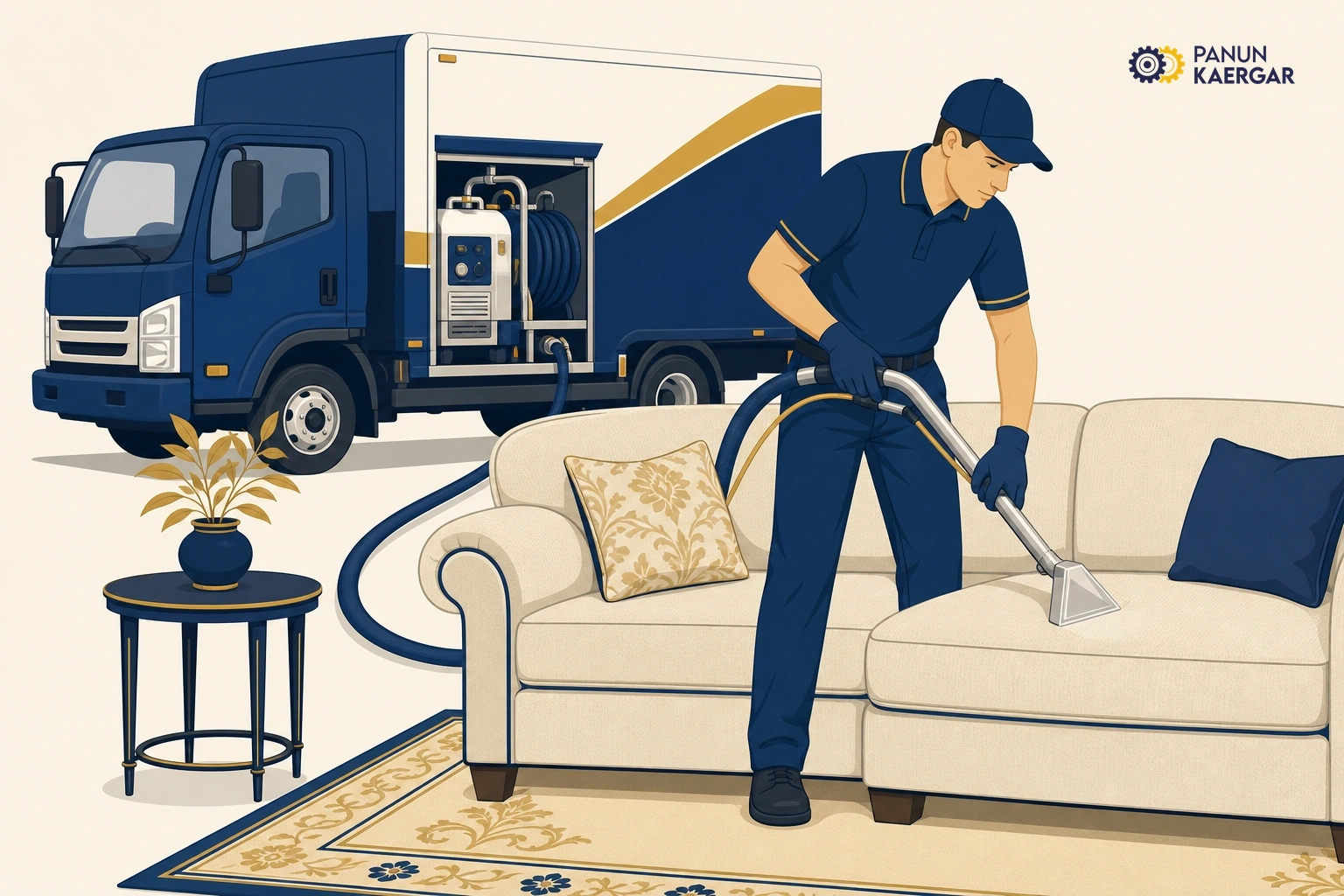
Pros can rinse residue and dry the filling without flooding it.
Take one clear photo before taking anything apart. It helps a professional see the pattern and saves guesswork.
Kashmir home note
Closed Kashmir winters keep sofas damp longer than they feel on top. A heater aimed at wet fabric can bake in a smell; airflow and the right method matter more.
What not to do
These shortcuts usually cost more than they save.
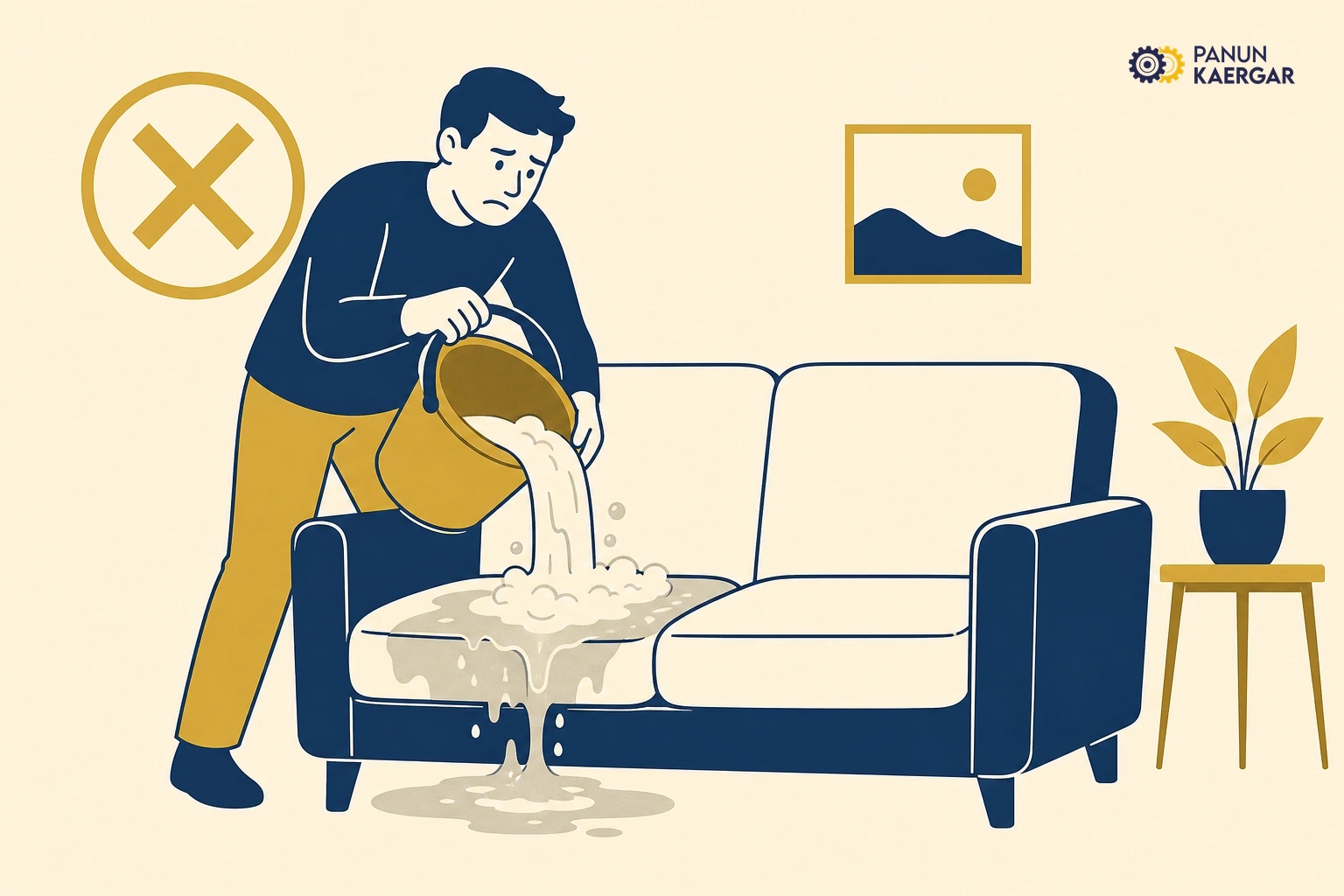
Saturate the foam
Traps moisture and bakes in odour
Flooding cushions leaves detergent and water in the filling; indoor heat can turn that into a lasting smell.
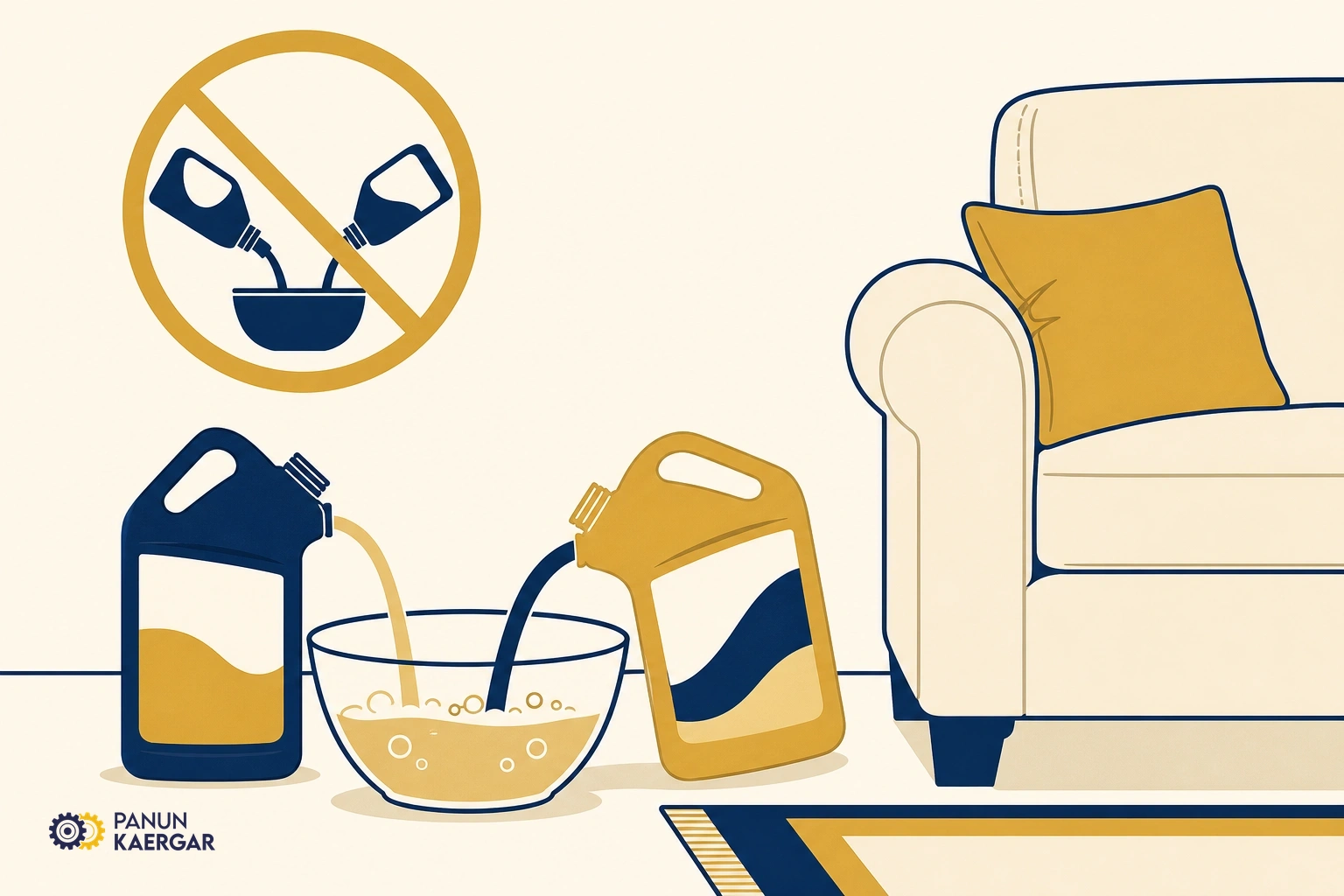
Mix different cleaners
Unpredictable stains and fabric damage
Combining vinegar, bleach, or shop products can set a stain or weaken fibres in ways one product alone would not.
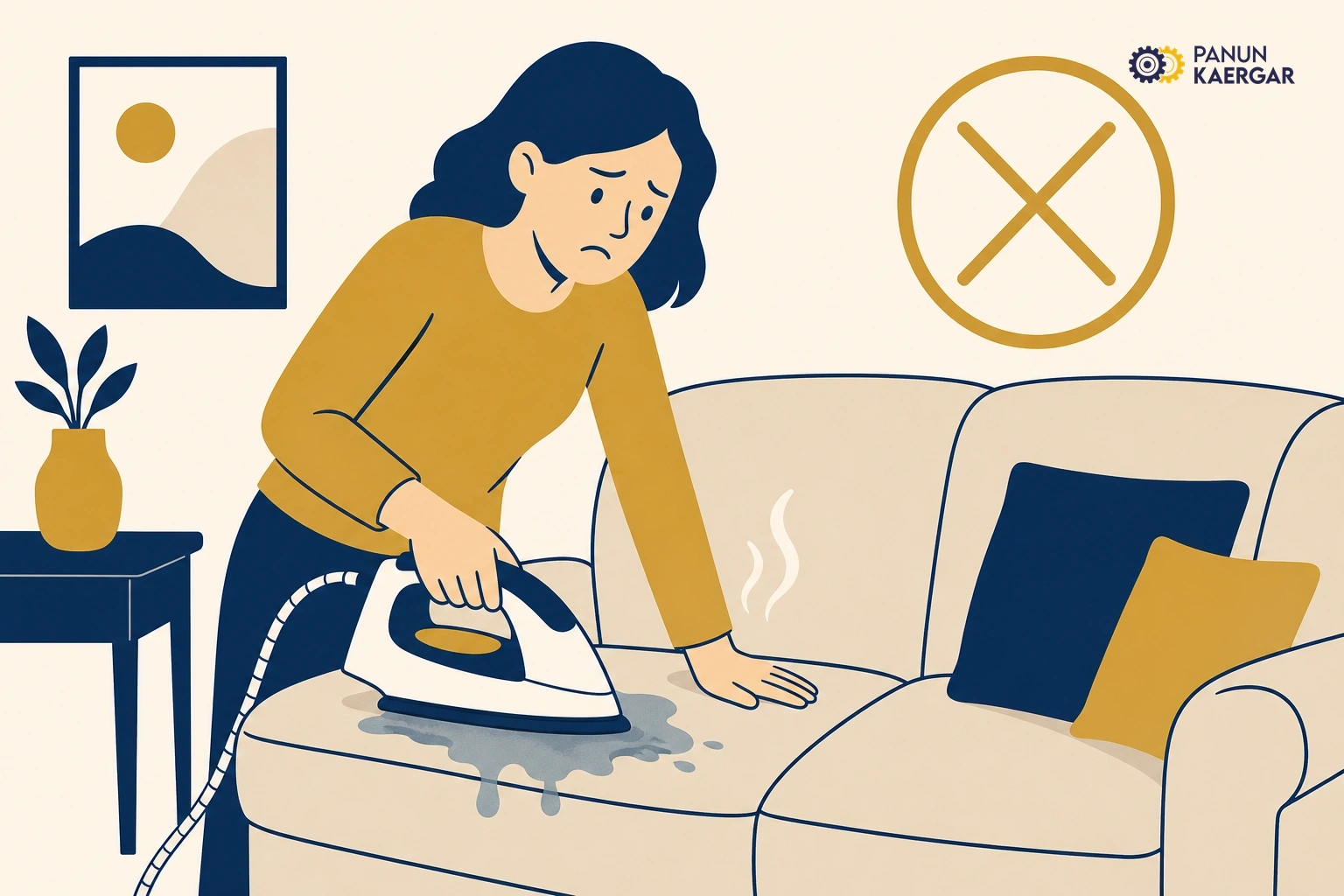
Iron a stain
Sets the mark permanently
Heat locks oil and dye into fabric; what looked like a fresh spill becomes a fixed shadow.
Keep it from returning

Fix the small trigger, keep the area clean and dry where relevant, and deal with repeat symptoms before they become a replacement job.
When to book a professional
Book dry cleaning or upholstery extraction for silk, wool, velvet, pet accidents, mould spots, old odour, or a dry-clean-only label.
FAQs
What is the first check for does your sofa need dry cleaning or a home clean?
Check whether the cover is removable and whether water is allowed.
Can I keep using it?
Only if there is no safety risk or spreading damage. Stop when the symptom worsens.
Why did this start suddenly?
A change in load, moisture, wear, cleaning product, or season often exposes a weak point.
Will a temporary fix last?
It can buy time, but repeat symptoms need the cause corrected.
When should I book help?
Book dry cleaning or upholstery extraction for silk, wool, velvet, pet accidents, mould spots, old odour, or a dry-clean-only label.