
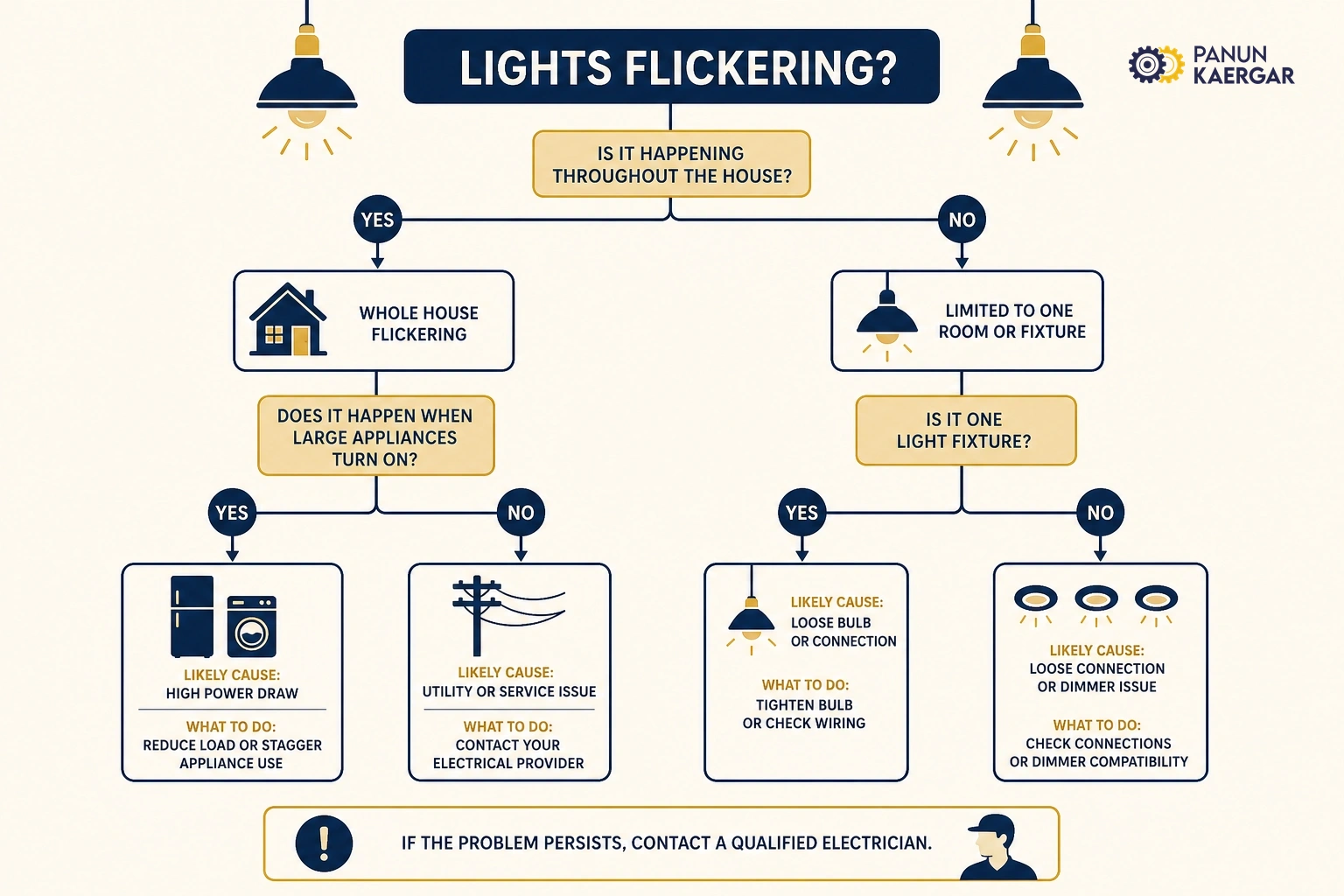
In an older flat, the kitchen tube flickers whenever the geyser clicks on. The family swaps bulbs twice before anyone asks whether the fitting or circuit is talking.
Tighten or replace the bulb or tube, try another lamp on the same point, and note whether flicker matches appliance use. Persistent flicker, buzzing, heat, or one-room-only issues need an electrician.
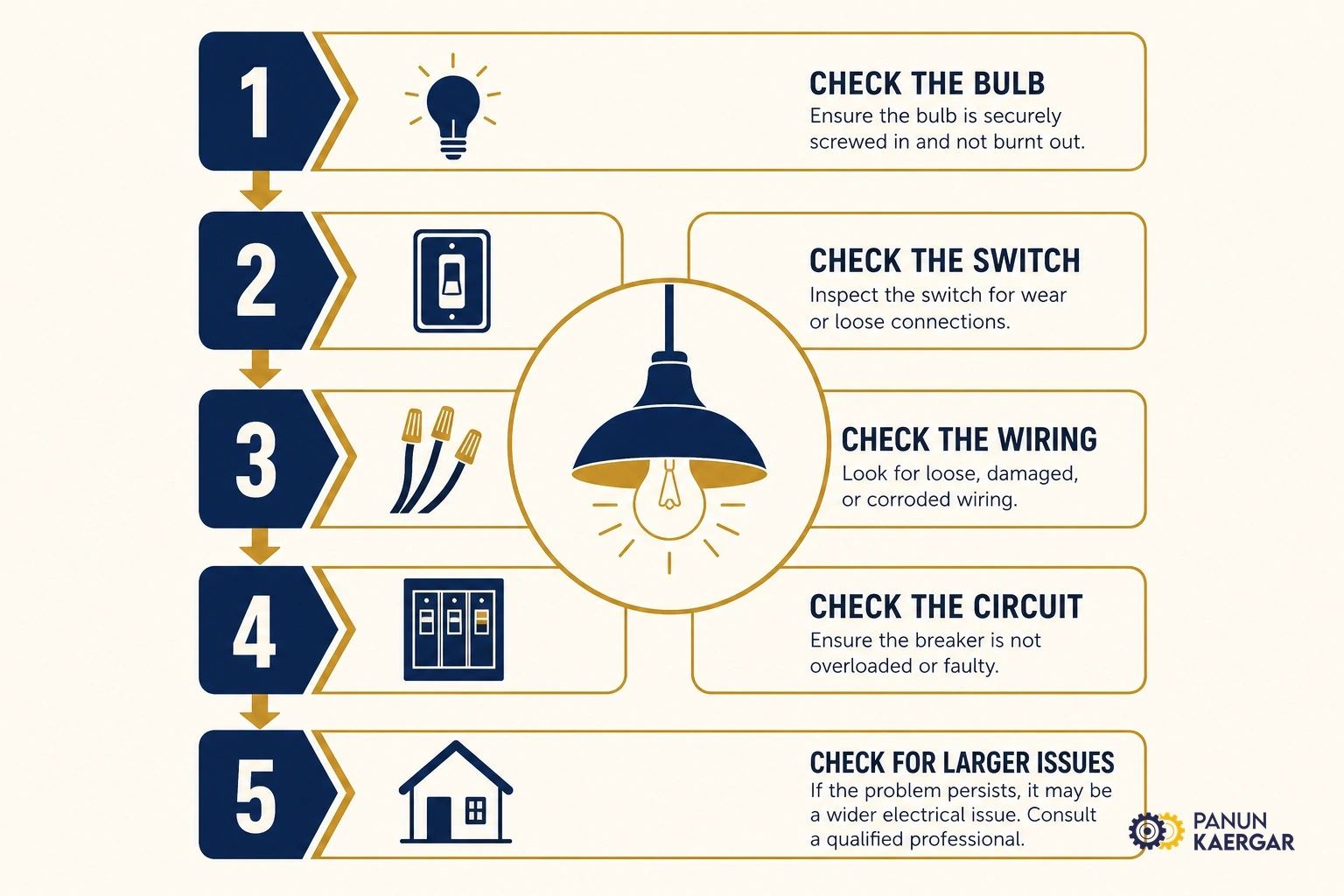
Quick diagnosis map
Start with the symptom, not the most dramatic fix. A small check now can save a cabinet, appliance, or Sunday afternoon.
| What you notice | Likely reason | First move |
|---|---|---|
| Light flickers, dims, or pulses | Loose bulb, failing driver, loose contact, or circuit load | Switch off, tighten the bulb, or swap in a known-good lamp. |
| Problem worsens after use | An underlying fault or hidden damage | Stop adding load; inspect safely. |
| Heat, burning smell, leak, or sudden pain | Safety issue, not a DIY puzzle | Switch off / isolate / get help. |
Do not wiggle live fittings, bypass a holder, or ignore flicker that comes with a burning smell.
What usually causes this
The visible symptom is useful, but the small detail around it usually tells the real story.
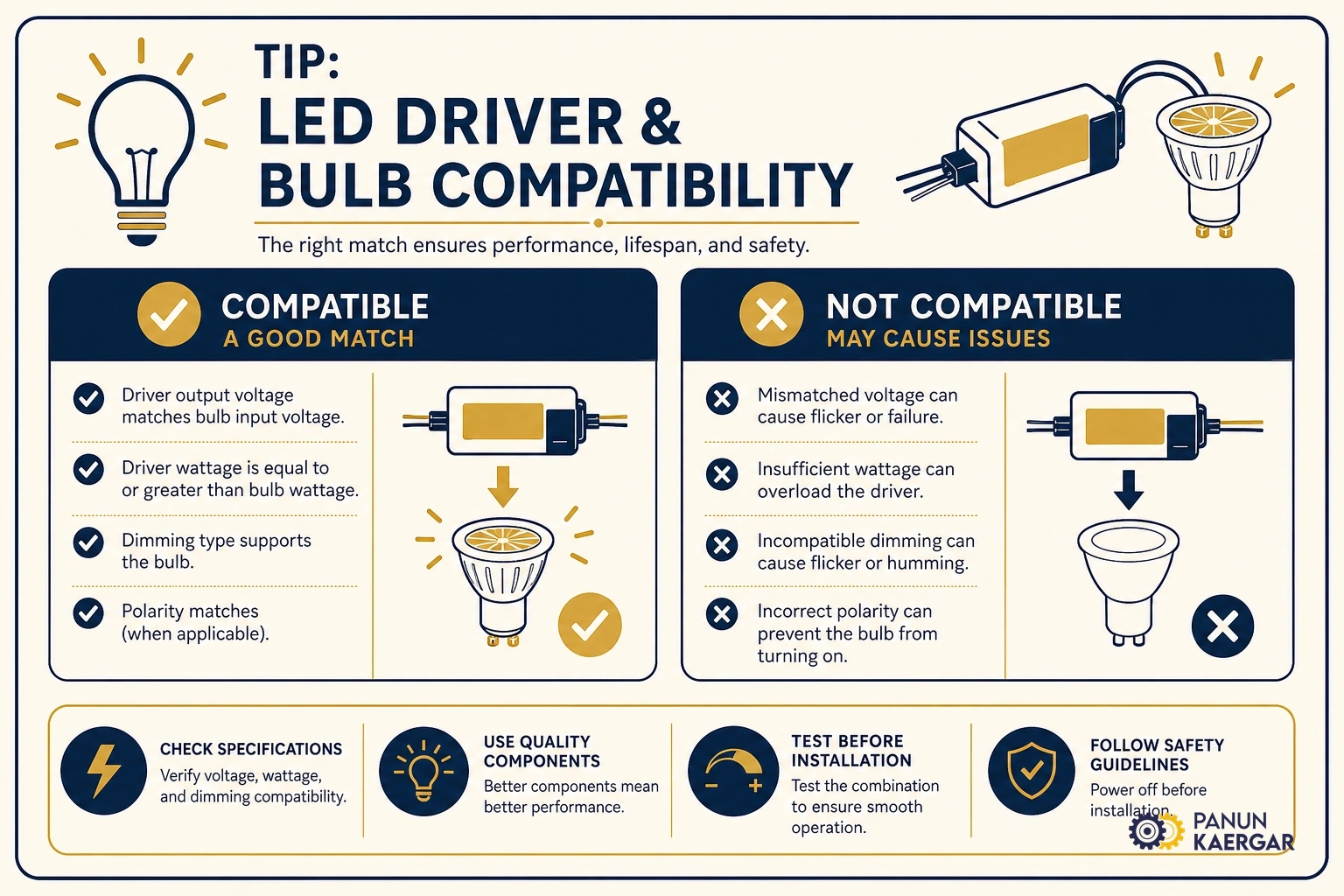
- Loose or incompatible bulb or LED driver.
- Loose holder contact or old starter gear.
- Heavy appliance starting on the same circuit.
Try these in order
Begin with the reversible checks. The goal is a clean fix, not winning an argument with a stubborn household thing.
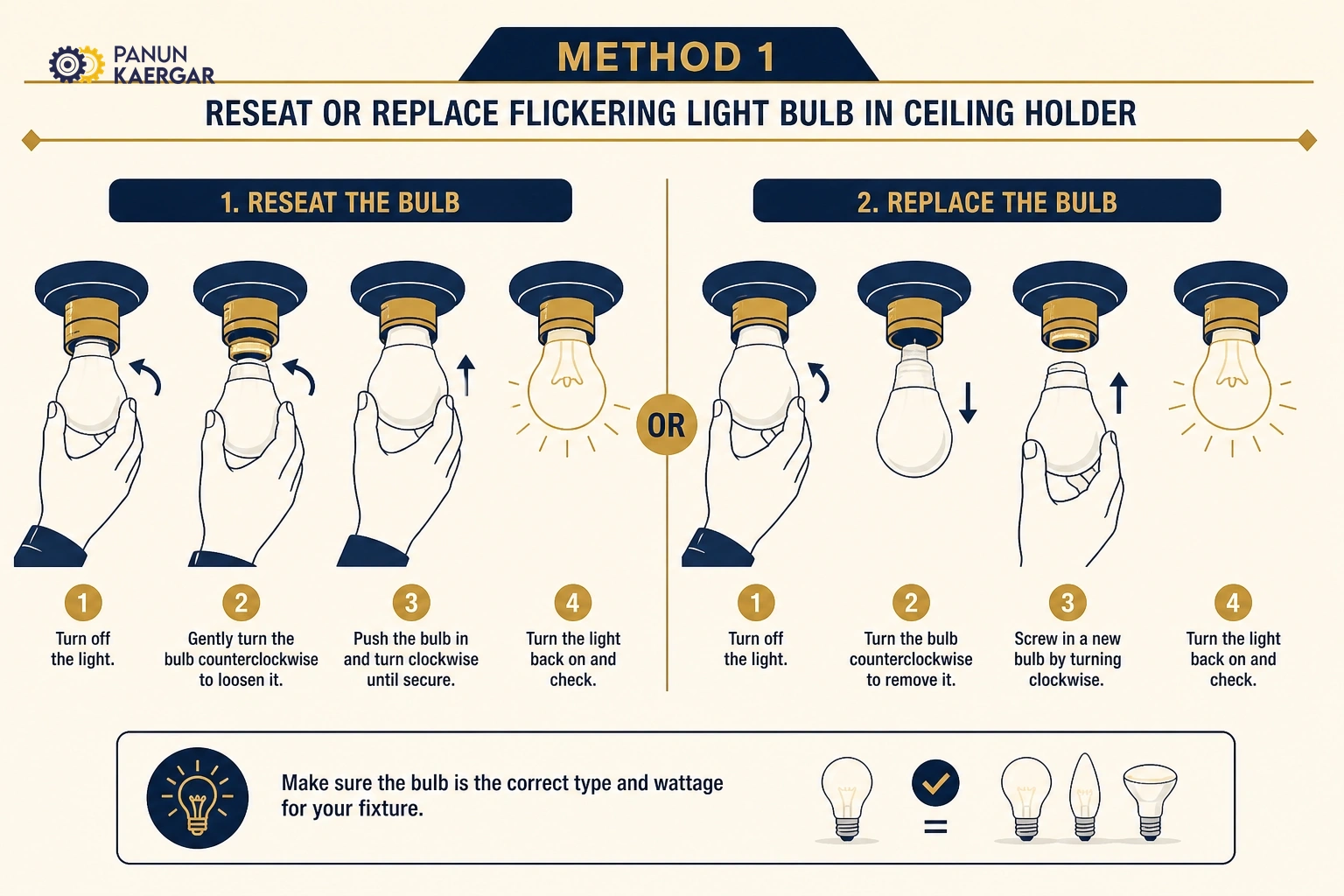
Reseat or replace the bulb
Best for: one flickering point
Switch off, tighten the bulb, or swap in a known-good lamp.
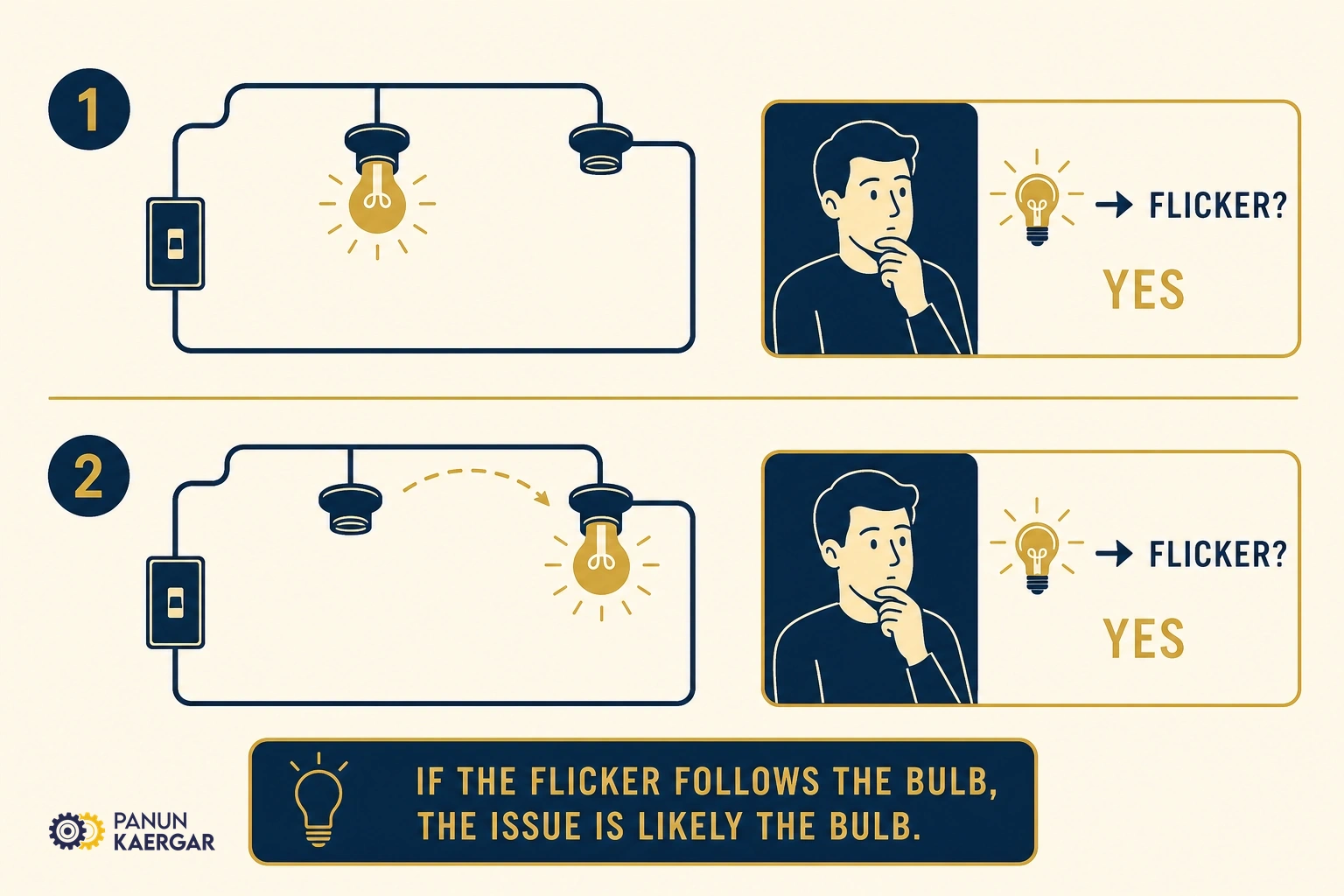
Try another fitting
Best for: isolating bulb vs point
Move the bulb to a different holder to see whether the flicker travels.
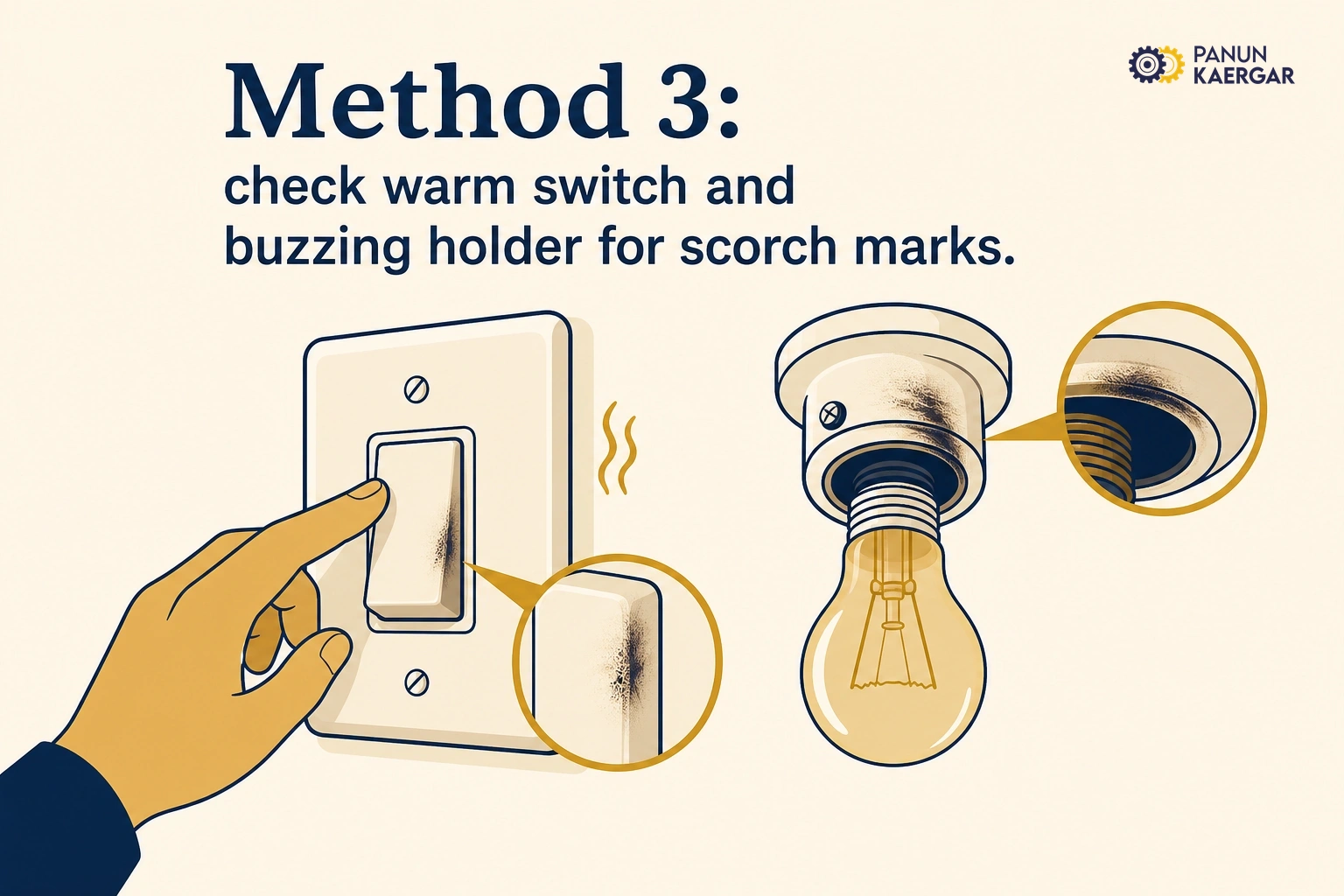
Listen and feel
Best for: buzzing or heat
Warm switches, buzzing holders, or scorch marks are not bulb problems.
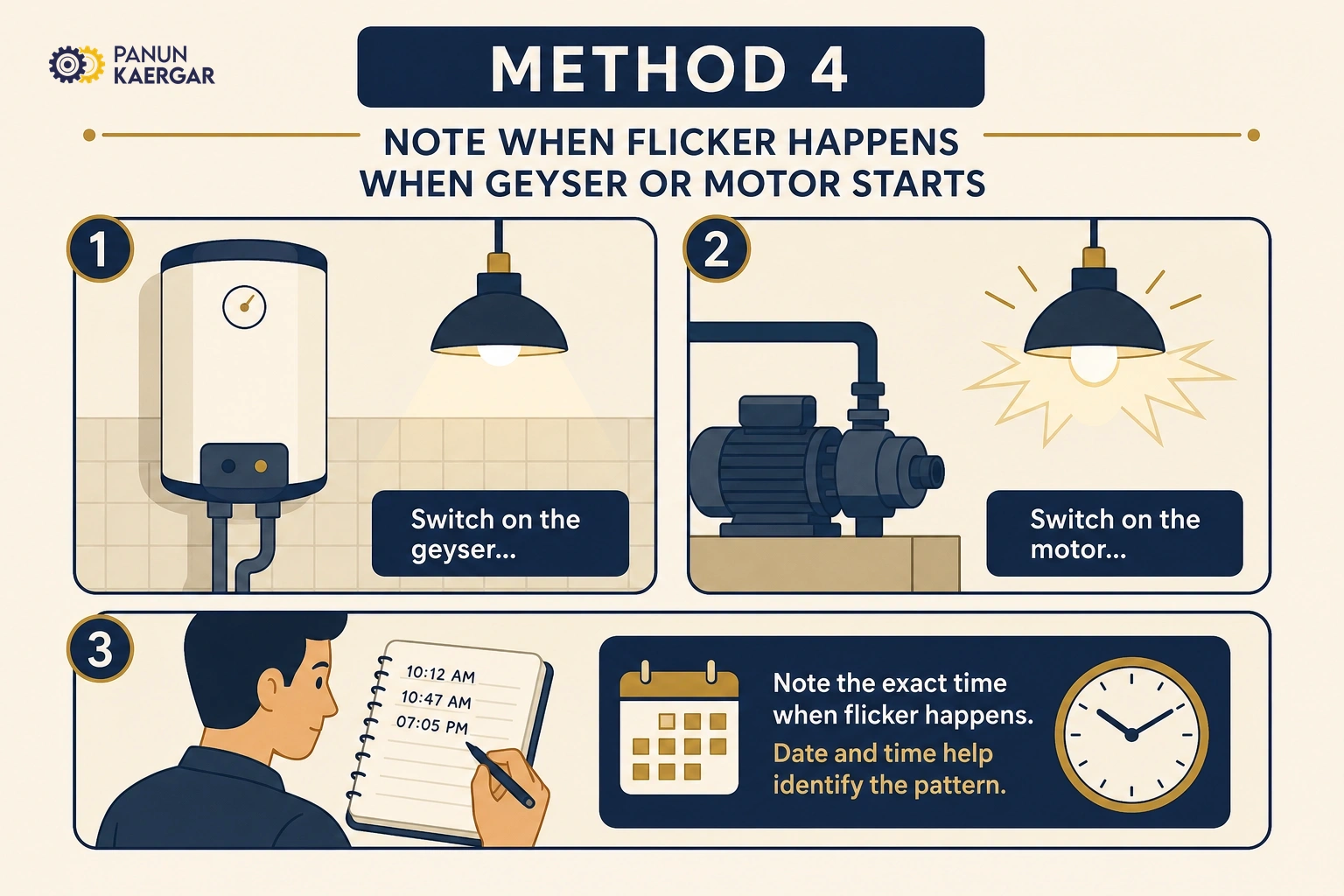
Note the pattern
Best for: load-related flicker
Write down whether it happens when the geyser, heater, or motor starts.
Book an electrician
Best for: persistent or spreading flicker
Loose neutrals, damaged wiring, and bad holders need proper testing.
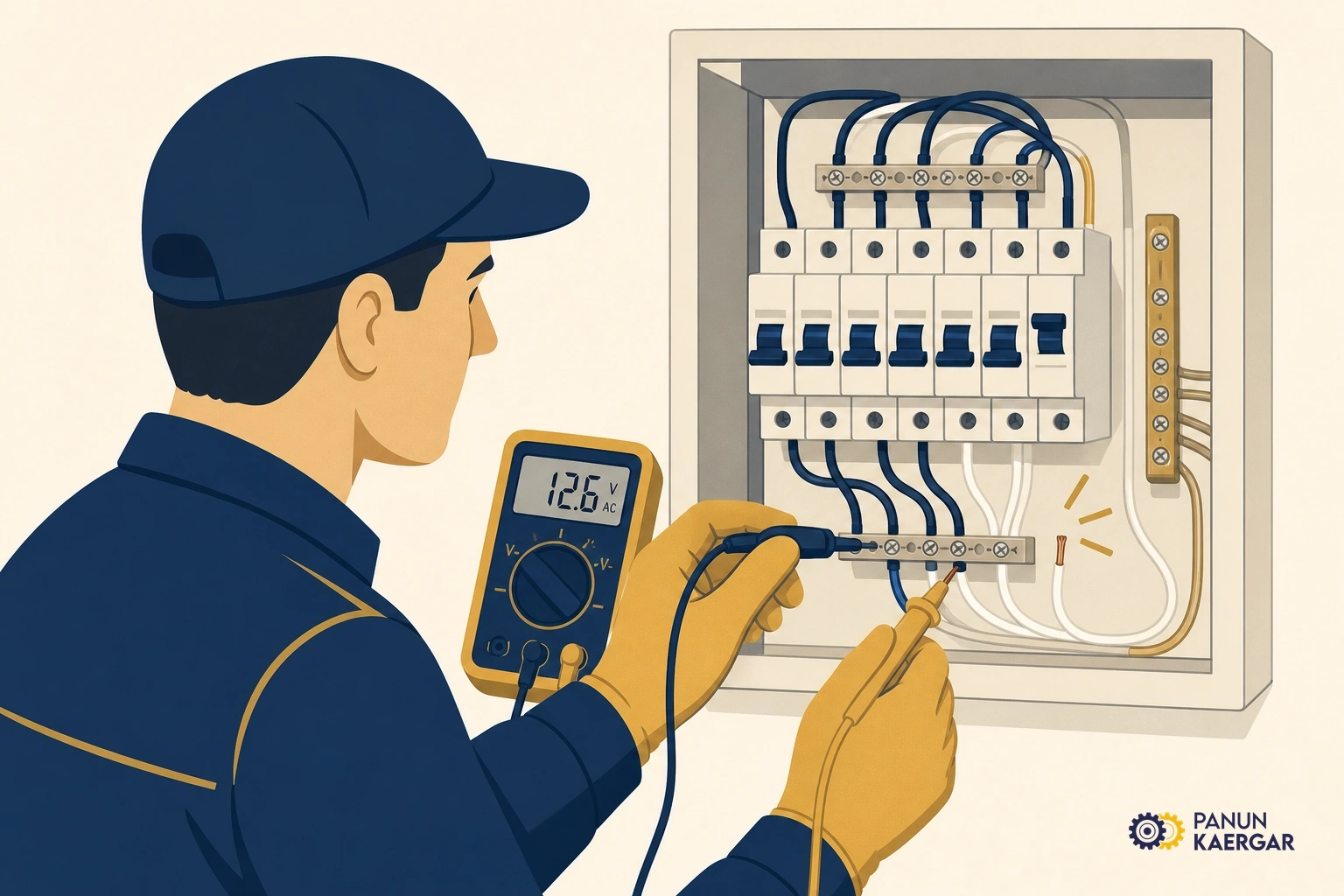
Take one clear photo before taking anything apart. It helps a professional see the pattern and saves guesswork.
Kashmir home note
Winter load from heaters and geysers can make marginal circuits show symptoms that look like a bad bulb. Check the simple things first, but do not ignore heat or smell.
What not to do
These shortcuts usually cost more than they save.
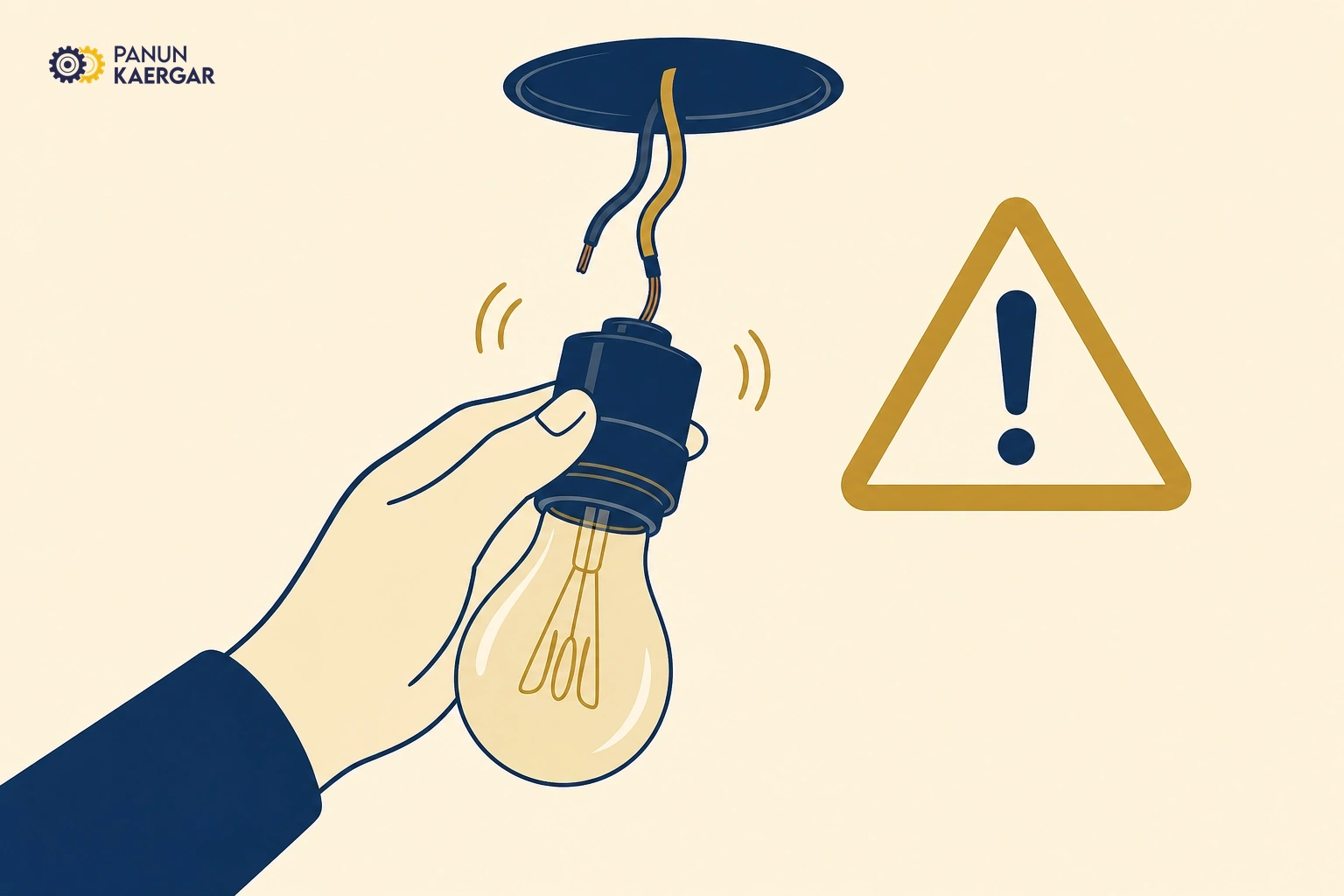
Wiggle live fittings
Shock and short-circuit risk
Touching a live holder or twisting wires while power is on can cause a shock or spark. Switch off at the breaker before any check.
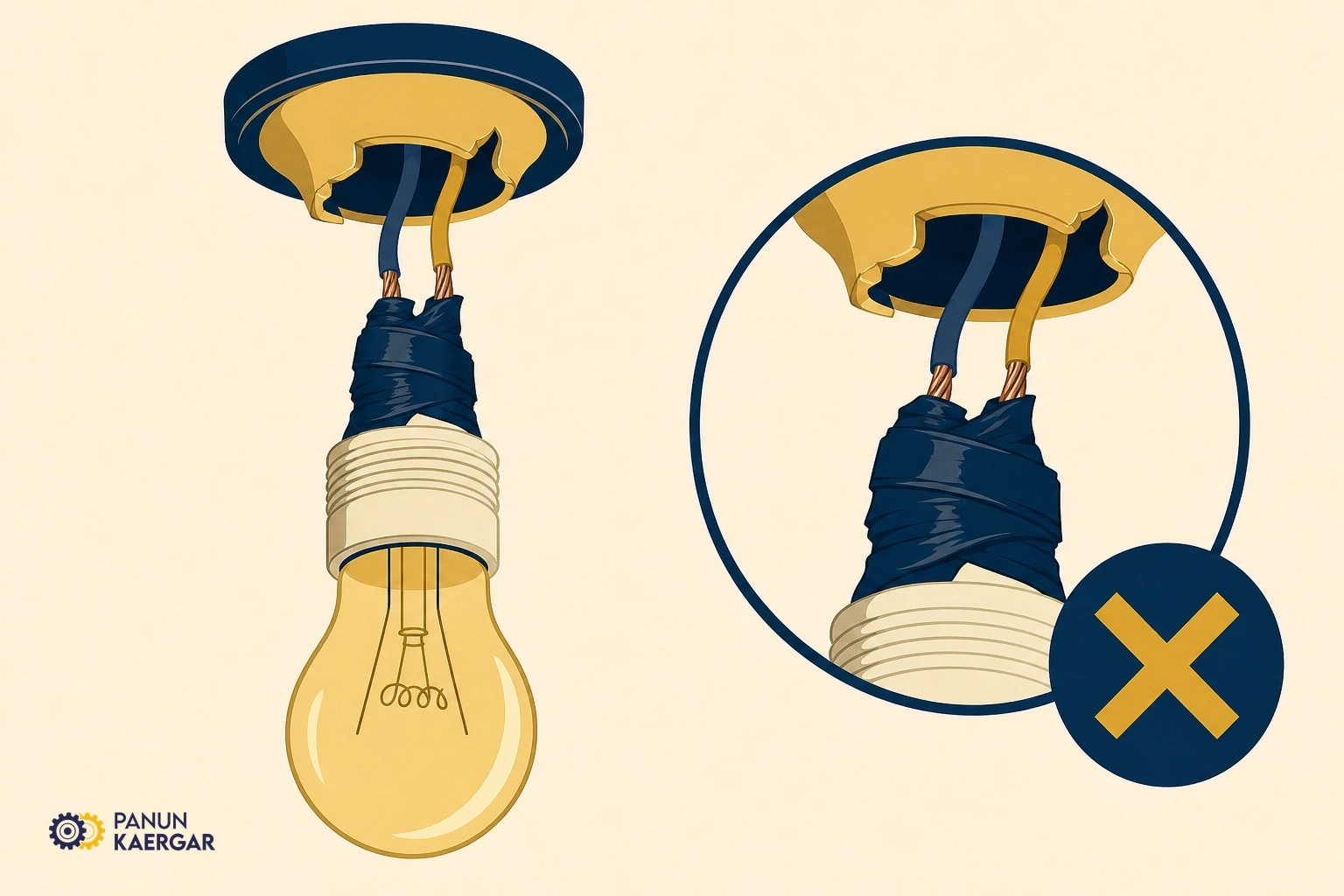
Bypass a holder with tape or wire
Creates a fire hazard
Taping wires or bypassing a holder leaves bare connections that can overheat. A proper holder or electrician fix is the safe route.
Ignore flicker with a burning smell
Often means overheating wiring
A burning smell with flicker usually points to arcing or a hot connection, not a bad bulb. Turn off the circuit and book an electrician.

Keep it from returning
Fix the small trigger, keep the area clean and dry where relevant, and deal with repeat symptoms before they become a replacement job.
When to book a professional
Book an electrician for heat, buzzing, scorch marks, whole-room flicker, or flicker that continues with a new bulb.
FAQs
What is the first check for lights flickering?
Switch off, tighten the bulb, or swap in a known-good lamp.
Can I keep using it?
Only if there is no safety risk or spreading damage. Stop when the symptom worsens.
Why did this start suddenly?
A change in load, moisture, wear, cleaning product, or season often exposes a weak point.
Will a temporary fix last?
It can buy time, but repeat symptoms need the cause corrected.
When should I book help?
Book an electrician for heat, buzzing, scorch marks, whole-room flicker, or flicker that continues with a new bulb.