
The bedroom fan starts a metallic tick every night just as the room settles, then a wobble that makes the light kit shiver — and someone reaches for oil without killing the power first.
Switch the fan off at the wall, tighten visible canopy and blade screws, check that blades are not bent or unequal, and test on a medium speed. Burning smell, sparking, a hot switch, or noise that returns after a careful tighten needs an electrician.
Quick diagnosis map
Start with the symptom, not the most dramatic fix. A small check now can save a cabinet, appliance, or Sunday afternoon.
| What you notice | Likely reason | First move |
|---|---|---|
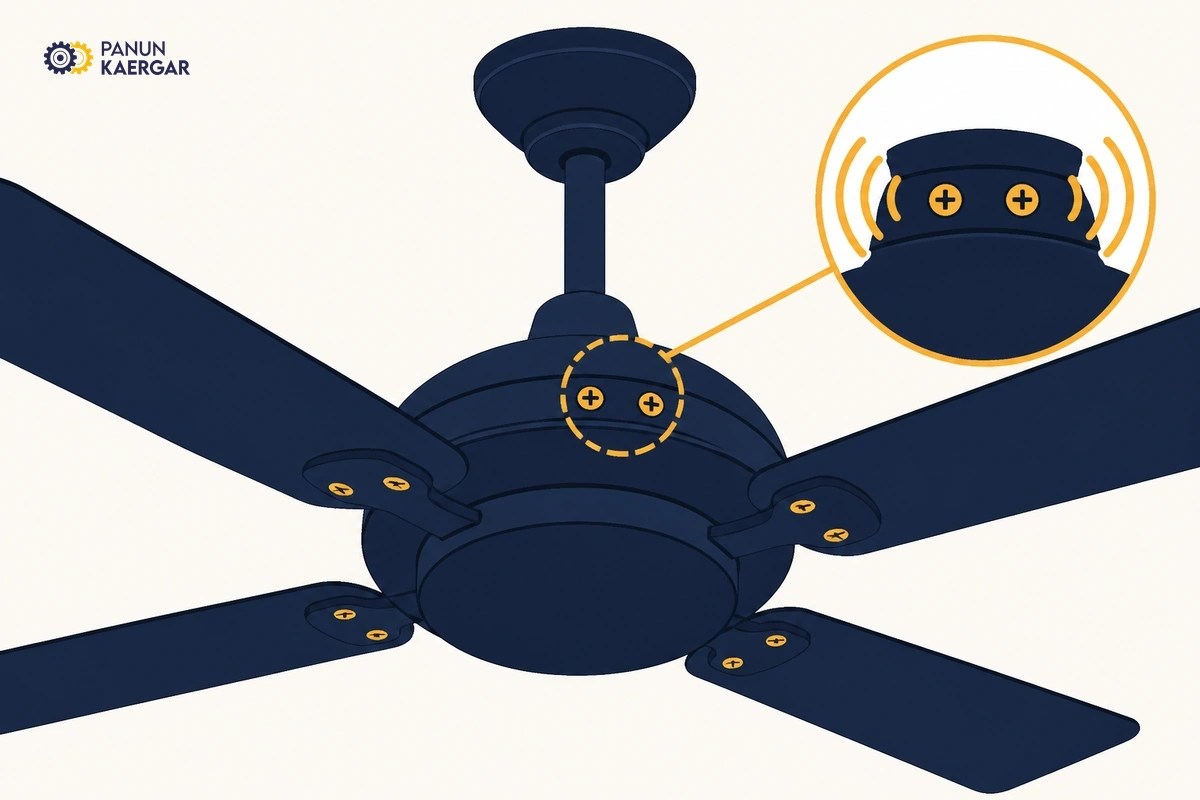
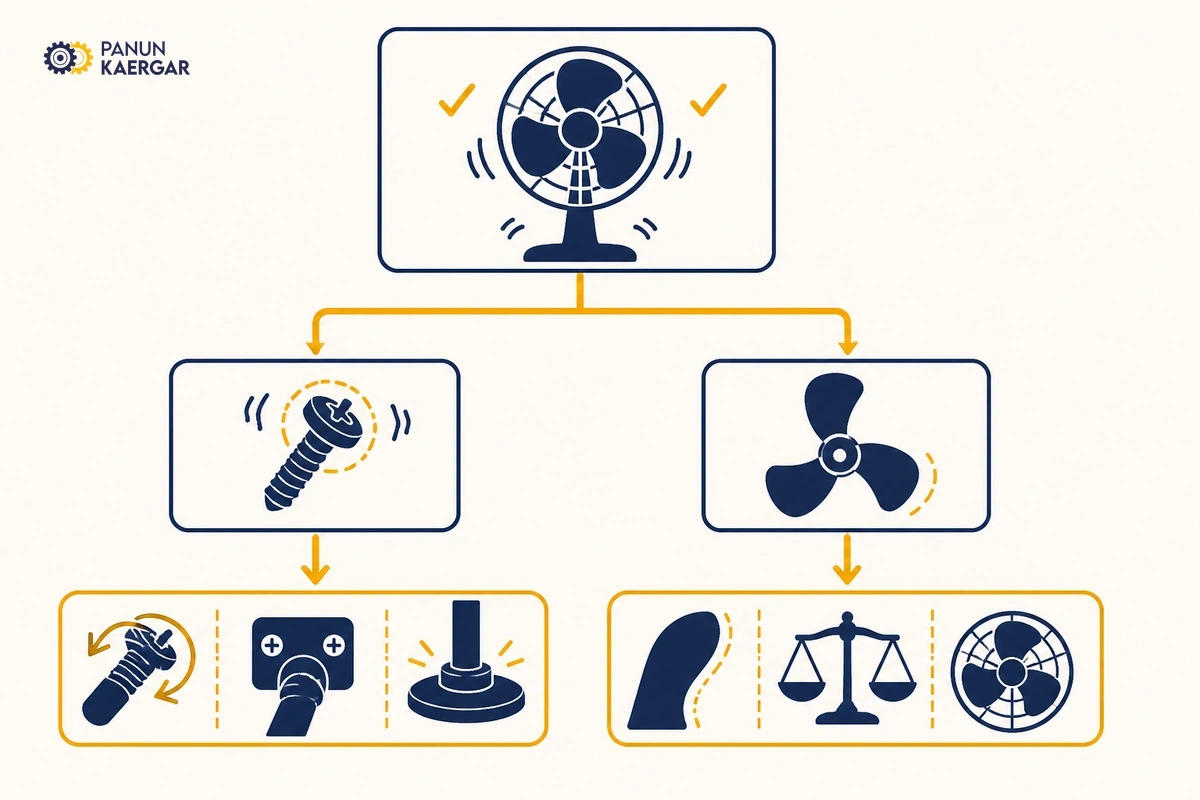
| Tick, rattle, or hum from a running ceiling fan | Loose canopy screws, unbalanced blades, worn bearings, or a switch/regulator fault | Switch off the fan and MCB if needed, then snug the canopy and downrod screws without stripping them. |
| Problem worsens after use | An underlying fault or hidden damage | Stop adding load; inspect safely. |
| Heat, burning smell, leak, or sudden pain | Safety issue, not a DIY puzzle | Switch off / isolate / get help. |
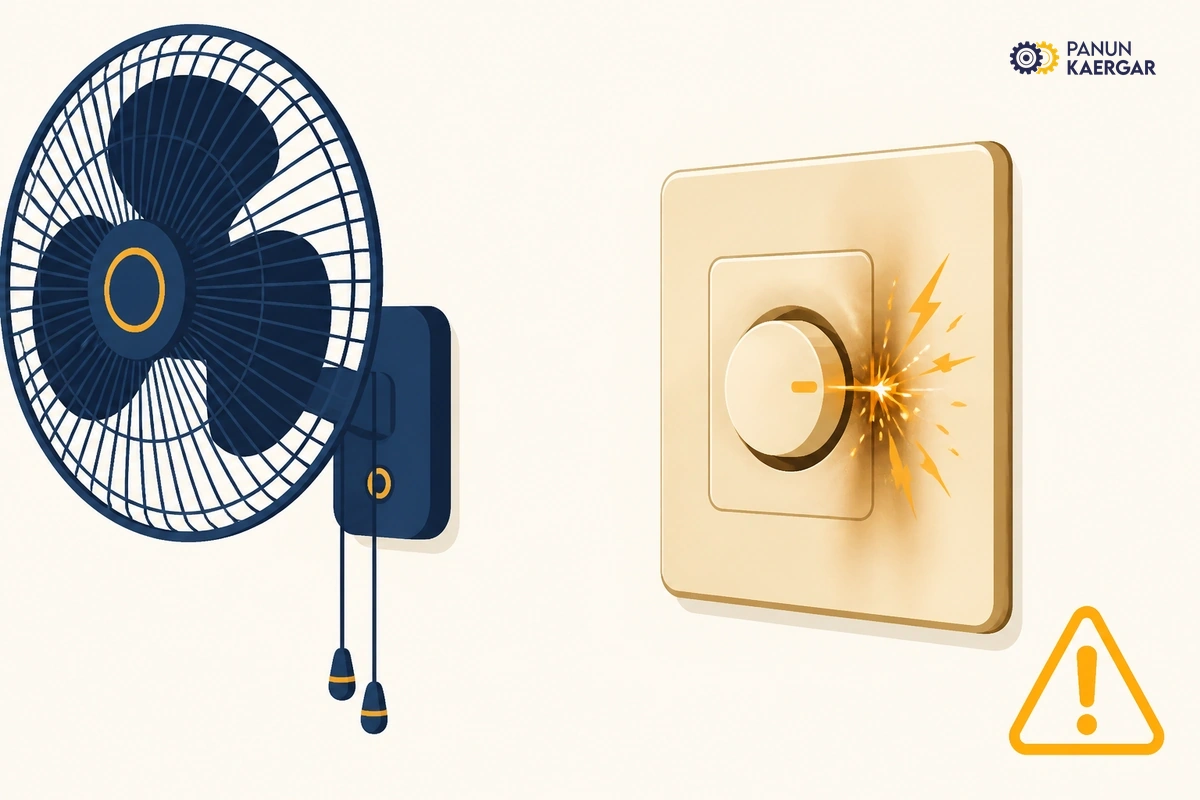
Do not oil a live fan, stand on unstable furniture under a spinning blade, or ignore sparking at the regulator.
What usually causes this
The visible symptom is useful, but the small detail around it usually tells the real story.
- Canopy or downrod screws loosened by vibration over months.
- One blade slightly bent, dusty, or fitted with a different pitch.
- Dry bearings, a failing capacitor, or a loose wall regulator connection.
Try these in order
Begin with the reversible checks. The goal is a clean fix, not winning an argument with a stubborn household thing.
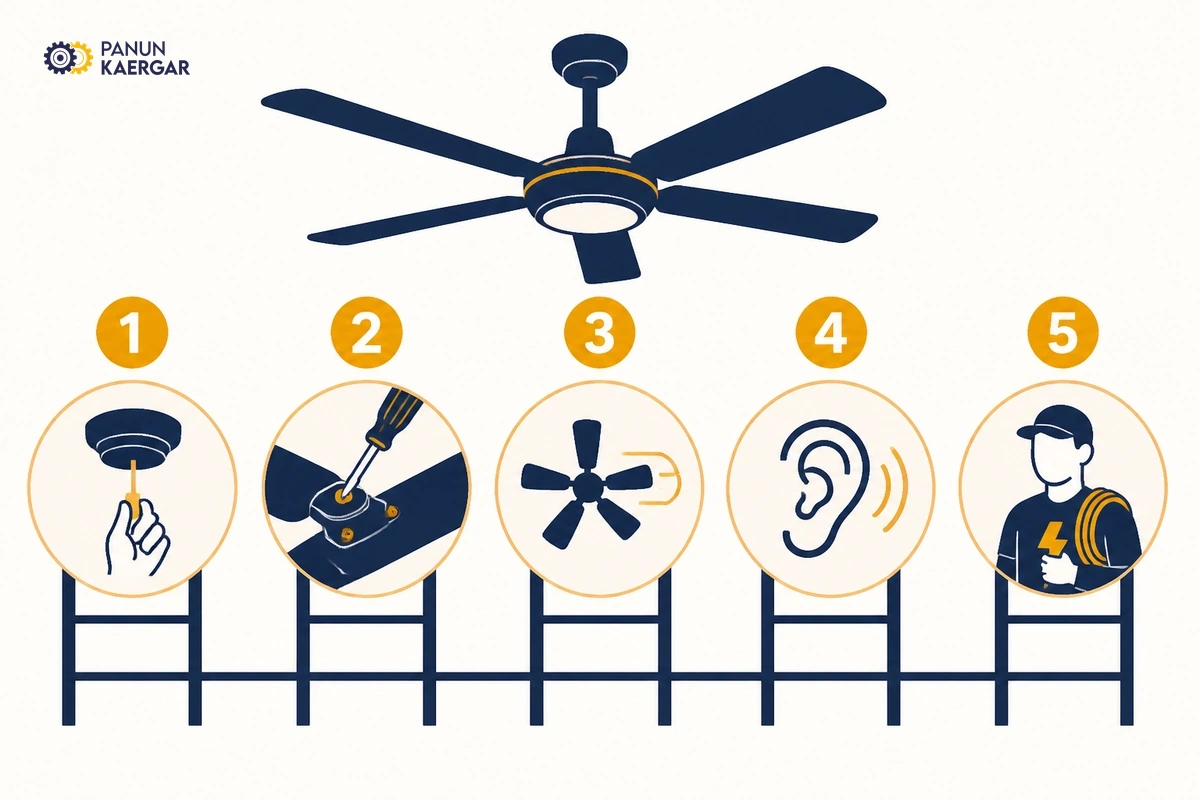
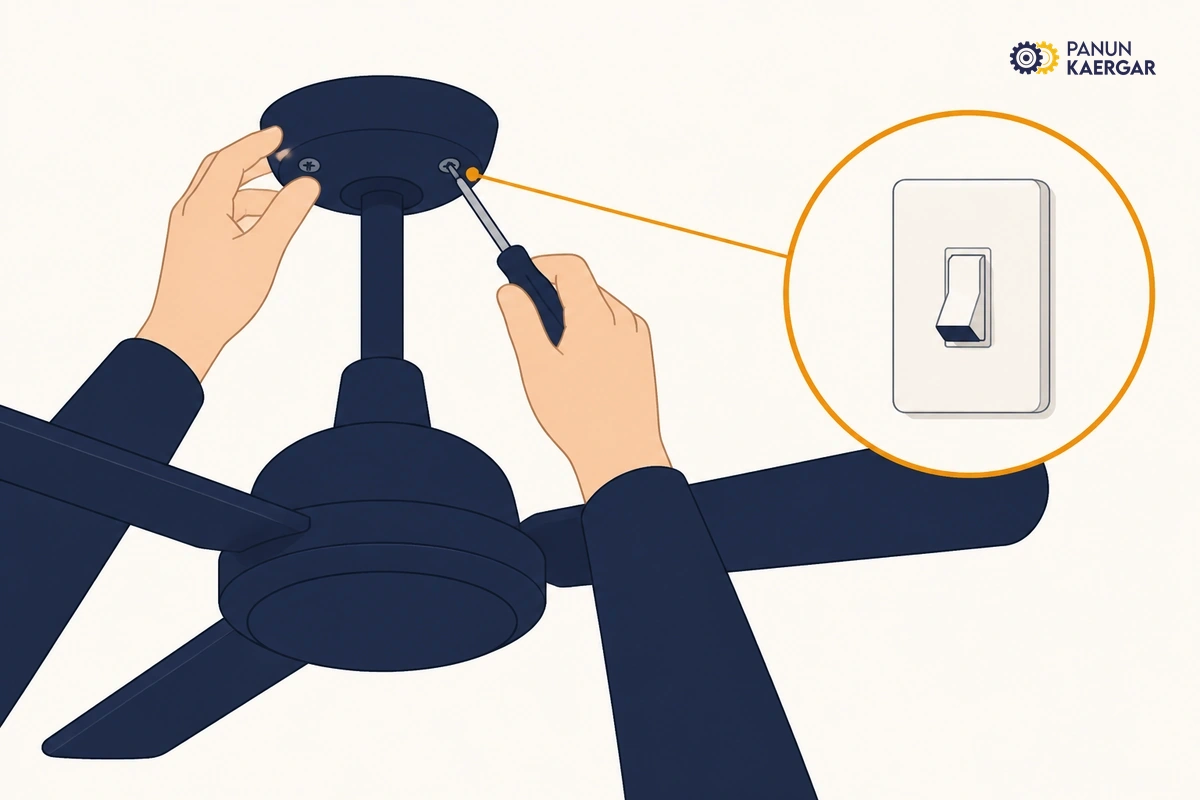
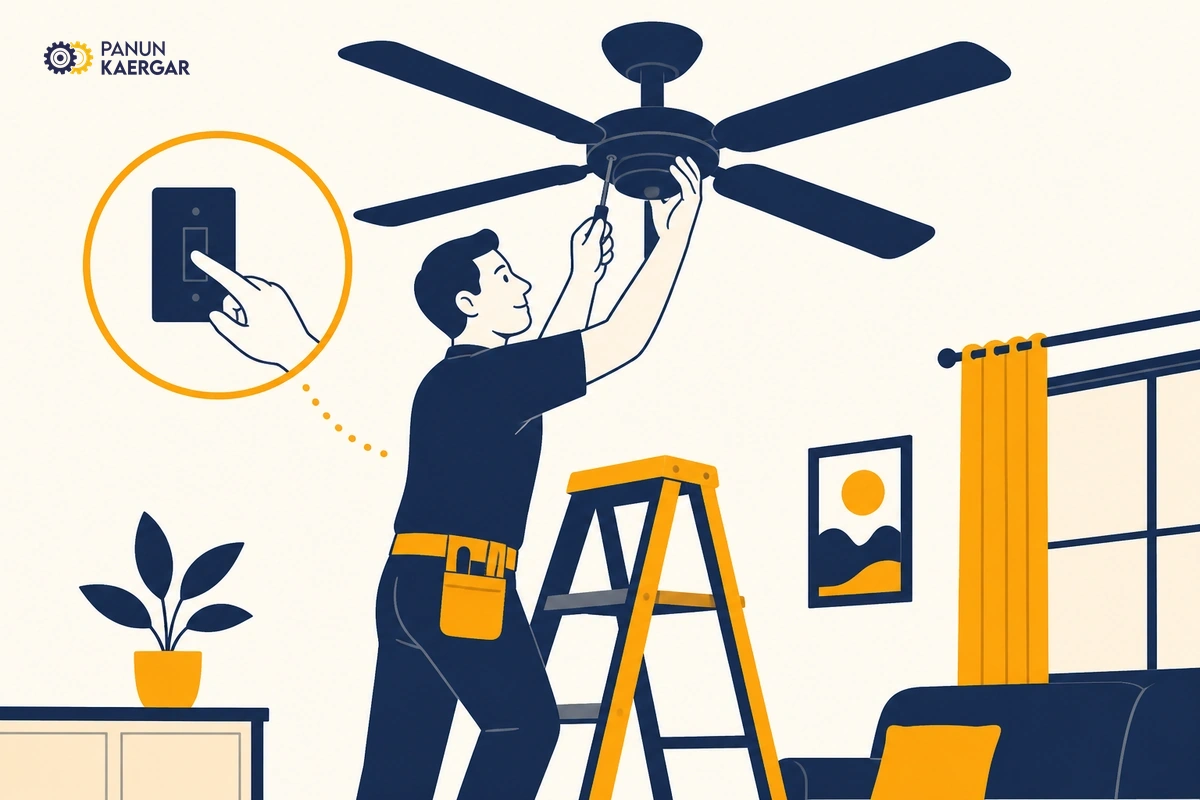
Kill power and tighten the canopy
Best for: a tick from the ceiling rose
Switch off the fan and MCB if needed, then snug the canopy and downrod screws without stripping them.
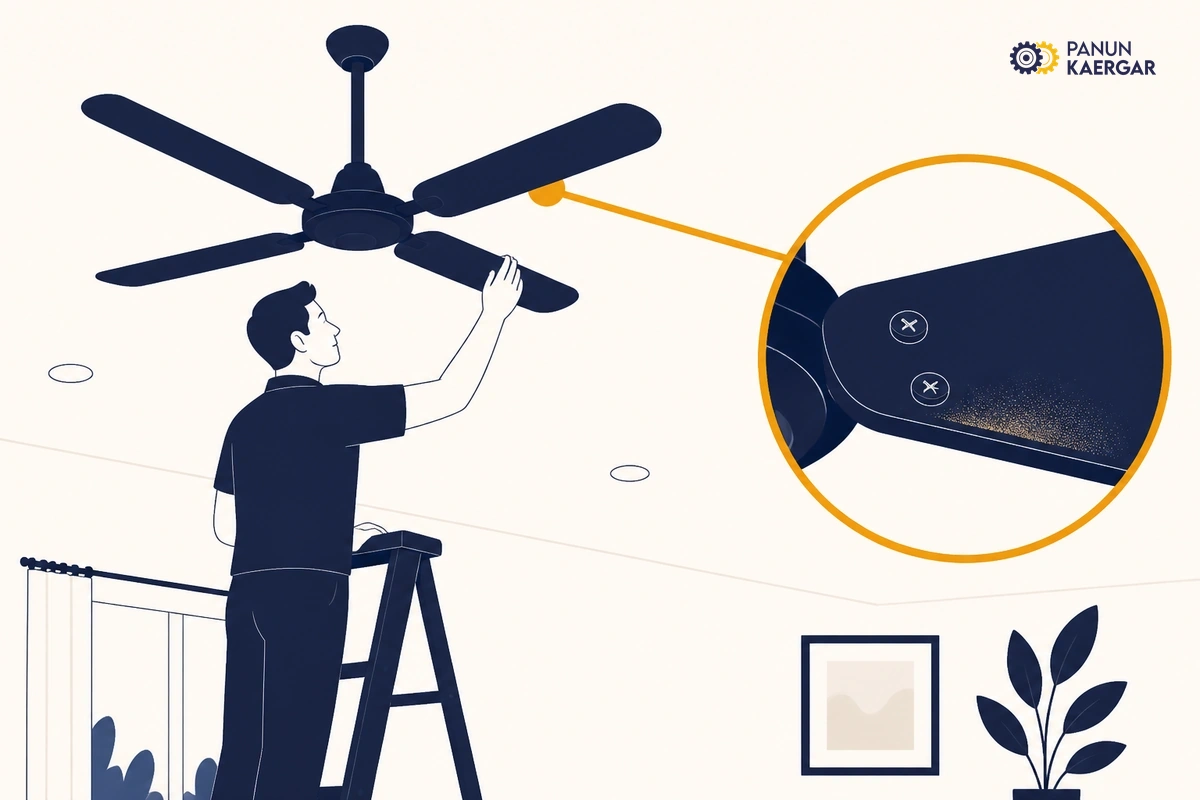
Check blade screws and balance
Best for: a wobble or slap
Confirm each blade screw is firm and blades look even; clean heavy dust that pulls one side off balance.
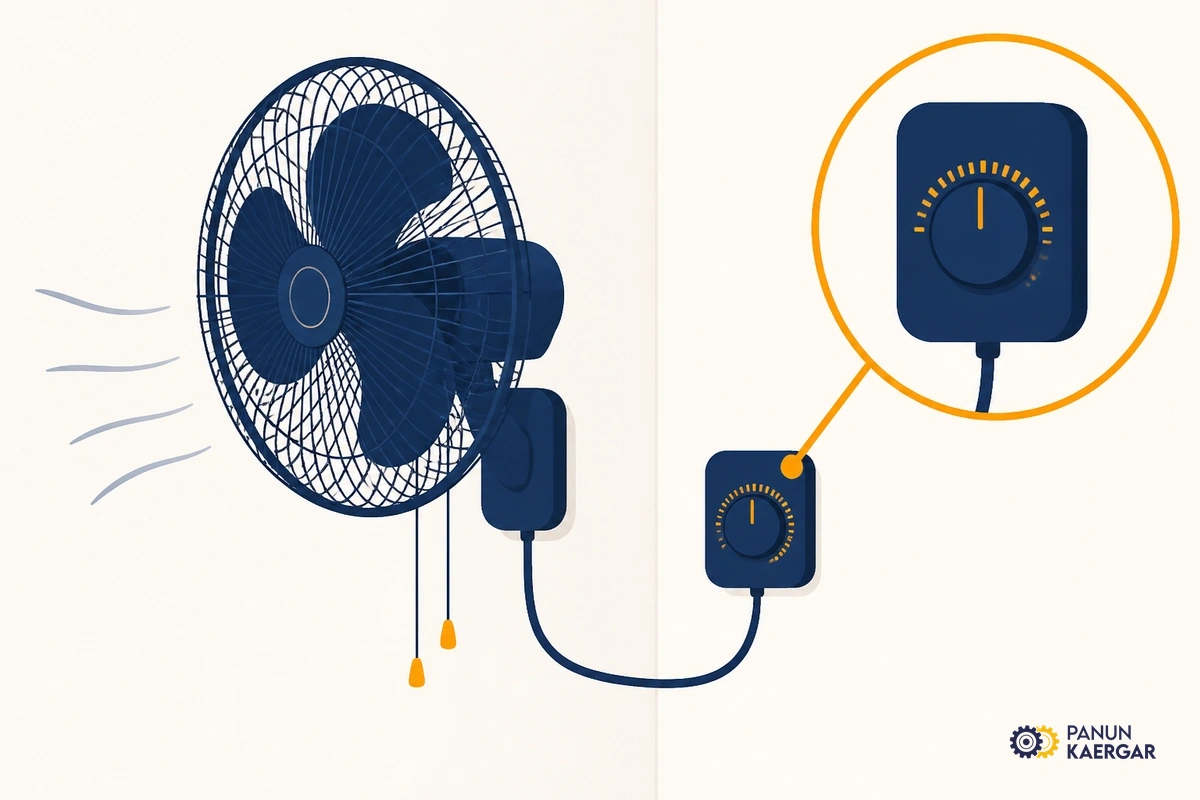
Test speeds after a clean tighten
Best for: noise only on one setting
Run low and medium first; a regulator that crackles or smells warm is an electrical issue, not a blade issue.
Note bearing or motor sounds
Best for: a grind that survives tightening
A deep grind or squeal that continues after screws are tight often means bearings or motor service.
Book an electrician
Best for: sparking, heat, or repeat noise
A pro can check the capacitor, regulator, earthing, and secure the fan without DIY live work.

Take one clear photo before taking anything apart. It helps a professional see the pattern and saves guesswork.
Kashmir home note
Kashmir fans run long hours in summer and sit through damp winters. Screw vibration plus seasonal expansion often sounds like a failing motor when it is only a canopy that needs a safe tighten.
What not to do
These shortcuts usually cost more than they save.
Oil a spinning fan
Injury and shock risk
Never reach into blades that are moving, and never work on wiring with the wall switch still on.

Ignore sparking at the regulator
Fire and trip risk
A crackling speed regulator is an electrical fault — stop using that control and book help.
Bend blades by hand to 'fix' wobble
Makes imbalance worse
Forcing a blade changes pitch permanently; clean and tighten first, then let a pro balance it.

Keep it from returning
Fix the small trigger, keep the area clean and dry where relevant, and deal with repeat symptoms before they become a replacement job.
When to book a professional
Book an electrician for sparking, burning smell, a hot switch, noise after screws are tight, a severe wobble, or a fan that trips the MCB.
FAQs
What is the first check for ceiling fan making noise?
Switch off the fan and MCB if needed, then snug the canopy and downrod screws without stripping them.
Can I keep using it?
Only if there is no safety risk or spreading damage. Stop when the symptom worsens.
Why did this start suddenly?
A change in load, moisture, wear, cleaning product, or season often exposes a weak point.
Will a temporary fix last?
It can buy time, but repeat symptoms need the cause corrected.
When should I book help?
Book an electrician for sparking, burning smell, a hot switch, noise after screws are tight, a severe wobble, or a fan that trips the MCB.