
The bathroom handle spins a little before it catches, the rose sits proud of the door, and someone keeps using it until the spindle slips and the door will not latch from inside.
Tighten rose and through-bolts, check the spindle and latch operation, and lubricate a sticky latch lightly. A broken spring, stripped wood around the lock, or a lock that will not secure the home needs a carpenter.
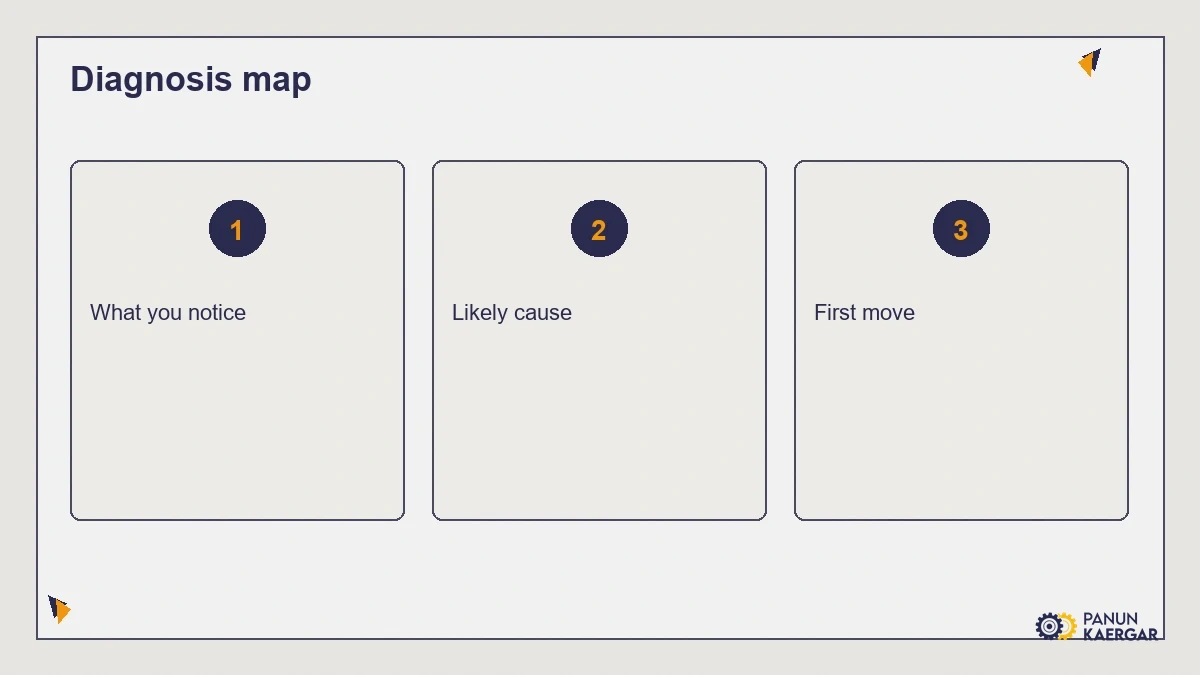
Quick diagnosis map
Start with the symptom, not the most dramatic fix. A small check now can save a cabinet, appliance, or Sunday afternoon.
| What you notice | Likely reason | First move |
|---|---|---|
| Handle wobbles, spins, or lock will not latch cleanly | Loose rose screws, worn spindle, dry latch, or failing lockset | Hold the handle steady and snug the rose or through-bolts — do not keep using a spinning handle that is about to strip. |
| Problem worsens after use | An underlying fault or hidden damage | Stop adding load; inspect safely. |
| Heat, burning smell, leak, or sudden pain | Safety issue, not a DIY puzzle | Switch off / isolate / get help. |
Do not keep using a handle that spins freely, force a key in a sticky cylinder with pliers, or widen the latch hole with a knife until the door barely holds.
What usually causes this
The visible symptom is useful, but the small detail around it usually tells the real story.
- Rose or through-bolts loosened by daily use.
- Spindle tip worn so the handle turns without driving the latch.
- Dry or dusty latch bolt sticking in the strike plate.
Try these in order
Begin with the reversible checks. The goal is a clean fix, not winning an argument with a stubborn household thing.
Support the handle and tighten the rose
Best for: a wobbling lever
Hold the handle steady and snug the rose or through-bolts — do not keep using a spinning handle that is about to strip.
Check the spindle and grub screw
Best for: handle turns without latching
Confirm the spindle is seated and any grub screw on the handle neck is firm before replacing the whole lock.
Watch the latch into the strike
Best for: door closes but will not catch
See whether the latch hits above, below, or beside the strike plate; a small plate adjust often beats forcing the door.
Light latch care only
Best for: a sticky but intact lock
Wipe dust and use a light lock-safe lubricant on the latch bolt — avoid soaking the lock body with thick oil.
Book a carpenter
Best for: stripped wood, broken spring, or security risk
A pro can remount a lock in sound wood, replace a worn spindle or lockset, and align the strike so the door secures properly.
Take one clear photo before taking anything apart. It helps a professional see the pattern and saves guesswork.
Kashmir home note
Daily bathroom humidity and busy family doors wear Kashmir locksets quickly. A slightly loose handle is easier to fix than a spindle that has already rounded off inside soft timber.
What not to do
These shortcuts usually cost more than they save.
Keep using a spinning handle
Rounds the spindle
Each turn on a loose rose wears the spindle square until the latch no longer moves at all.
Force a sticky key with pliers
Snaps the key
Pliers on a sticking cylinder often snap the key in the lock and turn a simple service into an emergency.
Carve a bigger latch hole with a knife
Door barely holds
Widening the strike roughly leaves the latch barely catching — a security and slam risk.
Keep it from returning
Fix the small trigger, keep the area clean and dry where relevant, and deal with repeat symptoms before they become a replacement job.
When to book a professional
Book a carpenter for stripped screw holes around the rose, a broken internal spring, a lock that will not secure bedrooms or exterior doors, or a cylinder that sticks after basic care.
Need hands-on help? Book verified carpentry services in Kashmir or find a carpenter near you on Panun Kaergar when DIY has done its part.
FAQs
What is the first check for door handle loose or lock sticky?
Hold the handle steady and snug the rose or through-bolts — do not keep using a spinning handle that is about to strip.
Can I keep using it?
Only if there is no safety risk or spreading damage. Stop when the symptom worsens.
Why did this start suddenly?
A change in load, moisture, wear, cleaning product, or season often exposes a weak point.
Will a temporary fix last?
It can buy time, but repeat symptoms need the cause corrected.
When should I book help?
Book a carpenter for stripped screw holes around the rose, a broken internal spring, a lock that will not secure bedrooms or exterior doors, or a cylinder that sticks after basic care.