
On a cold winter morning, the geyser indicator glows but the shower stays stubbornly lukewarm. Someone reaches for the thermostat dial and cranks it to maximum — which is rarely the first fix.
Confirm the geyser switch and MCB are on, check the indicator or heating light, verify thermostat setting, and look for leaks or a dripping safety valve. Lukewarm water after these checks, burning smell, or repeated tripping needs a geyser technician.
Quick diagnosis map
Start with the symptom, not the most dramatic fix. A small check now can save a cabinet, appliance, or Sunday afternoon.
| What you notice | Likely reason | First move |
|---|---|---|
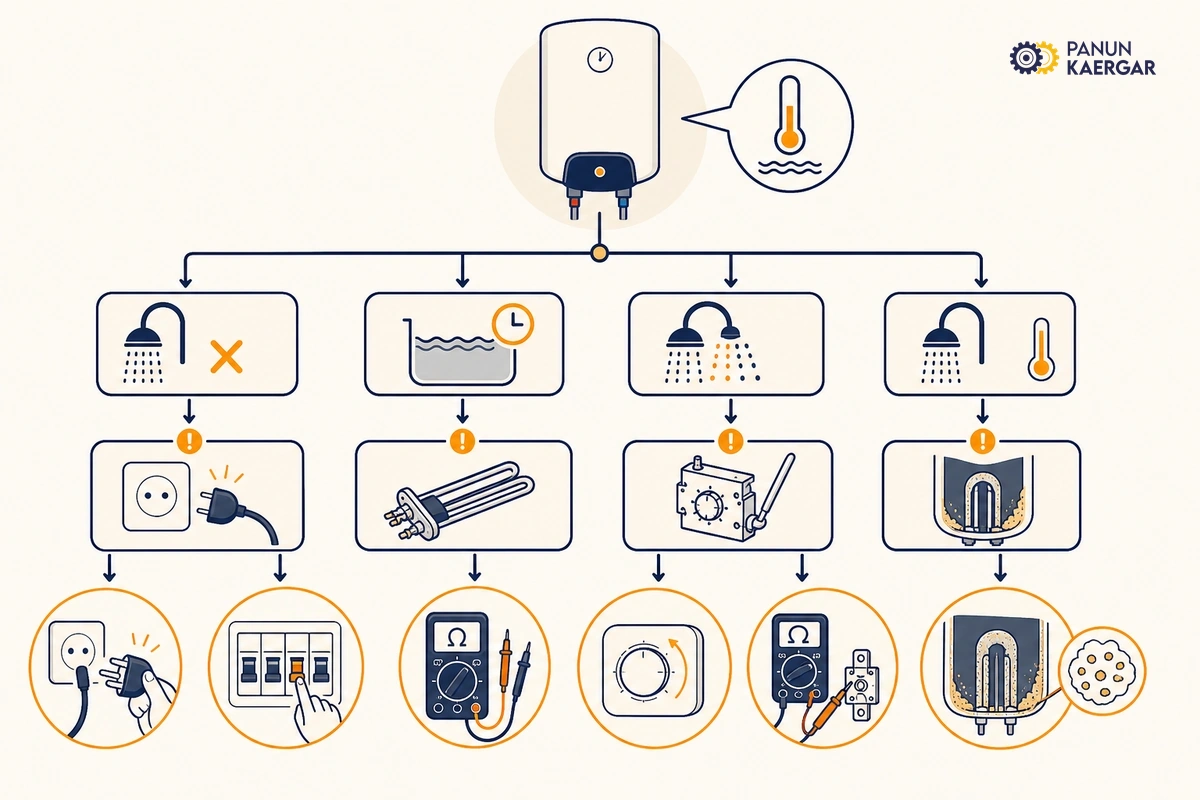
| Geyser runs but water stays cold or lukewarm | Tripped power, failed element, thermostat fault, or scale buildup | Check the dedicated geyser switch, the bathroom MCB, and whether other loads on that circuit work. |
| Problem worsens after use | An underlying fault or hidden damage | Stop adding load; inspect safely. |
| Heat, burning smell, leak, or sudden pain | Safety issue, not a DIY puzzle | Switch off / isolate / get help. |
Do not bypass the thermostat, open the tank cover yourself, or ignore a burning smell or hot outer shell.
What usually causes this
The visible symptom is useful, but the small detail around it usually tells the real story.
- MCB tripped or wall switch turned off after an overload.
- Heating element failed after years of hard-water scaling.
- Thermostat stuck low, faulty, or accidentally set to vacation mode.
Try these in order
Begin with the reversible checks. The goal is a clean fix, not winning an argument with a stubborn household thing.
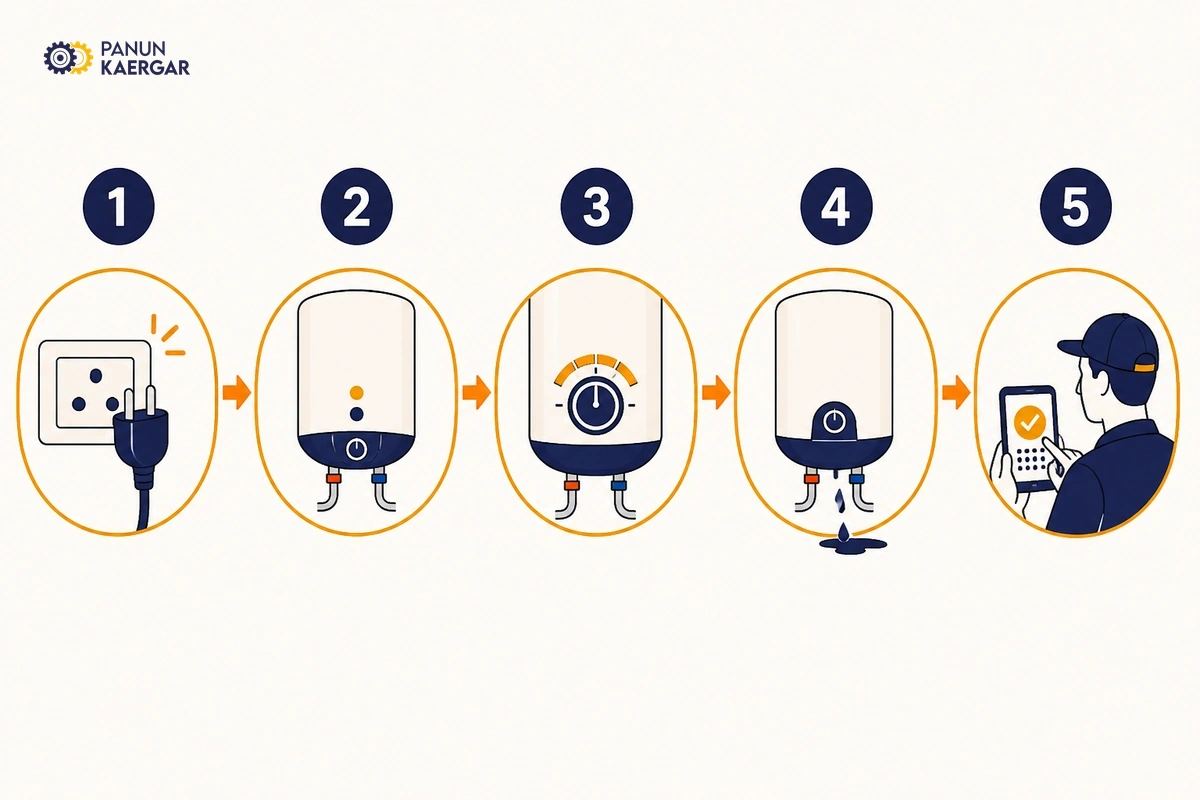
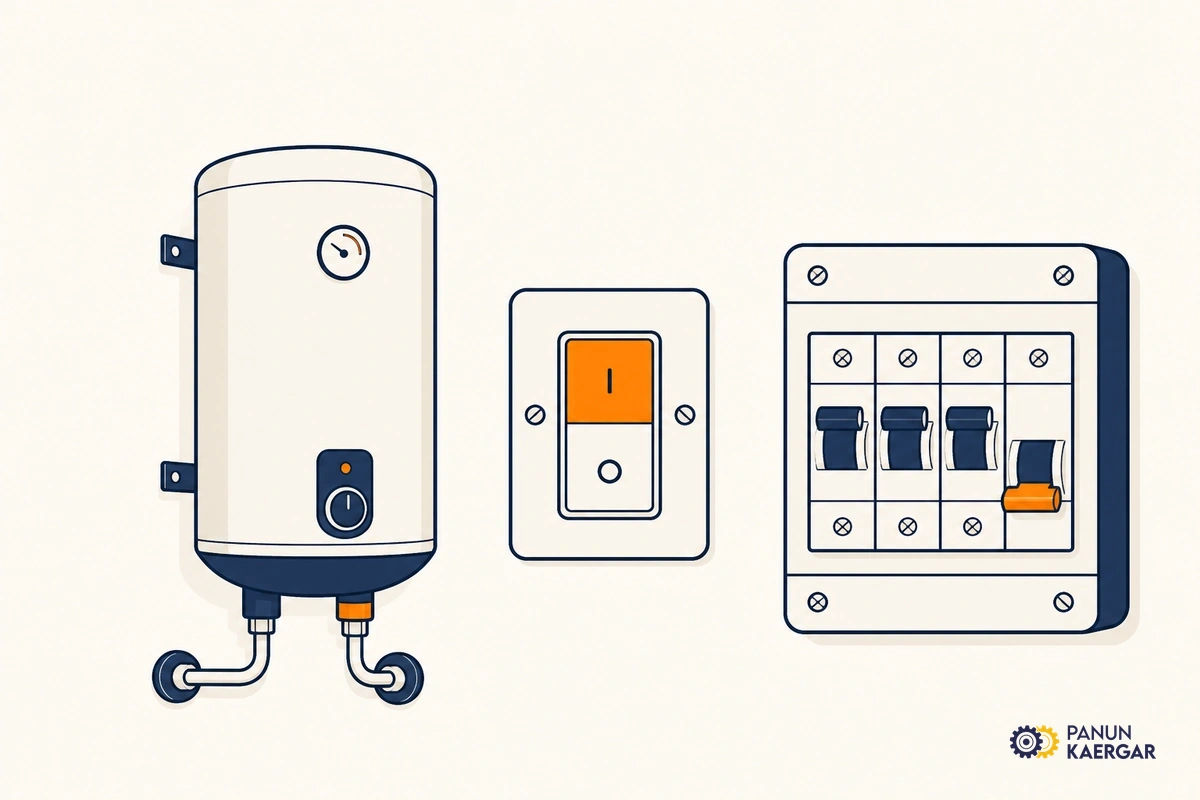
Confirm power is actually on
Best for: any no-heat complaint
Check the dedicated geyser switch, the bathroom MCB, and whether other loads on that circuit work.
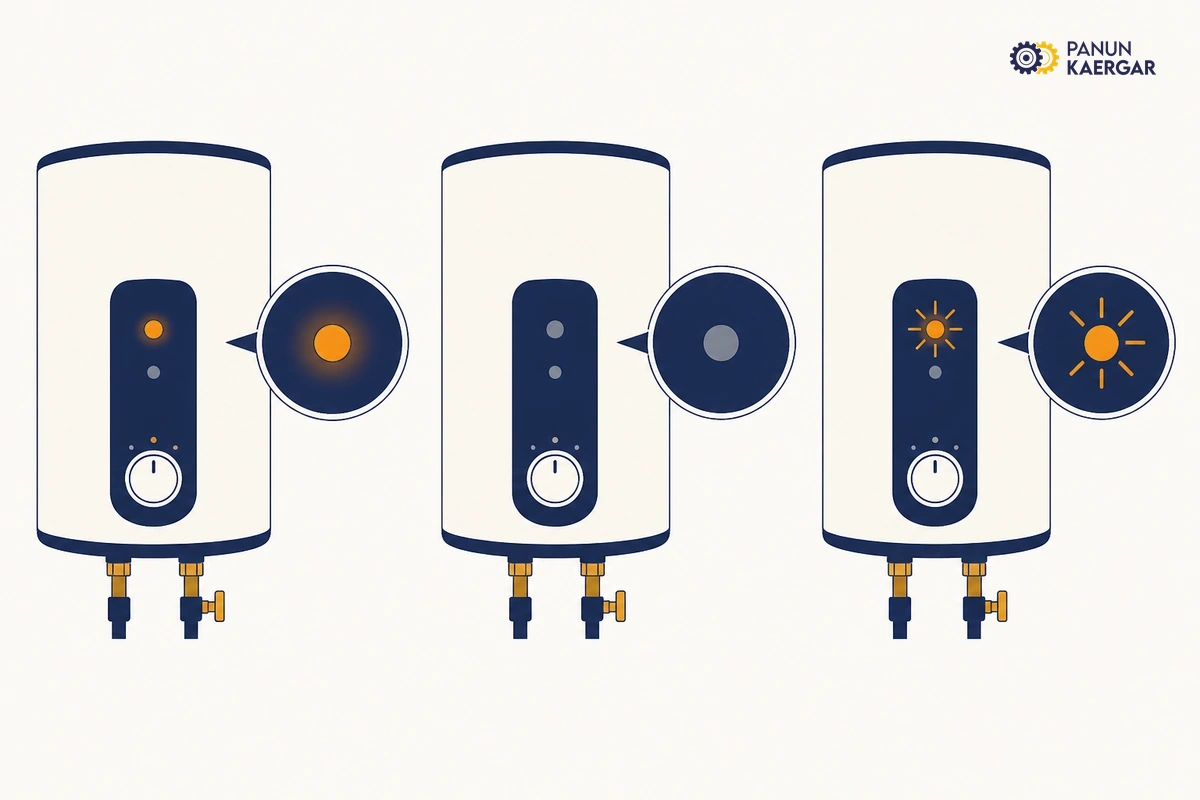
Read the indicator lights
Best for: a glowing panel but cold water
Note whether the heating LED stays on, flickers, or never activates when hot water is drawn.
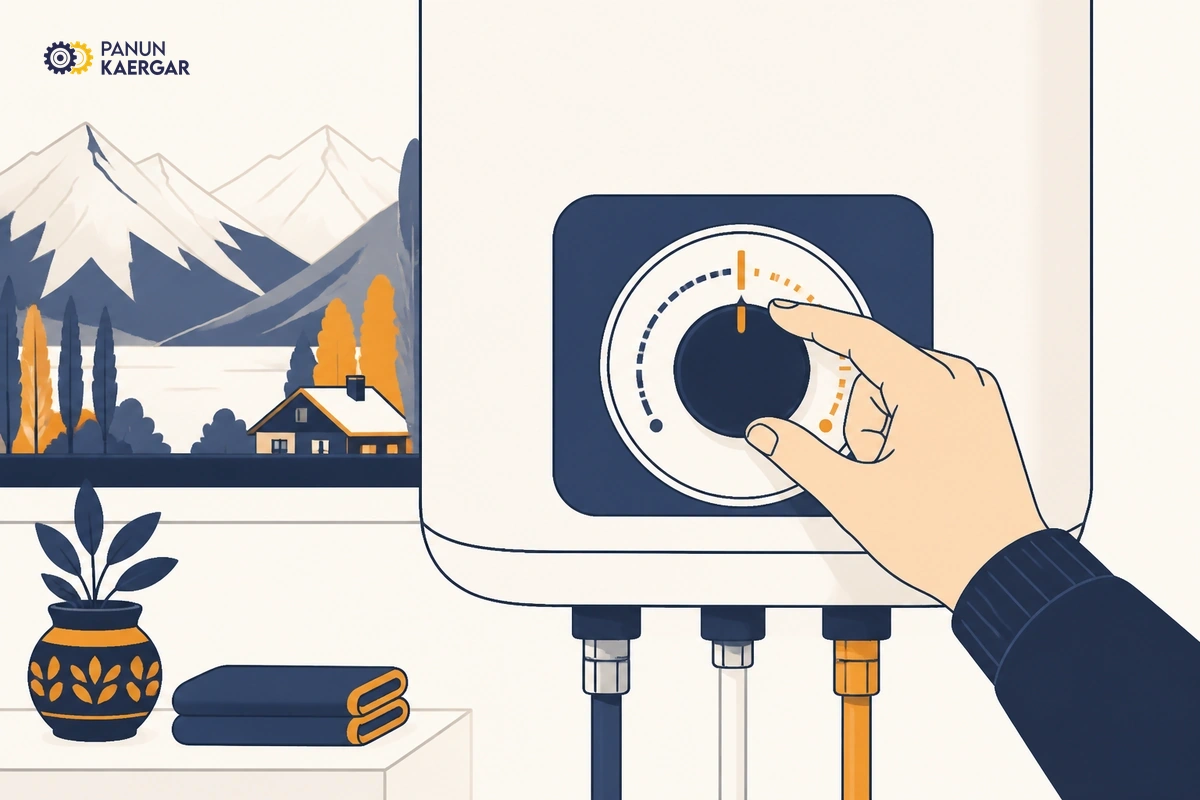
Check thermostat setting
Best for: lukewarm not cold
Set a sensible temperature and wait fifteen minutes; avoid maxing the dial to compensate.
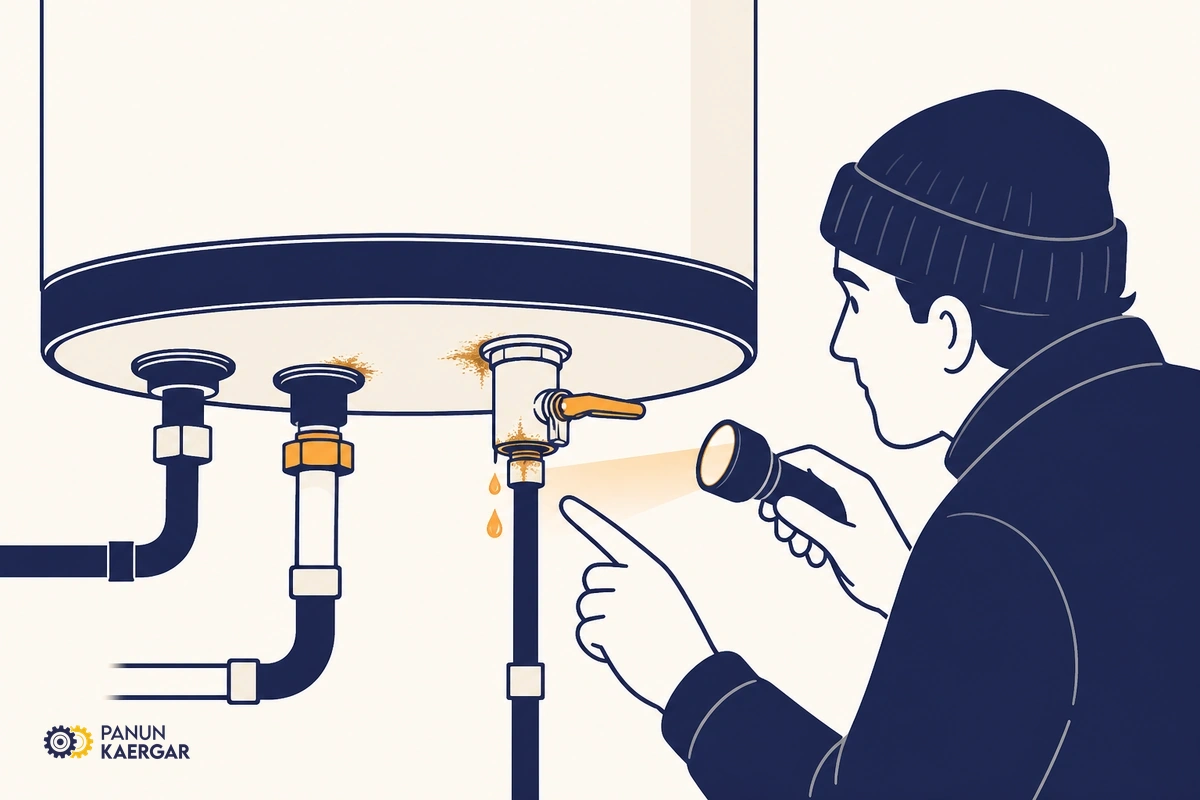
Look for leaks and valve drip
Best for: safety and pressure issues
Inspect the tank base, pipe joints, and pressure relief valve for active dripping or rust streaks.
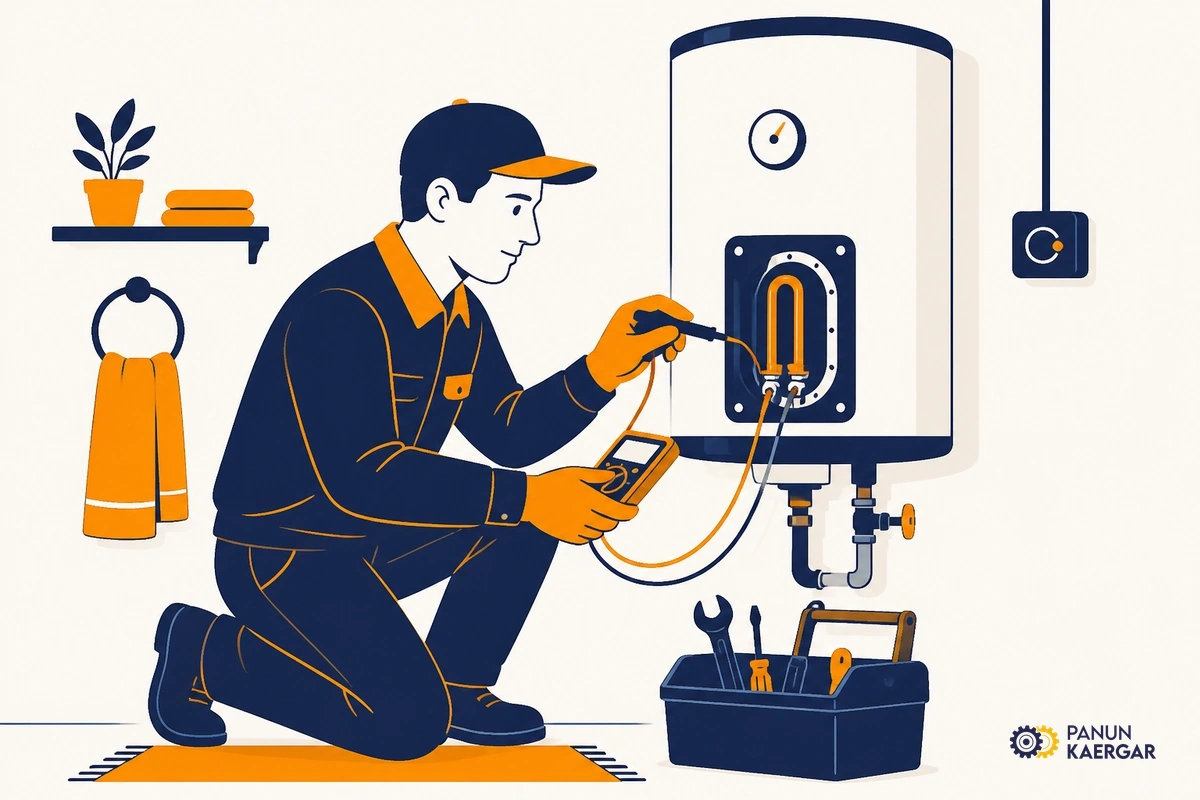
Book element or thermostat service
Best for: no improvement after checks
A technician can test the element, descale if needed, and replace a faulty thermostat safely.
Take one clear photo before taking anything apart. It helps a professional see the pattern and saves guesswork.
Kashmir home note
Hard water and a cold inlet in winter make geysers work harder in Kashmir. Scaling often shows up as longer heat-up times long before the tank stops completely.
What not to do
These shortcuts usually cost more than they save.
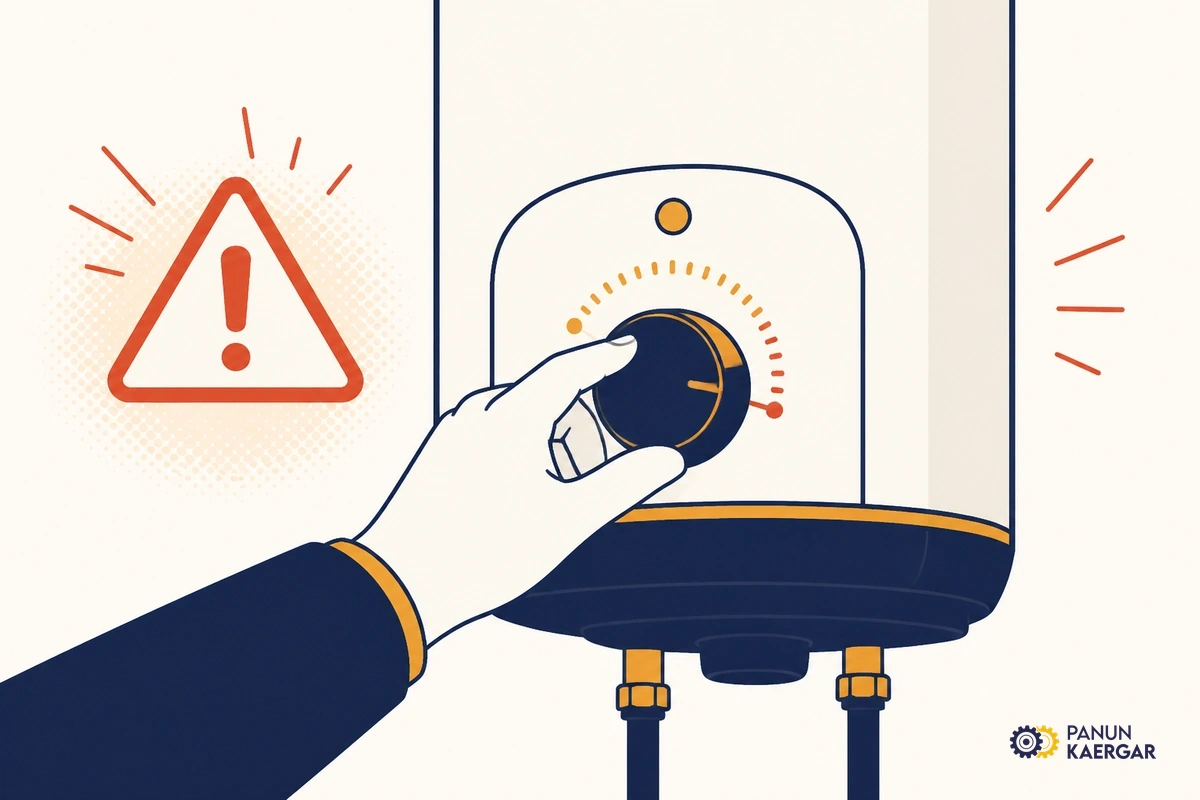
Crank thermostat to maximum
Masks a fault and risks scalding
Turning the dial to max does not fix a failed element; it can overheat water and stress safety parts.
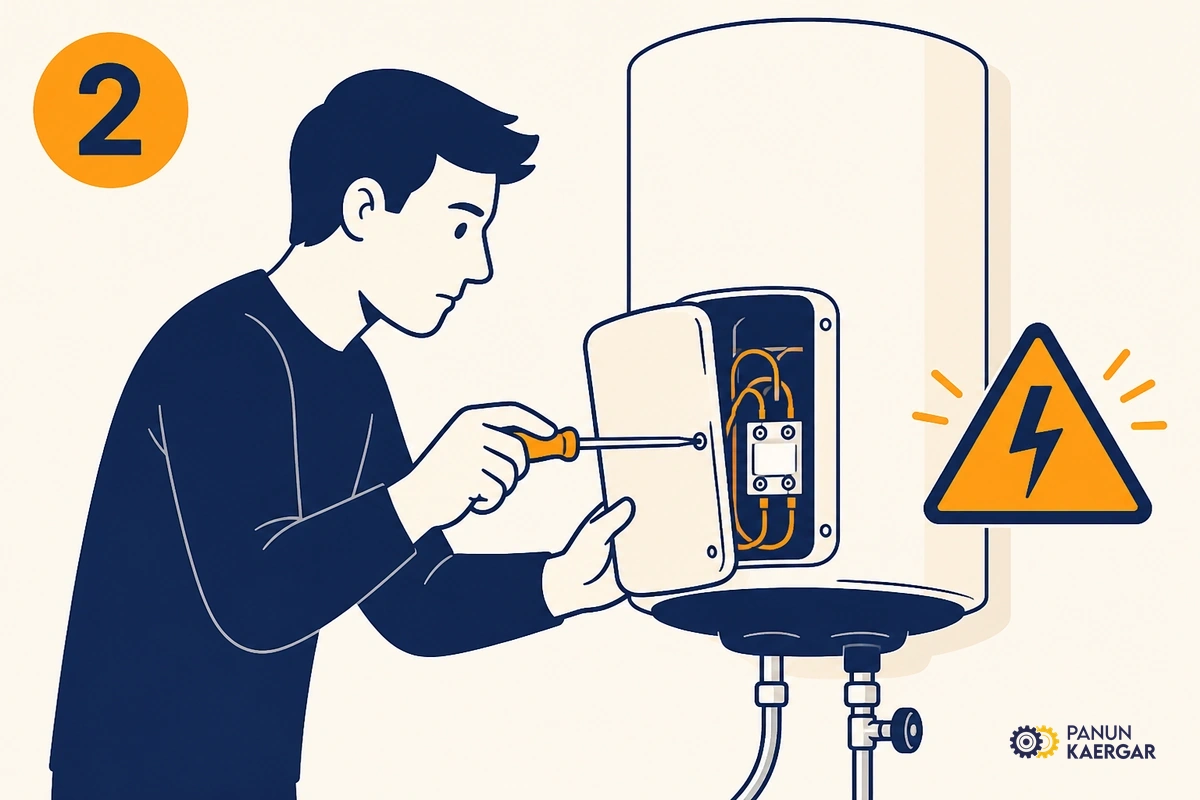
Open the tank cover yourself
Live wiring and pressure risk
Geyser internals carry mains voltage and hot water under pressure; DIY opening is dangerous.
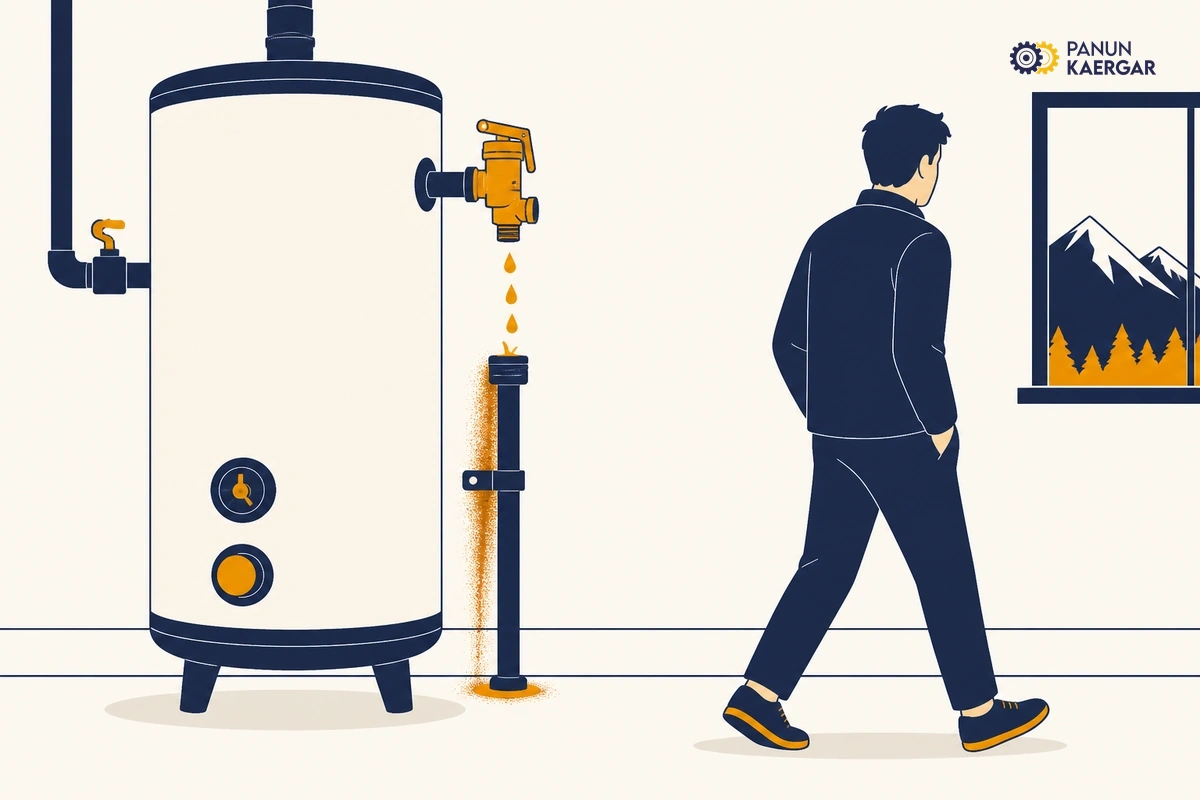
Ignore a dripping safety valve
Pressure or heating fault
A relief valve that drips constantly can signal over-pressure, failed thermostat, or scaling.
Keep it from returning
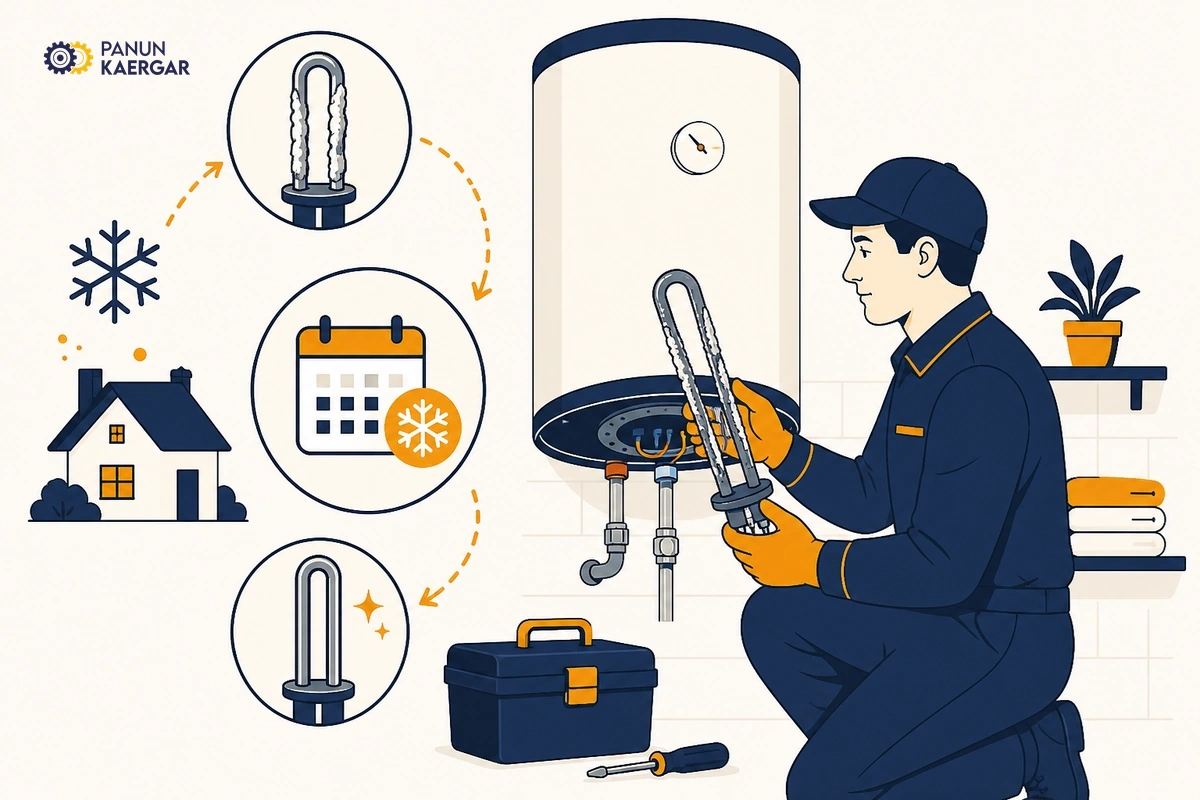
Fix the small trigger, keep the area clean and dry where relevant, and deal with repeat symptoms before they become a replacement job.
When to book a professional
Book a geyser technician for no heat after power checks, a tripping MCB, leaking tank, dripping relief valve, or water that suddenly runs very hot then cold.
FAQs
What is the first check for geyser not heating?
Check the dedicated geyser switch, the bathroom MCB, and whether other loads on that circuit work.
Can I keep using it?
Only if there is no safety risk or spreading damage. Stop when the symptom worsens.
Why did this start suddenly?
A change in load, moisture, wear, cleaning product, or season often exposes a weak point.
Will a temporary fix last?
It can buy time, but repeat symptoms need the cause corrected.
When should I book help?
Book a geyser technician for no heat after power checks, a tripping MCB, leaking tank, dripping relief valve, or water that suddenly runs very hot then cold.