
The bathroom geyser clicks on and the kitchen bulbs drop to a dull orange for a few seconds. Someone blames the wiring, but the real answer may be a shared circuit, a weak supply, or a heater drawing more than the line can carry.
Note whether dimming happens only when the geyser, heater, or AC starts, check if other rooms flicker too, unplug non-essential loads on that circuit, and test whether the supply voltage is stable. Persistent dimming with a hot board, buzzing, or a tripping MCB needs an electrician to check wiring size, earthing, and load balance.
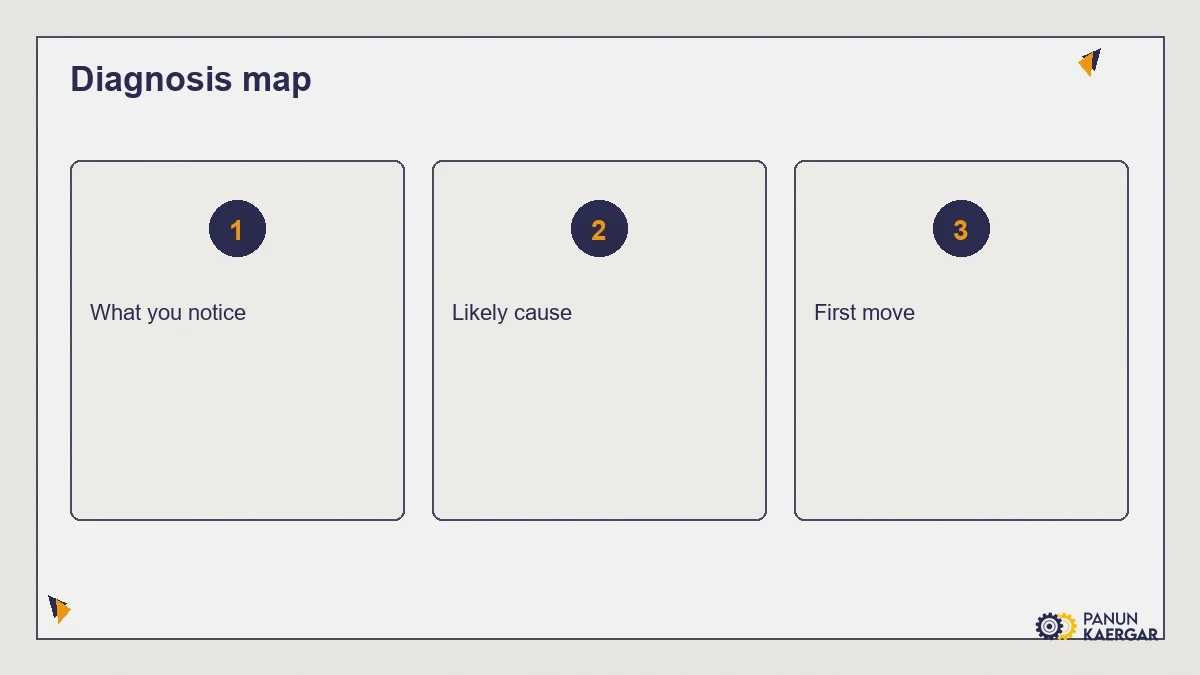
Quick diagnosis map
Start with the symptom, not the most dramatic fix. A small check now can save a cabinet, appliance, or Sunday afternoon.
| What you notice | Likely reason | First move |
|---|---|---|
| Bulbs or tube lights dip when a high-watt appliance starts | Voltage drop from overload, shared circuit, or weak supply | Switch the geyser or heater on and off while watching lights in the same room and nearby rooms — note whether dimming is brief or lasts the whole heat-up. |
| Problem worsens after use | An underlying fault or hidden damage | Stop adding load; inspect safely. |
| Heat, burning smell, leak, or sudden pain | Safety issue, not a DIY puzzle | Switch off / isolate / get help. |
Do not ignore buzzing, a hot distribution board, scorch marks, or dimming that worsens each week — voltage drop under load can damage appliances and loosen connections over time.
What usually causes this
The visible symptom is useful, but the small detail around it usually tells the real story.
- Geyser, immersion rod, or heater on the same circuit as lights and sockets.
- Undersized wiring or a loose connection at the board or a junction box.
- Weak incoming supply or long cable runs that cannot hold voltage under load.
Try these in order
Begin with the reversible checks. The goal is a clean fix, not winning an argument with a stubborn household thing.
Confirm the pattern
Best for: first triage
Switch the geyser or heater on and off while watching lights in the same room and nearby rooms — note whether dimming is brief or lasts the whole heat-up.
Unplug other loads on that circuit
Best for: overload check
Remove heaters, kettles, and irons from sockets on the same line, then start the geyser again and see if dimming eases.
Check labels and breaker grouping
Best for: shared circuit
Look at the distribution board labels to see whether lights and the geyser share one MCB — a common setup in older flats.
Test voltage at a simple socket
Best for: supply stability
If you have a basic multimeter and feel confident, compare socket voltage with the geyser off and on — a large drop suggests load or supply strain. Otherwise note the pattern for the electrician.
Book an electrician
Best for: persistent dimming or danger signs
A pro can measure load, split circuits, tighten connections, and confirm cable size and earthing are safe for a geyser.
If dimming lasts the whole geyser heat-up and not just the first second, suspect a shared circuit or loose connection — not a failing bulb.
Kashmir home note
Kashmir winters push geysers, blowers, and bukhari-adjacent heaters onto the same evening load. Older flats often run lights and a bathroom geyser from one line that was never sized for both.
What not to do
These shortcuts usually cost more than they save.
Swap to higher-watt bulbs
Masks a supply problem
Brighter bulbs draw more current and can worsen voltage drop or overheat fittings on an already strained circuit.
Run geyser and heater on one multi-plug
Overloads one socket line
Stacking high-watt appliances on a single socket or extension multiplies heat and voltage drop at weak connections.
Open the board without isolating mains
Shock and fire risk
Loose terminals cause many dimming faults — but the distribution board must be worked on dead by someone qualified.
Keep it from returning
Keep geysers and room heaters on dedicated circuits where possible, avoid stacking high-watt loads on one multi-plug, and have the board labelled before winter heating season.
When to book a professional
Book an electrician when dimming is constant, the MCB trips with the geyser, you smell burning, the board feels hot, or several rooms flicker whenever one appliance starts.
Need hands-on help? Book verified an electrician through Panun Kaergar across Kashmir when DIY has done its part.
FAQs
Why do lights dim when the geyser starts in Kashmir homes?
High-watt geysers and heaters draw a surge of current when they switch on. If lights share that circuit or the wiring is undersized, voltage drops briefly and bulbs appear dimmer.
Is dimming always dangerous?
Brief dimming on an old shared circuit is common, but constant dimming, buzzing, hot boards, or tripping MCBs are warning signs that need an electrician.
Can I fix this by changing the MCB to a bigger one?
No. A larger breaker without thicker cable increases fire risk. The fix is usually splitting circuits or upgrading wiring to match the load.
Should I use a voltage stabilizer?
A stabilizer may help sensitive appliances on an unstable supply, but it does not replace proper circuit design for a geyser. An electrician should assess whether load splitting is the real fix.
When should I book an electrician for dimming lights?
Book when dimming is persistent, worsens over time, affects several rooms, comes with a hot board, tripping breakers, or burning smells.