
On a warm morning the mattress still smells closed after winter bedding, a faint tea ring sits near the edge, and someone is already pouring a bucket of soapy water onto the foam — which often locks moisture and odour deeper inside.
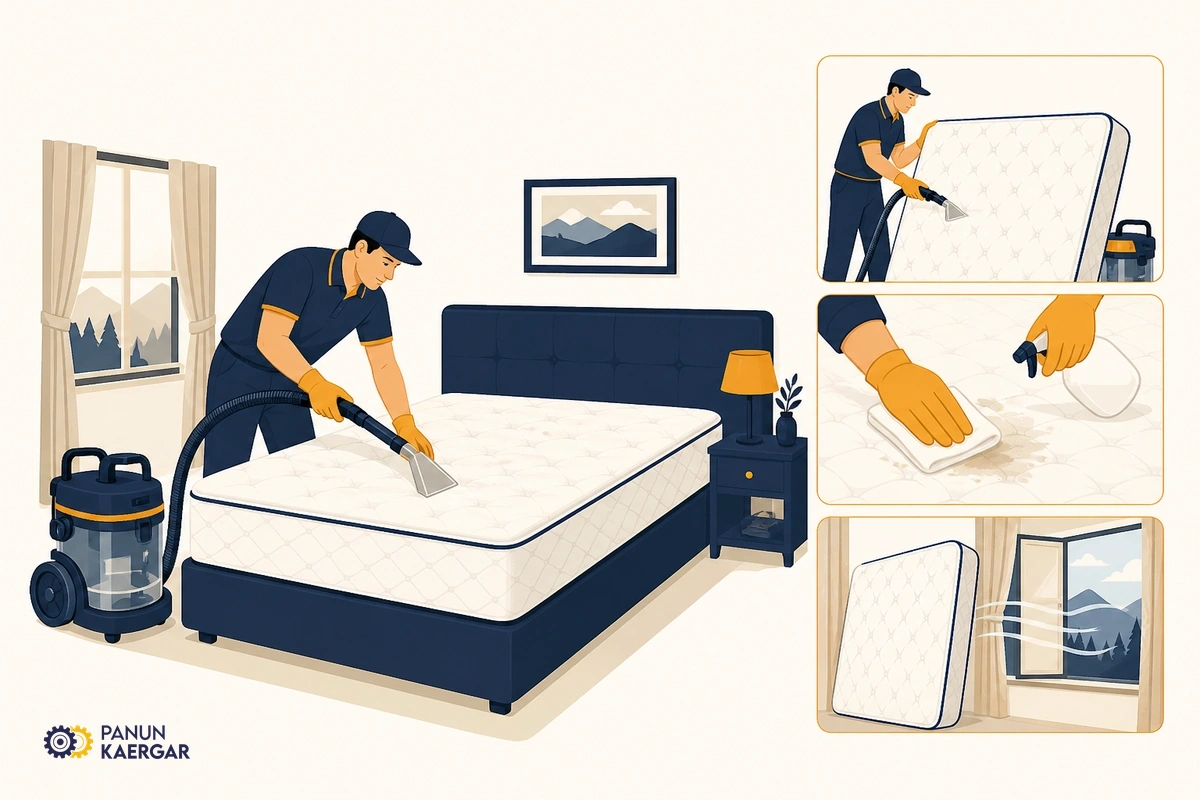
Strip the bedding, vacuum both sides, blot fresh spills without soaking, air the mattress in dry light, and use a light baking-soda refresh only when fully dry. Deep odour, urine, mould spots, or a mattress that stays damp after cleaning needs professional mattress cleaning.
Quick diagnosis map
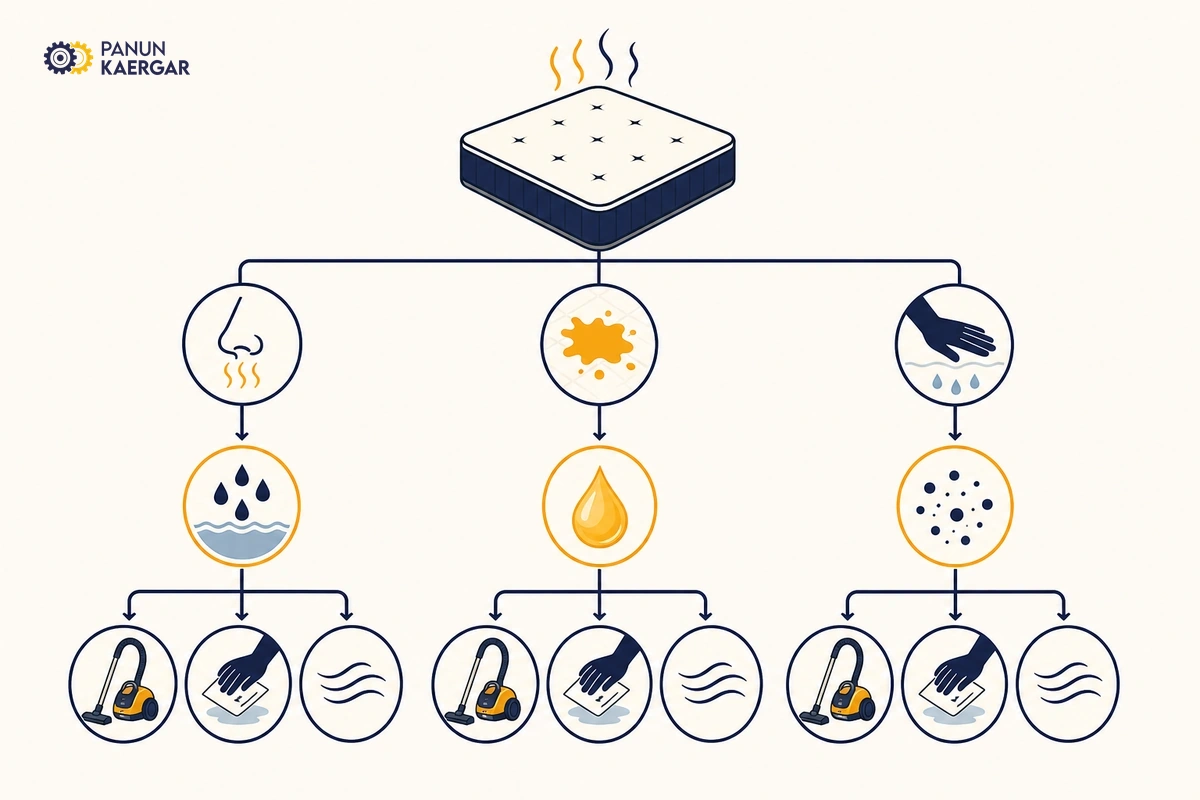
Start with the symptom, not the most dramatic fix. A small check now can save a cabinet, appliance, or Sunday afternoon.
| What you notice | Likely reason | First move |
|---|---|---|
| Stale smell, surface stain, or damp feel in the mattress | Trapped moisture, body oils, spill residue, or dust buildup in the cover and foam | Remove all covers, vacuum the top, sides, and underside with an upholstery tool, and empty the canister outside so dust does not settle back in the room. |
| Problem worsens after use | An underlying fault or hidden damage | Stop adding load; inspect safely. |
| Heat, burning smell, leak, or sudden pain | Safety issue, not a DIY puzzle | Switch off / isolate / get help. |
Do not soak the foam with buckets of water, scrub stains into a wider ring, or put a damp mattress back under heavy covers the same night.
What usually causes this
The visible symptom is useful, but the small detail around it usually tells the real story.
- Sweat and body oils building up under closed winter bedding with little airing.
- Spills rubbed wider or flooded with water so foam stays wet and smells musty.
- Dust, dead skin, and allergen buildup on a mattress never vacuumed or rotated.
Try these in order
Begin with the reversible checks. The goal is a clean fix, not winning an argument with a stubborn household thing.
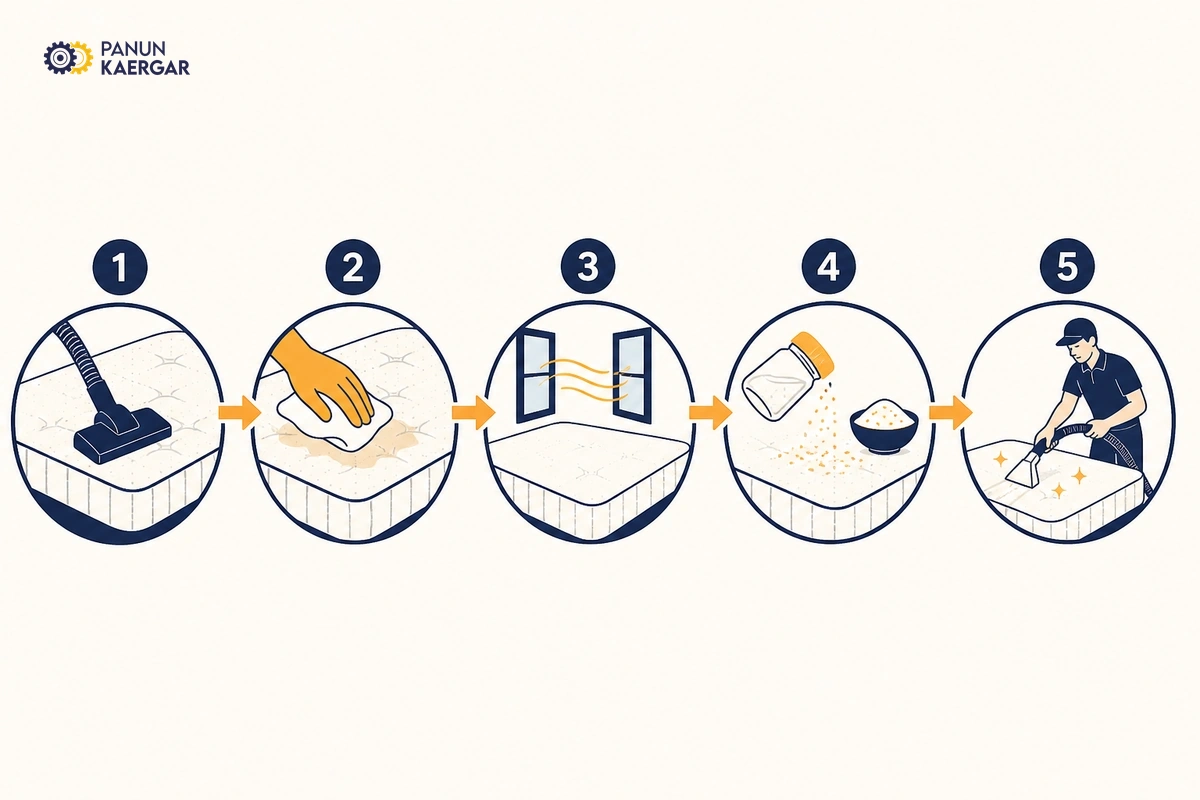
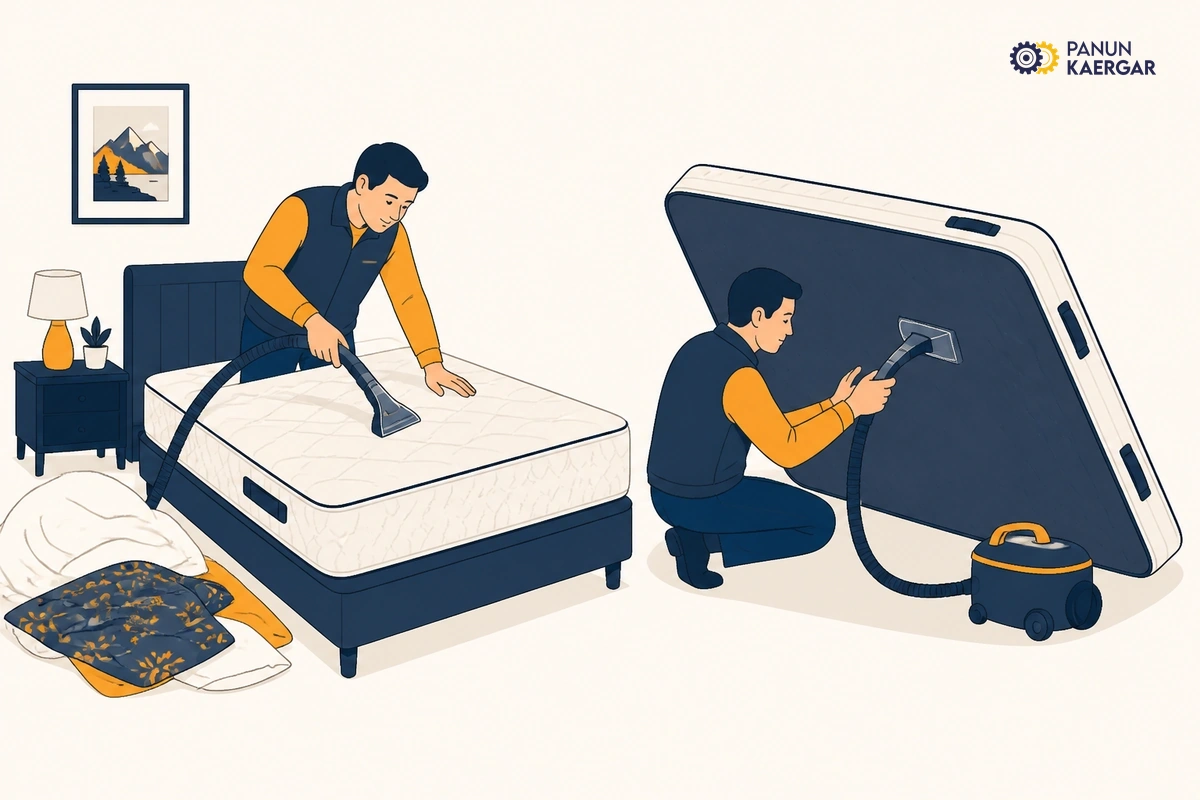
Strip and vacuum both sides
Best for: any stale or dusty mattress
Remove all covers, vacuum the top, sides, and underside with an upholstery tool, and empty the canister outside so dust does not settle back in the room.
Blot spills — never flood the foam
Best for: a fresh stain
Press a clean cloth from the edge inward; use minimal moisture on a barely damp cloth, then blot dry. Soaking foam can leave a lasting musty core.
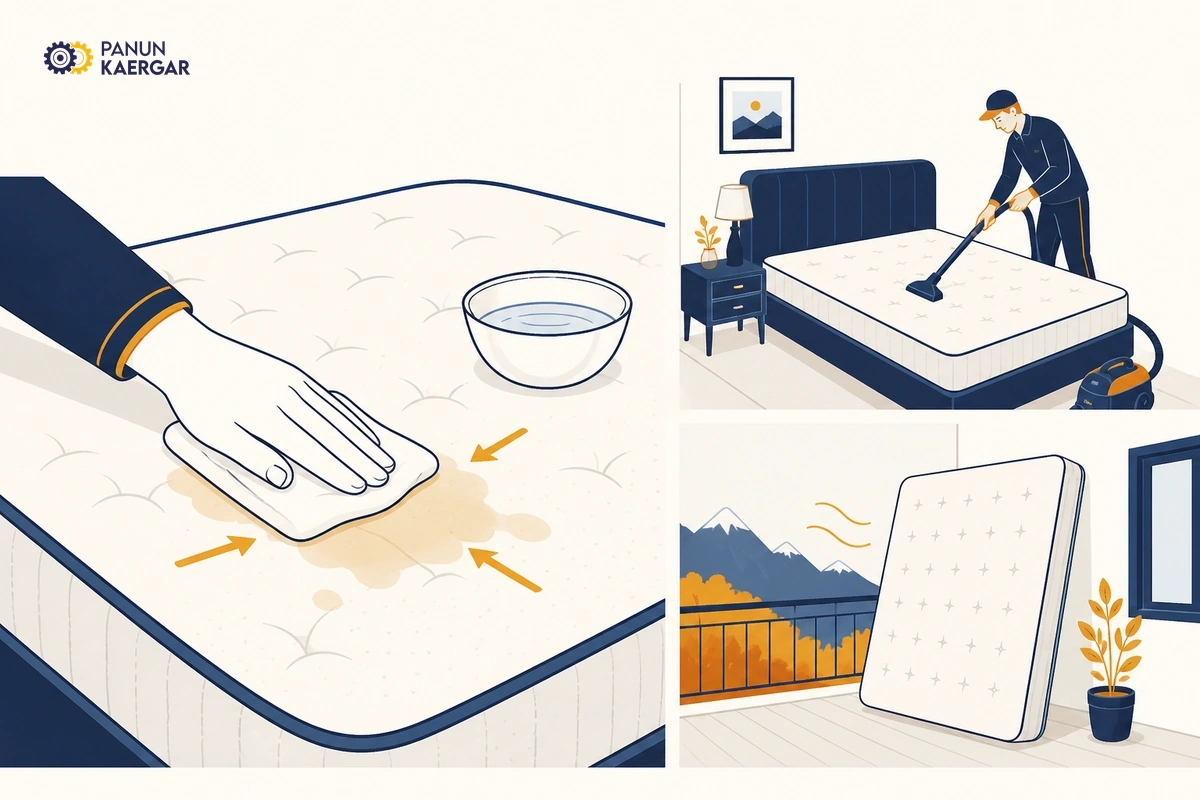
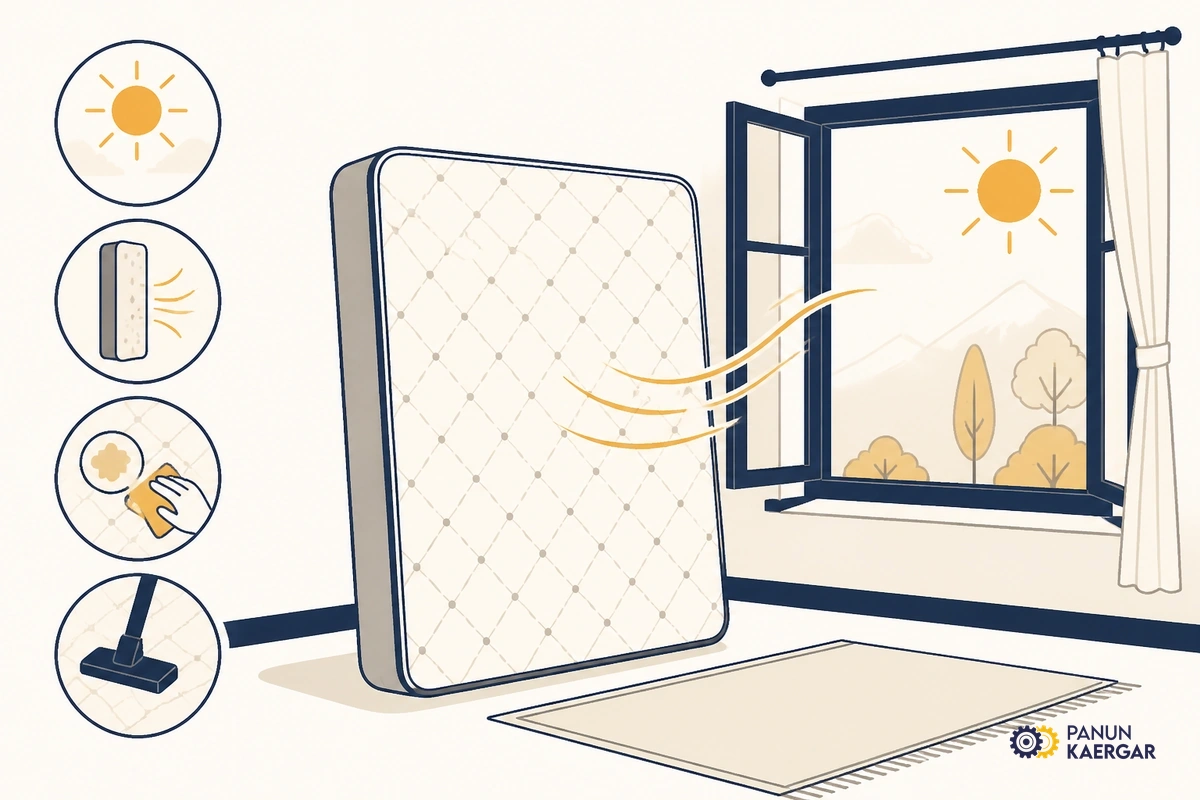
Air in dry light when weather allows
Best for: a closed winter smell
Stand the mattress on its side near an open window or sunny dry spot for a few hours — never leave it in damp air or overnight rain risk.
Refresh with baking soda only when dry
Best for: light odour after vacuuming
Dust a thin layer of baking soda on a fully dry surface, leave briefly, then vacuum thoroughly. Skip this on a damp mattress.

Book mattress cleaning
Best for: deep odour, urine, or mould
Pros can extract residue, treat allergens, and dry the core properly — safer than soaking foam at home.
Take one clear photo before taking anything apart. It helps a professional see the pattern and saves guesswork.
Kashmir home note
Kashmir winters mean thick bedding, closed rooms, and bukhari heat that dries the air while moisture still sits in foam. A mattress that never gets stripped and aired often smells 'old' long before it needs replacing.
What not to do
These shortcuts usually cost more than they save.
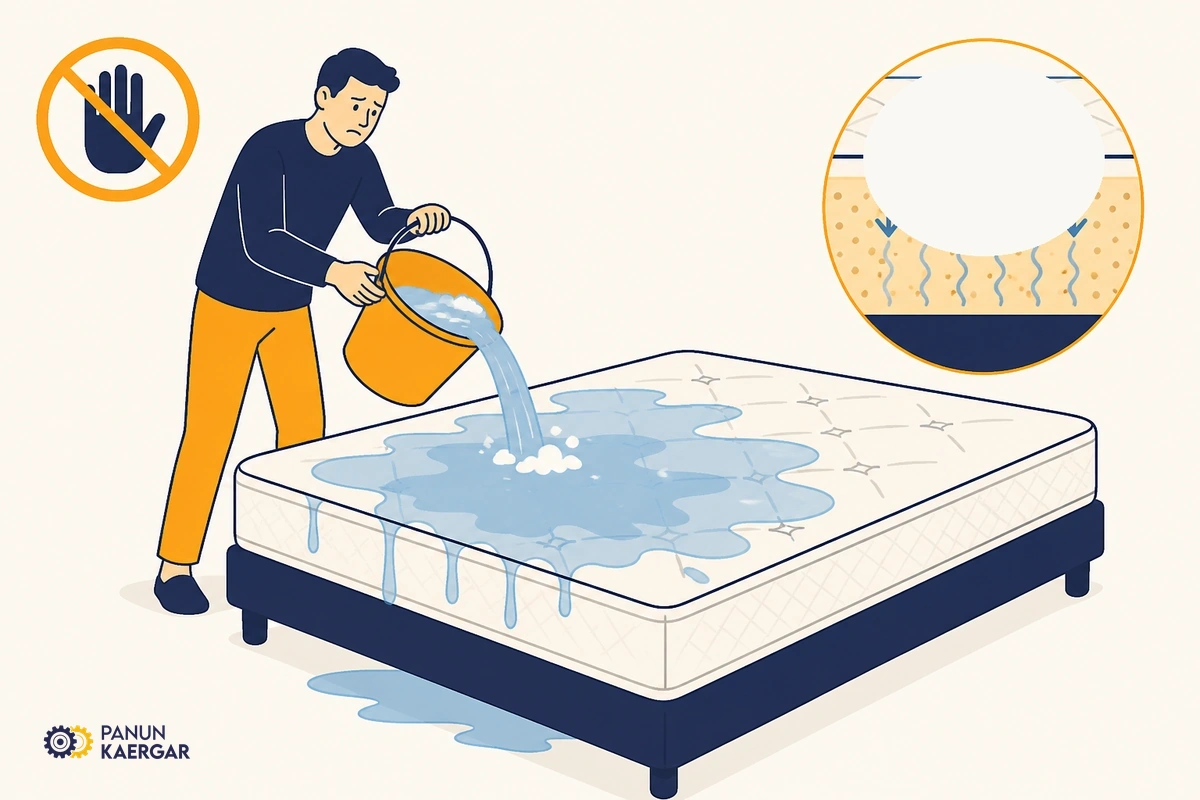
Soak the foam with a bucket of water
Locks in musty smell
Flooding a mattress drives moisture into the core where it cannot dry — odour often gets worse, not better.
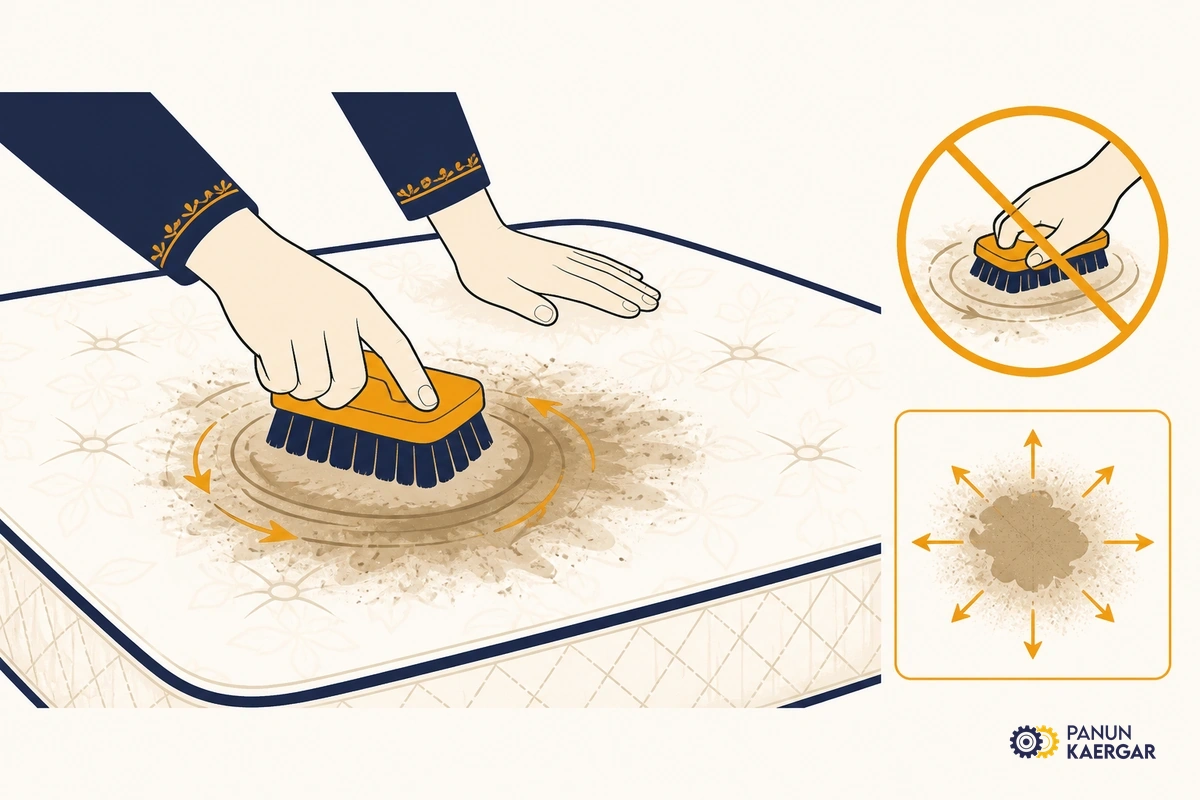
Scrub a stain in circles hard
Spreads a wider ring
Aggressive scrubbing pushes pigment outward and can damage the cover weave.
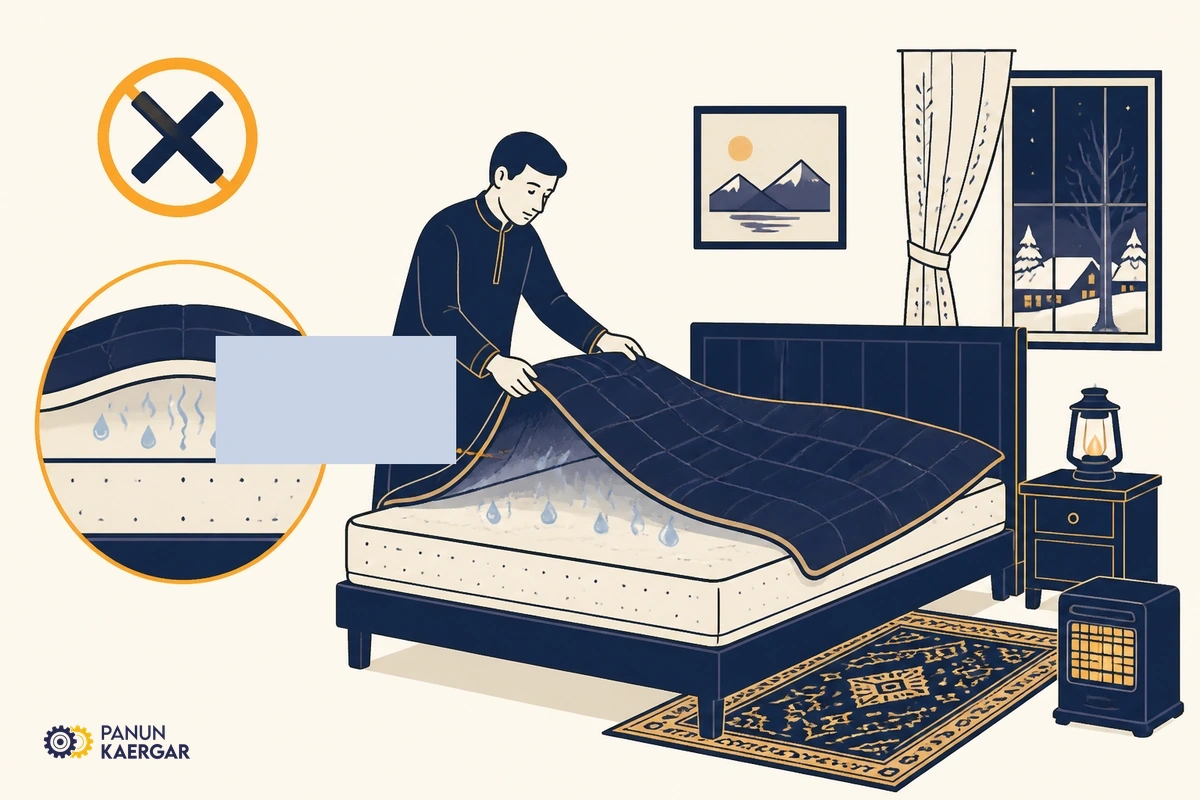
Cover a damp mattress the same night
Traps moisture under sheets
Heavy bedding on a still-damp mattress seals in humidity and recreates the closed smell by morning.
Keep it from returning

Fix the small trigger, keep the area clean and dry where relevant, and deal with repeat symptoms before they become a replacement job.
When to book a professional
Book professional mattress cleaning for urine or mould, odour that returns after airing and vacuuming, deep set stains, allergy flare-ups tied to the bed, or a mattress too heavy to turn and dry safely at home.
FAQs
What is the first check for mattress smells or stains?
Remove all covers, vacuum the top, sides, and underside with an upholstery tool, and empty the canister outside so dust does not settle back in the room.
Can I keep using it?
Only if there is no safety risk or spreading damage. Stop when the symptom worsens.
Why did this start suddenly?
A change in load, moisture, wear, cleaning product, or season often exposes a weak point.
Will a temporary fix last?
It can buy time, but repeat symptoms need the cause corrected.
When should I book help?
Book professional mattress cleaning for urine or mould, odour that returns after airing and vacuuming, deep set stains, allergy flare-ups tied to the bed, or a mattress too heavy to turn and dry safely at home.