
A small putty patch after moving a shelf looks fine until the roller dries — then a bright rectangle sits in the middle of a faded wall, and someone opens a fresh tin hoping one dab will disappear.
Clean and sand the spot, prime bare filler, tint from leftover paint or a fresh match under the same light, then feather thin coats outward instead of painting a hard square. Large faded walls, sheen mismatch, or many scattered patches need a painter for a full blend or recoat.
Quick diagnosis map
Start with the symptom, not the most dramatic fix. A small check now can save a cabinet, appliance, or Sunday afternoon.
| What you notice | Likely reason | First move |
|---|---|---|
| Touch-up looks lighter, darker, or glossier than the wall | Faded old paint, different batch/sheen, unprimed filler, or a hard-edged patch | Wipe grease, sand the filler flush, and remove dust so the new film sits level with the old wall. |
| Problem worsens after use | An underlying fault or hidden damage | Stop adding load; inspect safely. |
| Heat, burning smell, leak, or sudden pain | Safety issue, not a DIY puzzle | Switch off / isolate / get help. |
Do not paint a thick hard-edged square on faded walls, skip primer on bare putty, or judge colour under a yellow bulb alone.
What usually causes this
The visible symptom is useful, but the small detail around it usually tells the real story.
- Sun and bukhari heat fading the original wall while leftover paint stayed darker in the tin.
- Bare putty or plaster absorbing new colour differently than sealed emulsion.
- A hard square of fresh paint with a different sheen catching afternoon light.
Try these in order
Begin with the reversible checks. The goal is a clean fix, not winning an argument with a stubborn household thing.

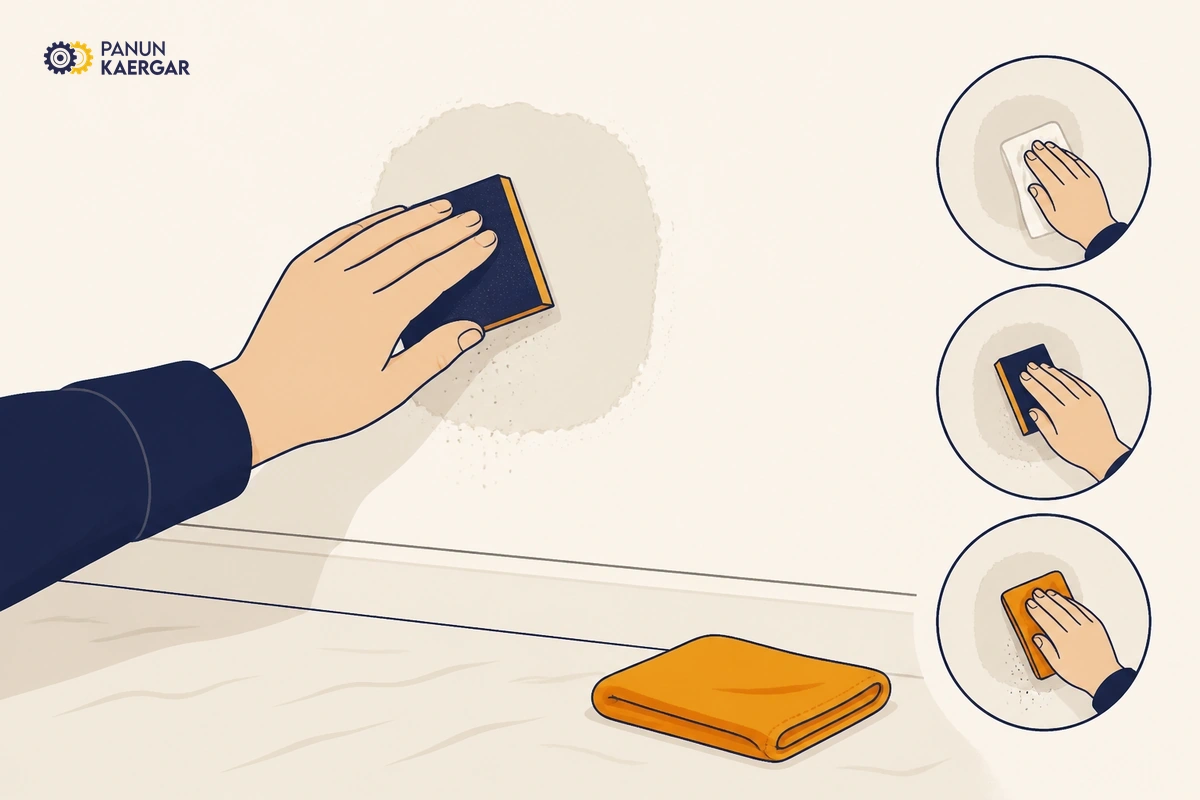
Clean, sand, and dust the patch
Best for: any small repair
Wipe grease, sand the filler flush, and remove dust so the new film sits level with the old wall.
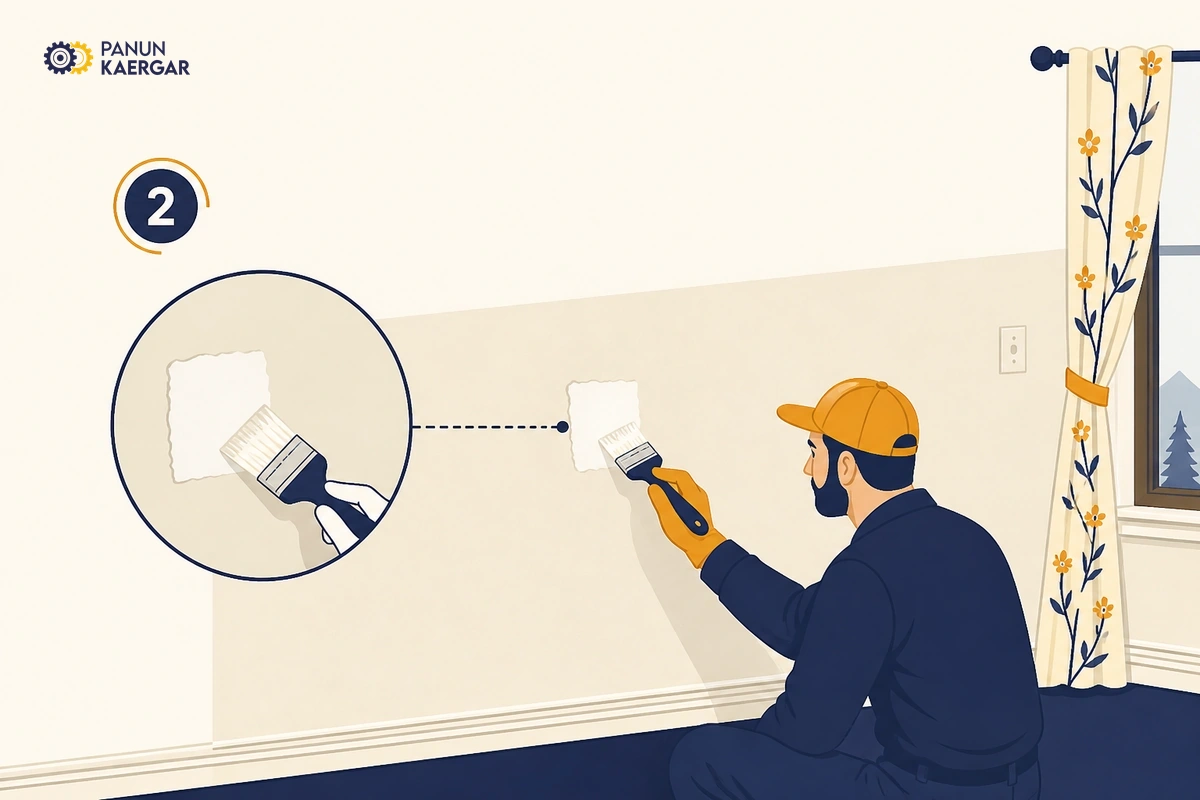
Spot-prime bare filler only
Best for: fresh putty or scraped plaster
Prime the absorbent patch so colour does not sink into a pale blotch when you apply finish.
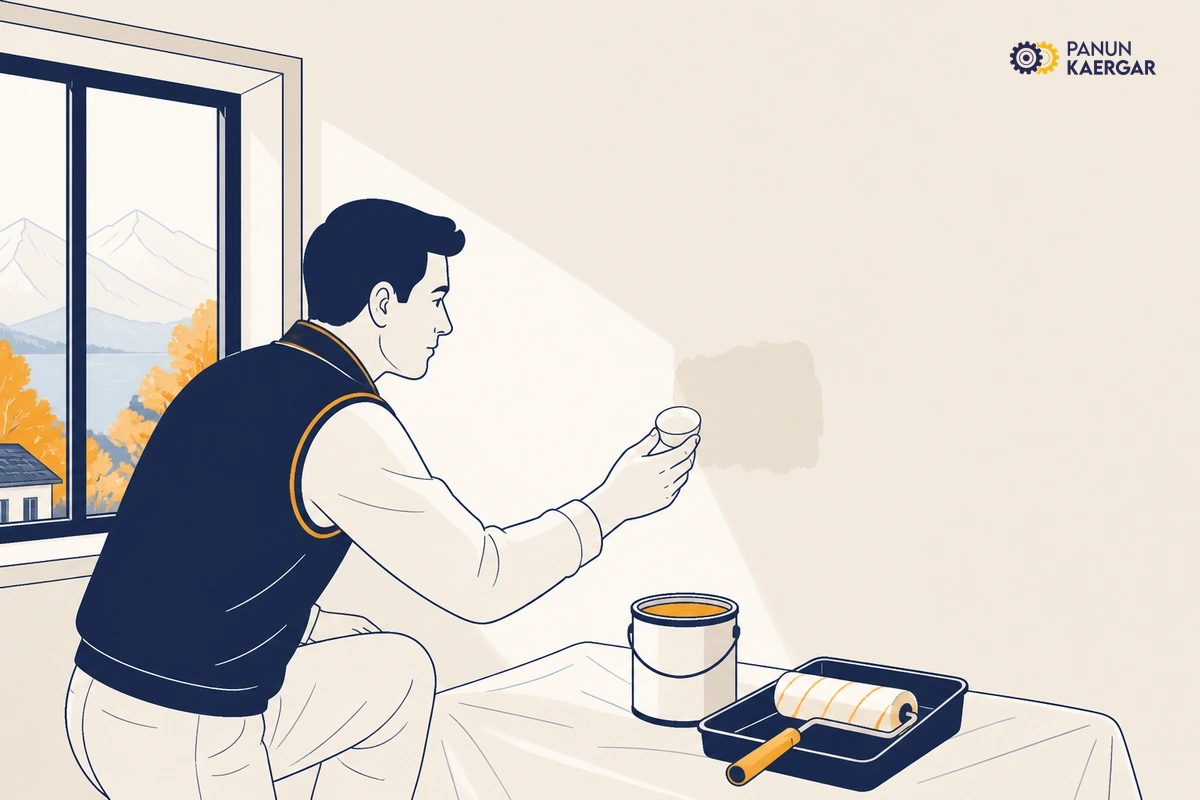
Match paint and sheen in daylight
Best for: leftover tin or a shop match
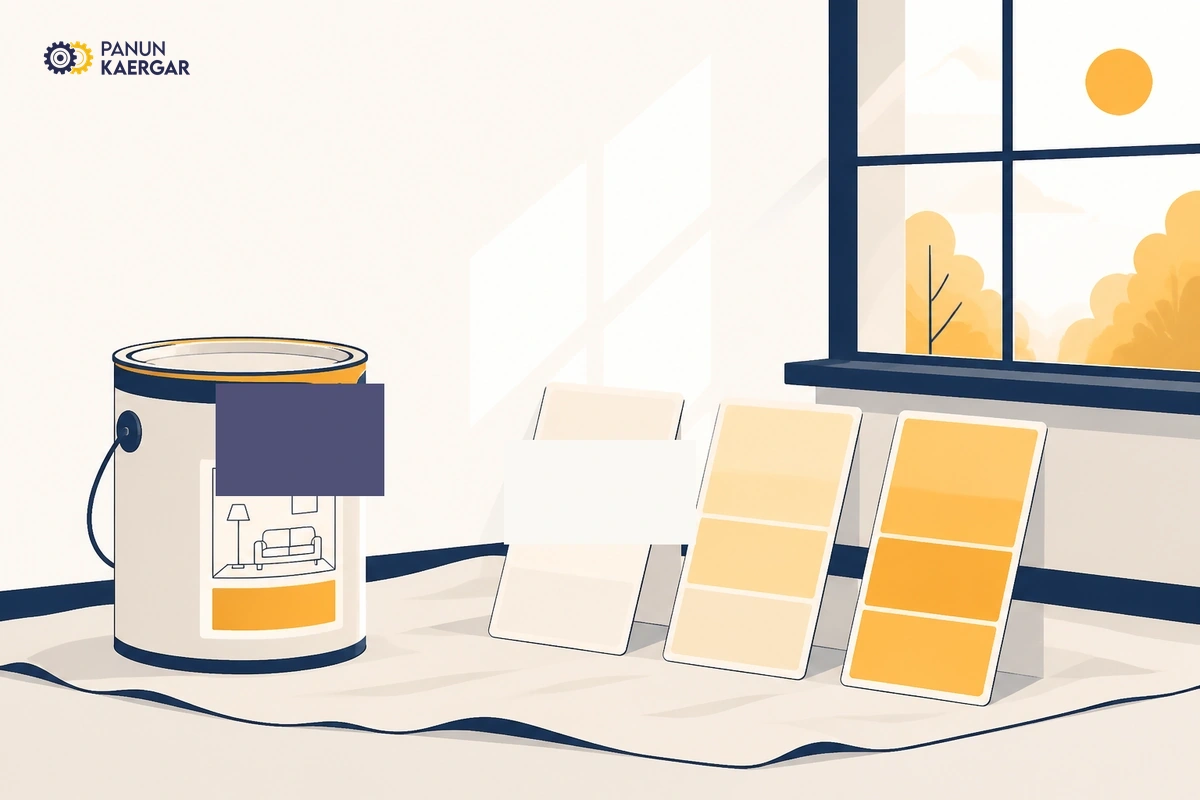
Shake well, check matt vs silk, and test a coin-sized dab beside the repair under the same window light you live with.
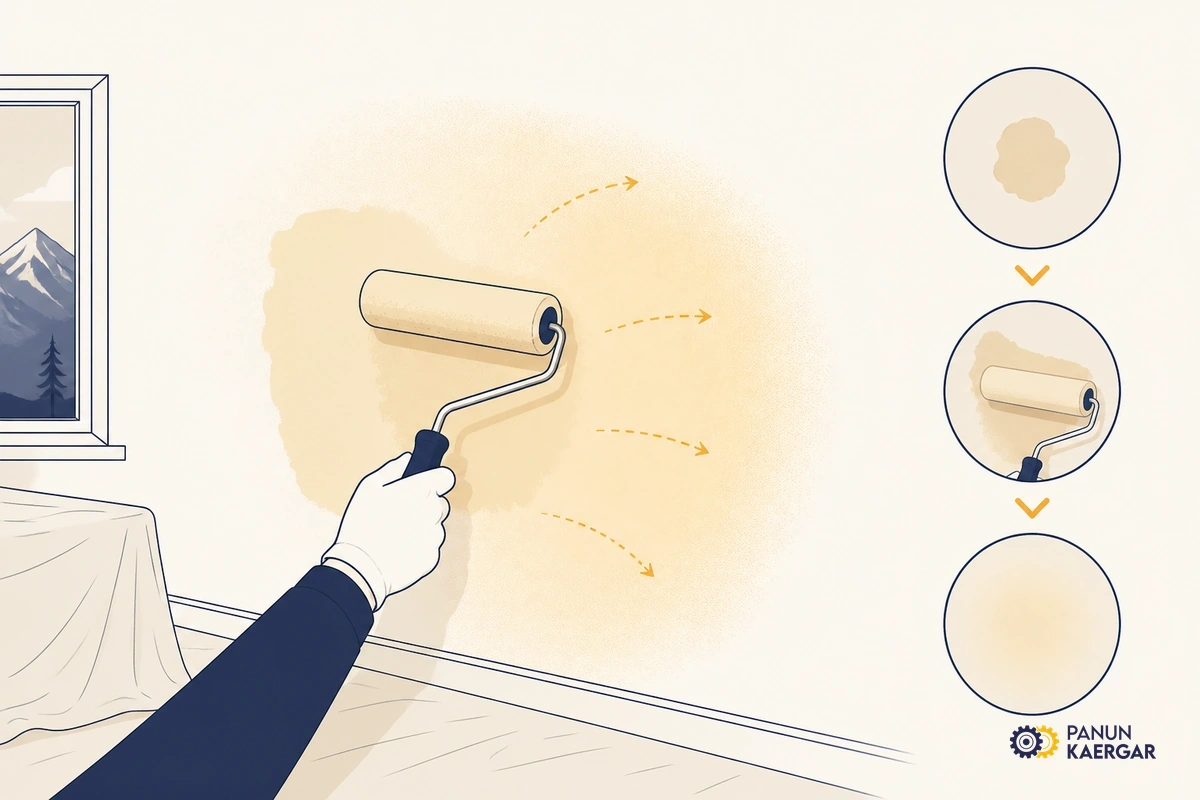
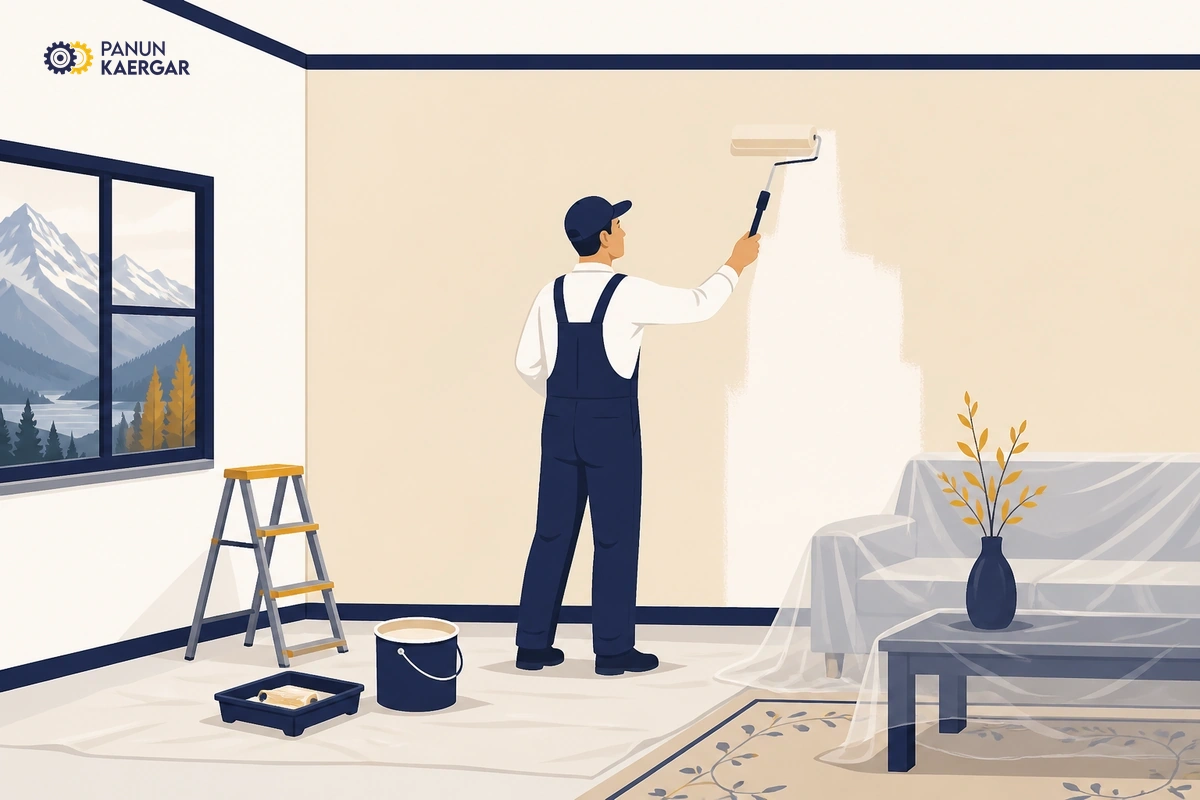
Feather thin coats outward
Best for: a visible rectangle after drying
Roll or brush lightly beyond the repair so the edge blends; two thin passes beat one thick square.
Book a painter for a proper blend
Best for: many patches or a whole faded wall
A pro can recoat a full elevation, match sheen, and hide scattered touch-ups that will never disappear alone.

Take one clear photo before taking anything apart. It helps a professional see the pattern and saves guesswork.
Kashmir home note
Kashmir walls fade unevenly — sunny sides bleach faster, and winter heating dries rooms while leftover tins stay sealed. A perfect tin match still looks wrong if the wall has aged and the patch is painted as a hard square.
What not to do
These shortcuts usually cost more than they save.
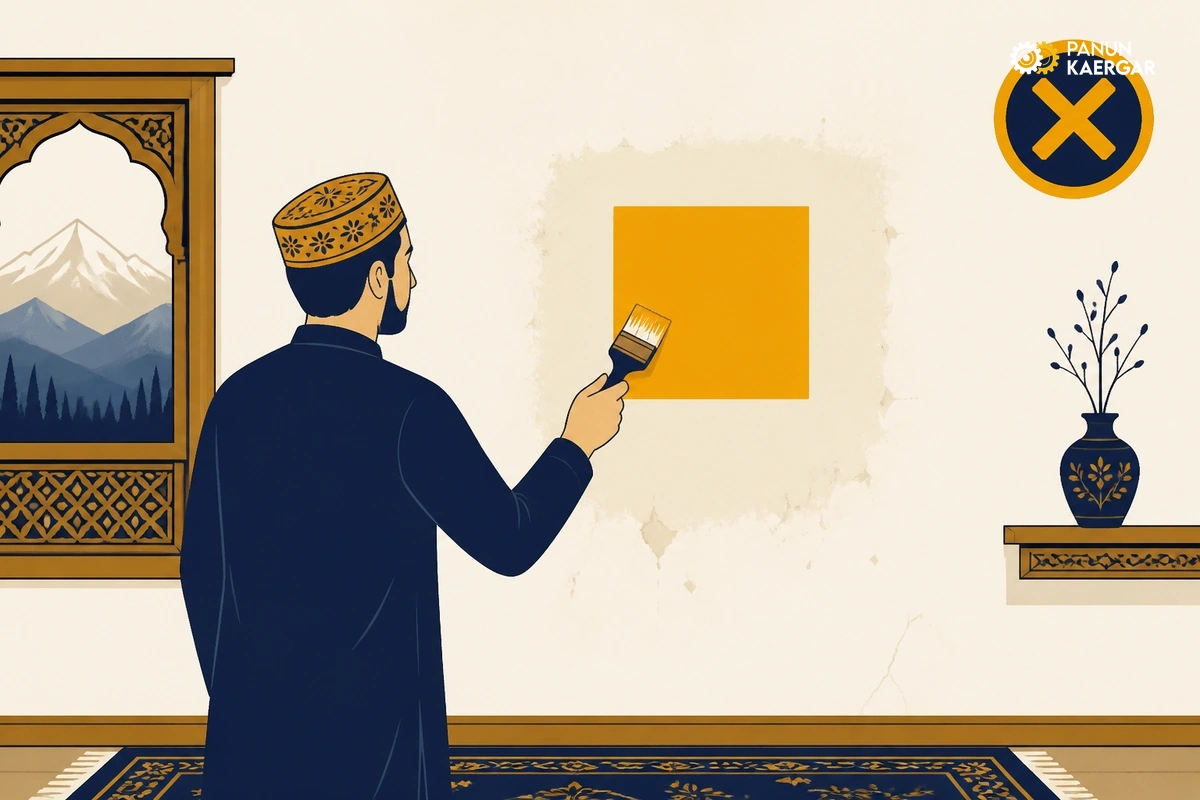
Paint a thick hard-edged square
Flashes under daylight
A sharp rectangle of fresh paint sits proud of faded wall colour and shows from across the room.
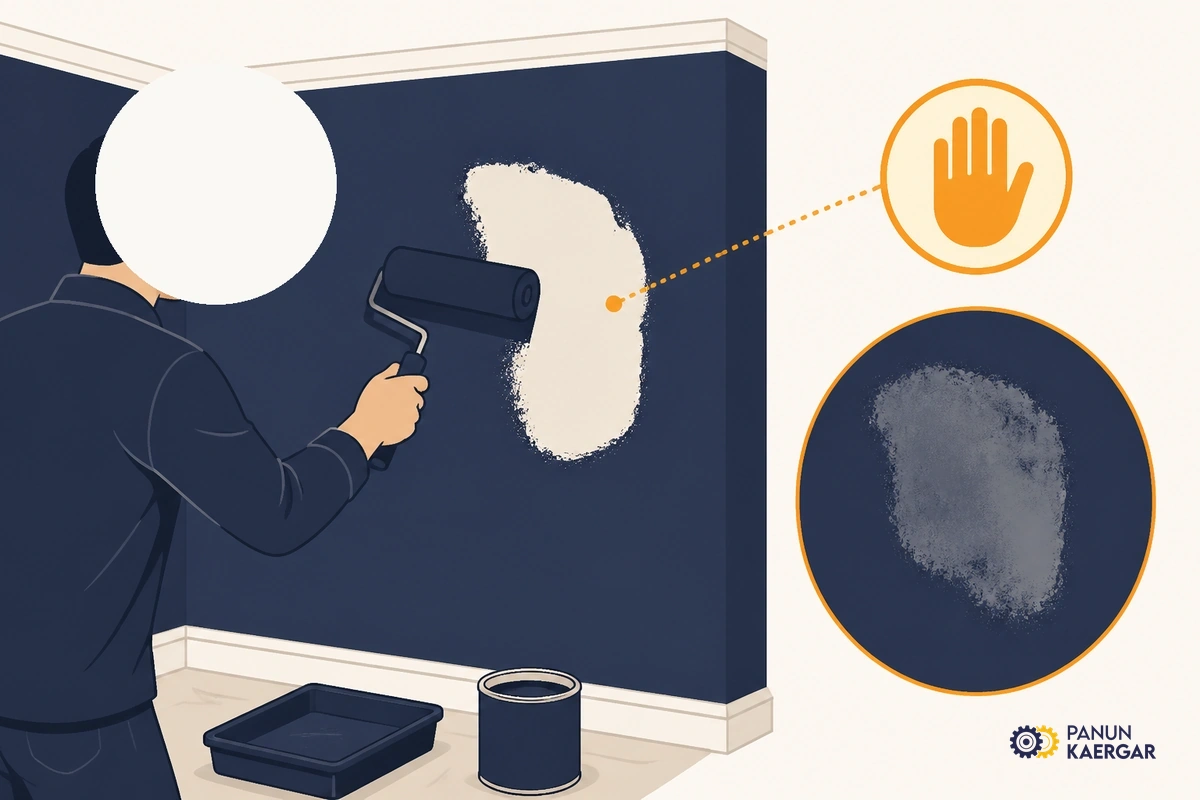
Skip primer on bare putty
Colour sinks unevenly
Unprimed filler drinks finish and leaves a permanent light blotch even with the same tin.
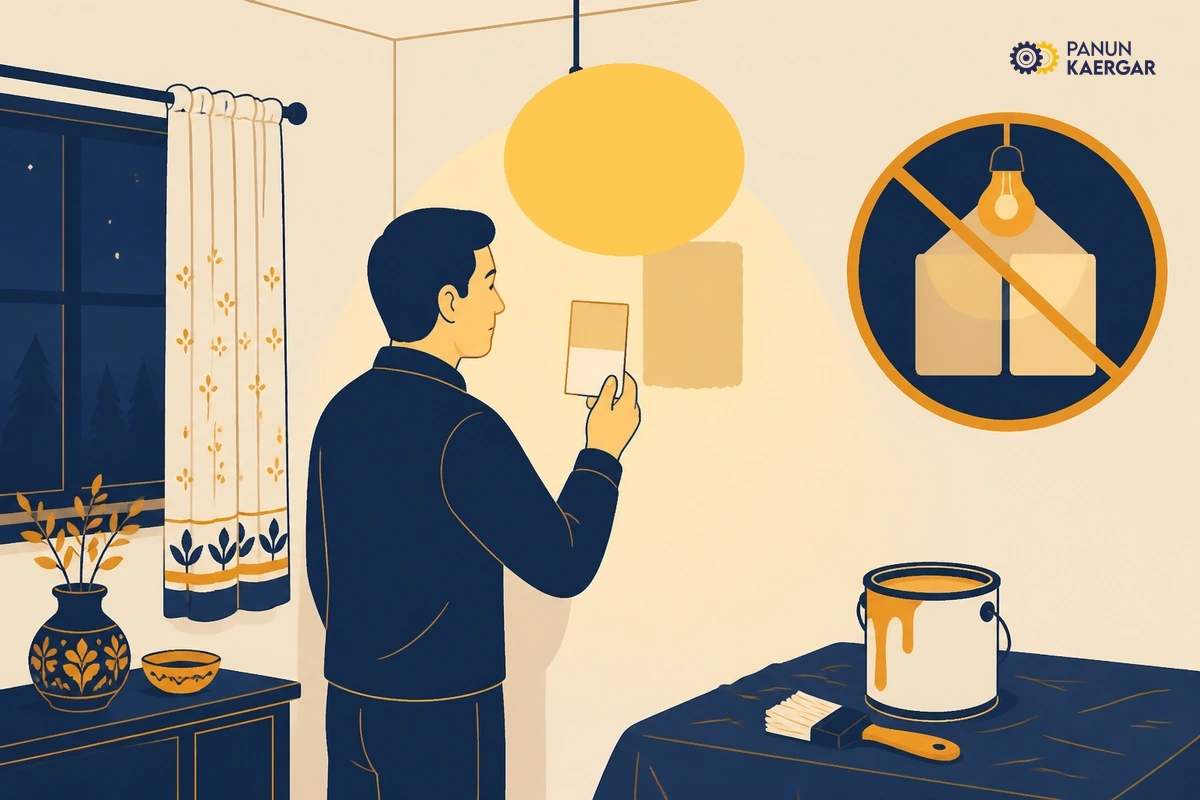
Judge colour only under a yellow bulb
Wrong match by morning
Warm bulbs hide sheen and hue differences that appear harsh in daylight — always check by a window.
Keep it from returning
Fix the small trigger, keep the area clean and dry where relevant, and deal with repeat symptoms before they become a replacement job.
When to book a professional
Book a painter when touch-ups still flash after careful feathering, the whole wall has faded, sheen is wrong across a room, or many repairs make a full recoat cheaper than chasing patches.
FAQs
What is the first check for touch-up paint never matches?
Wipe grease, sand the filler flush, and remove dust so the new film sits level with the old wall.
Can I keep using it?
Only if there is no safety risk or spreading damage. Stop when the symptom worsens.
Why did this start suddenly?
A change in load, moisture, wear, cleaning product, or season often exposes a weak point.
Will a temporary fix last?
It can buy time, but repeat symptoms need the cause corrected.
When should I book help?
Book a painter when touch-ups still flash after careful feathering, the whole wall has faded, sheen is wrong across a room, or many repairs make a full recoat cheaper than chasing patches.