
Walking past the bathroom door you hear a dull clack underfoot, then a neighbour says rip every tile out — before anyone maps which ones are hollow and which still ring solid.
Tap-test the floor, mark hollow or rocking tiles, check for water entry at grout lines, and lift only failed tiles carefully for rebedding. Widespread hollowness, cracked screed, or tiles lifting after a leak need a mason for proper floor tile repair.
Quick diagnosis map
Start with the symptom, not the most dramatic fix. A small check now can save a cabinet, appliance, or Sunday afternoon.
| What you notice | Likely reason | First move |
|---|---|---|
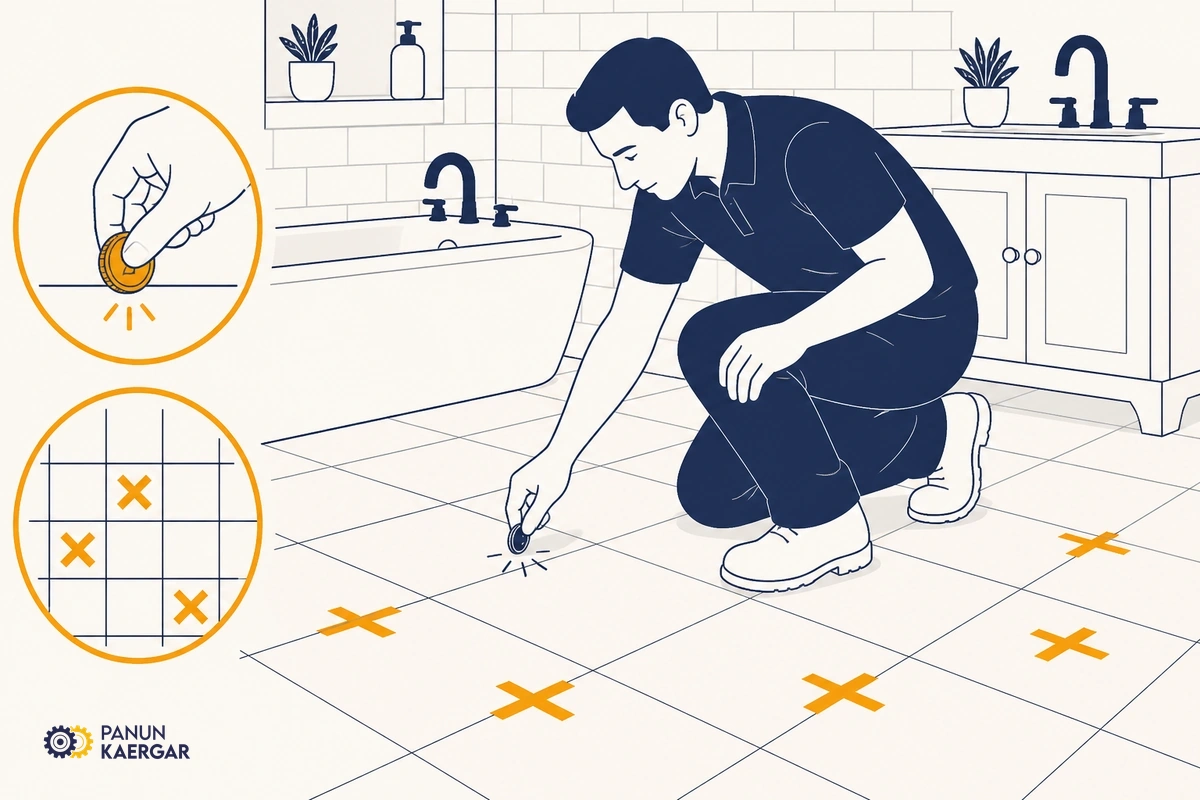
| Hollow sound, rocking tile, or cracked floor tile | Failed adhesive bond, water under tiles, or movement in the screed | Tap with a coin or screwdriver handle; hollow tiles sound dull. Mark them with tape so you know the real area before anyone starts breaking. |
| Problem worsens after use | An underlying fault or hidden damage | Stop adding load; inspect safely. |
| Heat, burning smell, leak, or sudden pain | Safety issue, not a DIY puzzle | Switch off / isolate / get help. |
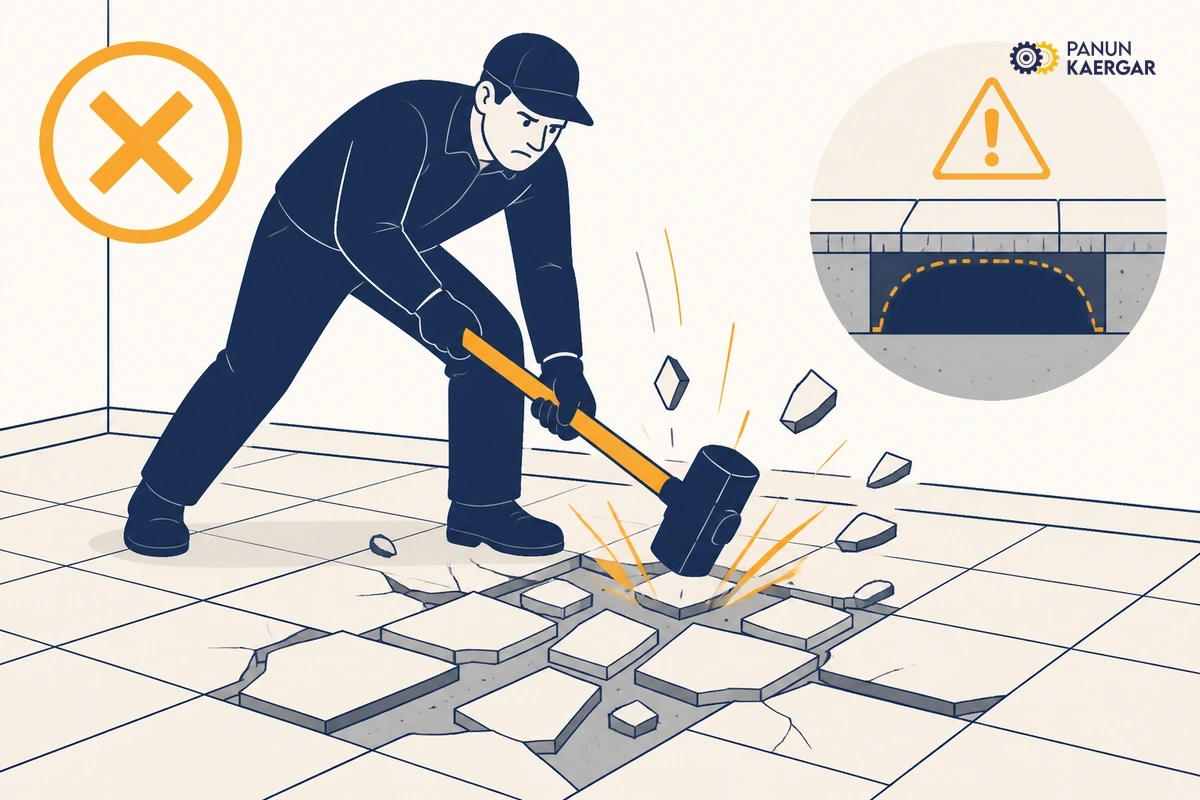
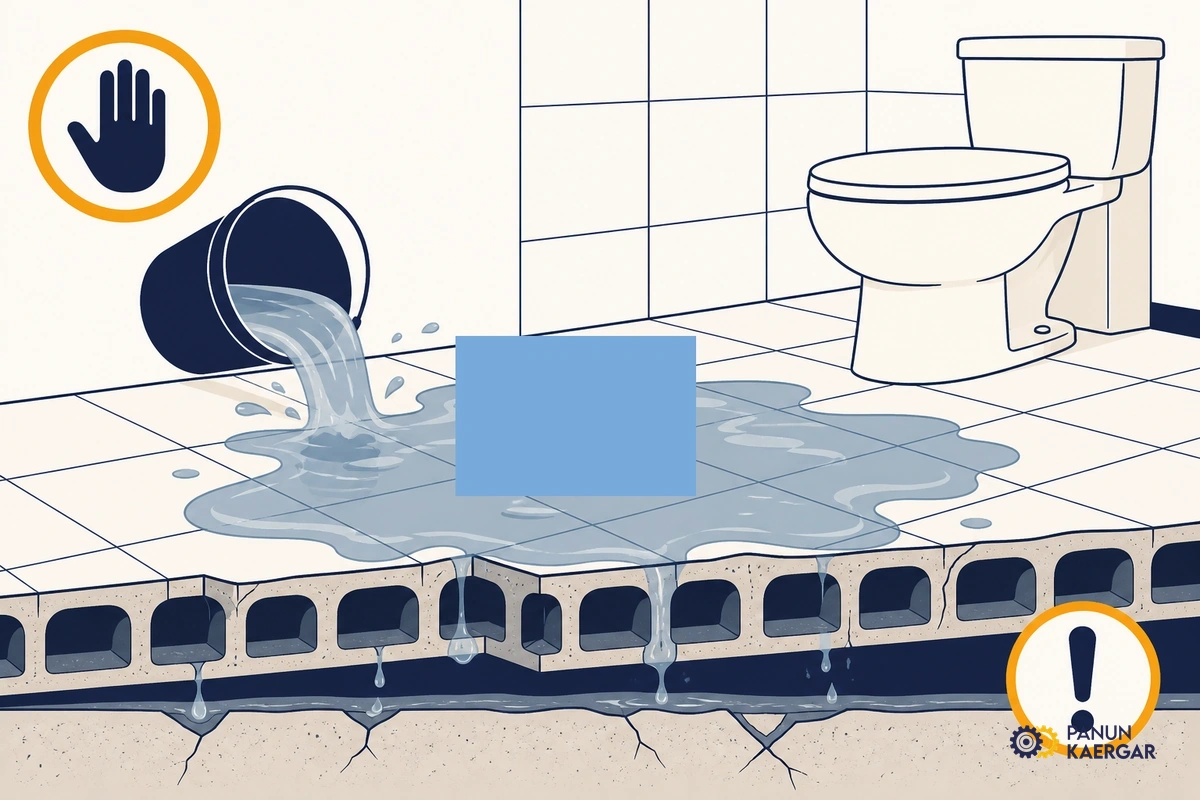
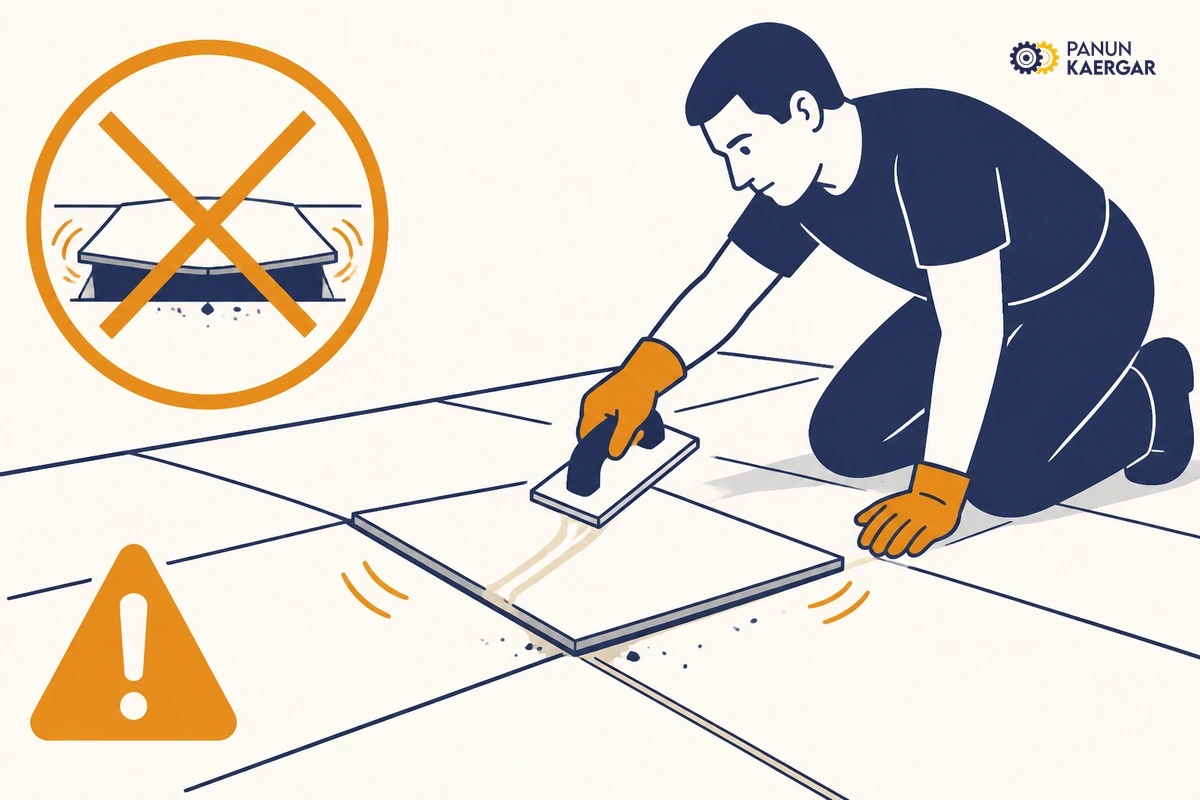
Do not smash random tiles without mapping hollow spots, flood the floor hoping it will 'settle', or ignore water under tiles while only regrouting the surface.
What usually causes this
The visible symptom is useful, but the small detail around it usually tells the real story.
- Adhesive or mortar bed that never bonded fully, or dried out under winter freeze-thaw.
- Water seeping through broken grout and lifting tiles from below.
- Heavy impact or furniture drag cracking a tile that then loosens its neighbours.
Try these in order
Begin with the reversible checks. The goal is a clean fix, not winning an argument with a stubborn household thing.

Tap-test and mark the hollow ones
Best for: any suspicious clack underfoot
Tap with a coin or screwdriver handle; hollow tiles sound dull. Mark them with tape so you know the real area before anyone starts breaking.
Check grout and wet zones
Best for: bathrooms and kitchen floors
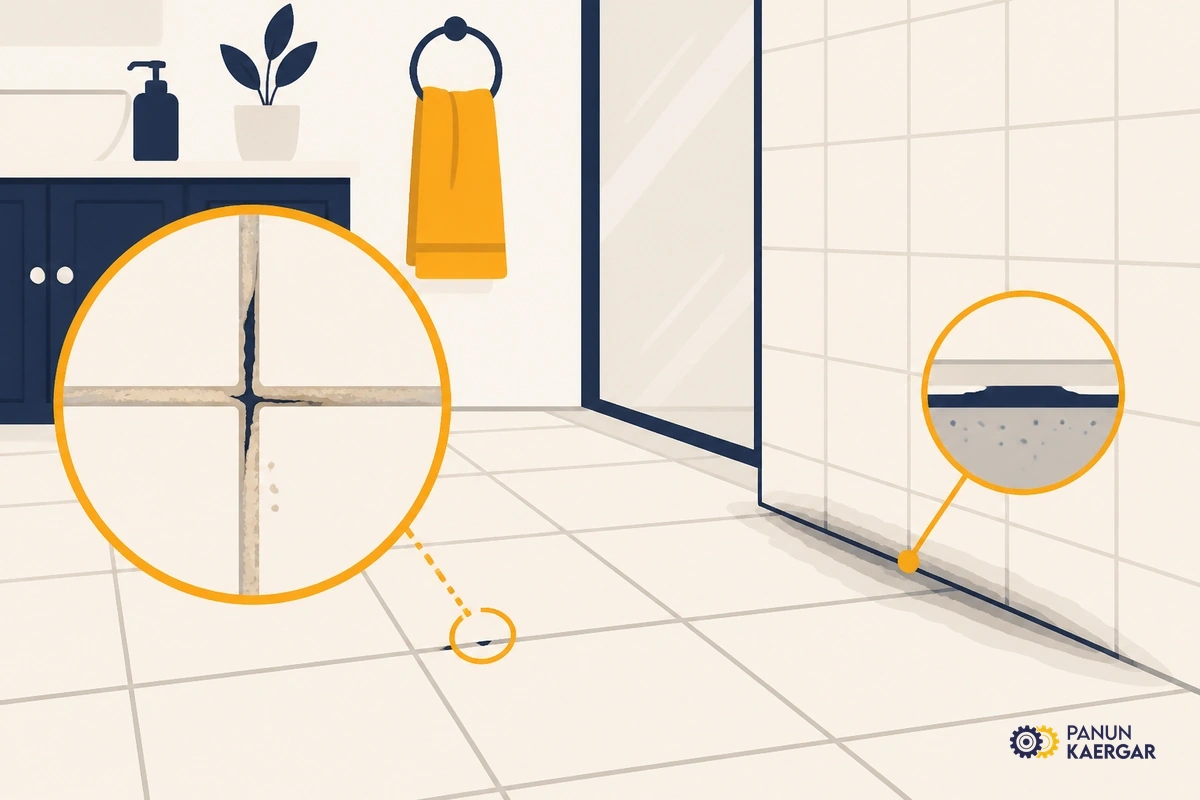
Look for missing grout, dark damp lines, or soft edges — water under tiles often explains a cluster of hollow spots.
Protect neighbours before lifting
Best for: a single loose tile
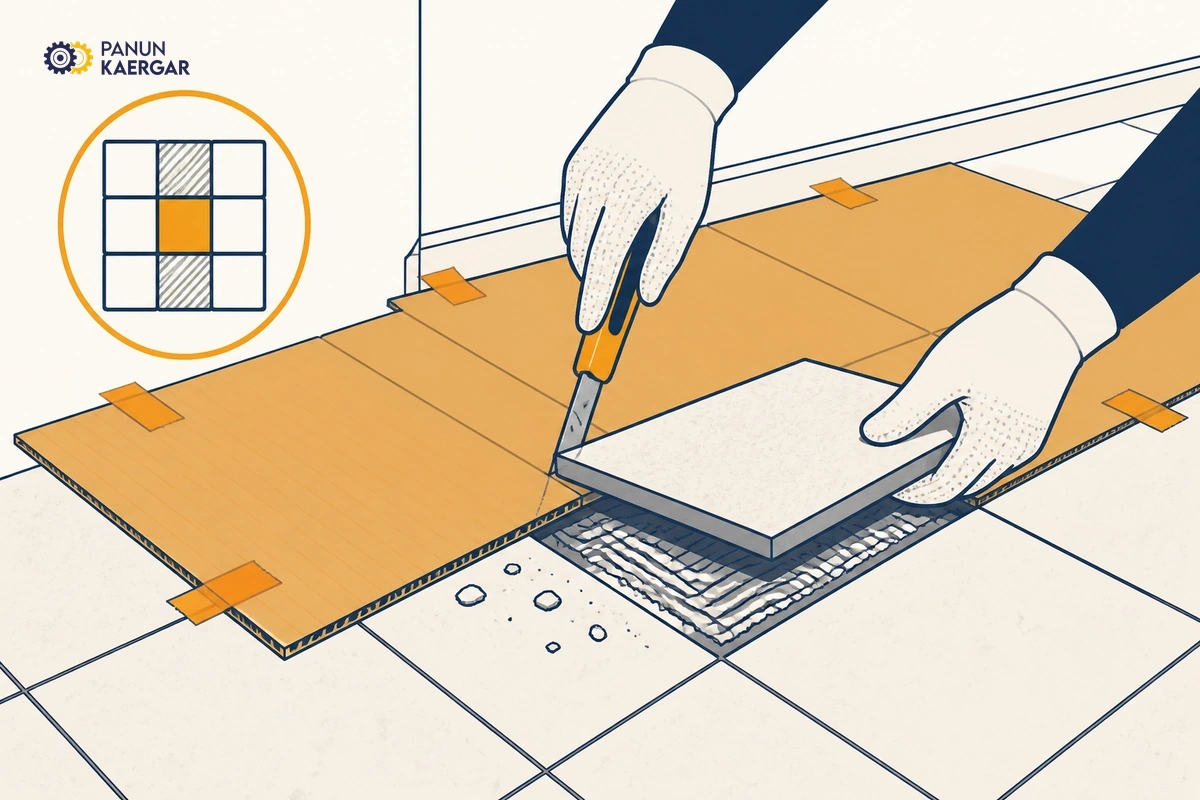
Score grout, protect nearby good tiles, and lift the failed piece carefully instead of hammering randomly across the room.
Clean and rebed a small repair
Best for: one or two loose tiles with sound screed
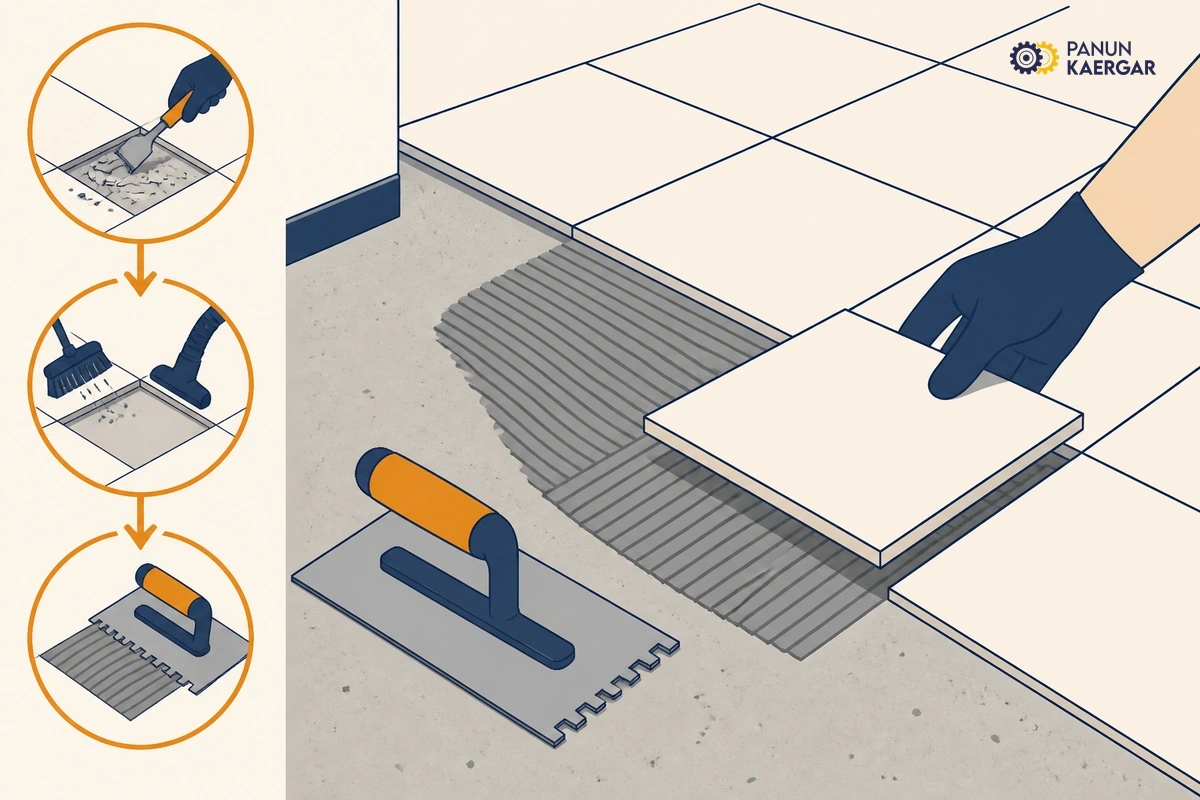
Clear old adhesive, dry the base, and reset with suitable tile adhesive so the tile sits flush and does not rock.
Book a mason for floor tile repair
Best for: many hollow tiles or cracked base
A pro can assess screed damage, replace a run of tiles, and regrout properly without turning a small hollow into a broken floor.

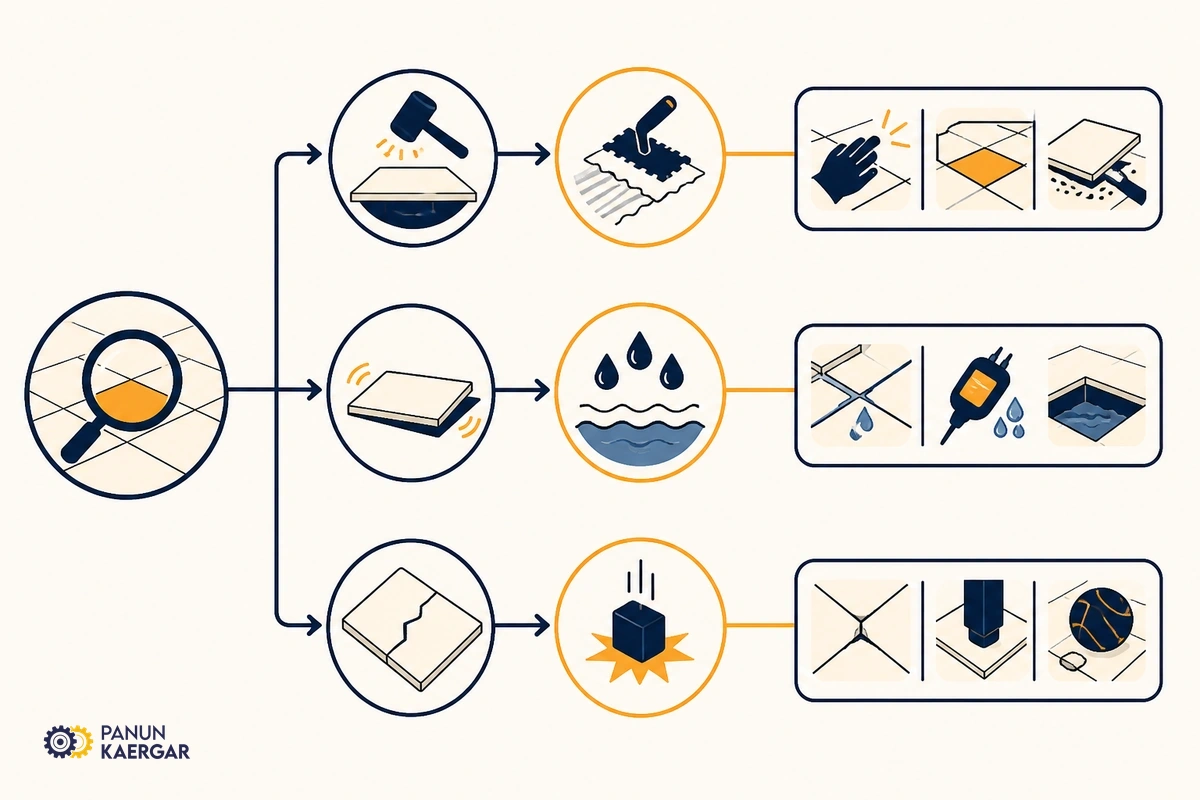
Take one clear photo before taking anything apart. It helps a professional see the pattern and saves guesswork.
Kashmir home note
Kashmir bathrooms and kitchens see freeze-thaw, hard water, and long wet winters that punish weak adhesive beds. A dull tap underfoot is often a small bond failure — not a reason to demolish every tile on day one.
What not to do
These shortcuts usually cost more than they save.
Smash tiles without mapping hollow spots
Breaks good floor needlessly
Blind demolition destroys solid tiles and raises dust before you know how small the failed area is.
Flood the floor hoping it will settle
Worsens under-tile water
Extra water under hollow tiles softens the bed further and can stain neighbouring rooms.
Only regrout and ignore rocking tiles
Hollowness returns quickly
Fresh grout on a floating tile hides the clack briefly but does not restore the bond underneath.
Keep it from returning
Fix the small trigger, keep the area clean and dry where relevant, and deal with repeat symptoms before they become a replacement job.
When to book a professional
Book a mason for widespread hollowness, rocking tiles near a leak, cracked screed, tiles that lift again after a DIY reset, or a bathroom floor that needs systematic repair.
FAQs
What is the first check for floor tile hollow or loose?
Tap with a coin or screwdriver handle; hollow tiles sound dull. Mark them with tape so you know the real area before anyone starts breaking.
Can I keep using it?
Only if there is no safety risk or spreading damage. Stop when the symptom worsens.
Why did this start suddenly?
A change in load, moisture, wear, cleaning product, or season often exposes a weak point.
Will a temporary fix last?
It can buy time, but repeat symptoms need the cause corrected.
When should I book help?
Book a mason for widespread hollowness, rocking tiles near a leak, cracked screed, tiles that lift again after a DIY reset, or a bathroom floor that needs systematic repair.