
When the pheran comes off after months of bukhari heat and closed rooms, the wool still smells faintly damp — and someone is already stuffing it into a plastic carry bag for the summer trunk.
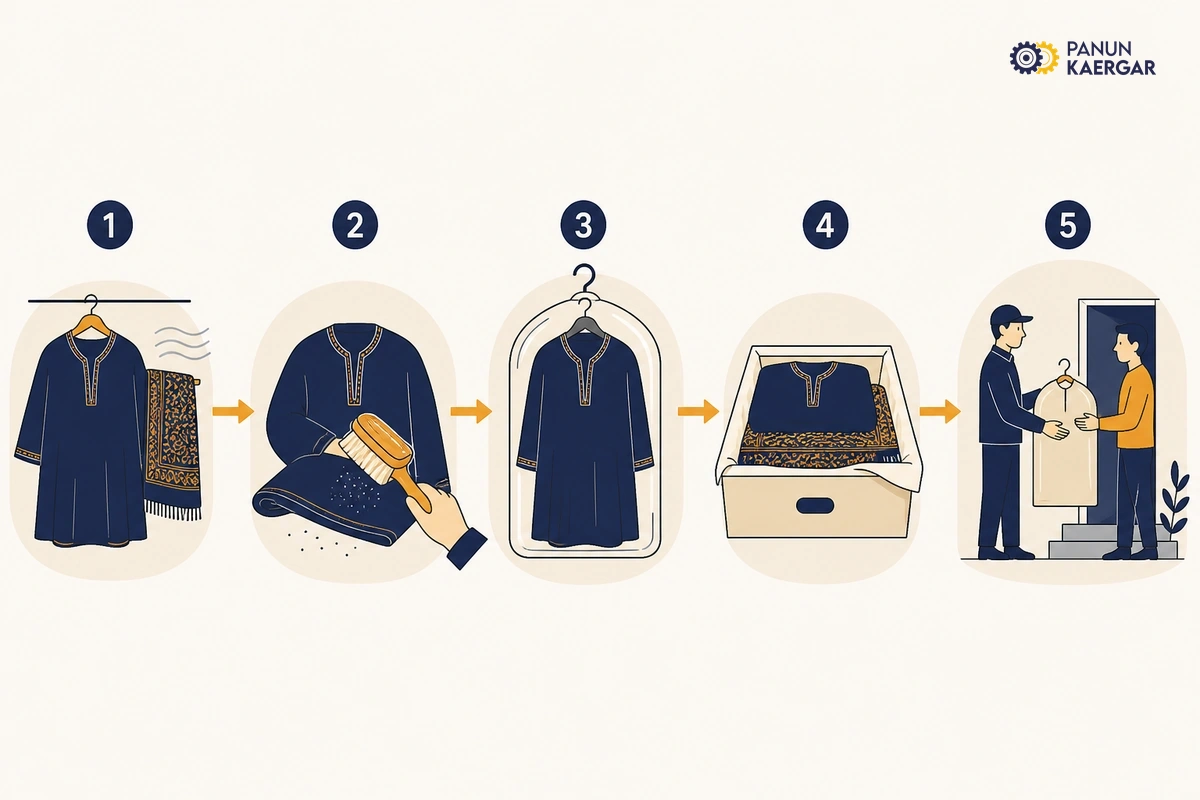
Air woollens in dry daylight, brush off surface dust, and dry clean pherans, shawls, and suits before long storage. Store clean, fully dry garments in breathable cotton with cedar or neem — never in sealed plastic while still holding body moisture or food odour.
Quick diagnosis map
Start with the symptom, not the most dramatic fix. A small check now can save a cabinet, appliance, or Sunday afternoon.
| What you notice | Likely reason | First move |
|---|---|---|
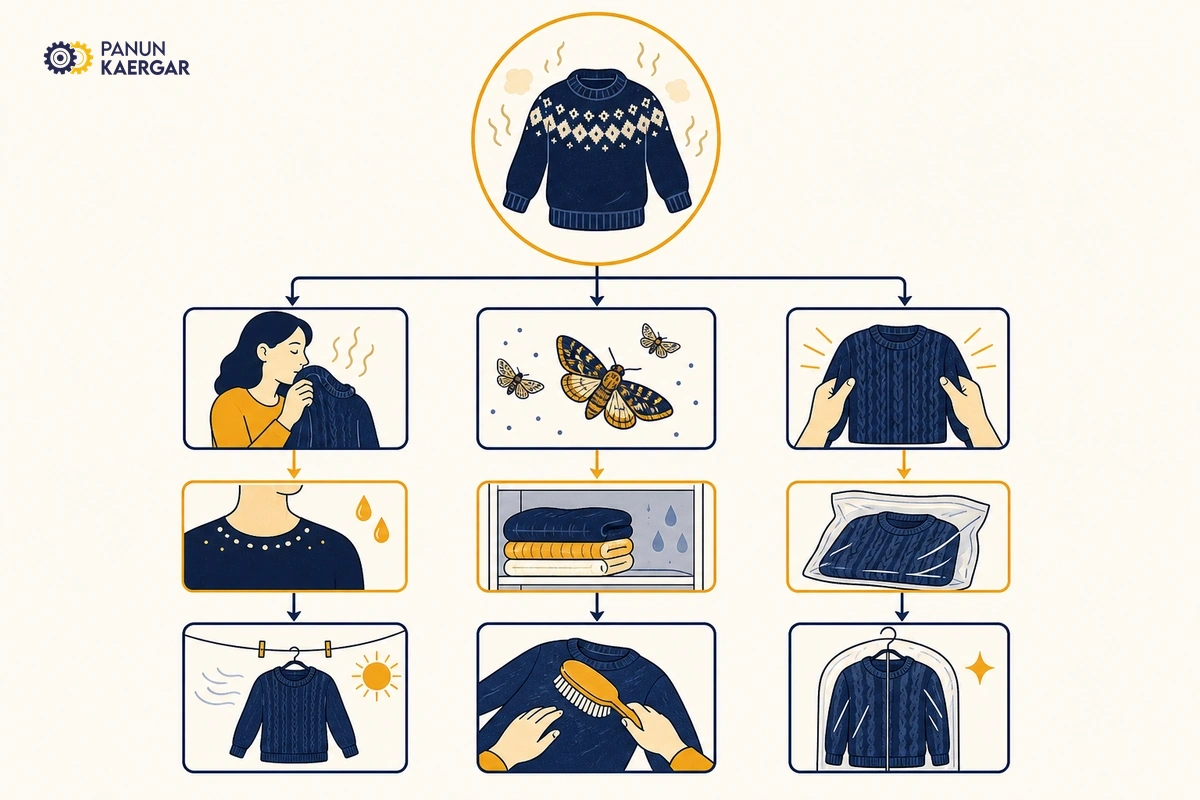
| Musty smell, flat moths, or stiff wool after winter wear | Body oils, damp storage, or food smoke trapped in fibres before folding | Hang pherans, shawls, and coats in dry daylight for a few hours; check seams, cuffs, and under collars for stains or tiny holes before storage. |
| Problem worsens after use | An underlying fault or hidden damage | Stop adding load; inspect safely. |
| Heat, burning smell, leak, or sudden pain | Safety issue, not a DIY puzzle | Switch off / isolate / get help. |
Do not home-wash dry-clean-only wool in hot water, seal damp garments in plastic, or skip cleaning because a pheran 'looks clean' after heavy winter wear.
What usually causes this
The visible symptom is useful, but the small detail around it usually tells the real story.
- Wool worn all winter without cleaning, trapping sweat, smoke, and skin oils that attract moths.
- Garments folded while still slightly damp after rain, snow, or a hurried wash.
- Plastic bags or airtight trunks sealing in humidity through Kashmir's damp spring weeks.
Try these in order
Begin with the reversible checks. The goal is a clean fix, not winning an argument with a stubborn household thing.
Air and inspect every piece
Best for: end-of-season woollens
Hang pherans, shawls, and coats in dry daylight for a few hours; check seams, cuffs, and under collars for stains or tiny holes before storage.

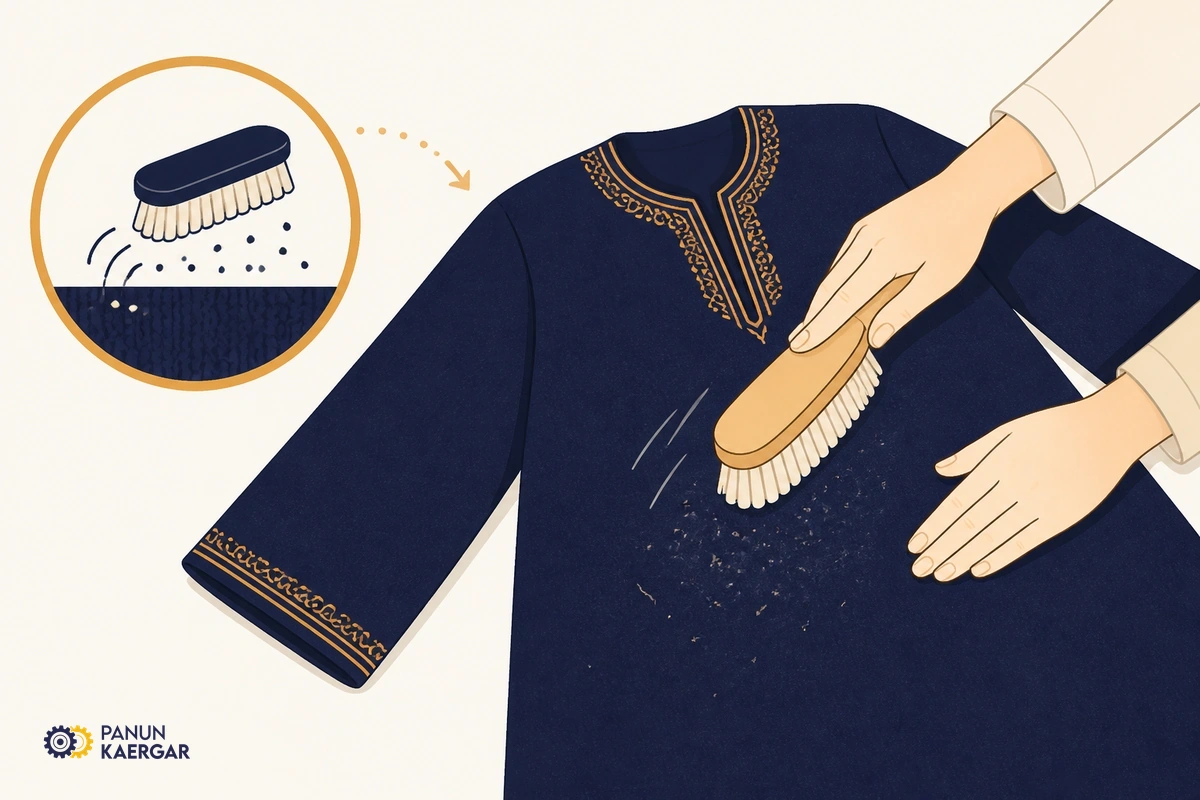
Brush off dust and lint
Best for: surface grime before drop-off
Use a soft clothes brush on dry fabric; do not beat wool against a wall — that can weaken fibres and spread hidden dust mites.
Dry clean before long storage
Best for: pherans, suits, and embellished wool
Take clean, identified items to dry cleaning so oils and food smells do not feed moths over summer. Point out any weak seams or loose buttons.

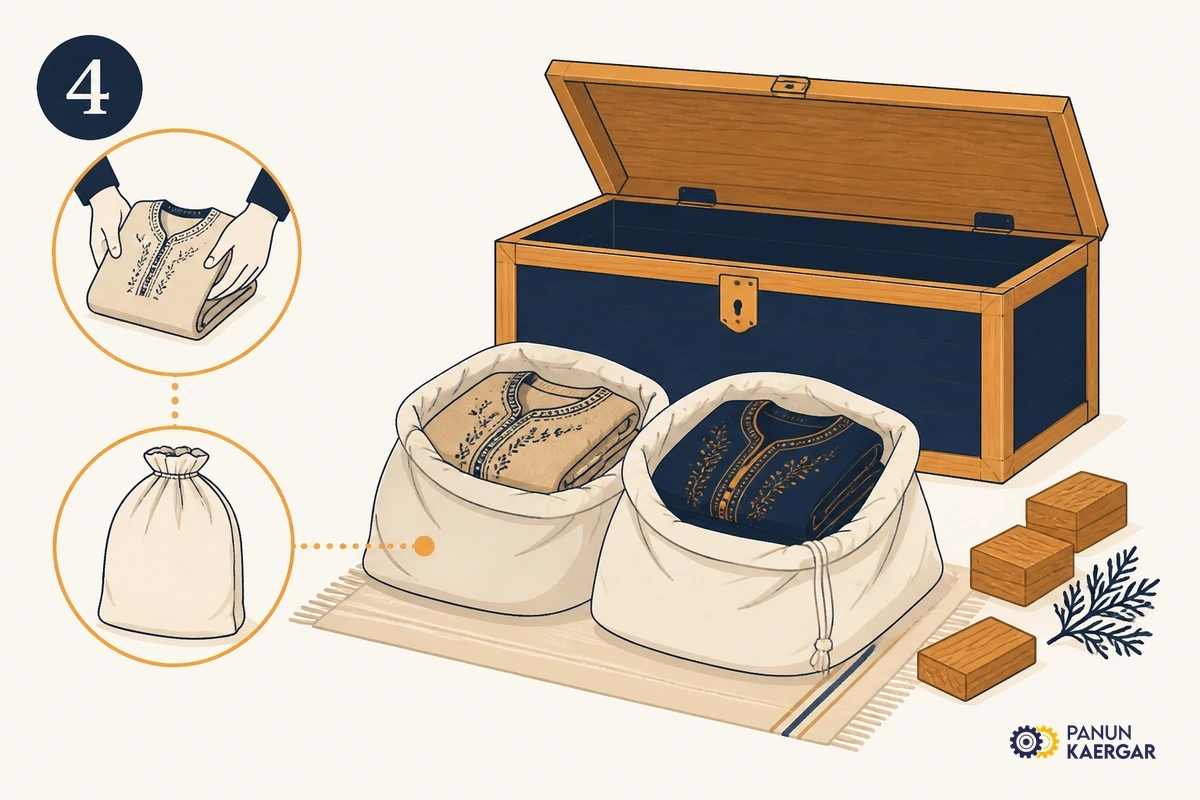
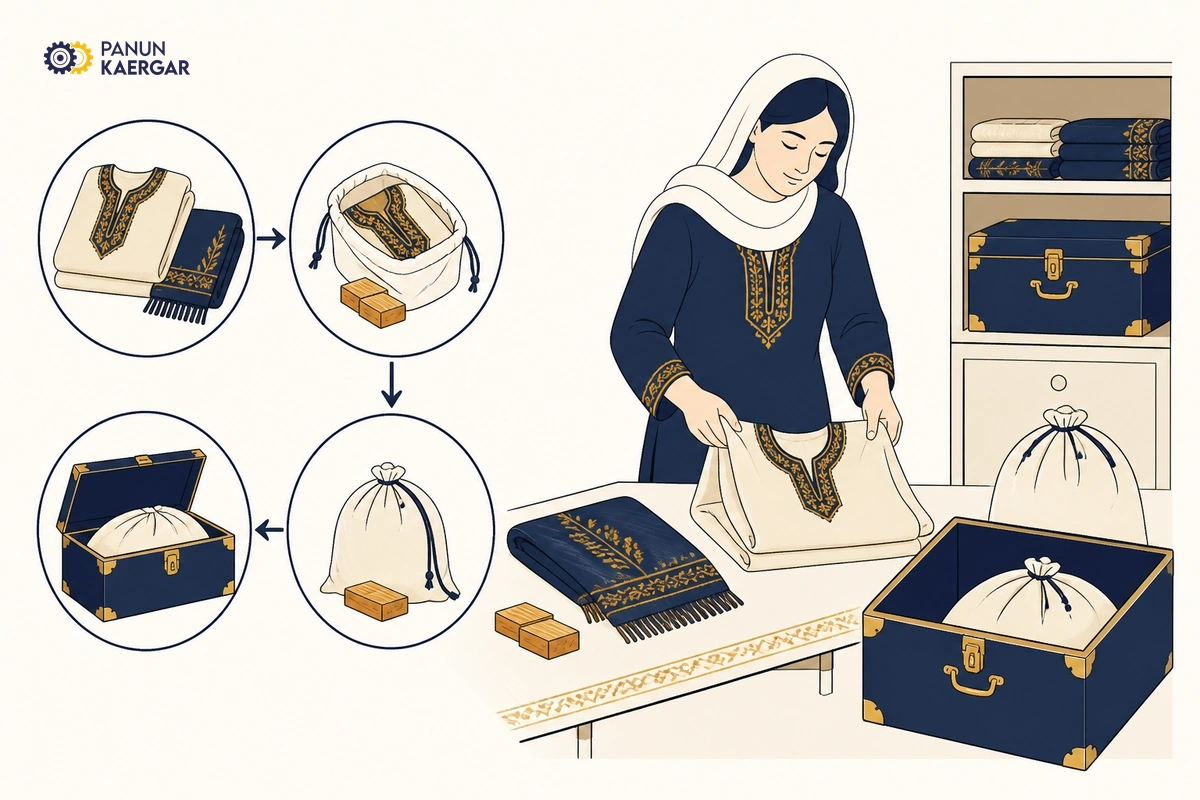
Store in breathable cotton
Best for: months in a trunk or cupboard
Fold loosely into cotton bags or muslin wraps with cedar blocks or neem leaves; keep away from naphthalene touching fabric directly.
Book pickup or drop-off dry cleaning
Best for: many pieces or delicate embroidery
A laundry partner can collect suits, pherans, and shawls, clean them properly, and return them ready for storage — safer than home washing wool.

Take one clear photo before taking anything apart. It helps a professional see the pattern and saves guesswork.
Kashmir home note
Kashmir winters mean months in wool around bukhari heat, wazwan smoke, and damp shoes tracked indoors. Wool that goes straight from daily wear into a plastic bag often smells fine for a week — then comes out musty or chewed by spring.
What not to do
These shortcuts usually cost more than they save.
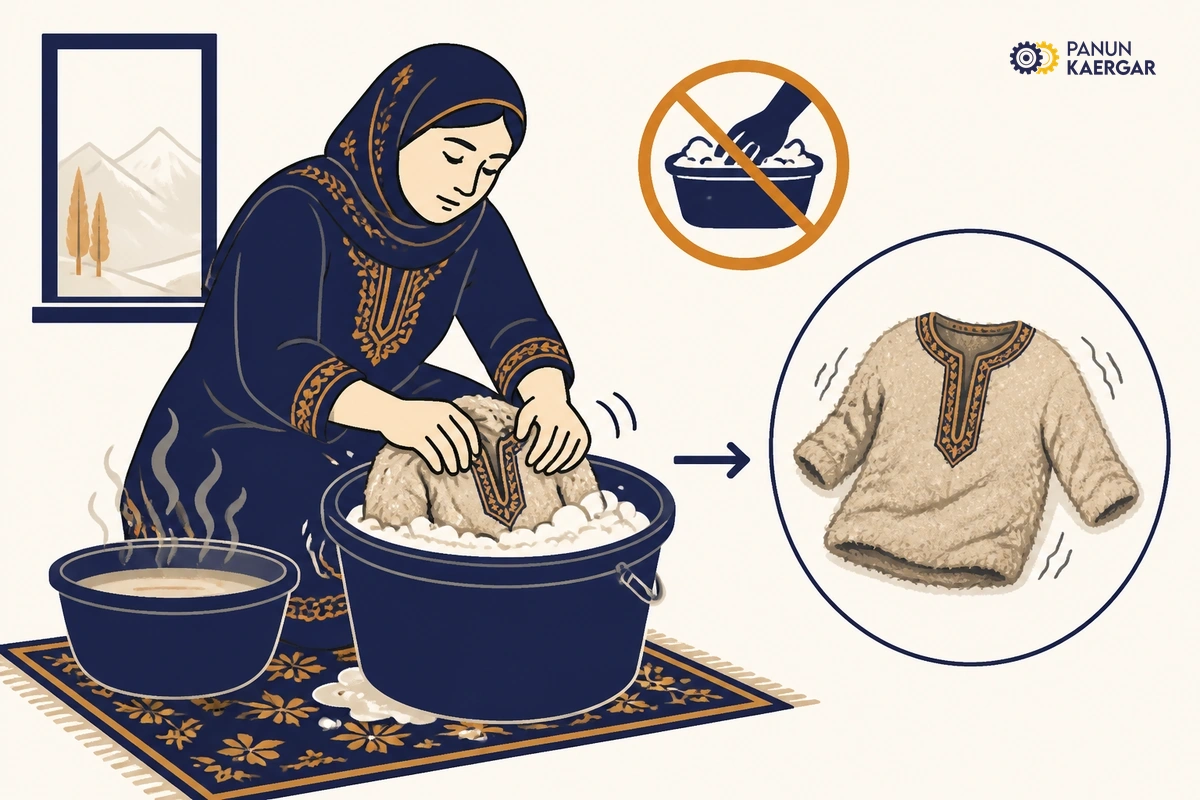
Home-wash a dry-clean-only pheran
Shrinks and felts the wool
Hot water and scrubbing can turn a loose pheran into a stiff, smaller garment with ruined embroidery.
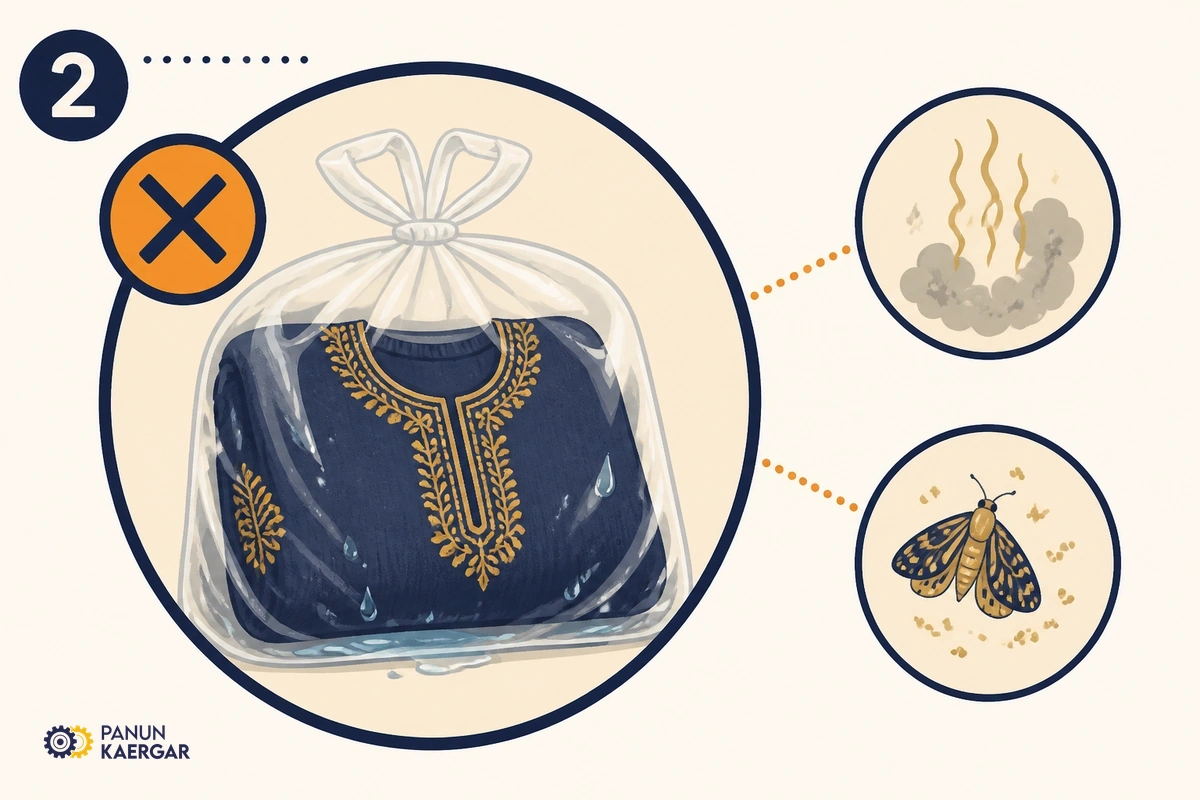
Seal damp wool in plastic
Musty smell and moth risk
Trapped moisture in a carry bag creates the exact damp pocket moths and mildew love over summer.
Skip cleaning because it looks fine
Oils feed moths all summer
Invisible skin oils and wazwan smoke on 'clean-looking' wool are what draw moths to cuffs and collars.

Keep it from returning
Fix the small trigger, keep the area clean and dry where relevant, and deal with repeat symptoms before they become a replacement job.
When to book a professional
Book dry cleaning for pherans, wool suits, embroidered shawls, and any garment with a dry-clean-only label before long storage; use pickup for a full winter wardrobe refresh or moth-damaged pieces that need professional treatment.
FAQs
What is the first check for winter woollens smell musty?
Hang pherans, shawls, and coats in dry daylight for a few hours; check seams, cuffs, and under collars for stains or tiny holes before storage.
Can I keep using it?
Only if there is no safety risk or spreading damage. Stop when the symptom worsens.
Why did this start suddenly?
A change in load, moisture, wear, cleaning product, or season often exposes a weak point.
Will a temporary fix last?
It can buy time, but repeat symptoms need the cause corrected.
When should I book help?
Book dry cleaning for pherans, wool suits, embroidered shawls, and any garment with a dry-clean-only label before long storage; use pickup for a full winter wardrobe refresh or moth-damaged pieces that need professional treatment.