
The painters leave, the sofa is back, and by evening every windowsill wears a grey film. Someone wet-mops the living room first — and the fine cement dust turns into a sticky paste that smears into the skirting.
Protect soft furnishings, dry-dust from ceiling to floor, vacuum corners before any wet mopping, then wipe cabinets and switches once the air settles. Fine dust in ducts, sticky paint residue, or a whole flat after major work needs professional post-renovation cleaning.
Quick diagnosis map
Start with the symptom, not the most dramatic fix. A small check now can save a cabinet, appliance, or Sunday afternoon.
| What you notice | Likely reason | First move |
|---|---|---|
| Grey film on sills, sticky floors, and dust that returns after one wipe | Construction dust settling in layers — wet-mopping too early turns it into paste | Cover remaining soft furniture, open windows if outdoor air is dry, and keep fans low so you do not blow dust into clean rooms. |
| Problem worsens after use | An underlying fault or hidden damage | Stop adding load; inspect safely. |
| Heat, burning smell, leak, or sudden pain | Safety issue, not a DIY puzzle | Switch off / isolate / get help. |
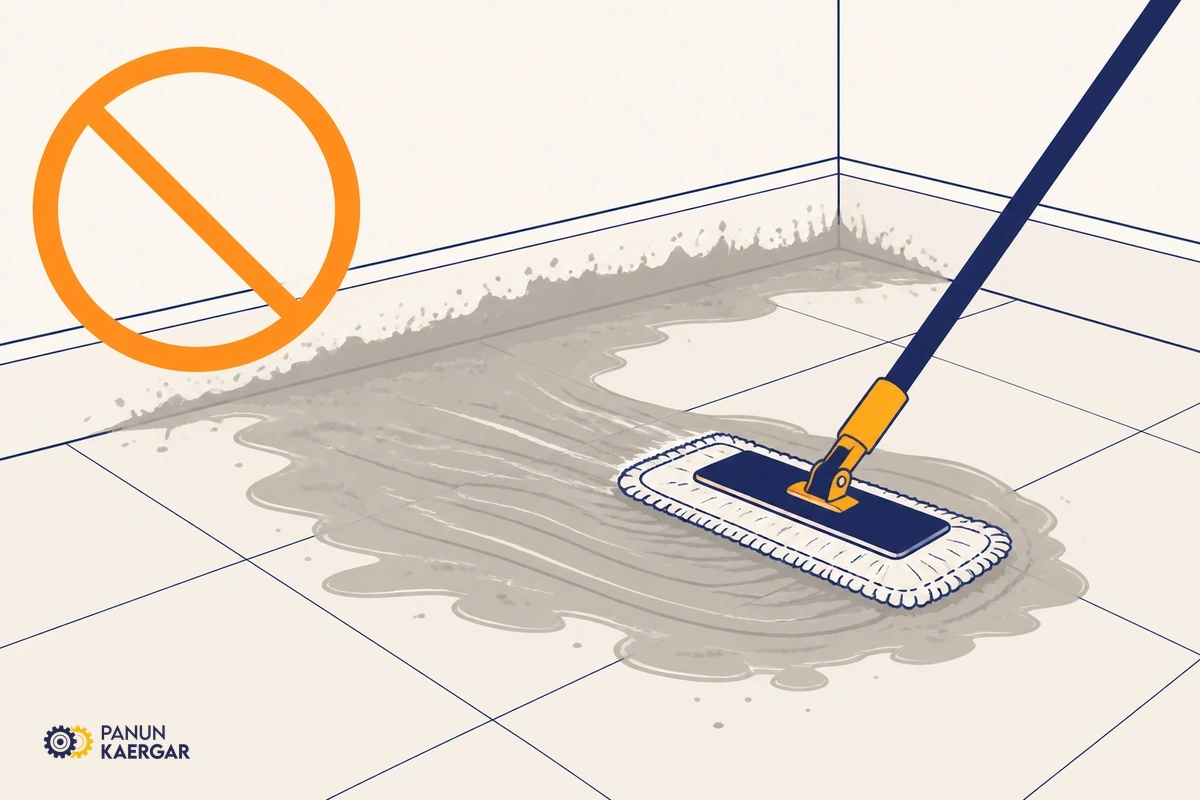
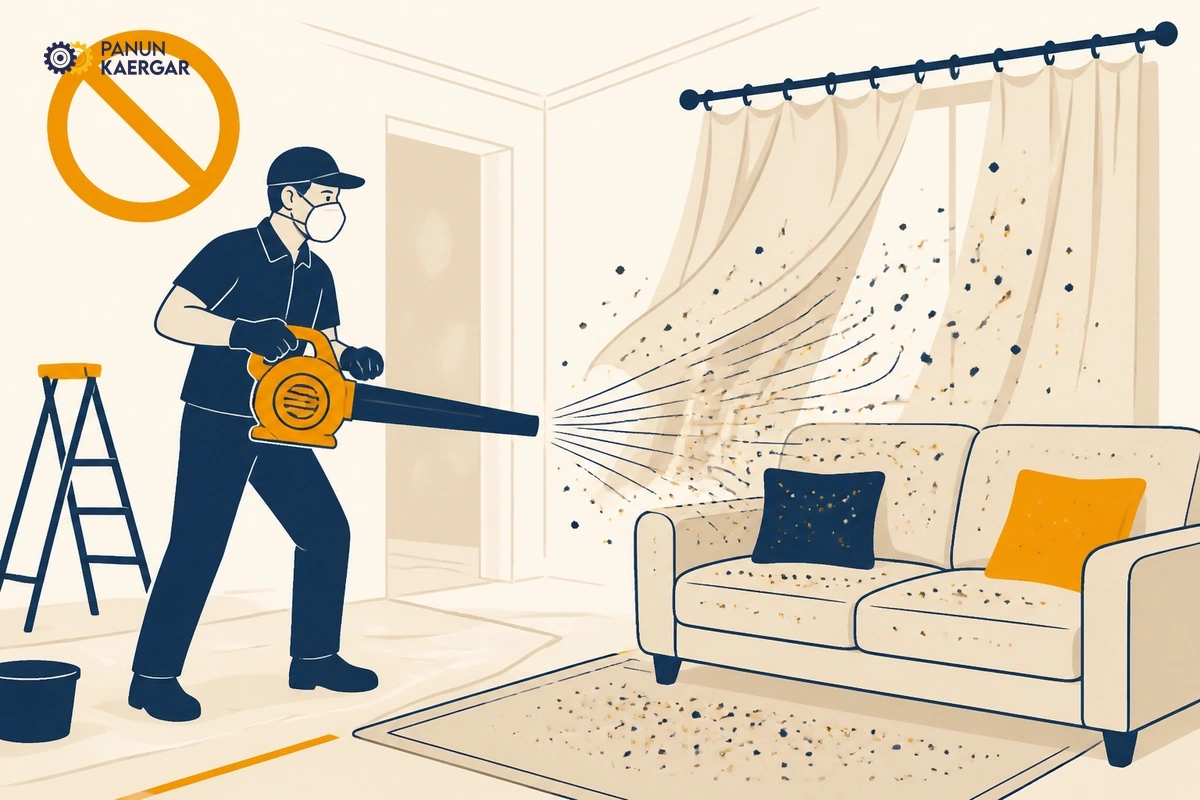
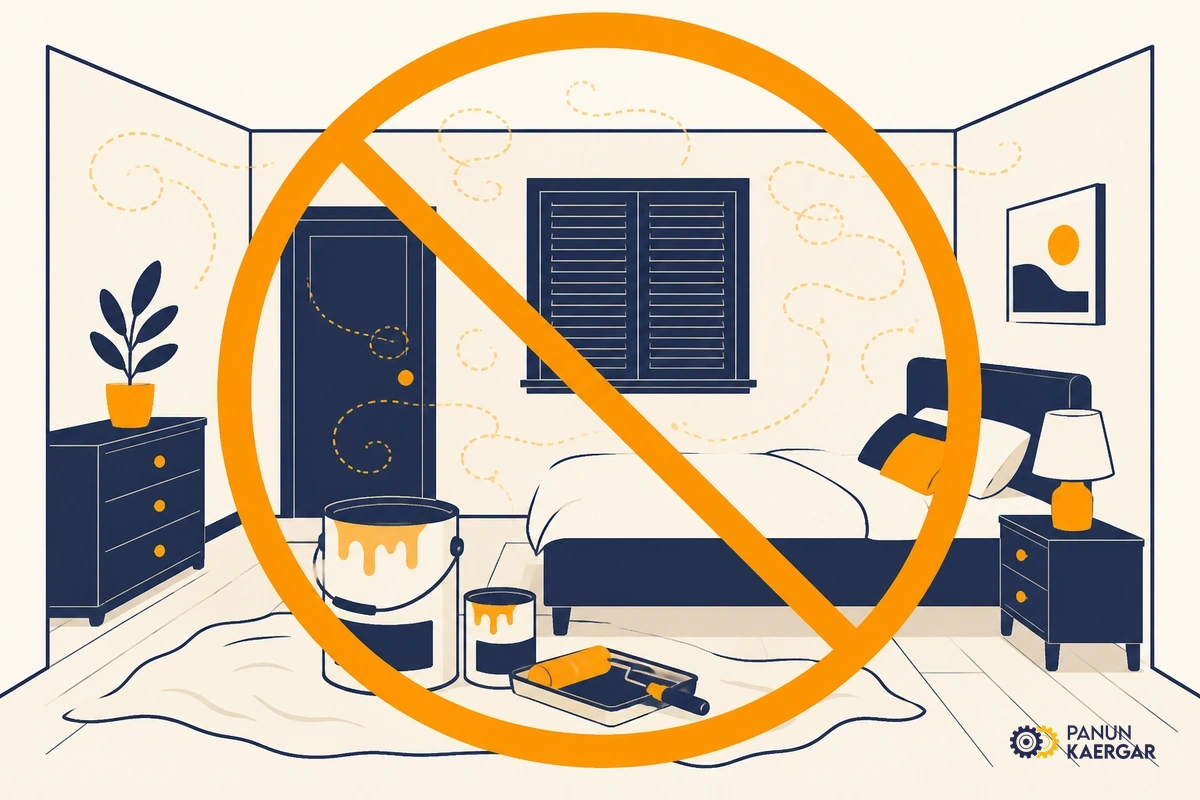
Do not wet-mop cement dust into a paste, blast rooms with a high-speed blower toward soft furnishings, or ignore leftover paint and solvent smells in a closed bedroom.
What usually causes this
The visible symptom is useful, but the small detail around it usually tells the real story.
- Fine cement, plaster, and sanding dust that stays airborne for days after work finishes.
- Wet mopping or wiping before vacuuming, which smears grit into tiles and wood grain.
- Dust trapped in curtains, carpets, AC filters, and closed cabinet tops that re-settles overnight.
Try these in order
Begin with the reversible checks. The goal is a clean fix, not winning an argument with a stubborn household thing.
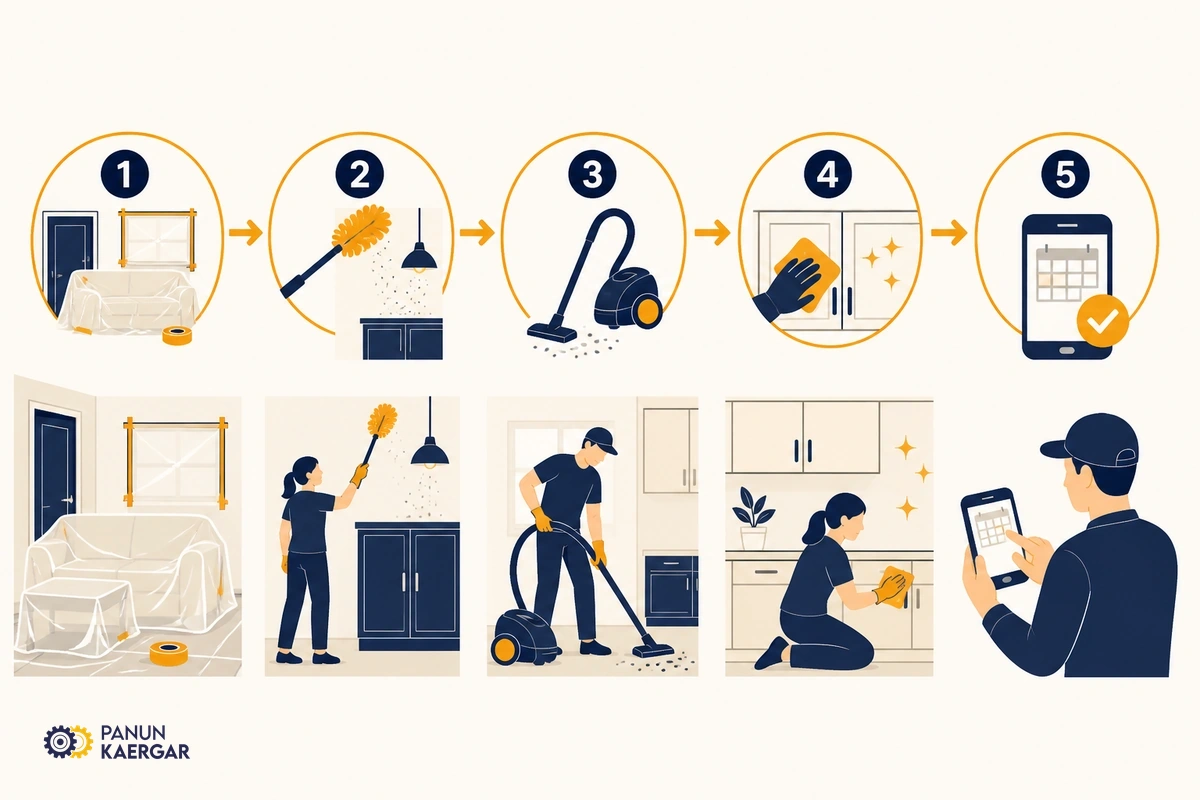
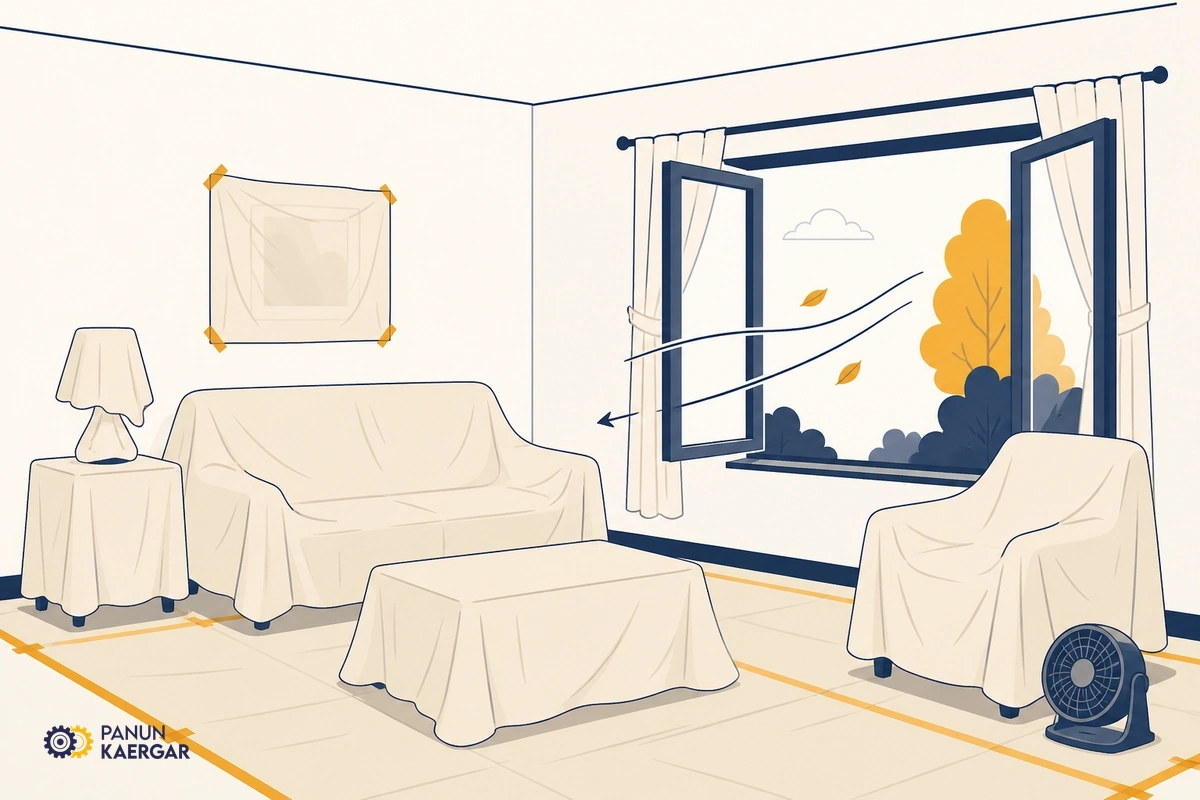
Protect and open the room
Best for: a freshly finished space
Cover remaining soft furniture, open windows if outdoor air is dry, and keep fans low so you do not blow dust into clean rooms.
Dry-dust from top to bottom
Best for: ceilings, fans, and high shelves
Wipe or vacuum high surfaces first — false ceilings, cornices, fans, curtain rods — so grit falls downward once, not onto a floor you already cleaned.

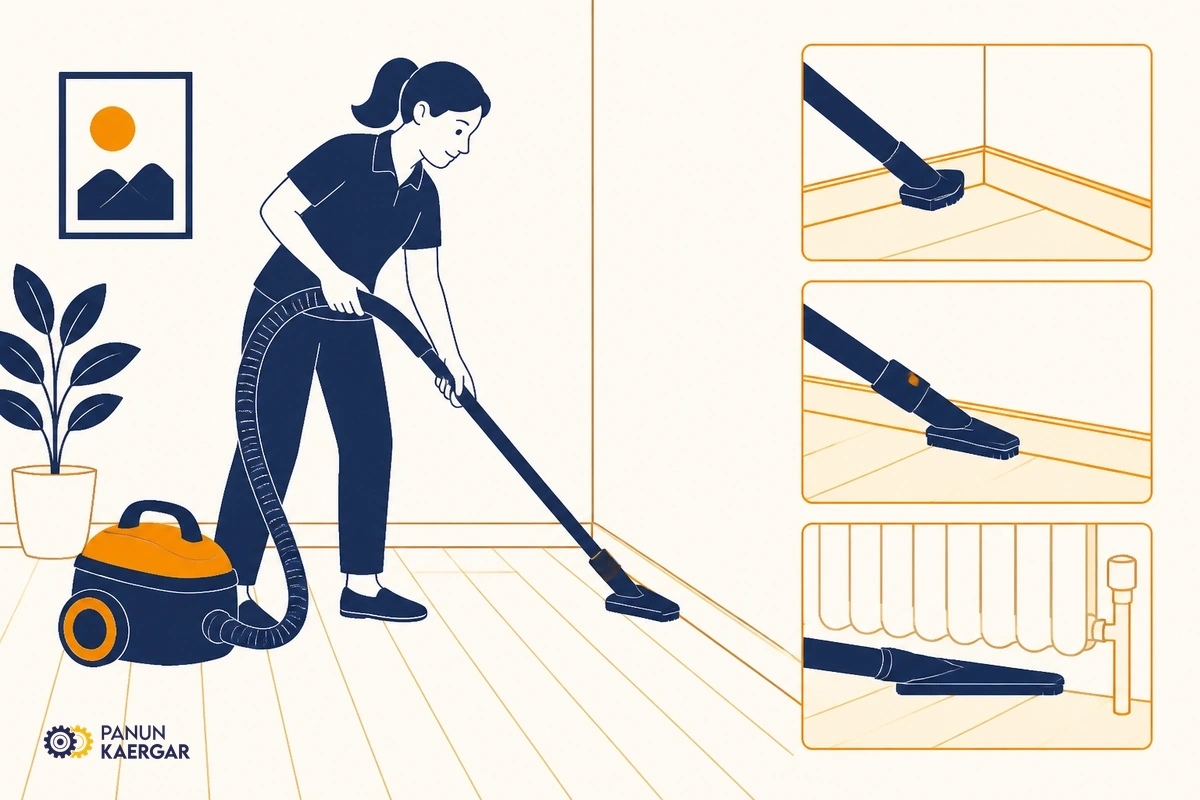
Vacuum floors and corners before wet work
Best for: tile, wood, or carpet dust
Use a hard-floor or upholstery tool on skirting, corners, and under radiators. Only then damp-mop with clean water changed often.
Wipe cabinets, switches, and glass last
Best for: sticky film after the air settles
Use a barely damp microfibre on doors, handles, and windows once the heavy dust has dropped. Change cloths when they grey out.

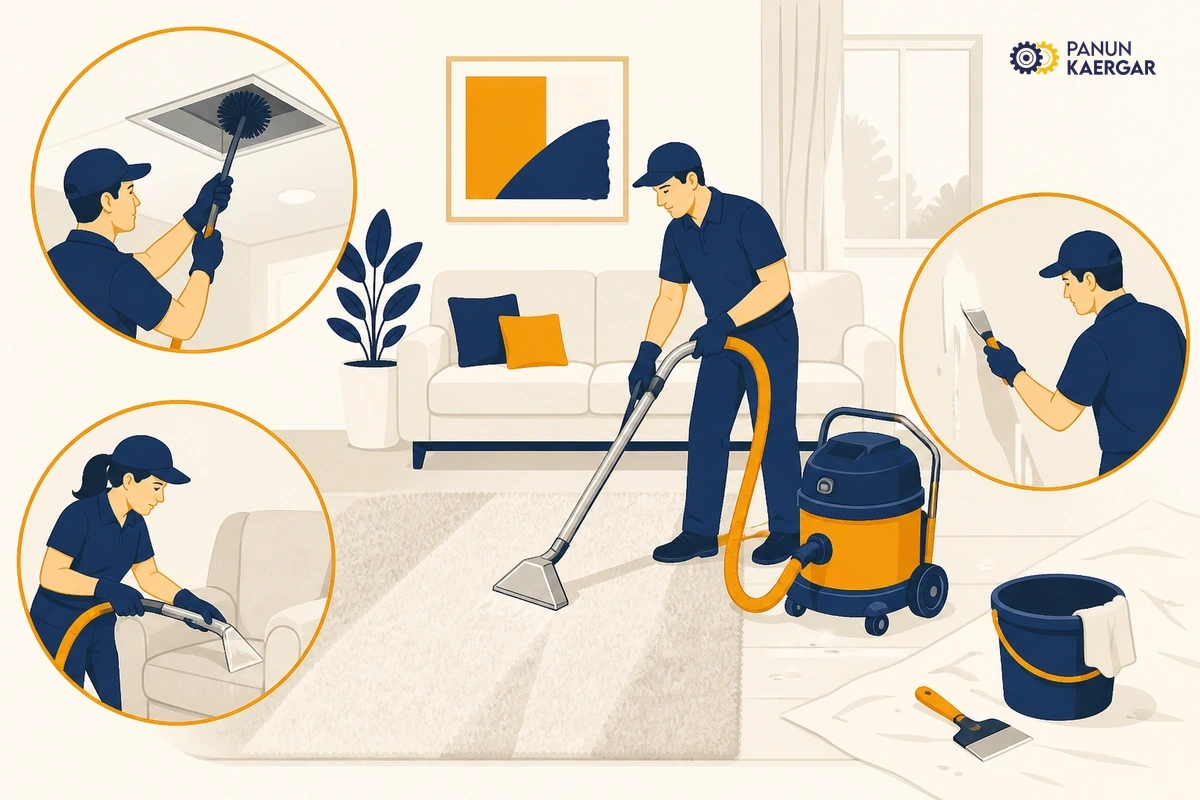
Book post-renovation cleaning
Best for: whole-home fine dust or paint residue
Pros can clear ducts, deep-clean carpets and upholstery, and lift sticky emulsion residue that home wiping leaves behind.
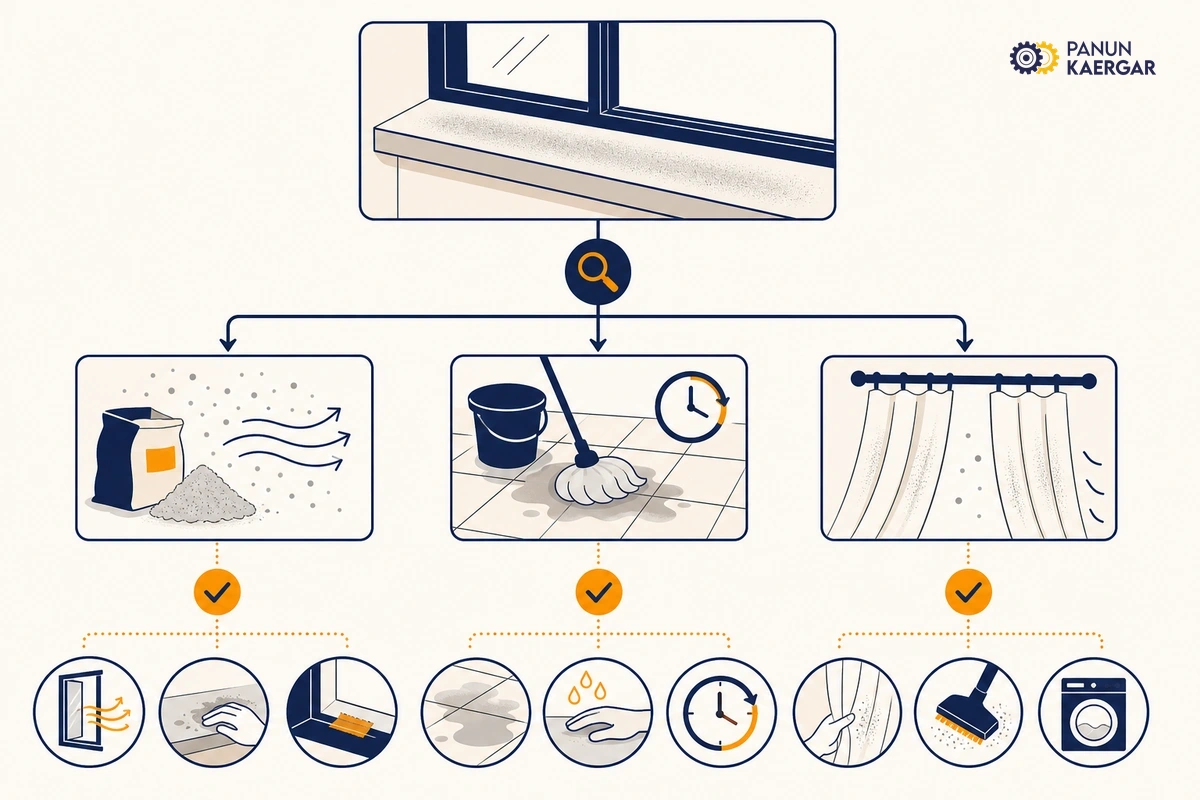
Change mop water the moment it turns grey. Dirty water re-lays the same dust as a thin film.
Kashmir home note
Kashmir renovations often finish just before winter when windows stay shut and bukhari heat keeps fine dust circulating indoors. Carpets, pheran piles, and lined curtains hold grit for weeks unless you work top-down and dry-first.
What not to do
These shortcuts usually cost more than they save.
Wet-mop fine cement dust first
Turns grit into grey paste
Water on unsettled construction dust smears into tile pores, wood grain, and skirting — harder to lift than dry vacuuming.
Blast every room with a high-speed blower
Pushes dust into soft furnishings
Strong airflow drives fine grit into curtains, carpets, and neighbouring rooms instead of removing it.
Ignore paint and solvent smell in a closed room
Air quality and finish risk
Sealed winter rooms trap fumes from fresh paint and adhesives; air the space and delay soft furnishings until surfaces are fully dry.
Keep it from returning
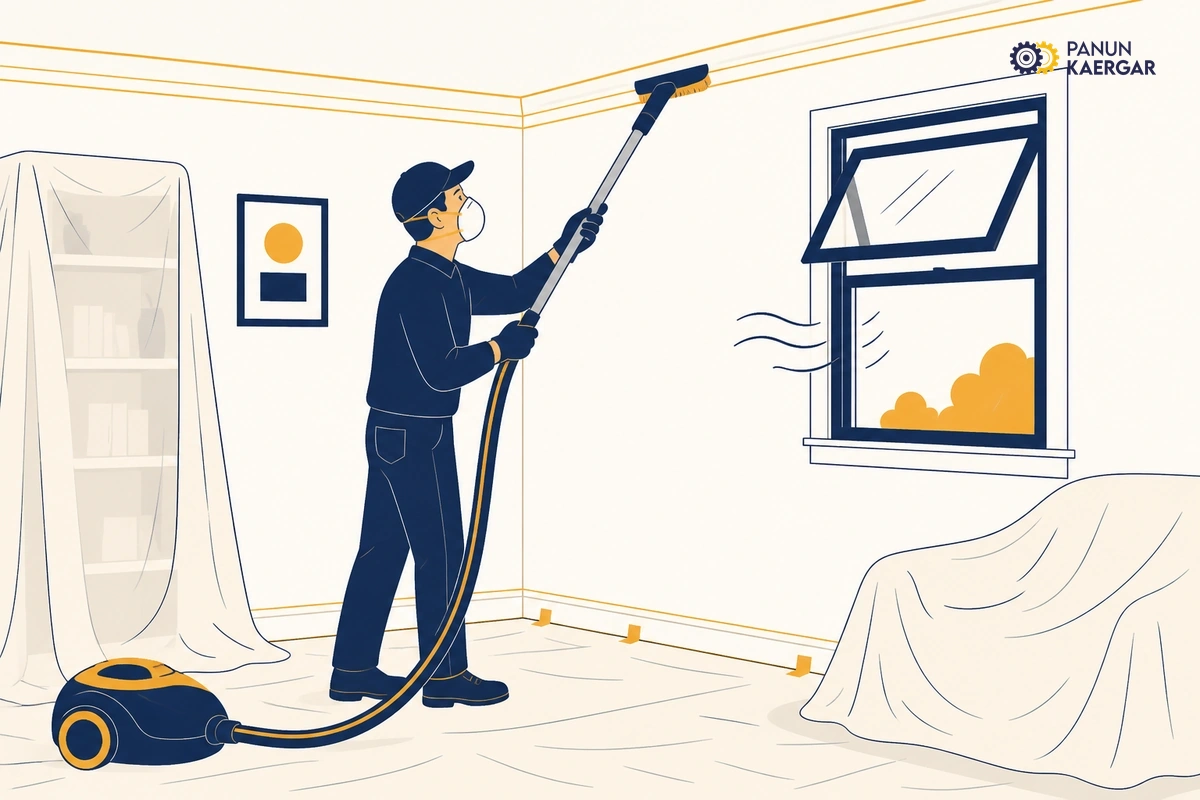
After any sanding or painting day, vacuum high surfaces the same evening, keep windows cracked when outdoor air is dry, and cover carpets until dust settles.
When to book a professional
Book professional post-renovation or deep cleaning after major painting or masonry, when dust returns daily, carpets and sofas stay gritty, AC filters clog within days, or sticky paint residue will not lift with home wiping.
Need hands-on help? Book verified a cleaning professional through Panun Kaergar across Kashmir when DIY has done its part.
FAQs
What is the first check for post-renovation dust everywhere?
Cover remaining soft furniture, open windows if outdoor air is dry, and keep fans low so you do not blow dust into clean rooms.
Can I keep using it?
Only if there is no safety risk or spreading damage. Stop when the symptom worsens.
Why did this start suddenly?
A change in load, moisture, wear, cleaning product, or season often exposes a weak point.
Will a temporary fix last?
It can buy time, but repeat symptoms need the cause corrected.
When should I book help?
Book professional post-renovation or deep cleaning after major painting or masonry, when dust returns daily, carpets and sofas stay gritty, AC filters clog within days, or sticky paint residue will not lift with home wiping.