
Every evening walk to the kitchen announces itself with a sharp squeak by the bedroom door. Someone grabs a random nail and hammers into the loudest board — and the next week a second squeak answers from two steps away.
Walk slowly and mark the exact board, check for a loose nail or screw, seat the board onto the joist with a proper fixing if you can see the structure, and use a dry lubricant only as a short quieting step. A bouncing span, rotten timber, or squeaks across a whole room need a carpenter.
Quick diagnosis map
Start with the symptom, not the most dramatic fix. A small check now can save a cabinet, appliance, or Sunday afternoon.
| What you notice | Likely reason | First move |
|---|---|---|
| Sharp squeak or creak when you step on one board | Loose board rubbing on a joist, nail, or neighbouring plank | Step slowly in socks, mark the loudest plank with tape or pencil, and note whether it squeaks near a wall, mid-span, or over a known joist line. |
| Problem worsens after use | An underlying fault or hidden damage | Stop adding load; inspect safely. |
| Heat, burning smell, leak, or sudden pain | Safety issue, not a DIY puzzle | Switch off / isolate / get help. |
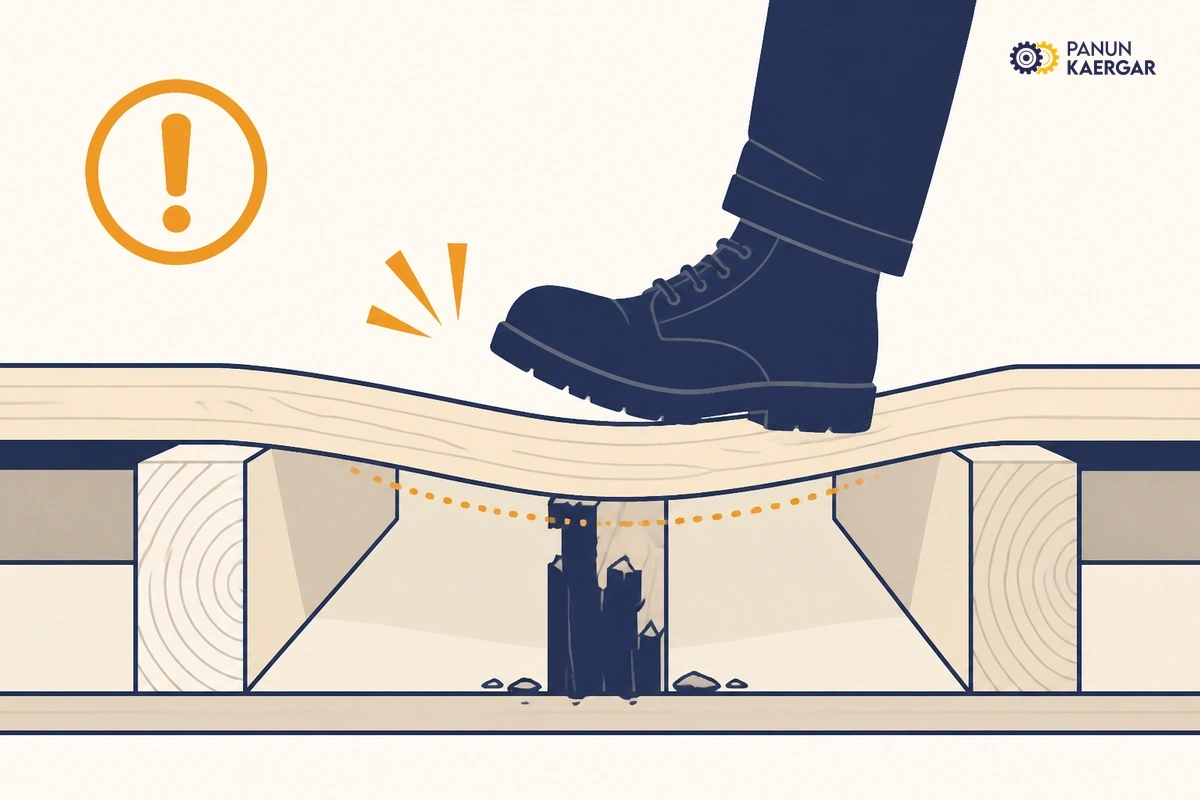
Do not hammer nails at random into an unknown floor bay, flood gaps with thick oil, or ignore a soft bouncing span that may mean a failing joist.
What usually causes this
The visible symptom is useful, but the small detail around it usually tells the real story.
- Floorboards shrinking in dry heated winter rooms so edges rub and nails loosen.
- A nail or screw that has worked up and rubs inside the wood.
- Joist movement or a board that no longer sits flat on its support.
Try these in order
Begin with the reversible checks. The goal is a clean fix, not winning an argument with a stubborn household thing.

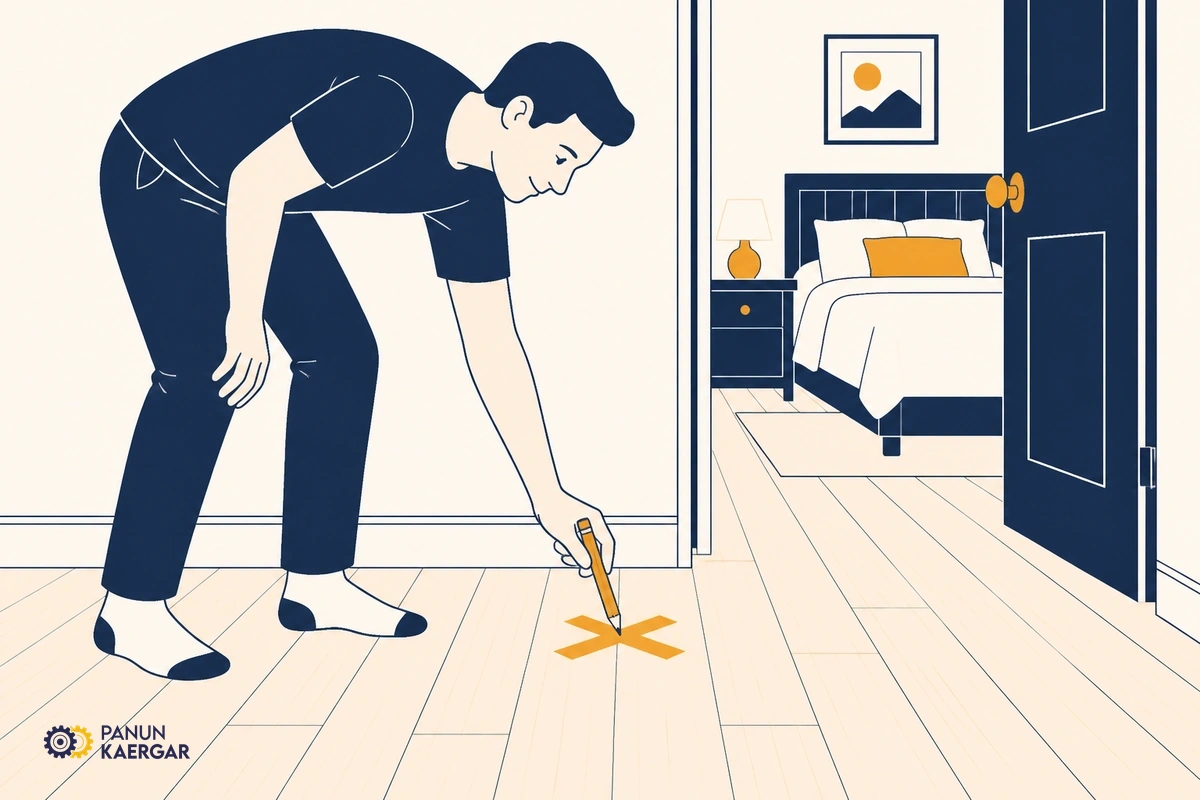
Walk and mark the squeak
Best for: any night-creak board
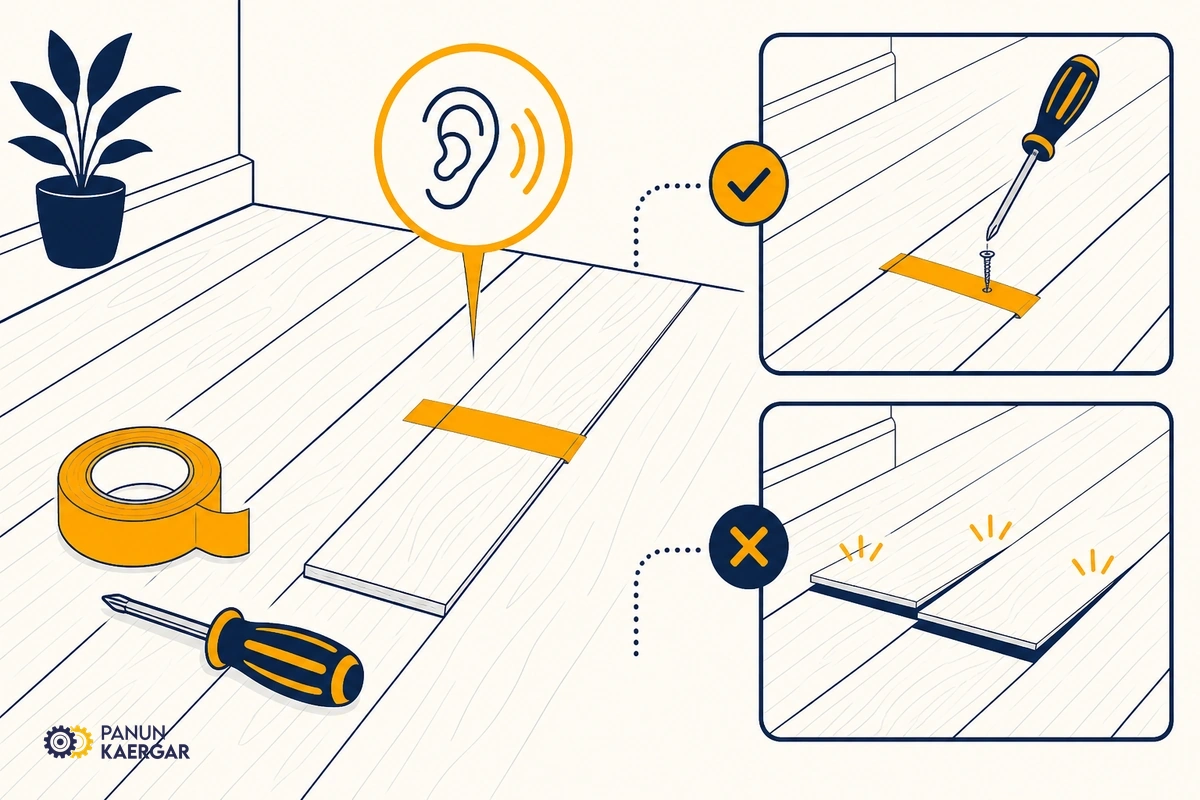
Step slowly in socks, mark the loudest plank with tape or pencil, and note whether it squeaks near a wall, mid-span, or over a known joist line.
Look for a proud nail or screw
Best for: a local click underfoot
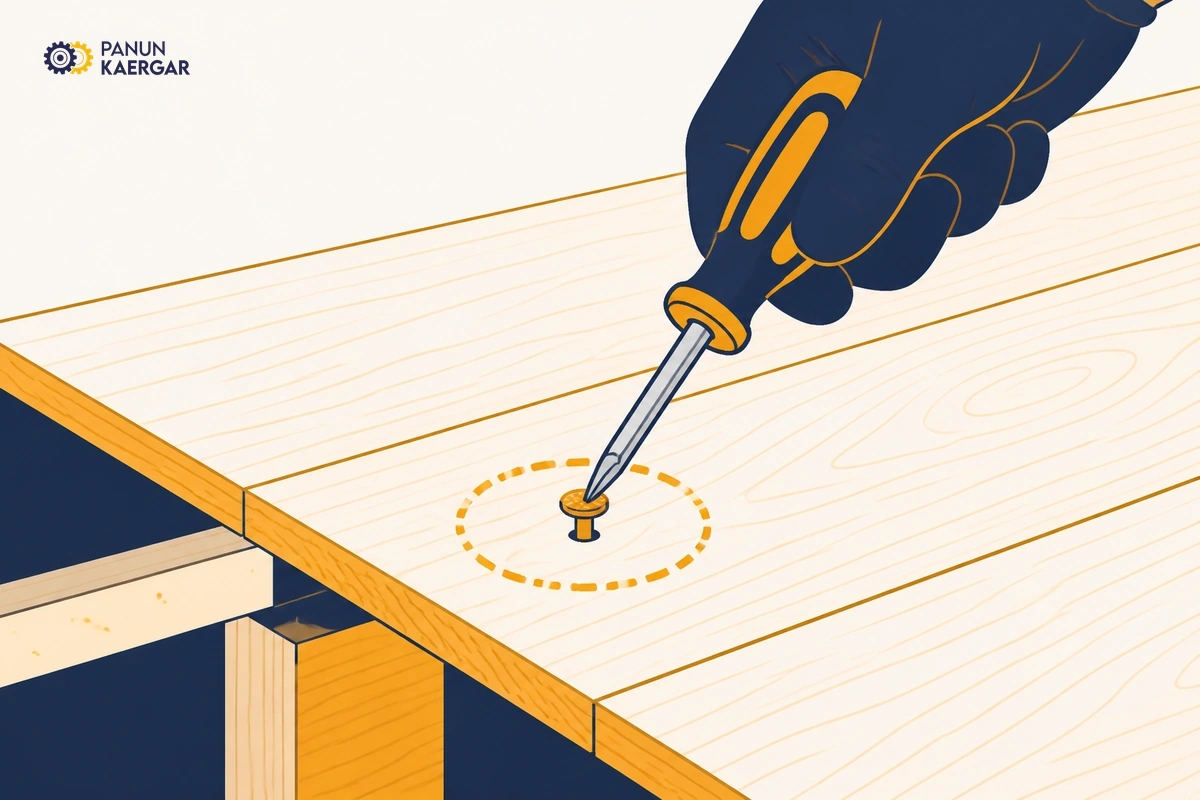
Check the marked board for a raised head; seat it carefully or replace with a slightly longer screw into solid timber — never force a bent nail sideways.
Quiet the rub only as a temporary step
Best for: a dry seasonal squeak
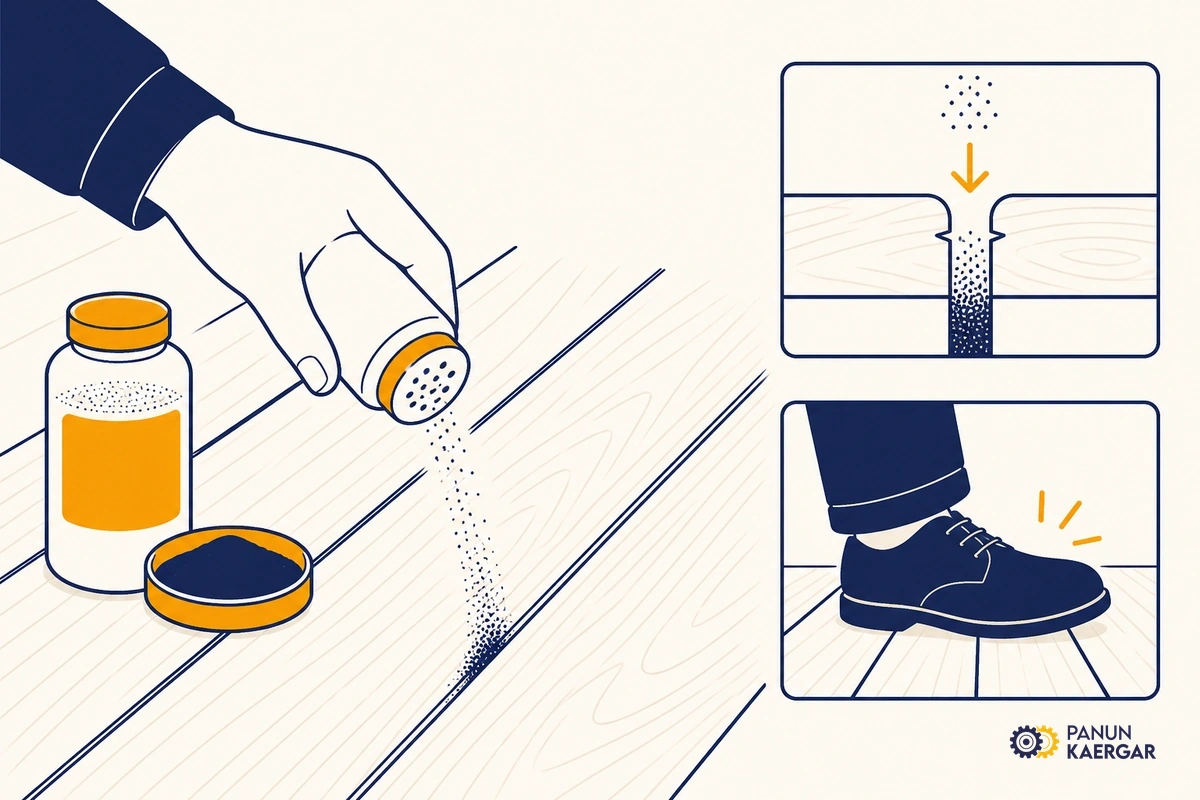
A light dusting of talc or graphite powder into the gap can reduce friction overnight, but it will not fix a loose board that still moves.
Screw the board to the joist if accessible
Best for: a board that lifts underfoot
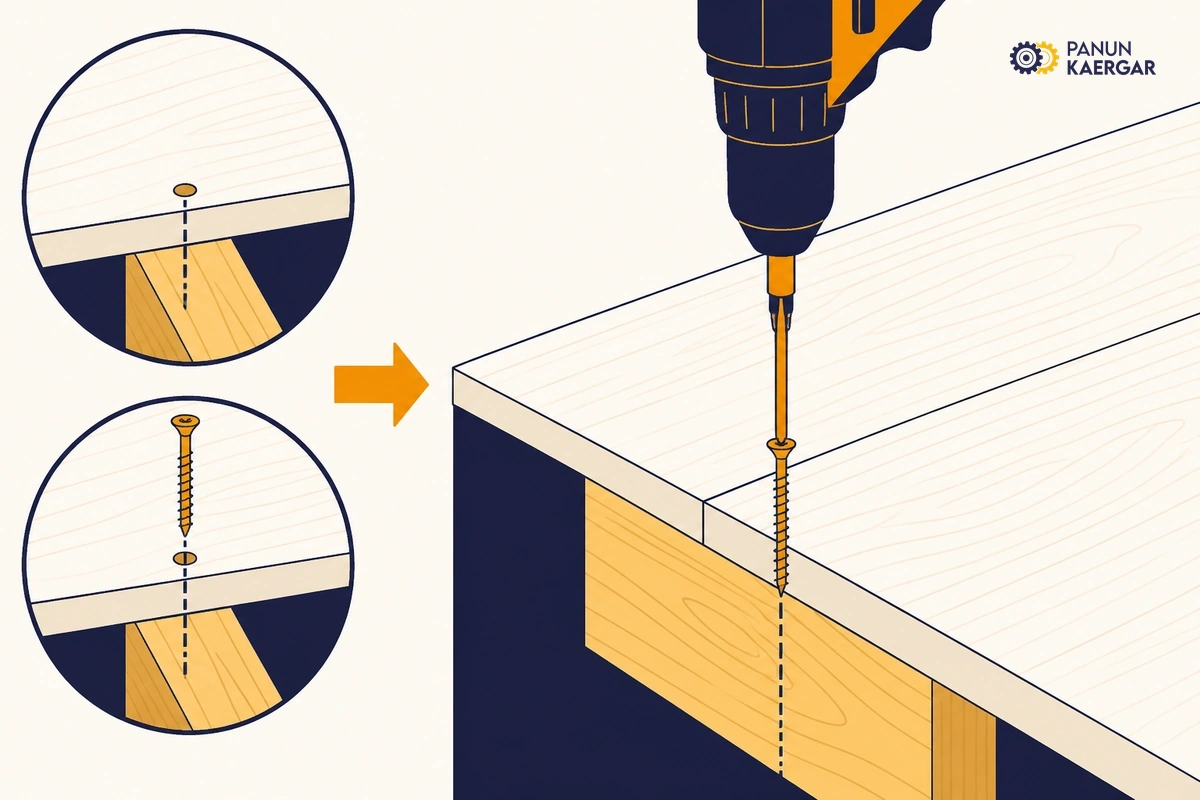
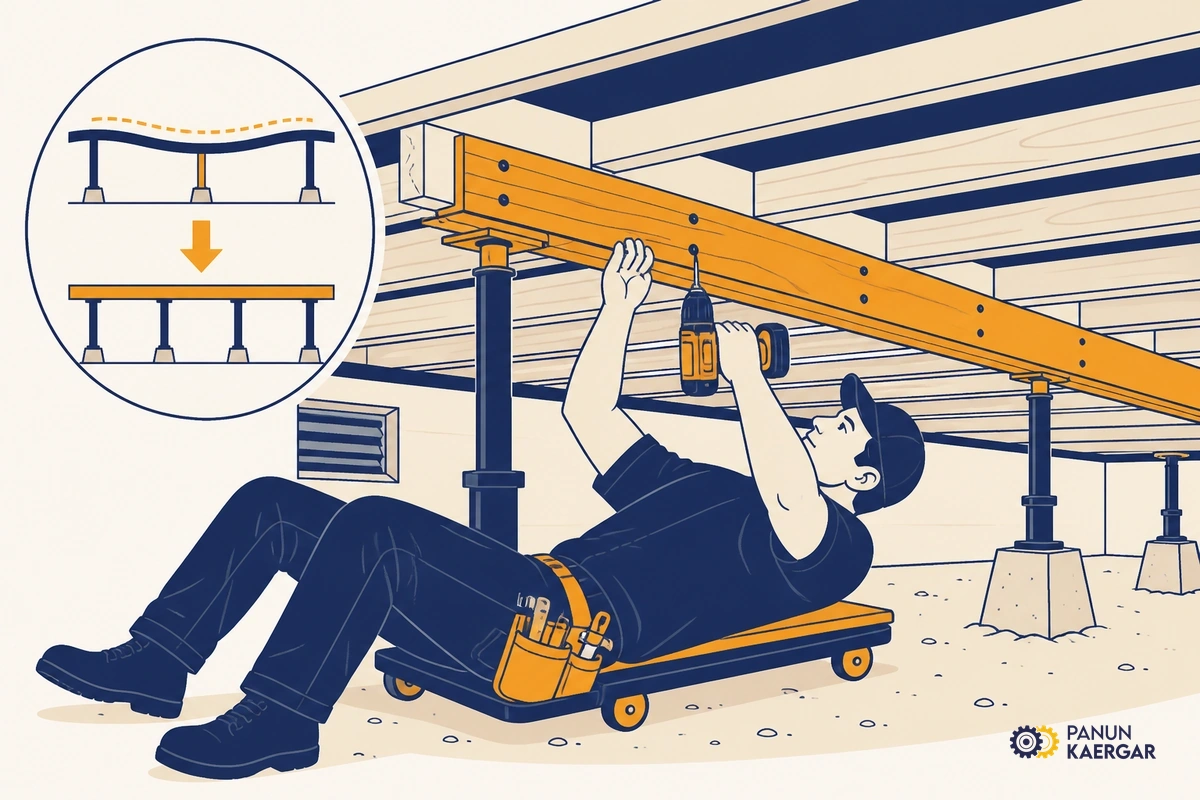
Predrill and drive screws into the joist line so the board sits flat; hide heads if the floor is finished timber. Stop if the timber feels soft or crumbly.
Book a carpenter
Best for: bounce, rot, or a whole noisy bay
A pro can work from below, sister a weak joist, replace a cupped board, and quiet a run of boards without guessing nail lines into pipes or cables.
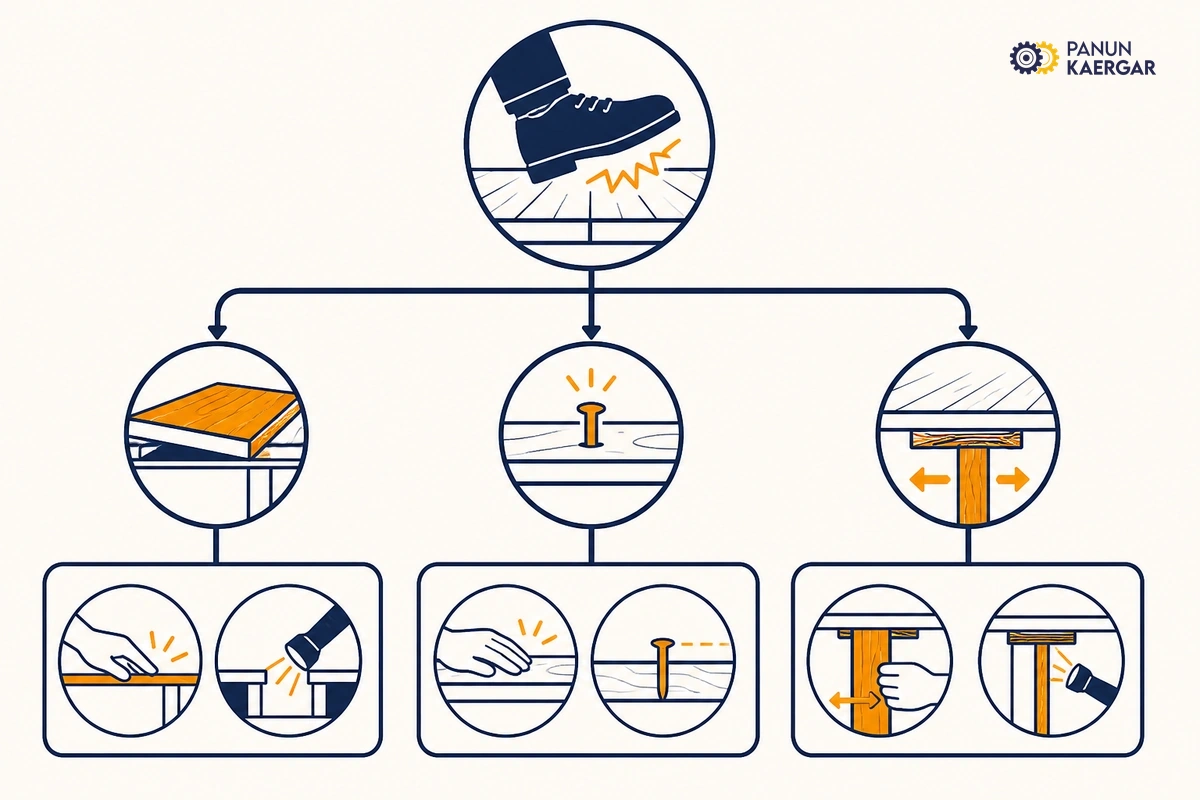
Tape a short line on the loudest plank, then check from both directions. The true rub is often half a board away from where you first heard it.
Kashmir home note
Kashmir timber floors dry hard under bukhari and room heaters, then take moisture again in damp spells. Boards shrink, nails loosen, and the same path to the kitchen starts announcing every step until the fixing is seated again.
What not to do
These shortcuts usually cost more than they save.
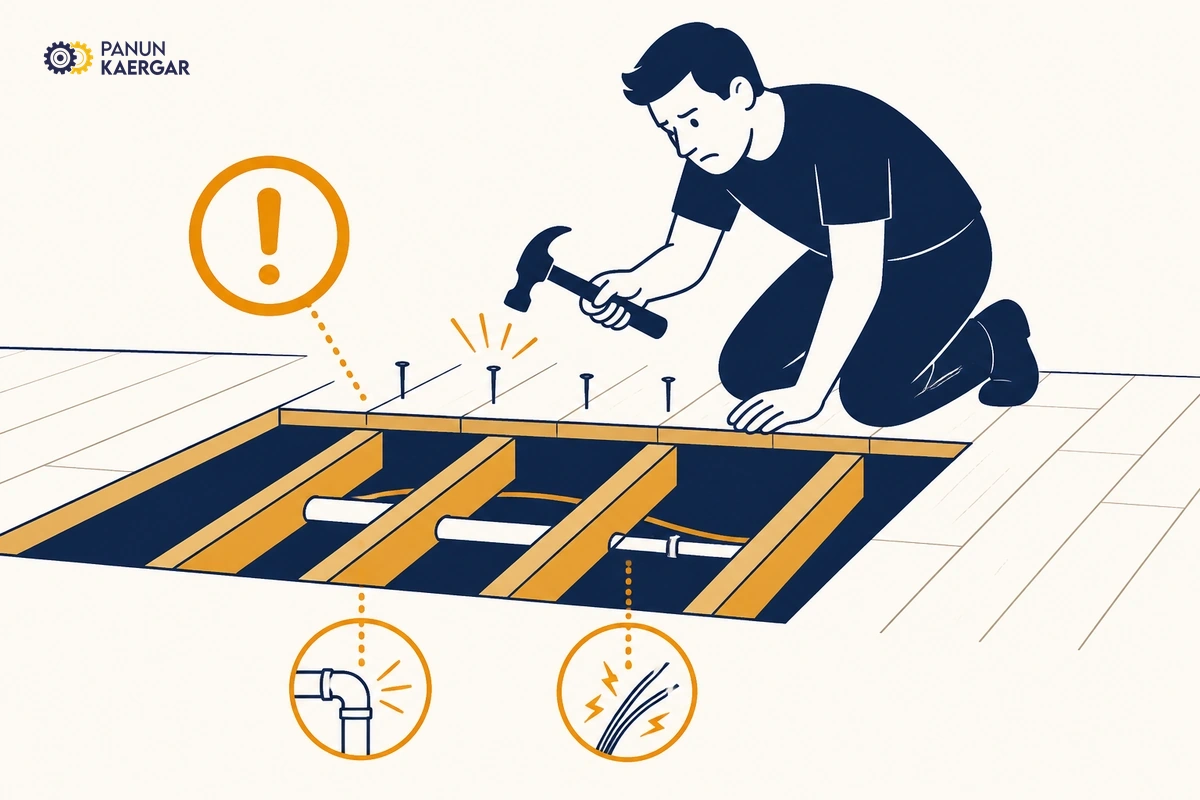
Hammer nails at random into the bay
Misses the joist — hits services
Blind nailing can miss the joist entirely and risk pipes or cables running under timber floors.
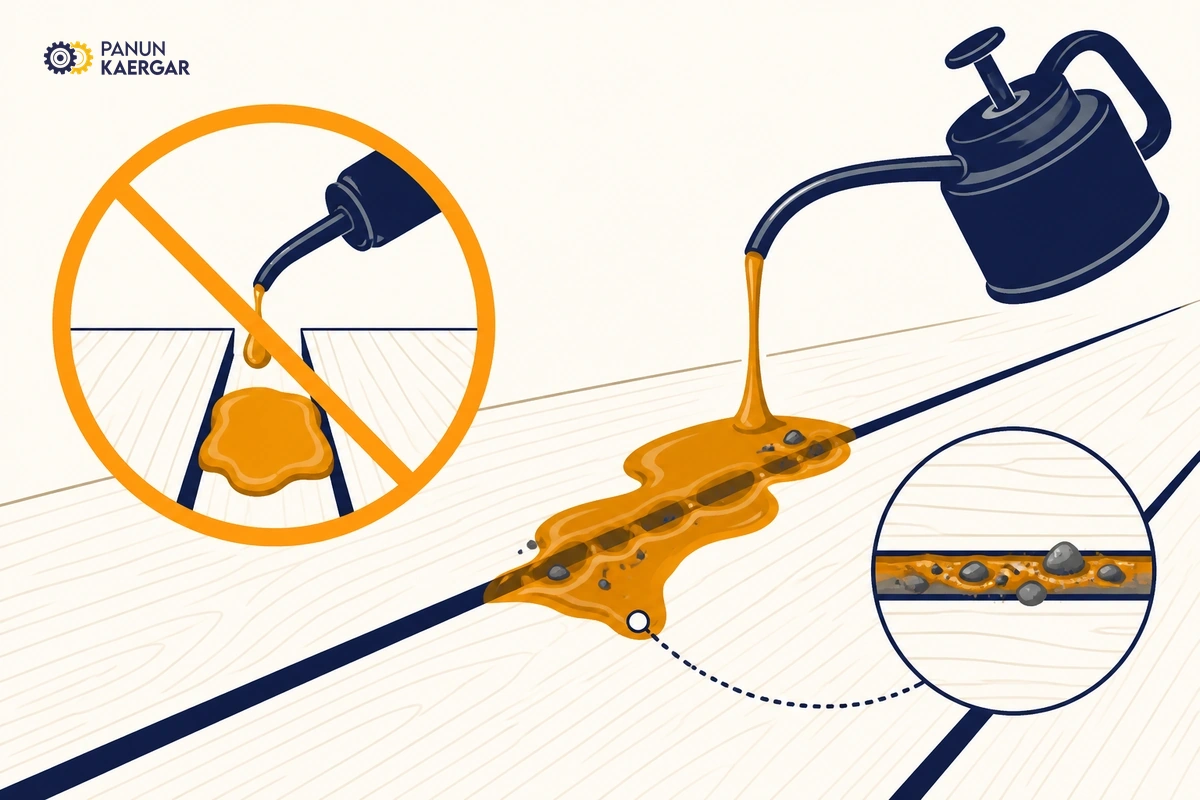
Flood the gap with thick oil
Holds grit and stains timber
Heavy oil darkens boards and catches dust so the rub returns messier than before.
Ignore a soft bouncing span
Joist or rot risk
A board that dips underfoot is not just noisy — it can mean a weak joist or decaying timber that needs a carpenter, not another nail.
Keep it from returning
Keep indoor humidity steadier where you can, fix drips that wet timber floors, and reseat a single squeaky board early before neighbouring planks loosen.
When to book a professional
Book a carpenter for squeaks across a whole room, boards that bounce or feel soft, visible rot, access only from a ceiling below, or any floor where pipes and cables may run under the boards.
Need hands-on help? Book verified carpentry services in Kashmir or find a carpenter near you on Panun Kaergar when DIY has done its part.
FAQs
Why does my wooden floor squeak in Kashmir?
Most squeaks are a loose board rubbing on a joist, a proud nail, or a neighbouring plank. Dry winter heating shrinks timber so fixings loosen; damp spells can swell boards again.
How do I find which floorboard is squeaking?
Walk slowly in socks, listen for the loudest step, and mark that plank with tape or pencil. Note whether the noise is near a wall, mid-span, or over a joist line.
Will talc or graphite fix a squeaky floor?
A light dry powder in the gap can quiet friction for a while, but it will not secure a board that still lifts. Seat the board to the joist or book a carpenter if movement remains.
Is it safe to nail a squeaky floorboard myself?
Only if you can identify the joist line and there is no risk of hidden pipes or cables. Random nailing is how floors get damaged and services get hit — mark first or book a pro.
When should I book a carpenter for floor squeaks?
Book when squeaks run across a whole room, boards bounce or feel soft, timber looks rotten, access is only from a ceiling below, or you are unsure what runs under the floor.