
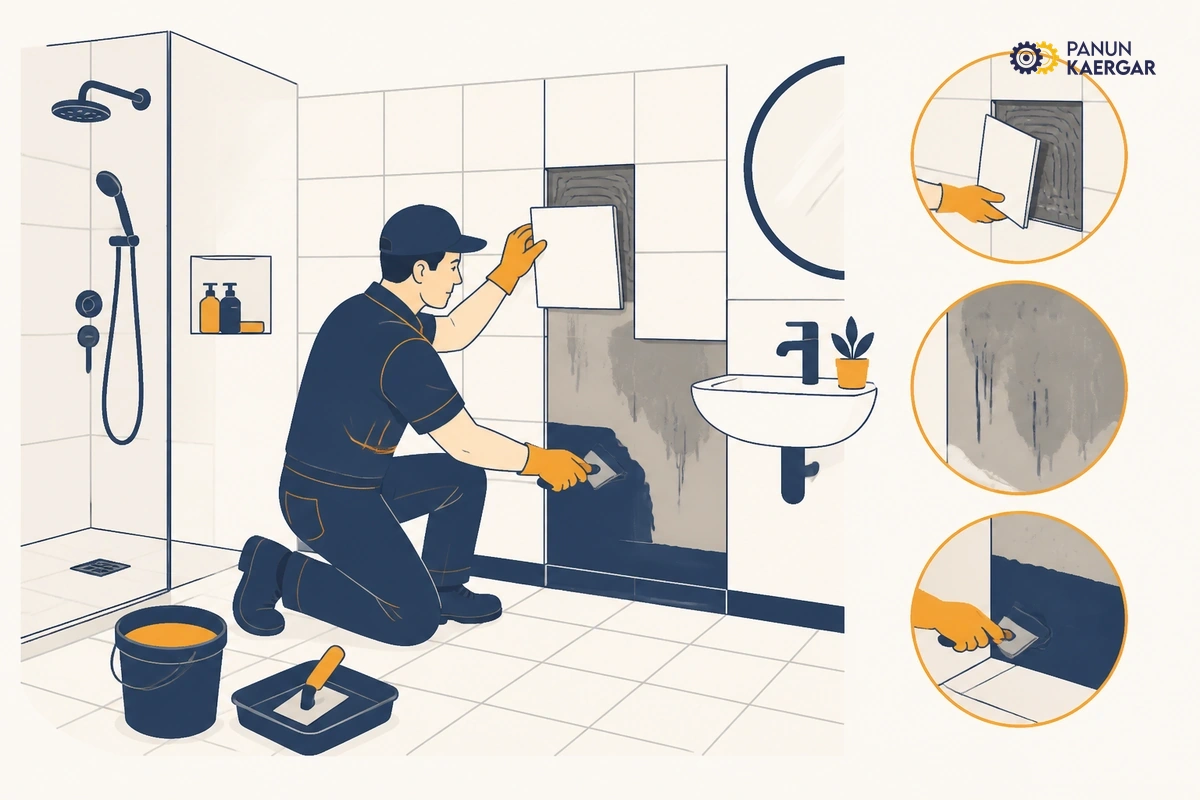
After a week of showers the floor joints look sandy, a dark line runs along the wall skirting, and someone squeezes silicone over the crumbling grout — trapping moisture behind a shiny seal.
Dry the area, rake out loose grout, clean and dry the joints fully, then regrout with a bathroom-grade mix and seal only after it has cured. Hollow tiles, soft plaster behind the wall, or mould that returns after regrouting need a mason for proper tile and waterproofing repair.
Quick diagnosis map
Start with the symptom, not the most dramatic fix. A small check now can save a cabinet, appliance, or Sunday afternoon.
| What you notice | Likely reason | First move |
|---|---|---|
| Sandy, cracked, or missing grout lines in a wet bathroom | Failed joint that lets water sit against the tile bed or wall | Wipe the floor and wall dry, then mark every joint that powders, cracks, or shows a dark damp edge so you know the full repair length. |
| Problem worsens after use | An underlying fault or hidden damage | Stop adding load; inspect safely. |
| Heat, burning smell, leak, or sudden pain | Safety issue, not a DIY puzzle | Switch off / isolate / get help. |
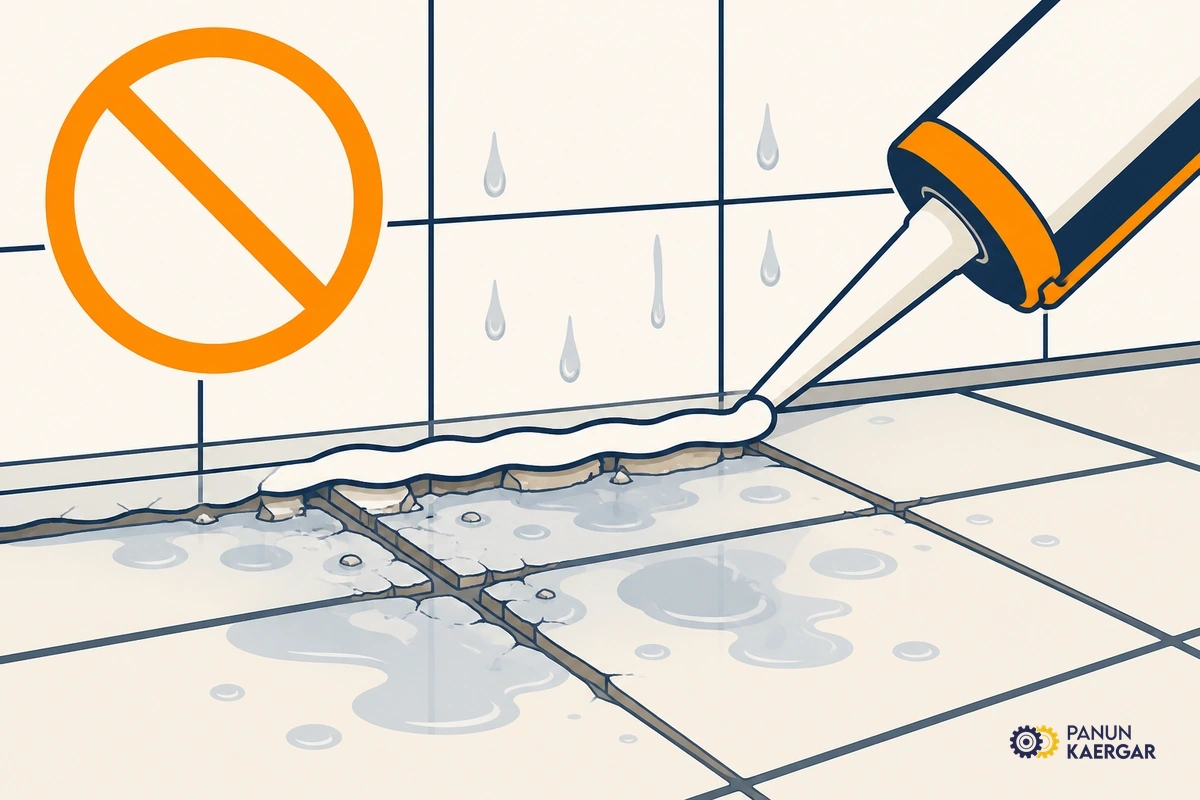
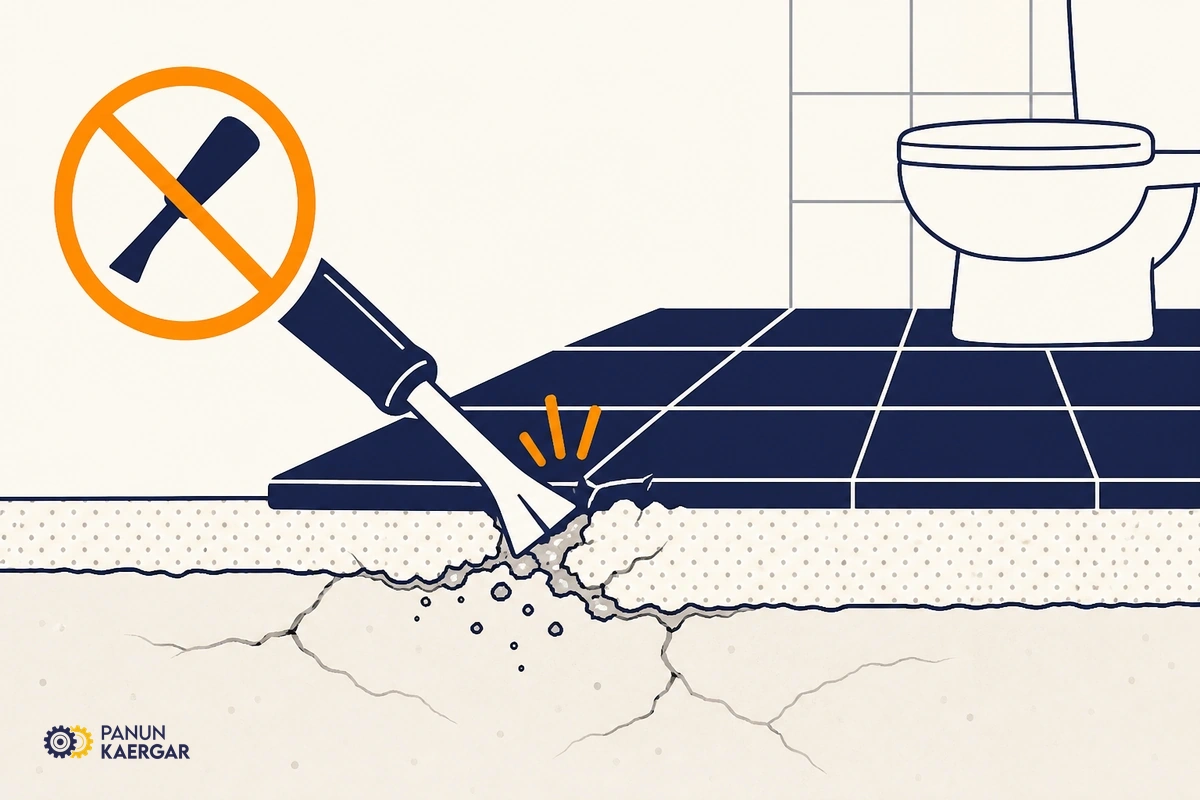
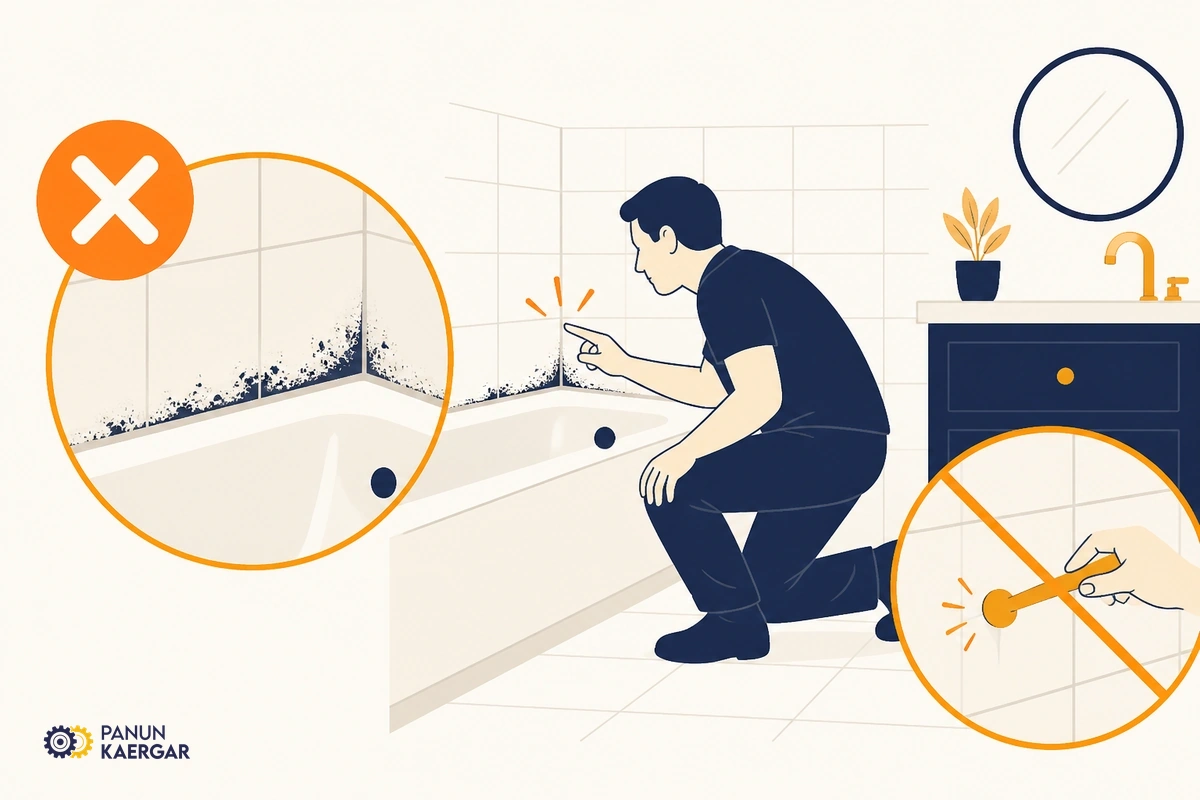
Do not seal silicone over wet crumbling grout, dig aggressively into a soft wall, or ignore mould and hollowness behind failed joints.
What usually causes this
The visible symptom is useful, but the small detail around it usually tells the real story.
- Old cement grout worn by daily washing, hard water, and cleaning acids.
- Movement or hollow tiles flexing the joint until it powders and drops out.
- Water left standing on floors after showers, working into open joints.
Try these in order
Begin with the reversible checks. The goal is a clean fix, not winning an argument with a stubborn household thing.

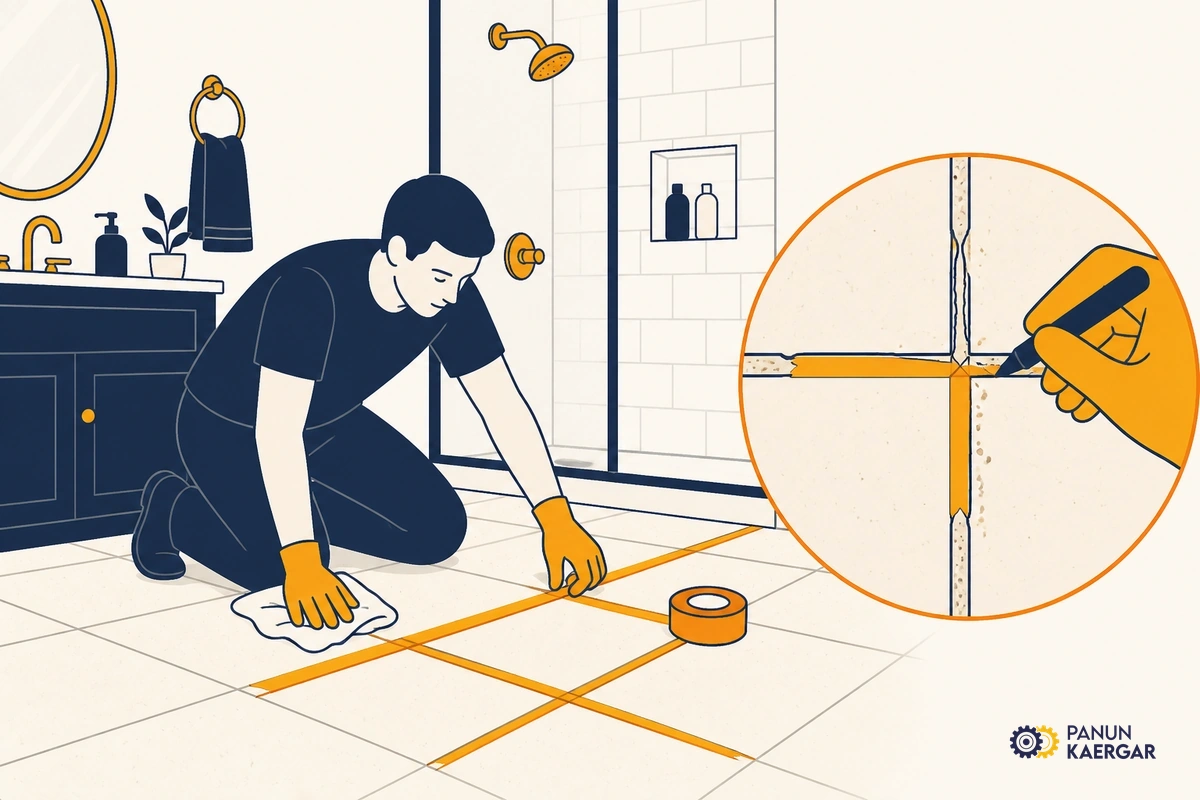
Dry and map the failed joints
Best for: any sandy or missing line
Wipe the floor and wall dry, then mark every joint that powders, cracks, or shows a dark damp edge so you know the full repair length.
Rake out loose grout only
Best for: crumbling joints
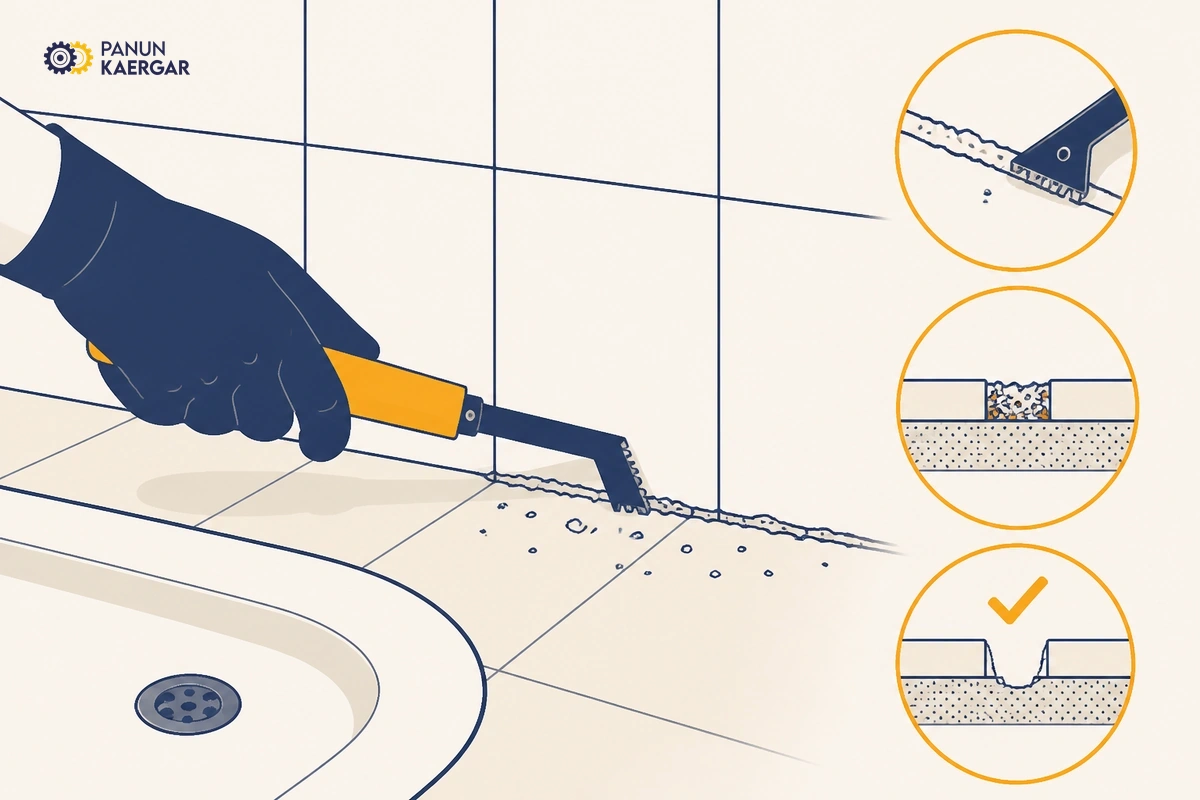
Use a grout rake or a narrow tool to remove loose material to a sound depth — do not dig into soft plaster or the tile bed.
Clean and dry the open joint
Best for: before any new fill
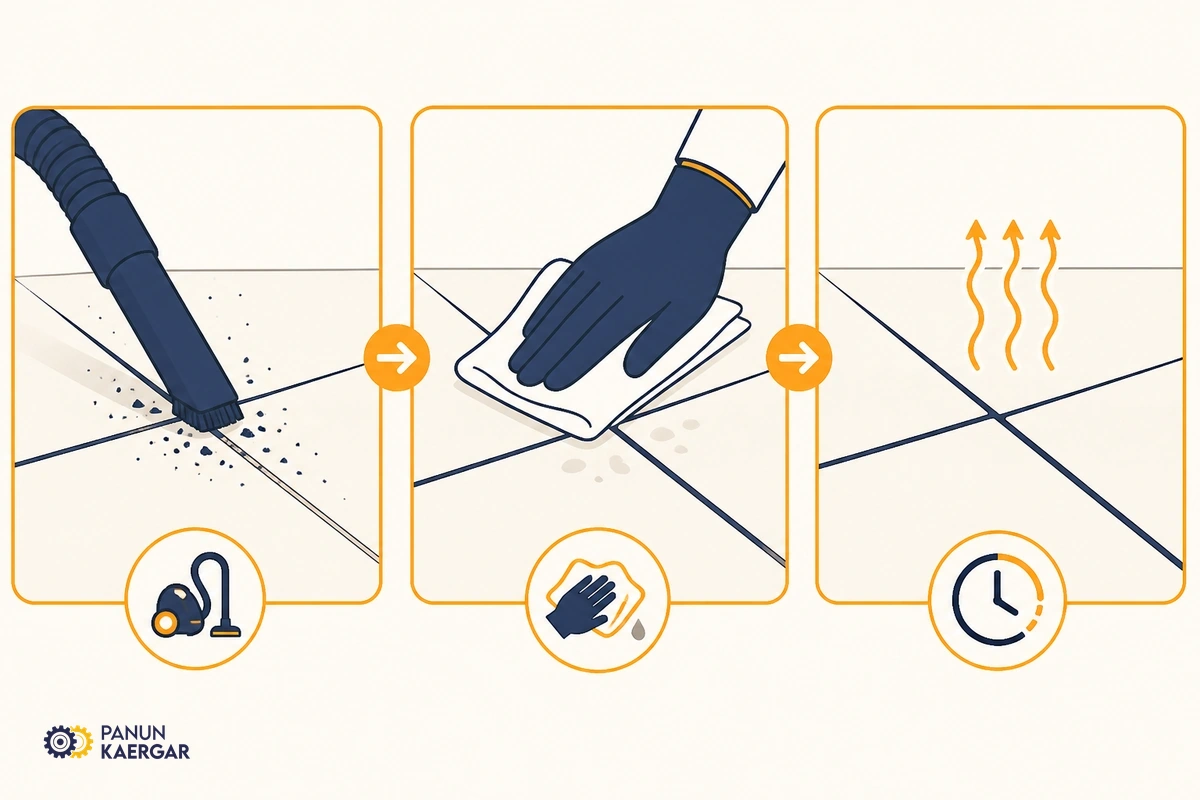
Vacuum dust, wipe with a barely damp cloth, and let the joint dry fully. Wet joints make new grout weak and patchy.
Regrout and cure before sealing
Best for: sound empty joints
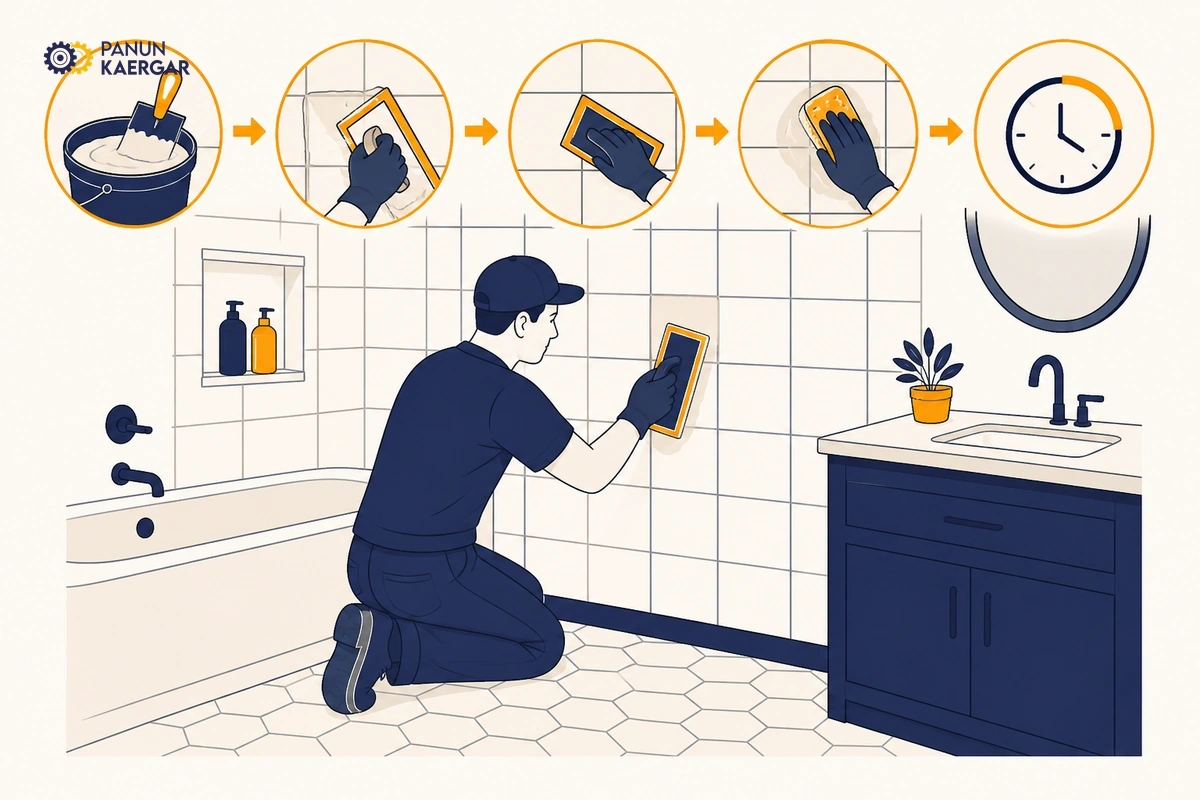
Press bathroom-grade grout firmly into the joint, tool it smooth, clean haze carefully, and wait for full cure before any silicone on corners.
Book a mason
Best for: hollow tiles, soft wall, or repeat mould
A pro can lift failed tiles, redo waterproofing, and replace a run of joints that will not hold after DIY regrouting.
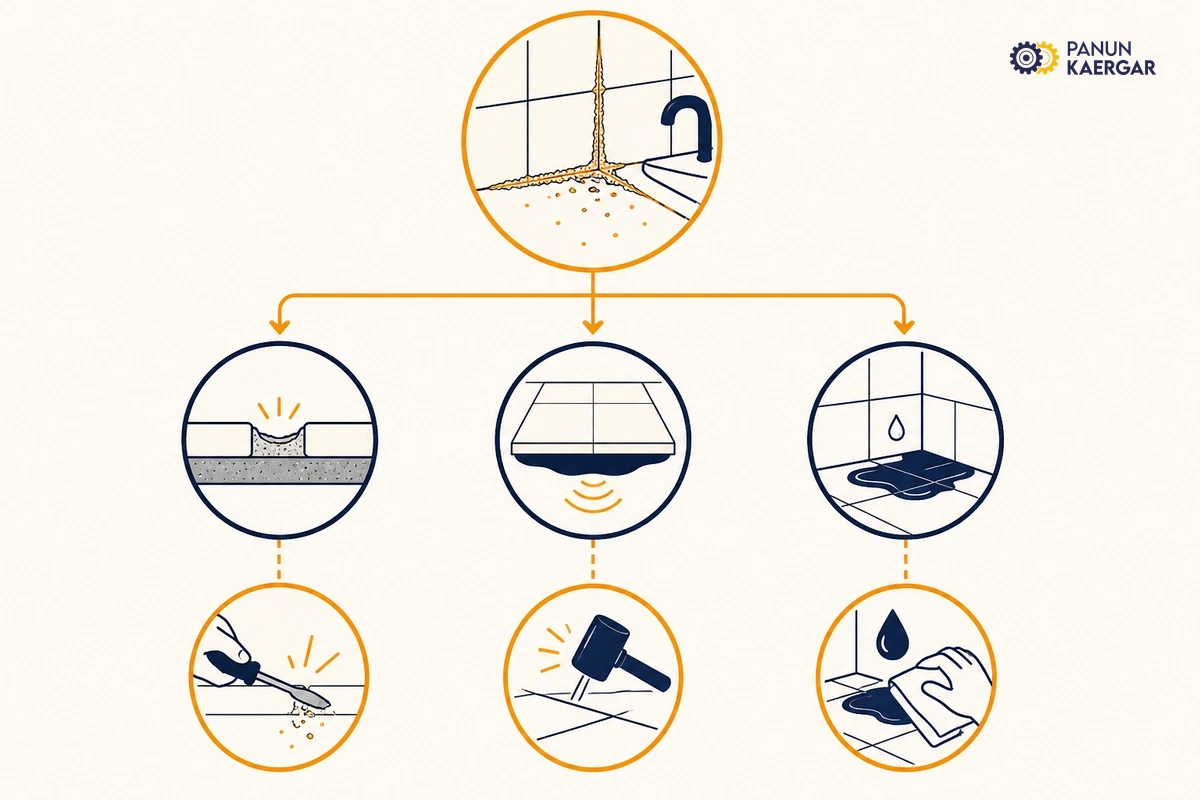
If a joint powders under a fingernail, map the whole run before you buy grout. A two-metre dark edge usually means more failure than the one sandy spot you noticed.
Kashmir home note
Kashmir bathrooms often mix hard water, closed winter ventilation, and cold floors that stay wet after showers. Grout fails first at floor edges and shower corners — the same paths seepage uses to reach plaster.
What not to do
These shortcuts usually cost more than they save.
Silicone over wet crumbling grout
Traps moisture behind the seal
A shiny bead over sandy joints locks water against the tile bed and often worsens mould and seepage.
Dig deep into a soft wall or bed
Damages plaster and tile bond
Forcing a tool past failed grout into soft plaster or adhesive can loosen sound tiles around the repair.
Ignore mould or a hollow clack
Water is already behind the finish
Black mould at joints or hollow-sounding tiles means the problem is past surface grout — DIY fill alone will not last.
Keep it from returning

Squeegee standing water after showers, keep the exhaust or window working, and touch up a short failed joint early before water reaches the wall.
When to book a professional
Book a mason when tiles sound hollow, plaster behind the wall feels soft, mould returns after cleaning, waterproofing has failed, or a large bathroom needs a full joint and tile reset.
Need hands-on help? Book verified masonry services in Kashmir or find a mason near you on Panun Kaergar when DIY has done its part.
FAQs
Why is bathroom grout crumbling in Kashmir homes?
Daily washing, hard water, cleaning acids, and boards that stay wet after showers wear cement grout. Movement or hollow tiles also flex joints until they powder and drop out.
Can I regrout bathroom tiles myself?
Yes for short runs of failed joints if tiles are still solid. Dry and rake loose grout, clean the joint, regrout with a bathroom-grade mix, and cure fully before sealing corners.
Should I put silicone over crumbling grout?
No. Silicone over wet or sandy grout traps moisture behind the seal. Rake out the failure, dry the joint, regrout, then use silicone only where a flexible corner joint is needed after curing.
How long should I wait before using the bathroom after regrouting?
Follow the product cure time — often a day or more before heavy wetting. Walking carefully may be fine sooner; showers and standing water should wait until the grout has set.
When should I book a mason for bathroom grout problems?
Book when tiles sound hollow, plaster feels soft, mould returns after cleaning, waterproofing has failed, or a large area needs joints and tiles reset properly.