
A soft drum sound answers when you tap the bedroom wall, then a palm-sized flake of plaster lands behind the wardrobe — and someone wants to skim the whole room before checking how far the hollow runs.
Tap-test the wall, mark hollow or blistered zones, clear loose flakes safely, and keep people clear of the fall path. Fix damp first if the plaster is wet; large hollow areas, ceiling plaster, or plaster near electrical points need a mason for proper plaster repair.
Quick diagnosis map
Start with the symptom, not the most dramatic fix. A small check now can save a cabinet, appliance, or Sunday afternoon.
| What you notice | Likely reason | First move |
|---|---|---|
| Hollow drum sound, blistered paint, or plaster flakes on the floor | Failed plaster bond, moisture behind the skim, impact, or old weak render | Tap lightly with a knuckle or wooden handle; hollow plaster sounds dull. Mark the boundary with tape so you know the real area before scraping. |
| Problem worsens after use | An underlying fault or hidden damage | Stop adding load; inspect safely. |
| Heat, burning smell, leak, or sudden pain | Safety issue, not a DIY puzzle | Switch off / isolate / get help. |
Do not hammer open a whole elevation without mapping hollow spots, skim over wet or salty plaster, or leave loose ceiling flakes above beds and walkways.
What usually causes this
The visible symptom is useful, but the small detail around it usually tells the real story.
- Plaster skim that never keyed to the masonry, or dried too fast and lost bond.
- Damp, salts, or seepage softening the layer until it drums hollow and peels.
- Impact, vibration, or old lime plaster that has lost strength after many winters.
Try these in order
Begin with the reversible checks. The goal is a clean fix, not winning an argument with a stubborn household thing.
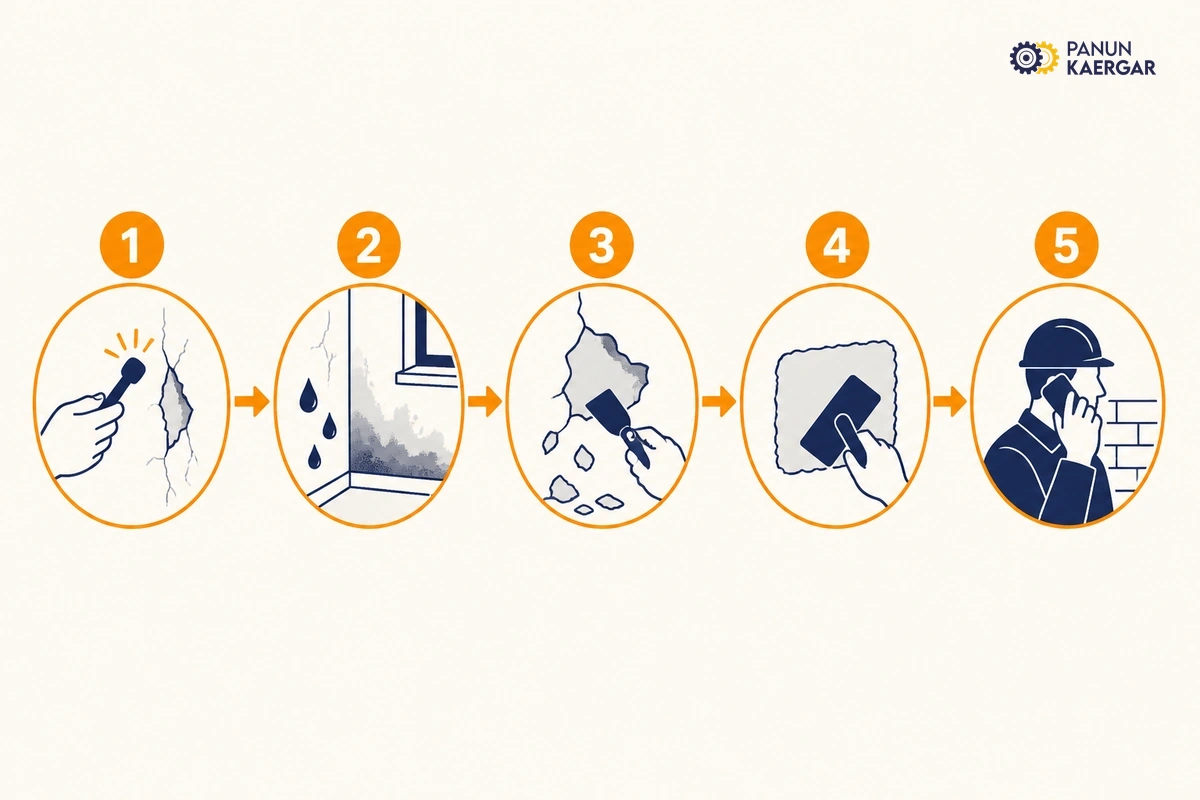
Tap-test and map the hollow zone
Best for: any soft or drumming patch
Tap lightly with a knuckle or wooden handle; hollow plaster sounds dull. Mark the boundary with tape so you know the real area before scraping.

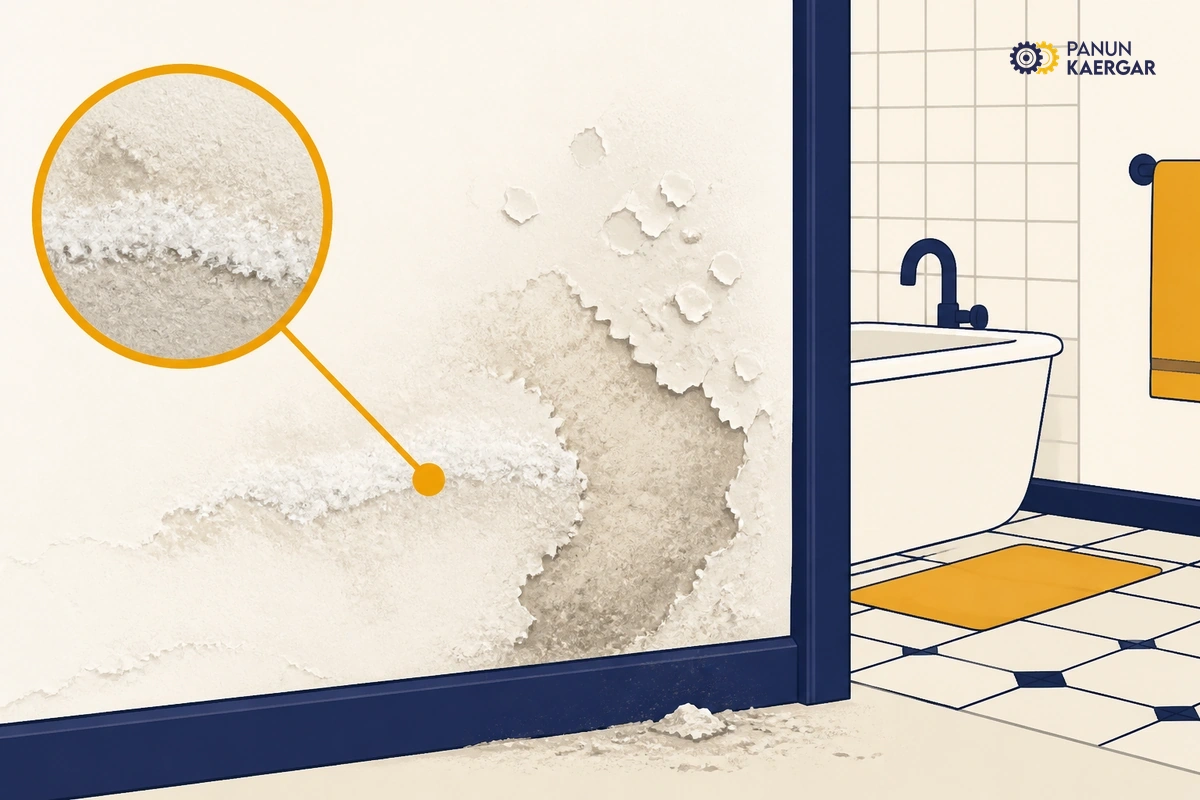
Check for damp and salts
Best for: blisters near bathrooms or exterior walls
Look for wet patches, white salt bloom, or stains — active moisture must be fixed before any replaster or the hollow will return.
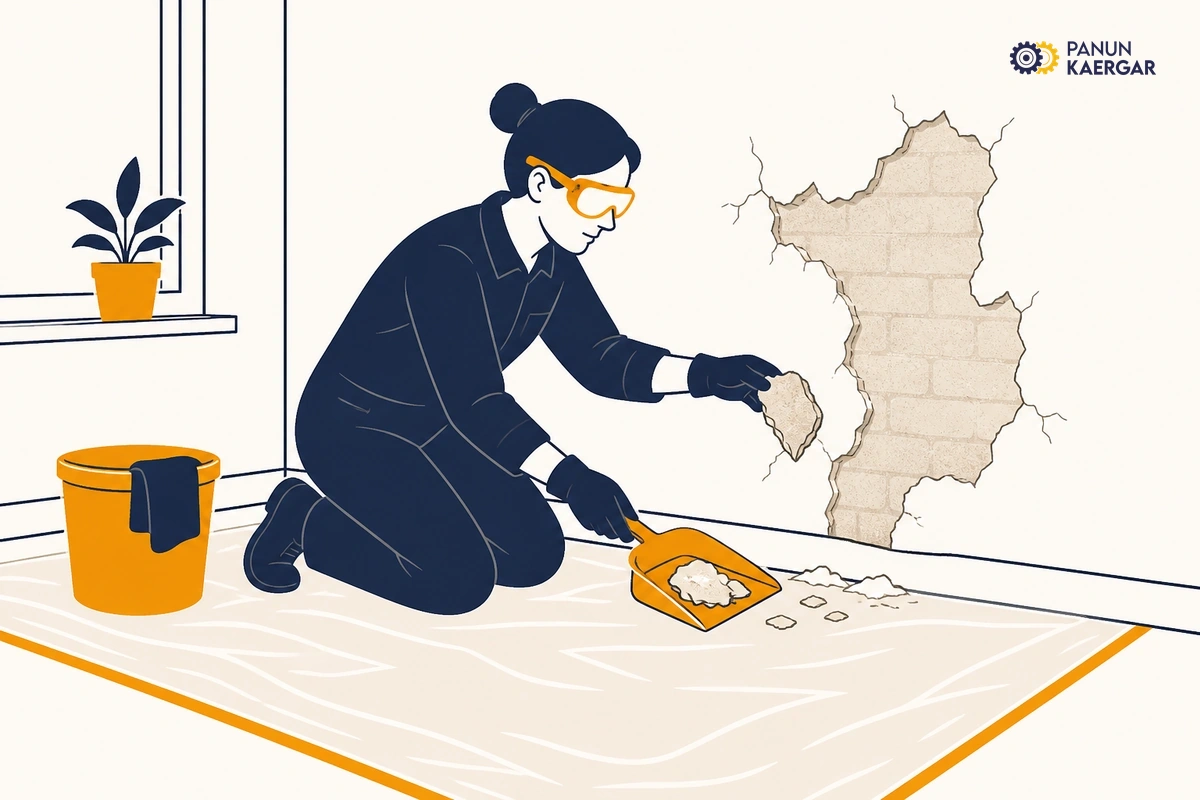
Contain loose flakes safely
Best for: ceiling edges and walkways
Clear the floor under the patch, wear eye protection, and peel only what already lifts; do not hammer a whole wall open on day one.
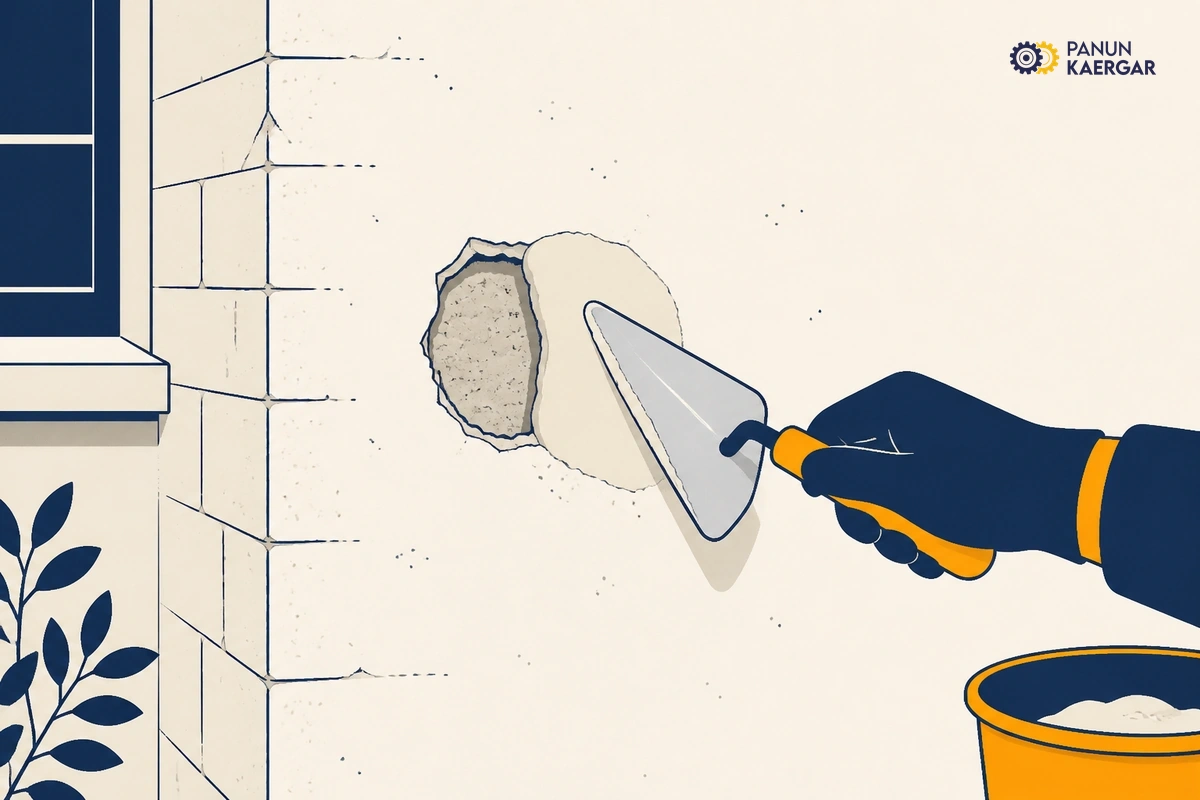
Patch a small dry hollow
Best for: a hand-sized dry failure with sound edges
Remove failed skim to a firm edge, dampen lightly, and refill with suitable plaster so the repair keys and sits flush before painting.
Book a mason for plaster repair
Best for: wide hollow areas or ceiling plaster
A pro can chase out failed render, treat the base, and replaster evenly — safer than DIY on ceilings, wet walls, or large living-room faces.
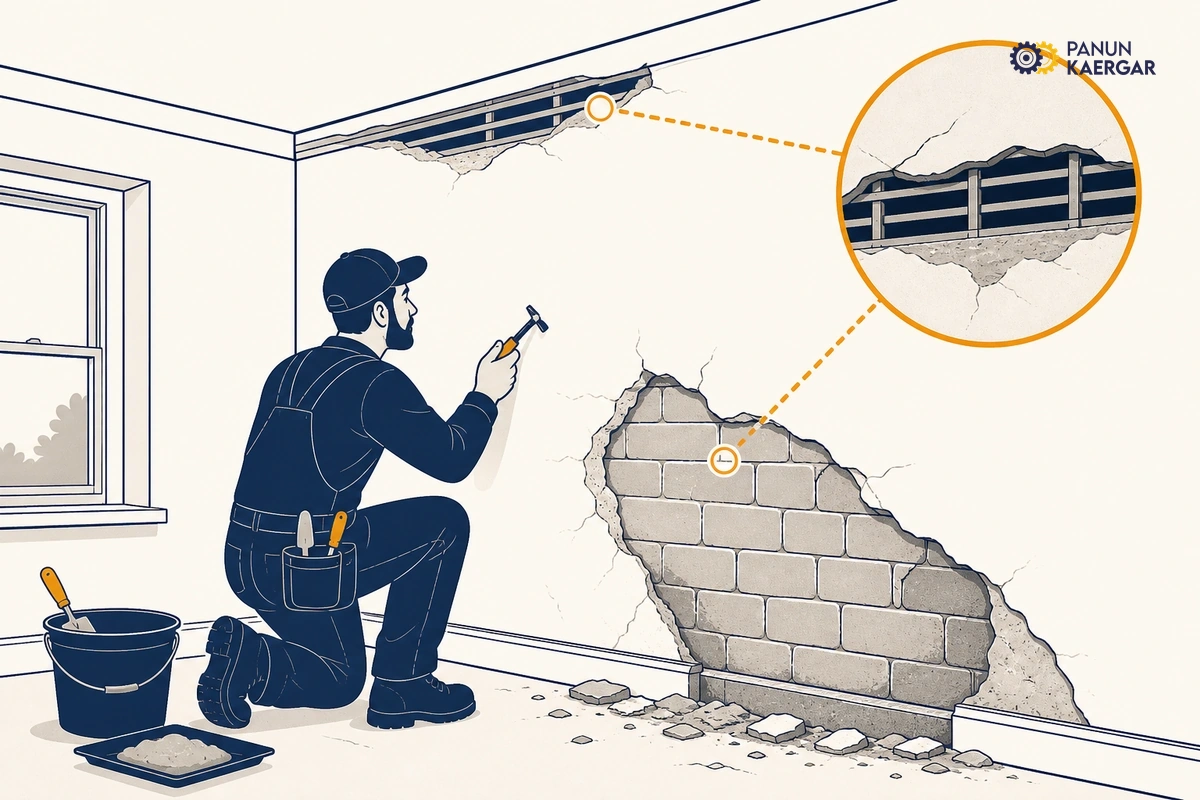

Take one clear photo before taking anything apart. It helps a professional see the pattern and saves guesswork.
Kashmir home note
Kashmir freeze-thaw, damp ground-floor walls, and old lime plaster make hollow patches common after winter. A drumming sound is a bond failure — not always a reason to demolish every wall in the house.
What not to do
These shortcuts usually cost more than they save.
Hammer open a whole wall without mapping
Destroys sound plaster needlessly
Blind chiselling raises dust and wrecks firm areas before you know how small the hollow zone is.

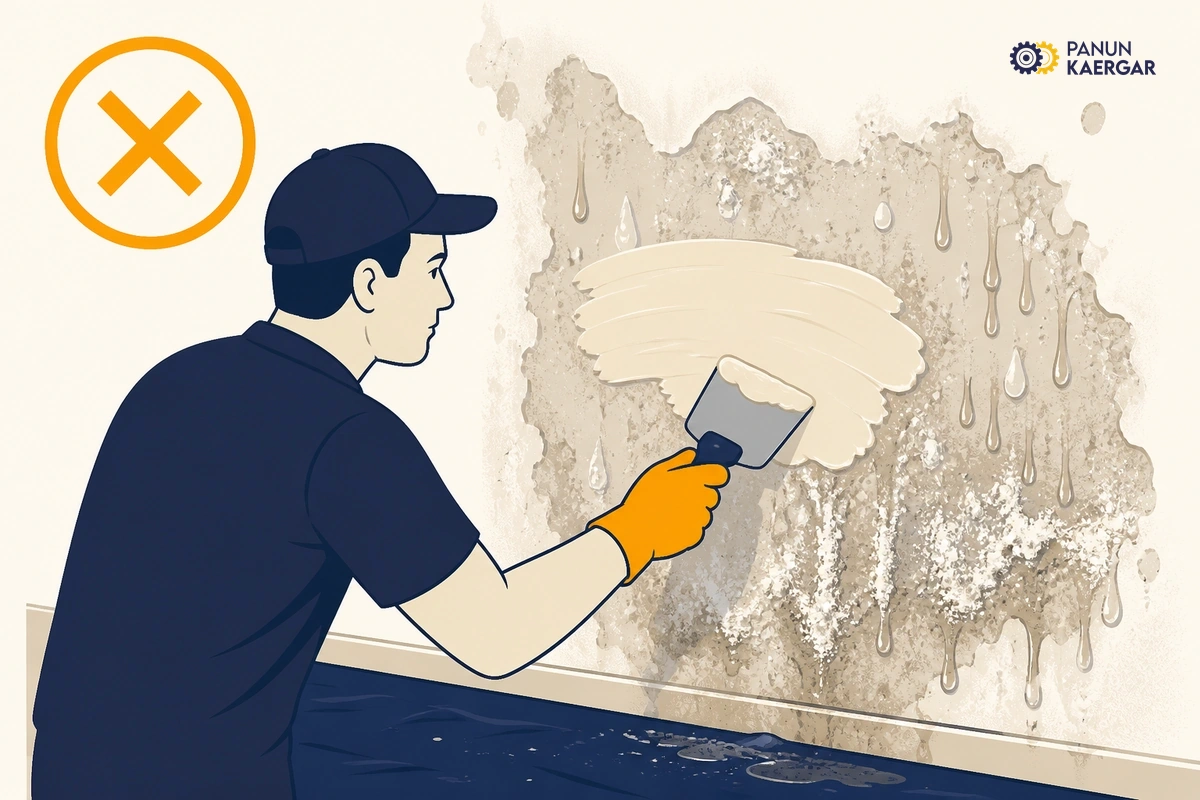
Skim over wet or salty plaster
Hollow returns under paint
Fresh putty on active damp or salt bloom looks fine for a week, then blisters and drums hollow again.
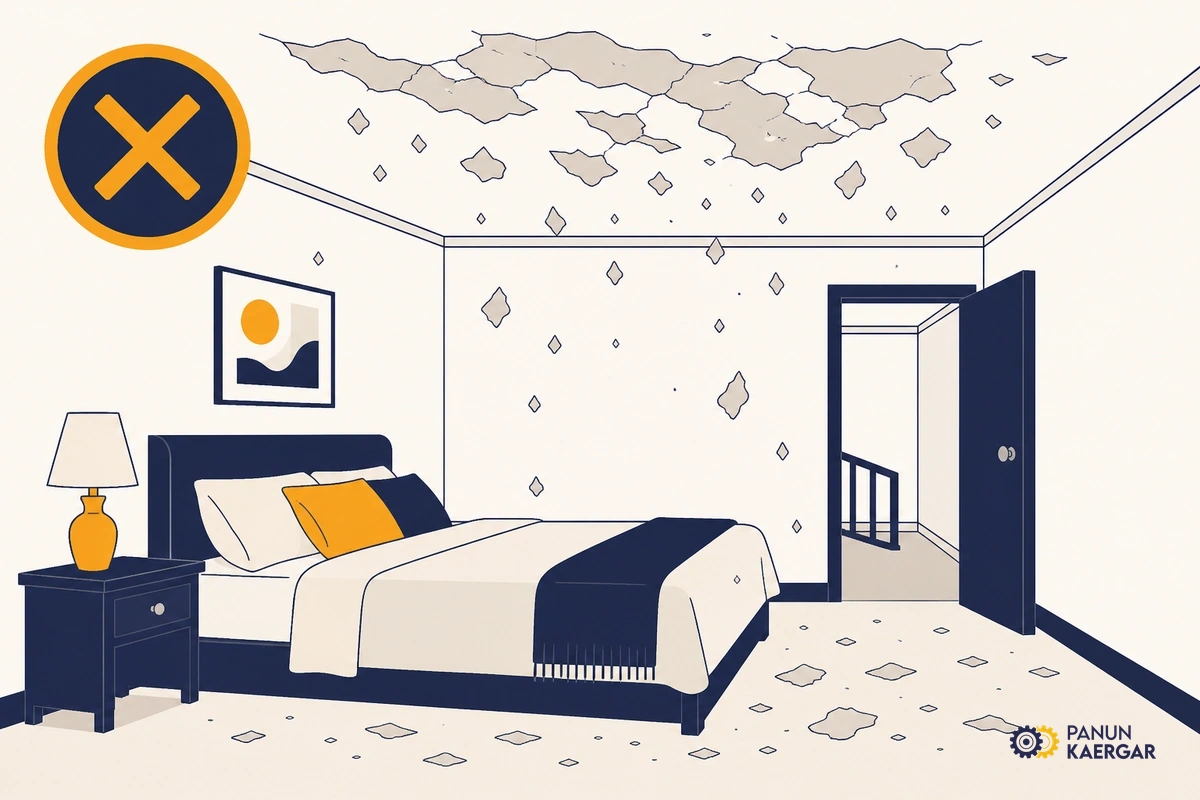
Ignore loose ceiling flakes above beds
Fall hazard overnight
Ceiling plaster that already peels can drop without warning onto beds, cradles, and walkways.
Keep it from returning

Fix the small trigger, keep the area clean and dry where relevant, and deal with repeat symptoms before they become a replacement job.
When to book a professional
Book a mason for widespread hollowness, falling ceiling plaster, wet or salt-damaged walls, plaster near electrical points, or a patch that fails again after a DIY refill.
Need hands-on help? Book verified masonry services in Kashmir or find a mason near you on Panun Kaergar when DIY has done its part.
FAQs
What is the first check for loose plaster hollow or peeling?
Tap lightly with a knuckle or wooden handle; hollow plaster sounds dull. Mark the boundary with tape so you know the real area before scraping.
Can I keep using it?
Only if there is no safety risk or spreading damage. Stop when the symptom worsens.
Why did this start suddenly?
A change in load, moisture, wear, cleaning product, or season often exposes a weak point.
Will a temporary fix last?
It can buy time, but repeat symptoms need the cause corrected.
When should I book help?
Book a mason for widespread hollowness, falling ceiling plaster, wet or salt-damaged walls, plaster near electrical points, or a patch that fails again after a DIY refill.