
Afternoon light catches a grey cloud when the drawing-room curtains move, and the lining smells closed after months of shut winter windows — but the care label is hidden high behind the pleats.
Vacuum curtains in place with low suction, check the care label and lining, spot-test only a hidden edge, and air the room dry. Dry clean lined, velvet, silk, pleated, blackout, or embellished curtains; careless machine washing can shrink the face fabric differently from the lining.
Quick diagnosis map
Start with the symptom, not the most dramatic fix. A small check now can save a cabinet, appliance, or Sunday afternoon.
| What you notice | Likely reason | First move |
|---|---|---|
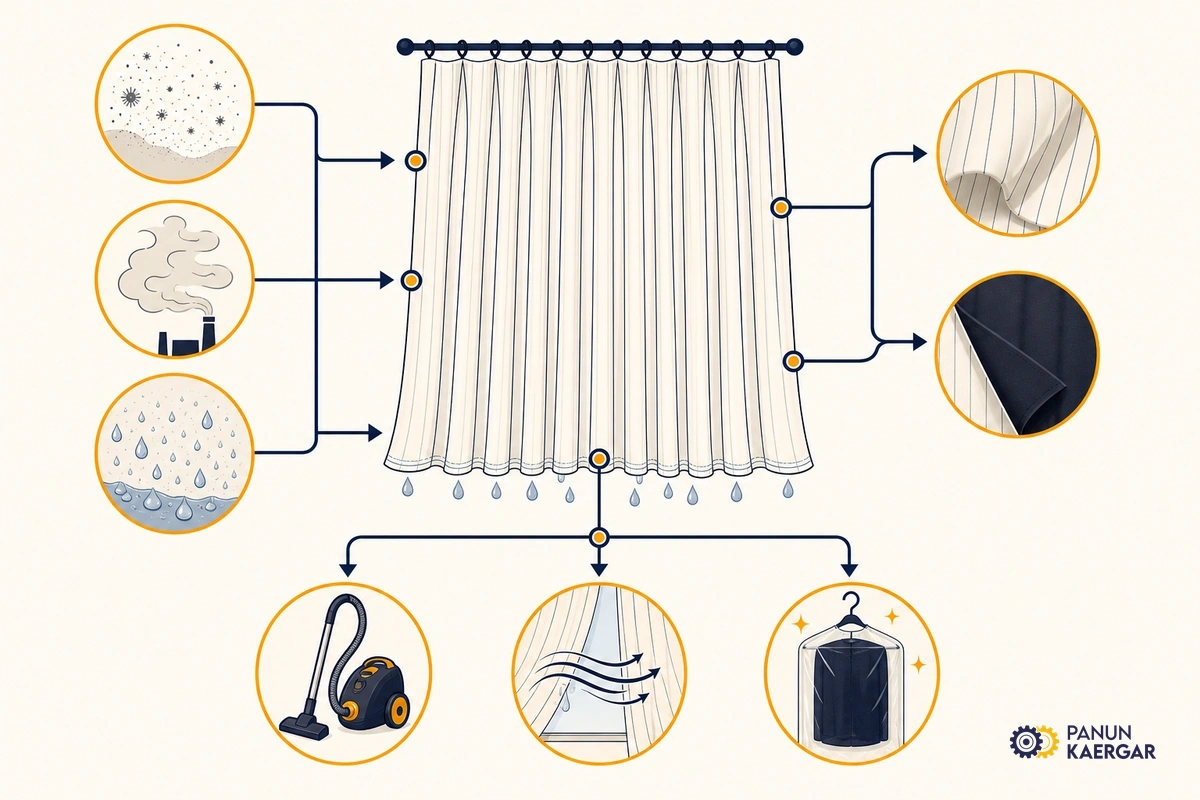
| Dust cloud, closed-room smell, tide mark, or stained curtain hem | Trapped dust and smoke, condensation, fabric-sensitive staining, or a damp lining | Use a clean upholstery attachment on low suction while the curtain hangs; support delicate pleats instead of pulling them into the nozzle. |
| Problem worsens after use | An underlying fault or hidden damage | Stop adding load; inspect safely. |
| Heat, burning smell, leak, or sudden pain | Safety issue, not a DIY puzzle | Switch off / isolate / get help. |
Do not machine-wash lined curtains without the care label, soak a stained hem while it hangs, or rehang panels before both face and lining are fully dry.
What usually causes this
The visible symptom is useful, but the small detail around it usually tells the real story.
- Road dust, pollen, bukhari smoke, and cooking residue settling into folds over a long closed season.
- Window condensation dampening hems or blackout lining where air cannot circulate.
- Face fabric and lining made from different fibres that shrink at different rates in a home wash.
Try these in order
Begin with the reversible checks. The goal is a clean fix, not winning an argument with a stubborn household thing.
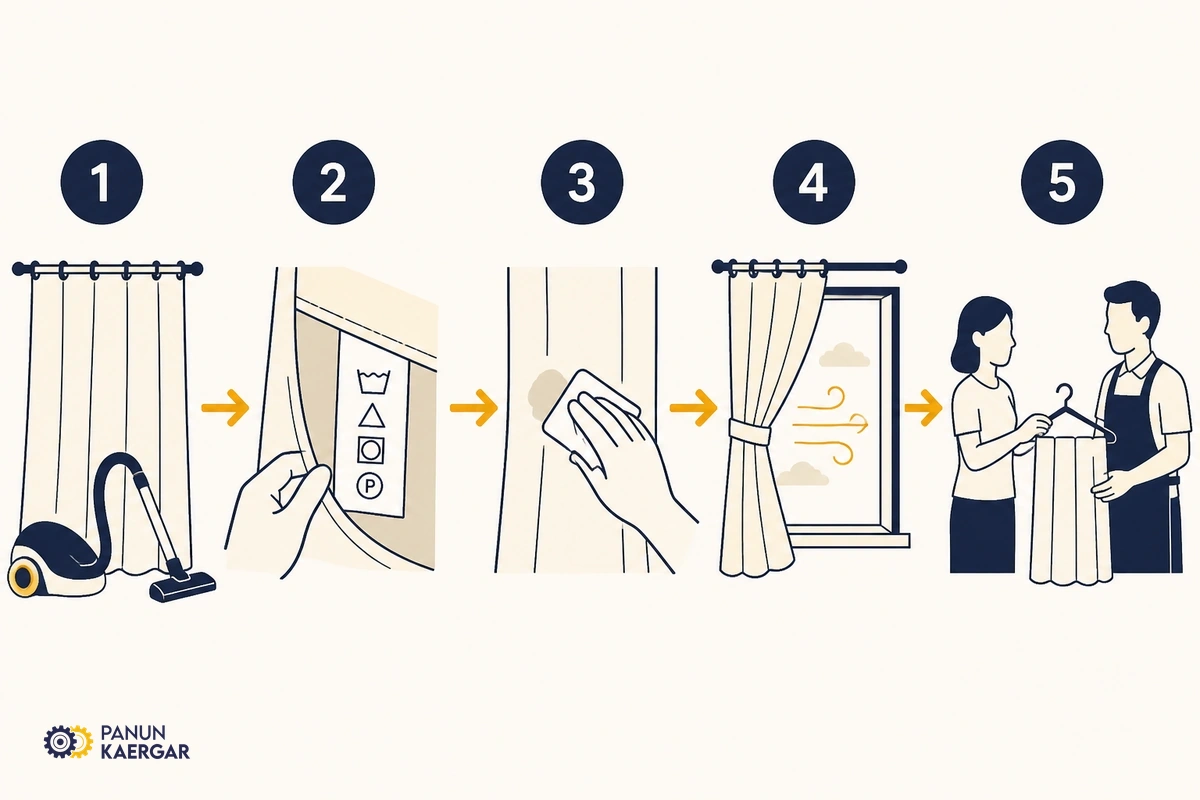
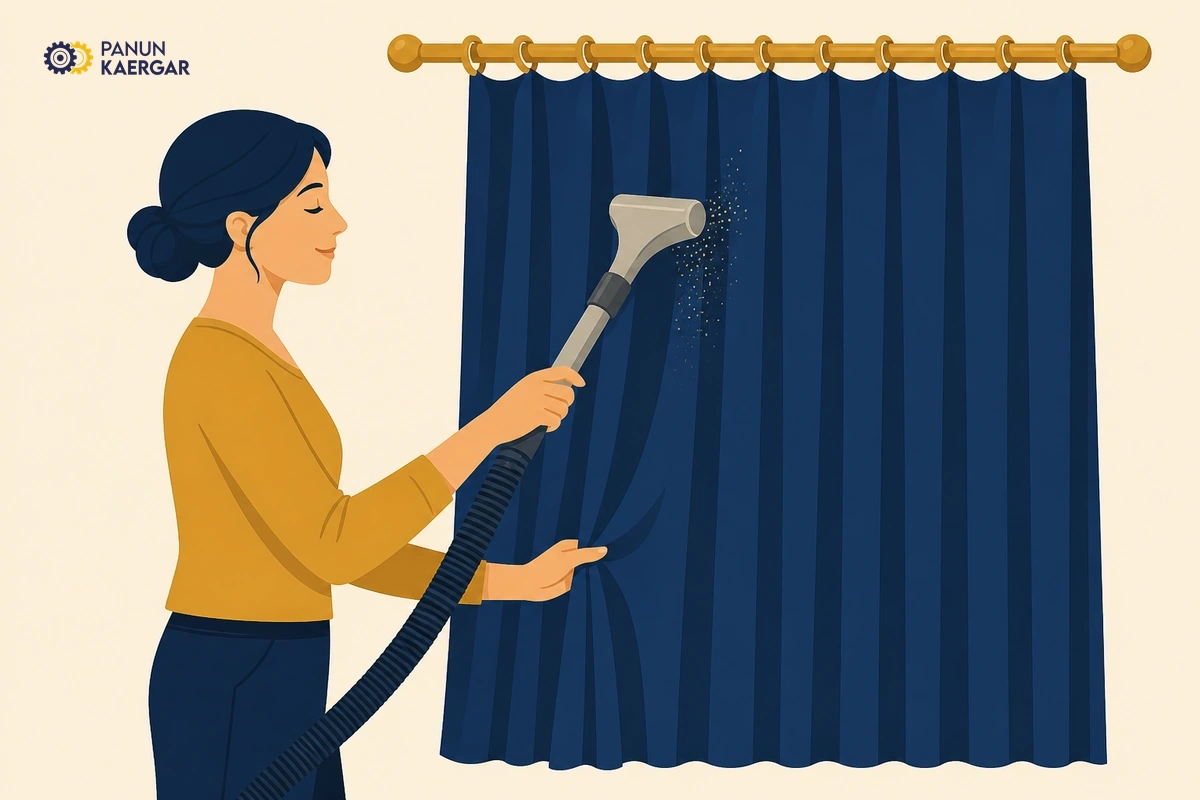
Vacuum from top to hem
Best for: ordinary surface dust
Use a clean upholstery attachment on low suction while the curtain hangs; support delicate pleats instead of pulling them into the nozzle.
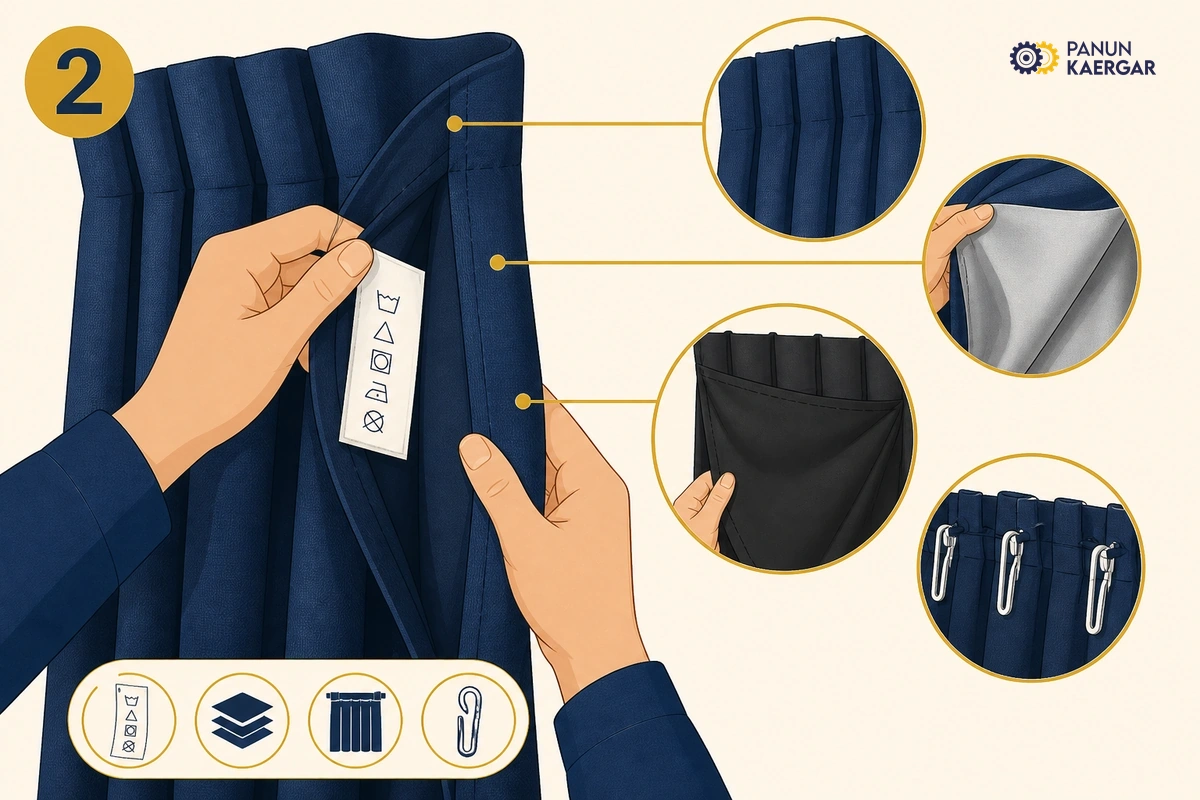
Read the label and inspect the lining
Best for: before adding any water
Check the face fabric, blackout backing, embroidery, hooks, and lining — the least washable layer decides how the whole curtain should be cleaned.
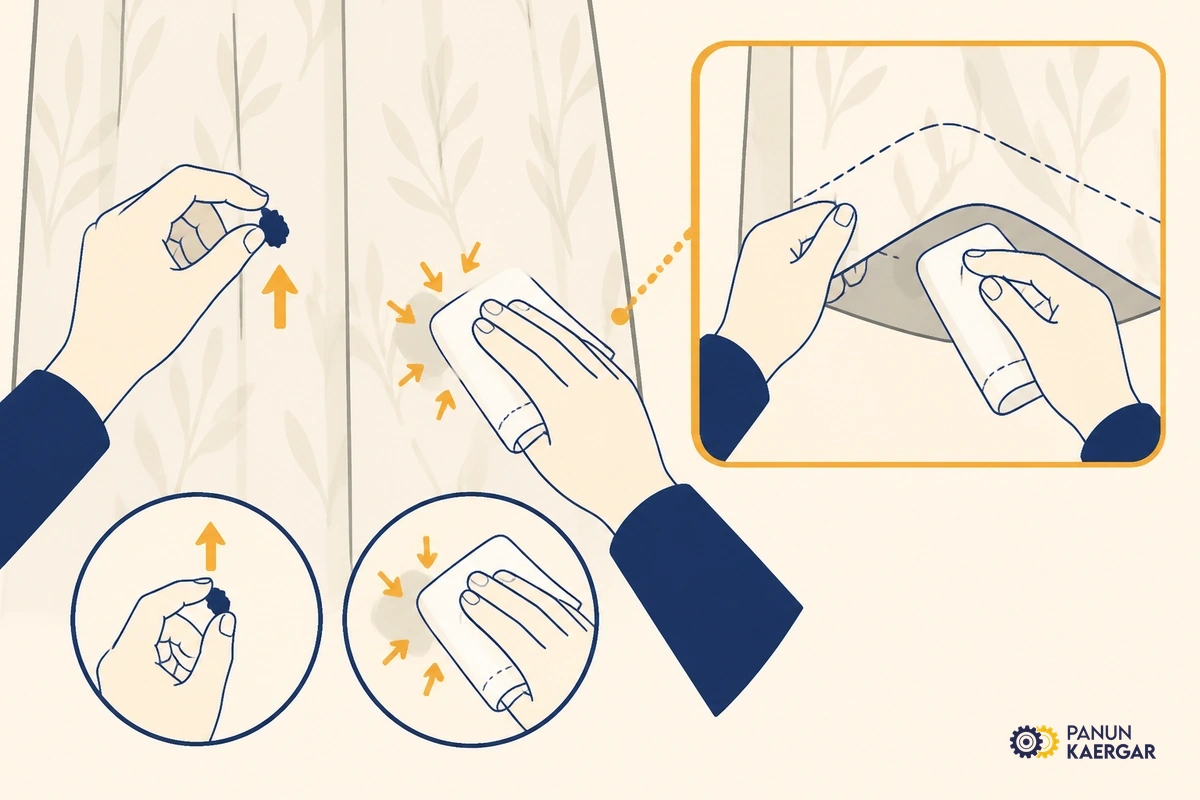
Blot a fresh mark carefully
Best for: a small recent splash
Lift solids, then blot from the edge inward with a clean white cloth. Test any fabric-safe solution behind the hem and stop if colour transfers.
Air the window area dry
Best for: musty hems or condensation
Open curtains fully, wipe the sill, and improve airflow; do not fold or rehang fabric that still feels cool and damp at the lining.

Book curtain dry cleaning
Best for: lined, velvet, silk, blackout, or large panels
A fabric-care professional can label each panel, remove hooks safely, treat stains, and clean the face and lining without guessing at shrinkage.
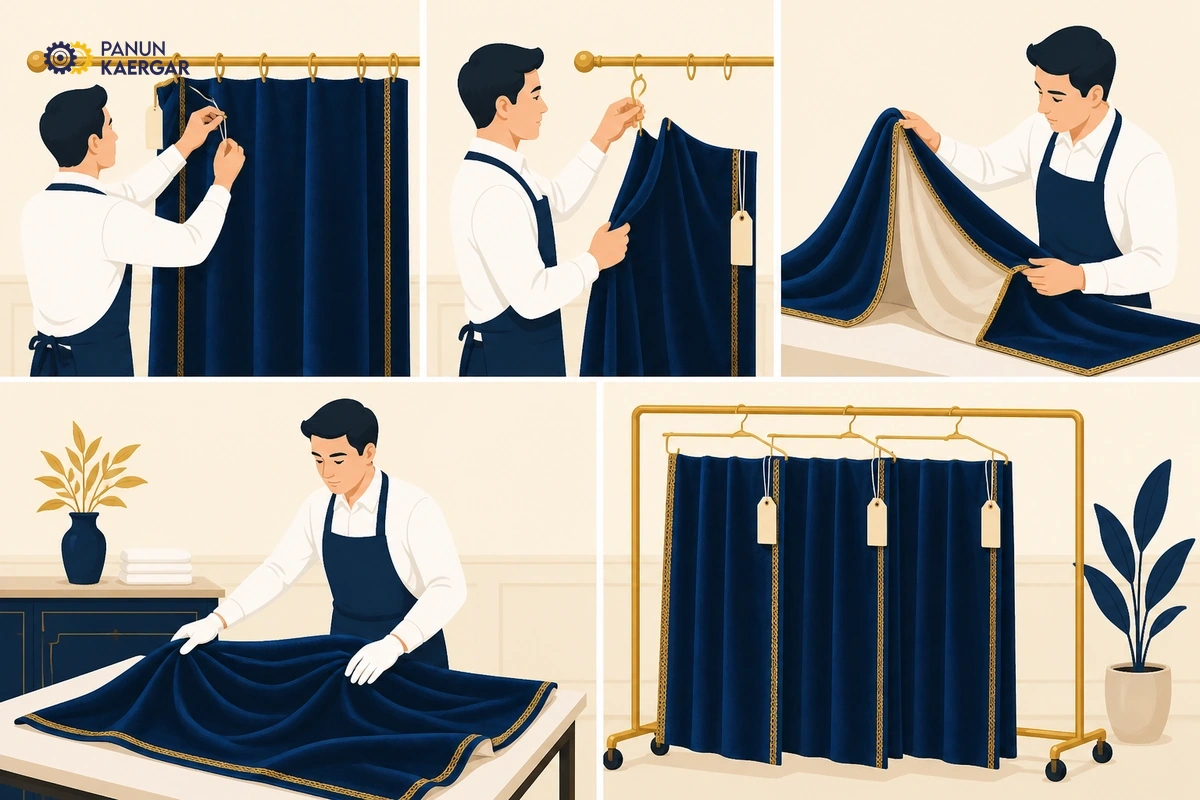
Take one clear photo before taking anything apart. It helps a professional see the pattern and saves guesswork.
Kashmir home note
Kashmir rooms stay closed through cold months, so curtains collect bukhari smoke, kitchen vapour, road dust, and window condensation together. Heavy lined panels may feel dry on the face while the hem or backing still holds moisture.
What not to do
These shortcuts usually cost more than they save.
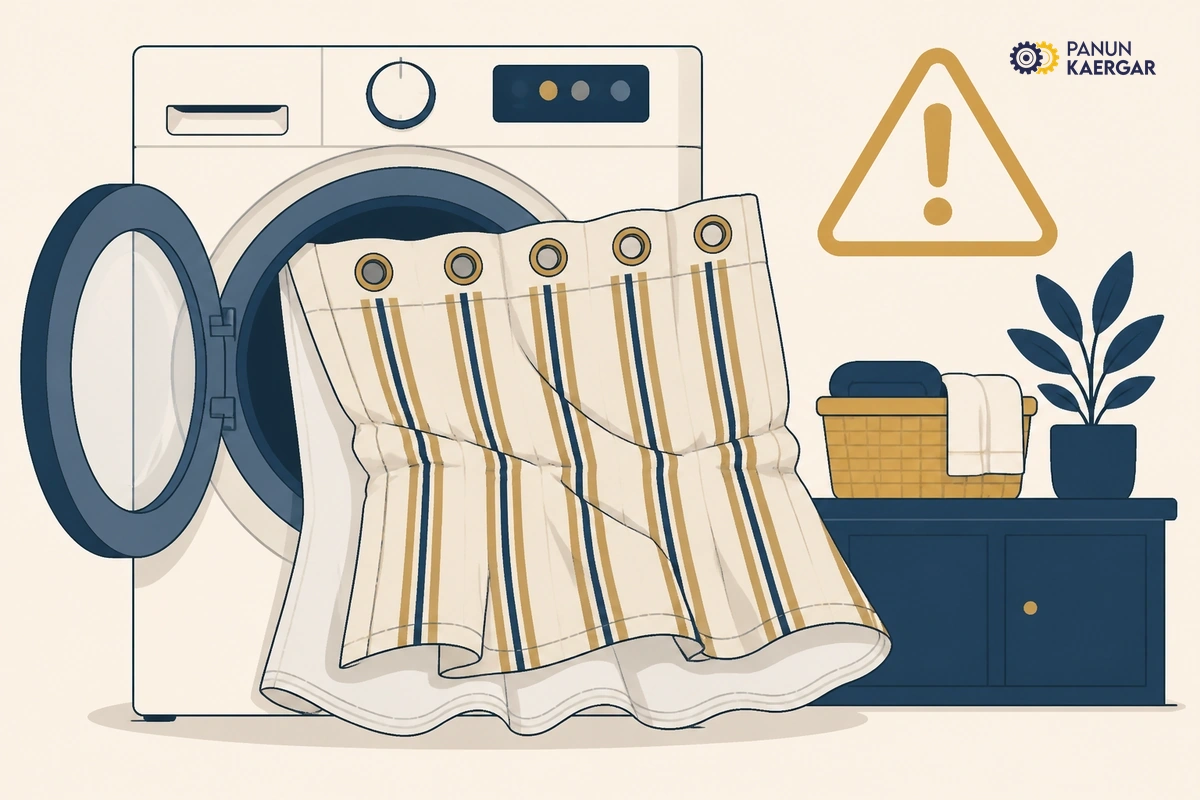
Machine-wash lined curtains blindly
Face and lining shrink differently
Mixed fibres can pull against each other, leaving a shortened lining, puckered seams, or panels that no longer meet the floor.
Soak a stained hem while it hangs
Leaves a tide mark and wet wall
Water climbs through the fabric, spreads the stain, and can dampen the sill, wall, and lining behind it.

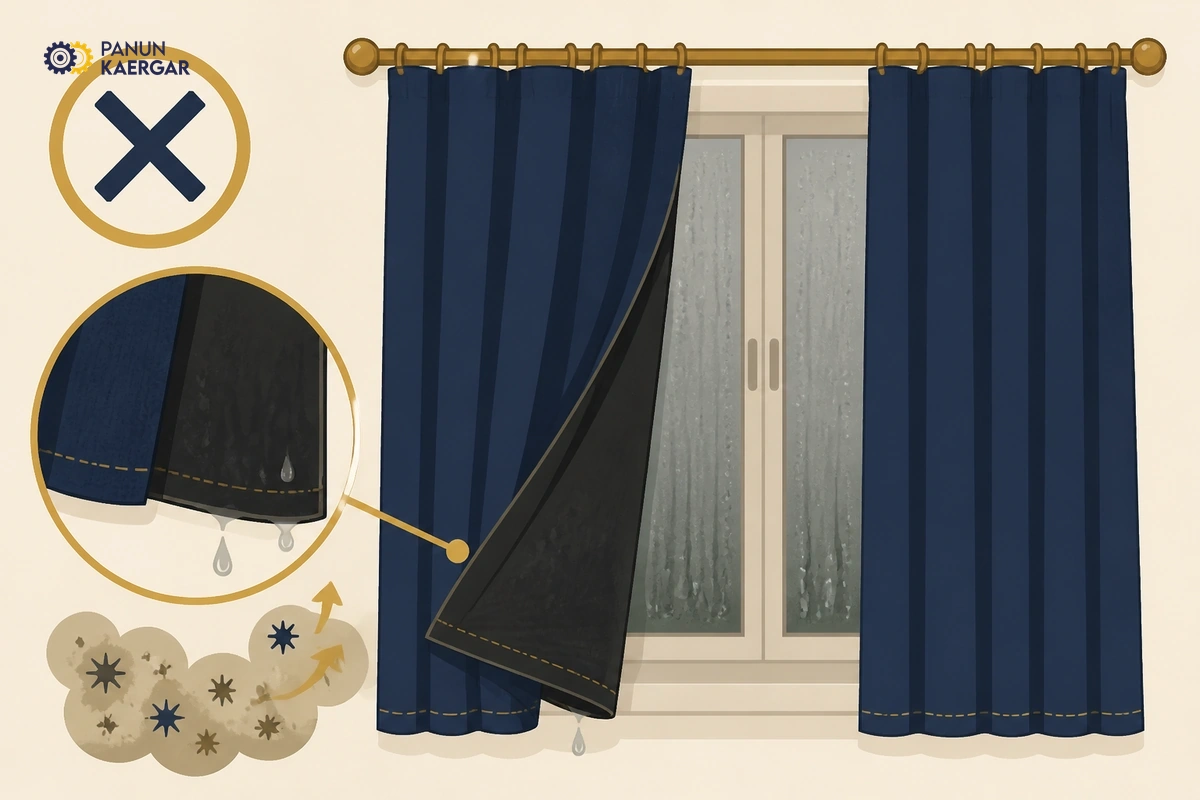
Rehang before the lining is dry
Musty smell returns quickly
A dry-feeling face can hide moisture in blackout backing or stitched hems, sealing the same stale smell against the window.
Keep it from returning

Fix the small trigger, keep the area clean and dry where relevant, and deal with repeat symptoms before they become a replacement job.
When to book a professional
Book dry cleaning for velvet, silk, wool, blackout, lined, pleated, embroidered, or very large curtains; get prompt help for mould spots, colour bleeding, water damage, or a musty smell that returns after airing.
Need fabric-safe help? Book verified dry cleaning and laundry services in Kashmir through Panun Kaergar when home care has done its part.
FAQs
What is the first check for curtains dusty or musty?
Use a clean upholstery attachment on low suction while the curtain hangs; support delicate pleats instead of pulling them into the nozzle.
Can I keep using it?
Only if there is no safety risk or spreading damage. Stop when the symptom worsens.
Why did this start suddenly?
A change in load, moisture, wear, cleaning product, or season often exposes a weak point.
Will a temporary fix last?
It can buy time, but repeat symptoms need the cause corrected.
When should I book help?
Book dry cleaning for velvet, silk, wool, blackout, lined, pleated, embroidered, or very large curtains; get prompt help for mould spots, colour bleeding, water damage, or a musty smell that returns after airing.